


20, Mar 2026
NITI Aayog Plans INR 7,500 Crore Push to Boost India’s Sports Goods Industry
India is preparing for a major industrial upgrade in its sports goods and equipment sector, with NITI Aayog proposing ₹7,500 crore in structural reforms and fiscal incentives for the period 2027–2031. The initiative aims to position India as a globally competitive hub for sports manufacturing while significantly boosting exports, employment, and innovation.
This ambitious roadmap is built around a seven-pronged strategy designed to strengthen production capacity, modernise infrastructure, and integrate Indian manufacturers into global supply chains.
India’s Sports Manufacturing Sector Set for Major Expansion
The sports goods industry in India has traditionally been driven by small and medium enterprises, but global demand for fitness equipment, sportswear, and performance gear is rising rapidly. Recognising this opportunity, the proposed policy framework focuses on scaling up domestic manufacturing capabilities.
The goal is clear: transform India from a cost-based supplier into a quality-driven global exporter of sports equipment.
Key Objectives of the ₹7,500 Crore Reform Plan
The proposed strategy focuses on long-term structural transformation rather than short-term subsidies. Key priorities include:
-
Expansion of modern manufacturing clusters
-
Technology upgradation in production units
-
Improved testing, certification, and quality standards
-
Better logistics and supply chain efficiency
-
Incentives to attract private and foreign investment
-
Strengthening export-oriented production systems
These reforms are designed to improve efficiency, reduce costs, and enhance global competitiveness.
Boosting Exports and Global Market Share
A major focus of the initiative is to increase India’s presence in the global sports goods market. Currently, India holds a relatively small share despite strong domestic manufacturing potential.
The policy aims to:
-
Increase exports of sports equipment and fitness products
-
Improve international quality compliance standards
-
Promote “Made in India” branding in global markets
-
Strengthen trade competitiveness against established exporters
If successfully implemented, India could emerge as a key alternative manufacturing hub for global sports brands.
MSMEs at the Core of Growth Strategy
Micro, small, and medium enterprises form the backbone of India’s sports manufacturing ecosystem. The reform plan places strong emphasis on supporting MSMEs through:
-
Easier access to credit and incentives
-
Skill development and workforce training
-
Cluster-based industrial development
-
Integration into global value chains
This is expected to create large-scale employment opportunities, especially in traditional manufacturing regions.
Economic and Employment Impact
The sports goods sector has the potential to become a high-employment industry, particularly for semi-skilled and skilled workers. The proposed reforms are expected to:
-
Generate new manufacturing jobs
-
Strengthen export-linked income opportunities
-
Encourage entrepreneurship in small-scale industries
-
Support regional industrial development
States with existing manufacturing clusters are likely to benefit significantly from this growth push.
Conclusion
NITI Aayog’s proposed ₹7,500 crore reform package marks a strategic step toward transforming India’s sports goods industry into a globally competitive manufacturing powerhouse. By combining infrastructure development, export promotion, and MSME support, the initiative aims to unlock long-term growth potential in a sector with rising global demand.
If implemented effectively, this vision could place India firmly on the global map as a leading exporter of sports goods and equipment by the end of the decade.

- 0
- By Neel Achary

20, Mar 2026
Large imaging study changes understanding of the origins of Parkinson’s rest tremor
| A Finnish clinical imaging study shows that rest tremor in Parkinson’s disease is not explained by greater dopamine loss. In contrast, tremor appears to be associated with relatively better-preserved dopamine function. |
|
|
|
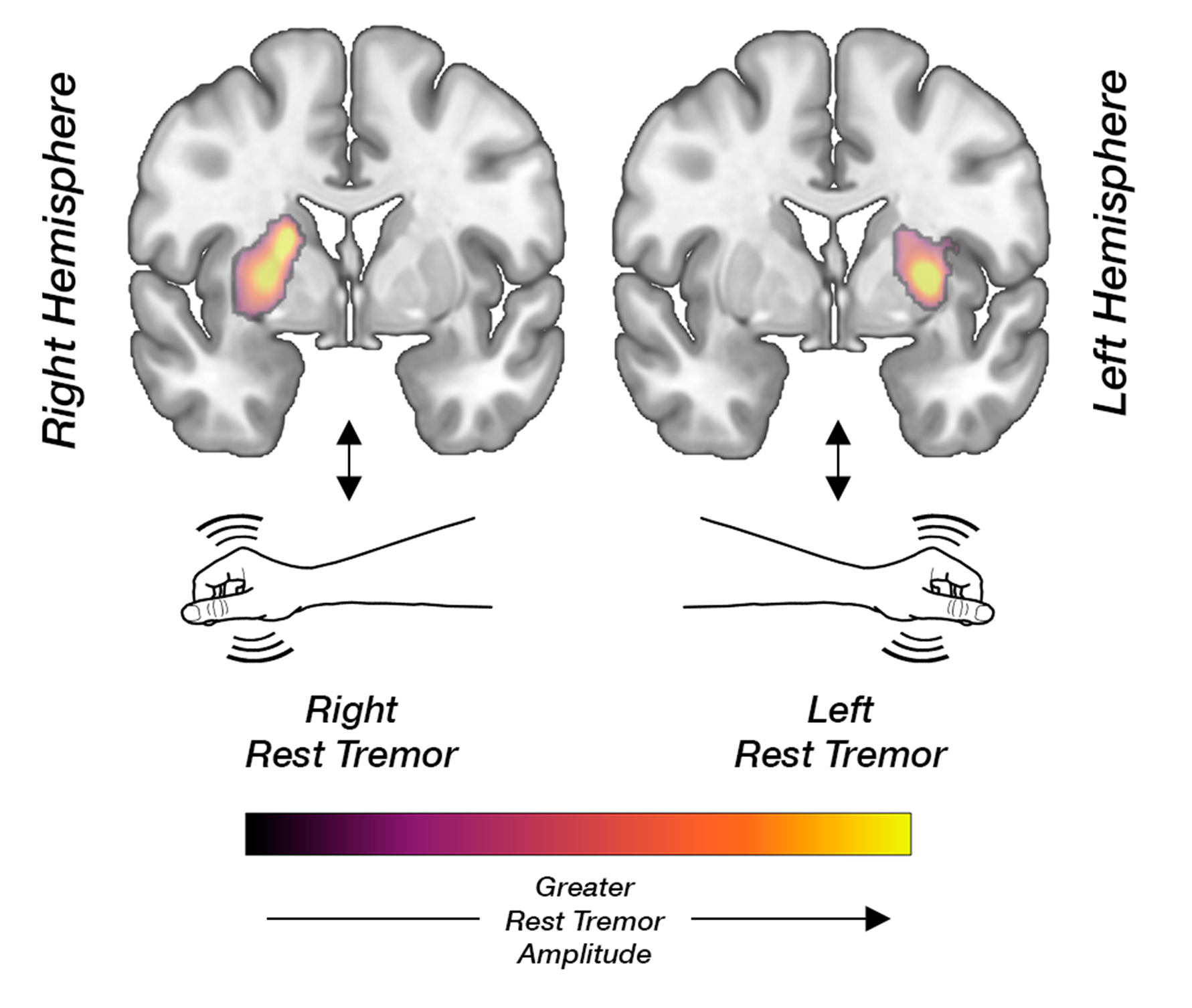
Researchers from the University of Turku and Turku University Hospital, Finland, analysed clinical data and dopamine transporter (DAT) imaging data from 414 Finnish patients. The cohort consisted of patients examined in routine clinical practice for uncertain parkinsonism or tremor, making the findings exceptionally well generalisable to real-world clinical settings. The results were published on 19 March 2026 in Neurology®, the prestigious medical journal of the American Academy of Neurology. The cardinal motor symptoms of Parkinson’s disease are slowness of movement (bradykinesia), muscle stiffness (rigidity), and rest tremor. Bradykinesia and rigidity are known to reflect degeneration of dopamine-producing neurons. Because most brain pathways cross, this association is typically observed in the striatum on the side opposite to the symptoms. In contrast, the biological basis of rest tremor has long remained uncertain. The study revealed a clear and consistent phenomenon: rest tremor was associated with higher dopamine transporter binding in the striatum on the same side as the tremor. Other cardinal motor symptoms, however, showed the expected correlation with dopamine deficits in the opposite hemisphere. “These results show that more severe rest tremor is not simply a marker of more advanced damage to the dopamine system,” says the lead author, Neurologist Kalle Niemi, MD, PhD. “Tremor appears to involve a partly distinct neurobiological mechanism.” The findings confirm the group’s earlier observations made using data from the international Parkinson’s Progression Markers Initiative (PPMI) cohort, where a novel imaging analysis technique developed by the research team was first applied. The replication of the results in an independent and clinically representative cohort strengthens the reliability of the observed phenomenon. “Our findings support the view that different symptoms of Parkinson’s disease may be driven by partly distinct neural network and neurotransmitter mechanisms,” Niemi explains. “This may help explain why tremor behaves differently from symptoms such as bradykinesia.” Using the same methodological framework, the research team also demonstrated that key non-motor symptoms of Parkinson’s disease including depression, anxiety, and REM sleep behaviour disorder are primarily linked to monoaminergic systems other than dopamine. Taken together, these findings reinforce the concept of Parkinson’s disease as a complex brain disorder involving alterations across multiple neural networks and neurotransmitter systems. A more precise understanding of the biological differences between symptoms may, in the future, enable the development of more targeted and personalised treatment approaches. |
20, Mar 2026
Vibhor Steel Tubes bags INR 16.87 crore order for supply of fabricated and galvanised towers
Mumbai, Mar 20: Haryana-based high-quality steel tubes and pipes maker, Vibhor Steel Tubes Ltd (VSTL), has received Rs 16.87 crore order for supply of fabricated and galvanised towers from Agrawal Infracab, a leading manufacturer of cables and conductors for overhead power transmission and distribution lines across the country.
Fab and gal towers are typically used for infrastructural purposes requiring high strength, durability, and corrosion resistance.
Commenting on the development, Mr Vijay Kaushik, Chairman and Executive Director, Vibhor Steel Tubes, said,
“We have been witnessing a buoyant demand for value added steel products backed by a steady growth in infrastructure projects across the country. This order is a testament of our strong manufacturing capabilities and our commitment to deliver high-quality fabricated and galvanised steel towers reinforcing our position as a trusted partner in the fast-growing infrastructure and power transmission sectors. We have seen a healthy growth in our order book this year and we are confident of sustaining the growth momentum moving forward.”
In June this year, VSTL commissioned its 1.56 lakh MT greenfield project in Odisha and subsequently commenced supply of crash barriers, power transmission line towers, Electric Resistance Welded (ERW) and Galvanised (GI) pipes produced at the unit. The plant, which entailed a total investment of Rs 119.83 crore, offers several value-added steel products such as power transmission line towers, crash barriers, high mast lighting poles, octagonal poles and monopoles.
With the new capacity commissioned, the company’s total capacity has increased to 377,000 MTPA, located across its three plants in Maharashtra, Telangana and Odisha.
The company manufactures steel products such as electric resistance welded pipes, hot-dipped galvanized pipes, hollow section pipes and primer painted pipes among others. VSTL, which has a contract manufacturing agreement with Jindal Pipes to manufacture and supply finished goods under the brand name Jindal Star, currently sees over 80% of its total turnover coming from this one segment.
20, Mar 2026
AAEON to Present Elite Networking Platforms at Upperside World Congress

AAEON will be at Booth 306 of Le Palais des Congrès de Paris between March 24th and March 26th, 2026.
(Taipei, Taiwan – Mar 20) AAEON, a leading producer of AI and networking platforms, will present a range of new products at the Upperside World Congress from March 24th – 26th, 2026.
Date: March 24 – 26, 2026
Booth: 306
Venue: Palais des Congrès de Paris, Paris, France
The event, which is expected to host over 1,000 participants from 60 countries and 268 companies, will include a number of discussions and keynote speeches from leading industry figures, heavily focused on the role of AI and machine learning in critical networking infrastructures, as well as exploring the issues and challenges faced in scaling modern datacenter architectures.
AAEON will be at booth 306, and will showcase a range of networking and security appliances, with particular emphasis on their utility for uCPE, SD-WAN, UTM, and NGFW solutions, such as:
FWS-2290 & FWS-2291 – Desktop network appliances featuring both Intel Processor N-series and Intel Atom® Processors x7000RE Series for the Edge CPUs, ideally suited to uCPE, SD-WAN, and UTM deployments.
FWS-2370 – High-performance desktop network appliance powered by the Intel Atom® Processor C5315, boasting up to 14 LAN ports, on-chip technologies such as Intel® QAT and Intel® VT-d/VT-x, and 5G, 4G/LTE, Wi-Fi, cellular, and network module support.
FWS-7851 – An enterprise-grade security appliance supporting 12th, 13th, and 14th Gen Intel® Core™ Processors, up to ten 2.5GbE RJ-45 ports, and dual GbE SFP ports, with optional 10GbE SFP+ expansion.
FWS-7700 – High-performance Rackmount Network Appliance featuring Intel® Xeon® 6 Processors and modular NIM slot expansion.
Among its portfolio of hardware platforms, AAEON will also be showcasing an array of NIM modules compatible with upcoming Rackmount Network Appliances, facilitating functions such as dual 100-Gigabit Ethernet connectivity for high-performance server and network security gateway deployments.
Make sure to use the code 30620UWCP6BR for a 20% discount on admission to visit AAEON at Booth 306 from March 24 – 26, 2026.
20, Mar 2026
TransIndia Enters Greater Matunga District, Strengthening Residential Footprint in Mumbai
Mumbai, Mar 20: TransIndia, a trusted Mumbai-headquartered real estate developer with over 15 years of experience in residential and mixed-use development, founded by Mr. Rajendra Rajan, has announced its strategic entry into the Greater Matunga District, encompassing key micro-markets such as Matunga and Sion one of the fast-emerging residential corridors in Mumbai and the wider Mumbai Metropolitan Region (MMR).
Over the past four years, the Greater Matunga District catchment has witnessed consistent price appreciation, with residential values rising by approximately 37% ft. by the end of 2025. At this level, pricing remains closely aligned with South Central Mumbai, reflecting only a marginal variance and reinforcing the district’s steadily strengthening premium positioning.
The outlook continues to remain optimistic, with value growth expected to accelerate further, driven by rising redevelopment momentum and ongoing infrastructure enhancements across the micro-market. These factors collectively enhance the area’s attractiveness and point towards sustained capital appreciation in the coming years. At the same time, supply dynamics remain favourable, with the estimated time required to liquidate available inventory standing at approximately 18 months, indicating a healthy absorption rate. Notably, the current inventory mix is heavily skewed towards under-construction supply, with only about 2% of units ready to occupy and nearly 98% under development, further supporting future price stability and growth.
Mr. Rajendra Rajan, Founder, TransIndia Group, said,
“Greater Matunga District, including Matunga and Sion, offers a rare balance of legacy, connectivity, and residential character. It is among the few micro-markets in Mumbai that combine central location with quality social infrastructure and a strong community environment. Our entry reflects TransIndia’s long-term vision to develop high-quality residential projects that respect the area’s cultural fabric while introducing modern, sustainable living solutions. We believe this project will be a game changer for the micro-market and set new benchmarks for residential development in this part of the city.”
The transformation of the Greater Matunga District is being underpinned by an unprecedented scale of infrastructure development, with over ₹3.50 lakh crore worth of capital deployed across key projects and more than 2,078 kilometres of infrastructure either delivered or under construction. The micro-market enjoys proximity to some of Mumbai’s most critical connectivity upgrades, including Metro Lines 3 and 4, the suburban railway network, monorail access, and major arterial routes such as the Eastern and Western Express Highways. Additionally, landmark infrastructure such as the Mumbai Trans Harbour Link (Atal Setu), the Mumbai–Ahmedabad Bullet Train corridor, and the Delhi–Mumbai Expressway further enhance regional accessibility. With seamless connectivity to both the existing Chhatrapati Shivaji Maharaj International Airport and the upcoming Navi Mumbai International Airport, the district is emerging as a highly integrated and future-ready urban node, strengthening its appeal as a premium residential destination.
The Greater Matunga District’s enduring appeal is further strengthened by its robust and well-established social infrastructure, which continues to drive strong end-user demand across segments. The neighbourhood offers seamless access to a wide network of reputed educational institutions, healthcare facilities, and lifestyle destinations within a short radius. From leading institutes such as VJTI, ICT, and Welingkar Institute of Management to prominent colleges, schools, and hospitals including Hinduja Hospital and Tata Memorial Hospital, the area is deeply anchored in both academic and healthcare excellence. In addition, its proximity to key commercial hubs, premium retail destinations, and the Chhatrapati Shivaji Maharaj International Airport enhances overall liveability and convenience. This rare blend of cultural legacy, connectivity, and everyday infrastructure positions the district as one of Mumbai’s most stable and sought-after residential micro-markets, particularly for families and long-term homeowners.
TransIndia’s entry into the Greater Matunga District builds on the Group’s philosophy of creating long-term value through quality, sustainability, and thoughtful design. With a strong legacy of assets aligned with international standards, the company now brings the same discipline, execution capability, and vision to residential real estate.
As the Greater Matunga District continues to evolve into one of Mumbai’s most desirable residential addresses, TransIndia Group’s entry marks a defining moment, underscoring its confidence in the corridor and its clear, long-term vision for urban living in the MMR region.
20, Mar 2026
India Launches INR 497 Crore RELIEF Scheme to Safeguard Exporters Amid West Asia Trade Disruptions
Pic Credit: Pexel
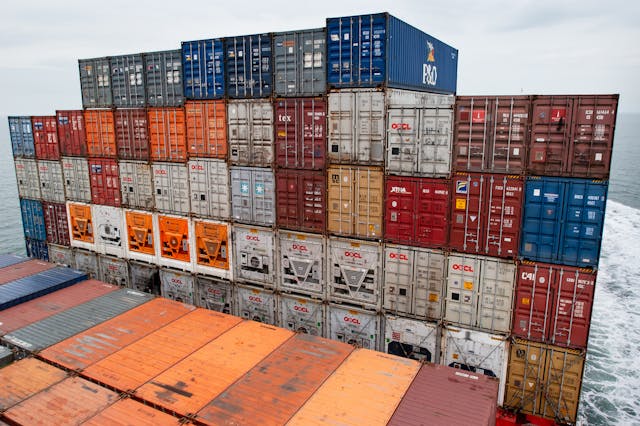
In a significant move to protect India’s export ecosystem from rising global uncertainties, the government has rolled out a ₹497 crore initiative titled Resilience & Logistics Intervention for Export Facilitation (RELIEF). The scheme is designed to cushion exporters particularly MSMEs against escalating logistics costs, shipping disruptions, and insurance pressures triggered by ongoing instability in West Asia.
With key trade routes passing through the Gulf region facing repeated disruptions, Indian exporters have been dealing with delayed shipments, rerouted cargo vessels, and sharply increased freight and insurance charges. The new intervention aims to provide immediate financial and operational relief during this volatile period.
A Response to Rising Global Trade Pressure
West Asia remains one of India’s most critical export corridors, connecting major markets such as the UAE, Saudi Arabia, Qatar, Oman, Kuwait, Bahrain, Iraq, Iran, Israel, and Yemen.
However, recent geopolitical tensions have led to:
-
Increased shipping time due to route diversions
-
Significant rise in freight and logistics costs
-
Higher marine insurance and war-risk premiums
-
Contract uncertainties for small exporters
The RELIEF scheme has been introduced as a time-sensitive buffer mechanism to ensure that export activity continues smoothly despite these disruptions.
What the RELIEF Scheme Offers
The ₹497 crore package is structured around three targeted support mechanisms designed to reduce financial stress and improve export stability.
1. Flexible Export Compliance
Exporters operating under Advance Authorisation and EPCG schemes will benefit from automatic extension of export obligations without penalties, reducing regulatory pressure during disrupted trade cycles.
2. Strengthened Insurance Coverage
The Export Credit Guarantee Corporation of India (ECGC) will expand coverage for shipments between March 16 and June 15, ensuring:
-
Stable insurance premiums despite global volatility
-
Protection against war-risk and disruption-related losses
-
Greater confidence for exporters engaging in high-risk routes
3. MSME-Centric Support
Recognising the vulnerability of small exporters, the scheme offers:
-
Assistance for MSMEs previously outside formal insurance coverage
-
Partial relief for rising freight and logistics expenses
-
Easier access to export credit protection mechanisms
This targeted approach is expected to stabilise the most affected segment of India’s export community.
Why MSMEs Stand at the Centre
Micro, Small and Medium Enterprises form the backbone of India’s export sector, but they are also the most exposed to sudden global shocks. Rising shipping costs and delayed payments can severely impact their cash flow and competitiveness.
By directly supporting MSMEs, the RELIEF scheme aims to:
-
Prevent order cancellations
-
Maintain liquidity flow
-
Ensure continuity in international contracts
-
Strengthen resilience against external shocks
Broader Economic Impact
Beyond immediate relief, the scheme carries wider implications for India’s trade strategy:
Protecting Export Competitiveness
India’s exporters can continue servicing global markets without losing ground to competitors affected by similar disruptions.
Stabilising Supply Chains
By reducing uncertainty in shipping and insurance, the scheme helps maintain smoother trade flows.
Strengthening Global Trust
Consistent government backing enhances India’s reputation as a stable and reliable export partner.
Supporting Recovery in Volatile Times
The intervention ensures that temporary geopolitical shocks do not translate into long-term business losses.
Conclusion
The ₹497 crore RELIEF scheme marks a timely and strategic intervention aimed at insulating India’s export sector from external shocks in West Asia. By combining compliance flexibility, insurance protection, and MSME-focused support, the initiative provides a crucial safety net for exporters navigating an increasingly uncertain global trade environment.
In essence, it is not just a financial package—it is a stabilisation effort to ensure that India’s export engine continues to run smoothly even amid global turbulence.
20, Mar 2026
ICMAI Concludes RISE India Leadership Summit 2026, Charts Roadmap for CMAs in Advancing Viksit Bharat Mission
Summit emphasises bridging institutional and industry gaps to accelerate value creation, strengthen GCCs, and support India’s journey towards becoming a developed economy
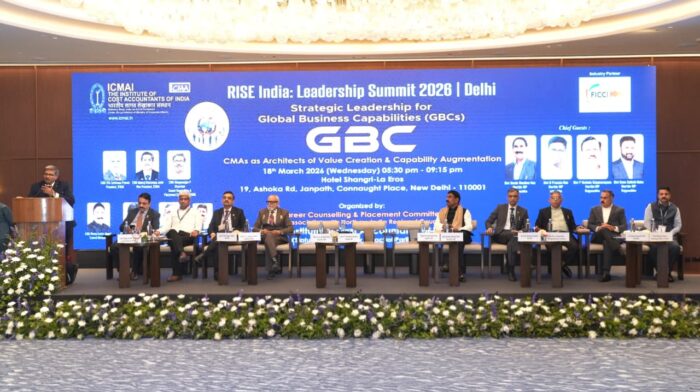
New Delhi, Mar 20: The Institute of Cost Accountants of India (ICMAI), a statutory body established under an Act of Parliament under the administrative control of the Ministry of Corporate Affairs, Government of India, successfully concluded the RISE India Leadership Summit 2026 in New Delhi, bringing together policymakers, industry leaders, and financial experts to deliberate on the role of strategic leadership in advancing India’s vision of Viksit Bharat 2047, as envisioned by the Hon’ble Prime Minister Shri Narendra Modi.
ICMAI, the largest Cost and Management Accounting body in the world and in Asia, with nearly five lakh students and over one lakh qualified CMAs globally, continues to play a pivotal role in strengthening governance systems, ensuring transparency, and promoting financial discipline across India’s economic ecosystem.
Held at Shangri-La Eros, the summit centred around the theme “Strategic Leadership for Global Capability Centre – CMAs as Architects of Value Creation & Capability Augmentation”, with a strong focus on identifying institutional, regulatory, and operational gaps that must be addressed to accelerate India’s transformation into a developed economy.
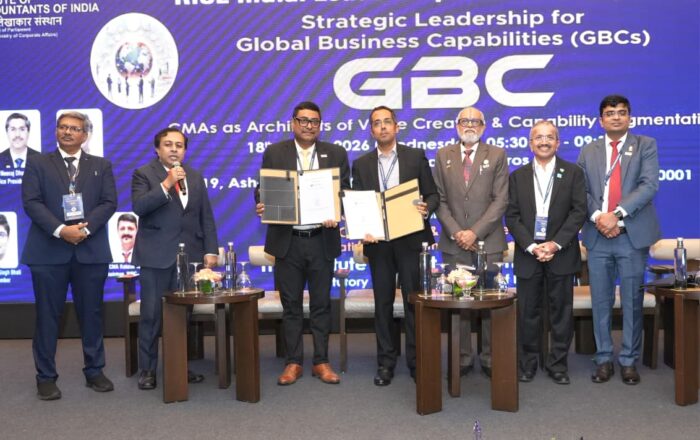
In his address, CMA T.C.A. Srinivasa Prasad, President, ICMAI, underscored the pivotal role of Cost and Management Accountants in driving efficiency, transparency, and value-based decision-making across sectors. He highlighted that CMAs are uniquely positioned to act as strategic enablers in bridging gaps between policy formulation and on-ground implementation, particularly in emerging areas such as Global Capability Centres (GCCs), digital finance, and sustainable growth frameworks.
The summit witnessed the presence of distinguished dignitaries including Shri Beeda Mastan Rao, Hon’ble Member of Parliament; Shri D Prasada Rao Hon’ble Member of Parliament. CMA Anand Kumar Pal, Advisor Manistry of finance, Shri CMA L.V. Sudhakar Babu, Managing Director, Sagarmala Finance Corporation; Shri Vivek Chandrakant Tongankar, Director (Finance), ONGC; CMA Rajesh Kumar Dwivedi, Director (Finance), BHEL; CMA Rakesh Yadav, Chairman, NIRC, ICMAI; and Shri CMA Sanjay Jindal, Director (Finance), Engineers India Limited, among others.
The event also reflected the collective leadership of ICMAI, including CMA Neeraj Dhananjay Joshi, Vice President; CMA Vinayaranjan P, Chairman, Career Counselling & Placement Committee; CMA B B Nayak , CMA Manoj Kumar Anand, CMA Rajendra Singh Bhati, CMA Navneet Kumar Jain, CMA Chittranjan Chattopadhyaya, CMA Avijit Goswami and Council Members; and CMA Dr D.P. Nandy, Secretary, along with other Council Members who contributed to the success of both the summit and the preceding press conference.
Deliberations throughout the summit focused on strengthening India’s institutional capacity to support the Viksit Bharat mission by enhancing financial discipline, improving cost competitiveness, and fostering innovation-led growth. Speakers highlighted the need for robust policy alignment, capacity building, and deeper industry-academia collaboration to address skill gaps and ensure that India’s GCC ecosystem evolves into a global benchmark for efficiency and value creation.
The summit served as a high-level platform for dialogue, collaboration, and knowledge exchange, bringing together CEOs, CFOs, Directors, senior corporate leaders, HR professionals, senior government officials, and industry representatives to collectively shape strategies for strengthening India’s global business and capability ecosystem.
A key takeaway from the discussions was the critical importance of CMAs in enabling data-driven governance, optimizing resource allocation, and supporting regulatory frameworks that align with global standards. The summit also stressed the need to institutionalise best practices in cost management and performance measurement to enhance India’s competitiveness in global markets.
Industry leaders from organisations such as Microsoft India, Indian Oil Corporation Limited, Accenture, Apple India Private Limited, Power Finance Corporation Limited, BHEL, NSIC, REC Limited, Central Warehousing Corporation, Cement Corporation of India Limited, KRIBHCO Green Energy Pvt Ltd, Accenture, HCL, Samsung, Orange Business and TPM Consultants Pvt Ltd shared insights on building resilient and future-ready enterprises aligned with national priorities.
The RISE India Leadership Summit 2026 concluded with a collective commitment from ICMAI and participating stakeholders to actively contribute towards bridging systemic gaps, strengthening institutional frameworks, and enabling a robust economic architecture—reinforcing the role of CMAs as key drivers in achieving the vision of a Viksit Bharat by 2047.
20, Mar 2026
Odisha’s Emerging Mining Boom: From Diamonds to Rare Minerals Driving Economic Growth
Odisha, already recognised as one of India’s most mineral-rich states, is entering a new phase of exploration and opportunity with the reported discovery of diamonds and other valuable minerals. These findings are positioning the state as a future hub not only for traditional mining but also for high-value resources that could significantly reshape its economic landscape.

Pic Credit: Pexel
Recent Breakthrough: Diamond Traces in Nuapada
In a major development, diamond-bearing rock formations have been identified in the Kalamidadar region of Nuapada district. The discovery, highlighted in the state assembly, has generated strong interest among policymakers and experts. Detailed geological and feasibility studies are currently underway to assess whether commercial extraction is viable.
Alongside this, indications of ruby deposits have been reported in Kalahandi, while potential gold-bearing zones have been identified in districts such as Mayurbhanj and Keonjhar. Together, these findings underline the largely untapped and diverse mineral potential beneath Odisha’s surface.
A Diversifying Mineral Landscape
Odisha’s mineral profile is expanding beyond its traditional strengths in iron ore, bauxite, and manganese. Recent surveys and exploration activities have indicated the presence of several valuable resources, including:
-
Diamonds in Nuapada
-
Ruby deposits in Kalahandi
-
Gold indications in Mayurbhanj, Keonjhar, and Deogarh
-
Copper, graphite, and nickel in parts of the state
In addition, potential rare mineral zones along the coastal belt are drawing attention due to their importance in modern industries such as electronics, renewable energy, and electric mobility.
This evolving mineral base is steadily enhancing Odisha’s position as one of India’s most resource-diverse states.
Economic Impact: A Potential Game Changer
1. Investment and Industrial Growth
The possibility of high-value mineral extraction is expected to attract significant interest from investors and industry players. Once feasibility is confirmed, Odisha could see a surge in mining-related industrial activity.
2. Employment and Regional Development
Mining and allied industries have the potential to generate large-scale employment opportunities. Regions such as Nuapada and Kalahandi could benefit from improved infrastructure, income generation, and broader socio-economic development.
3. Growth of Supporting Industries
A strengthened mining ecosystem can support multiple sectors, including mineral processing, logistics, engineering services, and jewellery manufacturing. This creates strong opportunities for small and medium enterprises as well.
4. Strategic Importance for Future Industries
Critical minerals like graphite, nickel, and rare earth materials are essential for electric vehicles, batteries, and advanced manufacturing. Odisha’s growing mineral base could play an important role in India’s transition toward clean energy and high-tech industries.
Policy Direction and Future Outlook
The state government is focusing on scientific exploration, detailed feasibility studies, and sustainable development planning before any large-scale mining begins. Future strategies are likely to include structured mineral auctions to ensure transparency and encourage responsible private participation.
Environmental safeguards and long-term sustainability are expected to remain central to policy decisions as the sector expands.
Conclusion
The discovery of potential diamond, gold, and other high-value mineral zones marks an important shift in Odisha’s economic trajectory. While exploration is still ongoing, the findings highlight the state’s growing importance in India’s mineral future.
If developed responsibly, this emerging mining landscape could transform Odisha into a major high-value mineral and industrial hub, driving economic growth, employment, and long-term development.
20, Mar 2026
Pakhala Dibasa Goes Global as Odisha Celebrates Food, Culture and Sustainability
Observed on March 20 each year, Pakhala Dibasa has grown from a simple culinary tradition into a vibrant cultural celebration for Odias across the globe. What was once a humble summer meal is now a symbol of identity, heritage, and community bonding.

Pic Credit:https://x.com/MohanMOdisha
Pakhala—fermented rice soaked in water and often mixed with curd—is cherished for its cooling properties and probiotic benefits, making it ideal for the hot summer months. Beyond its nutritional value, it represents a way of life deeply rooted in Odisha’s traditions.
This year, the scale of celebrations has expanded significantly. Leading hospitality brands such as Nimantran, Mayfair, and Swosti Premium are offering elaborate “Gourmet Pakhala Thalis,” some featuring up to 20 traditional side dishes. These curated spreads are drawing food lovers and tourists, giving the traditional dish a modern and luxurious presentation.
What truly stands out is the global participation. With millions of households and members of the Odia diaspora across more than 20 countries observing the day, Pakhala Dibasa has evolved into an unofficial “national day” for Odias worldwide. As temperatures rise, people come together over a bowl of pakhala, celebrating not just food but shared heritage and collective memory.
The festivities also include cultural events such as the two-day Pakhala Paraba held at Panthanivas, where Odisha’s culinary richness is showcased alongside discussions on sustainability and traditional food practices. The event was inaugurated by Deepankar Mohapatra and will be attended by key leaders including Chief Minister Mohan Charan Majhi and Deputy Chief Minister Pravati Parida.
A major highlight this year is the state’s attempt to set a Guinness World Records benchmark by preparing the largest serving of pakhala—estimated at 800–850 kg. Organised in collaboration with the Robin Hood Army, the initiative emphasizes sustainability and a zero-waste approach.
Meanwhile, Cuttack is hosting vibrant community celebrations at Barabati Fort, bringing people together from midnight through the afternoon. Local leaders, including Subhash Singh, have highlighted how pakhala has evolved from a modest household dish to one that is widely appreciated for both its health benefits and cultural significance.
In my own home, the preparation of pakhala remains a cherished ritual. Cooked rice is cooled and soaked in water, often with a touch of curd, allowing it to ferment slightly and develop its signature tang. For lunch, it is served with a variety of traditional sides such as aloo bharta, saga bhaja, badichura, and roasted dishes like baigana poda and bilati poda. Sometimes, crispy sukhua bhaja is added for an extra burst of flavor, along with simple accompaniments like green chilies and onions.
More than just a meal, Pakhala Dibasa is a reminder of Odisha’s rich food heritage and sustainable eating practices. Whether enjoyed at home, in restaurants, or at community gatherings, a bowl of pakhala continues to unite people—offering comfort, nourishment, and a deep connection to cultural roots.
20, Mar 2026
Honeywell Unveils Commercial Launch Of Ai-powered Control Room Assistant Following Successful Pilot
India, Mar 20: Honeywell today announced the commercial launch of Experion Operations Assistant, an AI-powered solution designed to transform how industrial operators monitor plant performance, make critical decisions and respond to alarm incidents before they happen.
Built on Honeywell’s flagship distributed control system, Experion PKS, Experion Operations Assistant merges historical data with real-time operational insights to allow operators to forecast and respond to potential critical scenarios associated with unsafe operations and production losses. The solution aims to bridge the gap between autonomous technologies and control room operators.
The commercial launch follows the recent pilot program during which Chevron and TotalEnergies were among the partners who leveraged Honeywell’s Experion Operations Assistant in their operations to help minimize unplanned downtime. In its pilot phase, the AI-powered assistant made predictions an average of 5-10 minutes before alarm incidents would have happened, enabling operators to quickly implement corrective actions and avoid potential events.
“Industrials are under pressure to avoid unplanned downtime and maximize the productivity of existing assets, while navigating the massive knowledge transfer of a retiring workforce,” said Jim Masso, president and CEO of Honeywell Process Automation. “By combining more than 50 years of process automation expertise with site-specific knowledge, data and advanced AI, Experion Operations Assistant helps operators anticipate issues earlier, respond with confidence and operate more safely and effectively. Throughout our pilot phase, Experion Operations Assistant delivered tangible, real-world results across multiple customer sites, highlighting the immense opportunity as the solution scales.”
As part of Honeywell’s Experion PKS distributed control system network, the Honeywell Experion Operations Assistant is designed to seamlessly integrate into existing control room environments, leveraging the systems already in place and building on the legacy site-specific data. The solution is centered upon its capability to capture site-specific knowledge and then use language models to analyze this data in real-time in order to proactively advise operators of impending issues.