


23, Oct 2026
Hexaware Hosts Greater Manchester and West Yorkshire Mayoral Delegation, Deepens Partnership with University of Leeds
Part of the Great North Mayoral Delegation’s visit to India, discussions focused on Hexaware’s UK expansion and planned R&D centers in Leeds and Manchester
LONDON, Oct. 23, 2026 /PRNewswire/ — Hexaware Technologies (NSE: HEXT), an AI-first digital and IT services company, hosted a delegation led by Tracy Brabin, Mayor of West Yorkshire, and Bev Craig, Mayor of Greater Manchester, as part of The Great North’s first joint mayoral-led trade mission to India
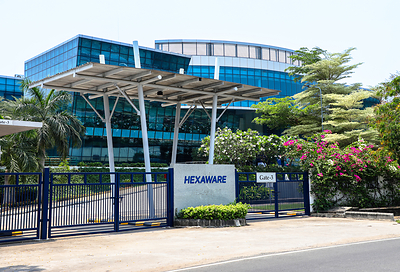
Hexaware met with Tracy Brabin and delegates from West Yorkshire at its Mumbai office to discuss the company’s UK investment plans, regional employment, and opportunities for technology collaboration across the North of England.
During the visit, Hexaware and the University of Leeds discussed their agreement to strengthen industry–academic collaboration through research, knowledge sharing, and experiential learning opportunities for students.
Earlier in the mission, on October 14 in Bengaluru, Hexaware leaders met Bev Craig, Mayor of Greater Manchester, together with representatives of the British Deputy High Commission and the Invest Manchester team, to discuss Hexaware’s investment in the city region.
Hexaware announced that it will create hundreds of jobs and invest £9 million in a new Design and Innovation Centre at Manchester’s innovation district, SISTER, delivered in collaboration with the University of Manchester. By establishing a base at SISTER, Hexaware will have access to Europe’s largest clinical academic campus on Manchester’s Oxford Road Corridor and a rapidly expanding digital and tech ecosystem within the city.
The visits follow Hexaware’s June 2026 announcement of a £25 million UK expansion, expected to create approximately 1,200 jobs over three to five years across Manchester, Leeds, and Birmingham, including 420 in Manchester and 240 in Leeds. Plans include proposed R&D centers in Manchester and Leeds, with Newcastle also under consideration as a potential future location, given the region’s strong university talent pool and proximity to Scotland.
Parameshwaran Iyer, Executive Vice President & Head – Europe, Hexaware, said, “The North of England is an important part of our UK growth plans. Our investment goes into developing technology capabilities and recruiting graduates from the region’s universities, training them to work with enterprise and public-sector customers. Our new agreement with the University of Leeds will strengthen this pipeline, giving us closer access to graduate talent as we grow our presence in the region. We see considerable potential in the talent and expertise available across these cities.”
Bev Craig, Mayor of Greater Manchester, said, “Greater Manchester has established strengths in healthcare, life sciences, and AI, supported by close cooperation between universities, researchers, and industry. We welcome Hexaware’s plans for Manchester and the opportunities they present for investment, innovation, and employment in these sectors.”
Tracy Brabin, Mayor of West Yorkshire, said, “It was great to visit Hexaware’s headquarters in Mumbai and hear first-hand about the company’s ambitious plans for growth in the UK. Their investment in Leeds and the creation of hundreds of new jobs is fantastic news for West Yorkshire and a strong vote of confidence in our region. Trade missions like this give us the opportunity to meet decision-makers directly, strengthen international relationships and explore how businesses like Hexaware can deepen their links with West Yorkshire to create a stronger, better-off region that works for all.”
Glenn McCauley, Head of Proposition Development at the University of Leeds, said, “We were delighted to join this Great North Mayoral Delegation to India and to discuss with Hexaware leadership and with the Mayor of West Yorkshire how the University of Leeds’ agreement with Hexaware can be a catalyst to drive economic growth in our region.”
India and the North of England are connected above all through people, with more than 81,000 people of Indian heritage living in Yorkshire and the Humber, and 50,000 people of Indian diaspora in Greater Manchester. Thousands of Indian students also choose universities in the two regions every year. Increasingly, Indian companies are also among the region’s investors and employers. The India–UK Comprehensive Economic and Trade Agreement (CETA), in force since July 2026, alongside The Great North’s investment initiatives, gives that relationship fresh momentum.
Hexaware will continue discussions with regional partners on its proposed R&D facilities, graduate recruitment, and technology partnerships across the North of England, drawing on Leeds’ strengths in digital engineering, data science, robotics, fintech, and technology-enabled care, and Manchester’s strengths in healthcare, life sciences, cyber, and AI.
About Hexaware
Hexaware is a global technology and business process services company. Every day, Hexawarians wake up with a singular purpose: to create smiles through great people and technology. With offices across the world, we empower enterprises worldwide to realize digital transformation at scale and speed by partnering with them to build, transform, run, and optimize their technology and business processes. Learn more about Hexaware at https://hexaware.com.

 View original content to download multimedia:https://www.prnewswire.co.uk/news-releases/hexaware-hosts-greater-manchester-and-west-yorkshire-mayoral-delegation-deepens-partnership-with-university-of-leeds-302917955.html

- 0
- By PRNewswire

23, Oct 2026
Steel Import Concerns: Centre to Hold Open House on October 28
New Delhi, Oct 23: The Union Ministry of Steel will hold an Open House on October 28 to address issues faced by companies and industry associations in importing steel, with a focus on regulatory procedures and compliance-related challenges.

Representational Image
According to an official statement issued on Friday, the session will take place from 11 am to 5 pm at the Steel Room, third floor, GPOA-3, Netaji Nagar, New Delhi.
The initiative is intended to provide a platform for businesses to raise concerns related to the Steel Import Monitoring System (SIMS), SARAL SIMS and exemptions from Quality Control Orders (QCOs).
Registration Deadline Set for October 26
Companies and industry associations seeking to participate must submit their requests by email no later than 12 noon on October 26, 2026, to obtain a confirmed time slot.
The Ministry said individual appointment timings would be communicated through email. Walk-in participation will not be permitted due to logistical constraints, and only one representative from each organisation will be allowed to attend.
Applicants must provide details of their industry and products, such as automotive, aerospace, telecommunications or defence. They must also briefly describe the issue they wish to raise in no more than 50 words and include the participant’s name, designation, mobile number and email address.
The Ministry has clarified that third-party representation will not be permitted.
Focus on SIMS, SARAL SIMS and QCO Exemptions
The Open House will address concerns relating to three key regulatory areas governing steel imports.
The Steel Import Monitoring System (SIMS) requires importers to comply with the applicable monitoring and registration procedures for specified steel products.
SARAL SIMS was introduced to simplify the registration process for eligible small consignments imported by micro, small and medium enterprises (MSMEs) and other small importers. It also covers eligible imports under routes such as Advance Authorisation, Special Economic Zones (SEZs) and Export Oriented Units (EOUs) for export-related purposes.
The session will also consider issues involving Quality Control Order (QCO) exemptions. QCOs prescribe mandatory quality requirements for covered steel products, with applicable Bureau of Indian Standards (BIS) certification and marking requirements.
By engaging directly with industry representatives, the Ministry aims to hear concerns about these procedures and the challenges businesses face in complying with the rules.
India’s Core Industries Record Strong Growth
The announcement comes as India’s core infrastructure industries reported a year-on-year growth rate of 7.9 per cent in September, according to the figures cited in the report. The performance marked a 30-month high and was supported by growth in sectors including iron ore, electricity, coal, refinery products, cement and steel.
Cement production recorded growth of 10.3 per cent, while steel production increased by 4.9 per cent during the month.
Demand for steel has been supported by infrastructure development and public investment in projects involving highways, ports and railways.
Industry Engagement Amid Expanding Steel Demand
As steel consumption and industrial activity remain important to India’s infrastructure ambitions, import procedures and quality compliance continue to be significant concerns for businesses that rely on overseas supplies.
The October 28 Open House will give eligible companies and industry associations an opportunity to present specific problems directly to Ministry officials. The effectiveness of the exercise will depend on how the concerns raised are addressed and whether practical solutions can improve clarity and ease of compliance for importers.
23, Oct 2026
Zoomlion Tower Cranes Combine Heavy Lifting and Precision Control for Construction at Height
CHANGSHA, China, Oct. 23, 2026 /PRNewswire/ — Zoomlion Heavy Industry Science & Technology Co., Ltd. (“Zoomlion”) supported the Sept. 29 topping out of the 283-meter Shangri-La-side main tower of China’s Lugu Lake Grand Bridge. Two R4300-200 tower cranes served the bridge’s main towers. Alongside the company’s earlier work on a 380-meter tower in Istanbul, the project demonstrates how heavy lifting capacity, precise controls and customized engineering support construction at height.
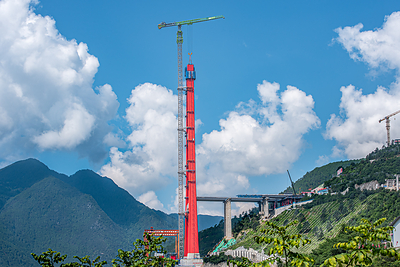
Heavy Lifting and Remote Control at Lugu Lake Grand Bridge
Located on the Xichang-Shangri-La Expressway in southwestern China, the bridge required accurate placement of large structural components in a mountain canyon. Each R4300-200 handled component lifting for its respective main tower. The final 103 meters of the Shangri-La-side tower construction included positioning the last steel and concrete sections above the central crossbeam, where changing wind conditions made stability and load control particularly important.
With a maximum lifting capacity of 200 metric tons and an 80-meter jib, the R4300-200 combines heavy lifting performance with more than 20 intelligent safety and control functions. These include collision prevention, automatic adjustment of operating speed according to load and controls that prevent suspended loads from slipping downward. Together, these features support controlled movement and positioning of heavy components during tower assembly.
Live camera feeds allow operators to monitor component positioning and control lifts remotely from ground level. This provides a view of lifting operations and supports accurate alignment during installation. Segment lifting for the Shangri-La-side main tower was completed safely.
Customized Engineering and Coordinated Technical Support in Istanbul
Zoomlion applied a different equipment configuration at the Central Bank of the Republic of Türkiye’s tower within the Istanbul International Financial Center. The 380-meter building combined steel framing with precast concrete. Construction required 1,260 heavy lifts, including steel columns weighing up to 48.2 metric tons, within a tightly constrained site.
For this project, Zoomlion customized its L760-50 luffing jib tower crane, which has a maximum lifting capacity of 50 metric tons and a maximum jib length of 60 meters. Modular mast sections measuring 2.3 meters on each side accommodated the limited space and enabled transport in standard shipping containers. Each crane required 10 custom connections to the building, engineered to meet local seismic requirements.
Variable-frequency drives regulate lifting, rotation and jib movement, enabling smooth starts, stops and fine adjustments when aligning heavy steel components. The control system supports precise positioning and helps manage load sway. Wind speed monitoring provides automatic warnings and limits operating speeds when preset thresholds are exceeded, helping teams manage changing conditions at height.
Remote monitoring and maintenance technology complemented these controls by transmitting 28 operating parameters, including loads, component temperatures, operating hours and fault codes. These data supported assessment of component wear and preventive maintenance. Zoomlion’s R&D team in China worked remotely with engineers based in Türkiye to diagnose equipment issues and support timely maintenance, helping limit downtime. Equipment selection and technical support helped sustain a construction schedule of one floor every five days for the main structure.
Support also extended to crane placement, installation feasibility studies and dismantling simulations, connecting equipment design with practical construction requirements.
The project demonstrated Zoomlion’s capabilities in customization, R&D, rapid delivery and responsive service. It also provided experience for other high-rise projects, including the 377-meter Ciel Dubai Marina hotel, Dubai’s 400-meter Al Habtoor Tower and Indonesia’s 331-meter Oasis Central Towers.
Building on this experience, Zoomlion will continue to develop tailored lifting solutions with ongoing technical support to meet the demands of high-rise and infrastructure construction.
 View original content to download multimedia:https://www.prnewswire.co.uk/news-releases/zoomlion-tower-cranes-combine-heavy-lifting-and-precision-control-for-construction-at-height-302917960.html

23, Oct 2026
Hexaware Hosts Greater Manchester and West Yorkshire Mayoral Delegation, Deepens Partnership with University of Leeds
Part of the Great North Mayoral Delegation’s visit to India, discussions focused on Hexaware’s UK expansion and planned R&D centers in Leeds and Manchester
MUMBAI, India, Oct. 23, 2026 /PRNewswire/ — Hexaware Technologies (NSE: HEXT), an AI-first digital and IT services company, hosted a delegation led by Tracy Brabin, Mayor of West Yorkshire, and Bev Craig, Mayor of Greater Manchester, as part of The Great North’s first joint mayoral-led trade mission to India
Hexaware met with Tracy Brabin and delegates from West Yorkshire at its Mumbai office to discuss the company’s UK investment plans, regional employment, and opportunities for technology collaboration across the North of England.
During the visit, Hexaware and the University of Leeds discussed their agreement to strengthen industry–academic collaboration through research, knowledge sharing, and experiential learning opportunities for students.
Earlier in the mission, on October 14 in Bengaluru, Hexaware leaders met Bev Craig, Mayor of Greater Manchester, together with representatives of the British Deputy High Commission and the Invest Manchester team, to discuss Hexaware’s investment in the city region.
Hexaware announced that it will create hundreds of jobs and invest £9 million in a new Design and Innovation Centre at Manchester’s innovation district, SISTER, delivered in collaboration with the University of Manchester. By establishing a base at SISTER, Hexaware will have access to Europe’s largest clinical academic campus on Manchester’s Oxford Road Corridor and a rapidly expanding digital and tech ecosystem within the city.
The visits follow Hexaware’s June 2026 announcement of a £25 million UK expansion, expected to create approximately 1,200 jobs over three to five years across Manchester, Leeds, and Birmingham, including 420 in Manchester and 240 in Leeds. Plans include proposed R&D centers in Manchester and Leeds, with Newcastle also under consideration as a potential future location, given the region’s strong university talent pool and proximity to Scotland.
Parameshwaran Iyer, Executive Vice President & Head – Europe, Hexaware, said, "The North of England is an important part of our UK growth plans. Our investment goes into developing technology capabilities and recruiting graduates from the region’s universities, training them to work with enterprise and public-sector customers. Our new agreement with the University of Leeds will strengthen this pipeline, giving us closer access to graduate talent as we grow our presence in the region. We see considerable potential in the talent and expertise available across these cities."
Bev Craig, Mayor of Greater Manchester, said, "Greater Manchester has established strengths in healthcare, life sciences, and AI, supported by close cooperation between universities, researchers, and industry. We welcome Hexaware’s plans for Manchester and the opportunities they present for investment, innovation, and employment in these sectors."
Tracy Brabin, Mayor of West Yorkshire, said, "It was great to visit Hexaware’s headquarters in Mumbai and hear first-hand about the company’s ambitious plans for growth in the UK. Their investment in Leeds and the creation of hundreds of new jobs is fantastic news for West Yorkshire and a strong vote of confidence in our region. Trade missions like this give us the opportunity to meet decision-makers directly, strengthen international relationships and explore how businesses like Hexaware can deepen their links with West Yorkshire to create a stronger, better-off region that works for all."
Glenn McCauley, Head of Proposition Development at the University of Leeds, said, "We were delighted to join this Great North Mayoral Delegation to India and to discuss with Hexaware leadership and with the Mayor of West Yorkshire how the University of Leeds’ agreement with Hexaware can be a catalyst to drive economic growth in our region."
India and the North of England are connected above all through people, with more than 81,000 people of Indian heritage living in Yorkshire and the Humber, and 50,000 people of Indian diaspora in Greater Manchester. Thousands of Indian students also choose universities in the two regions every year. Increasingly, Indian companies are also among the region’s investors and employers. The India–UK Comprehensive Economic and Trade Agreement (CETA), in force since July 2026, alongside The Great North’s investment initiatives, gives that relationship fresh momentum.
Hexaware will continue discussions with regional partners on its proposed R&D facilities, graduate recruitment, and technology partnerships across the North of England, drawing on Leeds’ strengths in digital engineering, data science, robotics, fintech, and technology-enabled care, and Manchester’s strengths in healthcare, life sciences, cyber, and AI.
About Hexaware
Hexaware is a global technology and business process services company. Every day, Hexawarians wake up with a singular purpose: to create smiles through great people and technology. With offices across the world, we empower enterprises worldwide to realize digital transformation at scale and speed by partnering with them to build, transform, run, and optimize their technology and business processes. Learn more about Hexaware at https://hexaware.com.
View original content to download multimedia:https://www.prnewswire.com/in/news-releases/hexaware-hosts-greater-manchester-and-west-yorkshire-mayoral-delegation-deepens-partnership-with-university-of-leeds-302917888.html

23, Oct 2026
Malteurop acquires the Chunlei Malting Co. malting plant – A strategic investment that significantly expands its operations and strengthens its position in export markets
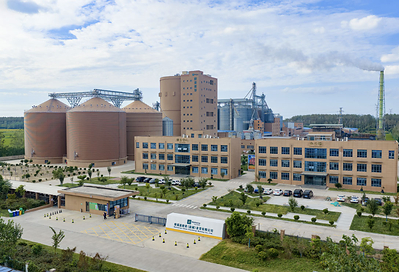
YANCHENG, China, Oct. 23, 2026 /PRNewswire/ — VIVESCIA cooperative group and its malting business have announced the acquisition of the Chunlei Malting Co. plant. With annual production capacity of 220,000 tonnes of malt, enough to make 2 billion liters of beer, Malteurop is taking its industrial and logistical capabilities in China to a new level. Based near Yancheng, 300 km north of Shanghai in the province of Jiangsu, this plant is aligned with the highest standards in terms of decarbonization thanks to industrial processes combining biomass and green electricity.
One of the world’s leading malt manufacturers, and the only foreign commercial malt producer in China, with this deal Malteurop strengthens its position on the Chinese malt market 30 years after opening its first site in Baoding (in Hebei province, approximately 150 km south-west of Beijing).
The President of VIVESCIA Group, Christoph Büren, said: “This project illustrates the capacity of a leading French player in the barley, brewing and malt industry to become a lasting presence in the Chinese manufacturing ecosystem, while showcasing French agricultural expertise. It reflects our group’s long-term commitment to its presence in China and strengthens Franco-Chinese relations and economic cooperation in grain industries.“
“Malteurop has been in China for 30 years and is now stepping up its partnership with local players in the malting and brewing industry. With this major acquisition, perfectly aligned with our VIVESCIA 3.0 strategy, our ambition is to combine local excellence with Malteurop’s global expertise to build a competitive and sustainable growth platform for its brewing customers in China, Asia and wider export markets,” added Guillaume Mothe, Managing Director of VIVESCIA Group.
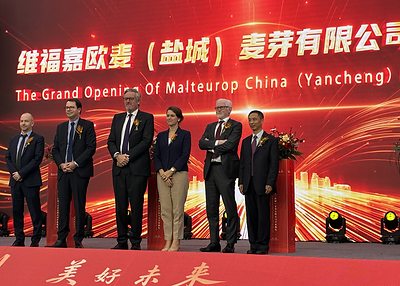
Today we are celebrating the deal, which was finalized this summer, in Yancheng in the presence of the regional Chinese authorities, the French authorities represented by the French Consul General in Shanghai, customers, partners and the employees of VIVESCIA and Malteurop.
After 30 years in China, a new step for Malteurop’s manufacturing and logistics
This acquisition is in line with Malteurop’s long-term commitment to its operations in China, which started 30 years ago with its historic Baoding site in the province of Hebei. With Chunlei, Malteurop is increasing its manufacturing and logistics footprint to better serve Chinese brewers and export markets.
This significant investment by VIVESCIA Group may be followed by other future investments to increase production capacity.
Malteurop also intends to work with its local partners to support the ongoing premiumization of the barley-malt-beer industry, while drawing on extensive technological and process expertise deployed in the Chinese malting industry, as well as local know-how on the transition to more environmentally sustainable, low-carbon production.
The Chunlei malting plant: profile and key figures
- Acquisition finalized in the summer of 2026.
- Located near Yancheng, in the province of Jiangsu, near leading export infrastructure.
- A unique position: Malteurop is the only foreign commercial malt producer operating in China.
- Annual production capacity of 220,000 tonnes of malt, enough to make 2 billion liters of beer.
- A low-carbon malting plant: The production process combines heat production from 100%-locally sourced biomass, mainly rice straw, and renewable electricity from wind turbines and solar panels, supported by battery storage.
About VIVESCIA Group
A leading French grain cooperative group generating €3 billion in revenue, with 41 production sites around the world, VIVESCIA takes care of the grain, from field to fork. Its lodestar has not changed for more than 100 years: to create value for its 9,000 cooperative members in north-east France — the farmers who own VIVESCIA — and to help them sustain their farming businesses over the long term. The group has 4,000 employees working in agricultural businesses and sustainable plant- and grain-based ingredient value chains. Every year, the group collects an average of 3.5 million tonnes of grain in the Grand Est region of France. 2,000 beers brewed with Malteurop malt are enjoyed every second worldwide. 1 Francine product is purchased every second by French consumers. Grands Moulins de Paris produces nearly 600,000 tonnes of flour and specialty ingredients for artisan bakers and food manufacturers. We also have expertise in the milling maize industry and in the biotechnology and plant chemistry ecosystem.
In 2023, VIVESCIA and its partners launched TRANSITIONS, the biggest large-scale impact-driven program in France and Europe. TRANSITIONS helps farmers move toward more resilient, low-carbon farming practices that promote soil health and biodiversity.
About Malteurop
A recognized specialist in the barley-malt-beer and whiskey value chain, Malteurop is the malting division of French cooperative group VIVESCIA. One of the top-three malt producers worldwide, Malteurop has 1,000 employees and 20 malting plants in 14 countries across four continents. Malteurop combines an established manufacturing footprint with an unwavering commitment to quality, innovation and sustainability in the service of its customers, brewers and distillers.

 View original content to download multimedia:https://www.prnewswire.co.uk/news-releases/malteurop-acquires-the-chunlei-malting-co-malting-plant—a-strategic-investment-that-significantly-expands-its-operations-and-strengthens-its-position-in-export-markets-302917924.html

23, Oct 2026
Tradewind Finance Provides EUR 2 Million Export Factoring Facility to Eldohm to Support International Growth
The tailored factoring facility enables Eldohm to offer international customers payment terms of up to 120 days while maintaining the liquidity needed to pay suppliers in China earlier in the trade cycle.
MÖNCHENGLADBACH, Germany, Oct. 23, 2026 /PRNewswire/ — Tradewind Finance has provided a EUR 2 million export factoring facility, available in both euros and US dollars, to the Hong Kong subsidiary of Eldohm, a Netherlands-based international trading company. Arranged in collaboration with CRDT, the facility supports Eldohm’s international growth by providing working capital against outstanding invoices, enabling the company to manage larger orders and pursue further expansion in the United States.

Supporting Growth Across International Trade Flows
For internationally operating trading companies, managing the time between supplier payments and customer collections is a critical working capital challenge. Customers often require extended payment terms, while suppliers need to be paid much earlier in the trade cycle.
Eldohm’s Hong Kong subsidiary manages sourcing, product development and quality control, while the group’s financial administration is handled from the Netherlands. The company offers international customers payment terms of up to 120 days and can pay its suppliers in China earlier in the trade cycle.
As trading volumes grow, so does the amount of working capital required to bridge these payment cycles. This additional financing capacity enables Eldohm to accept larger orders, support growing customer demand and continue expanding its business in the United States.
An Export Factoring Solution Tailored to Eldohm
Tradewind structured the export factoring facility around Eldohm’s international trading operations.
By financing eligible export receivables issued by the Hong Kong entity, Tradewind makes working capital available before customers settle their invoices. This allows Eldohm to meet supplier payment obligations while continuing to offer competitive payment terms to its international customers.
The transaction required experience in international factoring, particularly in financing a Hong Kong entity with concentrated receivables exposure to a US-based buyer. These characteristics had made conventional financing through Dutch providers difficult to arrange.
Tradewind’s international expertise and tailored approach enabled a factoring solution aligned with Eldohm’s actual trade flows and financing requirements.
“Through factoring, we can offer our international customers the extended payment terms they need to manage their cash flow effectively when handling large volumes. At the same time, we can pay our suppliers in China earlier in the trade cycle without our own cash flow limiting growth. This creates financial flexibility on both sides of the supply chain and enables us to grow faster together with our partners,” said Pieter van den Bosch of Eldohm.
CRDT and Tradewind Combine Expertise to Deliver the Facility
The transaction was introduced to Tradewind by CRDT, which already supported Eldohm with credit management services. As Eldohm’s financing requirements developed, CRDT helped identify a financing partner with the international experience needed to support its operations.
For trading companies operating across Europe, Asia and the United States, access to appropriate financing can be complicated by differences in legal jurisdictions, corporate structures and the requirements of domestic financing providers.
CRDT’s understanding of Eldohm’s business, combined with Tradewind’s experience in international factoring, contributed to the development of a financing structure suited to the company’s needs.
“International trade requires expertise and a strong network to tailor supply chain finance to the needs of each business,” said Frans van der Hoorn, Managing Director at CRDT.
International Factoring Expertise Supporting Further Expansion
For Tradewind, the transaction demonstrates the importance of structuring financing around the way companies conduct international business.
With decades of trade finance experience and an international network of local teams, Tradewind supports exporters and importers whose financing needs extend beyond traditional domestic banking structures.
Rather than relying solely on Eldohm’s Dutch operations, Tradewind was able to finance receivables through the company’s Hong Kong subsidiary, supporting trade with a US-based buyer.
“Eldohm’s business demonstrates why export factoring needs to reflect the way goods, invoices and payments move across borders. By financing receivables through its Hong Kong entity, we have structured a facility that supports extended customer payment terms while providing the working capital needed for larger orders and further growth in the United States. Our collaboration with CRDT was instrumental in developing a solution aligned with Eldohm’s business,” said Harry Marchal, VP Sales Europe at Tradewind Finance.
The facility provides Eldohm with additional financing capacity to manage increasing order volumes, maintain supplier payments and pursue further international growth. It illustrates how tailored export factoring can improve cash flow and support companies operating across multiple markets.
To learn how Tradewind’s tailor-made trade finance solutions support international growth, visit www.tradewindfinance.com.
About Tradewind Finance
Founded in 2000, Tradewind Finance maintains a global network of offices including Bangladesh, Bulgaria, China, Hong Kong SAR, Hungary, India, Pakistan, Turkey, UAE, and the USA, alongside its headquarters in Germany. Combining financing, credit protection, and collections into one streamlined offering, Tradewind delivers flexible, best-in-class trade finance solutions to exporters and importers worldwide.
 View original content to download multimedia:https://www.prnewswire.co.uk/news-releases/tradewind-finance-provides-eur-2-million-export-factoring-facility-to-eldohm-to-support-international-growth-302917932.html

23, Oct 2026
SBC and V&V Group Announce Strategic Consolidation of Technology and AI Capabilities into a Joint-Venture Platform
14 tax-technology products and intellectual assets came together under a common AI-native integration layer, creating an integrated platform spanning transfer pricing, corporate tax, GST, e-invoicing, audit and suite of accounting products. Combined businesses served 1,500–2,000 clients, including over 350 multinational groups, and brought together nearly 500 professionals, with plans to expand into four to five jurisdictions within 24 months
HYDERABAD, India, Oct. 23, 2026 /PRNewswire/ — Steadfast Business Consulting (SBC), a Hyderabad-headquartered international tax, transfer pricing and tax-technology group, and V&V Group, a Bengaluru-based GST and audit-technology group, announced a strategic consolidation of their technology assets and artificial intelligence (AI) capabilities into a joint-venture technology platform. The initiative marks a significant step towards building an Indian-owned, AI-enabled technology enterprise that combines deep tax expertise, proprietary software and intelligent automation to serve businesses and professional services firms across global markets.
The consolidation brings together 14 technology products and intellectual assets spanning transfer pricing, corporate taxation, GST, e-invoicing, audit, bookkeeping and regulatory compliance. Together, the two organisations serve approximately 1,500–2,000 clients, including more than 350 multinational groups, and brings together nearly 500 professionals, comprising 40–50 chartered accountants and 40–50 engineers. Their services businesses across India, the UAE, the United States and Europe are positioned to serve as the platform’s first customers and international distribution channel.
The combined portfolio includes SBC’s TP Doc Gen AI (TAIGA), TaxMate, FixTag, SBC Track and ROC Data, alongside V&V Group’s GSTZen, WeAudit, DeskAudit, Papilio and the Tidy suite. The common AI-native integration layer is designed to connect these products, streamline workflows and reduce duplication in technology development, data infrastructure and service delivery.
Commenting on the announcement, CA Mithilesh Reddy, Founder & Managing Partner, SBC, said, “Indian firms never lacked talent. We lacked scale and ownership of our tools. This combination gave us both. By bringing together our domain expertise, proprietary technologies and AI capabilities, we took an important step towards building a globally competitive, Indian-owned technology enterprise. Our vision was to move beyond traditional consulting models and create a platform where every service engagement benefited from our own technology, enabling us to deliver greater efficiency, consistency and value to businesses worldwide.”
The combined technology estate included 51 AI agents, of which 44 are operational. The proposed common AI layer brings together regulatory knowledge, tax laws, rulings, comparables and financial data to support automation across document preparation, data processing, reporting and audit-related workflows. The architecture is designed to integrate with client enterprise resource planning systems, India’s GST and e-invoicing infrastructure, and relevant data providers.
The platform follows a human-led decision-making model: AI executed repetitive and data-intensive tasks, while qualified professionals retained responsibility for interpretation, review and final decisions. This approach sought to combine the speed and scalability of automation with professional judgement, accountability and regulatory expertise.
Vinay Thyagaraj, Co-founder, V&V Group and GSTZen, said, “Our GST, e-invoicing and audit engines already supported Indian businesses in managing their everyday compliance requirements. Bringing these capabilities together with SBC’s expertise in international taxation and transfer pricing created an opportunity to build a more comprehensive technology platform. With one AI layer and a wider global channel, we aimed to transform proven India-built solutions into scalable products that businesses and professional services firms across the world could use. Our focus remained on using technology to simplify complexity while keeping qualified professionals at the centre of decision-making.”
The organisations outlined a four-phase integration roadmap spanning 24 months. The initial 90 days focused on establishing joint technology leadership, a common data infrastructure and an integrated product roadmap. The next phase envisaged cross-selling opportunities across the combined client base and the establishment of a shared delivery centre. Within 12 months, the technology joint venture planned to introduce new products, including UAE e-invoicing, WeAudit AI and TidyBooks AI. The final phase targeted operations across four to five jurisdictions within 24 months.
TidyBooks AI is envisioned as an integrated platform connecting invoicing, accounting, financial statements, audit files and transfer pricing documentation. The roadmap also includes expanding the technology portfolio into global VAT and e-invoicing requirements, with Dubai positioned as a regional hub for the Gulf Cooperation Council market.
The consolidation is expected to generate operational efficiencies through a shared engineering team, common data stack, unified AI gateway, integrated delivery infrastructure and a single go-to-market strategy. The model followed a ‘build once, deploy everywhere‘ approach, allowing the organisations to scale technology across their combined client base without duplicating development efforts.
Beyond serving their own clients, the organisations envisage a white-label and subscription-based delivery model that enabled other professional and consulting firms to access the platform under their own brands. The approach was intended to help smaller and mid-sized firms adopt advanced technology without having to independently develop and maintain complex software infrastructure.
The initiative also seeks to strengthen India’s position as a global hub for technology-enabled professional services. By combining its accounting expertise, engineering talent and cost-efficient delivery capabilities, the group aimed to export technology-led tax and compliance solutions to international markets while creating opportunities for professionals skilled in AI, taxation and regulatory technology.
About SBC: SBC is an international tax, transfer pricing and tax-technology group with operations in Hyderabad and Dubai and a presence in the United States. It serves more than 350 multinational groups across international taxation, transfer pricing, Advance Pricing Agreements, UAE corporate tax, Pillar Two, virtual CFO services and Global Capability Centre advisory. Its technology portfolio includes TP Doc Gen AI (TAIGA) and TaxMate. SBC is a member of Kreston Global, an international network spanning more than 120 countries. Website: steadfastconsultants.in
About V&V Group and GSTZen: V&V Group, co-founded by Vinay Thyagaraj and CA Venugopal Gella, is a Bengaluru-based technology group specializing in GST, e-invoicing, audit automation, bookkeeping, VAT and customs technology. Its portfolio includes GSTZen, WeAudit, DeskAudit and the Tidy suite of products. The group focuses on simplifying tax compliance, financial reporting and audit processes through technology-enabled solutions. Website: gstzen.in
 View original content:https://www.prnewswire.com/in/news-releases/sbc-and-vv-group-announce-strategic-consolidation-of-technology-and-ai-capabilities-into-a-joint-venture-platform-302917845.html

23, Oct 2026
FIA President Mohammed Ben Sulayem Says ‘Driver Experience and Passion of Race Fans’ Is the Force Behind V8 Return to Formula One

Dubai, UAE, Oct 23: Ahead of this weekend’s FIA Formula One United States Grand Prix, FIA President Mohammed Ben Sulayem says his experience as a driver combined with a desire to give passionate race fans around the world what they truly want, lies behind his commitment to bring back V8 engines to the FIA Formula One World Championship.
In collaboration with Formula One Management (FOM), the teams and the power unit manufacturers, Ben Sulayem says the FIA is pressing ahead with plans for the engine’s return.
“I believe the change will be felt by everyone, from the drivers to the fans, and it will usher in a thrilling new era for Formula One as the pinnacle of global motorsport,” said Ben Sulayem, who is attending this weekend’s FIA Formula One United States Grand Prix at the Circuit of The Americas in Austin, Texas.
“Rallying gave me a practical understanding of what drivers, teams and organisers need from the sport and that experience stays with me. It tells me that a lighter car, one a driver can push to the limit, is the foundation of great racing.”
The FIA President is targeting a Formula One debut in the 2030s that will include a weight saving of approximately 80 kilogrammes, with research and development and engine costs expected to be cut by at least 50%.

“Drivers want cars that respond to their skill and reward their commitment. Reducing weight and reintroducing the V8 factor is the most direct way to give them that,” said the FIA President.
“Fans experience Formula One with all their senses, and the sound of a V8 is part of what first drew so many people to the sport. Bringing that back allows us to reconnect with long-standing fans, while inspiring a new generation who have yet to hear it at a racetrack.”
He views the progress towards V8 reintroduction as a strong indication of a new understanding being built between the FIA as the governing body, and FOM as promoter, and their shared commitment to building the next golden era for the FIA Formula One World Championship.
The relationship was reinforced with the signing last December of the Concorde Governance Agreement by the FIA, FOM and all 11 Formula One teams. This crucial contract defines the regulatory framework and governance terms of the FIA Formula One World Championship to 2030.
It is one of four major deals secured by the FIA under Ben Sulayem’s Presidency inside the last 18 months. The first was a multi-year extension to the FIA’s agreement with Formula E Holdings Limited (majority owned by Liberty Global) for the continued promotion of the ABB FIA Formula E World Championship (Formula E) within the all-electric single-seater category.
In July this year, the FIA announced a historic long-term commercial rights agreement for the FIA World Rally Championship (WRC) and FIA European Rally Championship (ERC). It followed the acquisition of WRC Promoter GmbH by Cosmobilis and Park Square Capital.
In September, the FIA and the Automobile Club de l’Ouest (ACO), the founder and organiser of the 24 Hours of Le Mans, signed a major deal for the FIA World Endurance Championship, securing another decade of growth.
23, Oct 2026
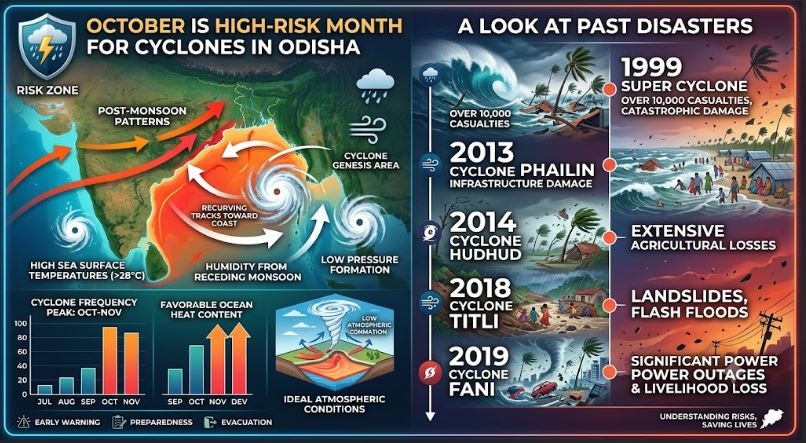
Why October Is a High-Risk Month for Cyclones in Odisha: A Look at Past Disasters
Bhubaneswar, Oct 23: A low-pressure system is expected to develop over the Bay of Bengal on October 23 and may intensify into a depression by October 25, bringing the possibility of unsettled weather to Odisha. Although the formation of a cyclone is not yet certain, the evolving system has renewed attention on the state’s vulnerability to tropical storms during October.
Representational Image
Odisha has experienced several destructive cyclones during the month, including the devastating 1999 Super Cyclone, Cyclone Phailin in 2013 and Cyclone Dana in 2024. The state’s location along the Bay of Bengal, combined with favourable atmospheric and oceanic conditions, makes the post-monsoon period particularly important for cyclone monitoring and preparedness.
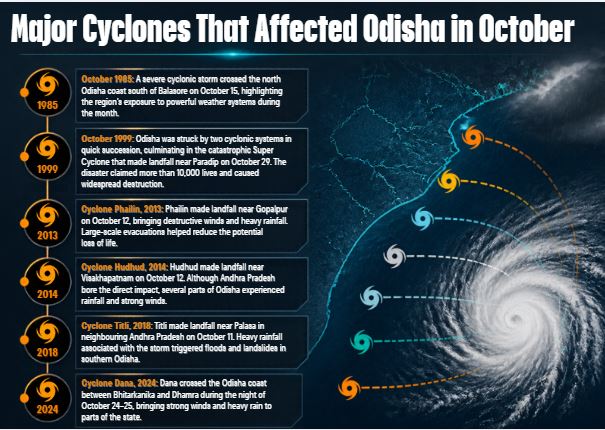
Major Cyclones That Affected Odisha in October
October 1985: A severe cyclonic storm crossed the north Odisha coast south of Balasore on October 15, highlighting the region’s exposure to powerful weather systems during the month.
October 1999: Odisha was struck by two cyclonic systems in quick succession, culminating in the catastrophic Super Cyclone that made landfall near Paradip on October 29. The disaster claimed more than 10,000 lives and caused widespread destruction.
Cyclone Phailin, 2013: Phailin made landfall near Gopalpur on October 12, bringing destructive winds and heavy rainfall. Large-scale evacuations helped reduce the potential loss of life.
Cyclone Hudhud, 2014: Hudhud made landfall near Visakhapatnam on October 12. Although Andhra Pradesh bore the direct impact, several parts of Odisha experienced rainfall and strong winds.
Cyclone Titli, 2018: Titli made landfall near Palasa in neighbouring Andhra Pradesh on October 11. Heavy rainfall associated with the storm triggered floods and landslides in southern Odisha.
Cyclone Dana, 2024: Dana crossed the Odisha coast between Bhitarkanika and Dhamra during the night of October 24–25, bringing strong winds and heavy rain to parts of the state.
These events demonstrate that Odisha can face both direct cyclone landfalls and significant weather impacts from storms that move across neighbouring coastal areas.
Why Is October Favourable for Cyclone Formation?
1. Transition from the Southwest Monsoon
October marks the transition from the southwest monsoon to the post-monsoon season. Changes in atmospheric circulation during this period can support the development of low-pressure systems over the Bay of Bengal, some of which may intensify under favourable conditions.
2. Warm Bay of Bengal Waters
The Bay of Bengal can retain substantial heat after the summer and monsoon seasons. Warm sea-surface temperatures provide moisture and energy that can help thunderstorms organise and strengthen into a tropical cyclone when other atmospheric conditions are suitable.
3. Favourable Wind Conditions
Vertical wind shear—the change in wind speed or direction with height—plays an important role in cyclone development. Relatively weak wind shear can allow thunderstorms around a developing system to remain organised, increasing the potential for intensification.
4. Odisha’s Vulnerable Coastline
Odisha’s long coastline along the Bay of Bengal exposes it to storms moving towards India’s eastern coast. Low-lying coastal areas are particularly susceptible to storm surges, heavy rainfall, flooding and damage caused by strong winds. Rivers and drainage systems can also contribute to flooding during prolonged rainfall.
Will the Latest Low-Pressure System Become a Cyclone?
The developing system may intensify into a depression by October 25, according to the forecast cited in the report. However, cyclone formation, the system’s eventual track and any potential landfall remain uncertain at this stage.
Its development will depend on evolving oceanic and atmospheric conditions. Residents should therefore avoid treating the possibility of a cyclone as a confirmed event and instead follow updated forecasts from the India Meteorological Department (IMD) and instructions issued by local authorities.
Preparedness Remains Key
Odisha’s history of October cyclones underlines the importance of timely warnings, evacuation planning and public awareness. Residents in coastal and low-lying areas should monitor official weather bulletins, keep essential supplies ready when advised and follow local administration instructions.
While October has historically been an important month for cyclone activity in the Bay of Bengal, not every low-pressure system develops into a cyclone. Accurate forecasts and timely preparedness remain essential to reducing risks to life and property.
23, Oct 2026
Raipur–Visakhapatnam Economic Corridor: 240-Km Odisha Stretch to Boost Connectivity, Trade and Tourism
Bhubaneswar, Oct 23: The ambitious Raipur–Visakhapatnam Economic Corridor is expected to transform road connectivity across Odisha, Chhattisgarh and Andhra Pradesh, opening up new opportunities for trade, tourism and regional development.
Representational Image
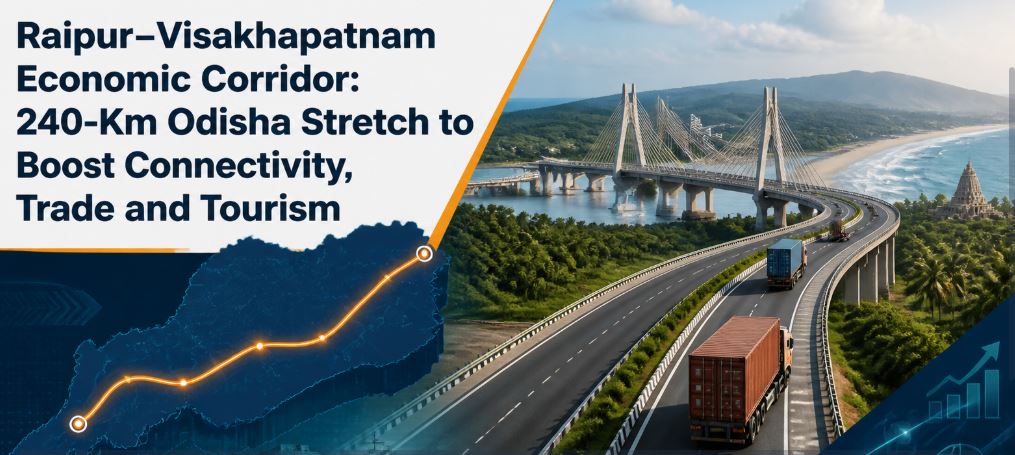
The Rs 20,000-crore project involves the construction of a 464-km, six-lane highway, of which approximately 240 km passes through Odisha. The corridor will traverse Koraput and Nabarangpur districts, improving access to markets and essential services for people living in southern Odisha.
According to National Highways Authority of India (NHAI) Project Director Prakash Kumar, the Odisha stretch is targeted for completion by December, as stated in the report.
The project is expected to strengthen links between the three states, reduce travel time and improve the movement of goods and passengers.
Travel Time Between Raipur and Visakhapatnam May Be Halved
One of the major anticipated benefits of the economic corridor is a significant reduction in travel time between Raipur and Visakhapatnam.
Once the entire route becomes operational, the journey, which currently takes approximately 12 to 14 hours, is expected to be reduced to around six to seven hours.
The improved road network could facilitate faster transportation of agricultural produce, raw materials and other goods, helping farmers, traders and local entrepreneurs reach markets across state boundaries more efficiently.
Better connectivity is also expected to support employment opportunities and encourage tourism in the region.
Twin Tunnels Emerge as Key Features in Koraput
The twin tunnels near Sunkhi Ghat in Koraput district are among the project’s prominent engineering features. Constructed through challenging hilly terrain at an elevation of around 3,000 feet, the tunnels have been named the Shabara Srikhetra Tunnel and the Koraput Tunnel.
The structures are designed to improve movement through the mountainous stretch, where difficult terrain can otherwise increase travel time and pose challenges for motorists.
Safety measures are also being incorporated into the project, including rock anchoring and slope stabilisation to minimise the risk of rockfalls.
Wildlife-friendly infrastructure, such as monkey canopies and underpasses, is being developed to facilitate animal movement and reduce the risk of wildlife entering the highway.
Advanced Safety Systems Planned Inside Tunnels
According to Jagannath, Safety Manager at Margdarshi Infra, several measures have been incorporated to improve passenger safety inside the tunnels.
These include CCTV cameras installed at intervals of approximately 100 metres, emergency vehicle cross-passages with a clearance of 5.5 metres, and lighting systems that automatically adjust to surrounding light conditions.
The lighting arrangement is intended to reduce the sudden change in visibility experienced by motorists when entering or exiting a tunnel, commonly known as the black-hole effect.
Air quality is also being monitored as part of the safety arrangements.
Improved Access to Healthcare and Essential Services
The economic corridor is expected to bring significant benefits to residents of southern Odisha, particularly those in remote and hilly areas of Koraput and neighbouring districts.
Improved road access could make it easier for people to reach hospitals, educational institutions and employment centres in larger towns and cities.
Local residents have reported improvements in connectivity along developed sections of the route. Rishikesh Behera said travelling to better healthcare facilities had become easier, while Pitambar Pujari noted that journeys that previously took four to five hours could now be completed in around one to two hours on certain stretches.
These accounts highlight the potential benefits of improved road infrastructure, although travel times will vary depending on the starting point, destination and operational status of individual sections.
Boost Expected for Local Businesses and Tourism
Beyond transportation, the corridor is expected to create fresh opportunities for local businesses, artisans and tourism-related enterprises.
Farmers could benefit from faster access to markets, while improved connectivity may help local products reach customers in neighbouring states. The highway could also make tourist destinations in southern Odisha more accessible to visitors.
The project’s overall impact will depend on the timely completion of the remaining work, the operational readiness of individual stretches and the extent to which local communities and businesses can take advantage of the improved infrastructure.
With around 240 km of the corridor passing through Odisha, the project represents a major investment in the state’s road network and could play an important role in strengthening economic links across eastern and central India.


