


22, Oct 2026
TransNusa Celebrates Historic Milestone With Launch Off Maiden Melbourne-Bali Flight
MELBOURNE, Oct 22- TransNusa, the Asia-Pacific region’s pioneering Premium Service Carrier, today marked a major international expansion milestone with the official launch of its maiden flight from Bali to Melbourne. The inaugural daily scheduled flight establishes a highly competitive alternative on the heavily travelled Australia-Indonesia corridor.
The strategic expansion from Melbourne follows TransNusa’s exceptional growth in the Australian market, where it rapidly captured a 20 percent market share in Perth by increasing its scheduled flight frequency to 21 by July 2026 from just 3 weekly flights in April 2025. This showcases the confidence and loyalty the TransNusa brand has garnered in the Australian market within 15 short months.
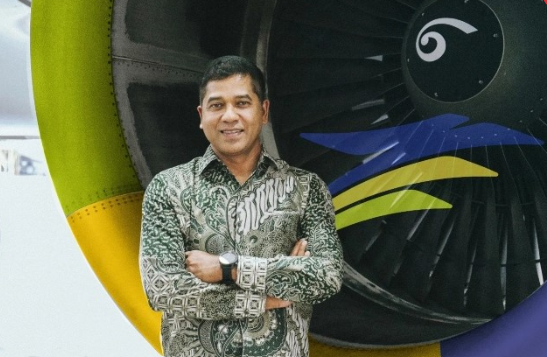
Datuk Bernard Francis, Group Chief Executive Officer of TransNusa, speaking on the historic launch stated that this new daily Melbourne-Bali route marks a significant milestone in the airline’s growth trajectory, shifting the paradigm from conventional point-to-point operations to positioning Bali as a primary international transit hub for Australian travellers.
“The launch of the Melbourne-Bali route represents a monumental step forward in TransNusa’s international expansion strategy. It strengthens Bali’s position as a premier gateway between Australia and Asia, while giving travellers a compelling new choice that combines connectivity, value, and a distinctly premium travel experience,” said the Malaysian-born aviation industry captain, Datuk Bernard.
“Bali remains a prime global holiday destination, and by connecting it directly to Melbourne, we are providing travellers from Australia with a highly competitive, premium flying alternative,” he added.
“TransNusa has always strived to deliver beyond expectations as our aim is to provide reliable, comfortable, and affordable travel choices across the region,” Datuk Bernard explained.
Datuk Bernard Francis… TransNusa offers a Beyond Bali network connectivity, allowing passengers to expand their experience and planning with smooth transitions to world class local and international island destination
To celebrate this milestone, TransNusa continues to offer exclusive introductory fares, with standard basic seats starting from just AUD299. Distinct from traditional low-cost competitors, even TransNusa’s standard tickets include generous baggage provisions alongside baseline comfort amenities such as complimentary water and snacks.
Strategic Schedule and Beyond Bali Network Connectivity
Engineered to seamlessly accommodate both leisure holidaymakers and business travellers, the route operates on an optimized overnight and morning schedule:
-
Flight 8B 18 departs Bali (DPS) at 20:45 from I Gusti Ngurah International Airport, arriving at Melbourne Airport (MEL) at 05:40 the following morning.
-
Flight 8B 19 departs Melbourne Airport (MEL) at 06:25, arriving in Bali (DPS) at 09:40.
Initially, TransNusa will operate four flights weekly, scheduled on Monday, Wednesday, Thursday and Friday. The airline will increase its frequency to seven scheduled flights weekly from November 15th onwards.
The synchronized schedule allows passengers from Australia to seamlessly transition “Beyond Bali” to 11 prime island destinations across the Indonesian archipelago, including the preserved marine ecosystems of Wakatobi and the pristine islands of Manado, Bima, Surabaya, and Lombok. Additionally, the network provides timely, hassle-free transits to leading global commercial and tourism hubs across Asia, including Guangzhou (China), Singapore, and Phuket (Thailand).
“Today, we are celebrating more than just a single point-to-point connection,” added Datuk Bernard.
“Our goal is to design ultimate travel experiences. By scheduling timely transits from Bali, we are giving travellers from Australia complete flexibility to extend their journeys seamlessly to exotic domestic havens or major regional capitals across China and Southeast Asia.”

Tickets for the new daily Melbourne–Bali route are available for immediate purchase. Travellers can book the tickets via the official website at transnusa.co.id or through authorized travel booking platforms.
- 0
- By Neel Achary

22, Oct 2026
Voqalize Says Voice Is Becoming the Default Way People Use Software
Voqalize is infrastructure for making software conversational. Existing applications, websites and AI agents can add a voice interface that listens, sees context, responds and acts, without being rebuilt.
BENGALURU, India, Oct. 22, 2026 /PRNewswire/ — Voqalize today said it gives existing applications, websites and AI agents a voice interface that can listen, see context, respond and act, without rebuilding the application. The company says teams can have it running in about an hour, either through Plug & Play, where Voqalize manages the AI agent and the voice experience, or through a developer integration into their own backend.
Imagine telling a clothing app: “I’ve got an outdoor wedding in Napa on the 20th. I need something under two hundred that goes with the shoes I bought in the spring.” The app pulls those shoes from your order history and lays out six options beside them. “Not the floral. Show me the second one in the navy.” It swaps the color and puts the shoes next to it. Then it adds: “You sent back a medium from this brand last time, so I picked the large. It arrives on the 17th.” You look it over and tap buy. That is the shift Voqalize is building for: voice not as input, but as an interface to software.
Fast facts
- Apple’s iOS 27, released in September, lets Siri read what’s on a user’s screen and take actions inside apps
- Google reports that roughly one in five Gemini Live conversations now add a camera or screen share, with voice used in 63% of interactions across Gemini’s 1 billion-plus monthly users
- A Censuswide survey of 700 business leaders and consumers for Voices, published Jan. 28, 2026, found that 55% of consumers say voice is their primary AI interface, while only 29% of companies have deployed customer-facing voice AI
Dictation Proved People Will Talk to Their Software
Dictation and notetaking apps are among the fastest-growing categories in consumer AI. Wispr, valued at $2 billion, and Granola, valued at $1.5 billion, have both built large user bases on a simple premise: people would rather talk than type, once the transcription is good enough. Wispr says the habit sticks. After six months, its average user writes 72% of their characters by voice.
The category is already moving past that original pitch. Wispr raised its most recent round on a case for going “beyond dictation.” Granola is expanding from a meeting notetaker into what it describes as a context layer for company AI. Superhuman acquired the notetaker Fathom in September. Talking to software stopped being the hard part. What people do with that voice next, and how directly it’s built into the products they already use, is where the category is headed.
“The next billion people coming online won’t type their way onto the internet. They’ll talk their way on, in whatever mix of languages they speak at home.” Sripathi Krishnan, Co-founder, Voqalize
Voice Is Moving From Typing Substitute to Default Interface
Voqalize’s argument is that voice is moving from a typing substitute into the default way people use an app: a running conversation, not a single dictated sentence, where the app listens, responds and can act on what’s on screen, with the interruptions and mid-task changes of direction that come with a real conversation. That mirrors a broader shift already underway on the phone line, where most current “voice AI” is still built around short, scripted calls that book an appointment or qualify a lead and then hang up. Apple’s iOS 27 and Google’s Gemini Live both point at the same shift: voice agents that can see a screen and act on it rather than just transcribe speech.
How Do You Add a Voice Interface to an Existing App?
An existing application or device connects through Voqalize rather than being rebuilt inside a new platform: Voqalize supplies the two-way voice channel and the ability to read and act on whatever is on screen. Businesses choose how much to hand over. With Plug & Play, Voqalize manages the AI agent and the voice experience. With a developer integration, businesses add Voqalize’s voice capabilities to their own backend while keeping control of their AI agent and workflows.
In some deployments, that voice is paired with a face on screen as well, so the person on the other end has something to talk to, not just a voice in the room. Sripathi Krishnan, the company’s co-founder, has argued that the harder part of that conversation may not be how fluently the agent talks, but how well it listens and knows when to stay quiet. Voqalize also works across Indic languages, because conversations in India often move between languages mid-sentence. A majority of Indian internet users already engage with content in Indic languages. Voice also makes software accessible across languages and across literacy and input constraints.
Building Toward Plug-and-Play Voice, Across Apps and Devices
Today, adding Voqalize to a product means connecting an existing application or device through a single interface, without rebuilding it inside a new platform. Voqalize says its near-term work is on extending that same one-connection model further, so that adding two-way voice to a new app, or to a device beyond the phone and the browser, becomes a plug-and-play step rather than a custom integration. That direction follows a broader move already visible in the industry: voice infrastructure is consolidating around shared frameworks instead of one-off builds, and AI tools are increasingly connecting to each other through standard connectors rather than custom code written for each pairing. Voqalize says it intends to be the layer that makes that same simplicity available for voice specifically, across whatever app or device a company is already building for.
“Soon people will judge an app by how well it understands them, the way you judge a shop by whether the person behind the counter gets what you mean.” Samkeet Jain, Co-founder, Voqalize
Voqalize is available today for teams adding a two-way voice interface to an existing product or AI agent. Early deployments include in-app assistants for mortgage servicing workflows, legal clause review, and authenticated banking support. Voqalize was also named one of the 30 products in YourStory’s Vibecode30 2026, a showcase of emerging AI-native builders in India.
About Voqalize Voqalize is a voice AI platform that makes it easy for businesses to add two-way voice conversations to their applications and AI agents across 60+ Global and Indic languages. With Plug & Play, Voqalize manages the AI agent and voice experience for you. With our developer integration, businesses can add Voqalize’s voice capabilities to their own backend while keeping control of their AI agent and workflows. Go ahead and build your next voice-enabled applications with us on voqalize.com.
Media Contact: Samkeet Jain / +91 8147514179 / Samkeet@voqalize.com

 View original content to download multimedia:https://www.prnewswire.com/in/news-releases/voqalize-says-voice-is-becoming-the-default-way-people-use-software-302915851.html

22, Oct 2026
EC-Council Expands Technology Risk Capabilities Through Acquisition of Cyber Insurance Academy
The strategic acquisition brings together cybersecurity, AI and insurance expertise, extending EC-Council’s people, process and technology capabilities into the insurance industry.
Acquisition at a Glance
- EC-Council has acquired Cyber Insurance Academy, the credentialing body for the cyber and AI insurance industries.
- Cyber Insurance Academy will continue under its existing brand and leadership as an EC-Council Company.
- The acquisition extends EC-Council’s people, process and technology capabilities into the insurance industry.
- Cyber Insurance Academy will expand beyond cyber insurance into AI risk, emerging technology risk and role-based technology education.
- The flagship Certified Cyber Insurance Specialist designation has been updated as CCIS v2, with new coverage of AI-driven threats, AI governance and AI-related insurance exposures.
- Cyber Insurance Academy’s programs are accredited by CII, ANZIIF, RIBO and NIBA and are continuing education approved in more than 45 U.S. states.
HYDERABAD, India, Oct. 22, 2026 /PRNewswire/ — EC-Council, creator of the Certified Ethical Hacker (CEH) credential and a global leader advancing Cybersecurity and Responsible AI through its Adopt. Defend. Govern. (ADG) Framework, today announced the acquisition of Cyber Insurance Academy, the credentialing body for the cyber and AI insurance industries.
The acquisition expands EC-Council’s capabilities into insurance at a time when technology is becoming increasingly embedded in the risks insurers assess, price and manage. Cyber Insurance Academy will continue to operate under its existing brand and leadership as an EC-Council Company, while expanding its portfolio beyond cyber insurance into AI risk, emerging technology risk and practical technology education for the broader insurance community.
For EC-Council, the acquisition supports its broader approach to Cybersecurity and Responsible AI, which brings together people, process and technology to help organizations build capability, manage risk and govern emerging technologies. Cyber Insurance Academy extends that approach into insurance by strengthening the knowledge and capabilities of the professionals responsible for understanding and transferring technology risk.
The acquisition also responds to a gap EC-Council has seen across the industry. The professionals responsible for assessing, pricing, placing, and managing cyber and AI risk, from underwriters and brokers to risk managers and claims professionals, rarely come from a technology background, while those with deep technical expertise seldom work in the language of insurance. Rather than entering insurance from the outside, EC-Council chose to join an organization already closing that gap from within the industry.
“Technology is now embedded across almost every dimension of enterprise risk, and managing that risk requires more than technical controls alone. It requires skilled people, accountable processes and the ability to understand how technology changes exposure,” said Jay Bavisi, Founder & Group CEO, EC-Council. “Cyber Insurance Academy brings deep insurance expertise to that equation. Together, we can help build the technology fluency the insurance industry increasingly needs as cyber, AI and emerging technologies reshape the risk landscape.”
Technology is already changing how insurers approach underwriting, claims, governance and risk management. AI is introducing new questions around accountability, liability and exposure, while autonomous systems, connected technologies and next-generation computing are creating increasingly complex forms of risk.
Cyber Insurance Academy has built its expertise at this intersection of technology and insurance. Its programs are designed for brokers, underwriters, claims professionals and risk managers and are accredited by CII, ANZIIF, RIBO and NIBA, with continuing education approval in more than 45 U.S. states.
The Academy’s programs are developed by people who understand both the technology and the business of insurance, giving professionals the confidence to make sound decisions on technology risk and become true risk experts without needing to become technical experts.
Under EC-Council, cyber insurance will remain the Academy’s core focus while its capabilities expand into three areas: AI risk, emerging technology risk and role-based technology education for insurance professionals.
The expanded portfolio will include education on how AI changes exposures, underwriting, claims and governance across insurance portfolios; emerging risks associated with technologies such as autonomous systems and quantum computing; and practical learning designed to help non-technical professionals understand the technologies behind the risks they place, price and manage.
The aim is not to chase every new technology trend, but to keep the insurance industry a step ahead of the risks it is increasingly being asked to cover.
“Every insurance professional is now a technology risk professional, whether they realize it or not,” said Guy Simkin, Co-Founder and CEO, Cyber Insurance Academy. “Cyber is where we started, not where we stop. With EC-Council, we can take what we have built for cyber insurance to the wider industry, beginning with AI and the emerging risks that will increasingly shape insurance.”
“The technologies influencing insurance risk are evolving rapidly, and the industry needs education that evolves with them,” said Asaf Armoni, Co-Founder, CTO and COO, Cyber Insurance Academy. “EC-Council brings the technical depth and scale that allow us to expand our capabilities while staying focused on what insurance professionals need to make informed decisions.”
The acquisition also provides Cyber Insurance Academy access to EC-Council’s technical expertise, global network and cybersecurity and AI capabilities, while EC-Council gains a dedicated insurance education business with established industry relationships and credentialing expertise.
For learners, this means course material shaped by specialists who study emerging threats first-hand, and a broader catalogue developed faster, as technical content no longer needs to be sourced externally.
As part of this expansion, Cyber Insurance Academy has rebuilt its flagship Certified Cyber Insurance Specialist (CCIS) designation for the AI era. CCIS v2 includes new coverage of AI-driven threats, AI governance and the exposures AI creates across insurance portfolios.
The Academy will deliver its expanded portfolio through self-paced learning, role-based certifications, professional designations and enterprise programs for carriers, brokers and managing general agents seeking to strengthen technology capabilities across their teams.
Cyber Insurance Academy will continue under the leadership of Guy Simkin, Co-Founder and CEO, and Asaf Armoni, Co-Founder, CTO and COO. Its brand, leadership and cyber insurance foundation will remain unchanged, supported by EC-Council’s broader technical and global capabilities.
About Cyber Insurance Academy
The Delaware company, Cyber Insurance Academy, is the credentialing body for the cyber and AI insurance industries is the credentialing body for the cyber and AI insurance industries. Built by the industry, for the industry, it trains brokers, underwriters, claims professionals and risk managers through its flagship Certified Cyber Insurance Specialist (CCIS) designation and is expanding its offering to deliver technology education on AI and emerging risks to the broader insurance community.
Its programs are accredited by CII, ANZIIF, RIBO and NIBA and are continuing education approved in more than 45 U.S. states. Cyber Insurance Academy is an EC-Council Company.
For more information, visit: https://www.cyberinsuranceacademy.com/
About EC-Council
Founded in 2001, EC-Council is a global cybersecurity and AI organization focused on building the skills, capabilities and systems required for a more secure digital future.
EC-Council created the Certified Ethical Hacker (CEH) program and has certified more than 400,000 professionals across 174 countries. Its programs and credentials are used across government, defense, enterprise, and academia worldwide.
As an ISO/IEC 17024 accredited certification body, EC-Council’s credentials are recognized by the U.S. Department of Defense under DoD Directive 8140 and are held by professionals across the U.S. Army, Navy, Air Force and leading global organizations.
As cybersecurity and AI converge, EC-Council is advancing Responsible AI through its proprietary Adopt. Defend. Govern. (ADG) Framework, bringing together people, process and technology to help organizations adopt AI responsibly, defend digital environments and govern emerging technologies with greater accountability.
The EC-Council ecosystem includes EC-Council, EC-Council University (ECCU), CodeRed, EC-Council Global Services (EGS), EC-Council Academia, and Aware.
CONTACT: press@eccouncil.org

 View original content to download multimedia:https://www.prnewswire.com/in/news-releases/ec-council-expands-technology-risk-capabilities-through-acquisition-of-cyber-insurance-academy-302915662.html

22, Oct 2026
Puri–Badampahar Express Gets Approval: A New Rail Link for Odisha
Bhubaneswar, Oct 22: Odisha Chief Minister Mohan Charan Majhi has welcomed the Centre’s approval of the long-awaited Puri–Rairangpur–Badampahar Express, calling it a major boost to rail connectivity in the state. He thanked Prime Minister Narendra Modi and Railway Minister Ashwini Vaishnaw for clearing the service, which had been a longstanding demand of people in northern and coastal Odisha.

File Photo
What the New Train Offers
The express will run daily between Puri and Badampahar via Rairangpur, connecting key districts including Puri, Khordha, Cuttack, Jajpur, Keonjhar and Mayurbhanj. It will have nine LHB coaches and halt at 19 stations, including Bhubaneswar, Cuttack, Keonjhar, Sukinda and Rairangpur.
According to the approved schedule, the Puri–Badampahar service is expected to depart Puri at 11:45 pm, reach Rairangpur at 12:53 pm the next day, and arrive at Badampahar at 1:45 pm. The return train is slated to leave Badampahar at 4:00 pm and reach Puri at 6:00 am the following day.
CM Majhi’s Response
In a post on X, Chief Minister Majhi said the new service would make travel more convenient for passengers while opening fresh economic and social opportunities across the connected districts. He described the approval as the fulfilment of a long-pending demand and thanked the Prime Minister and the Railway Minister for their support.
Why It Matters
The route is expected to particularly benefit residents of Mayurbhanj and Keonjhar, regions that have sought better direct rail access to Puri and Bhubaneswar. By linking temple-town Puri with Rairangpur and Badampahar, the service is likely to improve travel for pilgrims, students, workers and traders, while strengthening access to healthcare, education and markets.
The Ministry of Railways approved the train on October 19, 2026, under communication numbers CC-208/2026 and 2026/CHG/16/WCR/41-PT; the regular start date is yet to be announced.
22, Oct 2026
RBI Regional Director Sibi Mathews Calls on Odisha Chief Minister Mohan Charan Majhi
Bhubaneswar, Oct 22: Sibi Mathews, Regional Director of the Reserve Bank of India (RBI), called on Odisha Chief Minister Mohan Charan Majhi at Lok Seva Bhawan in Bhubaneswar.

Mr Sibi Mathews, Regional Director of the Reserve Bank of India (RBI), called on Hon’ble Chief Minister Shri Mohan Charan Majhi at Lok Seva Bhawan. https://t.co/NzJPW0Nrik
— CMO Odisha (@CMO_Odisha) October 21, 2026
The meeting took place during Mr Mathews’ visit to the Chief Minister’s office. However, details regarding the discussions held during the meeting have not been officially disclosed.
The meeting highlights an interaction between the Odisha government and the Reserve Bank of India’s regional leadership, an institution that plays a key role in banking regulation, financial stability and the promotion of financial inclusion.
22, Oct 2026
Liquibase Warns AI Agents Are Exposing a Critical Gap in Database Accountability
As governments move to investigate incidents involving AI agents, Liquibase research finds 96.5% of respondents report AI interactions with production databases, yet only 32% consistently create audit-ready database change history.
AUSTIN, Texas, October 21, 2026 – Liquibase, the leader in Database Change Governance, is calling attention to a growing accountability challenge as AI agents take on a greater role in changing production systems. Findings from the company’s 2026 State of Database Change Governance Report, published in March, show that 96.5% of respondents report at least one AI or LLM interaction with their production databases, while only 32% always or often create audit-ready database change history. The warning follows new government action on autonomous AI.
On October 12, 2026, the UK government announced it is developing a specialist capability to respond to serious incidents involving AI agents, working with the National Cyber Security Centre, Department for Culture, Media and Sport, and the AI Security Institute. The government said that when such incidents occur, it must be able to quickly establish what went wrong and contain the risks. In the United States, a concept paper from NIST’s National Cybersecurity Center of Excellence focuses on identity, authorization, and auditing for AI agents, noting that agents are often treated as generic service accounts without dedicated accountability controls.
For enterprises, the same implications extend to production databases. Whether investigating an incident or proving control to an auditor, organizations need a reliable record of what changed, who or what initiated it (human or an AI agent), whether it was authorized, and what controls ran. When AI agents generate and deploy database changes, sometimes through shared service accounts, that record is often the hardest evidence to produce.
“AI is changing who makes software changes, but it doesn’t change who’s accountable for them,” said Pete Pickerill, Co-Founder at Liquibase. “When an AI agent initiates a change to a production database, organizations still need to know what changed, whether it was authorized, and which controls were enforced. If proving that requires reconstructing activity across tickets, logs, and spreadsheets, the governance model isn’t keeping up with the technology.”
The Database Audit Readiness Gap
The 2026 State of Database Change Governance Report, based on a survey of 426 database, platform, technology practitioners and senior technology leaders, reveals a gap between how frequently organizations face audits and how consistently they maintain the evidence needed to demonstrate control:
- Audits are constant. 95.3% of respondents face multiple compliance or database audits annually, including 21.6% who face seven or more.
- Evidence is inconsistent. Only 32% always or often create audit-ready database change history. Another 39% do so sometimes, while 21% rarely or never do.
- Controls depend on people. Only 35% always or often automate security or compliance checks on database changes.
- Drift detection is inconsistent. Only 31% always or often automate drift detection, while 48% do so only sometimes.
- AI adds new risk. 46.5% cite ungoverned AI-generated SQL as a top AI-related database change risk.
Most organizations have governance processes, but the controls and evidence supporting those processes aren’t always applied consistently. As AI increases the speed and volume of database change, that gap becomes increasingly difficult to manage.
When AI Makes the Change, Who’s Accountable?
The accountability questions haven’t changed: What changed? Who authorized it? Were the right controls enforced? What has changed is how hard they are to answer once AI agents generate SQL and initiate change through automated workflows. In the same survey, 33.6% of respondents report AI-generated SQL interacting with their production databases, and 21.8% report human review if governance controls aren’t embedded upstream.
Organizations can’t rely on someone remembering to review a change, or on reconstructing its history after deployment. Governance has to be enforced inside the delivery process, with the evidence captured as each change happens.
Liquibase Secure 6.0 Brings Continuous Governance to Database Change
As AI accelerates software delivery, organizations need consistent policies, visibility into change activity, and a reliable record of how controls were applied, regardless of whether changes originate with developers or AI agents.
Introduced September 30, Liquibase Secure 6.0 brings these capabilities together in a unified platform to see, govern, and control database change across teams, pipelines, databases, and agents:
- Change Intelligence centralizes database change activity, deployment history, and policy outcomes, making it easier to understand what changed and demonstrate which controls were applied. Changes originating from developers or AI agents can be governed and tracked when deployed through supported Liquibase workflows.
- Centralized policy management lets teams define rules once and apply them everywhere, starting from 50+ prebuilt policy rules.
- Role-based access control and governed exceptions determine who can manage policies, assignments, exceptions, and governed assets, preserving separation of duties without slowing developers down.
The release builds on Agent Safe Governance, which helps enterprises validate, track, and govern database change whether it’s created by people or AI.
It’s Audit Season. Be Audit-Ready. Always.
Audits shouldn’t test your memory. Organizations need to know what changed, demonstrate that the right controls were followed, and produce evidence without reconstructing activity across tickets, logs, and spreadsheets.
To help organizations address these challenges, Liquibase has launched It’s Audit Season, an initiative focused on closing the gap between database change governance and audit readiness.
The campaign draws on findings from the 2026 State of Database Change Governance Report to highlight the risks of inconsistent controls, fragmented evidence, and the growing role of AI in software delivery. It includes a free Audit Readiness Assessment, an audit checklist, and practical guidance informed by the 2026 report.
Audit season comes around. Audit readiness never leaves.
22, Oct 2026
Nearly 2 in 5 Higher Education Employees Work at Institutions Served by JobElephant
SAN DIEGO, Calif. (October 22, 2026) – JobElephant, a leading recruitment advertising technology company specializing in data-driven solutions for higher education institutions, reports new findings from the Integrated Postsecondary Education Data System (IPEDS) that confirm the company’s reach across American higher education. According to the latest IPEDS data, JobElephant currently serves more than 900 colleges and universities, reaching institutions that collectively employ 1,087,668 full-time workers, equal to 39% of all full-time employees at active U.S. postsecondary institutions. As academic institutions navigate budget cuts and rising operational costs, JobElephant delivers transparent, cost-effective recruitment advertising solutions backed by real-time performance data and complete visibility into every dollar spent.
Budget Pressure Meets Hiring Demand
Higher education institutions face a compounding recruitment challenge. Rising costs and shrinking budgets are forcing human resource teams to stretch every dollar, yet many continue to invest in broad, blind job postings that waste budget and miss top talent hiding in niche publications. That lack of visibility carries a measurable cost. IPEDS data documents a total universe of 2,787,935 full-time employees across U.S. postsecondary institutions, signaling an ongoing need for qualified educators. When recruiters bypass data-driven ad recommendations, the consequences are direct: they spend 57% more on job ads and experience a 39% decrease in click-through rates, according to 2023 Apptrkr data.
Predictive Placement Powered by 25 Years of Data
JobElephant addresses these challenges through Horton®, its predictive analytics engine that pinpoints the highest-ROI publications before institutions spend a dollar. Powered by more than 25 years of proprietary recruitment data, Horton® analyzes entire job descriptions to recommend hyper-targeted ad placements across the most relevant publications, removing guesswork from the process. Institutions using Horton® achieve 56% lower ad spend, 114% higher click-through rates, and generate 3x more job seeker views per ad compared to non-Horton® placements, according to Apptrkr® data. JobElephant’s business model carries no additional cost to the client beyond standard ad insertion fees, making smarter, data-driven recruitment available to every institution regardless of budget size.
University Perspective
“For several years, the University of Wisconsin-Milwaukee has relied on JobElephant as a valued recruitment advertising partner, and their expertise in identifying innovative and targeted advertising channels has helped UWM expand its reach and improve recruitment outcomes,” said Jennifer Brown, Recruitment Specialist, University of Wisconsin-Milwaukee. “After implementing a new applicant tracking system in 2025, UWM hiring teams embraced JobElephant’s recommendations and experienced substantial gains in applicant traffic, along with higher click-through rates and significantly lower advertising costs. JobElephant’s commitment to data-driven strategy, exceptional customer support, and responsible stewardship of advertising resources has made them an indispensable partner.”
Leadership Perspective
“As employers reduce hiring due to funding cuts and labor market uncertainty, we have seen a notable uptick in annualized job board subscriptions at the expense of ad hoc postings,” said Michael Ang, CEO and Founder, JobElephant. “Institutions cannot predict whether they will be hiring in six months, so they are locking in prices today as a hedge against inflation, committing to a full year of recruitment advertising rather than spending more on each individual campaign. JobElephant’s analytics allow us to identify the return on investment for any talent acquisition or media source, giving our clients the clarity they need to make every dollar count.”
Proven Reach Across Higher Education
Operating nationwide in the higher education recruitment market, JobElephant serves institutions that collectively employ 1,087,668 full-time workers. Horton®’s reach extends even further, covering colleges and universities that employ 2,421,130 full-time workers, or 86.8% of the entire IPEDS full-time workforce, the equivalent of nearly 9 in 10 higher education employees. That gap between JobElephant’s current customer base and Horton®’s full reach signals significant unrealized growth potential within institutions already accessible through the platform.
Looking Ahead
With budget pressure and hiring uncertainty reshaping how higher education institutions invest in recruitment, JobElephant provides the clarity, data, and established recruitment approach HR teams need to make more informed hiring decisions while reducing costs. To learn more, visit www.jobelephant.com.
About JobElephant:
JobElephant is a leading recruitment advertising technology company specializing in data-driven solutions for higher education, nonprofit institutions, and public sector organizations. By leveraging proprietary technology and research, JobElephant helps clients make strategic recruitment ad placements to attract diverse, qualified candidates. For more information, visit www.jobelephant.com.
22, Oct 2026
Blokees Exhibits 900+ Products at 2026 China Toy Expo, Continuing to Advance Product Competitiveness
SHANGHAI, Oct. 22, 2026 /PRNewswire/ — From October 21 to 23, Assembly Character Toys Brand Blokees exhibited more than 900 products at the 2026 China Toy Expo, spanning its two core categories, Blokees Model Kits and BLOKEES WHEELS, and highlighting its expanding product portfolio driven by continuous innovation.

For hero collectors, Blokees exhibited nearly 40 products across HERO5, HERO8, HERO10 and other series, covering global IPs including Ultraman, Kamen Rider, Transformers and Mega Man, as well as original IP Hero Infinity. More than 30 products made their debut, including Mega Man HERO10 Series 1, marking the IP’s first commercialization within the HERO10 series.
For model kit collectors, Blokees exhibited nearly 50 products from Champion, Champion Lite, Fantastic and Legend, covering 13 global IPs including Transformers, Saint Seiya, Naruto, Hatsune Miku and Pokémon, as well as Hero Infinity. Nearly 10 new products made their debut.
Blokees also exhibited DaaLaMode, integrating articulation and outfit customization, and TERRAVENTURE, an animal-themed series based on Jurassic World. Four TERRAVENTURE products made their debut, further expanding the portfolio.
BLOKEES WHEELS featured its C, E and S series, combining assembly, play, collecting and customization. Transformers C05 and CT04 made their debut in full-color prototypes, following their previous appearance as gray prototypes at Wonder Festival and demonstrating their evolution from design concepts to final product forms.
Blokees continues to strengthen its innovation capabilities through R&D. As of June 30, 2026, the company held 559 granted domestic patents, 25 granted overseas patents and 85 domestic invention patents.
Through BFC (Blokees Family Creator), Blokees extends product experiences into creation and sharing. The fourth BFC Creation Contest in 2026 has reached 22 countries and regions, with selected creator works exhibited at the expo.
Guided by “Universally appealing, Stepwise pricing, Globally promoting,” Blokees will continue combining innovative R&D with global IPs to deliver richer products and experiences for players worldwide.
 View original content to download multimedia:https://www.prnewswire.co.uk/news-releases/blokees-exhibits-900-products-at-2026-china-toy-expo-continuing-to-advance-product-competitiveness-302915504.html

22, Oct 2026
Casio to Release Analog G-SHOCK Watches Inheriting the Functional Beauty of the Original Digital Model
Featuring Multi-Mission Date with Multiple Functions
TOKYO, Oct. 22, 2026 /PRNewswire/ — Casio Computer Co., Ltd. announced today the release of the latest additions to the family of G-SHOCK shock-resistant watches. The new GMC-2500 and GAC-2500 bring the functional beauty of the first-ever G-SHOCK to an analog design.

G-SHOCK made its debut in 1983 with the DW-5000C, created around the concept of a watch that would not break even if dropped. Since then, the brand has continued to evolve with the times while keeping shock-resistant construction at its core, earning an enthusiastic following around the world.
The new GMC-2500 and GAC-2500 translate the functional beauty of the original DW-5000C into a simple analog design. While carrying forward the iconic form of the original, the watches introduce a new exterior design with softer, more rounded contours.
The watches incorporate the new Multi-Mission Date feature, which uses a three-cell window at the 3 o’clock position to display the date, elapsed minutes for the stopwatch, setting information, and more, depending on the function in use. Setting the year, month, and day with Multi-Mission Date enables a fully automatic calendar in a fully analog watch, eliminating the need for manual date correction.
The small seconds hand at the 9 o’clock position can be stopped when not needed and restarted at any time. This sleep function helps reduce power consumption to extend battery life.
The case design features gentle curves throughout, creating a rich interplay of light and shadow that shifts with the angle of the light. The simple, sharply defined dial and indexes combine a refined look with excellent readability.
- GMC-2500 and GAC-2500 Promotional Video
https://youtu.be/EXVJdWUWn64

 View original content to download multimedia:https://www.prnewswire.co.uk/news-releases/casio-to-release-analog-g-shock-watches-inheriting-the-functional-beauty-of-the-original-digital-model-302910783.html

22, Oct 2026
Side Acquires Boutique Art Studio Roboto Entertainment in Creative Services Push
Founder Andrea Cordella appointed Global Head of Art as Side establishes new Chengdu studio
CHENGDU, China, Oct. 22, 2026 /PRNewswire/ — Leading games services provider, Side, today acquired the boutique games art studio, Roboto Entertainment, strengthening its global art capabilities and presence in mainland China. Roboto Entertainment founder and industry veteran, Andrea Cordella, will lead Side’s global art division and act as studio head for the new Chengdu site. His team will work closely with Side Shanghai as well as Side’s wider network of art and co-development teams spread across the Americas, EMEA, and Asia.
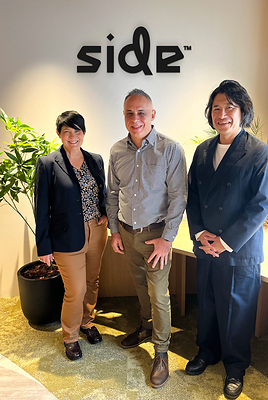
“When half the titles at gamescom’s Opening Night Live this year were made in China, the world notices. China has long been one of the most important markets for our industry, and I’m fiercely proud of the fact that our team there is hungry for more work, so we’re going to grow.” said Deborah Kirkham, CEO at Side.
While the games industry has reported a slowdown globally in recent years, the Chinese market is expected to grow by 4% in 2026 and hit $59.8B by 2030. It boasts some of the highest player engagement rates, esports engagement, player hours, and player spend, making the region an attractive space for developers.
“This acquisition is a double-down on a winning regional strategy. With Andrea as our Global Head of Art and a new studio in Chengdu, we now have some of the industry’s best environment and world-building artistic talent,” continued Kirkham.
Cordella founded Roboto Entertainment in 2014, specialising in environment and world building art for games. The Chengdu-based team has worked on AAA and AA releases across console and mobile games.
Andrea Cordella said, “I knew from the moment I met Deborah and the team at Side that the company aligned with the values my team and I hold dear. We strive for excellence and hold creativity close to our hearts – games are the only art medium where the consumer plays an equal role to the creator, and we will continue to deliver that creativity to every brief, now collaborating with teams across the world and supporting developers on a range of projects. It goes without saying, but I can’t wait to get started.”
Side’s QA offering recently expanded through a partnership with leading AI QA platform, Modl.ai, announced at Gamescom earlier this year. Side, which provides Player Support, QA, Localisation, LQA, Datasets, Codev, Art and Audio, already offers its full suite of services to China-based developers.
The new studio, combined with new expertise in environment art through Andrea and his team, will allow the company to offer developers in China and beyond more than ever before.
About Side:
Side is a global video game development and services provider, offering technical and creative solutions to many of the largest developers and studios around the world. Founded in 2009, Side has grown from their Japanese roots to become a global force in the technology industry, with 15+ studios in over a dozen countries across the Americas, Europe, and Asia. Their industry-leading services include art production, game development, audio production, quality assurance, localisation, localisation QA, player support, community management, and datasets. For more information, visit www.side.inc
 View original content to download multimedia:https://www.prnewswire.com/in/news-releases/side-acquires-boutique-art-studio-roboto-entertainment-in-creative-services-push-302915415.html



