


2, Oct 2026
Nritya Mallika Dance Academy Presents AGOMONI NRITYA MAHOTSAV 2026
Celebrating the Divine Arrival of Maa Durga through Dance, Music & Culture
7 October 2026 — Dinabandhu Mancha, Siliguri
8 October 2026 — Rabindra Mancha, Shaktigarh, Siliguri
Time: 5:00 PM onwards on both days
Siliguri: Nritya Mallika Dance Academy, Siliguri, is all set to present its annual cultural celebration, “Agomoni Nritya Mahotsav 2026,” on the occasion of the auspicious arrival of Maa Durga and the festive season of Mahalaya.
Established in 2009, Nritya Mallika Dance Academy has been dedicated to the practice, preservation and promotion of Indian dance, art and culture. One of its foremost objectives is to preserve India’s rich cultural heritage and pass it on to the younger generation through the graceful and expressive language of dance.

This year’s Agomoni Nritya Mahotsav will bring together a large community of young dancers and established artistes in a celebration dedicated to Maa Durga. Nearly 200 students of Nritya Mallika Dance Academy will participate in the two-day cultural festival.
The central theme of the festival is a heartfelt tribute to Goddess Durga, celebrating her divine arrival, magnificence and her eternal form as the destroyer of evil and the embodiment of Shakti.

Guru Smt. Rimpi Saha Banik
The programme on 7 October at Dinabandhu Mancha will begin with a sacred invocation to Maa Durga, welcoming the Divine Mother through music, dance and devotion. The audience will witness traditional Agomoni presentations and Devi Vandana, followed by special dance productions including:
“Dus Dike Durga”
“Mahishasuramardini”
Dus Dike Durga — Ten Dimensions of Maa Durga
The special production “Dus Dike Durga” explores ten multidimensional aspects of the omnipotent Goddess Durga through the medium of dance.
For Bengal, the arrival of Maa Durga is not merely the celebration of a powerful Goddess. It is also an emotional homecoming — the return of a daughter to her maternal home. The anticipation of her arrival is deeply woven into Bengal’s cultural consciousness, music, literature and devotional traditions.
Through “Dus Dike Durga,” Nritya Mallika Dance Academy seeks to portray different manifestations and qualities of the Divine Mother, bringing together spirituality, storytelling, music and dance in a vibrant theatrical presentation.
The evening will also feature Durga Puja songs and a specially choreographed presentation of the timeless Mahishasuramardini, celebrating the triumph of good over evil.
Nritya Mahotsav — 8 October
The second day, 8 October at Rabindra Mancha, Shaktigarh, Siliguri, will be dedicated to a grand Nritya Mahotsav, bringing together dancers and artistes from different regions of Eastern and North-Eastern India.
One of the special highlights of the festival will be the coming together of talented dancers from diverse regions on one stage, presenting the richness and variety of India’s traditional and classical dance heritage.
More than 45 talented artistes from Assam are expected to participate. Along with them, dancers and artistes from Alipurduar, Dinhata, Sikkim, Darjeeling and other regions will join the celebration.
Altogether, around 150 dancers will come together on one magnificent stage to showcase their diverse dance traditions, creativity, talent and cultural heritage.
The festival thus aims not only to celebrate Maa Durga but also to create a cultural bridge among different regions of India, demonstrating the country’s extraordinary diversity through the universal language of dance.
Distinguished Guests
The festival will be graced by eminent personalities and distinguished guests, including:
- Guru Dr. Shobha Koser
- Vidushi Dr. Samita Koser
- Shri Sajal Koser
- Dr. Upendra Sharma
- Shri Ravindra Jain
- Shri Om Prakash Bharti
- Vidushi Sangita Chaki
- Shri Raju Bista, Hon’ble Member of Parliament, Lok Sabha
- Dr. Shankar Ghosh, Hon’ble MLA
Guest Artistes
Shri Subrata De — Sitar
Swaranjali Delhi
Pandit Subir Adhikary — Tabla
The participation of renowned artistes will add a special musical dimension to the festival, complementing the visual beauty and expressive power of the dance presentations.
A Celebration of Shakti, Culture and Unity
Agomoni Nritya Mahotsav 2026 is envisioned as more than a dance festival. It is an offering of devotion to Maa Durga, a celebration of India’s cultural diversity and an opportunity for young artists to connect with their roots.
Through dance, music and collective participation, Nritya Mallika Dance Academy hopes to create an atmosphere where tradition meets the creative energy of the younger generation.
“In the rhythm of dance, in the bond of culture, we welcome the Divine Mother with devotion.”
Nritya Mallika Dance Academy, Siliguri warmly invites art lovers, cultural enthusiasts, dancers, musicians and the people of Siliguri to join this grand celebration of Maa Durga, Dance and India’s Living Cultural Heritage.
- 0
- By Neel Achary

2, Oct 2026
Use.ai reaches 1 million monthly active users less than a year after launch
The all-in-one AI workspace gives consumers access to more than 10 major AI models, including GPT, Claude, Gemini, Grok and DeepSeek, through a single subscription and interface.
San Francisco, CA – Oct 02; Every new AI model creates another reason to switch. For users who have already built up months or years of conversations, preferences, files and personal context inside one platform, moving to a better model can also mean starting again.
Use.ai was built around the idea that people should be able to switch between the intelligence they use without changing the interface or losing their context. Less than a year after launch, the all-in-one AI workspace has reached one million monthly active users, giving consumers access to more than 10 leading AI models, including GPT, Claude, Gemini, Grok and DeepSeek, all within a single conversation.
The origin
Use.ai grew out of Co-Founder Ihor Herasymov’s own frustration with jumping between AI platforms. A former M&A and tech investment banker, Herasymov went on to launch seven businesses before building a tech company to 100+ employees and $3 million in annual revenue within two years. After ChatGPT was released, AI quickly became central to how he researched, analyzed and made decisions. He began testing models obsessively and quickly found that each built up context he didn’t want to lose.
“I pay around $1,000 a month for premium subscriptions because those accounts hold years of my history. My preferences, my work, my life. I don’t want to lose that context whenever a better model appears,” said Ihor Herasymov, Co-Founder of Use.ai. “That’s where Use.ai began: one account, leading AI models, and context that stays with you.”
The core offering
Use.ai turns a fragmented AI landscape into one workspace. Instead of juggling separate subscriptions, users can access all of them in a single consumer workspace and switch between them mid-conversation. Research, writing, planning and creation all happen in the same thread, with users able to pull in different models as the task evolves.
At the heart of Use.ai’s offering is its free Answer Engine, built on open-weights models that the company configures and optimizes. More advanced frontier models are available under a paid subscription when a task calls for deeper reasoning or more advanced capabilities.
The bigger ambition is to make choosing a model disappear entirely. Use.ai is building automatic orchestration that can route each task to the most suitable intelligence, alongside tools that allow the platform to understand more of a user’s world over time. Instead of asking people to follow model launches, study benchmarks or decide which AI belongs to which task, Use.ai wants them to focus on one thing: what they want to get done.
“We build for consumers, not developers”, said Herasymov. “Our users shouldn’t need to follow model releases, compare benchmarks or decide which model is best for every task. That’s our job.”
Why model choice matters
As people use AI more, the context trapped inside each platform becomes more valuable and harder to leave behind. Use.ai’s research suggests users already want the freedom to move between models: in a survey of more than 5,000 users, 42% said they switch for better quality or deeper reasoning, while 36.5% switch depending on the task. One user even compared the same investment question across four models, using where they agreed and disagreed to decide what needed more research.
Use.ai is betting that the biggest opportunity is still ahead. In a separate survey of more than 30,000 users, 54% said they were either using AI for the first time or had only tried it a few times. With the company estimating that roughly four billion more people could become regular AI users over the next decade, its aim is to become the place where those users build their AI context from day one.
Looking ahead
Use.ai’s next phase is about moving from answers to action. The goal is a personal assistant that understands a user’s preferences, routines, schedule and context, then coordinates models and connected apps to get things done.
That could be as simple as saying, “Book me a haircut next week.” With permission to access the user’s calendar, the assistant could know their usual salon, check available appointments against their schedule, make the booking, add it to the calendar and set a reminder.
The same approach could apply to shopping. A user looking for new running shoes could ask Use.ai to research suitable models based on their preferences and training habits, compare prices and availability across retailers and, eventually, complete the purchase once the user confirms.
Over time, that could mean finding and booking appointments, researching products, comparing prices and availability, and completing purchases with confirmation. The underlying idea is that users should be able to describe an objective while Use.ai handles more of the research, coordination and model selection required to complete it.
“Our goal is to minimize the effort between ‘I need something done’ and ‘it’s done,’” said Herasymov. “We want Use.ai to be where your AI relationship begins and where it stays, regardless of which model wins next.”
2, Oct 2026
Canara Bank Kolkata Circle Organises “Swachhata Hi Seva” Campaign
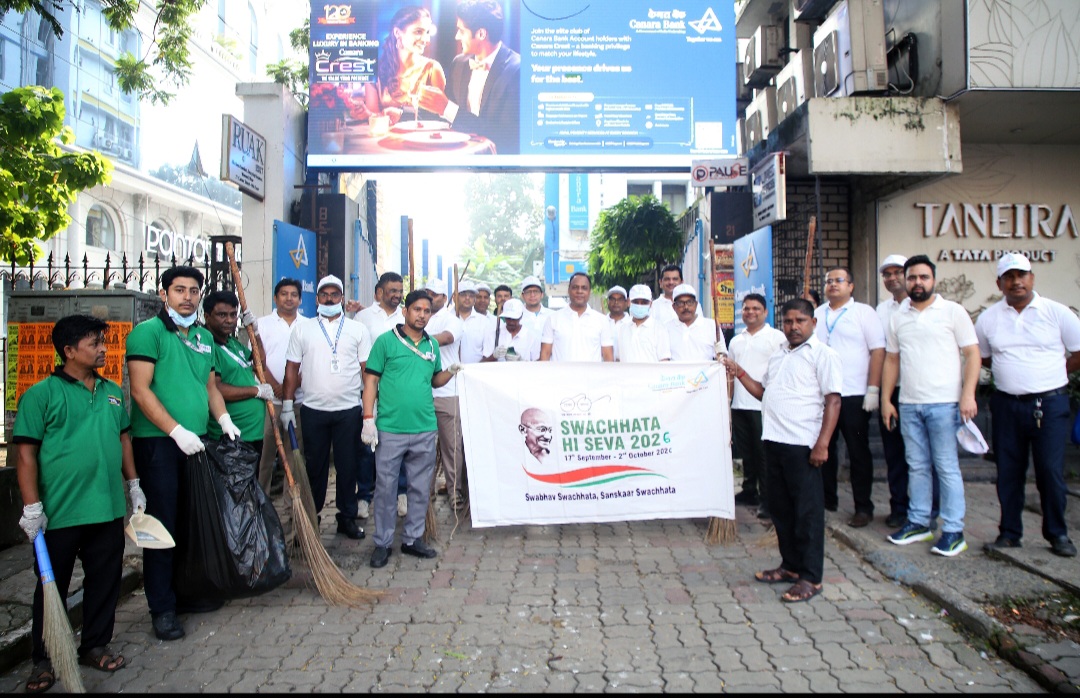
Kolkata | Oct 02: Canara Bank, Kolkata Circle, organised a “Swachhata Hi Seva” Campaign on 1st October 2026 at its Circle Office premises in Kolkata, reaffirming the Bank’s commitment towards cleanliness, sanitation and responsible citizenship.
The cleanliness drive was conducted in the presence of Shri Manoj Kumar Meena, General Manager & Circle Head, Canara Bank, Kolkata Circle, along with Deputy General Managers, other executives and staff members of the Circle Office. Officials and employees actively participated in cleaning the office premises as well as the adjoining areas, spreading the message that cleanliness is a shared civic responsibility.
Addressing the gathering, Shri Manoj Kumar Meena highlighted the significance of the Swachhata Hi Seva initiative and emphasised the important role of every citizen in maintaining cleanliness and hygiene in workplaces, neighbourhoods and public spaces. He encouraged employees to make cleanliness a part of everyday life and contribute actively to the larger national cleanliness movement.
As part of the programme, sanitation equipment was distributed among the cleaning staff to support their day-to-day work. In recognition of their invaluable contribution towards maintaining a clean and hygienic workplace, thank-you gift hampers were also presented to the cleaning staff as a gesture of appreciation.
The programme concluded with a collective commitment by the officials and staff of Canara Bank, Kolkata Circle, to uphold the spirit of “Swachhata Hi Seva” and contribute towards a cleaner, healthier and more responsible society.
2, Oct 2026
Survey: CHRO Confidence Remains in Positive Territory, But Continues to Inch Down
AI Is Changing Workforce Planning, Yet Few Organizations Feel Fully Prepared
New York, October 2, 2026—CHRO confidence remained positive in Q3, but continued to edge down from its record high earlier this year. That’s according to the latest survey of US chief human resource officers (CHROs) from The Conference Board.
The CHRO Confidence Index declined to 56 in Q3 from 58 in Q2. A reading above 50 reflects more positive than negative responses. The hiring component of the Index rose slightly, while the retention and engagement components declined.
The survey also reveals that AI is already changing workforce planning, even as many organizations remain early in preparing for its impact. More than 8 in 10 CHROs (82%) say their organization has changed its workforce-planning process because of AI, although half describe the change as only slight. Just 19% say anticipated AI effects have been incorporated into workforce and financial planning across the enterprise.
And while 55% of CHROs consider their organizations at least somewhat prepared to manage AI-driven workforce change over the next two years, only 4% say they are very prepared. The biggest barriers are difficulty predicting AI’s workforce impact (41%), limited AI skills (39%), and an unclear AI strategy (31%).
“CHROs are still planning to hire, but the broader workforce picture is becoming more cautious,” said Diana Scott, US Human Capital Center Leader, The Conference Board. “Organizations are balancing the need for talent with slower workforce growth and mounting concerns about engagement and retention. At the same time, AI is forcing leaders to rethink what skills they will need in the future and how they plan their workforces.”
Hiring: Do HR leaders expect to hire more employees in the next six months?
The CHRO Confidence Index: Hiring component was 61 in Q3, up from 59 in Q2.
Hiring expectations remain positive.
- 53% expect hiring to increase over the next six months, compared with 17% who expect it to decrease.
- Those expectations were relatively stable from Q2, when 54% expected an increase and 17% expected a decrease.
Expectations for overall workforce size have cooled.
- 49% expect total workforce size to increase over the next six months, down from 55% in Q2.
- 28% expect workforce size to remain unchanged, up from 23%.
- 23% expect their workforce to decrease, essentially unchanged from 22% in Q2.
Retention: Do HR leaders expect employees to stay over the next six months?
The CHRO Confidence Index: Retention component declined slightly to 54 in Q3 from 55 in Q2.
Retention expectations softened.
- 33% of CHROs expect employee retention to increase, down from 36% in Q2.
- 22% expect retention to decrease, up from 19%.
- The gap between those expecting improvement and deterioration narrowed to 11 percentage points from 17 points in Q2.
Engagement: Were employees committed, motivated, and connected to their work and the organization over the past six months?
The CHRO Confidence Index: Engagement component fell to 55 in Q3 from 59 in Q2.
Employee engagement emerged as the clearest source of weakness this quarter.
- 44% report increased engagement, down slightly from 46% in Q2.
- 24% report decreased engagement, up notably from 16% in Q2.
AI and Workforce Planning: How is AI changing organizations’ workforce planning?
Most are changing workforce planning because of AI, but for many, the changes remain limited.
- 50% of CHROs say their organization has made only a slight change to workforce planning.
- 25% report a moderate change, while only 7% report a significant change.
Organizations are analyzing AI’s impact more often than changing how frequently they plan.
Among organizations that have changed their workforce planning process:
- 67% have analyzed AI’s potential impact on jobs, tasks, or workforce demand.
- 67% have brought AI technologies or AI leaders into workforce planning discussions.
- 45% have incorporated new AI-related workforce, skills, or labor-market data.
- Just 21% have changed workforce planning schedules; 20% have increased the frequency of planning.
Enterprise-wide integration of AI into workforce planning remains limited.
- Enterprise-wide incorporation is 19% for both global and non-global organizations.
- Among global organizations, 32% have incorporated anticipated AI effects into workforce and financial planning for selected functions, roles, business units, or geographies.
- Among non-global organizations, 30% have done the same.
The biggest barriers to successful AI workforce planning are:
- 41%: Difficulty predicting AI’s workforce impact.
- 39%: Limited AI skills among the current workforce.
- 31%: An unclear AI strategy.
- Financial resources, executive alignment, and workforce data are cited much less frequently as barriers.
Few organizations feel very prepared for AI-driven workforce change.
- 55% describe their organization as prepared to manage AI-driven workforce change over the next two years, but only 4% say they are very prepared.
- 27% say their organization is unprepared.
“AI is clearly becoming part of workforce planning, but most organizations are still working through what it means in practice,” said Robin Erickson, PhD, Head of Human Capital Research, The Conference Board. “The biggest obstacles aren’t simply budget or data. Organizations are uncertain about how AI will change work, the potential gaps in workforce skills, and, thus, the lack of a clear AI strategy. CHROs will need to connect the HR technology strategy much more closely with workforce and skills planning.”
2, Oct 2026
SimonMed Brings Arizona’s First AI-Powered Pristina Recon DL Mammography Technology to Scottsdale
Advanced AI-powered software enhances 3D mammography image clarity to support early breast cancer detection at no additional cost to patients
SCOTTSDALE, Ariz., October 2, 2026 – SimonMed, a leading company in radiology, imaging and longevity technology, on Thursday announced that it will become the first imaging provider in Arizona to introduce Pristina Recon DL, GE HealthCare’s advanced AI-powered mammography image reconstruction technology.
The software will be integrated into GE HealthCare’s Senographe Pristina mammography system at SimonMed’s Scottsdale Mountain View location, with the first patient examinations anticipated in early October, coinciding with Breast Cancer Awareness Month.
Pristina Recon DL uses two deep learning models to enhance image quality and improve the visualization of subtle details that may be important in identifying breast cancer. The technology delivers sharp, clear 3D mammography images without increasing radiation dose or changing the patient exam experience.
For patients, this means access to advanced imaging technology designed to provide greater diagnostic clarity while maintaining a comfortable, efficient screening experience. Regular screening lowers a woman’s risk of dying from breast cancer by 26%, and when breast cancer is caught while still localized, the five-year survival rate climbs to 99%* — underscoring why sharp, clear imaging at the point of screening matters so much.
“Early detection saves lives, and our mission at SimonMed is to bring the most advanced, life-saving technology to the communities we serve without creating additional financial barriers for patients,” said John Simon, MD, Founder and Chief Executive Officer of SimonMed. “By bringing this technology to Arizona first, we’re giving our radiologists even clearer images to help identify subtle signs of breast cancer and providing referring physicians with the advanced imaging they rely on to care for their patients. And we’re making these advances available at no additional cost. That’s what innovation should look like in healthcare.”
In a GE HealthCare preference study, radiologists preferred the overall image quality of Pristina Recon DL in 99.11% of image evaluations compared to previous digital breast tomosynthesis (DBT) reconstruction. Pristina Recon DL shows superior performance in the detection of microcalcification clusters and masses in a trial with modeled clinical data.
For referring providers, the technology represents another advancement in the imaging and diagnostic expertise available to their patients. By providing radiologists with sharp, clear 3D mammography images, SimonMed aims to support the identification and evaluation of subtle findings, helping physicians make informed decisions about patient care and recommended next steps.
“At GE HealthCare, we’re focused on developing innovations that give clinicians the clarity and confidence they need to deliver exceptional patient care,” said Victoria Daly, VP, Women’s Health, US and Canada, GE HealthCare. “By implementing Pristina Recon DL, SimonMed is bringing advancements in deep learning image reconstruction to women in Arizona, combining exceptional image quality with an efficient, patient-centered mammography experience. Together, we’re helping expand access to innovative solutions that can help support early detection of breast cancer.”
2, Oct 2026
Registration Opens for the 2026 Eye Level Math Olympiad
SEOUL, South Korea, Oct. 2, 2026 /PRNewswire/ — Eye Level has opened registration for the 2026 Eye Level Math Olympiad (ELMO 2026), inviting elementary and middle school students from around the world to take part in the annual global math competition.
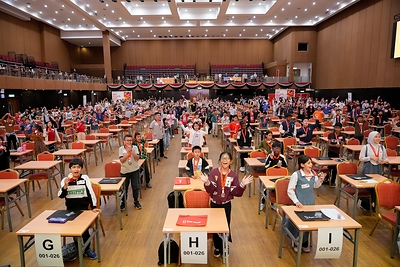
This year, ELMO extends its reach to South America for the first time, with Ecuador joining the competition. ELMO 2026 will be held across participating countries and regions including Australia, Canada, Hong Kong, Macau, India, Indonesia, Malaysia, Myanmar, New Zealand, the Philippines, Singapore, Taiwan, Thailand, the United Kingdom, the United States, Uzbekistan, Vietnam, and Ecuador, with schedules varying by country and region.
Established in 2004, the Eye Level Math Olympiad is an international math competition designed to challenge students’ mathematical thinking and problem-solving skills. Reflecting the spirit of “One Test. A Thousand Possibilities,” ELMO encourages students to discover their potential and grow through the experience.
The ELMO assessment is organized by grade level and evaluates a range of mathematical abilities, including mathematical knowledge and arithmetic skills, the ability to understand and formulate word problems, and problem-solving proficiency. Through the competition, students can gain a clearer understanding of their current mathematical abilities, recognize their strengths, and identify areas that can help guide their next steps in learning.
Official results will be announced in January 2027 on globalelmo.com. Participants will also receive an individual result report with a detailed analysis of their performance.
Registration and detailed information, including local schedules, are available at globalelmo.com.
About Eye Level
Eye Level is a global education brand offering Math and English programs to students around the world. Its learning approach focuses on helping students learn at their own level while building independent learning habits and problem-solving skills.
 View original content to download multimedia:https://www.prnewswire.co.uk/news-releases/registration-opens-for-the-2026-eye-level-math-olympiad-302895725.html

2, Oct 2026
Midea Showcases Breakthrough Cooling Technologies for High-Density AI Data Centers at Data Center World Asia 2026
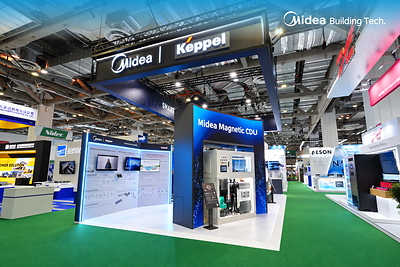
SINGAPORE, Oct. 2, 2026 /PRNewswire/ — The Asia Data Centre World 2026 was held at Marina Bay Sands, Singapore from September 29 to 30. During the exhibition, Midea Building Technologies (MBT) showcased its next-gen power-cooling hyperconvergence architecture and full stack AI Data Center (AIDC) cooling solutions for the Asia-Pacific region, covering key application scenarios such as high-density computing, liquid cooling, tropical climate and low-carbon operation. The exhibition hall was crowded with visitors, and discussions around AI infrastructure upgrading, Data center energy efficiency optimization and the development of liquid cooling technology continued to heat up, attracting numerous industry customers, partners and technical experts to stop and exchange views.

Power-Cooling Hyperconverged Architecture, The Industry-First Breakthrough
At the event, MBT presented the industry’s first power-cooling hyperconverged architecture. Integrating power systems, energy storage, magnetic bearing cooling sources, and liquid cooling CDUs into a unified infrastructure stack, it connects “power supply—energy storage—cooling—liquid cooling distribution” from the early stage of data center construction.
During the event, MBT also released a related technical white paper, further elaborating on the architecture’s technology pathway across AI data center planning, construction, and operation. More than a summary of Midea’s technical solutions, the white paper reflects a deep understanding of the global development trends in data center infrastructure, providing a quantifiable and replicable technical reference for addressing the key challenge of integrating electrical and thermal systems.
As rack power density rises, this system-level approach improves the matching between power supply and cooling. Coordinated operation of magnetic bearing cooling sources, free cooling, and liquid cooling terminals also reduces reliance on mechanical cooling, supporting improved PUE performance and low-carbon operation.
Full-Stack Cooling, The Revolutionary Innovation
Addressing the full-chain heat dissipation requirements of AI data centers from cooling source to terminal, this full-stack cooling solution connects the cooling source, cooling distribution, and terminal heat dissipation links, enabling efficient temperature control under complex climate conditions and resource constraints. Built on this system, three flagship products are serving as the key pillars for solution deployment.
Magnetic CDU: Integrating a magnetic bearing cooling source with a distribution unit, it replaces the separated “chiller + passive CDU” model. It reduces equipment footprint by up to 70%, shortens deployment cycles, and supports a PUE below 1.2 under suitable operating conditions.
Air-Cooled Magnetic Centrifugal Chiller: Designed for hot, water-scarce environments, it reduces cooling water dependence and delivers a COP of up to 5.4, providing an efficient and flexible cooling source for data centers.
Industrial-Grade CDU: With 2.6 MW cooling capacity at a 3K temperature difference and high-availability support, it ensures stable liquid cooling distribution for large-scale AI clusters and high-density racks.
MBT × Keppel: Building the Future of Green Data Centers
At DCW Asia, MBT highlighted its strategic collaboration with Keppel on green data center infrastructure from design to delivery and operation. The Gui’an Midea Cloud Data Center in China showcases this partnership, combining MBT’s hardware with Keppel’s digital platform to deliver up to 7,654 hours of annual free cooling and a stable PUE below 1.2. It offers a replicable model for green data center development across APAC’s fast-growing AI infrastructure markets.
From full-stack AIDC cooling solutions to power-cooling hyperconvergence architecture, and from magnetic innovation to collaboration with Keppel, MBT is reinforcing its commitment to the Asia Pacific market. Backed by the world’s first fully AI-powered chiller Lighthouse Factory, 193 local service sites across 29 countries, and spare parts centers in 34 countries, MBT is ready to provide responsive support and empower the next generation of efficient, resilient data centers across Asia Pacific.
 View original content to download multimedia:https://www.prnewswire.com/in/news-releases/midea-showcases-breakthrough-cooling-technologies-for-high-density-ai-data-centers-at-data-center-world-asia-2026-302893929.html

1, Oct 2026
SQC and Schneider Electric Use Hybrid Quantum-Classical Models to Improve Energy Forecasting
Partnership moves to Stage 2 of Australia’s Critical Technologies Challenge Program following an average 20% improvement in forecasting accuracy with SQC’s Watermelon™ system
SYDNEY, Oct. 2, 2026 /PRNewswire/ — Silicon Quantum Computing (SQC) and Schneider Electric, a global energy technology leader, have progressed to Stage 2 of the Australian Government’s Critical Technologies Challenge Program (CTCP), receiving A$3.6 million (US$2.5m) in funding to continue their work in partnership with UNSW Sydney.
Energy grids are under increasing pressure and urgent solutions are required. As rooftop solar, home batteries and electric vehicles become widespread, household energy systems have become more dynamic and difficult to predict. Schneider Electric uses advanced forecasting and optimisation technologies to help balance distributed energy resources, including forecasting when to switch back and forth to solar energy deployment.
During Stage 1, the joint team explored whether SQC’s atomically engineered, quantum-enhanced AI chip, Watermelon, could improve the accuracy of Schneider Electric’s forecasting models. Watermelon generates quantum features that, when used alongside classical features, deliver richer models with greater predictive abilities.
For companies like Schneider Electric, more accurate forecasting can improve the management of distributed energy resources, increase renewable energy utilisation and contribute to lower energy costs for consumers. Even modest improvements in forecasting accuracy can deliver these benefits, and Stage 1 results delivered well beyond that threshold.
By applying Watermelon to next-day forecasting data over a 12-month period, SQC and Schneider Electric achieved an average 20% improvement in forecasting accuracy against the classical benchmark, with gains up to 41%.
Building on these results, Stage 2 funding will expand modelling to hundreds of homes across Australia, with direct integration into Schneider Electric’s AI workflows. This work provides a clear pathway for today’s quantum computing systems to be used in production environments.
Michelle Simmons, Founder and CEO of Silicon Quantum Computing, said: “We have always believed that quantum processors would work alongside CPUs and GPUs to deliver real-world performance gains. The results we have achieved with Schneider Electric demonstrate how quantum-enhanced AI can address practical challenges across the energy sector and time-series datasets more broadly. We’re grateful to the Australian Government for continuing to back this important work.”
Colette Munro, Pacific Zone President at Schneider Electric, added: “The energy system is becoming more dynamic with variables like rooftop solar, EVs, and home batteries creating new levels of complexity. Together with SQC, we’ve demonstrated how advanced energy technology has the potential to better manage this complexity, lowering costs for consumers and using energy more efficiently across the system.”
Launched in 2025, Watermelon is deployed with customers across telecommunications, banking, high-frequency trading and more. The system is available via cloud and hardware sale, including turnkey data center deployment.
About Silicon Quantum Computing
Silicon Quantum Computing (SQC) is at the forefront of global efforts to deliver a commercial-scale quantum system. Backed by 25 years of technological leadership, SQC holds a singular advantage: exclusive capability to manufacture silicon chips with atomic precision, enabling quantum computing systems with world-leading algorithmic fidelity. With in-house QPU manufacturing, SQC iterates new chips weekly while delivering quantum-enhanced AI and materials simulation systems to customers today. The company was founded in 2017 and is headquartered in Sydney, Australia.
For more information, visit www.sqc.com or follow SQC on LinkedIn.
About Schneider Electric
Schneider Electric is a global energy technology leader, driving efficiency and sustainability by electrifying, automating, and digitalizing industries, businesses, and homes. Its technologies enable buildings, data centers, factories, infrastructure, and grids to operate as open, interconnected ecosystems, enhancing performance, resilience, and sustainability. The portfolio includes intelligent devices, software-defined architectures, AI-powered systems, digital services, and expert advisory.
With 160,000 employees and one million partners in over 100 countries, Schneider Electric is consistently ranked among the world’s most sustainable companies.
For more information, visit www.se.com.
Media Contact
press@sqc.com
 View original content:https://www.prnewswire.co.uk/news-releases/sqc-and-schneider-electric-use-hybrid-quantum-classical-models-to-improve-energy-forecasting-302896041.html

1, Oct 2026
IBM Elects Frank Baker to its Board of Directors
ARMONK, N.Y., Oct. 1, 2026 /PRNewswire/ — The IBM (NYSE: IBM) board of directors has elected Frank Baker to the board, effective October 1, 2026.
Frank Baker, 53, is a Co-founder and the Managing Partner of Siris Capital Group, LLC (“Siris”). Siris is a leading private equity firm that has deployed more than $9 billion of equity capital since inception across technology, telecommunications, and data-focused companies.
Arvind Krishna, IBM chairman, president and chief executive officer, said: “We are excited to welcome Frank Baker to our Board of Directors. I look forward to the perspective and insight Frank will bring as we advance our long-term vision and drive enterprise‑wide transformation through technology both for our clients and across IBM. His deep expertise, proven leadership, and strategy-driven mindset will strengthen our business and further deliver significant value to our shareholders.”
Mr. Baker oversees Siris’ portfolio and leads its investment strategy, driving value creation in established technology companies with mission-critical products and services that are navigating technology changes. His leadership and passion for development have been instrumental in driving the firm’s success.
Prior to Siris, he was a Managing Director at Ripplewood Holdings and began his career in mergers and acquisitions at Goldman Sachs. He currently serves as a trustee of the University of Chicago, Chairman of the Board of the Robert & Ethel Kennedy Human Rights Center, and trustee of Deerfield Academy.
Born and raised near Detroit, Michigan, Mr. Baker holds an MBA from Harvard Business School and a B.A. in economics from the University of Chicago.
Contact:
Erin McElwee
347-920-6825
Erin.McElwee@ibm.com
 View original content to download multimedia:https://www.prnewswire.co.uk/news-releases/ibm-elects-frank-baker-to-its-board-of-directors-302896418.html

1, Oct 2026
Diego Mesa Puyo takes over as CEO and Chairperson of the Global Environment Facility
- First term for the former Colombian Minister of Energy and Mines aligns with global push to 2030 environmental goals
- Country pledges to Global Environment Facility ninth replenishment grow to over $4 billion
WASHINGTON, Oct. 1, 2026 /PRNewswire/ — Colombian-Canadian economist and sustainable development expert Diego Mesa Puyo today took up his new role as CEO and Chairperson of the Global Environment Facility (GEF), beginning a four-year term at the helm of the world’s largest public funder for the environment. His mandate coincides with the 2026–2030 GEF-9 funding cycle, backed by over $4.3 billion in initial donor pledges to protect and restore the global environment, including a new pledge of £330 million announced last week by the UK government.
“We have a global responsibility to protect nature and the environment while propelling sustainable economic growth. Achieving the 2030 goals requires bringing development and environmental action together,” said Mesa Puyo. “The GEF is uniquely positioned within the global financial architecture to bring governments, investors and communities together to deliver global environmental benefits that last, and I am honored and delighted to get started on this work today.”
“Investing in nature is investing in resilience and sustainable development for people and planet,” Mesa Puyo continued. “Donor governments have been generous in prioritizing this work through our more than $4 billion replenishment in GEF-9, and I am ready to take this forward alongside our exceptional Secretariat team and with our partners around the globe.”
Mesa Puyo is an international expert in energy policy, economic development, resilience, and sustainability, who most recently served as Deputy Chief of the Climate Policy Division at the International Monetary Fund (IMF). He served as Minister of Energy and Mines during Colombia’s 2018–2022 administration, leading one of Latin America’s most ambitious energy transition agendas mobilizing more than $3 billion in private investment.
At the GEF, his tenure will focus on the priorities the GEF’s member countries have agreed for the sprint to 2030 environmental goals: scaling integrated solutions, expanding blended finance, strengthening whole-of-government and whole-of-society approaches, and improving institutional effectiveness. The GEF-9 funding period will also deepen support for Least Developed Countries and Small Island Developing States and expand engagement with Indigenous Peoples and local communities.
Mesa Puyo holds a master’s degree in economics from McGill University, a bachelor’s degree in economics from Concordia University, and has held the Chartered Financial Analyst (CFA®) designation since 2012. He succeeds Claude Gascon, who returns to his role as Director of Strategy and Operations after serving as Interim CEO and Chairperson.
 View original content:https://www.prnewswire.co.uk/news-releases/diego-mesa-puyo-takes-over-as-ceo-and-chairperson-of-the-global-environment-facility-302896377.html



