


10, Nov 2026
Odisha Weather Update: Low Pressure Likely Over Bay of Bengal on November 13, Temperature to Drop 2-3°C
Bhubaneswar, Nov 10 (UDN): Odisha may witness another spell of changing weather conditions as the India Meteorological Department (IMD) has forecast the formation of a fresh low-pressure area over the southeast Bay of Bengal around November 13.

Representational Image
The developing weather system is likely to move northwestwards and intensify into a well-marked low-pressure area within 24 hours of its formation. It may further strengthen into a depression around November 15, raising the possibility of changing weather conditions along parts of India’s eastern and southern coastline.
However, there is no specific forecast yet regarding rainfall activity or the areas likely to be affected by the system.
New Weather System Over Bay of Bengal: What IMD Predicts
According to the latest weather outlook, an upper-air cyclonic circulation is expected to develop over the southeast Bay of Bengal before evolving into a low-pressure area around November 13.
The system is then likely to move northwestwards, with the possibility of further intensification over the following days.
However, its exact trajectory, strength and potential impact remain uncertain at this stage.
Weather expert Dr Jyoti Prakash Mishra said it was too early to make a definite assessment of the system’s movement and intensity.
“The system is still in a preliminary stage, making it difficult to predict its intensity, movement and possible impact,” he said.
He added that an upper-air cyclonic circulation was expected to develop before the formation of the low-pressure area.
Will the Developing System Bring Rain to Odisha?
The possible impact of the approaching system on Odisha remains unclear.
According to Dr Mishra, low-pressure systems developing over the Bay of Bengal during October and November generally tend to influence coastal areas of Andhra Pradesh and Tamil Nadu more significantly.
Odisha may experience a comparatively limited impact from the approaching system. However, its actual influence will become clearer only after November 13, once the system develops and its movement can be assessed more accurately.
At present, there is no confirmed forecast regarding rainfall, landfall or specific districts likely to be affected.
Odisha Likely to Witness 2-3°C Temperature Drop
While the developing low-pressure system remains under watch, Odisha is likely to experience cooler weather over the next few days.
Minimum temperatures across the state may fall by around 2 to 3 degrees Celsius over the next two to four days, mainly due to the influx of cold and dry winds from northern and northwestern regions.
The change in wind patterns is expected to bring a noticeable chill, particularly during night and early morning hours.
However, the temperature trend could change if the developing weather system draws moisture towards Odisha.
An increase in moisture levels may lead to a rise in minimum temperatures, depending on the system’s movement and intensity.
Odisha Weather: What to Expect in the Coming Days
For now, the state is likely to experience cooler nights as northerly and northwesterly winds influence local weather conditions.
The developing Bay of Bengal system will remain an important factor to watch, particularly after November 13.
Meteorological assessments over the next few days are expected to provide greater clarity on whether the system will influence Odisha’s weather or move towards the southern coastal states.
Residents are advised to follow subsequent IMD bulletins for updated information on rainfall, temperature changes and any possible weather warnings.
- 0
- By Neel Achary

10, Nov 2026
Hexnode appoints Lars Gommermann as DACH Sales Director for Channels and Alliances
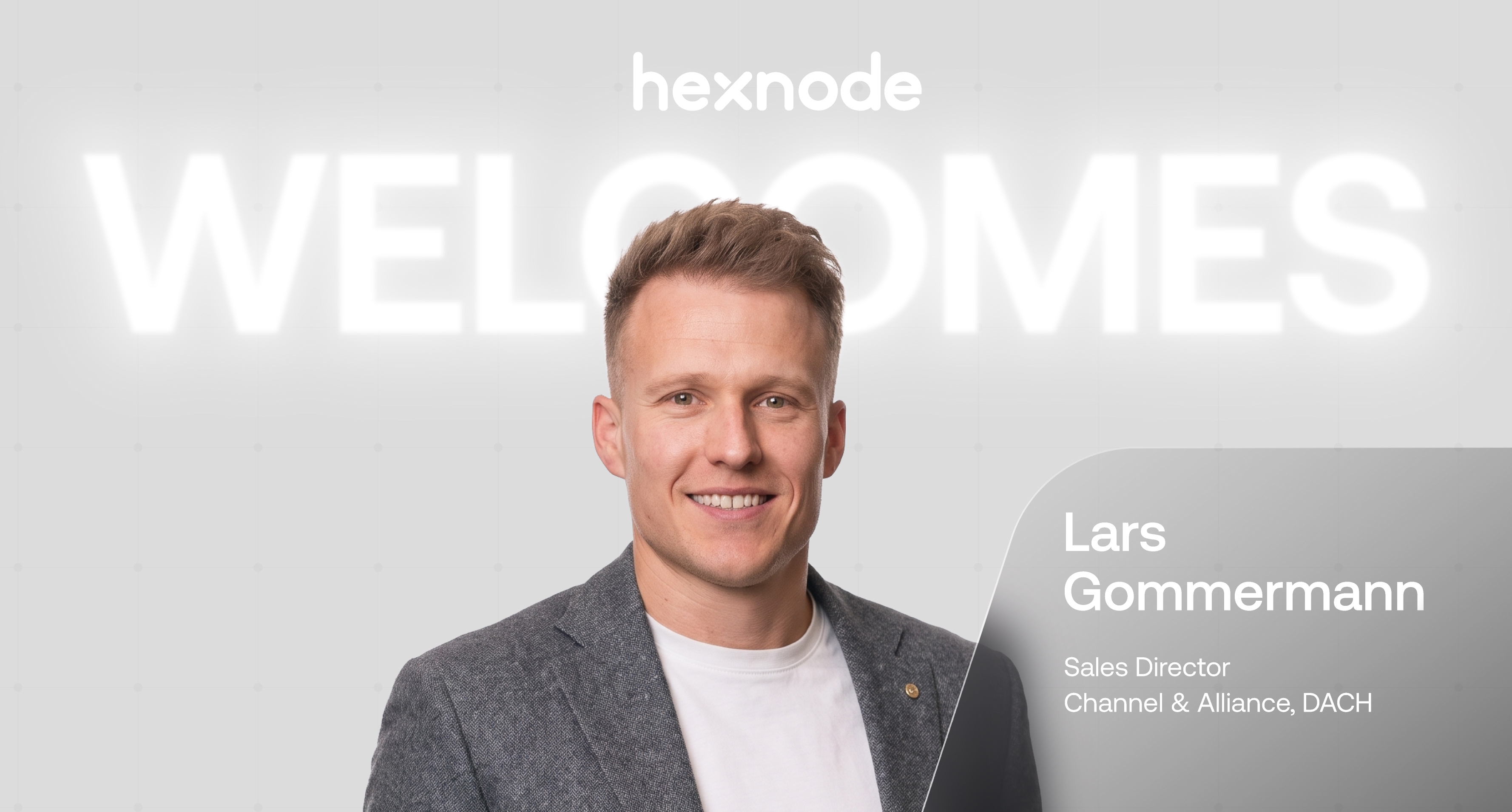
Munich, Germany, Nov 10: Hexnode, the enterprise software division of Mitsogo Inc., today announced the appointment of Lars Gommermann as Sales Director for Channels and Alliances for the DACH region.
The appointment follows Hexnode’s recent addition of a UK channel and alliances director, as the company builds dedicated partner leadership in its largest European markets. Across Germany, Austria and Switzerland, IT systems houses and distributors carry a growing share of Hexnode’s business as customers adopt endpoint management, security and identity from a single vendor.
Before joining Hexnode, Gommermann served as Channel Account Manager for DACH at CrowdStrike, responsible for recruiting, onboarding and developing partners across the region. He has more than 13 years in technology sales and channel development, on both the vendor and distributor sides.
In his new role, Gommermann will focus on broadening Hexnode’s channel network and developing strategic alliances across DACH. He will help partners sell Hexnode UEM, Hexnode XDR and Hexnode IdP to new accounts and existing customers.
“German-speaking partners have high expectations of a vendor: clear plans, reliable support, and a portfolio they can build a practice around. Lars has worked on both the vendor and distribution sides of this channel, so he knows those expectations first-hand and how to meet them. I’m delighted to welcome him to the team,” said Tim Bell, Vice President of Sales for EMEA & APJ at Hexnode.
“IT systems houses and distributors in DACH are looking for fewer vendors that can cover more of the stack, and Hexnode brings endpoint management, security and identity together in one platform. The first step is to understand how each partner goes to market and where we fit in their portfolio. My focus is on finding where our priorities align and then supporting partners consistently, from the first conversation to the customer,” said Gommermann.
10, Nov 2026
Odisha Pension Scheme: CM Majhi Ends Years-Long Wait, Eligible Applicants to Get Pension Next Month
Bhubaneswar, Nov 10 (UDN): In a major relief for thousands of pension applicants across Odisha, Chief Minister Mohan Charan Majhi has announced that eligible beneficiaries will no longer have to wait for years to receive financial assistance under the Madhu Babu Pension Yojana (MBPY).
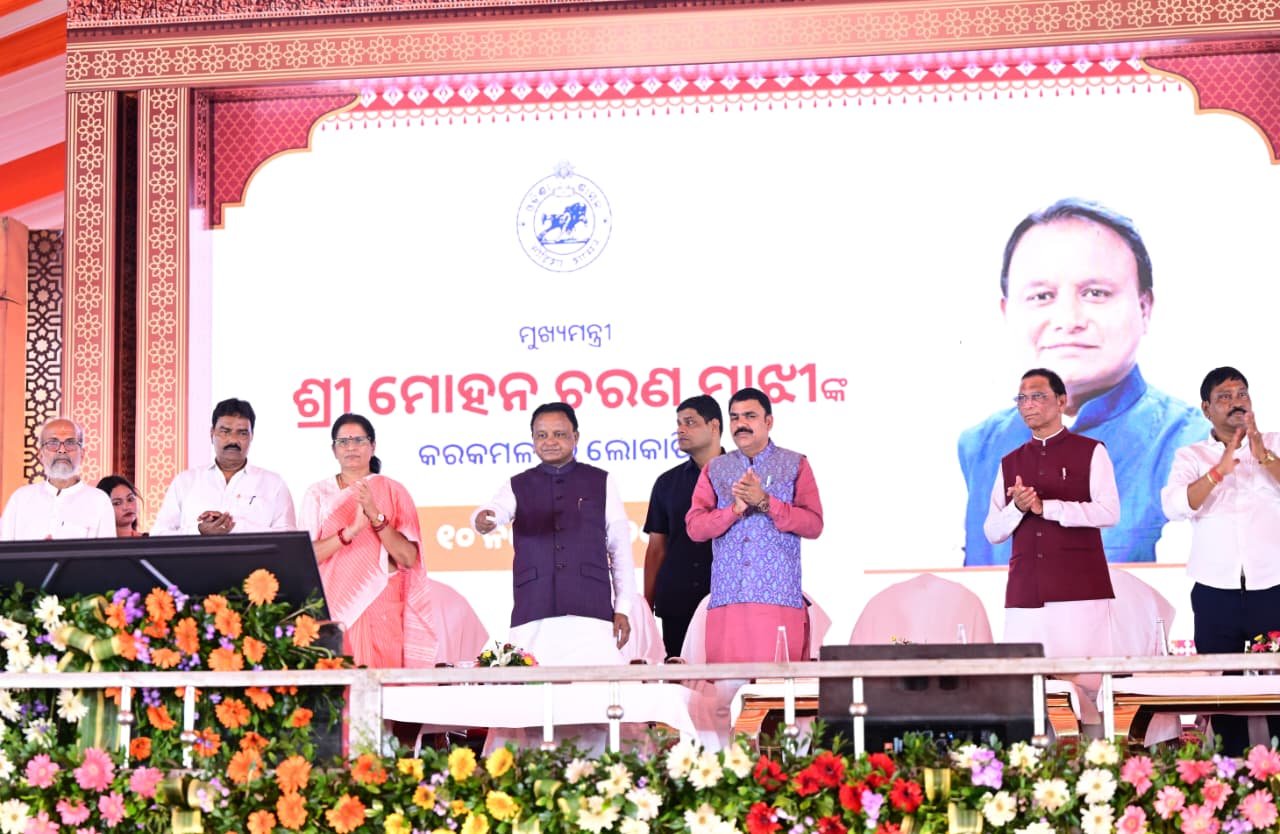
Pic Credit: x.com/IPR_Odisha
Under the revised system, applicants whose pension applications are approved will start receiving their entitled benefits from the following month, ending the prolonged waiting period that many eligible people have reportedly faced.
The Chief Minister said the expansion of the pension scheme fulfils the commitment made by his government in the previous Budget to bring every eligible person under the social security programme.
Odisha Government Fulfils Budget Promise on Pension Coverage
Ahead of the launch of the expanded pension programme in Balasore on Tuesday, Majhi shared a message on social media reiterating the government’s commitment to strengthening social security across the state.
He said the inclusion of eligible people who had been waiting for pension benefits for years was now becoming a reality.
As part of the expansion, more than five lakh additional beneficiaries are being brought under the Madhu Babu Pension Yojana, significantly widening the scheme’s coverage.
The Chief Minister said the initiative was aimed at ensuring that financial assistance reaches eligible people without unnecessary administrative delays.
New System to Ensure Pension From Month After Approval
One of the most significant changes announced by the state government is the revised timeline for pension disbursement.
Previously, applicants often faced prolonged waiting periods even after applying for benefits. Under the new arrangement, eligible applicants will begin receiving pensions from the month immediately following approval of their applications.
The government has also introduced administrative reforms to make the application, verification and payment processes simpler and more transparent.
The changes are expected to reduce procedural hurdles and improve access to pension benefits for senior citizens and other vulnerable sections of society.
What CM Mohan Charan Majhi Said
Taking to his official X handle, the Chief Minister said social security and dignified living remained among the government’s highest priorities.
“Our government has always given the highest priority to the social security and dignified living of the people of Odisha. To eliminate the long waits and difficulties in receiving benefits, a major administrative reform has been introduced in the system, making the benefit disbursement process transparent, simple and accessible,” Majhi said.
He further stated that the government’s Budget announcement to include every eligible person under the Madhu Babu Pension Yojana was now being implemented.
“From now on, there will be no need to wait year after year for benefits; eligible beneficiaries will receive their entitlements directly from the month following the approval of their application,” the Chief Minister added.
Over 5 Lakh New Beneficiaries to Receive Pension Benefits
Announcing the expansion ahead of the Balasore programme, Majhi said more than five lakh eligible people who had been waiting for pension assistance would be brought under the scheme.
He also said their pension benefits would be disbursed from October as part of the special inclusion drive.
The expansion is expected to provide financial support to thousands of vulnerable households, particularly elderly people, widows and persons with disabilities who depend on regular pension assistance.
Focus on Dignity and Social Security
The latest reform marks an important step in the Odisha government’s efforts to strengthen its social welfare delivery system.
By expanding pension coverage and introducing a time-bound disbursement mechanism, the government aims to reduce uncertainty for applicants and ensure that eligible beneficiaries receive assistance without prolonged delays.
For many elderly citizens and economically vulnerable families, timely pension payments are more than just financial support. They are an essential source of security and dignity.
The government now faces the task of ensuring that the promised reforms translate into timely payments and smoother services at the grassroots level.
10, Nov 2026
Hyderabad to Bring Its Entrepreneurial Ecosystem Together at HES 2026
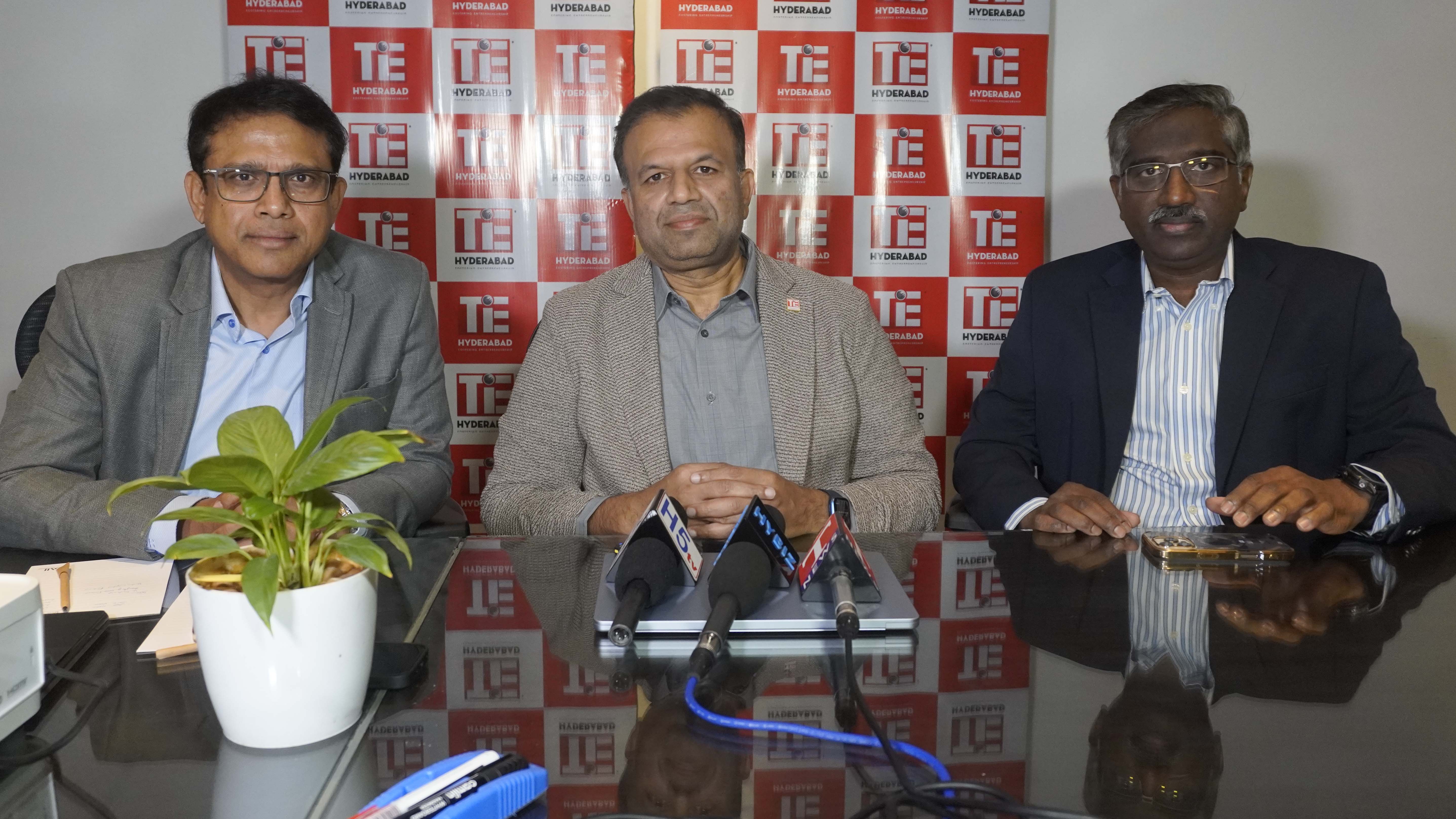
Hyderabad, Nov 10: Shri D. Sridhar Babu, Hon’ble Minister for IT, E&C and Industries, Government of Telangana, will attend the Hyderabad Entrepreneurship Summit (HES) 2026 as Chief Guest and deliver the keynote address on “Telangana: Building the Next Generation of Global Enterprises.” Shri Sanjay Jaju, Chief Secretary, Government of Telangana, will deliver the Opening Keynote Address on “Bet on Hyderabad.”
Hosted by TiE Hyderabad and promoted by the Hyderabad Entrepreneurial Ecosystem Collective (HEEC), HES 2026 will be held on November 20 at HICC Novotel, Hyderabad. The Summit will bring together entrepreneurs, investors, industry leaders, policymakers and ecosystem institutions to explore opportunities for enterprise creation, business growth, investment and global expansion.
Built around the theme INCLUSIVE • SCALE • LEADERSHIP – Bet on Hyderabad, the Summit is expected to attract over 2,000 entrepreneurs and business leaders, 120+ investors, 80+ speakers and 30+ ecosystem partners.
Going beyond conventional conference discussions, HES 2026 aims to create meaningful connections between businesses and capital, markets, technology, knowledge and collaborative opportunities, strengthening Hyderabad’s position as a preferred destination for entrepreneurship and enterprise growth.
The Summit will feature keynote addresses, panel discussions, fireside chats and masterclasses, bringing together founders, investors, industry experts and domain leaders to examine emerging opportunities across artificial intelligence, defence, space infrastructure, investment, quick commerce, family offices, SME IPOs and other growth sectors.
Discussions will focus on technology adoption, access to capital, market expansion and the capabilities required to build and scale competitive enterprises. The masterclasses will provide practical insights into business strategy, fundraising, innovation and emerging technologies.
HES 2026 also comes at an important time for Telangana’s investment ambitions, serving as a precursor to the Invest Telangana Global Summit 2026. By bringing together entrepreneurs, investors and industry leaders, the Summit seeks to build momentum around the State’s business potential and reinforce Telangana’s positioning as a destination for innovation, investment and globally competitive enterprises.
The HES Expo will showcase the entrepreneurial and technological capabilities of Hyderabad and Telangana, bringing together startups, technology companies, innovators and ecosystem partners.
The Expo will feature startup showcases, technology exhibitions and dedicated thematic pavilions, including:
AI Pavilion: Showcasing artificial intelligence, deep technology and emerging applications transforming industries.
Space & Defence Pavilion: Highlighting indigenous innovation, startups and emerging opportunities across aerospace, space technology and defence.
Social Impact Pavilion: Featuring entrepreneurs, organisations and initiatives using innovation and sustainable business solutions to address social challenges.
Sports Pavilion: Exploring the evolving sports technology ecosystem, innovation, business opportunities and the intersection of technology, entrepreneurship and sports.
The pavilions will provide participating enterprises an opportunity to demonstrate their capabilities, engage with investors and industry leaders, identify potential customers and explore strategic partnerships.
A major highlight of the Summit will be TiE50 Telangana 2026, an initiative spearheaded by TiE Hyderabad, with Qualcomm as Program Sponsor, to identify and recognise 50 promising startups from across Telangana.
Selected startups will receive 12 months of founder support, dedicated mentorship, access to TiE’s global network and partner benefits valued at over ₹5 lakh.
Together, Qualcomm, KPMG, Tempus Law Associates, Charantra and Rockwell Business School bring independent expertise and oversight to the TiE50 Telangana 2026 selection process, ensuring the highest standards of fairness, transparency, objectivity and rigour in identifying the state’s 50 most promising startups. These organisations are supporting the validation of the evaluation process and assessment metrics, along with the publication of the TiE50 Telangana Top 50.
TiE Women Pragati 2026, an initiative under TiE Women, will support rural women entrepreneurs across Telangana and Andhra Pradesh through mentorship, business development support and Telugu-first entrepreneurial learning.
The initiative will showcase participating entrepreneurs, their products and entrepreneurial journeys at HES 2026, providing them with an opportunity to connect with a wider business ecosystem.
The top three ventures will receive cash awards and TiE membership, supporting their efforts to build sustainable and scalable businesses.
TiE Social Impact: Entrepreneurship for Meaningful Change
The TiE Social Impact initiative will spotlight entrepreneurs and organisations leveraging innovation, sustainable business models and entrepreneurial solutions to address pressing social challenges.
Through the Social Impact Pavilion and focused ecosystem engagement, the initiative will provide greater visibility to enterprises creating measurable social value, reinforcing HES 2026’s commitment to inclusive growth and entrepreneurship that makes a difference.
The Summit will also feature the TiE Annual Entrepreneurship Awards, recognising outstanding entrepreneurial achievements and contributions to the business ecosystem across Telangana and Andhra Pradesh.
Seven award categories will celebrate excellence in leadership, business growth, innovation, social impact and product development.
The Entrepreneur of Distinction Awards, powered by Upwisery, will recognise high-performing businesses and startups based on business growth, significant funding, market presence and industry impact. The evaluation will be supported by primary research and credible public and industry data.
Together, the awards seek to celebrate entrepreneurial excellence and recognise the businesses and organisations shaping the region’s entrepreneurial landscape.
The Summit will culminate in the HES 2026 Celebrating Entrepreneurship Dinner, bringing together distinguished guests, entrepreneurs, investors and industry leaders for an evening of recognition, celebration and networking.
The programme will include distinguished addresses, the TiE50 and TiE Annual Entrepreneurship Awards ceremonies, dinner and live music, celebrating entrepreneurial achievements and contributions to Hyderabad’s business ecosystem.
Launched at the previous edition of HES, the Hyderabad Entrepreneurial Ecosystem Collective (HEEC) is a collaborative initiative anchored by TiE Hyderabad. It brings together organisations working across entrepreneurship, investment, industry, innovation, research and business development.
The collective aims to bring institutions that often operate independently onto a common platform, encouraging collaboration towards a shared vision for Hyderabad’s entrepreneurial future.
HES 2026 will provide an opportunity to strengthen these institutional connections, facilitate partnerships and create opportunities that extend well beyond the Summit.
Speaking about the Summit, Murali Kakarla, President, TiE Hyderabad and Convener, HES 2026, said: “This Global Entrepreneurship Week, HES 2026 will bring entrepreneurs, investors and policymakers together around a shared ambition: helping Telangana’s enterprises grow and compete globally. TiE Hyderabad’s role is to enable these connections—helping investors discover promising businesses, giving policymakers direct insight into entrepreneurs’ needs, and connecting founders with capital, customers and experienced business leaders. Building on Telangana’s enabling policy framework and investment outreach through Invest Telangana, we want to attract global capital to businesses being built here. Our aim is to turn dialogue into partnerships, investment opportunities and new markets for Telangana’s entrepreneurs.”
Rajesh Pagadala, Chair, HEEC and Co-Convener, HES 2026, said “For HEEC, HES is an opportunity to bring organisations across Hyderabad’s entrepreneurial ecosystem together around a common vision. By strengthening collaboration among institutions, investors, industry and entrepreneurs, we can create opportunities that extend beyond the Summit and contribute to the city’s long-term entrepreneurial growth.”
Ravi Chennupati, Vice President, TiE Hyderabad and Co-Convener, HES 2026, said:“HES is about bringing the strength of Hyderabad’s entrepreneurial ecosystem together and turning those connections into meaningful opportunities. By bringing entrepreneurs at different stages together with investors, industry leaders, mentors and institutions, we want to create greater access to capital, markets, knowledge and partnerships that can help businesses scale and compete beyond Hyderabad.”
HES 2026 also serves as a curtain-raiser to the Invest Telangana Global Summit 2026, connecting Hyderabad’s entrepreneurial community with the State’s wider investment, industrial development and enterprise growth ambitions.
The November 20 Summit coincides with Global Entrepreneurship Week (November 16–22), a worldwide campaign powered by the Global Entrepreneurship Network (GEN), celebrating entrepreneurship and the ecosystems that enable businesses to start and grow.
For Hyderabad, the opportunity extends beyond hosting a Summit. It is about building enterprises that attract investment, create employment, enter new markets and contribute to the city’s economic growth. HES 2026 seeks to bring together the entrepreneurs, investors, institutions and leaders committed to shaping this future.
The message “Bet on Hyderabad” captures this ambition, inviting businesses, investors and ecosystem partners to recognise the opportunities emerging from the city and participate in its next phase of growth.
10, Nov 2026
GTN appoints former Gemini and Kraken executive Mark Jennings as global head of digital assets
New role to lead GTN’s tokenisation strategy as more platforms bring traditional assets on-chain
DUBAI, UAE, Nov. 10, 2026 /PRNewswire/ — GTN, the global fintech powering limitless investment, today announced the appointment of Mark Jennings as global head of digital assets. Mark will lead GTN’s strategy to support tokenised securities through its global market access.

Mark joins GTN from Gemini, where, as CEO of Gemini Europe, he led the exchange’s European expansion. Before that, he held senior roles at Kraken, including CEO of Crypto Facilities, its FCA-regulated derivatives venue for institutional clients.
Manjula Jayasinghe, GTN’s co-founder and group CEO, said: ‘We are seeing growing demand for tokenised securities, where investors can trade traditional assets on-chain, 24/7, with real-time settlement, and we expect this trend to accelerate in the years ahead. With our industry-leading multi-market, multi-asset coverage, we are well positioned to help platforms bridge traditional and digital markets. Mark brings substantial experience from the digital assets industry and will lead our efforts with the right technology, partnerships and regulatory approach.’
Mark said: ‘Tokenisation is one of the most significant shifts in market infrastructure in decades. At Gemini and Kraken, I saw first-hand users’ demand for traditional assets alongside crypto, and the complexity of delivering them in a robust, compliant and scalable way. GTN has already done the difficult work to connect to markets and asset classes. That puts us in a unique position to take a leading role in helping platforms bring those assets on-chain. I’m excited to lead that work with platforms across the ecosystem to bring tokenised securities to their users.’
Mark’s appointment follows GTN’s hire of former Saxo Bank executive Daniel Endler as its first group chief product officer in October. Together, the two appointments strengthen GTN’s senior leadership as it expands its offering for financial institutions and digital asset platforms.
About GTN
GTN is the global fintech infrastructure powering limitless investment through a unified API-first architecture. By combining cloud-native technology with deep institutional expertise, GTN provides brokers, banks, asset managers and fintechs with brokerage infrastructure spanning 90+ markets and up to 8 asset classes across GTN’s six regulated entities, through a single API, enabling partners to create the next generation of investing and trading experiences. From fractional trading and micro-portfolios, including $1 fractional bonds, to full-service brokerage, GTN automates the investment lifecycle from digital onboarding to post-trade settlement. As a single counterparty, GTN reduces technical and regulatory burdens, enabling investment banks, brokerage firms and wealth management firms to scale without having to build technology from scratch.
GTN has over 700 professionals across 14 countries and serves more than 500 clients worldwide, united by one mission: transforming the accessibility of investment and trading opportunities. GTN operates through six regulated entities, each authorised in its own jurisdiction: FCA in the UK, DFSA in the DIFC, MAS in Singapore, SEC and FINRA in the US, FSCA in South Africa and SFC in Hong Kong. Strategic investors include IFC (World Bank Group) and SBI Ventures Singapore. To learn more, visit www.gtngroup.com or follow us on LinkedIn.

 View original content to download multimedia:https://www.prnewswire.co.uk/news-releases/gtn-appoints-former-gemini-and-kraken-executive-mark-jennings-as-global-head-of-digital-assets-302933703.html

10, Nov 2026
Middle East ‘Will Lead Institutional Digital Asset Adoption’
Nov 10: The Middle East is expected to lead growth in institutional digital asset adoption over the next three years beating the US and EU, new global research (1) from London-based Nickel Digital Asset Management (Nickel), Europe’s leading digital assets hedge fund manager founded by alumni of Bankers Trust, Goldman Sachs and JPMorgan, shows.
Research with more than 200 senior executives at institutional investors and wealth managers found more than a third (35%) expect the Middle East to lead the way ahead, compared to around a quarter (24%) choosing the US and the EU including Switzerland. Just 7% selected the UK and 6% Asia Pacific.
Nearly half (45%) say access to sovereign and institutional capital make the Middle East attractive for the digital asset sector, while around two out of five (42%) point to Government support for the market in the region. Around 37% highlight tax efficiency and 32% the speed of regulatory and policy development.
The study identified the UAE as being best positioned to become the leading institutional digital asset hub in the region. Around two out of five (41%) chose it ahead of 34% selecting Saudi Arabia and 9% Qatar, with 6% picking Bahrain.
The research across the US, UK, UAE, Germany, Switzerland, France, Italy, the Netherlands, Singapore, Brazil and the Nordics found respondents expect the Middle East to be established as one of the world’s top three institutional digital asset hubs by 2030.
However regional geopolitical risk remains an issue – nearly nine out of 10 (88%) questioned say geopolitical risks are a factor in allocation decisions involving digital asset exchanges, custodians or managers based in the Middle East. For 29% they are a significant factor.
Institutional investors and wealth managers would also welcome stronger UAE-based regulatory and custody infrastructure – a third (33%) say their organisation would be much more likely to allocate to funds, managers or products in the region as a result of this, with a further 57% saying they would be slightly more likely to do so.
There is confidence in Middle Eastern regulation with 31% saying jurisdictions such as UAE and Bahrain are more effective at mitigating institutional digital assets risks than Western counterparts while 55% say they are about as effective. Just 10% say they are less effective.
More than one in five (22%) say their use of Middle East-based digital asset products, managers or service providers will increase significantly over the next two years while 60% expect their use to increase moderately.
Institutional investors and wealth managers are aware of potential barriers to success for digital assets in the Middle East – 22% cite the limited institutional track record and ecosystem in the region while 15% are concerned about a lack of local talent and operating history as well as market liquidity and the range of institutional digital asset investment products.
Anatoly Crachilov, CEO and Founding Partner at Nickel Digital, said: “The Middle East has worked hard to become a global focal point for digital asset investment and tokenised finance driven by a combination of progressive regulation and access to sophisticated institutional capital and growing real-world adoption of digital finance.
“Institutional investors and wealth managers recognise the structural growth already taking place across the region and are increasingly looking beyond near-term events to the longer-term opportunity. The direction of travel is clear: the Middle East is building the regulatory framework, capital base and institutional infrastructure required to establish itself as one of the world’s leading digital asset hubs.
10, Nov 2026
Odisha Madhubabu Pension Yojana: 5.05 Lakh New Beneficiaries Added, Apply Online at UPMP Portal
Balasore, Nov 10 (UDN): In a major boost to social security coverage in Odisha, Chief Minister Mohan Charan Majhi on Tuesday launched pension disbursement for 5,05,817 newly enrolled beneficiaries under the Madhubabu Pension Yojana (MBPY). He also inaugurated the Unified Pension Management Portal (UPMP), a digital platform aimed at making pension services more accessible, transparent and efficient.
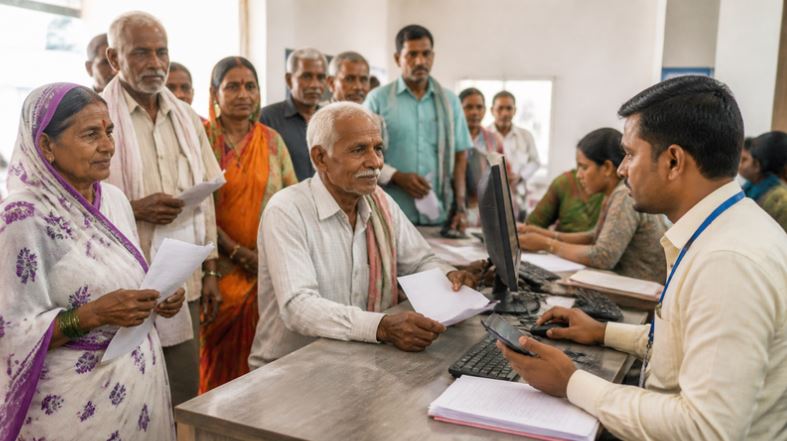
Representarional Image
The programme was held at the Reserve Police Ground in Balasore district, where the Chief Minister announced a series of measures to strengthen the state’s pension delivery system and extend financial assistance to vulnerable sections of society.
With the latest expansion, the number of beneficiaries under the scheme will increase substantially from the existing 36.75 lakh, providing social security support to more elderly people, widows, persons with disabilities and economically disadvantaged citizens.
Over 5 Lakh New Beneficiaries to Receive Pension Benefits
The inclusion of 5,05,817 additional beneficiaries marks a significant expansion of Odisha’s social welfare network.
According to official sources, the newly enrolled beneficiaries will receive their pending pension dues from October 2026 onwards.
To facilitate the distribution, special pension disbursement programmes will be organised across the state. District-level programmes will take place on November 11 and 12, followed by block-level distribution events on November 13 and 14.
Those unable to collect their pension during these programmes will be able to receive the money in cash at their respective gram panchayat or urban ward offices on November 15.
The government has also announced a fixed monthly pension distribution schedule. From December 2026 onwards, beneficiaries will receive their pensions regularly on the 15th of every month.
UPMP Portal to Streamline Pension Services
A key highlight of the government’s announcement was the launch of the Unified Pension Management Portal.
The digital platform is designed to streamline the entire pension administration process, from application submission and beneficiary registration to eligibility verification, data management and pension disbursement.
The portal is expected to improve transparency, minimise administrative delays and make it easier for eligible citizens to access social security benefits.
By bringing different stages of pension management under a unified digital system, the government aims to improve service delivery and ensure that genuine beneficiaries receive assistance without unnecessary complications.
Automatic Pension Hike After 80 Years of Age
In another significant decision, the state government has introduced an automatic pension enhancement mechanism for elderly beneficiaries.
Under the new provision, pension amounts will be revised automatically once a beneficiary completes 80 years of age. The enhanced amount will be credited from the following month, eliminating the need to submit a fresh application.
The move is expected to provide additional financial support to senior citizens, particularly those who face difficulties visiting government offices to complete administrative formalities.
New Payment Rules for NSAP Beneficiaries
The Odisha government has also introduced changes in the distribution of the state’s contribution to beneficiaries covered under the National Social Assistance Programme (NSAP).
The revised arrangement will cover beneficiaries of the Indira Gandhi National Old Age Pension Yojana, Indira Gandhi National Widow Pension Yojana and Indira Gandhi National Disability Pension Yojana.
Under the new system, the Centre’s contribution will continue to be transferred directly into beneficiaries’ bank accounts, while the Odisha government’s share will be distributed in cash through gram panchayat or urban ward offices.
The state’s contribution from November 2026 onwards will be paid through this revised arrangement. Pending state contributions for October and November will be distributed on November 15, while regular monthly payments will follow the 15th-of-every-month schedule from December.
How to Apply for Madhubabu Pension Yojana?
Eligible individuals seeking pension benefits can submit their applications through their nearest Block Development Officer’s (BDO) office or use the newly launched online portal.
Applicants can access the Unified Pension Management Portal at:
https://upmp.odisha.gov.in
Applications will undergo verification and the necessary eligibility checks. Once the formalities are completed and an applicant is approved, pension benefits will begin from the following month, as per the announced process.
Odisha Government Focuses on Wider Social Security Coverage
The expansion of the Madhubabu Pension Yojana and the introduction of the UPMP portal are part of the state’s efforts to strengthen its social security delivery mechanism.
With more than five lakh additional beneficiaries being brought under the scheme, the government aims to extend financial assistance to people who depend on pension support for their everyday needs.
The latest measures also seek to address long-standing concerns over delays, accessibility and transparency in pension administration.
Through expanded coverage, predictable monthly payments and digital management, the Odisha government is seeking to make social security assistance more efficient and accessible to vulnerable citizens across the state.
10, Nov 2026
AVer Debuts CL02 PTZ Controller, Unifying Camera Control for Seamless Multi-Camera Production

Taipei, Taiwan – Nov 10: AVer Information Inc., an award-winning provider of AI audio-video solutions, today announced the AVer CL02, a professional camera controller designed to streamline reliable multi–camera production across hybrid AV environments. Built for organizations that need to operate PTZ cameras, the CL02 enables intuitive, centralized control without requiring a costly, disruptive replacement of installed equipment.
The CL02 enables professional multi-camera productions with greater efficiency and control. Designed for live event environments, it helps production teams streamline operations, reduce workflow complexity, and deliver a polished viewing experience across every event. As organizations expand hybrid communications, training initiatives, and content creation, the CL02 provides a centralized control platform that simplifies camera operations and helps teams create engaging, high-quality video experiences with confidence.
Key User Benefits at a Glance
- Simplify Multi–Camera Production: Control up to 255 PTZ cameras over IP from a single purpose-built console, with NDI® HX2 support for streamlined network-based camera control.
- Maintain Confident Live Control: View critical camera information, such as connection status, channel, exposure, white balance, and gain, on four dedicated LCD screens for faster decisions and consistent image quality.
- Accelerate Installation and Management: Use PoE connectivity to reduce cabling needs, while the embedded Web UI enables convenient remote configuration and management.
- Create Smoother On-Camera Experiences: Access frequently used controls through dedicated camera-select buttons, one-touch preset recalls, independent zoom control, and a responsive 2-axis joystick for quicker transitions and more natural camera movement.
10, Nov 2026
Odisha Farmer Turns Rs 100 Investment Into Rs 1 Crore Kagzi Lemon Business, Exports to US and UK
Angul, Nov 10 (UDN): What began with a modest investment of just Rs 100 in lemon saplings has blossomed into an agricultural success story worth nearly Rs 1 crore annually. Odisha farmer Santosh Sahu has turned indigenous Kagzi lemon cultivation into a thriving business, connecting hundreds of farmers to profitable markets and taking the state’s traditional produce beyond India’s borders.
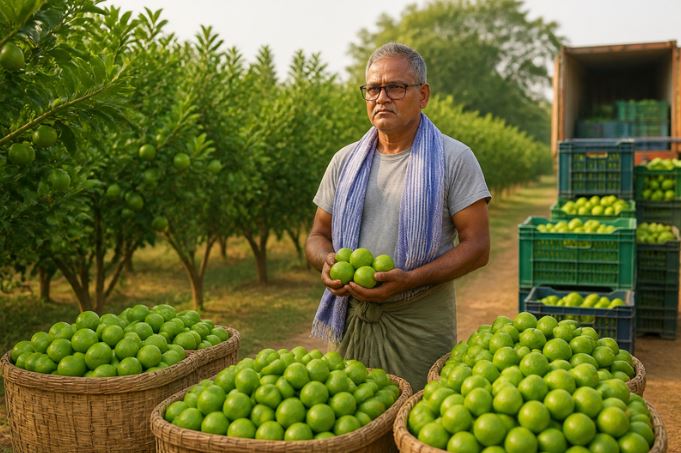
Representational Image
Hailing from Ogi village in Angul district, Santosh has built an extensive network of lemon growers, creating sustainable livelihood opportunities for nearly 700 to 800 farming families. Today, Kagzi lemons cultivated across more than 150 acres in and around the village are supplied to markets across Odisha and exported to countries such as the United States and the United Kingdom.
A Rs 100 Experiment That Changed Everything
The roots of this remarkable journey go back to Santosh’s father, Kartik Sahu, who was searching for an alternative source of income after repeated crop losses.
Farmers in Ogi village were struggling to sustain conventional agriculture due to frequent damage caused by elephants and monkeys. With cultivation becoming increasingly difficult, Kartik decided to experiment with indigenous Kagzi lemon farming.
He purchased 50 saplings at Rs 2 each, investing just Rs 100 in the initiative. What started as a small experiment gradually delivered encouraging results.
Inspired by the success of the plantation, Santosh took the initiative forward and transformed the family venture into a large-scale agricultural enterprise. Over the years, the small lemon garden expanded into a flourishing business, demonstrating how a low-cost farming experiment can create significant economic opportunities.
800 Farmers Become Part of the Success Story
Santosh’s achievement is not limited to his own earnings. One of the biggest milestones of his journey has been bringing hundreds of local farmers together under a common supply and marketing network.
Farmers from Ogi and surrounding areas now cultivate Kagzi lemons and sell their produce through Santosh, who helps connect them with larger markets.
“We harvest the lemons from our own land and sell some of the produce in the market. Farmers from across the village also bring sacks of lemons to us, and we also sell their produce. There are around 700 to 800 farmers in this village,” Santosh said.
The arrangement has given local growers a dependable channel to sell their harvest without having to independently search for buyers.
For many small farmers, this network has become an important source of household income.
Connecting Village Farms With Bigger Markets
The growing demand for Kagzi lemons has helped expand the business beyond the local market.
Farmers harvest lemons from their plantations and bring them to Santosh, who collects and markets the produce. A significant quantity is supplied to major commercial centres such as Cuttack and Bhubaneswar, while the enterprise has also reached international markets, including the US and UK.
Local farmers say the arrangement has helped them earn from produce that would otherwise have been difficult to market on their own.
“We harvest the lemons from our trees and sell them to Santosh. We give him around 3,000 to 4,000 lemons, depending on the quantity we harvest, and he pays us for the produce. He then sells them in Cuttack and Bhubaneswar. We depend on this income to support our families,” said farmer Panchanan Sahu.
An Inspiration for Rural Entrepreneurship
From 50 saplings to cultivation spread across more than 150 acres, the Sahu family’s journey highlights the potential of indigenous crops and locally driven agricultural entrepreneurship.
More importantly, the initiative has shown how one farmer’s effort can create opportunities for an entire rural community.
At a time when farmers across the country are exploring alternatives to traditional cultivation, Ogi village’s Kagzi lemon success story offers an encouraging example of how crop diversification, collective marketing and access to wider markets can strengthen rural livelihoods.
What began as a Rs 100 experiment has grown into a business generating nearly Rs 1 crore annually, while putting Odisha’s indigenous Kagzi lemons on the international map.
10, Nov 2026
India’s Digital Advertising Market and the Shift Towards Performance Measurement

India’s advertising industry is experiencing a structural shift in the way brands approach consumer engagement. Digital media, once viewed largely as a supplementary channel for marketing communication, has become a central component of corporate growth strategies. Businesses are no longer investing in online platforms merely to establish visibility. They increasingly expect advertising to contribute directly to customer acquisition, sales conversion, market expansion and revenue performance.
This transition reflects a broader change in India’s consumption and business environment. The expansion of internet access, smartphone usage, e-commerce and digital payments has created a large and increasingly connected consumer market. At the same time, the availability of campaign analytics and automated advertising technologies has given companies greater control over how marketing budgets are deployed and evaluated.
The result is a more commercially accountable advertising ecosystem. Brand reach continues to matter, but management teams are placing greater importance on the quality of customer engagement, the cost of acquiring buyers and the revenue generated from individual campaigns. For advertisers, marketing effectiveness is increasingly being judged by its contribution to business performance rather than the volume of exposure it generates.
Digital Media Strengthens Its Position in India’s Advertising Economy
The expansion of digital advertising reflects the changing relationship between consumers, brands and media platforms. Search engines, social networks, online video services, e-commerce applications and digital publishers have become important channels through which consumers discover products and evaluate purchasing decisions.
According to the dentsu-e4m Digital Advertising Report 2026, India’s digital advertising expenditure reached ₹71,621 crore in 2025, accounting for approximately 59% of total advertising spending. The market is projected to reach ₹98,034 crore by 2027, representing an estimated 70% share of the overall advertising industry.
These figures indicate that digital media is no longer simply competing for a larger portion of advertising budgets. It is increasingly influencing the way companies design their entire marketing strategies.
For established businesses, digital channels provide opportunities to complement traditional advertising with targeted consumer engagement. For emerging companies, they offer access to audiences without the extensive distribution and promotional infrastructure traditionally required to establish a market presence.
This development is particularly relevant to India’s small and medium-sized enterprises. Businesses can reach consumers beyond their immediate geographical markets, promote specialised products and generate enquiries from specific customer segments. The ability to start with relatively focused campaigns also allows companies to test market demand before making larger marketing commitments.
Advertising Budgets Are Moving Closer to Commercial Outcomes
One of the defining developments in the industry is the growing importance of performance-based advertising. Traditional advertising measurements have largely focused on exposure, audience reach and brand recall. While these remain relevant, businesses increasingly want to understand what happens after a consumer encounters an advertisement.
Performance marketing addresses this requirement by evaluating campaigns against defined actions, including product enquiries, registrations, qualified leads, app installations and completed purchases.
The distinction is important from a business perspective. A campaign generating thousands of website visits may appear successful, but its commercial value depends on whether those visitors demonstrate genuine interest and eventually become customers.
Companies are therefore examining indicators such as customer acquisition cost, conversion rates, average order value, repeat purchases and return on advertising spend. These measurements help management teams assess whether marketing expenditure is producing sufficient commercial value.
This approach is influencing budget decisions across sectors. Retailers are evaluating advertisements against sales performance, financial institutions are tracking qualified applications, and education companies are examining how digital campaigns translate into admissions.
The broader implication is that marketing departments are becoming more closely connected with sales, finance and business development functions. Advertising is increasingly treated as an investment that must support wider organisational objectives.
Retail Media Is Bringing Advertising Closer to the Point of Purchase
Retail media is emerging as a significant growth area within India’s digital advertising market. E-commerce platforms and online retailers are developing advertising networks that allow brands to promote products directly within shopping environments.
The commercial advantage is the ability to reach consumers when they are already exploring a particular product category. Sponsored listings, search placements, product recommendations and display advertisements can influence product discovery at a stage when purchase intent may be relatively high.
The dentsu-e4m report places e-retail advertising expenditure at ₹17,601 crore in 2025, following growth of more than 55%. This expansion reflects the increasing importance of commerce-led advertising in brand strategies.
For consumer goods companies, retail media offers an opportunity to connect promotional activity with product visibility and online transactions. It also provides smaller brands with another route to compete for consumer attention in established marketplaces.
The expansion of quick-commerce platforms is adding to this opportunity. As consumers increasingly purchase groceries, personal care products and everyday essentials through digital channels, brands are exploring advertising formats that can influence buying decisions closer to the transaction.
However, businesses must evaluate the economics carefully. Advertising placements can become expensive in competitive product categories, and high visibility does not necessarily guarantee profitable sales. Brands need to assess incremental revenue, repeat purchases and the actual contribution of retail media to overall business growth.
Data Intelligence Is Reshaping Marketing Decisions
The growing emphasis on accountability is making data analytics central to advertising strategy. Businesses now have access to detailed information about customer interactions, campaign engagement, website activity and purchasing behaviour.
The value of this information lies in its ability to improve decision-making. Rather than distributing budgets across platforms based on assumptions, companies can examine which channels generate qualified prospects, which audiences respond to particular messages and where potential customers abandon the buying process.
Artificial intelligence and machine learning are further strengthening these capabilities. Automated systems can assist with audience segmentation, bidding strategies, campaign optimisation, creative testing and performance forecasting. They also enable advertisers to adjust campaigns more quickly in response to changing consumer behaviour.
For businesses operating across multiple digital channels, these technologies can help improve the efficiency of marketing operations. However, successful implementation requires more than adopting new software. Companies need accurate data, appropriate measurement systems and professionals capable of interpreting campaign results in a commercial context.
Poor tracking, inconsistent reporting and low-quality customer information can undermine even sophisticated advertising strategies. Technology delivers value when it supports sound business decisions rather than simply increasing the volume of available data.
First-Party Data Is Becoming a Competitive Advantage
As businesses seek greater control over customer relationships, first-party data is gaining strategic importance. Information collected directly through customer registrations, transactions, loyalty programmes, subscriptions and enquiries can help companies understand their existing audiences and communicate more effectively.
For retailers, this may involve identifying purchasing patterns and recommending relevant products. For financial services providers, customer information can help improve the relevance of communications and service offerings, subject to appropriate consent and regulatory requirements.
A well-managed first-party data strategy can also reduce excessive dependence on external advertising platforms for audience access. Businesses gain a stronger understanding of their customers and can build marketing programmes around existing relationships.
The commercial benefits extend beyond advertising. Customer information can support demand forecasting, product development, retention strategies and service improvements.
Nevertheless, data collection must be accompanied by responsible governance. Transparency, customer consent, information security and compliance with India’s applicable data protection requirements are essential. Long-term consumer trust is more valuable than short-term gains from aggressive data collection.
Social Media and Video Are Changing the Economics of Brand Engagement
Social media and digital video have become important destinations for advertising investment because they combine broad audience access with interactive communication. Short-form videos, product demonstrations, creator partnerships and regional-language campaigns allow businesses to present products in formats that are closely aligned with changing media consumption habits.
For brands targeting India’s diverse consumer base, regional content offers particular commercial potential. Communication in familiar languages and cultural contexts can make campaigns more relevant to audiences beyond major metropolitan markets.
Creator partnerships are also evolving from occasional promotional arrangements into more structured marketing strategies. Businesses are increasingly assessing creators on audience relevance, credibility, engagement quality and their ability to influence purchasing decisions.
Yet the industry faces an important measurement challenge. Views, likes and follower counts do not necessarily translate into sales or customer loyalty. Advertisers must evaluate whether creator-led campaigns generate meaningful enquiries, conversions and sustained interest.
The commercial effectiveness of these formats depends on the relationship between creative quality, audience relevance and the overall customer journey.
Small Businesses Face New Opportunities and Greater Accountability
The shift towards performance measurement has particular significance for India’s MSME sector. Smaller businesses often operate with limited advertising budgets and cannot afford to sustain campaigns that generate attention without producing meaningful business results.
Digital platforms allow these companies to target specific locations, customer groups and product categories. A local manufacturer can generate enquiries from potential distributors, a retailer can promote products to nearby consumers, and a professional services firm can attract customers searching for specialised solutions.
However, the availability of advertising tools does not automatically ensure profitable marketing. Small businesses need to understand the complete cost of customer acquisition, including platform charges, creative production, agency fees and the resources required to convert enquiries into sales.
They also need to connect marketing activity with internal business operations. A successful advertising campaign can still produce disappointing results if customer enquiries are not answered promptly, product availability is inconsistent or the sales process is inefficient.
This makes marketing measurement a management priority rather than merely a technical exercise. Businesses that connect advertising data with sales performance are better placed to identify profitable customer segments and allocate resources effectively.
The Challenge of Measuring Returns Across Multiple Platforms
Despite the growing availability of analytics, measuring the true contribution of digital advertising remains complex. Consumers rarely follow a single, predictable path before purchasing a product. They may discover a brand through social media, compare alternatives through search engines, read online reviews and eventually complete a transaction through an e-commerce platform or physical store.
Attributing the final purchase to one advertising interaction can therefore be difficult. Different platforms may also report conversions using different measurement methods, making comparisons less reliable.
Businesses need a broader measurement framework that combines advertising analytics with website performance, sales records and customer relationship data. They should also distinguish between conversions that would have occurred naturally and those genuinely generated by additional advertising investment.
Another important consideration is the balance between immediate performance and long-term brand development. Excessive focus on short-term conversion targets can lead companies to overlook brand reputation, consumer trust and future demand creation.
An effective advertising strategy must recognise that brand building and performance marketing are complementary activities. One creates awareness and preference, while the other helps convert interest into measurable commercial outcomes.
A More Accountable Future for India’s Advertising Industry
India’s digital advertising market is moving towards a more sophisticated model in which technology, consumer intelligence and financial accountability will increasingly shape investment decisions. The expansion of retail media, artificial intelligence, digital video and first-party data is creating new opportunities for advertisers, but it is also raising expectations around transparency and campaign effectiveness.
For businesses, the next stage of digital advertising will require a closer connection between marketing strategy and organisational performance. Companies will need to establish clear objectives, understand the economics of customer acquisition and evaluate how advertising contributes to both immediate revenue and long-term market position.
For marketing agencies and technology providers, this shift creates demand for stronger analytical capabilities, transparent reporting and solutions that demonstrate commercial value. For MSMEs, it offers an opportunity to approach advertising with greater precision and make limited budgets work harder.
Ultimately, the future competitiveness of India’s digital advertising industry will depend not only on how much businesses spend, but on how effectively they translate that investment into sustainable growth. As marketing becomes increasingly measurable, the strongest brands will be those that combine creative communication with disciplined financial evaluation, reliable customer insights and a clear understanding of the markets they serve.