


1, Jun 2026
PMI Industry Roundtable highlights Construction Talent Gap in South Asia to Nearly Double by 2035
June, 1: Project Management Institute the authority in project management, convened a high-level construction and infrastructure roundtable bringing together more than 25 senior executives from leading organisations. The roundtable brought together leaders from across infrastructure, construction, energy, renewables, transportation, technology, manufacturing, and advisory sectors, representing both public and private enterprises. Held under the theme ‘Closing the delivery capability gap in Indian infrastructure: From national ambition to predictable on-ground execution’, the roundtable explored how India’s infrastructure ecosystem can strengthen execution capability, build future-ready project talent, and improve delivery outcomes as project complexity and investment scale continue to rise.
Speaking about the growing importance of project management in infrastructure delivery, Amit Goyal, Managing Director, PMI South Asia, said,
“India’s infrastructure growth story will increasingly be defined by how effectively projects are executed on the ground. As infrastructure projects become larger, more interconnected, and time-sensitive, organisations will need skilled professionals who can manage complexity, align multiple stakeholders, and optimise resources to deliver consistent, precise outcomes. Building future-ready project talent and strengthening delivery capability will be critical to the ‘Viksit Bharat’ vision, ensuring that infrastructure investments translate into long-term economic and social impact.”
The Construction Project Management Talent Gap Report by PMI, 2026, indicates that demand for construction project professionals across South Asia is expected to accelerate significantly by 2035, driven by sustained infrastructure and industrial investment across the region. Under high-growth scenarios, South Asia’s construction talent gap could increase from 291,000 professionals today to 558,000 by 2035, with India alone projected to require nearly 395,000 construction project professionals by then.
During the session, Yash Singh, Partner, Business Consulting, KPMG India, highlighted,
“India’s infrastructure and construction sector is entering a high-growth phase, making substantial investment in skilled project talent critical for delivering projects efficiently and sustainably. We are delighted to partner with PMI in such knowledge initiatives and advancing the dialogue around strengthening project and execution excellence.”
The discussion highlighted the operational and financial consequences of weak project execution across the industry. A 2020 global PMI survey also found that industry estimates indicate that 72% of projects exceed budgets, 73% face delays, and 70% experience scope creep. At the same time, nearly USD 127 million is lost for every USD 1 billion invested due to inefficiencies in project performance. Average project overruns affect profitability, stakeholder confidence, and long-term competitiveness.
As part of PMI South Asia’s broader Construction Roundtable series, this roundtable aimed to create a collaborative platform for industry leaders to identify capability gaps, exchange best practices, and explore diverse interventions that can strengthen infrastructure delivery outcomes across the region. The series builds on the first Construction Roundtable held during PMSAC24 in September 2024, which convened C-suite leaders and representatives from leading organisations across the infrastructure ecosystem.
- 0
- By Neel Achary

1, Jun 2026
Abu Dhabi Maritime Academy and Bahrain Polytechnic Sign MoU
Abu Dhabi Maritime Academy and Bahrain Polytechnic Sign MoU to Enhance Academic and Applied Collaboration in Maritime Transport and Emerging Technologies
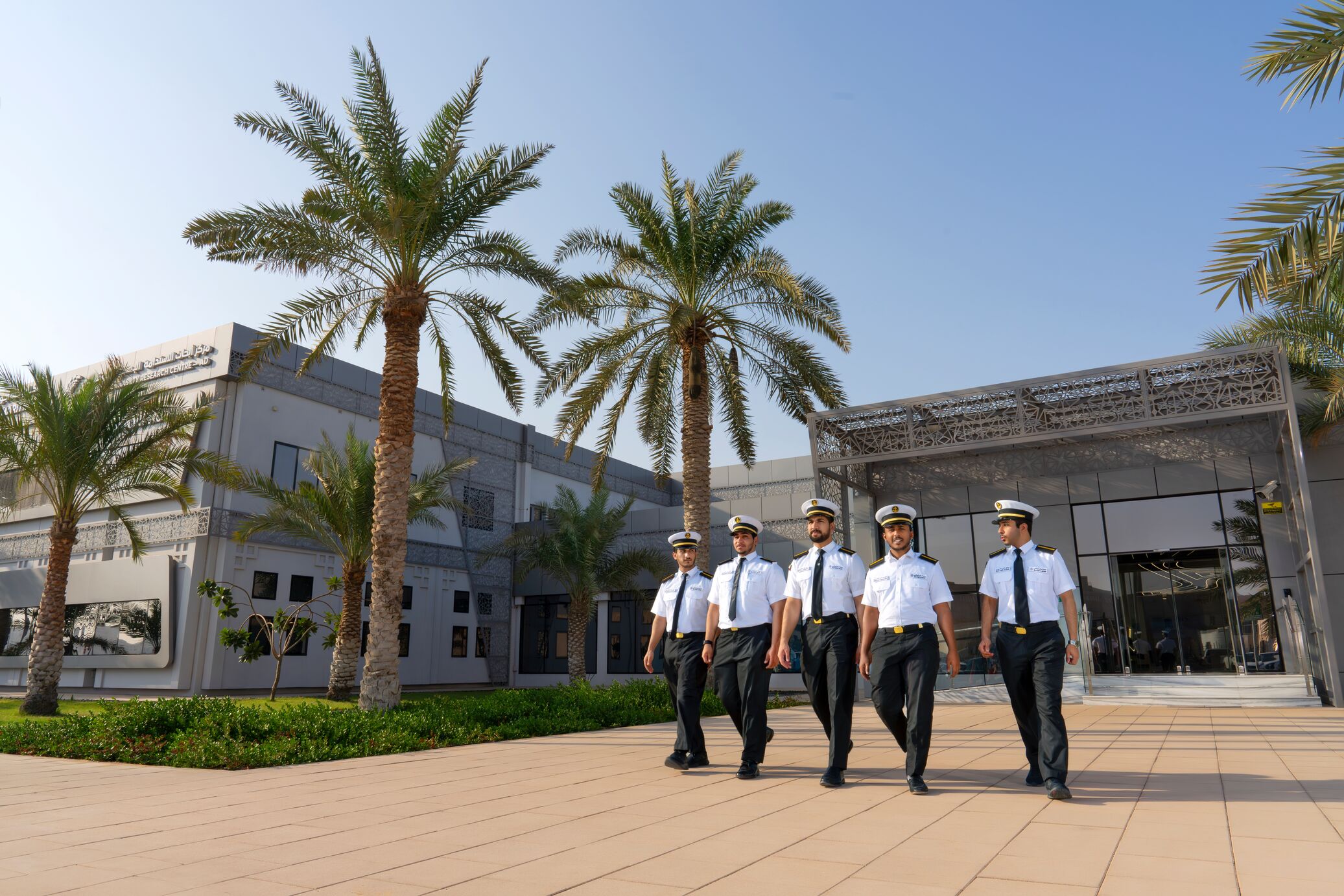
Abu Dhabi, UAE – 1st June 2026: Abu Dhabi Maritime Academy (ADMA), the region’s leading academic institution for maritime training, and an integral part of AD Ports Group (ADX: ADPORTS), has signed a Memorandum of Understanding (MoU) with Bahrain Polytechnic to strengthen cooperation in the areas of education, training, and applied research, and at building high-impact partnerships that contribute to the development of national and regional talent in the maritime, engineering, and technology sectors.
The MoU was signed by Dr. Yasser Al Wahedi, President of Abu Dhabi Maritime Academy; and Professor Ciarán Ó Catháin, CEO of Bahrain Polytechnic, in the presence of senior officials from both entities.
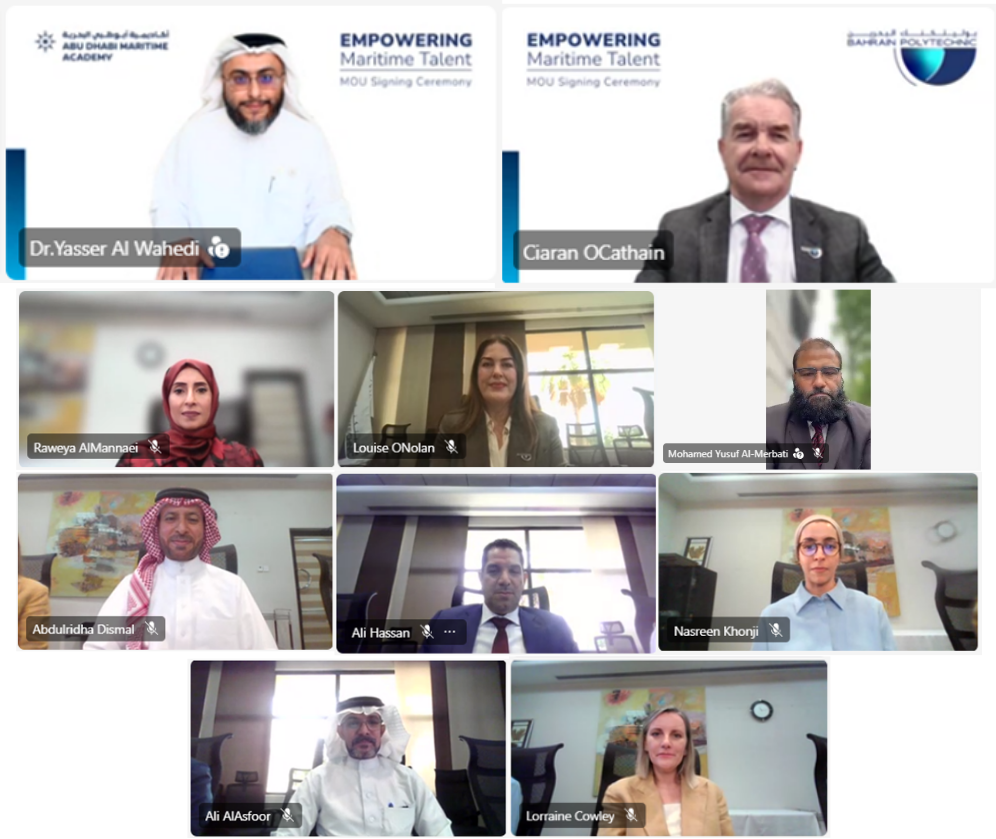
The MoU establishes a framework for collaboration to explore joint opportunities across several areas, including the development and delivery of training programmes and courses of mutual interest, train-the-trainer initiatives, and the organisation of lectures, workshops, events, and conferences. It also includes providing internship and work-placement opportunities (Cadetship) for Bahrain Polytechnic students and graduates.
In addition, the MoU promotes collaboration in applied research projects that contribute to the development of technologies that support the maritime sector, marine engineering, maritime security, and logistics. In addition, the partnership will facilitate the exchange of knowledge and expertise in technical and engineering fields, and the development of advanced training programmes in emerging technologies and applied research, thereby fostering innovation and strengthening the alignment between academic outcomes and the needs of the industrial and maritime sectors.
Dr. Yasser Al Wahedi, President of Abu Dhabi Maritime Academy, said: “This partnership reflects Abu Dhabi Maritime Academy’s commitment to advancing applied education and fostering innovation through regional collaboration. By aligning academic excellence with industry needs, we are enabling the next generation of maritime and technology pioneers.”
Professor Ciarán Ó Catháin, CEO of Bahrain Polytechnic, stated that this partnership represents a strategic step aligned with Bahrain Polytechnic’s Strategic Plan 2026–2029, which focuses on enhancing applied education, expanding regional and international partnerships, and improving student readiness for the labour market through the integration of academic learning with practical experience. He added that the MoU supports the Polytechnic’s direction towards innovation, future skills development, and strengthening its position as a leading applied higher education institution in the region.
The MoU reflects the shared commitment of Abu Dhabi Maritime Academy and Bahrain Polytechnic to expanding regional and international partnerships, enhancing the quality of applied education, and providing students with innovative learning and training opportunities that strengthen their professional readiness and align with the evolving needs of future industries.
1, Jun 2026
Mahindra Auto clocks 58,021 SUVs and 99,636 total vehicle sales, a robust 20 Percent YoY growth in May 2026
New Delhi, June 01: Mahindra & Mahindra Ltd. one of India’s automotive manufacturers, today announced its auto sales performance for May 2026, reporting total sales of 99,636 vehicles, a 20% year-on-year growth, including exports.
Strong Performance Across Segments
In the Utility Vehicles (UV) segment, the company sold 58,021 units in the domestic market, marking an 11% growth, while total UV sales, including exports, stood at 59,573 units.
The Commercial Vehicles (CV) segment also delivered strong growth, with domestic sales of 24,079 units, reflecting a 19% increase year-on-year.
Segment-Wise Sales Highlights (Domestic – May 2026)
Passenger Vehicles
- Utility Vehicles: 58,021 units (↑11%)
- Cars + Vans: 0 units
- Total Passenger Vehicles: 58,021 units (↑11%)
Commercial Vehicles & 3-Wheelers
- LCV < 2T: 3,490 units (↑35%)
- LCV 2T–3.5T: 20,589 units (↑16%)
- 3-Wheelers (including electric): 12,536 units (↑89%)
Exports Performance
Mahindra & Mahindra exported 5,000 units in May 2026, representing a 37% growth compared to the same period last year.
Management Commentary
Commenting on the performance, Nalinikanth Gollagunta, CEO – Automotive Division, M&M Ltd., said:
“In May, we achieved SUV sales of 58,021 units, a growth of 11% and total vehicle sales stood at 99,636, a 20% YoY growth. The sustained demand across our portfolio continues, constrained by supply chain challenges due to manpower shortages at select suppliers.”
1, Jun 2026
RCB Clinch Back-to-Back IPL Titles, Defeat GT by Five Wickets in IPL 2026 Final
Ahmedabad, June 1 (BNP): Royal Challengers Bengaluru (RCB) continued their dominance in the Indian Premier League (IPL), clinching their second successive title with a convincing five-wicket victory over Gujarat Titans (GT) in the IPL 2026 final at the Narendra Modi Stadium in Ahmedabad on Sunday.
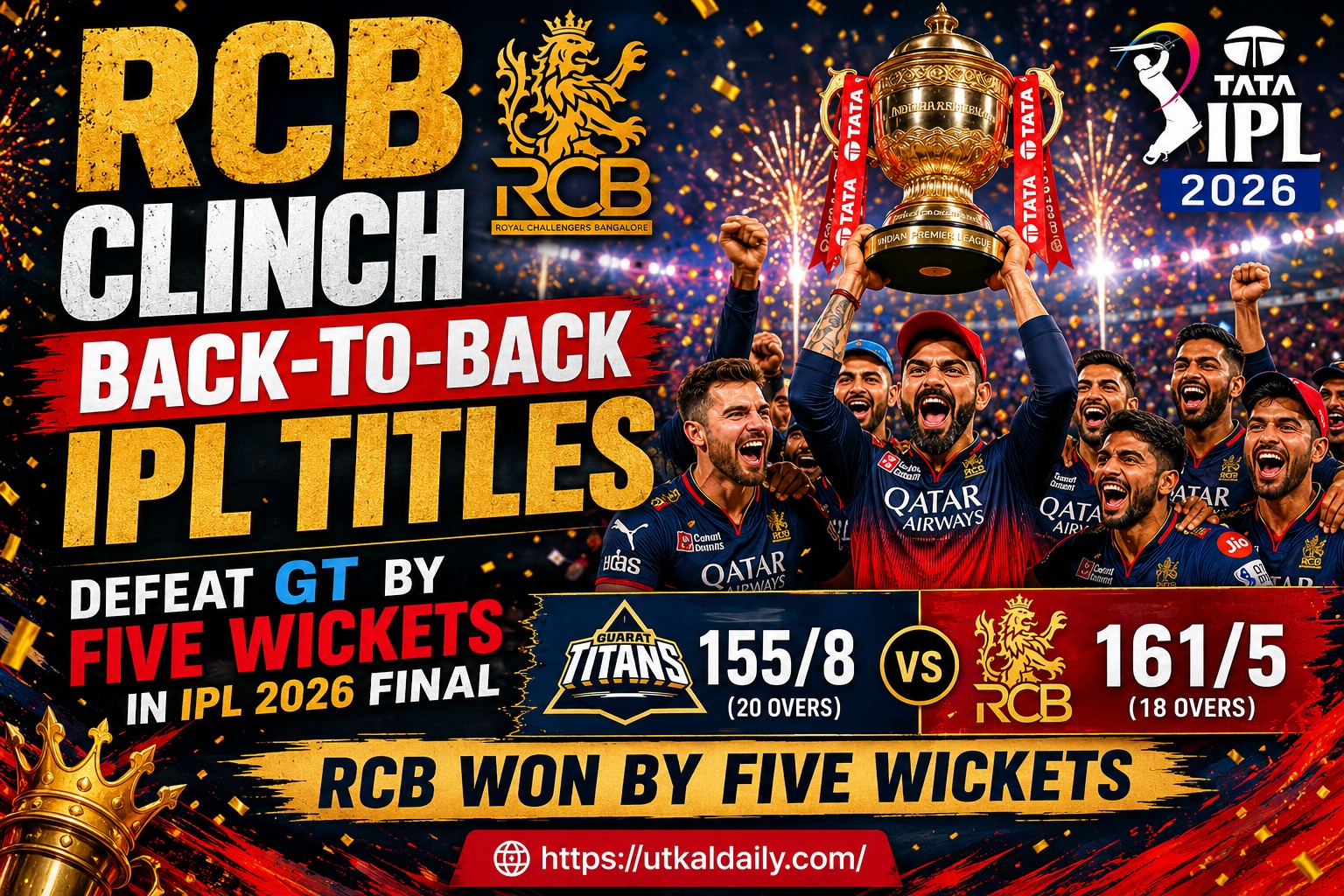
A clinical all-round performance, spearheaded by Virat Kohli’s unbeaten 75 and a disciplined bowling display from the pace unit, helped Bengaluru comfortably chase down a modest target of 156 with two overs to spare.
Opting to bowl first, RCB bowlers delivered under pressure, dismantling Gujarat’s batting lineup and restricting them to 155/8 in 20 overs. Fast bowlers Rasikh Salam, Josh Hazlewood and Bhuvneshwar Kumar struck crucial blows at regular intervals to keep GT under control throughout the innings.
Josh Hazlewood provided the early breakthrough by dismissing Gujarat skipper Shubman Gill for 10, while Bhuvneshwar Kumar removed Sai Sudharsan soon after, denting GT’s hopes in the powerplay. Gujarat struggled to recover as wickets continued to tumble against Bengaluru’s disciplined attack.
Despite the collapse, Washington Sundar stood firm and played a fighting unbeaten knock of 50, helping Gujarat cross the 150-run mark. Nishant Sindhu and Jos Buttler attempted to stabilise the innings but failed to convert their starts into substantial contributions.
Chasing 156, Bengaluru got off to a flying start courtesy of Virat Kohli and Venkatesh Iyer, who stitched together a quickfire 62-run opening stand. Iyer’s aggressive 32 off 16 balls gave RCB early momentum before Mohammed Siraj broke the partnership.
Kohli then took complete control of the chase, anchoring the innings with composure and authority. The veteran batter smashed nine boundaries and three sixes in his unbeaten 42-ball 75, registering his fifth half-century of the season.
Although Gujarat found brief hope through Rashid Khan, who dismissed Rajat Patidar and Krunal Pandya in quick succession, Kohli steadied the innings alongside Tim David and later Jitesh Sharma to guide Bengaluru home.
Kohli fittingly sealed the title with a towering six, sparking celebrations among teammates and thousands of RCB supporters inside the packed Narendra Modi Stadium.
Named Player of the Match, Kohli described the moment as a dream fulfilled and credited the team’s confidence and consistency for the successful title defence.
With the triumph, skipper Rajat Patidar joined an elite list of captains to win consecutive IPL titles, while RCB further cemented their status as one of the tournament’s dominant forces in recent seasons.
Gujarat Titans, meanwhile, ended runners-up for the second time in three IPL finals, with their only title victory coming in their debut season in 2022.
1, Jun 2026
TiE Bhubaneswar Startup Meetup Ignites Entrepreneurial Aspirations and Funding Conversations
Bhubaneswar, June 1, 2026: TiE Bhubaneswar, in collaboration with Bookingjini, hosted a vibrant Startup Meetup at Hotel Crown on May 27, bringing together around 30 aspiring entrepreneurs, startup founders, mentors, and ecosystem enablers for an evening of networking, learning, and investment-focused discussions.
The event provided founders with a unique opportunity to directly interact with investors and gain valuable insights into the startup funding landscape. A major highlight of the evening was an engaging interaction with Himanshu Goel, Founder of Azpiro Systems, who spent time listening to entrepreneurs, understanding their ideas, and sharing perspectives on building scalable ventures.
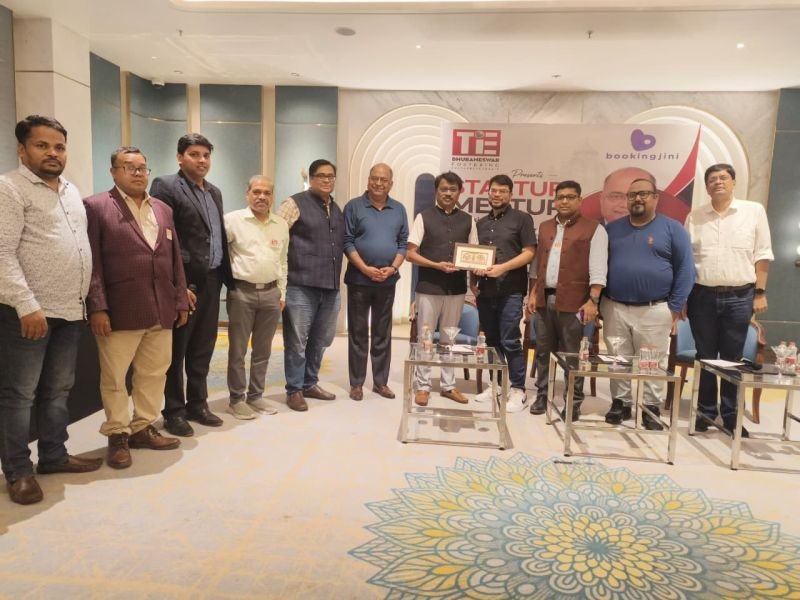
Source: LinkedIn
The gathering featured an insightful Fireside Chat moderated by Sibasish Mishra, former Joint Secretary of TiE Bhubaneswar. The session brought together investor viewpoints, entrepreneurial experiences, and discussions on the growth of Odisha’s startup ecosystem. Himanshu Goel shared his observations on startup investments, while Ayaskanta Mohanty, President of TiE Bhubaneswar, reflected on the organization’s journey and its efforts to foster entrepreneurship in the state.
The discussion also highlighted the rapid evolution of Odisha’s startup ecosystem and the increasing opportunities available to emerging entrepreneurs. Participants exchanged ideas on innovation, mentorship, funding access, and collaborative growth, creating a platform for meaningful engagement.
Prabhat Sahoo, Chair of the TiE Bhubaneswar Funding Committee, played a key role in steering the proceedings and ensuring productive interactions among founders, investors, and ecosystem stakeholders.
The event concluded with a vote of thanks delivered by Abhitabya Pattanayak, Joint Secretary of TiE Bhubaneswar, who expressed appreciation to all participants, speakers, partners, and organizers for contributing to the success of the meetup.
Behind the seamless execution of the event was the dedicated effort of Partha Sarathi Ghosh, Executive Director of TiE Bhubaneswar, whose coordination and support helped bring together the startup community for an impactful evening.
More than just a networking event, the Startup Meetup served as a catalyst for future collaborations, funding discussions, and entrepreneurial growth. As founders left the venue, many carried with them renewed confidence, fresh connections, and a stronger belief in the possibilities that lie ahead for Odisha’s startup ecosystem.
1, Jun 2026
Lights, Camera, Learning: Middle School Students Get a Taste of TV News
As a class assignment during the spring semester, sixth-grade students at University Middle School in Greeley were digging deep to uncover answers to four important topics:
- Is Artificial Intelligence (AI) going to replace all jobs?
- Is the Colorado Measures of Academic Success (CMAS) test worth students’ stress?
- What will the plot be in the new Spider-Man: Brand New Day movie?
- And is everyone’s favorite squeezable fidget toy, the NEEDOH, too distracting for class?
The students came up with these four intriguing questions, and through their research, they wrote, produced, directed and delivered a newscast showcasing their results inside the University of Northern Colorado’s broadcast studio in Candelaria Hall.
“We brainstormed, and I told them, ‘Think about what you want to hear. What is a story that you would actually listen to,’” said Rob Schuler, the teacher who leads University Middle School’s Broadcasting class.
Turns out, NEEDOHs can easily cause chaos if they break inside the classroom, spilling slimy goo everywhere, or get thrown and stuck on the ceiling. AI, if used correctly, can support workers instead of pushing them out. The CMAS teaches students how to manage their time and helps schools identify learning gaps, but it also adds pressure to the students.
“It’s basically education chaos, with a purpose,” said anchor Elizabeth Broughton during the newscast.
And as for Spider-Man: Brand New Day, regardless of what happens in the movie, many will buy tickets to witness the blockbuster event.
This is the third time Schuler has brought his students into UNC’s broadcast studio to produce their newscast. He originally connected with Communications and Journalism Professor Shawn Montano to see if he could bring his students to watch a taping of the college newscast Bear News. However, Montano said he had a better idea: how about the students actively create a production under his guidance?
“I wanted the students to leave with an actual experience,” Montano said. “Most of these kids probably are not thinking about careers in journalism yet. A few of them didn’t even really know what journalism was. But getting them into a real studio environment, feeling the adrenaline of a live-style production, and realizing they can create something as a team — that sticks with them.”
For one of the news anchors, Raelyn Miller, she says she loves to perform and wants to be an actor when she’s older, so the experience of presenting the news in a big studio was exciting.
“I was nervous at first — it was really scary,” Miller said. “But once you get it down, it’s fun. It’s way different from what we get to do at school. There are bigger cameras, bigger lights, bigger everything.”
Among the 25 students, there were two groups of three anchors, including Miller, who talked about AI and the CMAS. The other three anchors presented on the new Spider-Man movie and fidget toys while everyone else helped write the stories, operated the cameras and managed the teleprompter and the studio.
Watching them walk into the studio, nervous, and leave excited and proud of what they created is the best part. – Shawn Montano
The class also put together six short podcasts using UNC’s equipment, so it was a busy, content-filled day. To help them get all their work done, UNC Journalism students volunteered their expertise.
“The college kids help my kids through the process, and they have been phenomenal,” Schuler said. “They break them out of their shell, especially because, for the anchors, they tend to be a little gun-shy at first.”
Montano says the experience is also beneficial for the UNC students.
“My students get to see what teaching and leadership look like in a real-world environment,” Montano said. “They help guide middle school students through the production process, but the younger students do the work. It becomes a hands-on learning environment where everyone collaborates to create something real.”
The hands-on learning experience included the pre-teens trying on headphones, pushing buttons on the video switcher to control the newscast, cueing up cameras, talking into microphones and collaborating with their peers and college students to tell the news.
“It’s been fun to see,” Schuler said. “Having a real studio and the podcast studio, it’s really piqued some of the kids’ interest and they think, ‘well maybe I do want to dabble in this,’”
“I love doing this,” added Montano.
“I’m a huge believer in project-based learning and experiential learning. Any chance I get to create an environment where students can actively participate instead of just observe, I’m all in. Watching them walk into the studio, nervous, and leave excited and proud of what they created is the best part.”
Schuler says he plans to continue this partnership with UNC in the next school year.
1, Jun 2026
Indian Delegation Visits Germany to Strengthen Cooperation on Climate Adaptation and Environmental Technologies
New Delhi, June 2026: An Indian delegation comprising representatives from government institutions and the private sector recently visited Germany for a high-level exchange programme focused on climate adaptation, environmental technologies, and sustainable development.
The visit, held earlier this month, was jointly organised by GIZ India and the Indo-German Chamber of Commerce (IGCC) and centred around participation in IFAT Munich 2026, one of the world’s leading trade fairs for environmental technologies.
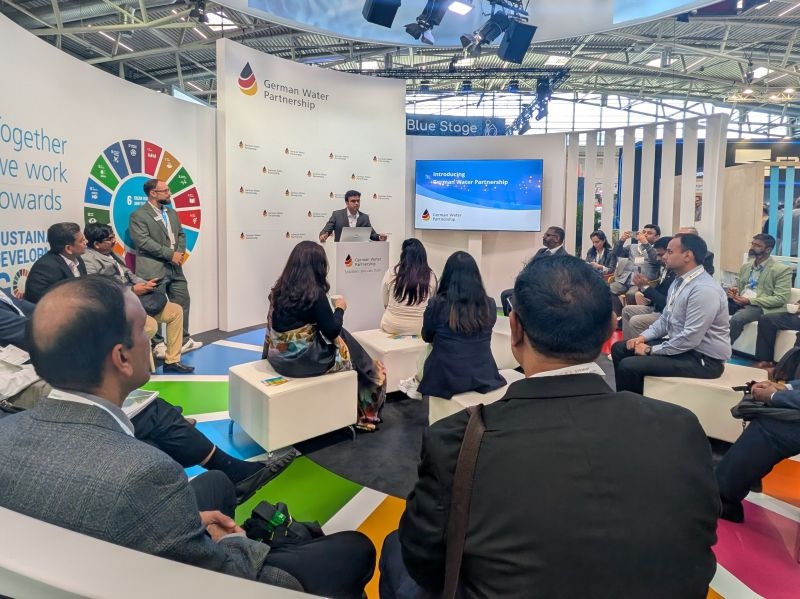
The programme combined attendance at the trade fair with institutional exchanges, technical site visits, and strategic discussions in Munich and Berlin. Delegates engaged with a wide range of stakeholders, including government officials, industry leaders, academic experts, and research institutions, to gain insights into innovative solutions and best practices in climate resilience and environmental management.
Key areas of discussion included climate adaptation strategies, water resource management, recycling technologies, circular economy practices, and sustainable urban development. Participants explored emerging technologies and policy approaches that could support sustainable growth and strengthen climate resilience.
According to organisers, the visit highlighted the growing momentum for deeper cooperation between India and Germany in addressing global environmental challenges. The exchange provided a platform for knowledge sharing, networking, and identifying opportunities for future collaboration.
Officials noted that the programme also facilitated partnership-building between institutions from both countries, paving the way for continued engagement on shared sustainability and climate objectives.
The initiative reflects the commitment of India and Germany to advancing climate action, promoting environmental innovation, and fostering long-term cooperation in support of sustainable development goals.
1, Jun 2026
World No Tobacco Day 2026: Cairn Leads Youth Awareness Drive on Tobacco-Free Living in Golaghat
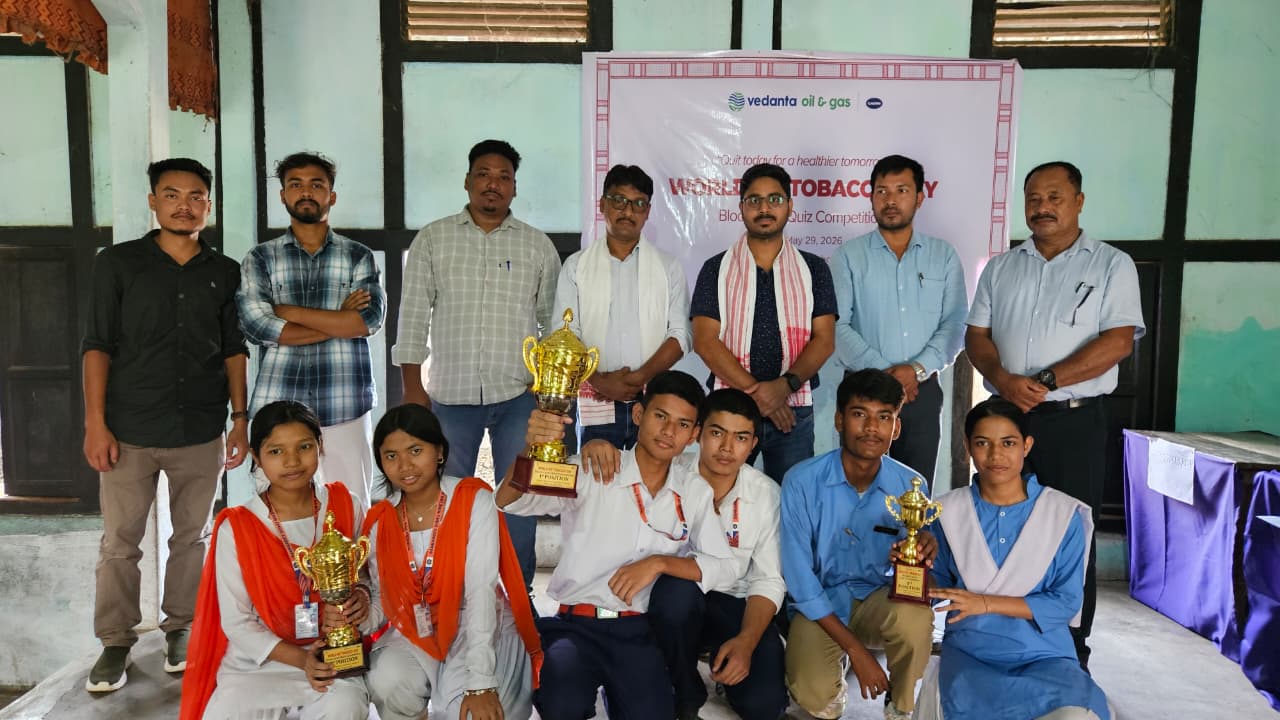
Golaghat, June 01: Marking World No Tobacco Day 2026, Cairn, Vedanta Oil & Gas, in collaboration with the District Narcotics Control Bureau (DNCB), Golaghat, organised an awareness initiative at Borpathar Higher Secondary School to sensitise the youth on the dangers of tobacco use, nicotine addiction, and substance abuse. The programme brought together more than 600 students from 16 high and higher secondary schools across the region, creating a platform for learning, engagement, and collective action towards a healthier future.
Aligned with this year’s Day theme, “Unmasking the Appeal – Countering Nicotine and Tobacco Addiction,” the initiative sought to equip students with the awareness and understanding needed to identify and resist the tactics often used to promote addictive substances among young people.
As part of the programme, a block-level quiz competition for students of Classes 9 to 12 was organised in partnership with the District Narcotics Control Bureau. The competition encouraged participants to strengthen their understanding of addiction, public health, and the broader social impact of tobacco and drug use, while fostering healthy competition and awareness.
Tobacco continues to be a major global public health challenge and a leading cause of preventable deaths, underscoring the need for sustained engagement and early awareness among young people.
The initiative is part of the company’s broader community development efforts in its Hazarigaon operational area, with a continued focus on strengthening health, education, and overall community well-being.
Mr. Pulin Saikia, Principal of Borpathar Higher Secondary School, appreciated the initiative, highlighting that the programme effectively raised awareness among students on the harmful effects of tobacco and substance abuse. He added that the quiz competition served as an engaging platform for learning and expression, and looked forward to more such initiatives in the future.
The programme builds on the company’s ongoing efforts to promote public health awareness. On World No Tobacco Day last year, a poster-making competition was organised in Jorhat, encouraging students to creatively highlight the harmful effects of tobacco use and advocate for healthier choices. Such initiatives continue to strengthen community awareness and empower young people to drive positive social change.
1, Jun 2026
Sree Pallavi Receives Telangana Excellence Award 2026 for Excellence in HR Entrepreneurship and Workforce Transformation
Hyderabad, Jun 1: The National Excellence Council – a distinguished professional body committed to recognising excellence across diverse sectors, conferred the prestigiousTelangana Excellence Award 2026 – Excellence in HR Entrepreneurship & Workforce Transformation onMs. Ayinampudi Sree Pallavi, Founder & Principal Consultant of Vetana Human Capital Consulting, Hyderabad;for her outstanding contributions to modern HR practices and workforce development. The award was presented by Chief Guest Shri Babu Rao, Founder & Chairman, Café Nilofer and Guest of Honour and Actress Ms. Hebbah Patel in the presence of eminent professionals, industry leaders, entrepreneurs, and distinguished guests, today atVisvesvaraya Bhavan, Khairatabad, Hyderabad.
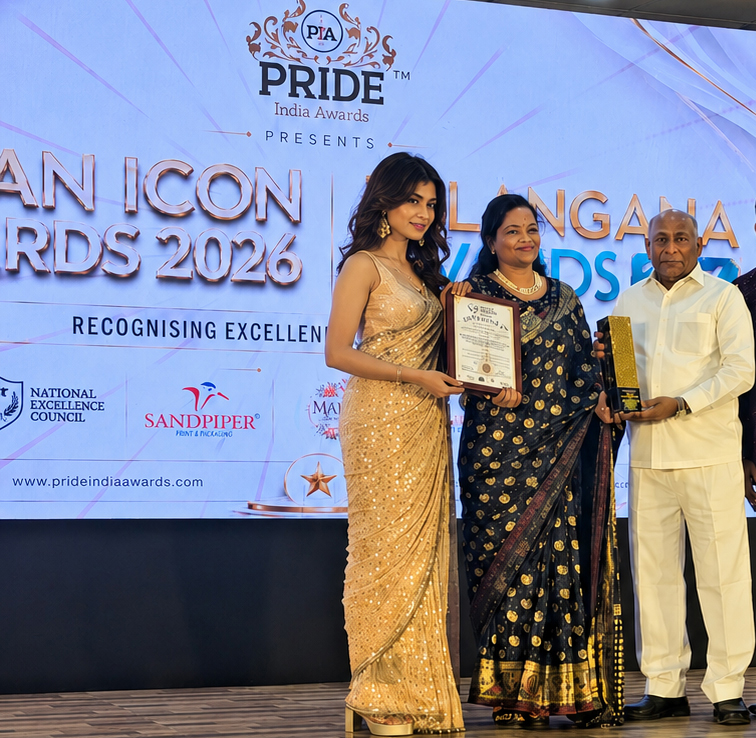
Sree Pallavi is widely recognised for her expertise in HR consulting, recruitment, talent management, and workforce transformation. Through her strategic and people-centric approach, she has been instrumental in helping organisations streamline HR operations, build high-performing teams, and drive sustainable business growth.
Expressing her gratitude, Sree Pallavi said,
“I am deeply honoured to receive this recognition from the National Excellence Council. This award inspires me to continue building progressive workplaces, empowering talent, and enabling organisations to achieve excellence through people-driven strategies.”
1, Jun 2026
43rd Vanvasi Vaicharik Kranti Shivir Successfully Launched by Akhil Bharatiya Dayanand Sevashram Sangh
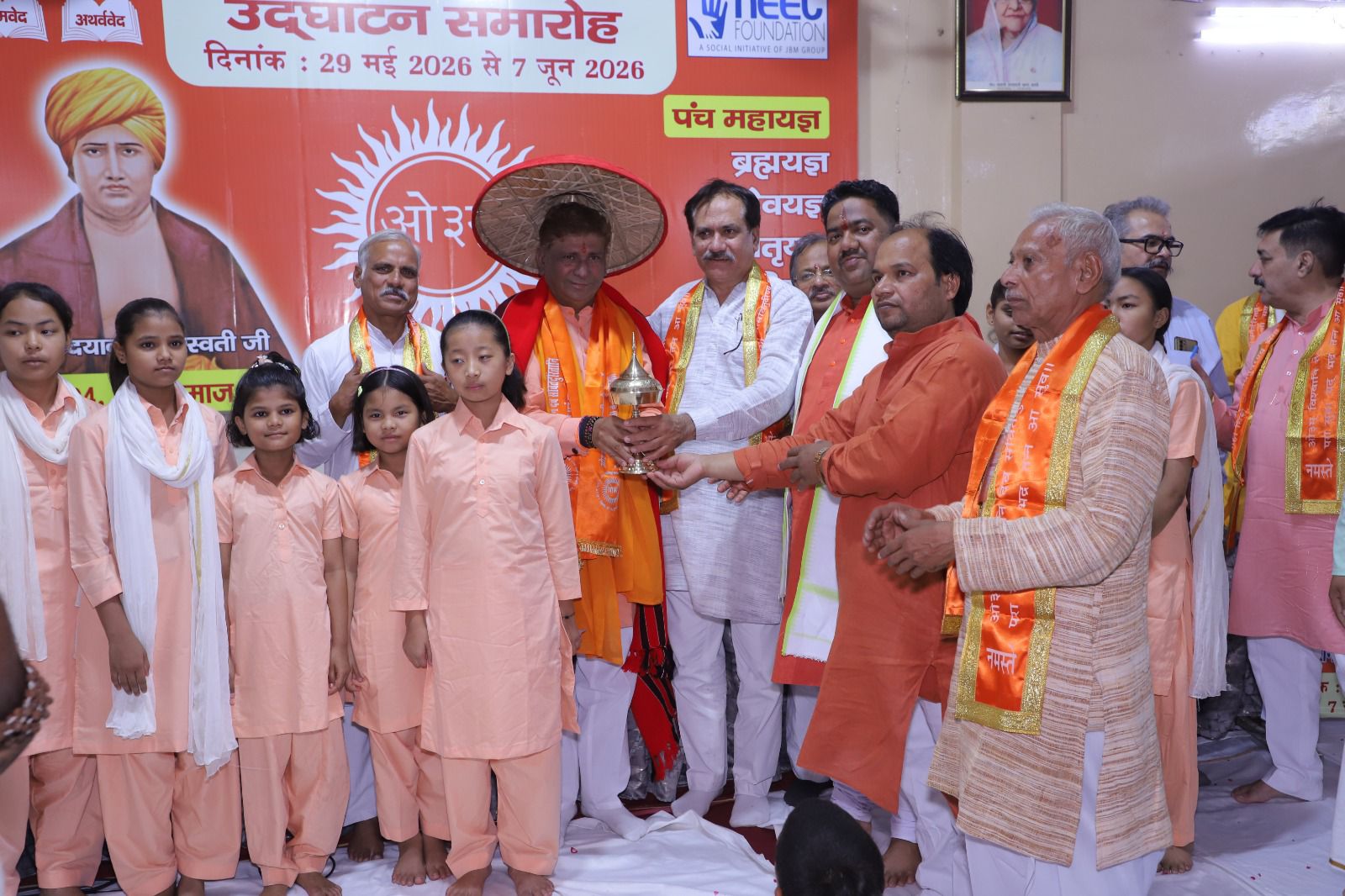
New Delhi| June 1: The 43rd Vanvasi Vaicharik Kranti Shivir is being organized by Akhil Bharatiya Dayanand Sevashram Sangh, Delhi from 29 May to 7 June 2026 at Arya Samaj, Ranibagh, Delhi. This camp has been continuously organized for the past 58 years. Hundreds of youth from Vanvasi and tribal areas of 14 states including Assam, Nagaland, Tripura, Manipur, Mizoram, Chhattisgarh, Odisha, Madhya Pradesh, Rajasthan, Bihar, Jharkhand, Uttar Pradesh will participate in this camp. The Sangh has been working for decades for the propagation of education, Indian culture, and Vedic ideology in these remote areas.
Objective of the Camp
Shri Joginder Khattar, General Secretary of the Sangh, said that the objective of this 10-day residential camp is to connect youth from rural and Vanvasi areas with Indian civilization, culture, and Vedic values of life. Through the camp, a sense of patriotism, character building, social responsibility, and self-respect is awakened in the participants, enabling them to protect their culture and traditions by staying away from modern temptations and false attractions.
Chief Guests at the programme included Shri Dharampal Arya, President, Delhi Arya Pratinidhi Sabha, and Shri Vijender Gupta, Speaker, Delhi Legislative Assembly. Special Guests included Area MLA Shri Karnail Singh and Municipal Councillor Smt. Jyoti Agrawal. The programme received blessings from Shri Vinay Arya and Shri Surendra Shastri.
Key Activities of the Camp:
1. Yajnopavit Sanskar: Special session on the significance of Yajnopavit, the sacred symbol of Indian culture
2. Vedic Training: Practice of Yajna, Yoga, Sandhya, Havan and Vedic methods in daily life
3. Character Building: Moral education, patriotism and awareness of social duties
4. Cultural Awareness: Lectures on Vedic religion, Indian traditions and life values
Shri Khattar said, “In the 43rd camp, youth will be given systematic training in accordance with the objective to prepare them for national service, so that they can become carriers of positive social change in their respective regions.”


