


22, May 2026
Driving Inclusive Growth: India Inclusive Summit 2026 Convenes National Stakeholders
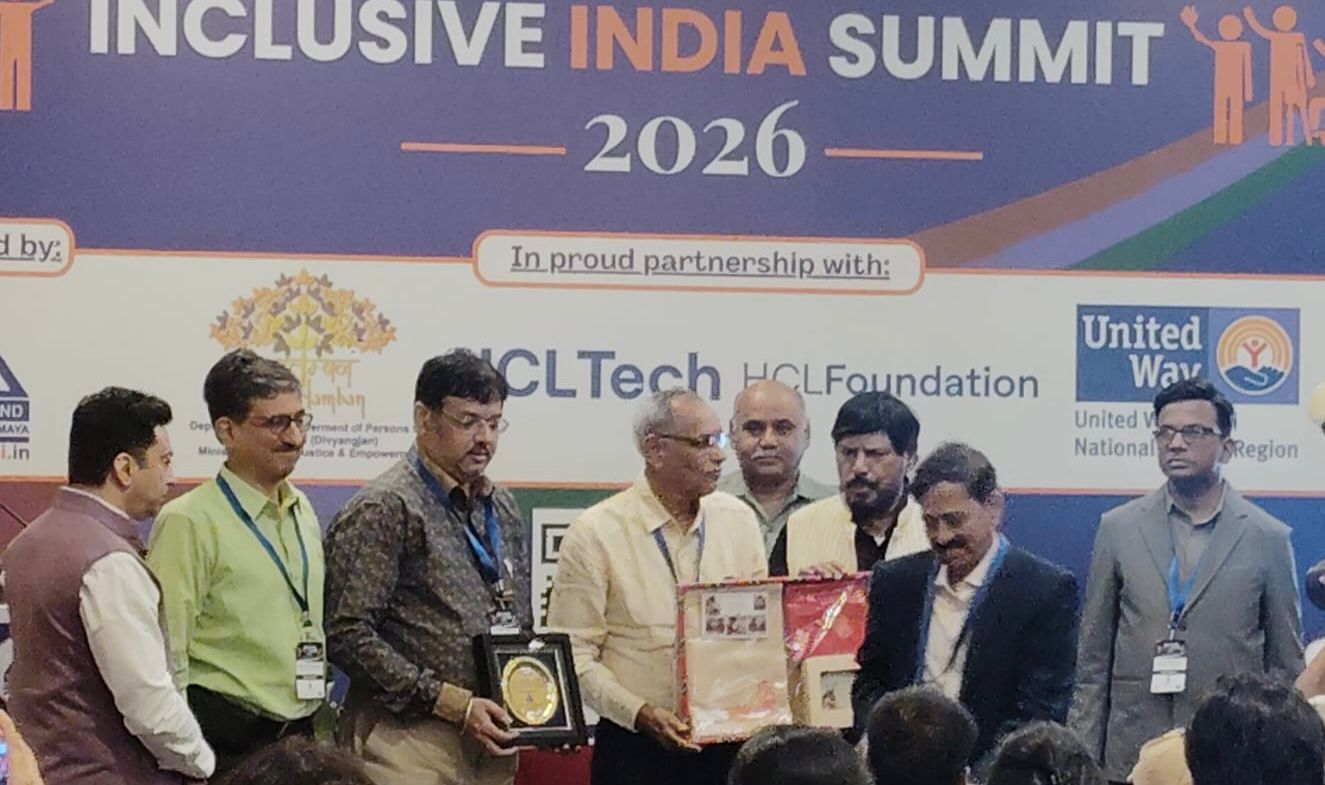
New Delhi, May 22: The National Association for the Blind (NAB Delhi) successfully hosted the India Inclusive Summit 2026 at Silver Oak, India Habitat Centre, New Delhi, bringing together policymakers, corporate leaders, accessibility experts, technology innovators, and members of the disability community to discuss the future of accessibility and inclusive development in India.
Organized by NAB Delhi with Knowledge Partner Tatsat Foundation, and in partnership with the Department of Empowerment of Persons with Disabilities (DEPwD), Ministry of Social Justice & Empowerment, Government of India, HCL Tech, HCL Foundation, and United Way of Delhi, the summit created a collaborative platform to address key issues around digital accessibility, inclusive workplaces, accessible technology, and empowerment of persons with disabilities (PwDs).
The summit commenced with an inaugural ceremony featuring a welcome address and context-setting by Mr. Prashant Ranjan Verma, General Secretary, NAB Delhi. A short film showcasing NAB Delhi’s initiatives and its ongoing efforts towards empowering visually impaired individuals through accessibility, education, training and advocacy, was also screened during the opening session.
Speaking on the occasion, Mr. Prashant Verma, General Secretary, National Association for the Blind (NAB Delhi) said, “India Inclusive Summit 2026 was envisioned as a platform to bring together diverse stakeholders to drive meaningful conversations around accessibility, inclusion, and empowerment. The summit reflects our commitment to ensuring that accessibility becomes an integral part of policy, technology, workplaces, and everyday experiences for persons with disabilities.”
One of the key highlights of the event was the presentation of the Inclusive India Awards 2026, recognizing institutions, implementation agencies, and individuals for their exceptional contribution towards promoting accessibility and inclusion in society. Microsoft received the Best Institution Award for making their Windows Operating system inclusive and accessible for all, including persons with disabilities. Mumbai based company BarrierBreak received the Inclusive India Award, in the Best Service Provider category while the Best Individual award was given to the blind lawyer and accessibility expert Amar Jain.
The event was graced by Chief Guest Ramdas Athawale, Minister of Social Justice and Empowerment, Government of India, who emphasized the importance of creating equal opportunities and strengthening accessibility initiatives across sectors.
On this occasion, Ramdas Athawale said, “India’s progress must be inclusive and accessible for all citizens. The government remains committed to promoting equal opportunities, accessible infrastructure, digital inclusion, and empowerment of PwDs. Platforms such as the India Inclusive Summit play an important role in encouraging dialogue, innovation, and collective action towards building a more inclusive nation.”
The summit featured multiple keynote presentations and panel discussions focused on strengthening India’s accessibility ecosystem. A keynote session by the Microsoft Windows Narrator Team highlighted the growing role of assistive technologies and accessible digital experiences in enabling greater independence for PwDs.
A major discussion during the summit centered around ‘Policy to Practice: India’s Digital Accessibility Landscape’, where accessibility experts and policy leaders discussed India’s evolving legal frameworks, implementation challenges, and the need for stronger adoption of accessibility standards across digital platforms. The session also explored how public and private stakeholders can work together to ensure that accessibility commitments translate into meaningful and inclusive user experiences.
The session on ‘Accessibility as Business Strategy’ highlighted how accessibility is increasingly being recognized as a driver of innovation, customer engagement, workforce diversity, and long-term business value. Industry leaders from technology, accessibility, and academic sectors shared insights on integrating accessibility into product development, workplace culture, and organizational strategy rather than treating it solely as a compliance requirement.
Another important discussion focused on the ‘Impact of Accessible ICT on Lives of PwDs’, where speakers shared how accessible information and communication technologies are transforming education, employment, communication, and independent living for PwDs. The session also showcased initiatives such as the Sugamya Bharat App, Shravan Audio Library, and Aditi AI, highlighting the role of technology-led innovation in improving accessibility and inclusion at scale.
The summit also featured a keynote presentation by Google on accessibility initiatives and inclusive design practices. The session highlighted how global technology companies are increasingly prioritizing accessible innovation to create digital products and experiences that are inclusive for all users.
The final session of the summit, ‘Corporate Action on Empowerment of Persons with Disabilities’, explored the role of the corporate sector in driving inclusive employment, accessible workplaces, skill development, and sustainable social impact initiatives.
Dr. Sumi Gupta, Director, Tatsat Foundation, added, “Accessibility is essential for equitable growth and social participation. It is through education, training and inclusion, can a person with disabilities achieve financial independence. Through this summit, we aimed to encourage stronger collaboration between government, industry, and civil society to ensure that innovation and development remain inclusive and accessible for everyone.”
The summit concluded with a conference summary and networking session, reinforcing a shared commitment among stakeholders towards advancing accessibility-led innovation and creating a more inclusive future for India.
- 0
- By Neel Achary

22, May 2026
India’s First CAR T-Cell Therapy Shows Durable Results: Two-Year Remission Achieved in Blood Cancer Patients
Bengaluru, May 22: In a major milestone in Indian oncology care, Immuneel Therapeutics’ Made-In-India CAR T-cell therapy has delivered the country’s first known long-term remission in patients with aggressive blood cancers. Seven patients treated in 2022 have now surpassed two years of progression-free survival (PFS), a first for any made-in-India CAR T-cell therapy. This achievement reinforces the durability of Immuneel’s approach and its potential to transform outcomes for patients with aggressive blood cancers.
The CAR T-cell therapy, known as Varnimcabtagene autoleucel (IMN-003A), under Immuneel’s IMAGINE Phase 2 clinical trial, aimed at treating adult patients with relapsed or refractory CD19-positive B-cell Non-Hodgkin Lymphoma (B-NHL) which is among the most aggressive forms of blood cancer, and many patients do not respond to standard therapies. In India, access to next-generation treatments like CAR T-cell therapy has been limited by cost and infrastructure, until now.
The encouraging results of the therapy recorded an 83% overall response rate (ORR) at Day 90 and a 50% ORR at Day 365, with a complete response rate of 83%, placing it among the highest reported outcomes in Indian clinical benchmarks for CAR T-cell therapies. The therapy has now been administered to more than 100 patients in India, marking Immuneel’s successful scale-up in delivering this complex therapy with consistent outcomes and a favorable safety profile. The data is backed up by 22+ presentations and publications at global platform along with original article publication in Blood-Immunology & Cellular Therapy.
Ms. Kiran Mazumdar-Shaw, Board Director & Co-Founder, Immuneel Therapeutics said, “Immuneel was founded with a clear mission to make advanced, life-saving cancer therapies accessible and affordable for patients in India. Seeing our Made-in-India CAR T therapy deliver durable remission outcomes across more than 100 patients; with several patients remaining in remission beyond two years, is a powerful validation of that mission. These encouraging long-term real-world outcomes demonstrate that innovation rooted in India can meet global benchmarks while addressing local healthcare needs at scale. As the clinical evidence continues to mature, Immuneel remains committed to strengthening India’s position in next-generation, transformative cancer therapies.”
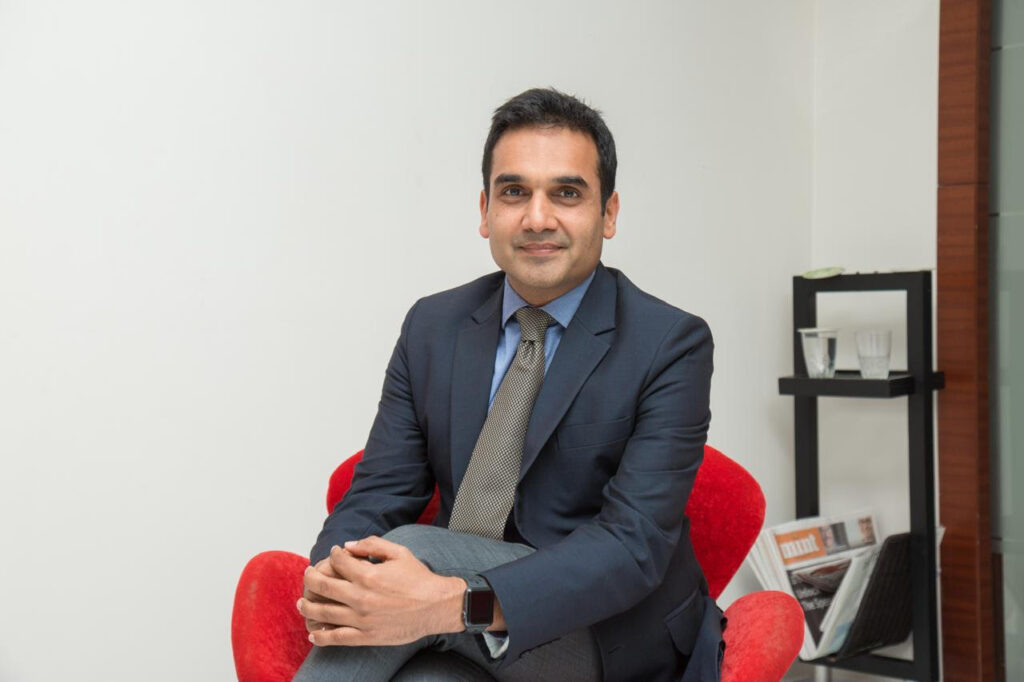
Mr. Amit Mookim, Board Director & CEO, Immuneel Therapeutics, added, “This achievement is not just a clinical validation, but a strategic proof point of what’s possible when world-class science is built for India and beyond, in India. Crossing the two-year progression-free survival mark with multiple patients demonstrates that India can lead in delivering durable, next-generation therapies. At Immuneel, our focus remains on scaling access, deepening impact, and continuing to redefine what cancer care can look like for patients and families in India and beyond India.”
Globally, CAR T therapies are considered revolutionary but are often expensive and logistically challenging. Immuneel’s effort marks a turning point in making these advanced treatments accessible to Indian patients, particularly those who have exhausted other options.
Key Clinical Highlights:
• India’s Longest-Known CAR T Therapy Survivors: Seven patients enrolled in the Phase 2 IMAGINE trial have crossed the two-year PFS milestone, a first for any CAR T therapy in India, underscoring durable remission and the potential for improved long-term survival
• Strong and Sustained Response Rates: IMN-003A (clinical trial) showed an 83% ORR at Day 90, a 50% ORR at Day 365, and a Complete Response rate of 83%, setting new standards in treatment for relapsed/refractory CD19+ B-NHL
• 1000-Patients Milestone: Therapy has been successfully administered to more than 100 patients post commercialization across leading Indian hospitals, demonstrating consistent clinical outcomes, favorable safety profile, and Immuneel’s ability to scale complex cell therapy delivery nationally
• Backed by DBT-BIRAC Grant: The IMAGINE Phase 2 trial was supported by BIRAC (Biotechnology Industry Research Assistance Council) under the Department of Biotechnology’s BIPP scheme, underscoring national recognition of its scientific merit
22, May 2026
GMM Pfaudler Limited reports Q4 FY26 results
Mumbai, May 22 : GMM Pfaudler Limited, global leader in corrosion-resistant technologies, systems, and services, announces its fourth quarter and annual results for the period ended March 31, 2025. Includes Exceptional items – Labour Code provision & Waghäusel severance.
Key Highlights
Consolidated:
·Revenue up 10% YTD and Q4FY26 up 17% YoY.
·EBITDA up 11% YTD and Q4FY26 down 10% YoY.
·PAT up 5% YTD and Q4FY26 up 155% YoY
·Order Intake up 20% YTD and for Q4FY26 up 32% YoY.
·Backlog up 34% YTD.
India:
·Revenue ₹ 1,034 Crores up 12% YTD and Q4FY26 ₹ 289 Crores up 15% YoY.
·EBITDA ₹ 135 Crores up 22% YTD and Q4FY26 ₹26 Crores down 24% YoY.
·Order Intake ₹ 967 Crores remains flat YTD and YoY.
·PAT ₹ 59 Crores up 40% YTD and Q4FY26 ₹16 Crores up 8% YoY.
Other Business Highlights:
·Mr. Gregory Gelhaus appointed as Group Chief Executive Officer.
·Mr. Ankit Nayyar appointed as Deputy Chief Financial Officer.
·The Board recommended a final dividend of ₹1 per equity share, subject to requisite approvals. Total dividend for FY26 (including interim dividend) would be ₹2 per equity share.
Management Comment
Commenting on the Company’s Q4 & FY26 results, Mr. Tarak Patel, Managing Director, said,
He further added, “Order intake during the year improved by 20%, driven by non-traditional markets such as Defence, Oil & Gas and Nuclear, which further reinforces our diversification strategy. Opening backlog stands at ₹ 2,194 crores a 34% increase over previous year giving us strong revenue visibility for the coming year. However, global economic conditions and geopolitical risks continue to create a challenging environment.
As part of our ongoing global transformation, we have appointed Mr. Gregory Gelhaus as Group CEO and Mr. Ankit Nayyar as Deputy CFO. These appointments will accelerate the execution of our strategic vision and will be instrumental in shaping the organization’s next phase of growth”.
22, May 2026
West Bengal’s Mandatory ‘Vande Mataram’ Order in Madrasas Triggers Political Storm
Kolkata, May 22 (BNP): A political controversy has erupted in West Bengal after the state government made the singing of Vande Mataram compulsory in all recognised madrasas across the state. The directive, issued by the Directorate of Madrasa Education, mandates that the national song be sung during morning assembly prayers before classes begin in institutions functioning under the Minority Affairs and Madrasa Education Department.

Representational image
The order applies to government model madrasas, government-aided institutions, approved Shishu Shiksha Kendras, Madhyamik Shiksha Kendras, and recognised unaided madrasas. The move comes nearly a week after the state government extended a similar mandate to schools, making Vande Mataram part of morning assemblies across educational institutions. Officials said the directive has been approved for immediate implementation as part of efforts to introduce uniformity in assembly practices and promote patriotic values among students.
The decision has sparked sharp reactions from opposition parties and sections of civil society, with critics alleging that educational institutions are being drawn into political debates. Several leaders questioned the timing and intent of the order, arguing that consultations with madrasa authorities and educators could have preceded such a move.
Reacting to the criticism, Samik Bhattacharya defended the government’s decision and rejected allegations of communal polarisation. “Vande Mataram and madrasas have no conflict. This is not about Hindu-Muslim politics. The slogan has historically been used across political traditions, including by the Congress during the freedom movement,” he said while backing the directive.
Written by novelist Bankim Chandra Chatterjee, Vande Mataram played a prominent role during India’s freedom struggle and remains a symbol of patriotism, while also periodically emerging as a subject of political and ideological debate in public life.
22, May 2026
Saatvik Green Energy Crosses INR 45,484 Mn in FY26 Revenue, Emerges as India’s Integrated Renewable Powerhouse
Chandigarh, May 22: Saatvik Green Energy Limited, one of India’s leading integrated solar energy solutions providers, announced its audited financial results for the quarter and year ended March 31, 2026 (Q4 & FY26).
The Company reported strong operational and financial performance during FY26, with revenue from operations growing by 111% year-on-year to ₹45,484 Mn, supported by sustained business momentum, manufacturing scale-up, and continued execution across key solar segments. During the year, Saatvik further strengthened its manufacturing footprint, diversified its solutions portfolio, and continued investments toward building a fully integrated solar manufacturing ecosystem.
The Company’s ongoing expansion initiatives, diversified clean energy portfolio, and continued backward integration efforts continue to strengthen Saatvik’s positioning across utility-scale, distributed solar, EPC, and integrated energy solutions segments. During the year, the Company further expanded its offerings across advanced PV modules, inverters, transformers, energy storage solutions, and turnkey energy solutions, while maintaining focus on high-efficiency and differentiated product offerings aimed at supporting customer value creation, operational reliability, and long-term margin resilience.
Commenting on the performance, Mr. Prashant Mathur, Chief Executive Officer, Saatvik Green Energy Limited, said, “FY26 was a defining year for us, marked by our successful listing on the Indian stock exchanges and the delivery of our highest-ever Revenue, EBITDA and PAT performance. Supported by strong order execution, manufacturing scale-up and growing customer relationships, we achieved our highest-ever annual production of 3,162 MW with effective capacity utilization of 84.07%, further strengthening our position as one of India’s fastest-growing renewable energy companies.”
“Our Ambala facility continues to operate at its full 4.8 GW module manufacturing capacity, while our Odisha integrated manufacturing project remains on track and represents a key milestone in Saatvik’s journey towards full value chain integration. During the year, we expanded our Odisha solar cell capacity plan from 2.4 GW to 3.6 GW, commissioned a 2 GW in-house EPE encapsulant manufacturing facility with expansion plans to 5 GW, and announced our planned entry into ingot and wafer manufacturing with a proposed 6 GW capacity.”
He further added, “FY26 also marked important strategic milestones across our clean energy solutions portfolio. Our order book stood at 5.89 GW with leading IPPs and utilities, while we expanded into transformer manufacturing, launched the UDAY Series of on-grid inverters, and strengthened our presence across hybrid and off-grid inverters and BESS solutions with B2C solar kits set to launch soon.”
“Our sustainability efforts were also recognized globally as Saatvik was awarded the Bronze Medal by EcoVadis and ranked in the 79th percentile among assessed companies worldwide. Supported by favourable policy initiatives and India’s long-term renewable energy ambitions, we believe Saatvik is strongly positioned for its next phase of growth with expanding manufacturing capacities, stronger integration and sharper execution capabilities,” he added.
Key Financial Highlights
(Audited; ₹ in Mn unless stated otherwise)
|
Particulars (₹ in Mn) |
FY26 |
FY25 |
YoY % |
|
Revenue from Operations |
45,484 |
21,584 |
111% |
|
EBITDA |
5,811 |
3,596 |
62% |
|
EBITDA Margin (%) |
12.78% |
16.66% |
– |
|
Profit after Tax (PAT) |
3,571 |
2,171 |
64% |
|
PAT Margin (%) |
7.85% |
10.06% |
– |
|
EPS (₹) |
29.83 |
19.40 |
– |
Operational & Strategic Highlights (FY26)
• Highest-ever annual production during FY26 stood at 3,162 MW, supported by effective capacity utilization of 84.07%.
• Order book remained strong at approximately 5.89 GW as of March 31, 2026, offering medium-term business visibility.
• Ambala facility continued operations at 4.8 GW module manufacturing capacity during FY26.
• Odisha integrated facility comprising 4 GW module and expanded 3.6 GW Phase 2 solar cell capacity remained on track, with tool moving expected to commence from Q1 FY27.
• Successfully commissioned a 2 GW EPE encapsulant manufacturing facility with plans to expand capacity to 5 GW.
• Announced plans for entry into ingot and wafer manufacturing with a proposed capacity of 6 GW.
• Expanded product portfolio through launch and development of hybrid inverters, off-grid inverters, B2C solar kits, transformer manufacturing and BESS-related solutions.
• Solar Pump business revenues scaled from ₹2 crore to ₹47 crore during FY26.
Outlook
Saatvik enters FY27 with a strong strategic roadmap centered around manufacturing integration, product diversification, and operational scale-up.
Key focus areas for the coming year include:
• Advancing Odisha integrated manufacturing expansion and commencement of tool moving activities from Q1 FY27.
• Scaling integrated module, solar cell, encapsulant, ingot and wafer manufacturing capabilities.
• Strengthening presence across distributed solar, inverter, transformer, Solar Pump and BESS ecosystems.
• Expanding high-efficiency and value-added product offerings across domestic markets.
• Continuing operational efficiency initiatives, backward integration and disciplined capital allocation.
The Company remains committed to supporting India’s renewable energy ambitions by enabling reliable, scalable, and affordable solar energy deployment through integrated manufacturing and technology-led clean energy solutions.
21, May 2026
Spotify and Universal Music Group Announce Landmark Licensing Agreements for Fan-made Covers and Remixes
Groundbreaking responsible AI tool to launch as paid add-on for Spotify Premium users
Santa Monica and Stockholm, May 21, 2026 – Spotify and Universal Music Group (UMG) today announced landmark recorded music and music publishing licensing agreements enabling Spotify to launch a new tool allowing fans to create covers and remixes of their favorite songs from participating artists and songwriters.
This groundbreaking tool will be powered by generative AI technology that will open up additional revenue streams and new ways to drive discovery. It introduces a creation model where artists and songwriters can directly share in the value generated through AI-driven licensed covers and remixes on the Spotify platform.
The new tool will launch as a paid add-on for Spotify Premium users and create an additional source of income for artists and songwriters, on top of what they already earn on Spotify.
“Solving hard problems for music is what Spotify does, and fan-made covers and remixes are next. What we’re building is grounded in consent, credit, and compensation for the artists and songwriters that take part. Through each technological transformation, we have worked together with Sir Lucian and his team to evolve the music ecosystem into a richer, more beneficial experience for fans and a more rewarding outcome for artists and songwriters,” said Alex Norström, Co-CEO, Spotify.
“The most valuable innovations in the music business always bring artists and fans closer together. That principle is at the heart of this pioneering AI-enabled superfan initiative, which is designed to support human artistry, deepen fan relationships, and create additional revenue opportunities for artists and songwriters. Building on our long track record of leading the industry through technology changes, and collaborating with Alex, Gustav, Daniel and the team at Spotify, this initiative is firmly artist-centric, rooted in responsible AI, and will drive growth for the entire ecosystem,” said Sir Lucian Grainge, Chairman and CEO, Universal Music Group.
21, May 2026
Kore.ai Launches Artemis, the New Generation of the Kore.ai Agent Platform for Building, Governing, and Optimizing Enterprise AI
Agent Blueprint Language™ (ABL) compounds returns and compresses agent delivery from months to days
SAN MATEO, Calif., May 21, 2026 — Kore.ai, the global leader in agentic platforms and applications, today launched the new-generation Kore.ai Agent Platform Artemis edition, the AI-programmable, AI-native foundation that builds, governs, and optimizes the agents, systems, and workflows running across the enterprise. The platform launches initially on Microsoft Azure, with broader cloud availability to follow.
The new-generation Agent Platform enables enterprises to deploy production-ready multiagent AI systems in days instead of months, with governance, observability, and operational control enforced before any agent goes live. Three core innovations make the platform fundamentally AI-native:
Agent Blueprint Language™ (ABL): ABL is a compiled, declarative language that standardizes how AI agents, systems, and workflows are defined, validated, and governed. Six built-in orchestration patterns (supervisor, delegation, handoff, fan-out, escalation, and agent-to-agent federation) enable resilient, production-grade multiagent systems at scale.
Arch™: Kore.ai’s AI agent architect translates business objectives into production-ready ABL, supports the full agent lifecycle, designs the underlying agent topology, and continuously refines agents using real-world production traces.
Dual-Brain Architecture: Two cognitive engines (combining agentic reasoning and deterministic flows) operate in parallel through shared memory, authored in a unified language and governed by a single runtime.
The platform operates independently of the model, keeping AI systems predictable, auditable, and scalable from experimentation to production-grade operations.
“Enterprise AI is entering its third wave, where governance, observability, and trust define success at scale,” said Raj Koneru, CEO and Founder, Kore.ai. “The Kore.ai Agent Platform reflects this shift by bringing an AI-native architecture to market that enables enterprises to build, manage, and optimize multiagent systems with confidence. This level of depth comes from a decade of delivering AI experiences in complex, regulated environments, where scale, compliance, and reliability are non-negotiable.”
The Business Case: AI Building, Governing, and Optimizing AI
ABL and Arch put AI in charge of every stage of the agent lifecycle:
- AI building AI. Arch generates production-ready agents from plain-language objectives, writes them in ABL, and validates them before deployment. Agents that once required months of bespoke engineering now ship in days as compiled, reviewable blueprints.
- AI governing AI. Every decision, path, and outcome is logged, traced, and analyzed by AI in real-time. Deterministic constraints and flow controls are enforced by the platform itself, not left to the agent.
- AI optimizing AI. The platform learns from production signals and recommends specific improvements as reviewable optimizations, with human oversight built in.
“To scale AI with confidence, enterprises need a standardized agent building system and the enforcement of robust governance,” said Vaibhav Bansal, Vice President at Everest Group. “Kore.ai’s strong investments in advancing agentic AI capabilities and governance, combined with a consistent focus on delivering measurable business outcomes, have positioned Kore.ai as a Leader in the Agentic AI Products PEAK Matrix® Assessment 2026.”
What This Means for Today’s CIO, CISO, and CFO
The Kore.ai Agent Platform changes what enterprise AI delivers, what it costs, and what it can be trusted to do:
- For the CIO, AI becomes manageable and accelerated. The platform consolidates fragmented third-party and home-grown agents into one foundation and accelerates delivery from quarters to days across every department and business unit.
- For the CISO, AI behavior becomes predictable. Governance is enforced at the platform layer, outside the model’s control. Every agent action and policy decision is logged, timestamped, and traceable to a specific regulatory control.
- For the CFO, AI investment compounds. Arch, ABL, and the runtime are shared infrastructure across every agent, so the marginal cost of the Nth agent approaches the cost of authoring its blueprint. Every model upgrade improves every agent already running.
Microsoft Azure: Initial Launch Partner
The Kore.ai Agent Platform launches initially on Microsoft Azure and is built natively on the Microsoft Azure stack across compute, identity, AI, and security. For Global 2000 enterprises already standardized on the Microsoft stack, the platform integrates with Microsoft Foundry, Microsoft Agent 365, Entra ID, and the Microsoft Graph API, and powers a native Microsoft Teams channel through the Azure Bot Framework. Kore.ai is also a launch partner for Agent 365.
“Enterprises are moving agentic AI from experimentation to operations, and that shift requires a foundation built for production. The Kore.ai Agent Platform integrates with Microsoft Foundry and Microsoft Agent 365, giving customers a governed environment to build, deploy, and operate AI agents with the identity, security, and observability that Microsoft customers expect,” said Stephen Boyle, CVP, Enterprise Partner Solutions, Microsoft.
Customers Say
“We’ve had early visibility into the Kore.ai Agent Platform, and the architectural rigor stands out. Compiled blueprints, governance in a separate deterministic layer, and one language for every agent are the design choices enterprise AI has been missing.” – Keyur Parikh, Head of Workplace Technology Strategies and Services, Vanguard
“The question every enterprise is asking is how to move AI from pilot to production without creating compliance exposure. What stood out about Kore is that governance is architectural, not an afterthought. That is what it takes to get AI approved for the work that actually matters.” – Arunkumar Ramakrishnan, Director of Enterprise Technology, Blue Cross Blue Shield of Massachusetts
The platform meets enterprise security, compliance, and deployment requirements from day one: SOC 2 Type II, ISO 27001, PCI DSS certified; FedRAMP Moderate Authorized; HIPAA-aligned; HiTrust and GDPR compliant. Real-time PII tokenization, tenant isolation, and immutable audit trails apply to every agent action. Customers deploy in public cloud, sovereign regions, private cloud, or on-premises, with data residency by region. The platform supports 40+ voice and digital channels and 300+ integrations across Microsoft A365, Salesforce, HubSpot, Jira, GitHub, and core banking, healthcare, retail, and telecom systems.
For more than a decade, Kore.ai has been one of the world’s leading providers and pioneers of AI-native enterprise software, enabling 500+ Global 2000 organizations to run mission-critical business workflows, including some of the largest names in banking, healthcare, insurance, retail, and global service operations.
21, May 2026
SimonMed leads largest global study of AI in X-ray, analyzing 258,373 exams across 26 countries
SCOTTSDALE, AZ. May 21, 2026 — A landmark, peer-reviewed global study representing the largest published evaluation of artificial intelligence in X-ray imaging has been published in Radiography, analyzing 258,373 X-rays from 100 medical centers across 26 countries and five continents. The study was led by Dr. Sean Raj, Chief Medical Officer and Chief Innovation Officer at SimonMed, who served as senior author.
SimonMed, one of the largest outpatient imaging providers in the United States, contributed U.S. clinical data and played a central role in the study’s design, execution, and analysis, reinforcing its leadership in the clinical validation of artificial intelligence in radiology.
The study evaluated all four components of the Rayvolve® AI Suite as a unified clinical platform under real-world conditions, with no exclusions based on image quality or acquisition protocol. The system demonstrated high diagnostic performance across multiple use cases, including musculoskeletal trauma, chest imaging, automated measurements, and bone age assessment. AZtrauma achieved an AUC of 98.3% (sensitivity: 97.4%, specificity: 96.4%) across 195,706 musculoskeletal examinations. AZchest demonstrated an AUC of 97.8% (sensitivity: 96.7%, specificity: 87.9%) across 61,418 chest radiographs covering six pathology categories. AZmeasure and AZboneage delivered measurement precision within 1.83 degrees for angles, 1.1 mm for lengths, and a bone age estimation error of approximately six months.
Performance remained consistent across pathologies, anatomies, patient demographics, and global care settings, with all 258,373 images processed without a single technical failure, highlighting both the robustness and scalability of AI in real-world clinical environments.
SimonMed’s contribution to the study builds on a partnership that has deepened since 2023, when SimonMed selected AZmed as its AI partner for X-ray diagnostics following an independent evaluation across its outpatient network. That initial deployment demonstrated a 6x reduction in turnaround time for fracture cases and 98.5% sensitivity across SimonMed centers. SimonMed subsequently provided the clinical data that supported AZmed’s 2024 FDA 510(k) clearance for pediatric fracture detection. The inclusion of SimonMed’s U.S. imaging data in this 26-country study extends the collaboration from operational deployment and regulatory contribution to large-scale, independently published clinical evidence.
“Validating a complete AI suite at this scale, across 100 centers in 26 countries, establishes a new standard for clinical evidence in radiology AI,” said Julien Vidal, CEO of AZmed. “SimonMed’s contribution at every stage of this journey, from early U.S. deployment through FDA clearance and now the largest published X-ray AI study, reflects the kind of clinical partnership that advances the entire field.”
“This study represents a defining moment for AI in medical imaging,” said Dr. Sean Raj, Chief Medical Officer and Chief Innovation Officer at SimonMed. “We are proud to have led a global effort that not only validates AI performance at an unprecedented scale, but also reinforces the importance of rigorous, real-world clinical evidence. We are committed to continue our founding mission – to deliver high quality, accessible care at scale while measurably improving diagnostic quality for our radiologists and the patients they serve.”
The study is available in Radiography.
21, May 2026
The Growing Role of Water Testing Labs in Ensuring Safe and Sustainable Water Quality
With increasing concerns over water pollution, industrial contamination, and public health risks, the role of water testing laboratories has become more important than ever. Water quality testing helps identify harmful contaminants, assess safety standards, and ensure that water is suitable for drinking, industrial use, agriculture, and environmental applications. As urbanization and industrial activities continue to expand, regular water monitoring has become a crucial step in protecting both human health and natural ecosystems.
Choosing the best water testing lab is essential for accurate analysis and reliable results. Professional laboratories use advanced scientific techniques to test critical parameters such as pH, turbidity, heavy metals, microbial contamination, total dissolved solids (TDS), and chemical pollutants. These services help industries, households, and regulatory bodies make informed decisions about water safety while ensuring compliance with environmental and public health standards.
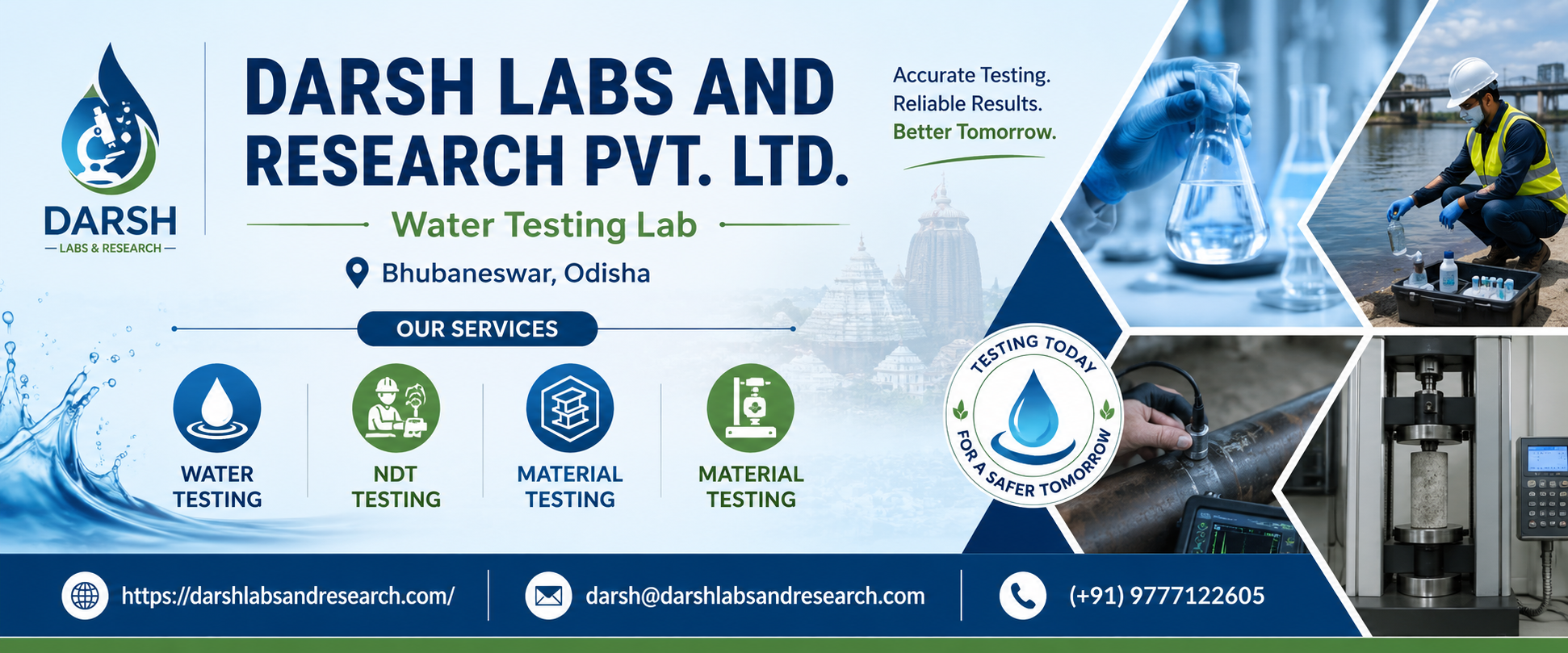
Water testing laboratories play a vital role in detecting contaminants at an early stage, preventing potential health hazards before they escalate. Contaminated water can contain harmful substances such as lead, arsenic, pesticides, bacteria, viruses, and industrial chemicals that may lead to serious diseases and long-term health complications. Through routine testing and laboratory-based analysis, these risks can be identified and controlled effectively.
In industrial sectors, water testing labs support quality control, wastewater treatment monitoring, and regulatory compliance. Industries rely on laboratory analysis to maintain process efficiency, prevent environmental pollution, and meet discharge standards set by authorities. Similarly, municipal bodies use water testing services to ensure safe drinking water distribution and maintain public sanitation systems.
Modern water testing laboratories also use advanced technologies such as ICP-MS, GC-MS, microbiological analysis, and real-time monitoring systems to provide highly accurate and timely results. These scientific methods improve contamination detection and help create data-driven water management strategies.
As water quality challenges continue to grow worldwide, water testing laboratories remain a critical pillar of public health, environmental protection, and sustainable resource management. Their role in ensuring safe water access, preventing contamination, and supporting regulatory compliance makes them indispensable in building a healthier and more sustainable future.
21, May 2026
Enterprise AI is burning tokens without context and teams are paying the price
-
Precision: answers sourced from real business data, cited and referenced so teams can stand behind them.
-
Efficiency: trusted answers at lower cost, lower token usage, no analyst required, full context on the first response.
-
Safety: nothing goes out before a human approves it, with full audit trails and the ability to undo any agent action.
-
Shared Memory: personal, team, and organizational memory that compounds over time
-
Trusted Answers: intent-aware search and consistent data answers. Same question, same answer, every time. Computer doesn’t guess – it knows, and it shows its work.
-
Safe Actions: governed, auditable actions across your systems. Computer acts on your behalf with guardrails, so teams move faster without risk.
-
Multiplayer AI: shared live sessions for human-to-human, human-to-AI, and team-wide collaboration
-
Skills – reusable workflows that any team can build, share, and deploy. One person’s expertise becomes everyone’s capability. Agent Studio allows users to build and deploy AI agents with sandboxed testing, full audit trails, and rollback
-
Text2SQL: analytical queries across structured data in plain language, no data analyst required
-
Connectors: Gmail, Outlook, Slack, Notion, Google Drive, Jira, Microsoft OneDrive, SharePoint, and any MCP-compatible tool
-
Usage-based pricing: that scales with adoption and not headcount
-
Across web, mobile, and desktop. Use Computer from any device.
-
Inside the DevRev system of record apps. Existing DevRev customers can access Computer directly within their current workflow without switching surfaces.