


21, May 2026
The Growing Role of Water Testing Labs in Ensuring Safe and Sustainable Water Quality
With increasing concerns over water pollution, industrial contamination, and public health risks, the role of water testing laboratories has become more important than ever. Water quality testing helps identify harmful contaminants, assess safety standards, and ensure that water is suitable for drinking, industrial use, agriculture, and environmental applications. As urbanization and industrial activities continue to expand, regular water monitoring has become a crucial step in protecting both human health and natural ecosystems.
Choosing the best water testing lab is essential for accurate analysis and reliable results. Professional laboratories use advanced scientific techniques to test critical parameters such as pH, turbidity, heavy metals, microbial contamination, total dissolved solids (TDS), and chemical pollutants. These services help industries, households, and regulatory bodies make informed decisions about water safety while ensuring compliance with environmental and public health standards.

Water testing laboratories play a vital role in detecting contaminants at an early stage, preventing potential health hazards before they escalate. Contaminated water can contain harmful substances such as lead, arsenic, pesticides, bacteria, viruses, and industrial chemicals that may lead to serious diseases and long-term health complications. Through routine testing and laboratory-based analysis, these risks can be identified and controlled effectively.
In industrial sectors, water testing labs support quality control, wastewater treatment monitoring, and regulatory compliance. Industries rely on laboratory analysis to maintain process efficiency, prevent environmental pollution, and meet discharge standards set by authorities. Similarly, municipal bodies use water testing services to ensure safe drinking water distribution and maintain public sanitation systems.
Modern water testing laboratories also use advanced technologies such as ICP-MS, GC-MS, microbiological analysis, and real-time monitoring systems to provide highly accurate and timely results. These scientific methods improve contamination detection and help create data-driven water management strategies.
As water quality challenges continue to grow worldwide, water testing laboratories remain a critical pillar of public health, environmental protection, and sustainable resource management. Their role in ensuring safe water access, preventing contamination, and supporting regulatory compliance makes them indispensable in building a healthier and more sustainable future.
- 0
- By Neel Achary

21, May 2026
Enterprise AI is burning tokens without context and teams are paying the price
-
Precision: answers sourced from real business data, cited and referenced so teams can stand behind them.
-
Efficiency: trusted answers at lower cost, lower token usage, no analyst required, full context on the first response.
-
Safety: nothing goes out before a human approves it, with full audit trails and the ability to undo any agent action.
-
Shared Memory: personal, team, and organizational memory that compounds over time
-
Trusted Answers: intent-aware search and consistent data answers. Same question, same answer, every time. Computer doesn’t guess – it knows, and it shows its work.
-
Safe Actions: governed, auditable actions across your systems. Computer acts on your behalf with guardrails, so teams move faster without risk.
-
Multiplayer AI: shared live sessions for human-to-human, human-to-AI, and team-wide collaboration
-
Skills – reusable workflows that any team can build, share, and deploy. One person’s expertise becomes everyone’s capability. Agent Studio allows users to build and deploy AI agents with sandboxed testing, full audit trails, and rollback
-
Text2SQL: analytical queries across structured data in plain language, no data analyst required
-
Connectors: Gmail, Outlook, Slack, Notion, Google Drive, Jira, Microsoft OneDrive, SharePoint, and any MCP-compatible tool
-
Usage-based pricing: that scales with adoption and not headcount
-
Across web, mobile, and desktop. Use Computer from any device.
-
Inside the DevRev system of record apps. Existing DevRev customers can access Computer directly within their current workflow without switching surfaces.
21, May 2026
AD Ports Group and e& Deliver AI-Ready Terrestrial Digital Backbone Across Logistics Infrastructure
Abu Dhabi, UAE – 21 May 2026: AD Ports Group (ADX: ADPORTS), a leading global enabler of trade, industry, and logistics solutions, and e& UAE today announced the successful deployment of an AI-ready high-capacity terrestrial connection, linking major maritime and logistics assets across the Group’s portfolio.
The new high-capacity network extends AD Ports Group’s terrestrial digital backbone to more than 1,000 kilometers, seamlessly connecting the Group’s strategically located assets in Abu Dhabi. This enables the continuous streaming of high-volume sensor data, video feeds, and IoT signals, creating a fully integrated environment ready for machine learning and automated decision-making.
Designed for ultra-low latency, this high-bandwidth terrestrial connectivity establishes a robust foundation for AI models to process data and deliver real-time inference within milliseconds.
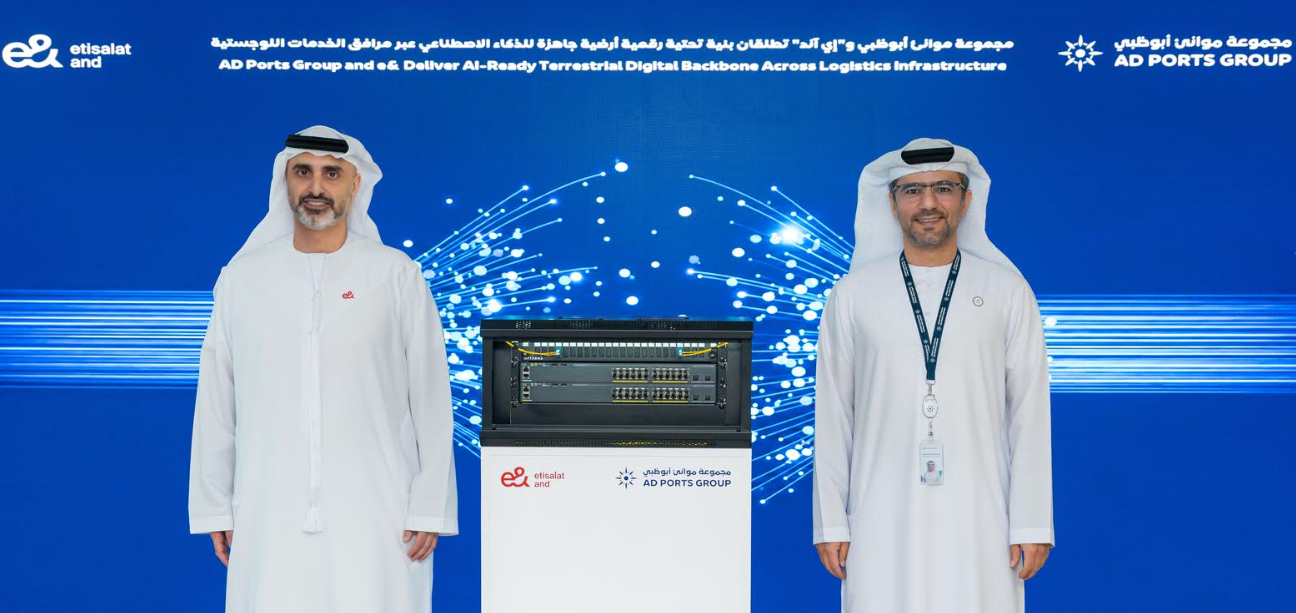
Captain Mohamed Juma Al Shamisi, Managing Director and Group CEO – AD Ports Group, said: “The future of global trade is intelligent and predictive. Under the guidance of our wise leadership in the UAE, we are embracing and leading this change by collaborating with globally leading technology companies to help us ensure that digital intelligence remains at the heart of our operations, driving global trade and supply chain resilience.”
Masood M. Sharif Mahmood, Group CEO, e& and CEO, e& UAE, said: “Advanced connectivity is now essential to the way major industrial and logistics hubs operate, scale and compete. Through this collaboration with AD Ports Group, e& UAE has delivered a future-ready digital backbone that powers speed, security and scalability, while creating the foundation for more advanced automation, analytics and AI-led operations.
“With e&’s leadership in fibre connectivity, we are not just connecting infrastructure; we are shaping the future of trade, logistics, and innovation for the entire nation.”
This strategic initiative marks another significant milestone in AD Ports Group’s digital transformation journey, further strengthening the Group’s digital resilience across its expanding global portfolio. In 2025, AD Ports Group announced the phased rollout of Low Earth Orbit (LEO) satellite connectivity across its global operations, aimed at enabling real-time data exchange with vessels and delivering always-on connectivity for ports and terminals, driving new efficiencies and fuel savings.
By integrating its terrestrial digital backbone with LEO satellite services and existing radio networks, the Group has established a resilient, multi-layered connectivity architecture that ensures sovereign, uninterrupted data flow under all conditions.
21, May 2026
Indian Markets End Flat Amid West Asia Tensions; Selective Buying Cushions Losses !
May 21 (BNP): Indian equity markets ended largely flat on Thursday as geopolitical tensions in West Asia weighed on investor sentiment, while selective buying in broader markets helped benchmark indices limit losses and avoid a sharper decline.
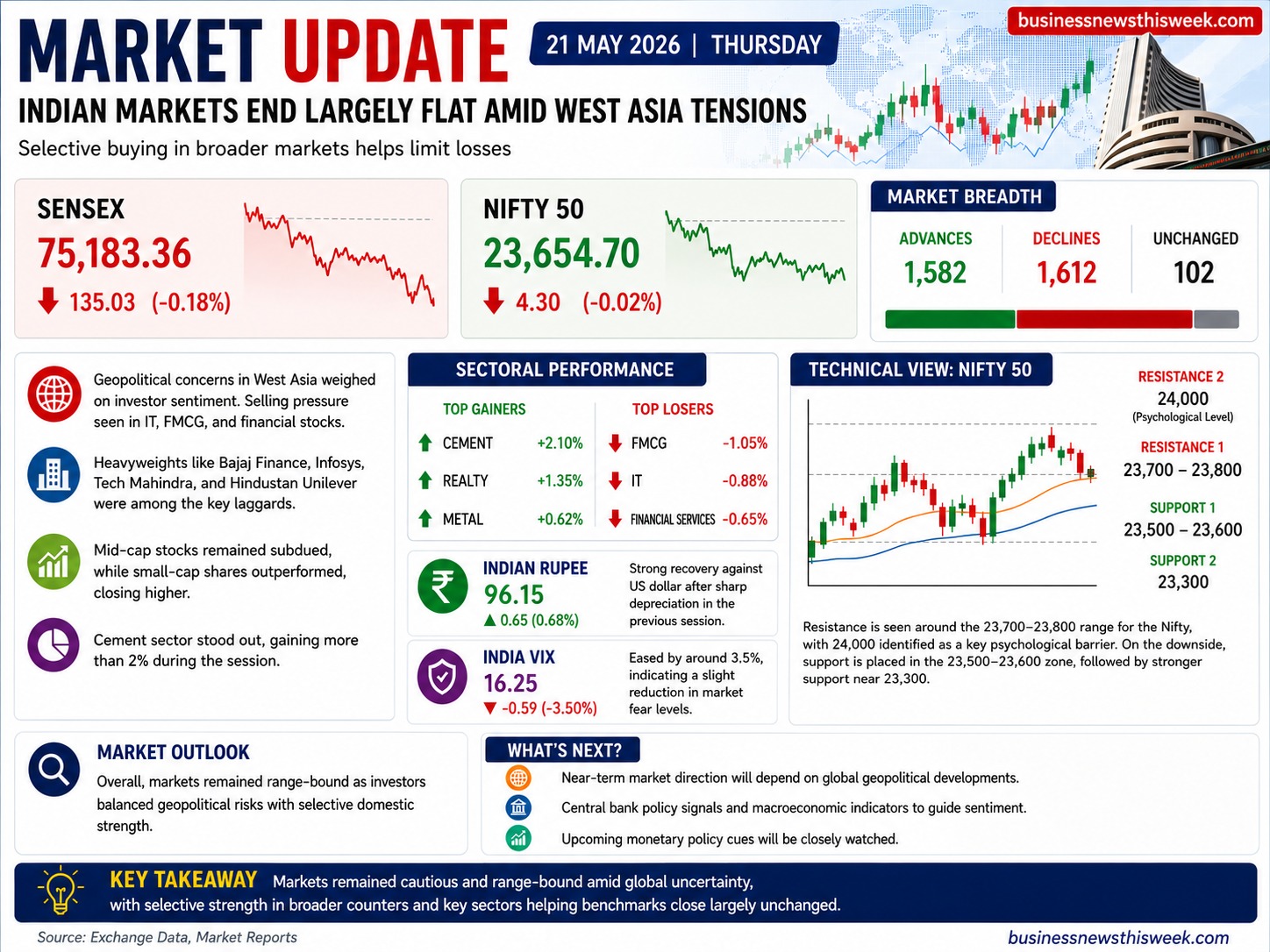
The benchmark Sensex closed at 75,183.36, down 135.03 points or 0.18 per cent, while the Nifty 50 settled nearly unchanged at 23,654.70, slipping just 4.30 points or 0.02 per cent, reflecting cautious market participation amid global uncertainty.
Market sentiment remained under pressure due to concerns over escalating geopolitical developments in West Asia, prompting selling in sectors such as information technology (IT), fast-moving consumer goods (FMCG), and financial services. Heavyweight stocks including Bajaj Finance, Infosys, Tech Mahindra and Hindustan Unilever emerged among the key laggards during the trading session.
Despite weak benchmark momentum, broader markets showed resilience. Mid-cap stocks traded subdued, while small-cap counters outperformed and ended higher, indicating selective investor confidence in specific segments. Sectorally, the cement pack emerged as the top performer with gains of over 2 per cent, followed by strength in realty and metal stocks. On the other hand, FMCG and IT sectors witnessed notable selling pressure.
The Indian rupee recovered strongly against the U.S. dollar to close at 96.15, registering gains of 0.68 per cent, while the India VIX, a measure of market volatility, eased by around 3.5 per cent, signalling a marginal decline in investor anxiety levels.
Market experts indicated that near-term direction is likely to remain dependent on geopolitical developments, global central bank signals and macroeconomic indicators. Technically, analysts see resistance for Nifty in the 23,700–23,800 range, with the 24,000 mark acting as a key psychological barrier, while immediate support is placed between 23,500 and 23,600.
Overall, markets remained range-bound as investors balanced geopolitical risks with selective domestic strength, keeping benchmark indices largely stable despite external headwinds.
21, May 2026
ATM 2026 confirms revised September dates
Dubai, United Arab Emirates, May 21 : RX has announced that Arabian Travel Market 2026 will now take place from 14–17 September 2026 at Dubai World Trade Centre , following extensive consultation with exhibitors and industry stakeholders, reflecting ATM’s commitment to listening to the needs of the global tourism industry.

Danielle Curtis, Regional Portfolio Director – UAE, RX Global, said:
“We have been listening and working closely with our exhibitors, partners and stakeholders from across the global travel industry, and the decision to move Arabian Travel Market 2026 to 14–17 September reflects that ongoing dialogue and collaboration.
“Our priority is always to ensure that ATM delivers the strongest possible platform for business, networking and partnership opportunities for the international travel community. Following industry feedback, we are pleased that these new dates will allow exhibitors, buyers and visitors from around the world to maximise their participation and engagement at the event.
“We would like to thank our strategic partners, including Dubai World Trade Centre, the Dubai Department of Economy and Tourism, IHG and Al Rais Travel, for their continued collaboration and support in making these revised dates possible. Together, we remain committed to delivering a world-class event that supports the continued growth and evolution of the global travel and tourism industry.”
Now in its 33rd edition, Arabian Travel Market serves as a key global platform connecting destinations, travel suppliers, hospitality brands, airlines, technology providers and industry professionals from across the travel ecosystem.
ATM 2026 will continue to be held under the theme “Travel 2040: Driving New Frontiers Through Innovation and Technology”, exploring the trends, technologies and innovations shaping the future of global travel. The event will spotlight ATM Travel Tech, the dedicated co-located show focused on the rapidly evolving travel technology sector, alongside the Tech & Innovation Zone, an immersive hub showcasing the latest developments in AI, immersive experiences, smart mobility, fintech, robotics and sustainable travel solutions.
The extensive ATM conference programme, which includes the Global Stage, Future Stage, located within the Tech & Innovation Zone, and Experience Hub, will bring together key tourism leaders and experts to examine the evolving challenges and opportunities shaping international tourism, with dedicated sessions exploring destination resilience, traveller experience, aviation innovation, digital transformation and sustainable long-term growth strategies.
The programme will include leading global research organisations, strategists and technology specialists to deliver data-driven insight into the future of travel. Confirmed contributors on the Global Stage include Tourism Economics, an Oxford Economics company, delivering the session “ATM Annual Trends Report: Middle East Momentum & Market Shifts”.
The company will be joined by Euromonitor’s Stephen Dutton, who will lead a session titled “The State of Travel: Inflation, Polycrisis & the New Travel Reality.”
The Future Stage, located within the Tech & Innovation Zone, will be hosted by BBC’s Nick Kwek, Travel and Tech Broadcaster and feature sessions led by research partners including Dragon Trail, where Sienna Parulis-Cook, Director of Marketing & Communications, will present “Welcoming Back the Chinese Tourism Market: Insights for the Middle East” and Videc, which will discuss “Money Talks: Growth, M&A and consolidation in Global Travel”, outlining the insights, data and strategies for investment and growth in travel technology.
The Experience Hub will welcome Rana Nawas, Corporate Strategist & Podcast Host, who will deliver a workshop titled “The Modern Leader and Future of Workforce.” The programme will also feature several sessions, including a high-level, buyer-focused event by ICCA titled “Beyond Borders: The Middle East’s Collaborative Vision for a Global Business Events Future”, alongside further peer-to-peer conversations and round table discussions.
ATM 2026 is expected to welcome thousands of travel professionals and exhibitors from around the world following the confirmation of the revised September dates, highlighting Dubai’s role as a global platform for tourism industry dialogue, collaboration and innovation.
21, May 2026
NCDEX to Roll Out India’s First Weather Derivative Contract ‘RAINMUMBAI’
Mumbai, May 21 (BNP): India is set to enter a new phase of climate-linked financial innovation with the National Commodity & Derivatives Exchange Ltd (NCDEX) preparing to launch RAINMUMBAI, the country’s first exchange-traded weather derivatives contract, on June 1, 2026. The pioneering product is designed to help businesses, investors and weather-sensitive sectors manage financial risks arising from monsoon uncertainty through a regulated market instrument.
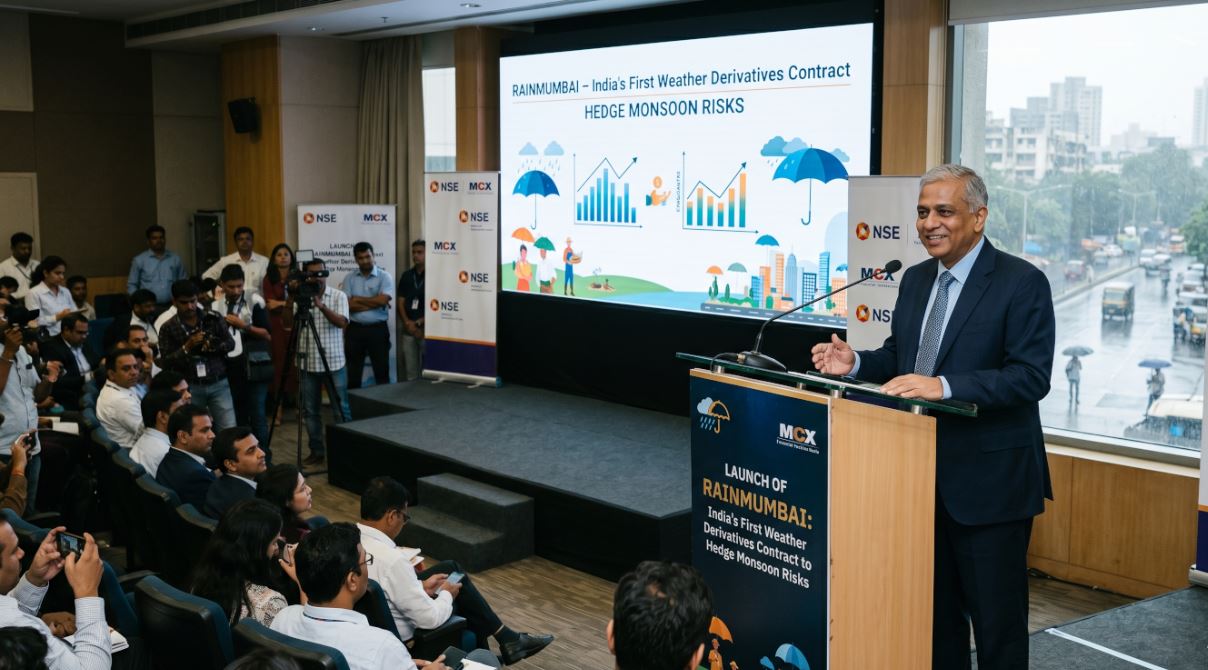
Representational image
The launch marks a significant step toward integrating climate variability into India’s financial ecosystem, particularly at a time when erratic weather patterns and rainfall fluctuations increasingly affect agriculture, logistics, infrastructure and commodity markets. Linked to rainfall data, the contract will allow stakeholders to hedge against unexpected monsoon outcomes and minimise economic disruptions caused by excessive or deficient rainfall.
Developed by National Commodity & Derivatives Exchange Ltd, RAINMUMBAI is expected to create a structured and transparent framework for managing weather-related risks using market-based mechanisms. The initiative is also seen as a major move toward strengthening financial preparedness against climate-linked uncertainties while broadening the scope of derivatives trading in India.
Industry experts believe the introduction of weather derivatives could benefit multiple sectors dependent on seasonal rainfall, offering a more predictable risk-management system and helping businesses make informed financial decisions during the crucial monsoon period. The development signals India’s growing focus on combining technology, finance and climate resilience in economic planning.
21, May 2026
Sony Music India Presents ‘Chand Mera Dil’: Unplugged Jam Session with Karan Johar
May 21 : The musical stars of Chand Mera Dil, including Sachin-Jigar, Faheem Abdullah, Raghav Chaitanya, Neeti Mohan, Junaid Ahmed, Tushar Joshi and Suvarna Tiwari recently came together for a fun and intimate jamming session with Karan Johar. The evening was filled with soulful, unplugged renditions of songs from the film, creating a warm and unfiltered musical experience.
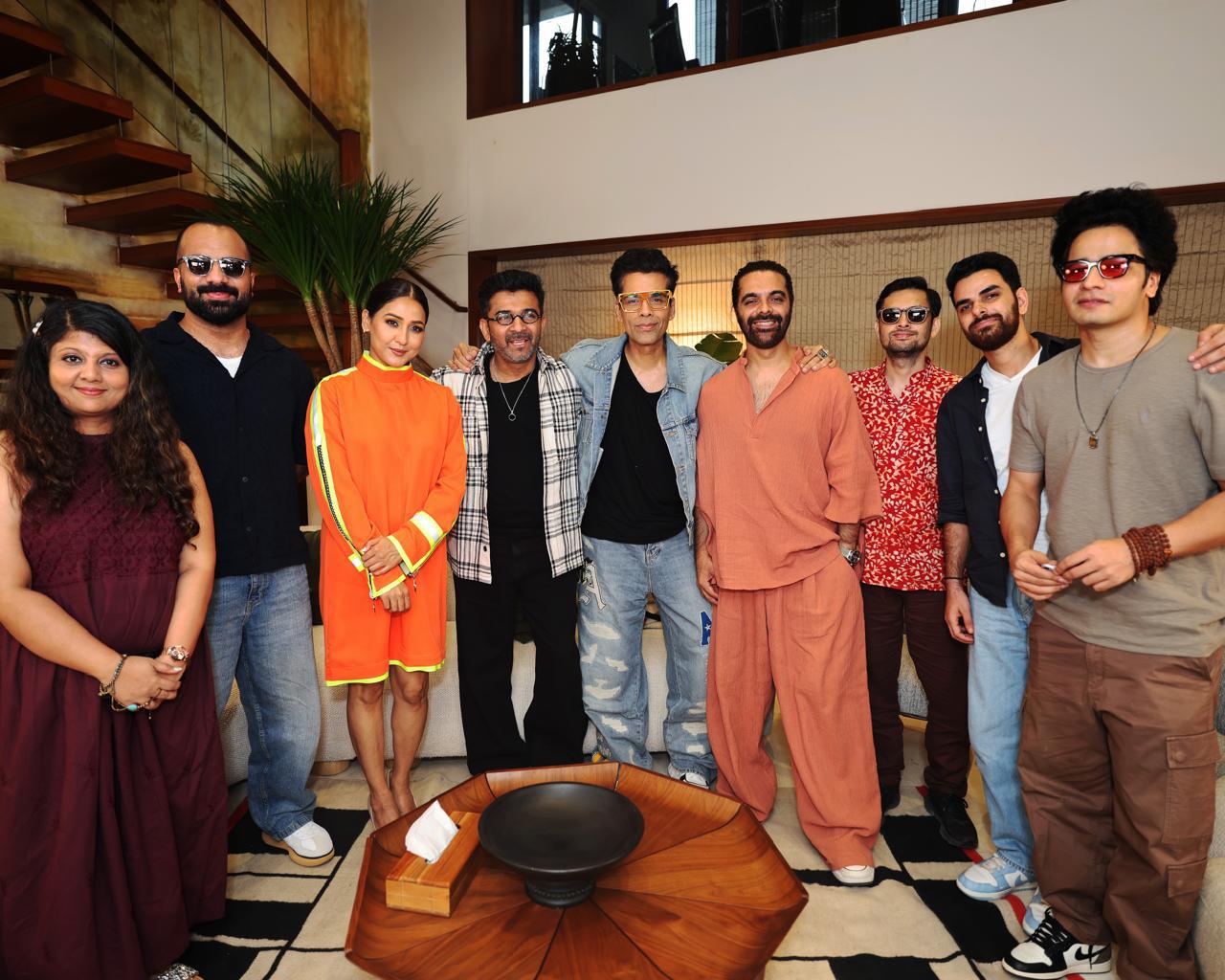
The artists vibed together, sang songs from the entire Chand Mera Dil album, shared stories behind the music, and celebrated the soundtrack in its purest form, making it a memorable evening of music, laughter, and camaraderie.
Speaking about the session, Karan Johar said,
“There’s a different kind of magic when music is experienced in its rawest and most unplugged form. Watching the entire musical family of Chand Mera Dil come together, vibe, sing, and simply enjoy the music was beautiful.”
To which Sachin-Jigar added,
“It was truly a wonderful time. To have everyone together, singing the songs of Chand Mera Dil in such an intimate setting, made the experience very special for all of us. The energy and vibes in the room was incredible, and moments like these remind us why we love making music.”
With songs from Chand Mera Dil already leading the charts and listeners deeply immersed in its musical world, this vibrant and intimate musical jamming session has further elevated the excitement surrounding the film and its soundtrack, reinforcing its place as one of the year’s most heartfelt and emotionally immersive musical albums. A Dharma Productions film, produced by Karan Johar, Adar Poonawalla, Apoorva Mehta, Somen Mishra, and Marijke deSouza. Directed by Vivek Soni, the movie is scheduled for a grand worldwide theatrical release on May 22, 2026.
21, May 2026
Amazon in to add 100 Plus premium beauty brands in 2026 expansion

“India’s beauty industry is seeing a clear shift from availability-led shopping to more intentional, discovery-led consumption, driven by growing awareness of global beauty trends. On Amazon, premium beauty is growing 50% YoY, with demand for K-beauty and French pharmacy nearly doubling year-over-year. We’re seeing more than 50% of this demand come from Tier 2 and Tier 3 cities such as Thrissur, Dehradun, Patiala, Guwahati and Kolhapur a strong signal that premium beauty aspiration is penetrating deep across Bharat. While we’ve invested in widening selection for diverse needs, we’re equally focused on speed – nearly half of all beauty orders across India’s top 100 cities now arrive the same or next day, bringing beauty closer to customers across Bharat. Our focus remains on offering a wide selection from trusted brands and AI-powered shopping tools that help customers discover and buy products more confidently and with the largest number of beauty shoppers in the country and double-digit growth in our beauty customers base every year, we’re excited about what’s ahead for beauty on Amazon.in,” said Siddharth Bhagat, Director – Beauty, Amazon India.
21, May 2026
Riders Ki Baraat 2.0 Roars Back to Omaxe Chowk with Grand 1000+ Bike Rally, Supported by OCPR
May 21 : Omaxe Chowk, Chandni Chowk, came alive with unmatched energy as Riders Ki Baraat 2.0 roared through the heart of Delhi, bringing together 1000+ bikers for one of the capital’s most vibrant and visually spectacular community celebrations. Building on the huge success of its first edition, Riders Ki Baraat 2.0 returned bigger and grander, transforming the iconic lanes of Chandni Chowk into a lively celebration of biking, festivity, and togetherness.

The ride commenced from Zana Motorcycles, Naraina, and culminated at Omaxe Chowk, with bikers dressed in vibrant wedding-inspired attire and stylish riding jackets. As the grand baraat made its roaring entry, the atmosphere at Omaxe Chowk transformed instantly into a spectacle of celebration, with electrifying dhol beats, high-energy cheers, and festive fervour taking over Chandni Chowk, creating an unforgettable experience.
The event was graced by celebrity jury members Divya Sandhu, Simple Arora, Dr. Arun Taneja, Deepak Gupta aka Mountain Man, Pooja Thapa, Siddesh Yadav, and Suchitra Kaur, along with special guests Irfan Chaudhary, Himanshi Singh, and Harish from Bhumi Motors. Adding to the grandeur, fashion brands such as Surya, Libas, Odhni, Mohanlal Sons, White Hanger, Yeshan Sarees, and Perfume Point showcased their latest collections.
Conceptualized as a unique blend of India’s traditional wedding baraat culture and contemporary biker lifestyle, the event saw bikers dressed in royal baraat-inspired attire with beautifully decorated motorcycles, creating a vibrant parade that perfectly captured the spirit of tradition, celebration, and thrill.
The celebration featured an array of exciting activities, including wedding-themed games, fashion walks, and dance performances. Winners were announced amidst an electrifying DJ session, followed by a lucky draw.
Speaking on the tremendous success of the event, Jatin Goel, Executive Director, Omaxe Group, said:
“The response to Riders Ki Baraat 2.0 has been truly overwhelming and reflects the growing demand for unique community-driven experiences in Delhi. At Omaxe Chowk, our vision has always been to create destinations that go beyond retail and become hubs of culture, celebration, and engagement. This event beautifully brought together the excitement of biking with the timeless essence of Indian festivities, creating an experience that participants will remember for a long time.”
The event was powered by Zana Motorcycles and supported by prominent riding and automotive partners, including xBhp, Castrol, Manipal Hospital, Chopra Helmets, and Reise, with Bold & Beautiful and Makeover by Manveen joining as fashion partners, further elevating the scale and excitement of the celebration.
With the resounding success of “Riders Ki Baraat”, Omaxe Chowk continues to establish itself as Delhi’s go-to destination for high-energy events that seamlessly merge tradition with modern celebrations.
21, May 2026
Oil above US$100/bbl revives Windfall Tax Debate across Four Continents
LONDON/HOUSTON/SINGAPORE, May 21– Oil prices above US$100 per barrel have triggered windfall tax proposals in Brazil, the EU, the US, and Australia. A new Wood Mackenzie report warns that fiscal policy design has a long-term impact on Upstream investment and production.
The cycle is familiar. As oil prices push past US$100 a barrel, politicians demand a windfall tax on energy companies. But, by the time legislation passes, prices have often already peaked.
That cycle is repeating in 2026. In recent weeks, Brazil introduced a temporary export tax. Five EU member states campaigned for reinstatement of the 2022-23 solidarity contribution levy (SCL). US senators relaunched a windfall tax bill targeting the largest oil producers and importers. The Australian senate debated a new gas export tax proposal.
Wood Mackenzie’s May 2026 Fiscal Service report, drawing on its proprietary global database and analyses of upstream fiscal changes across more than 150 jurisdictions since 2002, finds some consistent patterns. Governments with flat tax rate systems are most likely to seek new windfall levies when prices surge. Those with progressive fiscal systems, where the government’s revenue share moves automatically with prices, rarely need to. Oil companies object strongly to fiscal disruption; when it occurs, they question future investment in the affected sector.
“The current debate is following a script we have seen before, and the major uncertainty is how long the price spike will last. In the current situation, that depends on how long supply disruption lasts and if there is any lasting damage,” said Graham Kellas, SVP, Global fiscal research at Wood Mackenzie. “The longer prices stay elevated; the more governments are expected to act. The question is whether they can design something that works for the long term, or are they simply creating another measure that compounds future fiscal uncertainty?”
The pace of legislative action is another problem. Designing and passing a windfall tax mechanism can take several months. Prices may have peaked by then. Many proposals are never implemented. Those that are, often raise far less revenue than governments initially projected.
Key details
- Legal exposure: Brazil’s export tax faces legal challenge, with cases related to its 2023 temporary tax still unresolved. The EU’s 2022-23 SCL is subject to ongoing proceedings with ExxonMobil. Algeria’s 2006 windfall tax went to international arbitration — PSC contractors won after six years.
- Long-term returns: the largest companies measure returns over decades, not months, and target relatively stability over time, with price spikes balanced by price crashes. An unpredictable fiscal environment disrupts that.
- Long-term windfall tax policy benchmark: the UK’s proposed oil and gas price mechanism (OGPM), due to replace the energy profits levy by 2030, applies only above US$90/bbl for oil or GBP0.9 per therm (US$12/mcf) for gas, and only on revenue above those thresholds. It is predictable and can be built into investment models.
Background
Windfall tax episodes have recurred throughout this century. In 2006-08, new progressive taxes were introduced in Alaska, Algeria, China, Ecuador, Pakistan, and Venezuela. India’s 2022 windfall tax changed its rate every two weeks before being abolished in December 2024. The UK’s energy profits levy, also introduced in 2022, has had its rate, timeframe, and allowances changed multiple times. The longer prices stay elevated; the more governments are expected to act.
–


