



9, Dec 2025
Brakes India and TBK sign business alliance agreement
Chennai, Dec 9: Brakes India Private Limited and TBK Co., Ltd. recently signed a capital and business alliance agreement. With this, Brakes India, a TSF Group Company, acquires 10% shareholding in TBK through a primary capital infusion. The investment marks an important development for both organisations. This paves the way to leverage the strength of both the companies for commercial vehicle braking and create enhanced value for customers and stakeholders.

TBK, a leading global auto component manufacturer in the M&HCV segment specialises in brakes, pumps, and engine-related components. This move gives both organisations the scope to draw on each other’s strengths. It provides access to complementary geographies and has the potential to engage new customers and explore new supply chains. This opportunity introduces Brakes India’s existing hydraulic and pneumatic products into new export markets. It also opens avenues to extend the complementary product portfolio of TBK in the Indian domestic market. “Through this partnership, both companies will mutually complement each other’s technological strengths and customer bases to the fullest extent, jointly creating high value-added products and solutions for respective markets. Together, we aim to unlock new opportunities and contribute to the advancement of next-generation mobility” said Mr Kaoru Ogata, President & CEO, TBK.
“This milestone is a starting point for a long-term association with TBK. It reinforces our commitment to strategic, long-term growth. With this agreement, Brake India has access to TBK’s line-up of products for the Indian market and will offer Brakes India’s leading pneumatic braking products to new customers outside of India” said Mr Sriram Viji, Managing Director, Brakes India. This collaboration drives the development of cleaner, safer and more efficient commercial vehicle braking technologies, supporting the industry’s shift towards advanced and sustainable mobility.
- 0
- By Neel Achary

9, Dec 2025
AAEON’s UP Brand Partners with DEEPX to Deliver Ultra-Efficient AI Performance Across Hardware Platforms
Taipei, Taiwan, Dec 9:AAEON’s UP brand, a leading designer and manufacturer of industrial development boards, today announced its collaboration with DEEPX, a pioneer in producing power-efficient yet sophisticated AI acceleration modules.

The partnership will see multiple models from UP’s Development Kit and Mini PC series utilize DEEPX’s innovative DX-M1 AI chip to satisfy market demand for ultra-low power, compact, and AI-ready edge platforms upon which customers can build new, innovative industrial automation solutions.
Designed to bring GPU-class AI model execution at just 2W–5W, DEEPX’s DX-M1 AI chip is particularly well-suited for integration with the UP brand’s portfolio of small form factor products, given the module’s low power footprint and innovative thermal management.
The first UP products to be equipped with the DX-M1 chip will be the recently-released UP Squared Pro TWL and UP Xtreme ARL Development Kits, granting the platforms a boost of 25 TOPs of AI performance alongside preinstalled Linux Ubuntu Pro 24.04 LTS with the UP AI Software Suite and NPU driver.
The partnership between the two companies will also see AAEON stock the DX-M1 M.2 2280 expansion module for use with a range of AAEON’s UP Mini PCs, allowing customers to install the module on standard UP Squared and UP Squared Pro Edge systems via their M.2 M-Key slots. Meanwhile, AAEON has also announced its intentions to expand existing Mini PC lines to include models with the DX-M1 module preinstalled, with the Intel® Processor N97-powered UP Squared 7100 Edge expected to be the first.
DEEPX will also add to its own AI System product line with the release of the DX-AiPlayer-N97, a turnkey system that will combine the UP Squared 7100 Edge with an integrated DEEPX® DX-M1 M.2 LPDDR5 AI accelerator for customers wishing to test the NPU on trusted, compatible hardware. DEEPX have confirmed the official unveiling of the product will take place at the DEEPX booth (LVCC #8745) during CES 2026.
“Our collaboration with DEEPX marks an important milestone in making advanced AI performance accessible to industrial developers,” said Irene Lin, Product Manager at AAEON’s UP brand. “By integrating the DX-M1 module across our UP platforms, we’re bridging the gap between ultra-efficient AI acceleration and the flexibility of embedded edge computing empowering our customers to deploy smarter, more sustainable solutions with ease.”
Following these initial rollouts, the two companies plan to expand their collaboration across the entire UP Mini PC product line, building upon their respective presences across markets in Asia, Europe, and the US. In addition to this, DEEPX will be actively expanding mass production programs to target key industries to accelerate the uptake of the combined offering across smart factory and smart city projects.
UP Squared Pro TWL and UP Xtreme ARL Development Kits with preinstalled DX-M1 modules are now available for preorder on the UP Shop. For detailed specifications for the UP Squared 7100 Edge and the DX-M1 M.2 2280, please visit their respective product pages on the AAEON website.
9, Dec 2025
Kristu Mahotsav 2025 Celebrates 600+ Specially-Abled and Underprivileged Children with Inclusive Festivities
KRISTU MAHOTSAV 2025 Concludes with 600+ Specially-Abled and Underprivileged Children in a Celebration of “Including Everyone, Excluding None”
New Delhi, Dec 09: KRISTU MAHOTSAV 2025 the National Inter-Religious Ecumenical Christmas Celebration—concluded with profound joy and unity as over 600 specially-abled and underprivileged children participated in an evening filled with compassion, cultural vibrancy, and festive spirit. The event was hosted by filmmaker, philanthropist, and global cultural icon Dr. Sanjanaa Jon, who also served as the Master of Ceremonies for the evening, bringing her signature warmth and humanitarian spirit to the celebration.

The evening opened with a deeply moving Buddy March, led by the Hon’ble Governor of West Bengal, Dr. C. V. Ananda Bose, who entered the venue hand-in-hand with specially-abled children, symbolising solidarity and dignity. Ambassadors, interfaith leaders, and officials joined the march, creating a historic moment of inclusion that received an overwhelming standing ovation.
The event was jointly organised by the Chavara Cultural Centre, New Delhi, the Catholic Bishops’ Conference of India (CBCI), and the Association of Catholic Rehabilitation Centres in India (ACRCI). This year’s celebration also marked the 5th Anniversary of the Chavara Cultural Centre, honouring five years of interfaith harmony, cultural exchange, and social transformation.
Guided by the theme “Including Everyone, Excluding None,” KRISTU MAHOTSAV 2025 featured more than fifteen uplifting performances by differently-abled children, including wheelchair dance, inclusive choir, theatre, and cultural presentations that showcased extraordinary talent, confidence, and joy. The event reaffirmed its commitment to nurturing a society where every child is celebrated, every ability honoured, and no one is left behind.
A major highlight of the evening was the release of a new book authored by Hon’ble Governor Dr. C. V. Ananda Bose, unveiled on stage during the celebrations. The book, which includes songs and poems penned by Dr. Bose, reflects themes of peace, compassion, and the triumph of the human spirit—resonating beautifully with the message of Kristu Mahotsav. The audience was especially moved when select verses from the Governor’s poems were presented during the event, adding literary and artistic depth to the Christmas celebration.
The gathering also honoured Bishop Stephen Fernandes on his gracious appointment as the Auxiliary Bishop of the Archdiocese of Bombay. Organisers, dignitaries, and attendees extended heartfelt congratulations and prayerful wishes as he begins this new chapter of pastoral service. A special tribute was dedicated to Rev. Fr. Joseph Puthenpura, Founder President of ACRCI, on the Golden Jubilee of his Priestly Ordination. His five decades of service uplifting specially-abled children and marginalised communities were celebrated with immense gratitude and admiration.
Ambassadors, diplomats, interfaith leaders, civil servants, academicians, and cultural icons graced the Buddy March and the celebrations, enhancing the spirit of unity and shared purpose. Their presence underscored the event’s commitment to inclusivity and collective responsibility in building a compassionate society.
Governor Dr. C. V. Ananda Bose described the children as “the true stars of Christmas—reminding us that peace grows when we include and uplift one another.” Rev. Dr. Roby Kannamchirayil CMI, Director of the Chavara Cultural Centre, along with Rev. Fr. Roy Kannanchira CMI, President of ACRCI, and Rev. Dr. Mathew Koyickal, Deputy Secretary General of CBCI, extended heartfelt thanks to all dignitaries, institutions, and volunteers for making the event a powerful expression of love and inclusion.
KRISTU MAHOTSAV 2025 concluded with a renewed mission to promote peace, compassion, and interfaith understanding. The Buddy March, the spirited performances, and the participation of hundreds of children reaffirmed the central message of the evening: “Peace begins when we celebrate others.”
9, Dec 2025
ZF Group to showcase Intelligent System Solutions made in India at EXCON 2025
Bangalore, Dec 9 : ZF is poised to address the need for high degree of flexibility and rapid development cycles, with products and solutions at EXCON 2025 at Hall 1 Booth G149 . The company will demonstrate how it’s expertise in driveline technology and intelligent system solutions makes it the ideal partner to meet these demands. ZF’s technologies contribute to ‘The Future of Construction’ with low or zero emissions and offer increased productivity at construction sites.
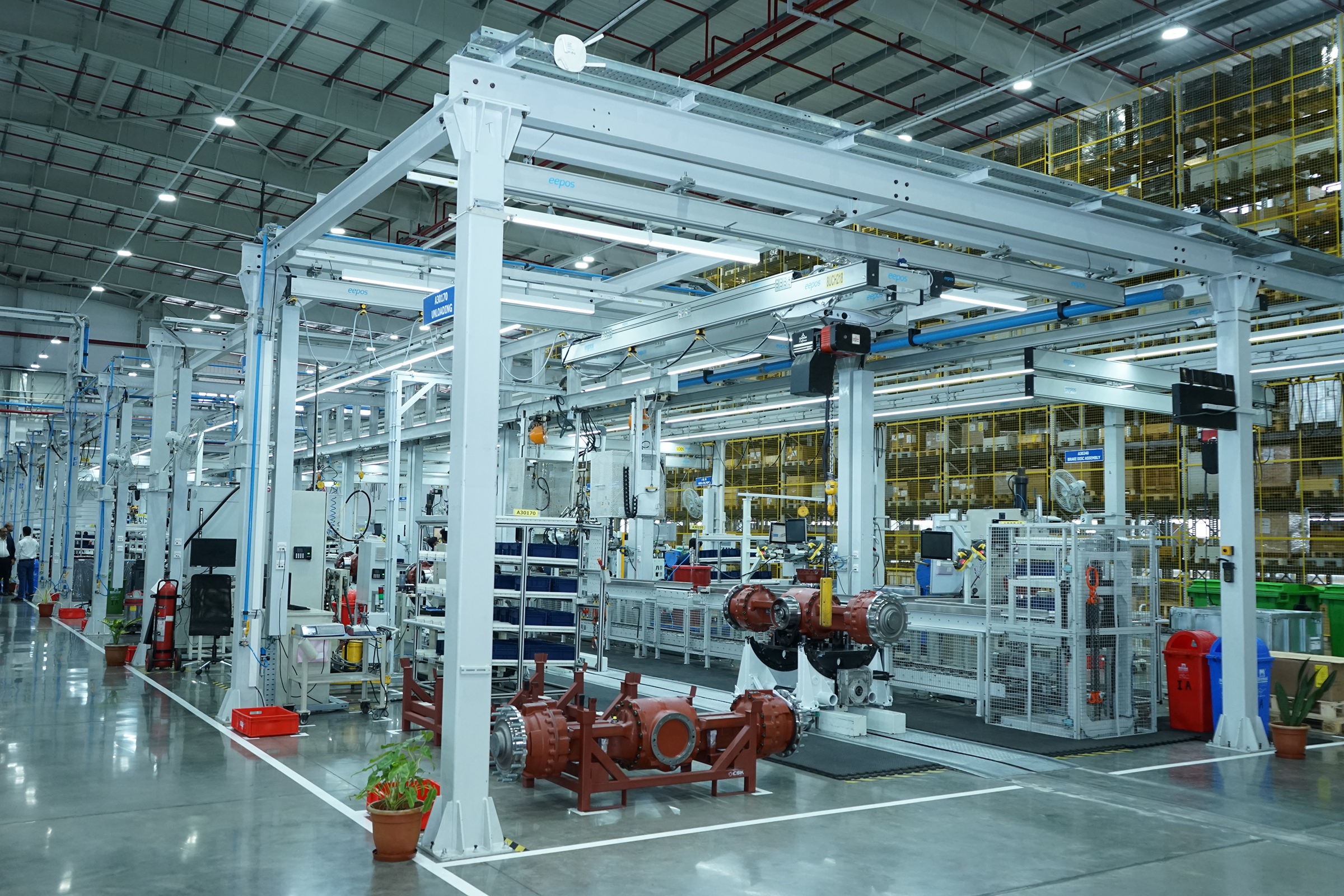
ZF Group plans to address the local customer requirements with its “local for local” approach, producing the transmissions and axles out of its newly inaugurated Construction Equipment plant in Coimbatore, TN.
The state-of-the-art plant inaugurated in Jun 2025, is spread over an area of 10,000 sq meters. The new off highway plant aligns with ZF’s objective of ‘Make in India for India and the World’ approach, highlighting the company’s thrust towards local manufacturing excellence while simultaneously catering to the OEMs global demands. This facility is a critical component of ZF Groups strategy for growth and market penetration in India with pioneering innovative solutions for construction equipment segment and railways in India.
ZF Group has invested 20 million Euro (192 Crores in early 2025) in this plant over the year, to strengthen the innovative solutions and unwavering commitment to localize world class technologies, products and solutions for the evolving Construction Equipment sector.
Akash Passey, President ZF Group India mentioned,
“At ZF Group, we’re proud to deepen our commitment to India’s dynamic construction sector by expanding local production of transmissions and axles in the recently inaugurated plant at Coimbatore. This strategic investment aligns with the Group’s ambition for the region and is aligned with the Government of India’s ambitious infrastructure push. Our advanced product portfolio is designed for unwavering reliability and is in step with the market trends toward cleaner, smarter, and digitally enabled machines.”
Wheel Loader Tech: Boost Efficiency & Comfort
ZF’s ERGOPOWER powershift transmissions are engineered for maximum productivity and efficiency in wheel loaders. Standard 4‑speed units and optional Efficiency Packages – including 5‑speed and DirectDrive – deliver up to 15% fuel savings and up to 40% productivity gains. They ensure smooth, effortless shifting with minimal tractive effort disruption, increasing driver comfort and lowering lifecycle costs.
Complementing ERGOPOWER, ZF’s MULTITRAC rigid axles are built for heavy-duty loader applications. These axles feature compact design, reduced weight, and wet multi‑disc brakes that minimize braking losses while enhancing efficiency. Durable and service-friendly, they offer excellent ground clearance and operate reliably under extreme conditions.
Backhoe Loader Solutions: Power Meets Precision
Backhoe loaders benefit equally from ZF’s combined ERGOPOWER & MULTITRAC systems. The powershift transmission ensures smooth operation across diverse digging and loading cycles, supporting high torque demands and continuous shifting. Meanwhile, MULTITRAC axles provide robust performance, long component life, and maintenance-friendly features designed for the intense workloads of excavating and back‑filling machines.
Concrete Mixer Drives: Reliability for Every Load
ZF’s ECOMIX I hydrostatic drum drives deliver proven reliability and efficiency for mixer trucks. These compact and rugged gears provide high power density, easy installation, low maintenance, and long service life even under the most demanding conditions. The ECOMIX product range sets industry standards in durability and performance, making it a trusted benchmark for mixer applications worldwide.
Intelligent braking portfolio provides turnkey solutions for off-highway customers
A global leader in hydraulic and electrohydraulic braking systems, ZF supports customers in the heavy duty, off-highway, construction, mining, and agriculture sectors with safe and efficient brake technology.
The company’s newest brake-by-wire solution is an important step change, as it provides vehicle manufacturers the ability to control deceleration via an electronic signal that adjusts brake pressure when needed, removing the need for hydraulic lines in the cab and evolving towards remote and autonomous operation.
With solutions that address the market requirement and meet the present needs of the OEM partners, ZF is driving India toward smarter, safer, and sustainable transportation- Redefining India’s Mobility.
9, Dec 2025
St. Regis Mumbai Appoints Shri Raj Goswami as Director of Food & Beverage, Penthouse Mumbai
The St. Regis Mumbai is pleased to announce the appointment of Shri Raj Goswami as the Director of Food & Beverage for Penthouse Mumbai, effective November 2025. With over 12 years of experience across some of the world’s most renowned luxury hospitality brands, Shri Raj brings strong operational acumen, international exposure, and a refined leadership approach.

In this role, Shri Raj will lead the Food & Beverage vision for Penthouse Mumbai, shaping its culinary identity, enhancing guest experiences, and elevating its position as one of the city’s most exclusive luxury destinations.
Shri Raj previously served as the Assistant Director of Food & Beverage at The Ritz-Carlton, Pune, where he oversaw signature dining venues, large-format banqueting operations, and curated elevated guest journeys. His tenure included key leadership roles such as Director of Restaurants, Bars & Banquets, highlighting his depth across diverse F&B environments.
His global experience spans roles with Four Seasons Hotels in Maldives and Bahrain, where he managed fine dining concepts, sophisticated bar programs, and high-performing multicultural teams. Earlier in his career, Shri Raj contributed to luxury service standards at The Oberoi Hotels in Agra, establishing a strong foundation in personalised hospitality.
Speaking on his appointment, Shri Raj said;
“The St. Regis Mumbai has always set the benchmark for luxury dining in the city. My approach will be centred on innovation, consistency, and people. Together with the team, we aim to craft elevated dining moments that reflect the evolving expectations of our guests and the energy of Mumbai.”
Outside of work, Raj enjoys reading and watching or playing cricket.With his international perspective, operational excellence and passion for contemporary luxury dining, Shri Raj is set to shape the next chapter of Penthouse Mumbai at The St. Regis Mumbai.
9, Dec 2025
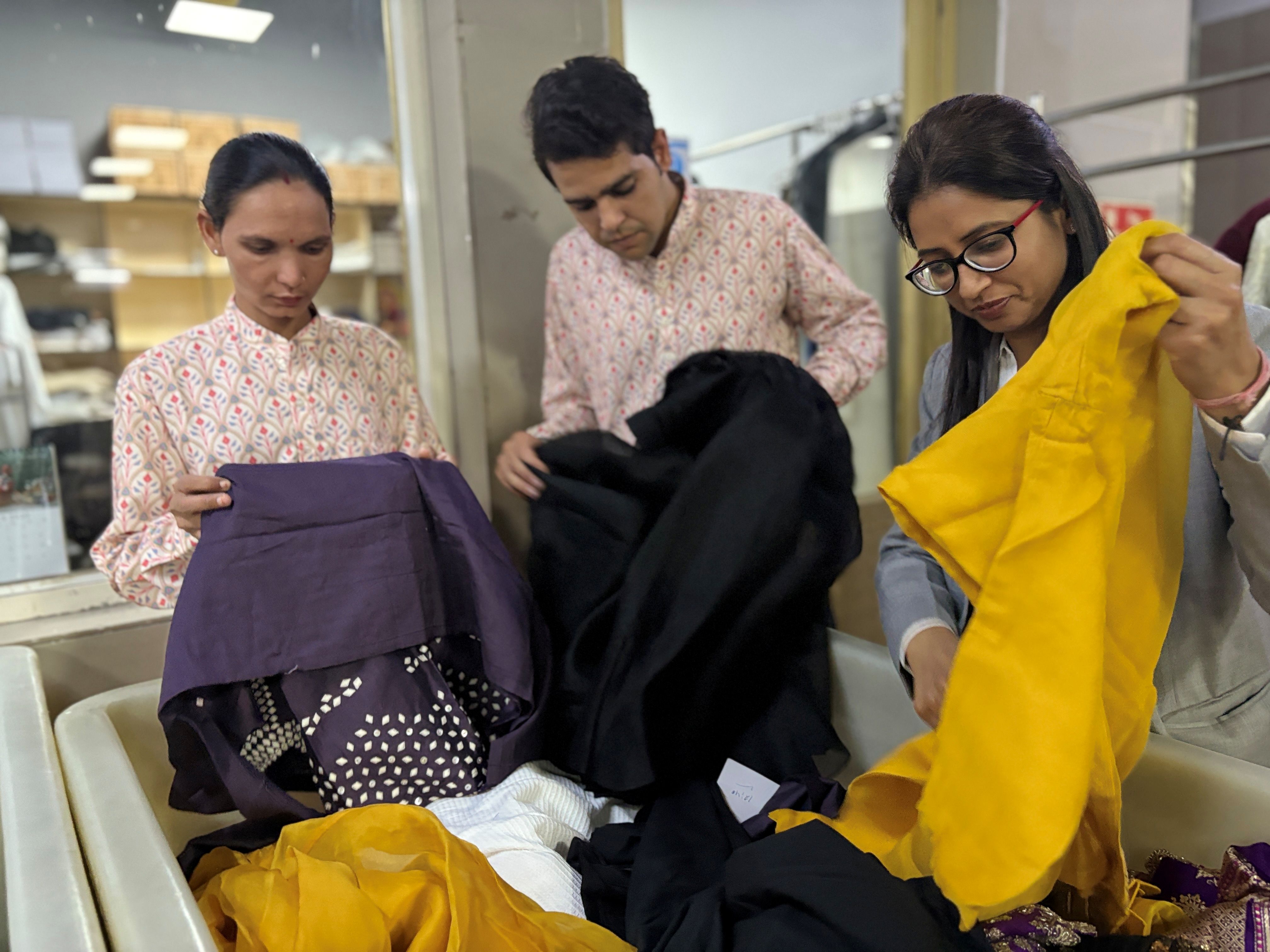
Triton Hotels & Resorts Boosts CSR Efforts with Donation & Textile Recycling Drive at Fairmont Jaipur
9, Dec 2025
Reinvigorating India’s Ghost Shopping Centres can unlock INR 357 Cr in annual rentals: Knight Frank India
Mumbai, Dece 9: Knight Frank India today released its flagship retail study, Think India, Think Retail 2025 Value Capture: Unlocking Potential, presenting the most extensive mapping of the country’s retail real estate across 32 cities. A significant finding of the report is that nearly one-fifth of India’s operational shopping centres fall into the category of ‘Ghost Malls’ assets marked by high vacancies, weak tenant curation, ageing infrastructure, and declining relevance. Across 365 shopping centres surveyed, 74 have been classified as ghost assets, representing 15.5 million square feet (mn sq ft) of dormant retail potential. Within this pool, 15 centres with a combined area of 4.8 mn sq ft have been identified as high-potential assets that could deliver as much as INR 357 crore (cr) in annual rental revenues if reinvigorated effectively. Of the 15 shortlisted assets with clear reinvigoration potential, Tier 1 cities hold an opportunity of INR 236 crore in annual rentals, while Tier 2 cities add another INR 121 cr to the reinvigoration landscape.
The study reveals that the ghost mall challenge is not confined to smaller cities or emerging markets. Tier 1 cities account for 11.9 mn sq ft of this dormant stock, indicating that even some of the country’s earliest and most established malls have struggled to keep pace with changing consumer expectations, shifting brand strategies, and the evolution of modern, experience-led retail formats. Tier 2 cities contribute the remaining 3.6 mn sq ft, where operational inefficiencies, inconsistent management practices, and limited anchor presence have restrained shopping centres from reaching their full potential.
Shishir Baijal, Chairman and Managing Director, Knight Frank India, said,
“India’s retail sector is entering a defining phase of growth, supported by strong consumption and a clear shift toward high-quality organised retail formats. Our analysis shows that reinvigorating 4.8 mn sq ft of dormant mall stock could unlock INR 357 cr in annual rentals, which is a substantial opportunity for developers and investors. With Grade A malls operating at only 5.7 percent vacancy and several Tier 2 cities demonstrating strong absorption trends, the sector is exceptionally well placed for future expansion. As consumer demand evolves and brands scale their footprint, revitalising older centres through redevelopment or adaptive reuse will play a pivotal role in shaping the next chapter of India’s retail transformation.”
Identifying ghost shopping centres is essential to unlocking viable reinvigoration opportunities. High vacancies, unstable tenant mixes, outdated layouts, and weak or missing anchor tenants are the clearest signals of an underperforming asset. Grade C malls and older developments, particularly in peripheral locations, are most vulnerable to obsolescence unless repositioned as community hubs, co-working spaces, or mixed-use developments.
Tier 1 cities are beginning to see a decline in ghost shopping centres as redevelopment, new ownership models, design upgrades, and alternate-use conversions bring ageing assets back to life. With rising flexible workspace demand and evolving retail formats, dormant centres are finding renewed relevance. While Grade A malls continue to outperform and lower-grade assets struggle, tightening quality supply is shifting attention to these revitalise-able centres. With focused interventions, improved management, and curated leasing, ghost malls can be repurposed into viable, future-ready assets that support the next phase of India’s retail growth.
Of the 365 shopping centres across the top 32 cities, 74 are classified as ghost malls. Within this group, immediate opportunity lies in the 15 centres which alone have the potential to unlock INR 357 cr in annual rentals by reinvigorating 4.8 mn sq ft of dormant space.
Tier 1 cities offer two-thirds of immediate potential to generate a rental revenue of INR 236 cr, and Tier 2 cities comprises the remaining one third with INR 121 cr rental revenue. Reviving distressed centres, often at a lower cost than new builds, can rapidly yield healthy, value-added cashflows.
India’s dormant retail infrastructure shows strong reinvigoration potential, especially in ageing but well-located shopping centres. Of the 74 ghost malls identified, 44% lie in the West, aligning with both favourable catchments and revenue potential. The West and South together contribute 77% of the estimated rental opportunity, while the Top 8 metros account for 66% of the INR 357 cr annual potential for 2025. Further, a rental yield of 5.86% makes reinvigoration a compelling investment. With improving connectivity and a shift toward experience-led, mixed-use development, revitalising dormant retail assets is set to drive the next wave of growth.
India’s retail real estate is becoming increasingly polarised. While Grade A malls record high occupancy, strong footfalls, and robust brand mixes, ageing and poorly designed centres from the early 2,000s face declining relevance due to structural flaws, weak catchment planning, outdated formats, and anchor tenant exits. Vacancy across 32 cities stands at 15.4%, yet the real challenge is a shortage of quality space, especially in Tier 2 cities. This gap creates a strong opportunity to revitalise dormant malls through design upgrades, tenant remixing, and alternate-use conversions. Success depends on accurate diagnosis and disciplined execution backed by strong design and management.
In contrast, markets with ageing malls, fragmented ownership, or design inefficiencies demonstrate higher vacancy levels and weaker brand penetration. The analysis shows that vacancy across all shopping centres in the 32 cities stands at 15.4%, but this headline number masks a clear structural divide: Grade A centres enjoy single-digit vacancies driven by steady demand and robust performance, whereas Grade C assets experience vacancies as high as 36%. High streets in many cities continue to thrive, driven largely by Indian brands, while airports maintain a strong mix of premium international and domestic retailers. Overall, the Retail Pulse points to a market where demand is strong, consumer aspirations continue to rise, and the most significant opportunity lies in expanding and upgrading quality retail infrastructure to keep pace with evolving expectations.
Shopping Centre Performances across Cities
Across 32 Indian cities, the report reveals a dynamic, yet uneven retail landscape defined by strong demand for quality spaces and widening disparities between Grade A and lower-grade centres. Tier 1 cities account for 73% of India’s shopping centre stock, but several Tier 2 cities such as Mysuru, Vijayawada, Vadodara, Thiruvananthapuram, and Visakhapatnam have performed remarkably with near-full occupancy and balanced tenant mixes, highlighting growing appetite for organised retail beyond metros.
High performing Markets based on Vacancy
A handful of cities clearly outperform the rest on key metrics like vacancy. These high achievers generally have retail supply well calibrated to demand, and benefit from proactive centre management. Shopping centres in such cities operate near full capacity and enjoy healthy tenant mixes.
- Mysuru (vacancy ~2%) – A tightly supplied market with very limited organised retail space. The scarcity of shopping centres relative to demand ensures that any quality centre attracts strong footfalls and remains almost fully occupied.
- Vijayawada (vacancy ~4%) and Vadodara (~5%) – Both are mid-sized cities with steady growth in consumer spends, yet new retail supply has been introduced cautiously. This equilibrium means the existing shopping centres face less competition, keeping vacancies low and retailer interest high.
- Thiruvananthapuram (~6%) and Visakhapatnam (~6%) – Southern India’s rising retail stars, where robust consumer demand meets a new generation of well-managed shopping centres. These cities have benefited from avoiding overbuilding; each new centre has strong anchors and caters to an eager customer base, resulting in consistently high occupancy.
Underperforming Markets based on Vacancy
At the other end of the spectrum, several cities struggle with significant vacant retail space and underutilised shopping centres. The causes range from oversupply and poor planning to operational issues and changing market dynamics:
- Nagpur (vacancy ~49%) – Nearly half of this city’s shopping centre space lies empty. A spate of development in anticipation of future demand overshot what Nagpur’s consumer base could absorb. Excess capacity, combined with only modest growth in retailer interest, has led to centres that never achieved critical mass and languish with high vacancies.
- Amritsar (~41%) and Jalandhar (~34%) – In these cities of Punjab, developers built too many shopping centres in proximity, outpacing the depth of viable retail tenants. Though consumer appetite exists, when multiple large centres compete for the same set of brands, none can sustain healthy occupancy. The result has been chronically half-empty properties as retailers cherry-pick only the top-performing locations.
Retail Density
Shopping centre density varies sharply, with cities like Mangaluru (1,521) and Lucknow (1,230) showing high penetration, while Pune (1,103) and Bengaluru (1,031) also reflect strong modern retail presence. In contrast, Surat (118) and Ludhiana (218) have limited mall infrastructure, where traditional formats dominate. Among metros, Mumbai and NCR benefit more from sheer market size than density, while Chennai and Hyderabad exhibit mid-level penetration. These contrasts highlight varied levels of market maturity and distinct opportunities for future retail expansion.
Brand Mix
Across India’s retail landscape, the mix of international and national brands differs sharply by format, revealing how each environment caters to distinct shopper expectations. Shopping centres offer the most balanced and globally attuned mix, with Indian brands accounting for 67% of the tenant universe and international brands contributing a significant 33%. This makes malls the primary gateways for global retailers entering India. High streets, by contrast, remain deeply rooted in domestic retail culture, with an overwhelming 86% share of Indian brands and only 14% international presence, reflecting their legacy-driven appeal and hyper-local relevance. Airports occupy a unique middle ground with 70% of brands here are Indian, while 30% are international, a ratio shaped by the affluent, captive traveller base that favours premium and global labels alongside established local favourites. Together, these contrasts demonstrate that while shopping centres and airports are driving international brand penetration across the country, high streets continue to champion India’s homegrown retail strength
9, Dec 2025
slice UPI credit card: India’s best UPI credit card for everyday payments
Bengaluru, Dec 09: slice recently launched its UPI credit card; a card designed for everyday payments. As UPI has become the country’s default mode for digital payments, integrating credit directly into this ecosystem was essential to provide people with greater access, convenience, and flexibility in their everyday spending. It combines the familiarity and convenience of UPI with the benefits of credit, giving users a way to earn rewards, manage liquidity, and access short-term credit.
Why slice introduced it:
Most credit cards in India are optimized for infrequent, high value spends, whereas the average user’s daily transactions happen on UPI. slice introduced the slice UPI credit card to bridge this gap, so that everyday payments, whether small or recurring, also come with the option of credit and rewards. The idea is to enable users to continue paying the way they already do on UPI, but with the added benefit of cashback while maintaining a balance in their savings account.
How it helps customers:
- Users can earn up to 3% cashback on UPI payments with no transaction limits. People can earn rewards even on a Rs.50 payment.
- Because payments are made using credit instead of a savings balance, customers can maintain liquidity and continue earning interest on their deposits.
- For bigger purchases, any transaction above ₹2,000 can be instantly converted into three interest-free EMIs through the slice app. This feature is available on 40 million merchant outlets.
- The card has no annual fees and avoids hidden or complex charges.
9, Dec 2025
Cloudera FSI Customers Win at IDC Future Enterprise Awards 2025
India, Dec 9:-Cloudera, the only company bringing AI to data anywhere, today announced that its customers, Taipei Fubon Commercial Bank and Axis Bank, have been named winners in the IDC Future Enterprise Awards 2025. These wins reflect the region’s accelerating shift toward AI-powered operations and reinforce Cloudera’s role as a trusted partner, enabling organizations to harness governed, scalable, and hybrid data capabilities for real-world impact.
“Cloudera is proud to support Taipei Fubon Commercial Bank and Axis Bank in their AI and data transformation journeys” says Remus Lim, Senior Vice President, Asia Pacific & Japan, Cloudera. “Their achievements at this year’s IDC Future Enterprise Awards demonstrate how a strong, governed, and hybrid data foundation enables organizations to build enterprise AI that delivers measurable business outcomes. We congratulate the winners for setting new benchmarks in innovation across the region.”
Taipei Fubon Commercial Bank Wins “Best in Digital Innovation” for Full-Product Recommendation and Optimal Contact Time Model
Taipei Fubon Commercial Bank has transformed its customer engagement strategy by replacing rule-based marketing with a fully AI-powered personalization engine. Powered by two advanced machine learning models the Full-Product Recommendation Model and the Optimal Contact Time Model the bank delivers hyper-personalized, real-time offers embedded directly into digital and telemarketing workflows. This AI-driven approach has resulted in a 2.4× increase in conversion rates, a 1.3× uplift in engagement, and reduced operational waste across channels.
“Personalization is a key differentiator for the future of financial services, and AI is enabling us to engage customers with far greater precision and relevance,” says a spokesperson from Taipei Fubon Bank. “By combining product recommendation intelligence with optimal engagement timing, we have transformed the way we connect with our customers across channels. This award from IDC is a meaningful recognition of our team’s ability to apply machine learning creatively and responsibly to deliver better outcomes, higher engagement, and more seamless customer experiences.”
“Fubon Bank’s dual-model strategy reflects a shift toward intelligence-led marketing, where relevance and timing are optimized simultaneously. It’s a data-driven approach to engagement that measurably improves conversion and reduces friction,” says Daniel-Zoe Jimenez, Vice President, Digital Innovation, IDC Asia/Pacific. “The impact metrics—2.4× lift in conversion and reduced waste point to a maturing AI capability that aligns business goals with intelligent automation. It’s an example of how data science can be translated into everyday marketing decisions.”
Axis Bank Wins “Special Award for Customer Experience” for AI-Driven Personalization at Scale
Axis Bank has transformed customer engagement for over 50 million customers by building an AI-powered personalization engine on Cloudera’s anywhere cloud platform on AWS. The system analyzes more than 2,000 attributes per customer daily and generates 17,000+ personalized nudge variants across nine channels, including WhatsApp, email, push notifications, and Relationship Manager-assisted engagement.
This initiative has delivered measurable impact:
- 45% of term deposits now originate from personalized nudges
- 70% of instant credit card loans booked via nudges
- 10% uplift in personal loan campaign effectiveness
- 1.5× increase in BillPay registrations through experimentation-driven optimization
“At Axis Bank, delivering meaningful and timely customer experiences is at the heart of our digital transformation,” says Balaji Narayanamurthy, President & Head of Business Intelligence Unit at Axis Bank. “Through our personalization engine built on Cloudera’s platform, we’ve moved beyond traditional segmentation to real-time, AI-powered engagement that reflects each customer’s needs and behaviors. This shift has helped us deepen relationships, increase product relevance, and elevate satisfaction across millions of interactions daily. Our customer-first strategy is not just about using data it’s about turning insight into action to create seamless journeys that build long-term trust and value.”
“Axis Bank’s customer engagement transformation shows how scaled personalization, driven by AI and deep behavioral insight, can move the needle on both experience and conversion. The combination of a robust data foundation and intelligent decisioning models demonstrates maturity in applying AI across complex customer journeys,” says Dhiraj Badgujar, Senior Research Manager, IDC Asia/Pacific.
9, Dec 2025
HEED Unveils India’s First Additively Manufactured Electric Hydrojet Propulsion System
Mysuru, Dec 09: HEED, a marine deep tech homegrown startup focused on clean and accessible water mobility, proudly unveils India’s first additive-manufactured electric hydrojet propulsion system. Designed, developed, and tested entirely in house in the royal city of Mysuru, this venture marks a significant step in India’s
In its initial phase, HEED is applying its hydrojet propulsion system to the recreational watercraft segment, developing fully electric jetboards that combine performance with forward-looking design and clean propulsion. With this foundation, the company aims to deliver accessible, clean-powered products that can set new benchmarks in personal water mobility.
The hydrojet propulsion system is 100% electric and optimised for efficiency across India’s diverse water conditions. While the current focus is on recreational use, the system has the potential to power a wider range of future applications, including performance vessels, passenger transport, and even defence and cargo solutions, positioning HEED as a foundational player in the country’s long-term ambitious blue economy goals. Engineered in India
The propulsion unit is supported by a dynamic test bench and sensory system, both developed entirely in-house. This test setup enables high-fidelity performance assessments and real-time data collection. With a payload capacity of up to 1000kg and force measurement capabilities reaching 500KgF (equivalent to 5000N or 5kN), the platform ensures the propulsion system can be precisely tuned and validated under realistic load conditions. In perspective: Successfully conducted first aquatic test
Why It Matters
This business initiative is a significant step toward strengthening India’s capabilities in designing and building next-generation watercraft. Rooted in Mysuru, HEED demonstrates what is achievable when performance engineering, local talent, and electric mobility intersect. As a deep tech venture, the company combines advanced hardware innovation and systems engineering to tackle complex challenges in water mobility.
The commitment to in-house development, local sourcing, and domestic assembly reflects a broader vision of economic self-reliance and technical excellence in India’s blue economy.
Impact Potential:
| Impact Area | Details and Data |
| Carbon
Emissions |
Zero-emission design supports India’s national climate goals. Under the IMO, India commits to:
• 40% reduction in carbon intensity by 2030 • Net-zero emissions by 2050 in the shipping sector. |
| Employment Creation | Maritime Vision 2030 aims to generate 2 million employment opportunities across ports, shipping, shipbuilding, and inland waterways. |
| Safety and
Comfort |
Hydrojet systems reduce underwater radiated noise by over 50% compared to conventional propellers, especially at speeds over 20 knots. They also significantly reduce vibrations, improving user comfort and safety. |
| Cost Efficiency | Hydrojet propulsion systems can be up to 10 times more cost efficient than traditional internal combustion engine (ICE) systems due to lower maintenance and energy costs. |
As one of the first Indian companies to focus exclusively on electric hydrojet propulsion, HEED is uniquely positioned to help shape India’s future in maritime transport. While recreational watercraft remain the core priority today, the foundational technology being built has the potential to scale into multiple sectors as the company grows.


