


18, Jun 2026
RapidShyp Launches ‘Share the Weight’ Campaign to Recognise and Support Logistics Heroes
June 18: RapidShyp, the homegrown tech-first shipping aggregation platform, has launched its Men’s Health Month campaign, ‘Share the Weight‘, to raise awareness around men’s health and bring attention to the pressures faced by men working in the logistics industry. The campaign aims to encourage open conversations, share real stories, and create space for men to speak about the strain that often comes with keeping supply chains and businesses moving.
The initiative comes at a time when men continue to form the backbone of the logistics workforce, carrying the responsibility of meeting tight timelines, handling high volumes, and working under constant pressure. In an industry where delivery performance is closely tracked and every shipment is expected to move with precision, the personal well-being of those behind the operations often receives less attention than it deserves.
The ‘Share the Weight‘ campaign seeks to bring that imbalance into focus. RapidShyp aims to use the campaign to highlight the human side of logistics while serving as a reminder to the industry that the people managing these demanding operations also need care, support, and understanding. Through the campaign, the company intends to bring real stories from the logistics community to the fore, encouraging men to share their experiences, speak honestly about the pressures they face, and seek support without hesitation.
The campaign reflects RapidShyp’s broader commitment to employee well-being and its belief that workplace support should go beyond operational efficiency. By using Men’s Health Month as a moment to raise awareness, RapidShyp is also drawing attention to the need for more honest conversations around mental, emotional, and physical health among men in logistics.
Mr Raghav Singhal, Founder and Executive Director, RapidShyp, said, “Logistics remains a key contributor to the economy, but behind every on-time shipment are men who carry pressure every day, often without pause and often without being seen. Through ‘Share the Weight’, we want to create a space where these voices can be heard, where men feel comfortable speaking about their struggles, and where the industry begins to treat health and well-being as part of daily work, not as a side concern. This campaign is a reminder that the people moving the nation’s goods deserve the same care and attention that their work demands.”
RapidShyp has built its platform as a technology-enabled orchestration layer for Indian businesses, bringing together more than 16 courier partners across over 29,000 pin codes. Its ecosystem includes RapidShyp Ayumi (an AI-powered delivery intelligence engine), RapidShyp Cargo+, RapidShyp Shield, RapidShyp Connect, and the RapidShyp App, each designed to help businesses manage shipping with greater control, visibility, and efficiency.
Through ‘Share the Weight‘, RapidShyp is extending that same philosophy to the people behind the logistics chain. The latest campaign is not only about raising awareness but also about recognition, support, and more open conversations about men’s health in an industry that continues to depend heavily on male workers.
- 0
- By Neel Achary

18, Jun 2026
Gold and Silver Prices Decline as Fed Hawkish Stance and Easing Global Tensions Weigh on Bullion
New Delhi, June 18: Gold and silver prices declined in global and domestic markets as a stronger US Federal Reserve outlook and easing geopolitical tensions reduced demand for safe-haven assets.

Market sentiment remained under pressure after signals from the US Federal Reserve suggested a continued hawkish stance on interest rates, supporting the US dollar and putting downward pressure on precious metals. A stronger dollar typically makes gold and silver more expensive for buyers using other currencies, leading to reduced demand in international markets.
At the same time, easing geopolitical tensions in key global regions have reduced risk aversion among investors, further weakening demand for traditional safe-haven assets such as bullion. As a result, trading activity in gold and silver remained subdued.
Analysts said that expectations of tighter monetary policy in the United States, along with improving global risk sentiment, have together contributed to the recent weakness in precious metal prices. Investors are also repositioning their portfolios in response to changing macroeconomic conditions.
Despite the short-term decline, experts noted that gold and silver continue to hold long-term relevance as hedge assets against inflation, currency volatility, and broader financial market uncertainty.
Market participants are now closely watching upcoming US economic data releases and further commentary from the Federal Reserve for clearer signals on interest rate direction, which is expected to influence bullion price trends in the coming sessions.
18, Jun 2026
Trupeer AI Strengthens Global Growth Ambitions with Appointment of Former UiPath CEO Raghu Subramanian
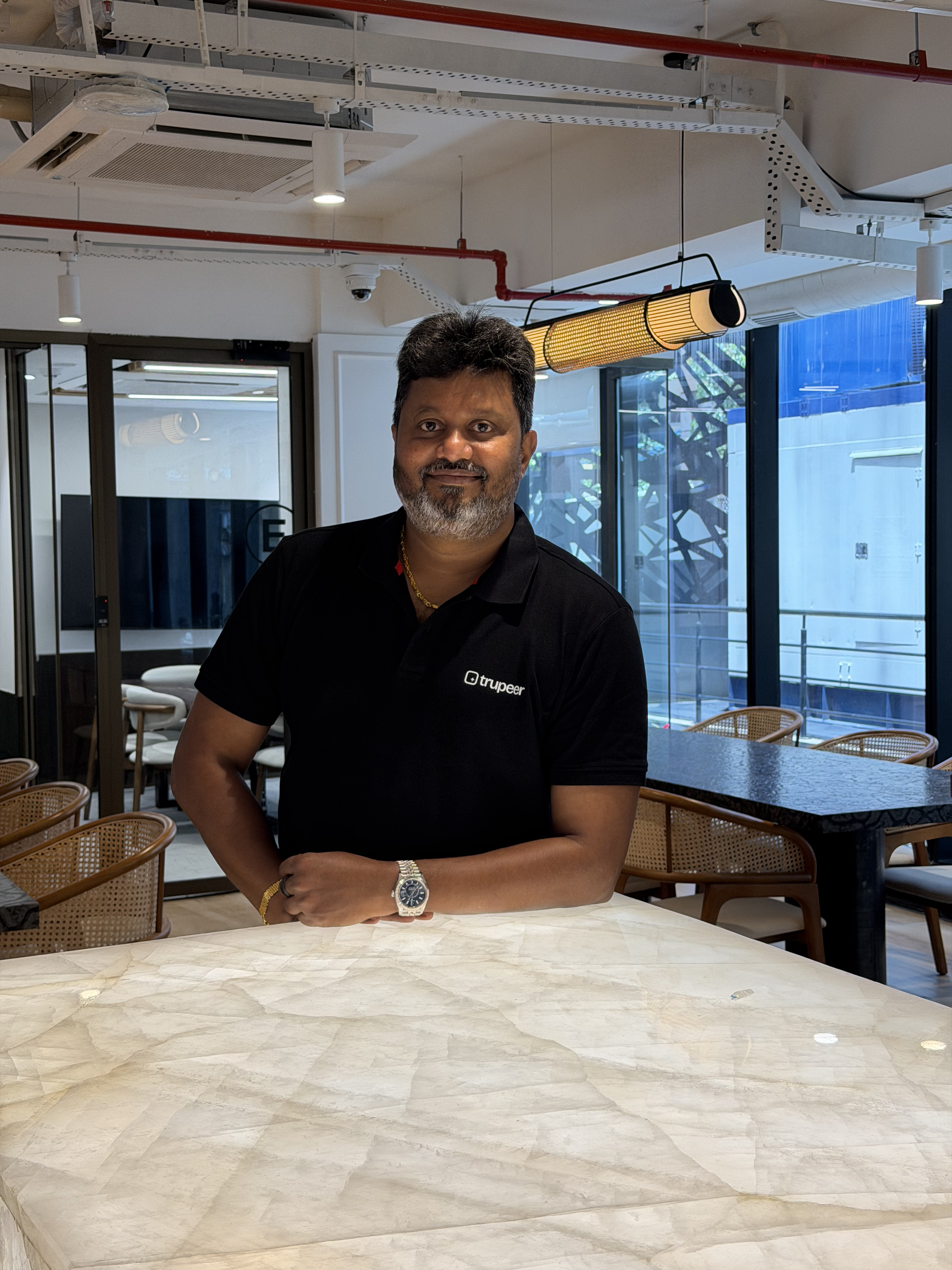
June 18:
Raghu joins from a
At Trupeer, he will lead the
Shivali Goyal, CEO and Co-
Founder, Trupeer AI, said, “Raghu has spent decades helping organisations adopt and scale transformative technologies and brings deep experience in building enterprises globally. Having seen first-hand the challenges enterprises face in organisational knowledge and agentic AI enablement, Raghu immediately resonated with our vision and the momentum Trupeer has built globally. His expertise will help us strengthen our commercial capabilities, deepen partnerships, and unlock the next phase of growth at Trupeer.” Raghu Subramanian, President
and Chief Business Officer, said, “EnterprisesTrupeer AI, have long struggled to get real value from AI, and the reason is fragmented context. The knowledge that makes AI useful sits trapped in people’ s heads and scattered across tools. In the agentic AI era, where agents are only as good as the context they run on, that gap becomes the difference between AI that works and doesn’t. This is the gap Trupeer was built to close. I look forward to partnering with enterprises and organisations across the globe to build the context layer that makes enterprise knowledge structured, accessible, and actionable, and AI genuinely useful.”
As enterprises move from AI
18, Jun 2026
MRF Achieves FIA Three-Star Environmental Accreditation, Reinforcing its Global Motorsport and Sustainability Commitment
Chennai, India | June 18: MRF Limited has been awarded the prestigious Three-Star level of the FIA Environmental Accreditation Programme, marking a significant milestone in the company’s sustainability journey and its continuing presence in global motorsport.
The certification, awarded recently, follows an audit conducted under the FIA Environmental Accreditation framework. The FIA audit recognised MRF’s structured approach to environmental management, continual improvement and responsible manufacturing practices across its motorsport tyre operations.
Commenting on the achievement, Mr Arun Mammen, Vice Chairman and Managing Director, MRF Limited, said: “MRF’s global motorsport journey is powered by performance and responsibility. This FIA Three-Star accreditation reinforces our commitment to sustainable innovation, environmental stewardship and continuous improvement across our operations worldwide today.”
With this recognition, MRF is the only Indian Tyre Company and also joins a select group of global motorsport tyre manufacturers to have achieved the FIA’s highest environmental accreditation.
MRF manufactures motorsport tyres at its manufacturing locations, which are certified to ISO 14001:2015 Environmental Management System standards. The audit also noted that these manufacturing locations maintain ISO 50001 Energy Management System certification.
The audit further recognised MRF’s SMART environmental objectives across its manufacturing locations, covering areas such as reducing specific power consumption, fuel consumption, water consumption and waste generation. Monitoring and measurement systems were documented across key environmental impact areas, including energy use, waste management, water consumption, biodiversity, air quality, noise, materials and procurement, transport, and Scope 1 and Scope 2 carbon emissions.
The FIA Three-Star Environmental Accreditation is the highest level within the programme and reflects MRF’s continued commitment to integrating sustainability into its motorsport operations while maintaining the performance standards associated with the MRF brand globally.
18, Jun 2026
India–UK Trade Agreement to Be Operational from July 15, Says PM Modi, Calling It a ‘Historic Milestone’
New Delhi, June 18: The India–UK trade agreement will come into effect from July 15, Prime Minister Narendra Modi announced on Wednesday, describing it as a “historic milestone” in the economic partnership between the two countries.
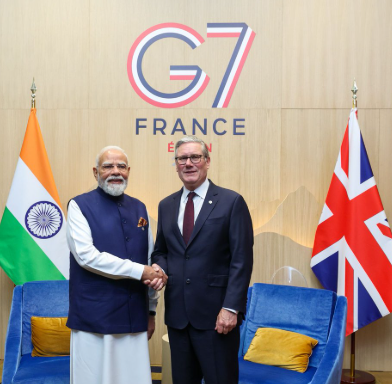
Pic Credit: https://x.com/PMOIndia
The operationalisation of the agreement is expected to mark a significant step forward in strengthening bilateral trade and investment relations, while opening new opportunities for businesses, exporters, and industries on both sides.
According to officials, the agreement is designed to enhance market access, streamline trade processes, and deepen cooperation in key sectors including goods, services, manufacturing, technology, and innovation-driven industries. It is also expected to support supply chain integration and encourage greater economic collaboration between India and the United Kingdom.
Prime Minister Modi said the agreement reflects the growing trust and shared ambition between India and the UK to build a stronger, future-oriented economic partnership. He noted that the pact will contribute to expanding trade opportunities and fostering long-term economic growth.
Officials further stated that the implementation of the agreement will provide a structured framework for boosting bilateral trade flows and improving ease of doing business between the two economies.
The development is being viewed as a major milestone in India’s expanding global trade engagements, reinforcing its position as a key player in international economic partnerships.
18, Jun 2026
PM Modi–Trump Meeting at G7 Focuses on Trade, West Asia and Strengthening India–US Ties
New Delhi, June 18: Prime Minister Narendra Modi and former U.S. President Donald Trump held discussions on key global and bilateral issues on the sidelines of the G7 Summit, focusing on West Asia developments, progress on the India–US trade agreement, and expanding cooperation across multiple sectors, according to the Ministry of External Affairs (MEA).

Pic Credit: https://x.com/PMOIndia
PM @narendramodi met US President @realDonaldTrump in Evian and reviewed progress in India-US cooperation across sectors such as energy, trade, defence, technology and people-to-people ties.
The two leaders also exchanged views on developments in West Asia. The Prime Minister… pic.twitter.com/CVZLtgcmDL
— PMO India (@PMOIndia) June 17, 2026
The MEA said the meeting covered strategic, economic and geopolitical priorities of mutual interest, with both leaders reviewing ways to further strengthen trade, investment, defence, energy and technology partnerships between India and the United States.
The discussions also included the situation in West Asia, with emphasis on regional stability and its global economic impact. Both sides expressed interest in deepening cooperation to support long-term strategic and economic alignment.
Following the meeting, business leaders and members of the Indian diaspora welcomed the engagement, saying it could help further boost confidence in India–US economic and strategic relations.
Officials noted that the interaction reflects continued efforts to expand the comprehensive global strategic partnership between the two countries.
18, Jun 2026
Indian Markets Trade Flat in Early Session Amid Mixed Global Cues
Mumbai, June 18: Indian benchmark equity indices traded flat in early trading on Thursday as investors remained cautious amid mixed signals from global markets.
The domestic market opened on a subdued note, with buying in select sectors offset by weakness in others. Investors largely adopted a wait-and-watch approach while tracking developments in international markets and key economic indicators.
Market sentiment remained influenced by global uncertainty, with traders closely monitoring movements across Asian and international markets. Sector-specific activity was seen in banking, information technology, and automobile stocks, while broader market participation remained moderate during the opening session.
Analysts said mixed global cues and investor caution contributed to the range-bound movement in early trade. Despite the muted start, domestic equities continued to find support from steady investor participation and resilient economic fundamentals.
The benchmark indices fluctuated within a narrow range during the initial hours of trading as market participants awaited fresh triggers for directional movement.
Trading activity is expected to remain focused on global developments, corporate updates, and economic data releases that could influence investor sentiment in the coming sessions.
18, Jun 2026
Kothari Group Forays into Retail Jewellery with the Launch of Lab Grown Diamond Brand Keemti Jewels
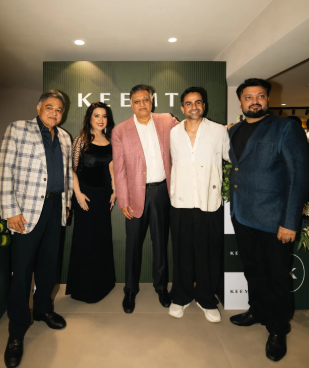
Mumbai, June 18: After over 35 years of building a global legacy in jewellery manufacturing and exports, the Kothari Group has officially entered India’s retail jewellery market with the launch of Keemti Jewels, a contemporary lab grown diamond jewellery brand founded by Armaan Sunil Kothari and designed for a new generation of Indian consumers.
Backed by entrepreneur and investor Nikhil Kamath, along with entrepreneur-investor Kavin Shah, Keemti brings together the Kothari Group‘s deep-rooted expertise in jewellery manufacturing with a modern, consumer-first vision for the future of lab grown jewellery.
Marking its retail debut, Keemti has launched its first flagship store in Andheri, Mumbai.
The store was officially inaugurated by Smt. Amruta Fadnavis, former banker, singer and social activist, and entrepreneur and investor Nikhil Kamath in the presence of Armaan Kothari, Founder & MD, Keemti, Sunil Kothari, Chairman, Keemti, and entrepreneur-investor Kavin Shah. The launch event was attended by prominent guests from the entertainment, business, and social circles, including Jackie Shroff, Stebin Ben, Seema Singh, and Varun Sharma. Located on Link Road near Infiniti Mall, within one of the city’s prominent jewellery and lifestyle hubs, the store introduces consumers to the brand’s fresh perspective on modern fine jewellery and accessible luxury.
At a time when consumer preferences are rapidly shifting toward conscious luxury, transparency, and self-purchase behaviour, Keemti aims to redefine how modern Indian consumers engage with diamonds. The brand moves away from traditional narratives of inheritance and occasion-led gifting, instead positioning jewellery as a symbol of personal ambition, individuality, and self-earned success.
Designed as a contemporary luxury destination, the Keemti flagship store offers an immersive retail experience that goes beyond traditional jewellery shopping. The space showcases the brand’s signature collections across everyday wear, occasion-led jewellery, statement designs, and modern essentials, allowing consumers to explore a wide range of lab grown diamond pieces under one roof. Thoughtfully designed interiors, personalised consultations, private viewing experiences, and dedicated lounge areas further enhance the customer journey, creating a relaxed and welcoming environment for discovery, celebration, and self-expression.
While Keemti’s flagship presence begins in Mumbai, the brand is also focused on catering to the evolving aspirations of consumers across Tier 2 and Tier 3 markets in India through its omnichannel approach. Recognising the growing demand for contemporary, accessible, and value-driven fine jewellery beyond metro cities, Keemti aims to make lab grown diamond jewellery more approachable for a wider new-age consumer base across the country. In addition to its retail presence, Keemti is available through its website and leading e-commerce marketplaces, including Amazon, enabling consumers across India to seamlessly access and purchase its collections.
What sets Keemti apart within the rapidly growing lab grown diamond category is not only its consumer-first positioning, but also the structural advantage of the Kothari Group’s long-standing manufacturing expertise across the USA, Europe, and the Middle East. By owning its manufacturing process, the brand is able to deliver aspirational design, trusted quality, and stronger value for today’s consumers.
Speaking about the launch, Sunil Kothari, Chairman, Keemti, said: “For decades, we have built our legacy on craftsmanship, trust, and a deep understanding of the global jewellery industry. With Keemti, we saw an opportunity to build a brand that reflects where the future of fine jewellery is headed. The growing shift toward lab grown diamonds is not just a trend, it represents a larger evolution in consumer mindset toward conscious luxury, accessibility, and modern design.
Keemti combines the strength of our manufacturing expertise with a contemporary consumer-focused approach, allowing us to create fine jewellery that is both aspirational and relevant for today’s market. I see Keemti as a long-term growth story, and we are committed to expanding our retail and omnichannel presence across key markets in India while continuing to strengthen consumer trust in the lab grown diamond category.”
Sharing his vision for the brand, Armaan Kothari, Founder & MD, Keemti, added: “At Keemti, we believe the next generation of luxury brands will be built around consumers, not just products. Keemti was created for a new-age audience that seeks transparency, relevance, and self-expression in everything they buy. Our ambition is to make fine jewellery feel more contemporary, more accessible, and more aligned with evolving consumer values.
With our expansion plans, we are focused on taking the Keemti experience to newer markets across India and building a brand ecosystem that seamlessly blends retail, digital, and community-led engagement.”
With an expanding omnichannel presence across retail stores, e-commerce, and marketplaces, Keemti aims to make lab grown diamond jewellery a more contemporary, accessible, and smart choice for a new generation of consumers that values meaning, versatility, and conscious luxury in equal measure.
18, Jun 2026
Accrelist Appoints Derek Cheong as Chief Executive Officer
Group sharpens focus on aesthetics retail under the CEO’s first initiative, a proposed entry into the Xiamen aesthetic clinic market
SINGAPORE, June 18 - Accrelist Ltd. (“Accrelist” or the “Company”, together with its subsidiaries, collectively the “Group”), listed on the Catalist Board of the Singapore Exchange Securities Trading Limited (the “SGX-ST”), today announced the appointment of Mr Derek Cheong Sheng Ze (“Mr Cheong”) as Chief Executive Officer of the Company, with effect from 16 June 2026.
The announcement pursuant to Rule 704(6) of the Catalist Rules, in relation to the appointment of Mr Cheong has been separately announced on the SGXNET.
About Mr Cheong
Mr Cheong joins Accrelist after a career spent building consumer-facing businesses in Malaysia. Most recently, in his role as Chief Strategy Officer of Thong World Sdn. Bhd, he is advising the organization on growth and expansion plans.
Before that, he served as Managing Director of Collab Working Lifestyle Sdn. Bhd., the master franchisee of Xing Fu Tang in Malaysia, where he managed business strategy and financial operations, and oversaw the build-out of the franchise network. He previously sat on the board of Supreme Falcon Sdn. Bhd., which operates in the healthcare sector, and held the role of Project Director at My Vacation Travel Sdn. Bhd., an event management business, giving him exposure to healthcare-adjacent services and experiential consumer brands.
Mr Cheong holds a Bachelor of Science in Accounting and Finance from Lancaster University in the United Kingdom.
First Initiative: Entry into the Xiamen Aesthetic Clinic Market
The Company has entered into a strategic collaboration through a non-binding term sheet with Mr Zhou, Zan (the “Vendor”) under which Accrelist proposes to acquire a 51% interest in a target company (“Target Company”) to be incorporated by the Vendor in the People’s Republic of China (the “PRC”), and the Target Company shall be establishing and/or acquiring aesthetic business in the PRC (including aesthetics businesses in which the Vendor currently has a controlling interest). The Group will license its A.M Aesthetics brand to the Target Company on a royalty-free basis, allowing the Xiamen clinics to operate under the Group’s flagship aesthetics brand.
As his first initiative, Mr Cheong will be driving this collaboration further, giving the Group a stronger positioning in the Greater China aesthetics market.
The rationale is twofold. First, the proposed acquisition enhances Accrelist’s foothold in the PRC, one of the largest aesthetics markets in the world, at a valuation anchored to performance, with multi-year visibility on the underlying business before the Group is committed to completion. Second, the licensing arrangement allows the A.M Aesthetics brand to be built in the PRC market in advance of completion, at no cost to the Group.
A separate announcement on the entry into a non-binding term sheet in relation to the proposed acquisition has been released on SGXNet and shareholders are advised to refer to that announcement for further details.
Sharpening Focus on Aesthetics Retail
Under Mr Cheong’s leadership, the Group will continue growing its A.M Aesthetics business, deepening its presence in existing markets and expanding into new ones. The aesthetics sector continues to be one of the fastest-growing consumer segments in the region, and the Group sees significant headroom to scale a differentiated, premium brand across Southeast Asia and Greater China.
Consistent with this direction, the Group will keep its broader portfolio under review to ensure that capital and management resources are channelled where they generate most value for shareholders. This includes its 52.5% controlling stake in Catalist-listed Jubilee Industries Holdings Ltd. (SGX: NHD) and its 27.34% strategic stake in Bursa Malaysia-listed MClean Technologies Berhad (KL: MCLEAN), each of which the Group will continue to manage and evaluate as part of its overall capital allocation. Any material developments will be communicated through the appropriate market announcements in due course, in accordance with the Catalist Rules and the rules of any other relevant exchange.
Mr Cheong, Chief Executive Officer of Accrelist, said: “It is a privilege to take on this role at a moment when Accrelist is strengthening its position in aesthetics retail. The opportunity in this sector across the region is enormous, and our A.M Aesthetics brand is a competitive platform for scale. The Xiamen collaboration is a deliberate first step: a derisked, strategic venture in a high-growth market, with a clear runway to scale. I look forward to working with Dato’ Terence, the Board and the wider team to deliver value for our shareholders.”
17, Jun 2026
Tulip Melrose Announced as One of the Tallest Residential Projects on Southern Peripheral Road, Gurugram

Delhi, 17 June: Tulip Melrose, a landmark luxury residential project, is set to become one of the tallest residential developments on Southern Peripheral Road (SPR), Gurugram. The tower will soar to approximately 495 feet, crowned by an exclusive sky terrace offering sweeping panoramic views of the city skyline. With an estimated investment of approximately Rs 1,100 crore, the 7.5-acre development represents a new pinnacle in luxury living on one of NCR’s fastest-growing premium residential corridors.
Tulip Melrose has been envisioned as a next-generation residential community that combines iconic architecture with thoughtful planning, superior construction quality and resident-centric design. The project has been conceptualised to address the evolving aspirations of luxury homebuyers who increasingly seek spacious residences, integrated lifestyle experiences, wellness-focused amenities and the assurance of investing with developers known for execution excellence.
The development will feature expansive landscaped open spaces, large-format residences, enhanced privacy through low-density planning, and private elevator access in select residences. A defining feature of Tulip Melrose is its zero vehicular movement at ground level — upon arrival, all vehicles enter directly into the basement, leaving the entire ground plane free of cars. Residents can then move through the landscaped grounds via electric golf carts, creating a serene, pedestrian-first living environment. The entire ground floor has been conceived as a grand clubhouse, seamlessly connecting all four towers at ground level and offering residents a unified lifestyle and wellness destination. Mirroring this at height, a sky terrace spanning all four towers at approximately 495 feet creates one expansive connected terrace in the sky, housing premium resident amenities alongside sweeping panoramic views of the city.
Beyond its architectural scale, Tulip Melrose has been designed around a long-standing philosophy that luxury extends beyond premium finishes and amenities. The project incorporates robust engineering standards, tested fire-rated safety systems, multiple levels of material testing, stringent quality-control processes and carefully planned layouts that maximise functionality, comfort and long-term durability.
The announcement comes as Southern Peripheral Road continues to witness rapid transformation into one of NCR’s most sought-after luxury residential destinations. Strengthened by significant infrastructure upgrades, improved connectivity with Golf Course Road, Dwarka Expressway and NH-48, expanding commercial development and growing employment hubs, SPR is attracting strong demand from entrepreneurs, senior professionals, multinational corporations, Global Capability Centres (GCCs), high-net-worth individuals and NRIs seeking premium residential addresses.
“Southern Peripheral Road is entering a defining phase of growth and is steadily establishing itself among NCR’s most important luxury residential destinations. Tulip Melrose is the culmination of over two decades of our commitment to building homes that stand the test of time — in quality, in design and in the trust of every family that calls them home. From our very first project, we have believed that true luxury lies not only in grand aesthetics, but in the integrity of every beam, every finish and every decision made on site. Tulip Melrose embodies that belief at its fullest.” Said Mr. Parveen Jain, Chairman & Managing Director, Tulip Infratech Group.
“Adding to this, Mr. Siddharth Jain, Nextgen Leadership of Tulip Infratech Group. said, “With Tulip Melrose, our vision is to create more than another premium residential project — we are developing a landmark that will redefine high-rise living on SPR. As one of the tallest residential developments on the corridor, Tulip Melrose reflects our commitment to thoughtful planning, uncompromising construction quality, robust safety standards and creating homes that continue to deliver value for generations. We believe true luxury lies not only in design and amenities, but equally in quality, durability, functionality and peace of mind.”
Tulip Melrose joins a distinguished portfolio of landmark developments across Gurugram and Sonipat, spanning more than 100 acres and including multiple projects delivered on or ahead of committed timelines — reinforcing a legacy of consistent execution and customer trust since 2005.
Tulip Melrose further strengthens a growing luxury portfolio that also includes Tulip Monsella, a 19.5-acre mixed-use landmark on Golf Course Road with an investment of Rs 3,600 crore, Tulip Crimson on SPR with an investment of Rs 1,200 crore, and the upcoming Tulip Violet Phase 2. Together, these developments represent a cumulative investment of over Rs6,000 crore by the Tulip Group of Companies, underscoring continued confidence in Gurugram’s premium residential market.
Construction quality and safety remain central to the development philosophy. A comprehensive quality-control framework comprising rigorous design reviews, continuous site supervision, vendor evaluation mechanisms and multiple levels of material testing is maintained throughout the construction lifecycle. Supported by an experienced in-house engineering team, these practices ensure that every development meets the highest standards of structural integrity, safety and long-term performance.
The development also reflects broader trends shaping India’s luxury housing market. Homebuyers today are placing greater emphasis on developer credibility, construction quality, safety, wellness infrastructure, open green spaces, community living and sustainable development practices. Demand is increasingly driven by end-users seeking future-ready homes that support changing lifestyle needs while also offering long-term value appreciation.
As Gurugram’s skyline continues to evolve, Tulip Melrose is expected to become a defining landmark on Southern Peripheral Road — setting new benchmarks for vertical luxury living while contributing to the transformation of one of NCR’s most dynamic residential corridors.


