


16, Jun 2026
India’s Culinary Stars Shine at NDTV Food Awards 2026
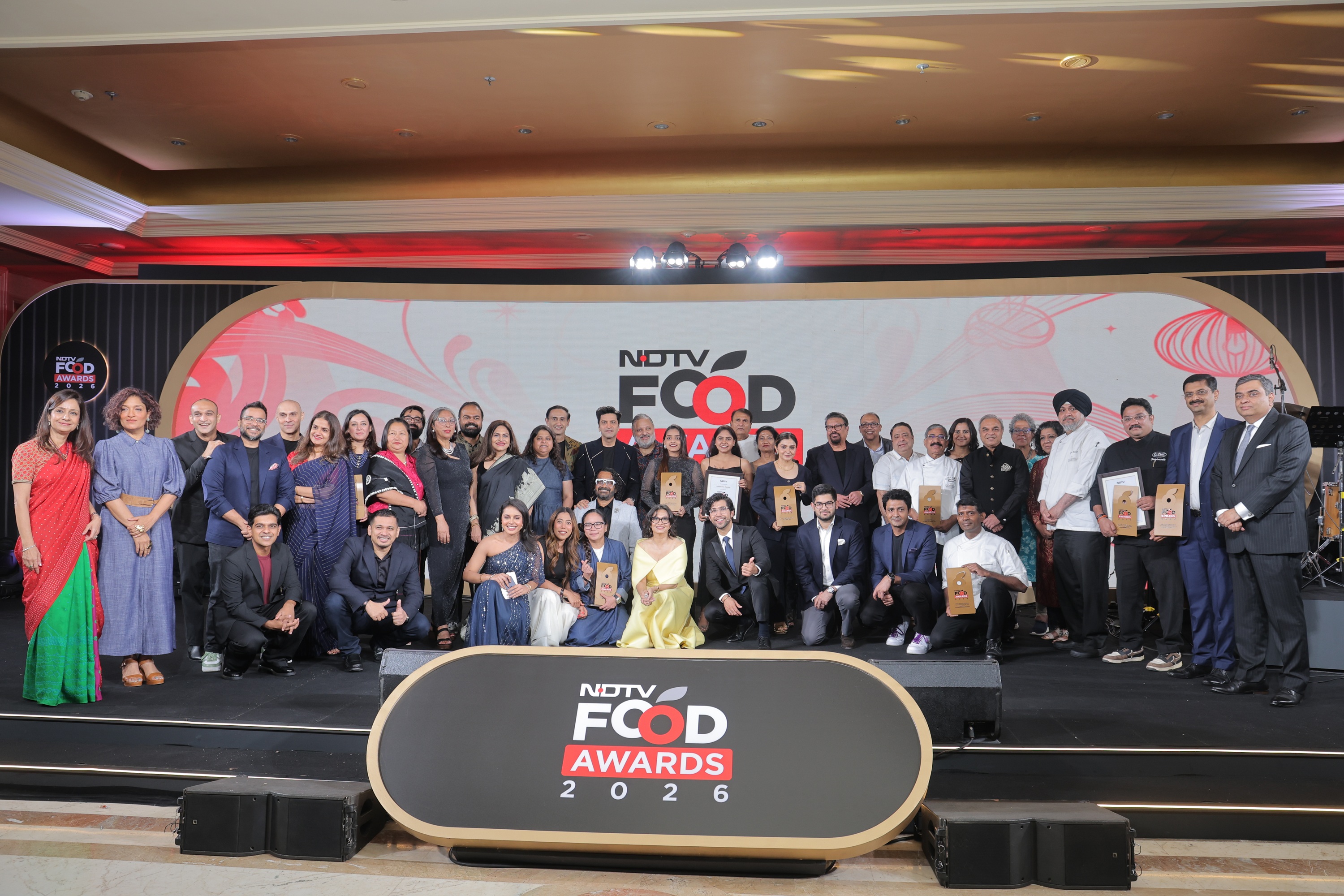
New Delhi, June 16: The NDTV Food Awards 2026 celebrated some of the finest names in India’s food and hospitality industry, honouring chefs, restaurants, restaurateurs, institutions and professionals who are shaping the way India eats, discovers and experiences food.
The awards brought together the many worlds that define India’s food story today – iconic restaurants, celebrated chefs, ambitious new openings, regional excellence, contemporary dining spaces, landmark institutions and professionals whose work continues to raise the bar for the industry.
This year’s winners reflected the creativity, enterprise, imagination and depth that have made India one of the most exciting food destinations in the world. They also captured the growing confidence of Indian food – rooted in tradition, but increasingly contemporary, experimental and global in its ambition.
What gives the NDTV Food Awards their distinctive credibility is the integrity of the process. Every award was decided on merit alone, with the jury process kept independent of commercial considerations, partnerships or external influence.
For NDTV, this principle is fundamental. In a landscape where recognition must earn its credibility, the NDTV Food Awards have been built on merit, discernment and trust. Commercial partnerships and event associations have remained entirely separate from the jury process and award decisions.
Over the years, the NDTV Food Awards have become an important platform for recognising the people and places that are shaping India’s food culture with originality, consistency and craft. The awards celebrate excellence across the industry while keeping the focus firmly on contribution, credibility and the quality of work.
NDTV has also been privileged to chronicle India’s changing relationship with food through iconic shows and formats such as Zaika India Ka, anchored by Vinod Dua, Highway On My Plate, Café Maria, Gourmet Central and many others. The NDTV Food Awards are an extension of that journey.
The NDTV Food Awards 2026 were adjudicated by an eminent jury chaired by Vir Sanghvi. The jury included Sourish Bhattacharyya, Asma Khan, Anindya Sundar Basu, Dr. Shabnam Banu, Ananya Banerjee, Marryam H Reshii, Kurush Dalal and Roshni Bajaj Sanghvi.
Speaking on the occasion, Rahul Kanwal, CEO and Editor-in-Chief, NDTV, said: ‘India’s food landscape is going through a remarkable moment of creativity, confidence and reinvention. The NDTV Food Awards celebrate the people and places that are adding depth, imagination and distinction to this journey. This year’s winners represent the very best of craft, originality and enterprise across the industry. For us, credibility is non-negotiable. These awards cannot be bought. They stand for merit, integrity and trust. At NDTV, we are proud to recognise the chefs, restaurants and institutions that continue to make India’s food story richer and more exciting.’
Vir Sanghvi, Jury Chair, NDTV Food Awards, added: ‘The winners of the NDTV Food Awards 2026 capture the remarkable diversity and ambition of India’s food culture. They reflect excellence, originality, consistency and a deep respect for craft. Together, they represent the richness of India’s culinary landscape and the exciting direction in which it is moving.’
The winners of the NDTV Food Awards 2026 represented the full breadth of India’s food and hospitality landscape.
Baoshuan at The Oberoi New Delhi was named Best Chinese Restaurant of the Year, while Izumi, Goa, won Best Japanese Restaurant of the Year. Seefah, Mumbai, was recognised as Best Asian Restaurant of the Year.
In the Indian restaurant categories, Chor Bizarre, Delhi, was named Best Indian Restaurant of the Year for North Indian cuisine, while Karavalli, Bengaluru, won Best Indian Restaurant of the Year for South Indian cuisine. Ethnic Table, Dimapur, was recognised as Best Indian Restaurant of the Year in the Regional category, and Sienna, Kolkata, was named Best Indian Restaurant of the Year in the Modern category.
Avartana at ITC Grand Chola, Chennai, was named Most Innovative Indian Restaurant of the Year.
Americano, Mumbai, was named Best Italian Restaurant of the Year, while The Table, Mumbai, won Best European Restaurant of the Year. Nisaba by Chef Manish Mehrotra was recognised as Best Opening of the Year. Paris My Love, Delhi, won Best Bakery & Patisserie of the Year, and The Qube at The Leela Palace, New Delhi was named Best All-Day Dining Restaurant of the Year.
The awards also honoured India’s much-loved food institutions. Aminia, Kolkata, was named Historic Restaurant of India, while Bukhara at ITC Maurya, Delhi, received the honour of Legendary Restaurant of India.
Among individual honours, Mirelle Pingfu of Masque was named F&B Professional of the Year. Papa’s, Mumbai, won Best Restaurant of the Year. Himanshu Saini was recognised as Chef of the Year – International, Doma Wang was named Best Restaurateur of the Year, and Chef Manu Chandra was honoured as Chef of the Year.
The Outstanding Contribution to Indian Food honours went to Chef Kunal Kapur, recognising his influence on the way Indian food is celebrated, interpreted and taken to the world.
As India’s food culture continues to evolve with new ideas, deeper regional pride and a growing appetite for originality, the NDTV Food Awards 2026 celebrated the people and places giving this movement its strongest expression.
NDTV Food Awards 2026 Winner list:
- Best Chinese Restaurant of the Year: Baoshuan, The Oberoi, New Delhi
- Best European Restaurant of the Year: The Table, Mumbai
- Best Asian Restaurant of the Year: Seefah, Mumbai
- Best Italian Restaurant of the Year: Americano, Mumbai
- Best Japanese Restaurant of the Year: Izumi, Goa
- Best Indian Restaurant of the Year (North Indian): Chor Bizarre, Delhi
- Best Indian Restaurant of the Year (South Indian): Karavalli, Bengaluru
- Best Indian Restaurant of the Year (Regional): Ethnic Table, Dimapur
- Best Indian Restaurant of the Year (Modern): Sienna, Kolkata
- Best Opening of the Year: Nisaba by Chef Manish Mehrotra
- Best Bakery & Patisserie of the Year: Paris My Love, Delhi
- Best All-Day Dining of the Year: The Qube, Hotel Leela, New Delhi
- Most Innovative Indian Restaurant of the Year: Avartana, ITC Grand Chola, Chennai
- Historic Restaurant of India: Aminia, Kolkata
- Legendary Restaurant of India: Bukhara, ITC Maurya, Delhi
- F&B Professional of the Year: Mirelle Pingfu, Masque
- Best Restaurant of the Year: Papa’s, Mumbai
- Chef of the Year (International): Chef Himanshu Saini
- Best Restaurateur of the Year: Doma Wang
- Outstanding Contribution to Indian Food: Chef Kunal Kapur
- Chef of the Year: Chef Manu Chandra
- 0
- By Neel Achary

16, Jun 2026
Knauf India Launches Advanced Drywall Solution ‘Knauf Drystar’ for Moisture-Prone and Wet Environments
New Delhi, June 16 : Knauf India, the world’s No. 1 company in Drywall & Ceiling Solutions, has launched ‘Knauf Drystar’, a specialised gypsum board system engineered for humid and wet environments, addressing the requirements of the modern construction projects which increasingly demand building materials that are able to resist mould growth, withstand moisture, and maintain structural performance over a period of time.

Knauf Drystar is a high-performance fibre-reinforced gypsum board that has been developed for usage in interior dry construction systems which are exposed to moisture, high humidity, and intermittent water contact. The board blends a moisture-resistant glass-fleece surface with a specially engineered gypsum core, allowing advanced protection against mould formation and water absorption.
Knauf Drystar features a low-level of water absorption of below 3% in combination with a high resistance to mould. It is classified according to EN 15283-1 as GM-FH1IR, signifying enhanced fire performance, increased surface hardness, less water absorption, and improved strength. It carries a fire classification of A2-s1,d0, turning it into a non-combustible building material which is suitable for projects that require stringent fire safety standards.
Speaking about the launch, Mr. Sumit Bidani, CEO of Knauf India, said,
“Modern construction demands materials not only delivering durability and performance but also addressing evolving concerns such as hygiene, fire safety, moisture management, sustainability and safety. With Knauf Drystar’s launch, we are introducing an advanced drywall solution that is engineered specifically for wet-area and high-humidity applications. Drystar amalgamates superior mould and moisture resistance with the flexibility, speed and efficiency of modern dry construction systems, enabling developers, architects and contractors to build with greater confidence.”
Use Case Scenarios:
Knauf Drystar is suitable for various scenarios such as commercial and residential washrooms where ceilings and walls are exposed to moisture on a regular basis, making it an ideal base for waterproofing systems and ceramic tiles. It has usability in hospitality projects and hotels, which often require ceiling and wall systems in spas, bathrooms, wellness facilities, helping to maintain long-term performance while lowering the risk of mould growth in high-humidity environments. Again, hospitals, diagnostic centres and clinics necessitate moisture-resistant and hygienic interiors. Knauf Drystar’s mould-resistant properties offer support to cleaner indoor environments in treatment zones and wash areas. Areas which are exposed to elevated humidity levels and occasional water splashes can also benefit from the moisture resistance property of Knauf Drystar and its robust surface characteristics. Besides, Knauf Drystar can be used for suspended ceilings in semi-exterior areas such as entrance canopies, covered walkways, balconies and others. Airports, schools, public infrastructure projects, shopping centres, can use Drystar in changing rooms, washrooms, and other utility areas where moisture resistance and durability play a critical role.
Product Specification:
Knauf Drystar includes the following features:
-
Enhanced Mould & Termites Resistance
-
High resistance to moisture and humidity
-
Low water absorption
-
Non-combustible construction material
-
Easy installation, similar to conventional gypsum boards
-
Flexible and bendable for curved applications
-
Suitable substrate for waterproofing membranes, tiles, and sealants
The launch of Knauf Drystar reinforces Knauf’s commitment towards bringing high-performance, globally proven building solutions to the Indian market and support the development of future-ready spaces across hospitality, residential, commercial and healthcare sectors.
16, Jun 2026
Persistent Announces Partnership with San Francisco Unicorns as Official ReAIimagining Partner
June 16 : Persistent Systems , a global Digital Engineering and Enterprise Modernization leader, announced a partnership with the San Francisco Unicorns for the 2026 Major League Cricket season. Under the agreement, Persistent will serve as an official Remagining Partner within the team’s premium partnership tier. The partnership highlights Persistent’s focus on bringing AI and data-led innovation into real-world high-performance environments where speed, adaptability and insight define outcomes.
This collaboration aligns with Persistent’s strategy to expand its AI-led capabilities in North America and build closer proximity to clients operating in real-time, decision-intensive environments. The partnership will be activated through Persistent’s GameReAImagined campaign, which explores how AI is helping make the hidden layer of the game more visible through performance insights on the field and richer fan experiences off it.
As the Official Re magining Partner, Persistent will explore opportunities with the franchise across data, AI and fan engagement initiatives, extending the relationship beyond sponsorship into potential areas of innovation. With MLC rapidly expanding across key U.S. markets, the partnership creates a compelling environment to demonstrate how intelligence, analytics and technology can shape both performance and fandom.
As part of the partnership, Persistent will have a strong presence across team and digital platforms. The partnership has been designed as an integrated engagement platform, including brand visibility through on-field perimeter boards, team kit branding and a dedicated branded content property, Persistent Coaches’ Corner. Together, these elements combine on-field visibility with deeper storytelling and curated interactions. The collaboration also includes a dedicated hospitality suite, creating opportunities to connect with clients and partners in North America within a high-performance setting, including select invite-only experiences to enable deeper engagement.
Sandeep Kalra, Chief Executive Officer and Executive Director, Persistent
“Cricket, like business, is becoming a game of intelligence as much as execution. The ability to convert data into real-time insight is increasingly the difference between good and great outcomes. At Persistent, we help organizations reimagine how AI creates advantage and this partnership with the San Francisco Unicorns brings that vision to life in a high-performance environment where every decision matters. Together, we have an opportunity to explore how AI can enhance performance, strategy, and fan engagement in new and exciting ways.”
David White, CEO, San Francisco Unicorns
“Sport is evolving quickly, with data and technology playing a bigger role in how teams prepare, compete and engage with fans. Partnering with Persistent gives us an opportunity to explore new ways of applying these capabilities across performance and strategy. We also see strong potential to enhance how fans experience the game as it continues to grow in the United States.”
16, Jun 2026
RAKEZ delegation highlights pathways for European companies to expand strategically through Ras Al Khaimah
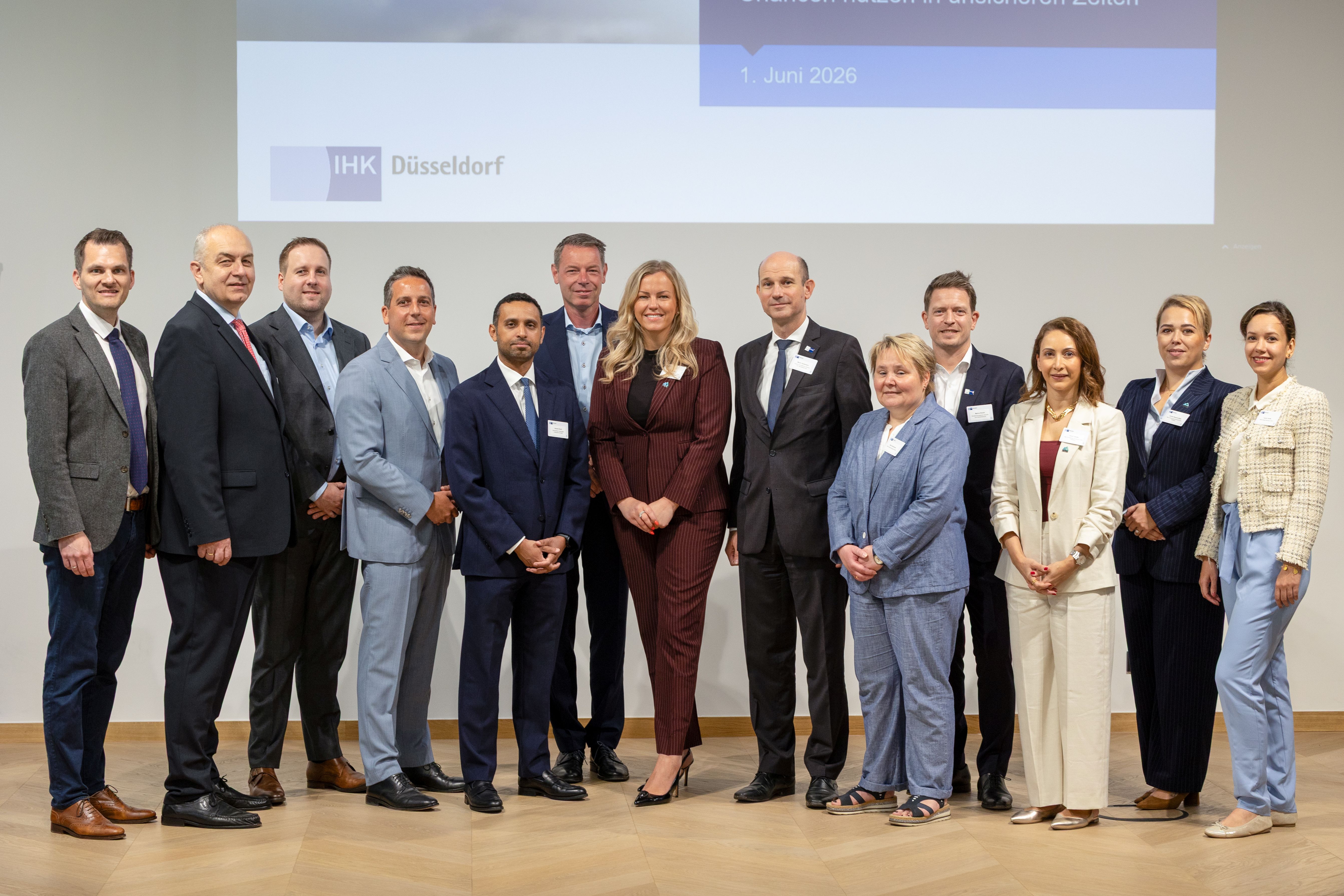
Ras Al Khaimah, June 16: Ras Al Khaimah Economic Zone (RAKEZ) concluded a series of business engagements in Germany and Finland aimed at strengthening economic ties, fostering new partnerships, and showcasing the opportunities available to European companies looking to establish and/or expand into the UAE and wider regional markets through Ras Al Khaimah.
The programme was headlined by a business breakfast held at the German Chamber of Industry and Commerce, Düsseldorf, in collaboration with IHK Düsseldorf and the German Emirati Joint Council for Industry and Commerce (AHK). The event brought together representatives from the Embassy of the United Arab Emirates in Germany, business leaders, industry representatives, and investors to discuss opportunities for growth amid an evolving global economic landscape and explore the advantages of establishing and expanding operations in the UAE
Discussions focused on areas of mutual interest, including UAE business laws, advanced manufacturing, industrial technologies, sustainability, logistics, and innovation, while highlighting the UAE’s position as a globally connected business hub and Ras Al Khaimah’s growing role as a destination for companies seeking competitiveness, operational flexibility, and access to regional and international markets. Germany remains one of the strongest investor markets within the RAKEZ business community, with more than 1,100 German companies operating across a wide range of industries, including manufacturing, furnishings, industrial equipment, construction solutions, electronics, and specialised services.
As part of the wider European programme, the RAKEZ delegation visited Finland, where it met with Her Excellency Amna Fikri, UAE Ambassador to Finland and Estonia, in Helsinki to discuss opportunities for enhanced economic, trade, and investment cooperation between the UAE, Finland, and Estonia. During the visit, the delegation also participated in Match & Grow: A business networking event in Lahti organised in collaboration with LADEC. The event brought together Finnish businesses and ecosystem partners to explore opportunities for international growth, investment, and collaboration, while providing direct access to RAKEZ experts and insights into expanding into the UAE market through Ras Al Khaimah.
A key feature of both events was the participation of established RAKEZ investors who shared practical insights into doing business in the UAE from a base in Ras Al Khaimah. In Germany, Harald Hotop, Chief Executive Officer of Kludi, one of the country’s leading manufacturers of bathroom and kitchen fittings, discussed the company’s experience of operating from Ras Al Khaimah and serving regional markets from the emirate. In Finland, Topi Paananen, CEO of Peikko Group, highlighted the company’s growth journey in the UAE and the opportunities the market continues to offer international manufacturers and industrial businesses. Both companies are among the many European businesses that have chosen RAKEZ as a base for their regional operations.
Commenting on the engagements, RAKEZ Group CEO Ramy Jallad said: “Europe continues to be an important strategic market for Ras Al Khaimah, and our engagements in Germany and Finland reflect our commitment to building long-term economic partnerships that create value for businesses on both sides. Germany, in particular, remains one of our most established investor markets, and we continue to see strong interest from European companies seeking a competitive, well-connected, and future-focused environment from which to serve regional and global markets. Through initiatives such as these, we are strengthening the bridges between our business communities and creating new pathways for investment, innovation, and sustainable growth.”
The engagements form part of RAKEZ’s ongoing international outreach efforts to connect with key investor markets, strengthen global partnerships, and support companies seeking growth opportunities through Ras Al Khaimah’s dynamic business ecosystem.
16, Jun 2026
All 28 States Record Fiscal Deficits in FY25, Says CAG Report
New Delhi, June 16: Fiscal pressures across India’s states have intensified in FY25, with all 28 states reporting revenue or fiscal deficits, according to the latest report by the Comptroller and Auditor General (CAG) of India.
The report highlights that rising expenditure commitments, coupled with uneven revenue growth, have contributed to widening fiscal stress across several states. Increased spending on welfare programmes, subsidies, and infrastructure projects has added pressure on state finances, even as revenue mobilisation efforts continue.
The CAG noted that while states remain committed to maintaining development momentum, fiscal imbalances have emerged as a key concern in the post-pandemic economic recovery phase. The report underscores the need for improved expenditure management and stronger revenue augmentation strategies.
Experts observing the findings stated that persistent deficits across all states reflect structural challenges in fiscal consolidation, particularly in balancing developmental priorities with financial sustainability. They added that greater efficiency in public spending and enhanced fiscal discipline will be critical going forward.
The report further suggests that strengthening tax administration, improving compliance, and rationalising expenditure could help states move towards more sustainable fiscal paths in the medium term.
Despite fiscal stress, states continue to play a crucial role in driving public investment and delivering essential services, making fiscal health a key area of focus for overall economic stability.
The findings underline the importance of coordinated fiscal reforms to ensure long-term sustainability of state finances while supporting growth-oriented spending.
16, Jun 2026
CLIRNET Receives Recognition from Indian College of Anesthesiologists for Advancing Digital Medical Education
Mumbai, India June 16: CLIRNET, a global leading platform present across 30+ countries and serving a community of over 650,000 doctors worldwide, has been awarded a Certificate of Recognition by the Indian College of Anesthesiologists (ICA) in acknowledgment of its continued digital support and contribution towards strengthening medical education and professional development within the anesthesiology community.
The recognition highlights CLIRNET’s commitment to leveraging technology to bridge knowledge gaps, facilitate continuous medical learning, and enable healthcare professionals across India and beyond to access high-quality educational resources and expert-led discussions. Through its digital ecosystem, CLIRNET has consistently partnered with leading medical associations and institutions to support knowledge dissemination and foster clinical excellence.
The Indian College of Anesthesiologists, a distinguished academic body dedicated to advancing anesthesiology education and standards in India, acknowledged CLIRNET’s role in supporting its educational initiatives and helping expand the reach of its programs among medical professionals nationwide.
Connecting Doctors at Scale and What It Means for Patients
CLIRNET’s recognition by the ICA is not an isolated milestone; it is emblematic of a broader transformation underway in how India’s medical community learns, connects, and practices. With over 650,000 verified doctors engaged on the platform across 30+ countries, CLIRNET has built one of the largest and most active physician intelligence networks in the world. In India alone, the platform reaches practitioners spanning every major specialty from critical care and anesthesiology to cardiology, oncology, and primary care across tier-1 cities, tier-2 towns, and underserved geographies alike.
This scale of physician engagement carries direct, measurable consequences for patient care. When a doctor in a semi-urban hospital can access the same expert-led CME content, clinical case discussions, and evidence-based guidelines as a specialist in a metropolitan teaching hospital, the quality gap in patient care begins to close. CLIRNET’s platform makes this possible daily.
The ripple effect of this physician-patient connection includes:
-
Better clinical decision-making: Physicians regularly updated on the latest treatment protocols and drug advancements are better equipped to make informed, evidence-backed decisions at the point of care.
-
Reduced medical errors: Continuous learning and peer-to-peer case discussions on platforms like CLIRNET help doctors recognise atypical presentations, avoid diagnostic pitfalls, and adopt updated safety standards reducing preventable adverse events.
-
Equitable access to medical expertise: A patient in a smaller town is no longer limited by the local availability of specialist knowledge. When their doctor is connected to a national network of experts and KOLs through CLIRNET, that expertise flows directly into the consultation room.
-
Faster adoption of medical innovations: From new drug therapies to updated surgical protocols, CLIRNET accelerates the dissemination of medical breakthroughs shortening the gap between research and bedside practice.
In a country where doctor-to-patient ratios remain strained and healthcare infrastructure is unevenly distributed, platforms that elevate the knowledge and capabilities of every practising physician serve a critical public health function. CLIRNET’s work, as recognised by the ICA, is ultimately in service of the millions of patients whose care depends on a well-informed, continuously learning medical community.
Commenting on the recognition, Saurav Kasera, Co-founder, CLIRNET, said: We are deeply honored to receive this recognition from the Indian College of Anesthesiologists. At CLIRNET, our mission has always been to empower physicians through accessible, evidence-based, and technology-enabled learning. This acknowledgment reflects the collective efforts of our team and our continued commitment to supporting medical communities with meaningful digital solutions that enhance clinical knowledge and ultimately improve patient care. As we continue to expand our global footprint, recognitions such as these reinforce the impact that collaborative, digital-first medical education can have on healthcare professionals and patient outcomes.
This recognition from the Indian College of Anesthesiologists underscores CLIRNET’s ongoing commitment to advancing digital medical education and empowering physicians through technology-enabled learning. Serving over 650,000 doctors across 30+ countries, CLIRNET remains dedicated to fostering continuous professional development, facilitating expert-led knowledge exchange, and helping healthcare professionals stay at the forefront of medical advancements worldwide.
16, Jun 2026
NIVEA MEN extend Real Madrid Partnership, Taps into India’s Growing Football Fandom

Mumbai, India — June 16: NIVEA MEN and Real Madrid – global icons in skincare and football – have extended their long-standing partnership, reinforcing a shared commitment to performance, precision, and excellence.
As the collaboration evolves, NIVEA MEN is placing greater focus on fan engagement – bringing supporters closer to the club through elevated, experience-led initiatives that go beyond the game.
India is emerging as a key market in this journey. With one of the fastest-growing football fan bases globally, driven by young, digitally engaged audiences, the sport is rapidly moving into the mainstream. Real Madrid enjoys a deeply loyal following across metros and emerging cities, reflected in everything from late-night match screenings to vibrant fan communities.
To further engage consumers around the partnership, NIVEA MEN India is collaborating with leading e-commerce platforms to launch exciting consumer activations. Shoppers purchasing NIVEA MEN products above a specified value will stand a chance to win a trip to Spain to watch Real Madrid live, along with exciting official Real Madrid merchandise. The campaign will be activated in phases with e-commerce partners across June–October 2027.
Shweta Dalal, Marketing Director, NIVEA India, said, “Football in India today is so much more than a sport; it’s a shared passion that brings people together across cities, screens, and communities. From late–night match screenings to everyday conversations, the love for the game runs deep, especially among young fans who are shaping this culture in exciting new ways. And while this passion is thriving in India, it’s also part of a global culture that unites millions across continents under the same anthem of the beautiful game . Clubs like Real Madrid hold a special place in their hearts, inspiring a sense of belonging and pride. At NIVEA MEN, we see this as an opportunity to connect with fans in a way that feels authentic and meaningful. Much like Real Madrid – whose very name ‘Real’ means royal in Spanish
– NIVEA MEN stands tall as a trusted ruler in the world of grooming, creating experiences that bring fans closer to the teams they love while making everyday moments a little more special. As true Real Madrid fans say, ‘Hala Madrid’ — stay tuned and keep an eye on the NIVEA MEN Instagram handle for what’s coming next.”
Building on a legacy of connecting with millions of fans worldwide, the partnership continues to align with NIVEA MEN’s vision of empowering men to feel confident in their skin. By combining global brand strength with locally relevant experiences, NIVEA MEN is further strengthening its position among modern Indian consumers while deepening its connection with the country’s evolving football culture
16, Jun 2026
AD Ports Group and Dajin Heavy Industry Sign MoU to Explore Offshore Wind and Maritime Opportunities
ollaboration to explore scalable solutions in high-growth renewable energy market
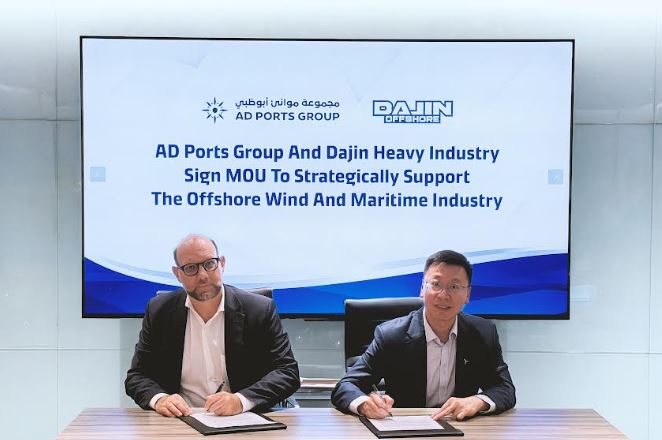
Abu Dhabi, UAE – 16 June 2026: AD Ports Group (ADX: ADPORTS), a leading global enabler of trade, industry, and logistics solutions, has signed a Memorandum of Understanding (MoU) with Dajin Heavy Industry Co., Ltd. a leading offshore wind equipment manufacturer to explore long-term cooperation across offshore wind supply chain development, maritime logistics, port infrastructure, and strategic vessel investments.
The collaboration builds on a series of strategic initiatives and partnerships announced by AD Ports Group in the renewable energy and offshore sectors, including recent agreements with Masdar, Siemens Energy, and Green Parrot, as well as the acquisition of Balenciaga Astilleros Shipyard in Spain, a specialist in offshore wind construction, all of which are building the Group’s offshore energy capabilities.
The MoU reflects the shared ambition of both parties to combine their complementary strengths in order to accelerate growth within the offshore wind and energy infrastructure markets in Europe and other regions.
Under the framework of the MoU, both parties will explore opportunities, including transportation solutions for offshore wind components, development of pre-assembly hubs, cooperation on selected offshore wind tenders and industrial projects, plus fabrication, assembly, and logistics solutions for offshore energy infrastructure.
Friedrich Portner – Chief Commercial Officer, Maritime & Shipping Cluster, AD Ports Group, said: “We are pleased to partner with Dajin Heavy Industry to jointly work on opportunities that leverage our maritime and logistics capabilities in support of the offshore wind sector, a strategic growth area for us. Together, we aim to deliver more integrated, efficient solutions across the renewable energy value chain.”
Walid Oulmane, Chief Commercial Officer – New Products, Dajin Heavy Industry, said: “This MoU represents an exciting opportunity to combine industrial strength, maritime expertise, and long-term strategic vision. We believe both companies can create meaningful value together in support of the global energy transition.”
The offshore wind energy market continues to experience strong global growth, driven by accelerating decarbonisation targets, large-scale renewable energy investments, and the expansion of offshore wind capacity across Europe, Asia, and emerging markets. The industry is projected to grow from USD 109 billion in 2026, to USD 307.5 billion by 2035, reflecting the increasing scaled and strategic importance of offshore wind within the global energy transition.
16, Jun 2026
Ericsson Mobility Report: India’s 5G subscriptions to reach 1.1 billion by 2031
More than 1.1 billion 5G subscriptions are expected in India by the end of 2031, reaching 81 percent subscription penetration. 5G adoption in India continues to grow rapidly, driven by the availability of affordable 5G-enabled smartphones and devices, expanded network coverage across almost all districts, and the increasing rollout of 5G Fixed Wireless Access (FWA) services. These findings are highlighted in the June 2026 edition of the Ericsson (NASDAQ: ERIC) Mobility Report (EMR).
The June 2026 report covers the same period (2025-2031) as the November 2025 edition, with updated statistics and forecasts.
5G subscriptions reached 430 million at the end of 2025, accounting for 35 percent of total mobile subscriptions. While 4G remains the dominant technology at 46 percent, subscriptions are forecast to decline from around 570 million in 2025 to nearly 160 million by 2031, as users migrate to 5G.
The country also continues to lead globally in mobile data consumption per smartphone, with average monthly usage already at 37 GB and expected to nearly double to 70 GB by 2031.
Nitin Bansal, Managing Director, Ericsson India, says ” India’s rapidly growing 5G adoption based on enhanced mobile broadband and 5G FWA is transforming consumer experiences. The robust and secure 5G infrastructure in the country is driving inclusion, governance, and innovation at scale and is serving as a powerful foundation for Digital India.”
In a significant development, a service provider in India recently launched differentiated connectivity services based on network slicing for its postpaid 5G customers, signaling the evolution of advanced 5G use cases in the market.
Global Momentum
Global 5G mobile subscriptions passed the three billion mark during the first quarter of 2026; 5G Standalone (SA) network slicing commercial offerings from communications service providers continue to grow significantly; while uplink mobile data traffic growth is already outpacing downlink for many service providers.
The 162 million new 5G subscriptions added globally during the first quarter of 2026 brought the total past the three billion mark, to 3.1 billion subscriptions. This figure is expected to grow rapidly and is forecast to more than double (to 6.4 billion) by the end of 2031.
Some 390 service providers have launched commercial 5G services to date – more than 90 of which have launched 5G Standalone (SA). 5G networks handled 48 percent of all mobile data traffic at the end of 2025 – a figure expected to rise to 85 percent by the end of 2031. Western Europe, North America, North East Asia and the Gulf Cooperation Council (GCC) countries are forecast to have 5G mobile subscription adoption close to, or above, 90 percent by the end of 2031.
The number of commercial differentiated connectivity service offerings based on 5G SA network slicing from service providers – with the ability to deliver guaranteed quality of service for use cases through securing slices of the network – continues to grow at pace. The total increased from 65 in the November 2025 EMR report to 84 across all regions in the new June edition – indicating that services based on differentiated connectivity are moving from early adoption to mainstream commercialization.
“With the upcoming transition to physical AI, traffic patterns will fundamentally shift as we move from centralized models in data centers to distributed, autonomous AI agents embedded across our device vehicles and cities, commonly connected by 5G,” Erik Ekudden, EMR publisher and CTO, Ericsson, says.
“Mobile networks are no longer only about providing best-effort connectivity, they are becoming critical, intelligent infrastructure that meets diverse application needs. Reflecting part of this shift is the continued rise in new commercial service offerings based on 5G standalone network slicing and the number of communications service providers deploying 5G SA.”
Speed-based tariff plans for fixed wireless access (FWA) also continue to appeal to service providers as a structured monetization strategy targeting different market segments. The share of FWA service providers offering the service over 5G has reached 71 percent – up from 57 percent in June 2025 – the largest annual increase in four years. Speed-based tariff plans are now offered by 57 percent of FWA service providers – up from 51 percent a year ago.
The diverse momentum is reflected in new 5G FWA launches in Algeria, Argentina, Bangladesh, Morocco, Taiwan, Türkiye and Vietnam.
5G FWA connections uptake is strongest in North America, the Nordics, the Gulf Cooperation Council (GCC) countries and parts of Asia.
Changing user behavior is also reflected in the June 2026 EMR network traffic statistics.
Uplink traffic is growing faster than downlink for most service providers – in some instances, significantly faster. The main current drivers are smartphone communication and collaboration apps, the sharing of user-generated content, and cloud storage.
Based on network traffic measurements conducted by Ericsson 43 out of 55 service providers experienced a higher uplink growth rate than downlink; 17 out of 55 service providers experienced more than 1.5 times higher uplink growth rate than downlink. Ericsson scenario modeling suggests additional AI traffic could result in uplink traffic being three times higher or more in 2031 compared to 2025.
Network data traffic (for both mobile and FWA) grew 22 percent year-on-year for the first quarter of 2026 compared to the same period in 2025 – exceeding expectations. This was driven mainly by continued strong growth in India and North America
The report also reflects the increasing industry focus on 6G – with standardization discussions underway. Early expectations include full support for integrated sensing and communication (ISAC); seamless integration between terrestrial and satellite networks to reduce coverage gaps; and a strong focus on energy efficiency – all driven by AI-native 6G.
The first implementable 6G specifications are expected to be finalized by the end of 2028 or early 2029. The first commercial 6G services are expected to follow around 2030, with varying subsequent uptake between regions and countries. As with 5G launches, the US, China, Japan, South Korea and the GCC countries are expected to be early adopters.
16, Jun 2026
Calicut FC Welcomes Newborns into the CFC Family on Second Foundation Day
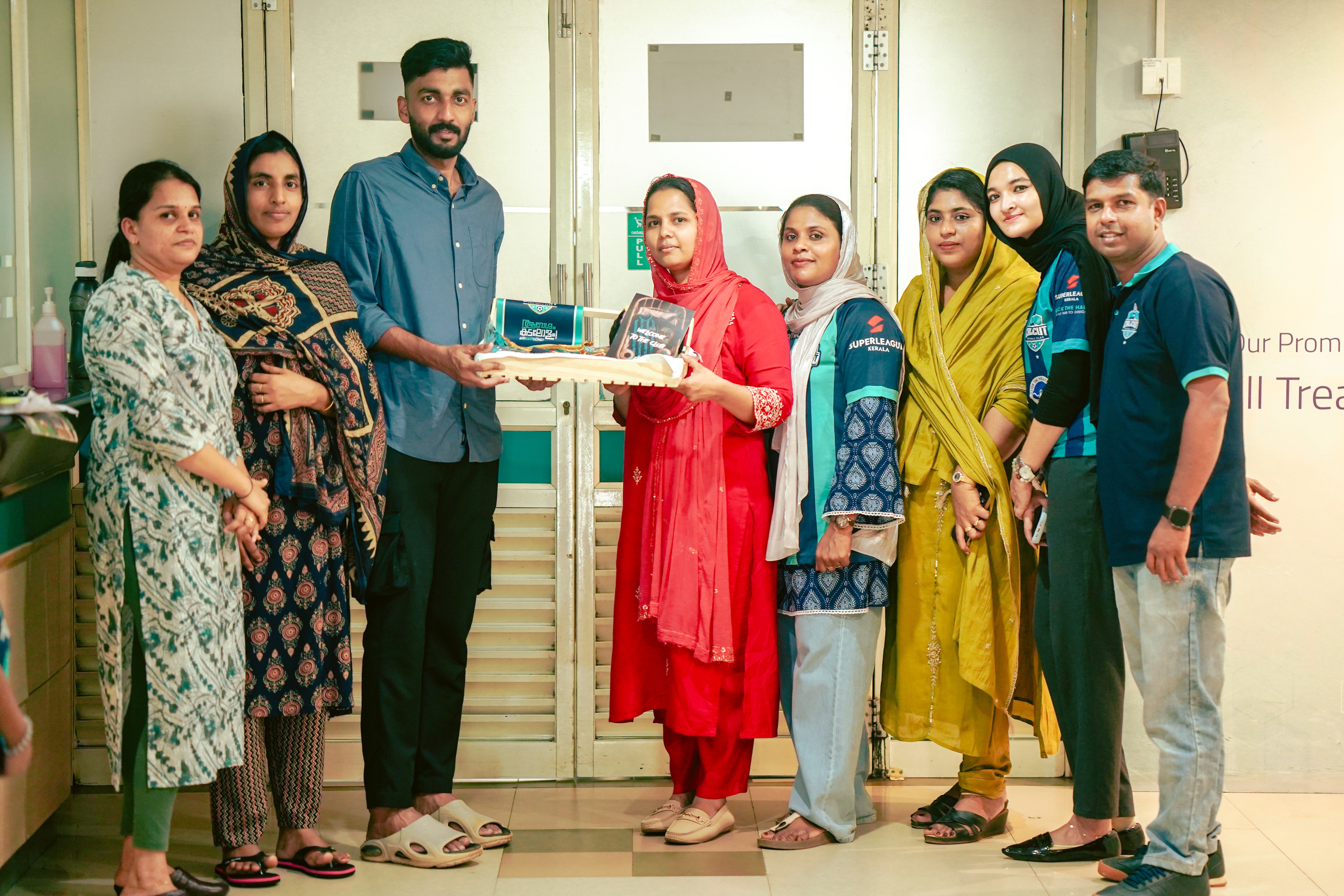
Kozhikode, June 16: Marking its foundation day with a heartfelt community initiative, Calicut FC welcomed babies born on June 15 as the youngest members of the CFC family.
Representatives from Calicut FC, Lady Beacons, and Beacons Brigade celebrated the birth of the newborns and shared special moments with their families across the hospitals in Calicut, including Aster MIMS Hospital, IQRA Hospital, Starcare Hospital, and Fathima Hospital.
As part of the second foundation day celebrations, families received specially curated hampers containing a club jersey, a soft football, a tote bag, and a welcome card.
“Our Foundation Day is not only about looking back at our journey as a club but also about celebrating the future. Welcoming these newborns into the CFC family was a special experience for all of us. We wanted to mark this day by sharing joy with families and creating a connection that they can cherish for years to come,” said Bino Jose Eapen, Club Secretary, Calicut FC.
The occasion brought smiles to parents and hospital staff alike, creating memorable moments on a day that holds special significance for the club. Through this Foundation Day celebration, Calicut FC sought to connect with the people of Calicut in a meaningful way and extend the spirit of football beyond the field.


