


29, Jun 2026
EBC Financial Group and the University of Oxford’s Department of Economics Renew Partnership on Public Economic Education
Three-year collaboration to broaden access to economic research through the What Economists Really Do webinar series
LONDON, 29 JUNE 2026 – EBC Financial Group (EBC) has renewed its strategic partnership with the Department of Economics at the University of Oxford for a further three years, extending a collaboration that helps bring economic research to wider public audiences around the world.
As part of the renewed partnership, EBC will sponsor one annual edition of the Department’s What Economists Really Do webinar series, helping to share economic research and insights with students, researchers, alumni and wider public audiences. To help extend the reach of the webinar, selected insights and discussion points will also be adapted into short social media videos, offering accessible summaries of key ideas for wider online audiences.
Since the partnership began, EBC-sponsored editions of What Economists Really Do have explored a range of pressing global issues, including tax evasion, climate change, and financial literacy. Each webinar typically attracts around 200 live attendees. Together, the recorded sessions have generated more than 3,600 views, demonstrating sustained audience engagement beyond the live events themselves.
The partnership reflects a shared commitment to widening access to economic knowledge and supporting informed public engagement with economic issues, while fostering informed discussion on topics ranging from macroeconomic policy and financial markets to regulation and global economic development.
It also supports the Department’s wider commitment to public engagement by helping make academic research accessible beyond the university community.
This initiative forms part of EBC’s broader commitment to corporate social responsibility, focused on removing barriers to education and fostering long-term societal impact. By connecting academic excellence with real-world application, EBC continues to support wider access to economic education and public engagement.
“In today’s rapidly evolving global economy, access to reliable financial knowledge is more important than ever. Our continued partnership with the Department of Economics at the University of Oxford reflects EBC’s commitment to empowering individuals with the insights and tools needed to make informed decisions, while supporting the development of future talent that will shape the financial systems of tomorrow”, said Christopher Stiegeler, Executive Director, EBC Financial Group (Cayman) Limited.
Stiegeler added, “Beyond our partnership with the Department of Economics at Oxford, EBC continues to champion financial education among the next generation through on-campus initiatives, academic collaborations, and memorandums of understanding with institutions worldwide. These collaborations include the National Autonomous University of Mexico (UNAM), the International University of Ulaanbaatar (IUU), Monterrey Institute of Technology and Higher Education (Tecnológico de Monterrey), Escuela Bancaria y Comercial in Mexico, and the Autonomous University of Bucaramanga (UNAB). Our teams are also actively exploring similar partnerships with additional institutions of higher learning globally.”
Professor Johannes Abeler, Head of the Department of Economics at the University of Oxford, commented: “Public engagement and education are central to the Department’s mission. Through initiatives such as What Economists Really Do, we seek to show how economics can contribute to better policy and a deeper understanding of the issues shaping our world. We are pleased to continue our partnership with EBC Financial Group, whose support helps us broaden access to economic knowledge and extend the reach of our educational activities to new audiences around the world.”
Over the next three years, the partnership will continue to connect academic research with wider public audiences, helping ensure that economic insights remain accessible, relevant and impactful in an increasingly complex global environment.
- 0
- By Neel Achary

29, Jun 2026
India values Seychelles ties as trusted partner: PM Modi at National Day event
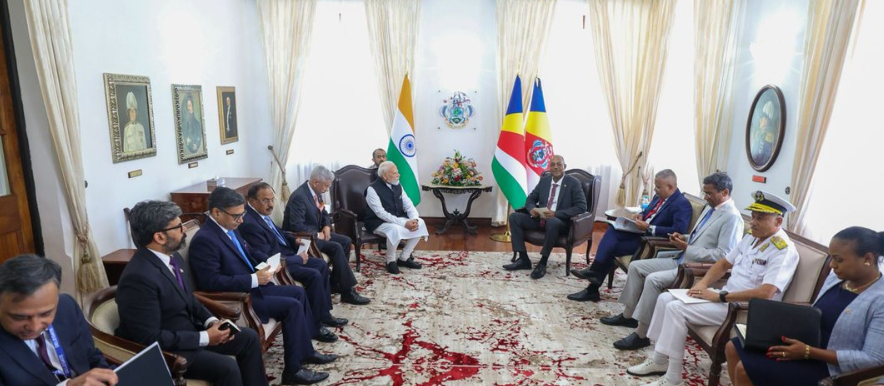
Pic Credit: https://x.com/PMOIndia
June 29: India is proud to stand as a trusted friend and reliable development partner of Seychelles, Prime Minister Narendra Modi said while attending the country’s National Day celebrations. He reaffirmed India’s commitment to further strengthening bilateral relations and expanding cooperation across multiple areas of shared interest.
Speaking at the event, the Prime Minister highlighted the deep-rooted historical, cultural, and maritime links between India and Seychelles. He noted that the partnership between the two countries has steadily grown into a strong and multifaceted relationship focused on mutual trust, regional stability, and sustainable development.
PM Modi emphasized India’s continued support for Seychelles in key sectors such as maritime security, capacity building, healthcare, education, infrastructure, and disaster response. He said India remains a dependable partner in the Indian Ocean region, committed to peace, prosperity, and inclusive growth.
He further underlined that Seychelles holds an important place in India’s vision for regional cooperation under initiatives such as ‘Neighbourhood First’ and ‘SAGAR’ (Security and Growth for All in the Region), which aim to strengthen ties with maritime neighbours and island nations.
The Prime Minister also stressed the importance of joint efforts in addressing global challenges, including climate change, environmental protection, and maritime security. He expressed confidence that India and Seychelles will continue to deepen their partnership and enhance people-to-people connections in the years ahead.
29, Jun 2026
India’s energy resilience helps blunt impact of West Asia tensions
June 29: India’s steadily built energy infrastructure over the past decade has helped the country absorb external shocks arising from recent tensions in West Asia, ensuring stability in fuel supply and shielding consumers from sharp price volatility.
Despite fluctuations in global crude oil markets triggered by geopolitical uncertainty, India managed to maintain steady availability of petroleum products across domestic markets. This stability was supported by long-term policy measures focused on energy security, diversified import sourcing, and improved logistics and refining capacity.
Over the years, India has significantly broadened its crude oil import basket, reducing dependence on any single region. This diversification strategy has played a key role in cushioning the impact of supply disruptions and price swings in global energy markets.
Strengthened infrastructure, including expanded refining capabilities, strategic petroleum reserves, and upgraded transport and distribution networks, has improved the country’s ability to respond quickly to external shocks and maintain uninterrupted supply chains.
Policy mechanisms and calibrated market interventions have also helped prevent extreme fluctuations in domestic fuel prices, reducing inflationary pressure on households and businesses during periods of global volatility.
Analysts note that India’s experience highlights the importance of sustained investment in energy resilience. They add that continued focus on diversification, efficiency, and renewable energy expansion will further strengthen the country’s long-term energy security and economic stability.
29, Jun 2026
Omaxe Announces Dedicated Hospitality Vertical with Rs. 6,200 Crore Investment
“Hospitality is a natural extension of our integrated development strategy. With improving connectivity, growing religious tourism and increasing travel across emerging markets, there is a clear need for quality hospitality infrastructure in these locations. Through this expansion, we aim to create well-located hospitality destinations that complement our existing developments, strengthen our recurring revenue base and contribute to the economic activity of the cities where we operate,” said Mr. Mohit Goel, Managing Director, Omaxe Ltd.
29, Jun 2026
AD Ports Group and Emirates Global Aluminium Expand Long-Term Partnership Through New AED 84 Million Infrastructure Development at Khalifa Port
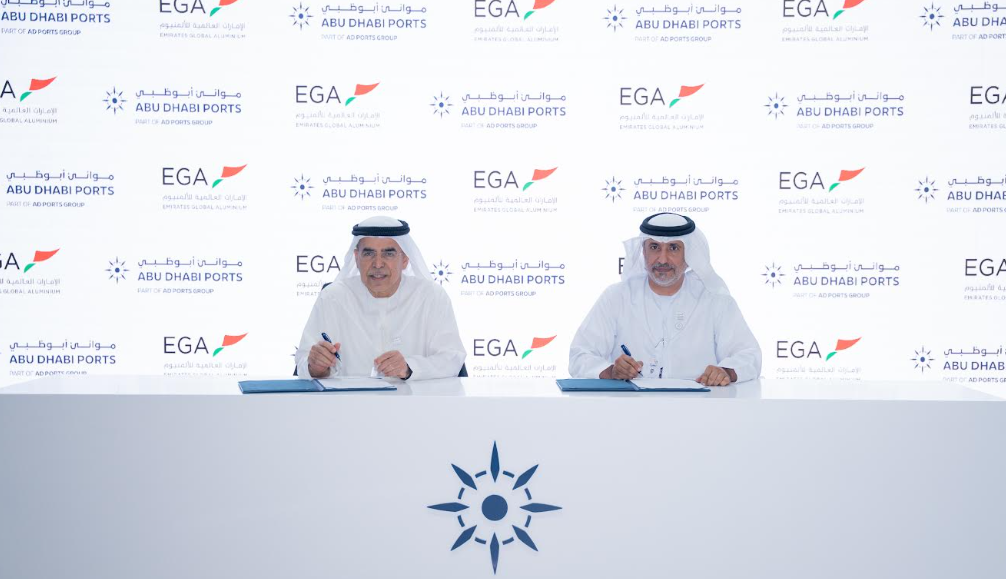
Abu Dhabi, UAE – 29 June 2026: AD Ports Group (ADX: ADPORTS), a leading global enabler of integrated trade, industry and logistics solutions, and Emirates Global Aluminium (EGA), the largest premium aluminium producer in the world, have signed an agreement to enhance EGA’s dedicated berth at Khalifa Port.
As part of their longstanding strategic partnership, AD Ports Group and EGA will jointly invest AED 84 million in a multi-phase berth enhancement programme to upgrade EGA’s dedicated port infrastructure and accommodate Newcastlemax dry bulk vessels, which can transport 15–20% more cargo than the Capesize vessels currently calling at EGA’s berth. The enhancements will further improve berth productivity, operational efficiency, and overall cargo-handling performance.
Upon completion of the planned works by August 2028, the upgraded berth is expected to support the handling of approximately 8 million tonnes of bulk cargo annually. The project will also enhance operational flexibility by enabling the installation of additional unloader facilities.
In addition, the enhancement programme includes upgrades to the existing capping beam, the installation of new bollards and fenders, the extension of crane beams and foundations, the provision of additional utility connections, and dredging works. Collectively, these enhancements will facilitate the safe and efficient accommodation of larger vessel classes while supporting the anticipated increase in future bulk-handling volumes.
Saif Al Mazrouei, Chief Executive Officer – Ports Cluster, AD Ports Group, said: “This agreement underscores our commitment to investing in world-class port infrastructure that supports the continued growth of the UAE’s industrial and trade sectors. It also reinforces our strategic partnership with Emirates Global Aluminium, a global leader in premium aluminium and one of the nation’s most important industrial champions. Through collaborative, long-term investment, we are enhancing the capabilities of critical trade infrastructure while enabling our partners to grow and compete more effectively on the global stage. Such partnerships remain central to AD Ports Group’s strategy and continue to support our profitable growth as a leading trade enabler across global markets.”
Abdulnasser Bin Kalban, Chief Executive Officer of Emirates Global Aluminium (EGA), said: “Khalifa Port is a strategic gateway for EGA’s global operations. This collaboration with AD Ports Group will strengthen long-term capacity, efficiency, and performance of our dedicated berth at Khalifa Port, ensuring the safe and reliable handling of the raw materials essential to our operations. The project will further strengthen our ability to produce the high-quality aluminium that enables modern life and supports industries around the world.”
This collaboration builds on the longstanding strategic partnership between AD Ports Group and EGA, and reflects their shared focus on operational excellence, infrastructure resilience, and sustainable industrial growth.
Khalifa Port, ranked 39th in the prestigious Lloyd’s List Top 100 Ports for 2025, is also a regional container hub to three of the world’s largest shipping lines – CMA CGM, COSCO, and MSC. It also serves as a technologically advanced maritime gateway to Abu Dhabi, providing seamless multimodal access to Khalifa Economic Zones – Abu Dhabi (KEZAD), the Middle East’s largest integrated system of economic cities and free zones, and extending inland connectivity across the UAE and wider Gulf region through the dry ports of Al Faya and Al Ain.
29, Jun 2026
Precious metals slip as global sentiment weighs on prices
June 29: Gold and silver prices traded lower in the domestic market on Monday, reflecting weakness in international bullion markets as improved global risk sentiment and a firmer U.S. dollar reduced demand for safe-haven assets. Investors also remained cautious ahead of key U.S. economic data that could shape expectations for the Federal Reserve’s interest rate path.

International gold prices came under pressure as easing geopolitical concerns prompted investors to shift towards riskier assets, while the stronger dollar made precious metals more expensive for holders of other currencies. Silver also declined in line with broader weakness across the precious metals complex.
Domestic bullion prices tracked the global trend, with traders maintaining a cautious stance amid uncertainty over the outlook for U.S. monetary policy. Expectations that interest rates could remain elevated for longer continued to weigh on non-yielding assets such as gold and silver.
Analysts said precious metal prices are expected to remain influenced by global economic data, movements in the U.S. dollar, central bank policy expectations, and geopolitical developments, all of which will play a key role in determining near-term market direction.
29, Jun 2026
India reclaims fifth-largest equity market
June 29: India’s equity market has regained its position as the world’s fifth-largest by market capitalisation, with the combined value of listed companies exceeding $5 trillion. The milestone reflects improving investor sentiment, supported by sustained domestic investment, resilient corporate performance, and a recovery in benchmark stock indices.
The rise in market value has been driven by broad-based gains across sectors, helping Indian equities recover from earlier bouts of global market volatility. Strong participation from domestic institutional and retail investors has continued to underpin the market despite external economic and geopolitical uncertainties.
Market experts said the achievement highlights the strength of India’s capital markets and the country’s long-term economic growth prospects. They added that favourable corporate earnings, steady economic activity, and consistent domestic inflows have reinforced investor confidence.
Looking ahead, investors are expected to remain focused on global economic conditions, geopolitical developments, inflation trends, and central bank policy decisions, which could influence the direction of equity markets in the near term.
29, Jun 2026
Indian markets open flat as investors track U.S.-Iran developments
June 29: Indian benchmark equity indices opened nearly flat on Monday as investors monitored developments in U.S.-Iran relations and evaluated their potential impact on crude oil prices and global market sentiment.
The Nifty 50 and the BSE Sensex traded with marginal gains in early trading, reflecting a cautious approach among investors. While concerns over geopolitical tensions have eased somewhat, uncertainty continues to keep market participants on the sidelines.
Sectoral performance was mixed, with information technology stocks facing pressure, while select pharmaceutical shares gained following positive company-specific developments. Investors also kept a close watch on global oil prices, which remain sensitive to geopolitical developments in the Middle East.
Going forward, market participants are expected to monitor further developments in U.S.-Iran relations, movements in crude oil prices, and key U.S. economic data for signals on global monetary policy and their potential impact on financial markets.
29, Jun 2026
AI Moves Beyond the Boundary Rope as Madhya Pradesh Premier League Modernises Cricket Administration
Indore & Bengaluru, India, June 29: Mahanaaryaman Scindia, President of the Madhya Pradesh Cricket Association (MPCA), is bringing AI into cricket administration through the Madhya Pradesh Premier League (MPL), with the league deploying custom-built software to support finance, operations and administrative workflows.
Built by Delhigence AI on Emergent, the AI software creation platform, the system is already being used by MPL’s finance and administration teams to manage key processes with greater visibility, structure and speed.
The initiative is part of a broader effort to modernise the systems that support cricket administration in Madhya Pradesh. What began as a finance and operations platform for the league is expected to evolve into a wider technology stack supporting governance, monitoring and administrative workflows across cricketing activities managed by MPCA.
Speaking about the initiative, Mahanaaryaman Scindia said, “Cricket administration today needs the same speed, transparency and professionalism that the game demands on the field. Madhya Pradesh has a rich cricketing legacy, and our responsibility is to build systems that can support the next generation of players, leagues and institutions. AI gives us an opportunity to rethink how sports administration works — not in theory, but in the everyday systems that help a league run better.”
While technology has transformed how cricket is played, analysed and consumed, many of the systems that run the game behind the scenes continue to rely on manual processes and fragmented workflows. MPL’s adoption of AI-built software reflects a growing effort among institutions to modernise operations through technology designed around their specific requirements.
Mukund Jha, Co-Founder and CEO of Emergent, said, “This is exactly where AI-built software becomes powerful. Every institution has workflows that are unique to how it operates. Earlier, building software for those workflows required long timelines, large teams and heavy development cycles. With Emergent, teams can translate real operational problems into working software much faster. What MPL and Delhigence AI are doing is a glimpse of how AI can modernise not just companies, but institutions.”
The platform has been designed to support day-to-day finance and administrative operations, helping teams move away from scattered workflows and towards a more structured operating environment. The system is hosted in India, with data and infrastructure aligned to domestic governance and operational requirements.
The initiative reflects a broader shift in how sporting institutions are approaching technology. While AI has largely been associated with performance analytics and fan engagement, organisations are increasingly exploring its potential to improve governance, operations and administration. MPL’s deployment offers an early glimpse of what that future could look like.
29, Jun 2026
Why Tier-II & Tier-III MSMEs are Facing a Working Capital Crunch Despite India’s Digital Growth
June 29 :As India marks MSME Day, it is important to recognise that the country’s MSME ecosystem has evolved into one of the strongest engines of economic growth, entrepreneurship and employment. Millions of small businesses are driving innovation, strengthening domestic supply chains and creating opportunities well beyond metropolitan centres. As this ecosystem expands in scale and sophistication, ensuring access to timely, affordable and inclusive finance will be critical to sustaining its growth trajectory.
While the government has taken several progressive steps to strengthen the sector through initiatives such as the expansion of the TReDS ecosystem, mandatory payment timelines and continued regulatory support, delayed payments remain one of the biggest constraints on MSME growth. Working capital continues to be locked up in receivables, limiting the ability of businesses to invest, expand operations and create jobs. Wider participation from large buyers and faster adoption of digital invoice financing can significantly improve liquidity across the ecosystem.
At the same time, India’s next wave of entrepreneurship is emerging from smaller towns, informal enterprises and deep-tier supply chains, where access to formal credit remains limited. As these businesses become increasingly integrated into organised value chains, the demand for flexible working capital and deep-tier financing is growing rapidly. Bridging this credit gap will require financial solutions that move beyond traditional lending models and are designed around the unique cash flow cycles of MSMEs.
Encouragingly, India’s rapidly evolving digital financial infrastructure – from account aggregators and digital public infrastructure to embedded finance and alternative credit assessment models – is transforming how MSMEs access capital. By enabling faster underwriting, data-driven lending and seamless financing across supply chains, technology is making formal credit more accessible to businesses that were previously underserved. Building on this momentum will be essential to creating a resilient financial ecosystem where every entrepreneur, regardless of size or location, has the confidence and capital to grow, ultimately accelerating India’s journey towards Viksit Bharat.
Although lending options have expanded, nearly 85% of India’s 64 million MSMEs still depend on informal credit due to collateral requirements and lengthy loan processes. As a result, many businesses borrow at high costs simply to manage operations. While India’s digital financial ecosystem is also introducing new financing models that reduce reliance on collateral-heavy lending. Platforms like TReDS are helping MSMEs convert approved invoices into immediate liquidity instead of waiting months for payments.
Commenting on this shift, Mr. Sundeep Mohindru, Founder & Promoter, M1xchange, said,
“As India celebrated the Entrepreneur spirit of the MSME, it is important to recognise that the country’s MSME ecosystem has evolved into one of the strongest engines of economic growth, entrepreneurship and employment. Millions of small businesses today are driving innovation, strengthening domestic supply chains and creating opportunities well beyond metropolitan centres.
the government has made numerous progressive moves to enhance the sector by increasing the TReDS ecosystem, mandatory timelines and regulatory support, collecting dues on time or before time from their customers have been one of the reason for the growth of the MSME industry. Simultaneously, the future of entrepreneurship in India is coming up from small towns, informal businesses and deep-tier supply chains where access to credit is low. As these small businesses begin to get involved in the organized value chains, there has been a sudden increase in the demand for working capital and deep-tier financing.
Fulfilling this need for credit can only happen if there are financial solutions that not only go beyond conventional loans but are based on the cash cycle of MSMEs. Creating a financial ecosystem that ensures easier and inclusive access to capital would help countless entrepreneurs grow their business and make a significant contribution to the journey of Viksit Bharat.”
Beyond receivables financing, embedded finance is also improving access to short-term liquidity by integrating credit directly into supply chains, while alternative data-led underwriting is reducing reliance on traditional collateral requirements. Speaking on the same, Pallavi Shrivastav, Co-founder, Progcap, an MSME Fintech, said,
“To realise India’s Viksit Bharat vision, we must build a credit infrastructure tailored to the modern MSME. The traditional banking system struggles to address the ₹30 lakh crore MSME financing gap due to rigid collateral requirements. Today’s global economic volatility and supply chain disruptions are severely stretching working capital cycles for Tier-II and Tier-III enterprises. The solution isn’t just more credit; it is smarter, embedded credit. By digitising corporate supply chains and leveraging alternative transaction data, as an MSME Fintech, we are building credit rails for small retailers, much like UPI built rails for payments, delivering agile, short-term liquidity that aligns perfectly with their seasonal cash-flow realities.”
Commenting on this Deepak Gandhi, Director, Business Head, Exports, Drip Capital added,
“India has enormous potential to expand its exports, but realizing this opportunity will depend on our ability to empower millions of micro, small, and medium enterprises (MSMEs) to participate in global trade. Today, the biggest constraint for many exporters is not a lack of international demand. Instead, they struggle with limited access to overseas markets, difficulty in identifying credible buyers and suppliers, inadequate market intelligence, constrained access to finance, and insufficient tools to manage trade risks.
Many businesses are capable of winning international orders but are unable to fulfill them because of working capital shortages, concerns over payment security, or the complexities of cross-border logistics and compliance. As global supply chains diversify and international buyers increasingly look toward India as a trusted sourcing destination, we have a unique opportunity to integrate millions of small businesses into the formal export ecosystem. By improving access to finance, digital trade infrastructure, logistics, market linkages, and risk management solutions, India can unlock a new wave of export-led growth, job creation, and entrepreneurship.”
Commenting on the same Munindra Verma, CEO, M1 NXT said,
“India’s MSMEs have demonstrated their ability to participate in global trade, with MSME-linked products contributing nearly half of the country’s merchandise exports. However, their ability to scale remains constrained by challenges related to market access, credit availability, and delayed payments. Addressing these gaps will be critical as India seeks to expand its export base and strengthen its position in global value chains.
For exporters, delayed payments and extended credit terms are not merely operational concerns. They often determine whether a business can take on its next order, negotiate better terms with suppliers, or enter new markets. A trade finance ecosystem supported by digital processes, risk assessment, and access to institutional capital can help MSMEs manage cross-border trade cycles more efficiently.
As global supply chains continue to evolve and businesses look to diversify sourcing destinations, India has an opportunity to bring a larger share of its MSME sector into international trade. Unlocking this potential could not only expand the country’s export footprint but also support employment generation, manufacturing growth, and broader economic development over the long term.”
Commenting on the same, Anand Kumar Bajaj, Founder, MD & CEO, PayNearby said,
“MSMEs are the everyday engines of India’s growth. From kirana stores and small service points to local manufacturers and neighbourhood entrepreneurs, they keep commerce moving, create livelihoods and serve communities across Bharat. Their contribution to the economy is significant, but their real strength lies in how deeply they are embedded in India’s local markets.On MSME Day, it is important to recognise that the next phase of MSME growth will be shaped by three enablers: digital confidence, access to formal credit and stronger last-mile support. The next leap will come from helping them move from informal resilience to formal, scalable growth. This means making digital tools simpler, credit more accessible, and assisted support more available at the last mile.“
Tier-II and Tier-III cities will drive India’s next wave of growth, but digital adoption alone isn’t enough. If delayed payments persist and working capital stays slow and costly, MSMEs will continue to be held back. India has strong digital payments infrastructure; the next step is a similar system for working capital.


