


8, Oct 2025
NIT Team Wins First Place in IIMCIP-TIC Smart Dustbin Challenge
Kolkata, 8th October 2025: Team Alpha Entity from Narula Institute of Technology (NiT), a JIS Group educational initiative emerged as the winner of the prestigious Smart Dustbin Challenge organised by IIM Calcutta Innovation Park (IIMCIP-TIC). The team clinched the top spot for their one-of-a-kind innovation, a smart dustbin equipped with advanced sensors for automated waste segregation, marking a proud moment for both the students and the institution.

The winning project stands out for its innovative & intelligent system that can automatically identify and segregate metal, wet and dry waste. By leveraging sensor-based technology, the innovation significantly enhances the efficiency of waste management ingeniously, minimizing manual labor and exposure to hazardous materials besides promoting better recycling practices.
The Smart Dustbin Challenge, organised by IIMCIP-TIC, was aimed at encouraging creative and practical solutions in the realm of waste management and sustainability. The initiative provided a platform for young innovators to translate their technical knowledge into meaningful real-world applications, driving progress toward a cleaner, more sustainable future.
Team Alpha Entity, led by Anirban Saha (Final Year), included members Ankita Debnath (2nd Year), Anuja Mondal (2nd Year), and Prachi Shaw (3rd Year) all students of Electronics and Computer Science. The team’s efforts were guided by Dr. Bikas Mondal, Assistant Professor, Department of Electronics and Computer Science, and Mrs. Sanghamitra Layek, Assistant Professor, Electronics and Computer Science, Narula Institute of Technology.
Speaking on the achievement, Sardar Simarpreet Singh, Director, JIS Group, said, “This accomplishment truly embodies the spirit of innovation and excellence that defines JIS Group. Our students consistently push the boundaries of creativity and technical expertise, developing sustainable solutions with meaningful real-world impact. We are immensely proud of Team Alpha Entity for bringing this well-deserved recognition to the institution.”
- 0
- By Neel Achary

8, Oct 2025
Team MRF Tyres clinches the FIA ERC 2025 Team Championship in Croatia
Cais, Joona and Tempestini secure a decisive team effort in the last round of the season, sealing the third crown for MRF Tyres after 2022 and 2023.

October 8th, 2025: Team MRF Tyres secured the prestigious FIA European Rally Championship team title during the Croatia Rally. This victory marked a remarkable milestone for the team, which is from India’s No 1 tyre manufacturer, MRF Tyres. The season was highly competitive and intense, culminating in a dramatic finale that was decided only in the final round, underscoring the team’s resilience and skill throughout the championship.
Following victories in 2022 and 2023, the ERC championship has been reclaimed by Team MRF Tyres, a testament to the collective effort and dedication of their drivers and co-drivers. Throughout this period, the team demonstrated exceptional teamwork and resilience, successfully representing their colors across various European events. The team’s success is attributed to a diverse roster of talented individuals from multiple countries, each contributing their skills and determination to achieve outstanding results.
The Team MRF Tyres lineup included Erik Cais and Igor Bagigal from the Czech Republic and Slovakia, respectively. Miklós Csomós, alongside Attila Nagy and Krisztián Kertészfrom Hungary; Callum Devinewith Niall Burns from Ireland. Chris Ingram from Great Britain paired with Alexander Kihurani from USA, Lauri Joona and Kristian Temonen from Finland, along with Roope Korhonenand Anssii Viinikka, also from Finland. Benjamin Korholafrom Finland, and the Norwegian duo Frank-Tore Larsen and Lars-Håkon Lundgreen, Stéphane Lefebvre with Andy Malfoy from France, Max McRae paired with Cameron Fair from Great Britain, and Mārtiņš Sesks with Renārs Francis from Latvia, and Jan Solans and Rodrigo Sanjuan from Spain, along with Simone Tempestini and Sergiu Itu from Romania, completed the diverse and talented roster.
Their collective effort underscores the importance of teamwork, strategic planning, and international collaboration in achieving success in competitive motorsport. The team’s ability to unify drivers from different backgrounds and harness their collective talent has been instrumental in reclaiming the crown and setting a high standard for future competitions.
The season was marked by strong performances, with team victories in Hungary and Poland and a one-two finish in Sweden, supported by consistent results on both tarmac and gravel. At the Croatia Rally, the final round of the series, the crews gave everything they had to secure the decisive points.

The event itself was a demanding challenge. The route was already tough and technical, and heavy rain on the final day made conditions even more complicated. Still, all three Team MRF Tyres crews finished inside the overall top ten, showing determination, resilience and strength from the technical package.
The best result came from Lauri Joona and Kristian Temonen (Škoda Fabia RS Rally2), who finished sixth overall. Making their debut on MRF Tyres, the Finnish crew drove a clean rally without mistakes, focusing on rhythm and consistency. They completed all ten special stages without issues, a strategy that paid off.
“It’s a big thanks to Team MRF Tyres. We had the chance to take on a really tricky rally, and we experienced everything you can face on a tarmac event. It was a big learning weekend and I’m happy to have contributed to earning the points that secured the Teams’ Title. Thanks to everyone involved,” Joona said.
Erik Cais and Igor Bacigál, also debuting on MRF Tyres with the Hyundai i20 N Rally2, finished seventh overall. The driver from Zlín showed the pace to fight for the podium, but setbacks on both legs cost him time. Despite this, Cais kept pushing to the end and played a key role in the final outcome.
“I am really happy with the Team title. Thanks to MRF Tyres we did a great job with strong support, and I am proud to be part of this. This was a really tough rally that brought many ups and downs. What matters most is the final result – a real team success,” Cais said.
Simone Tempestini and Sergiu Itu (Škoda Fabia RS Rally2) also placed in the top ten with tenth overall. The Romanian had to cope with issues that limited his ambitions but recovered positions in the heavy rain of the final day. He also came close to winning the Power Stage, missing the podium by only six tenths.
“For sure it was not our year. Sometimes we made mistakes, sometimes we were really fast, but we missed a bit of luck. A big thank you to our partners, MRF Tyres, the team and all the people who follow us every rally. Even if this was not our best event, I am happy to have contributed to the success. Let’s move on to the next one” Tempestini said.
2025 FIA European Rally Championship – Teams Championship
1. Team MRF Tyres pt. 208;
2. M-Sport Ford World Rally Team pt. 206;
3. TRT Rally Team pt. 133;
4. Kowax DST Racing pt. 120;
5. J2X Rally Team pt. 82;
6. Proformance Service KFT – Team Staff House pt. 66;
7. Motorsport Ireland Rally Academy pt. 55;
8. MRF Tyres Dealer Team pt. 37;
9. ADAC Opel Rally Junior Team im ADAC e.V. pt. 34;
10. F.P.F. Sport pt. 30
2025 FIA European Rally Championship – Drivers Championship
1. Miko Marczyk (Škoda) pt. 154;
2. Jon Armstrong (Ford) pt. 148;
3. Andrea Mabellini (Škoda) pt. 131;
4. Mads Østberg (Citroën) pt. 104;
5. Roope Korhonen (Toyota) pt. 60;
6. Isak Reiersen (Škoda) pt. 60;
7. Romet Jürgenson (Ford) pt. 50;
8. Mille Johansson (Škoda) pt. 49;
9. Simone Tempestini (Škoda) pt. 36;
10. Mārtiņš Sesks (Škoda) pt. 35
8, Oct 2025
Maharashtra’s GCC Policy 2025 Poised to Drive 4 Lakh Jobs, Expand Innovation Hubs Beyond Mumbai and Pune
BY: Yogesh Singh, Partner- Corporate Practice, Trilegal.
“The Maharashtra Global Capability Centre Policy-2025 is a timely and forward-looking blueprint for India’s next growth decade. By targeting 400 new GCCs and creating 4 lakh high-skilled jobs, it directly supports India’s journey towards Viksit Bharat @2047 and the vision of a INR 30 trillion innovation-led economy. What makes the policy particularly significant is its inclusive geographical design. It deliberately extends the GCC story beyond Mumbai, Pune, and Bengaluru to cities like Nagpur, Nashik, and Chhatrapati Sambhajinagar. The policy will connect local talent and regional infrastructure with global enterprise demand, bridging the urban-rural opportunity divide. This also aligns with the Union Government’s broader push to empower emerging cities, as reflected at the time of budget discussions. Equally noteworthy is sectoral depth of the policy; prioritizing industries such as aerospace and defence, life sciences, automotive, renewable energy, logistics, IT/ITES, and textiles, promoting specialised GCC clusters that leverage Maharashtra’s diverse industrial base and research capabilities. Maharashtra is positioning itself as a global centre for innovation, analytics, and digital transformation. The combination of fiscal incentives, infrastructure readiness, and policy convergence is likely to make Maharashtra a future-ready GCC destination.”
8, Oct 2025
Viva Lobby Lounge Launches In-House Bakery and Revamped Food & Beverage Menu
Gurugram, October 8, 2025: Viva Lobby Lounge at Holiday Inn Gurugram Sector 90 proudly unveils its all-new food and beverage menu, marking an exciting new chapter with the launch of its in-house bakery. Guests can now indulge in a curated selection of artisanal bakes, handcrafted pastries, and refreshing beverages, redefining the lounge’s culinary experience.

The refreshed menu seamlessly blends classic comfort with modern flair, featuring signature delights such as Genoise Chocolate Cake, Philadelphia Cheesecake, Hazelnut Chocolate Cake, Viva Special Cake, Mississippi Mud Pie, and the ever-popular Opera Pastry.
Freshly baked favorites like Apple Strudel, Butter Croissant, Fresh Fruit Danish, Multigrain Loaf, and French Baguette pair perfectly with the lounge’s enhanced beverage offerings, including specialty teas, freshly brewed coffees, and seasonal juices.
For health-conscious patrons, the bakery also introduces a range of wholesome cookies Millet Cookies, Almond Cookies, Sugar-Free Oats Cookies, and Honey & Fig Cookies each baked in-house with natural ingredients.
“With the launch of our in-house bakery, we are elevating the guest experience through handcrafted creations made from the finest ingredients. Every item on the new menu embodies our commitment to freshness, quality, and creativity,” said Executive Chef Prakash Yadav, Holiday Inn Gurugram Sector 90.
“Viva Lobby Lounge has always been a place to relax and connect. With this new menu and bakery, we’re not just serving food — we’re creating memorable moments,” added Nitinn Sharma, General Manager, Holiday Inn Gurugram Sector 90.
Nestled in the heart of New Gurugram, Viva Lobby Lounge offers a welcoming ambience for casual meetings, friendly catch-ups, or a quiet coffee break. With its innovative new menu and bakery concept, it’s set to become a must-visit culinary destination for both hotel guests and city residents alike.
7, Oct 2025
Western Digital to showcase its storage solutions at the India Mobile Congress this October
India, 7th october 2025:Western Digital is showcasing its products to address the evolving storage needs across different sectors at India Mobile Congress (IMC) 2025, scheduled to take place from 8th to 11th October 2025 at Yashobhoomi, New Delhi.
At booth D23, Western Digital is presenting a comprehensive product portfolio that empowers businesses and consumers to capture, preserve, access, and transform data efficiently. Alongside its Ultrastar® DC HC590 26TB HDD and Ultrastar DC HC580 24TB HDD for hyperscale cloud and data center environments, the company will be showcasing its WD Purple and WD Purple Pro HDD portfolio as well as its WD Red Plus and WD Red Pro drives, optimized for NAS.
Western Digital is looking forward to insightful conversations with partners, customers, young talents, and more attending this year’s India Mobile Congress 2025. Furthermore, visitors will be able to experience firsthand howW estern Digital’s innovations are shaping the future of data storage as the brand continues to meet the evolving demands of a data-driven world.
7, Oct 2025
UGRO Capital Launches UtsavKiUdaan with Business Lakshmi Mantra
Chennai, October 7th, 2025: Diwali in India is a season of light and prosperity. But for small businesses, the festival begins much earlier, in the stockrooms where shelves are filled weeks in advance, in the ledgers where cash flows are balanced late into the night, and in the hope that this season will bring growth, not just celebration. It is this reality that UGRO Capital has chosen to spotlight with its festive campaign, #UtsavKiUdaan. At the heart of the initiative are the Business Lakshmi Mantras, a 10-point practical checklist for MSMEs to prepare fully for the surge. From early planning and cashflow discipline to stocking smart, digital readiness, and customer relationships, these mantras are designed as a festive playbook that small businesses can carry forward well beyond Diwali.
The campaign is rooted in research. In a recent readiness poll conducted across platforms by UGRO Capital, nearly 80 percent of MSMEs revealed that they begin preparing one to three months in advance, and over 73 percent said they plan their festive budgets in detail. Funds, not demand, emerged as the single biggest challenge, with over 60 percent citing liquidity as their primary bottleneck. At the same time, more than 90 percent admitted to analysing last year’s performance before planning for this one. These insights confirm a truth UGRO has long believed in – MSMEs are far more disciplined and forward-looking than they are often given credit for.
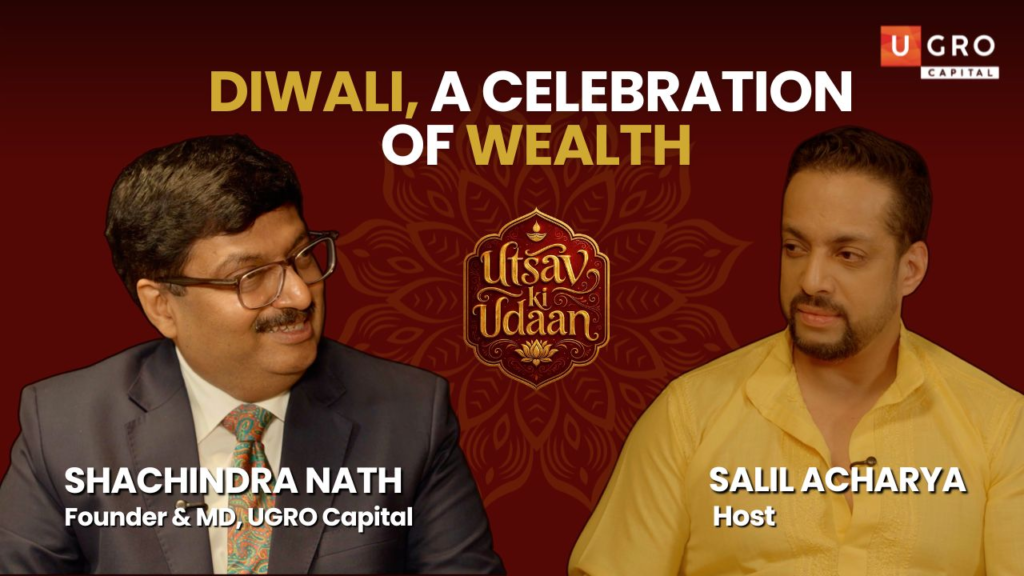
The Business Lakshmi Mantras were unveiled through an exclusive digital campaign and a podcast conversation between UGRO Capital’s Founder & Managing Director, Shachindra Nath and host Salil Acharya, blending festive spirit with business insight. The Business Lakshmi Mantras booklet, available in seven languages (English, Hindi, Marathi, Gujarati, Tamil, Telugu and Kannada) will reach over three lakh MSMEs directly via WhatsApp and email. The campaign is further amplified through influencer unveilings with a combined reach of 1.5 million, reels under the theme “Main Diwali Ready Hoon” showcasing real entrepreneurs, and a presence in Dainik Jagran and iNext to reach MSME hubs across Bharat. In all, UGRO expects to touch the lives of over two million people this festive season.
Speaking on the launch, Shachindra Nath, Founder & Managing Director, UGRO Capital, said,“Every Diwali, India’s homes light up with diyas but for MSMEs, the real light comes from preparation. If MSME Accha Hai was about recognition, and Bharosa MSME Par was about trust, then #UtsavKiUdaan is about readiness. Prosperity doesn’t arrive by chance; it is created step by step, and UGRO’s role is to stand beside MSMEs in that journey.”
Adding to this, Ankit Chothani, Head – Marketing & Corporate Communications, UGRO Capital, said, “With #UtsavKiUdaan and the Business Lakshmi Mantras, we wanted to give MSMEs more than festive greetings, a toolkit they can act on. By distributing it in seven languages, amplifying through influencers, and engaging three lakh businesses directly, we hope to make readiness the new definition of prosperity. This campaign is not just a celebration; it is a movement to equip MSMEs to take their Udaan.”
This campaign continues UGRO Capital’s brand journey from recognition through #MSMEAcchaHai, to trust with #BharosaMSMEPar, and now to readiness and prosperity with #UtsavKiUdaan. More than a festive greeting, it is a movement that puts MSMEs at the centre of India’s growth story, giving them not only capital but also the confidence to take flight this Diwali and beyond.
7, Oct 2025
TOTO India Expands Premium Collection with Wellness-Driven Showers and Sleek Faucets
India, 7th October 2025 – TOTO has unveiled its new G Shower and L Shower series, along with an expanded range of GT, LH and Pull-Out lavatory faucets for the Indian market. Staying true to TOTO’s philosophy of Weaving together spaces that are beautiful and comfortable, and experiences that are pleasant– the new collection combines advanced technology, refined aesthetics, and everyday comfort.
The New G Shower series offer the 3Rs of showering experiences: Relaxing, Refreshing and Revitalizing. Its innovative spray modes include the newly designed Calming Shawl, where spray holes are arranged in an arc to create a shawl-like water flow that gently envelops the body while keeping hair and face dry. It also features a Warm Spa technology that raises body temperature for a soothing full-body warmth. With three overhead spray modes-CALMING SHAWL, COMFORT WAVE, INTENSE WAVE and four hand-shower spray modes- WARM SPA, COMFORT WAVE, MIST SPA , INTENSE WAVE, and availability in eight elegant finishes.
The New G Shower is designed to deliver a premium bathing experience with innovative spray modes.It focuses on relaxation, personalization, and wellness. Its Thermostat Interface feature large, easy-to-press buttons and ridged dials for comfort and accessibility, while Safety Thermo technology ensures quicker and more stable temperature control for safer bathing. The L Shower, introduced as a complementary offering, is designed for ease of use across all age groups.
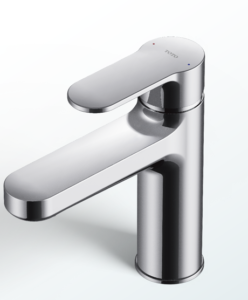
Completing the launch, TOTO expands its faucet portfolio with the GT and LH series as well as a new Pull-Out lavatory faucet. The GT series emphasizes thinner, lighter, and noiseless design innovations, while the LH series offers harmonized styling with sleek, modern aesthetics. The Pull-Out lavatory faucet brings everyday convenience with extended flexibility, featuring an easy-to-use pull-out hose for effortless bowl cleaning, a smooth and light-operating handle suitable for children, and a durable five-layer construction that resists scratches and corrosion to maintain long-lasting beauty
The new portfolio reflects TOTO’s Premium Value, offering affordability while maintaining superior technology and finish quality. Each product showcases Japanese Craftsmanship, with carefully designed elements that prioritize comfort, beauty, and durability, setting new standards in aesthetics. Furthermore, the collections ensure Seamless Integration, being compatible with TOTO’s existing showers and faucets to enable easy upgrades and tailored solutions for consumers.
“Everyday rituals are an important part of how people experience comfort and wellbeing. With our new G Shower, L Shower, and faucet collections, we have combined thoughtful design with advanced innovation to meet the needs of Indian consumers,” said Mr. Shiozawa Kazuyuki, Managing Director, TOTO India. “Our design concept was Human Approach. We aimed to create solutions that are closely attuned to people’s lives. With these launches, TOTO continues to reinforce its commitment to blending functionality, style, and human-centric innovation in the bathroom space.”
7, Oct 2025
Tilaknagar Industries appoints Nishant Jain as President Sales
New Delhi, October 07, 2025: Leading Indian-Made Foreign Liquor (IMFL) manufacturer, Tilaknagar Industries Limited (TI) (BSE: 507205) (NSE: TI), has announced the appointment of Mr. Nishant Jain as its President Sales.

Mr. Jain’s extensive experience with leading alco-bev companies will be a key driver of TI’s growth at a time when the company is gearing up to expand its presence in the whisky segment across the country, with the impending acquisition of Imperial Blue Whisky from Pernod Ricard India. An independent sales vertical has been created at TI to establish the company’s leadership in the whisky category that accounts for nearly 65 per cent of the IMFL market in India. Traditionally, TI has been a leading brandy maker dominating in prominent IMFL markets in South India such as Andhra Pradesh, Telangana, Karnataka, Puducherry and Kerala, amongst others.
Mr. Amit Dahanukar, Chairman & Managing Director, Tilaknagar Industries said, “Nishant’s extensive experience and proven leadership will be instrumental in strengthening our growth journey, as we expand our regional and portfolio presence, following the Imperial Blue acquisition.”
With over 26 years of experience in Sales, Trade Marketing and Key Accounts, Mr. Jain has had a wide exposure to the alco-beverage sector in India which ranks as one of the largest whisky markets across the globe. Prior to joining TI, Mr. Jain was Chief Operating Officer, Spirits Business at Inbrew Beverages. Earlier, he has worked with Allied Blenders & Distillers as well as Pernod Ricard India, leading sales and trade marketing initiatives nationwide.
An alumnus of IIT Roorkee and IIM Lucknow, Mr. Jain is widely recognized for his expertise in scaling businesses and building high-performing teams.
Taking on the new role at TI, Mr. Nishant Jain said, “I am excited to join Tilaknagar Industries at this transformative stage in its journey. With a vast portfolio of brands and a talented team, TI is well positioned for growth and I am eager to contribute to its next phase of expansion.”
7, Oct 2025
Abhay Prabhavana: Architecture as a Living Dialogue Between Heritage and Values
India, 7th october 2025: On World Architecture Day, few places capture the dialogue between design, philosophy, and culture as gracefully as the Abhay Prabhavana Museum & Knowledge Centre near Pune. Spanning 22.25 Hector (55 acres), it is among the largest private museums in the world, envisioned as a Museum of Ideas where architecture extends as storytelling in stone, space, and form.

The museum’s journey begins with the striking 13.3 meters (43-foot) Art Deco-style statue of Rishabhdev, the first Tirthankar, surrounded by murals that narrate humanity’s earliest steps into civilization. The 30.4 meters (100-foot) marble Manastambh rises nearby, its seven stages carved with symbols of humility and elevation, reminding visitors that architecture can embody values as powerfully as words.
Inside, 30 galleries unfold like carefully designed chapters, blending modern technology with traditional motifs. Interactive exhibits, immersive domes, and layered murals transform walls into living texts, shaping spaces that educate while inspiring reflection. The Plaza of Equanimity houses the Sarvatobhadra statue facing four directions, a design that makes inclusivity tangible through symmetry and openness.
The museum extends outdoors with its heritage walk, where recreations of Dholavira, Kere Basadi, Pavapuri’s Jal Mandir, and the Gwalior caves turn architecture into experience, letting visitors “travel” across centuries within a single arena. At Abhay Prabhavana, architecture is both: a visual grandeur as well as a living medium – one that bridges art, philosophy, and values, building upon the role of design in shaping how we experience heritage and meaning.
6, Oct 2025
Miller Museum of Anamorphic Art Opens, a World First
World’s First Miller Museum of Anamorphic Art Inaugurated – Marking a New Era in Art and Imagination
Bangalore, 6th october 2025: A defining cultural moment was marked with the grand inauguration of the world’s first Museum of Anamorphic Art the Miller Museum of Anamorphic Art. This pioneering institution, founded on the vision of Shereen Miller, was designed to become a global landmark where art, architecture, and nature converge to create an immersive realm of beauty, illusion, and imagination.

The museum was symbolically inaugurated at 4:40 PM a moment described as “touched by the grace of eight,” representing balance, strength, and endless love at the Miller Museum of Anamorphic Art, at Cooke Town. The museum reflected an extraordinary vision that celebrated creativity through anamorphic art, a unique blend of mathematics, science, and artistry.
The space showcased anamorphic paintings, surreal sculptures, charcoal works, and digital installations, each designed to challenge perspectives, spark curiosity, and inspire imagination. More than an exhibition space, it invited visitors to explore how perception could be shifted and expanded through art.
The inauguration was graced by eminent dignitaries and cultural icons, including Chiranjiv Singh, IAS (Retd.), Former Ambassador of India to UNESCO, Paris; Additional Chief Secretary, Karnataka; ex-Development Commissioner; Darshan Kumar YU, Deputy Curator, National Gallery of Modern Art; and Prof. R. H. Kulkarni, Eminent Art Historian, Karnataka Chitrakala Parishath.
Speaking on the occasion, Mr. Chiranjiv Singh said, “The Miller Museum is a significant addition to Bengaluru’s cultural landscape. Shereen Miller’s legacy, carried forward so beautifully by her daughter Cheryl, has brought a rare and fascinating form of art to the city. It is a moment of pride that Bengaluru now hosts the world’s first Museum of Anamorphic Art.”
Prof. R. H. Kulkarni noted, “This museum is a wonderful addition to Bengaluru’s cultural and artistic landscape. Shereen Miller was a multi-dimensional artist, and her anamorphic works deserve to be studied and celebrated. I hope this space remains open to students and artists so her legacy continues to inspire.”
Mr. Darshan Kumar YU added, “Walking through Shereen Miller’s works is truly moving. Her sculptures and drawings carry a bold, distinctive presence, and this museum gives Bengaluru’s vibrant art scene a unique treasure to cherish.”
Sharing her vision, Ms. Cheryl Anita Miller, Founder & Director, Miller Museum of Anamorphic Art,said: “Anamorphic art is about shifting perspectives — what seems distorted from one angle transforms into beauty when seen from the right view. My mother reintroduced this form with her own language of illusion and imagination, making it her life’s pursuit. For me, this museum is not just about art; it is a love letter to the city my mother cherished and returned to.”
The inauguration of the Miller Museum of Anamorphic Art marked a significant milestone in India’s cultural landscape, placing it firmly on the global map of artistic innovation and imagination. It promised to be an unmissable destination for artists, students, and art enthusiasts from around the world.