


22, May 2026
LTIMindtree offers to acquire Randstad’s tech consulting business in Europe and Australia
Mumbai, May 22 : LTM and Randstad announced that LTM has issued an offer to acquire Randstad’s Technology and Consulting Services business in France, Germany, Belgium, Luxembourg and Australia, representing USD 500+ million in annual revenue, to scale domain-driven solutions and AI services in the region.
The proposed acquisition would expand LTM’s presence in key markets, primarily across Aerospace & Defence, Automotive, Utilities and BFS. It would enable local domain expertise and complementary regional capabilities in domain-driven digital engineering, cybersecurity andIoT, supported by onshore and nearshore delivery through centers in Romania and Portugal.
This would create a more diversified portfolio for LTM – expanding its scale in Europe and Australia, enhancing its position in regulated and high-growth verticals through marquee customer relationships.
The deal would augment LTM’s global AI-centric capabilities with local domain and near-shore expertise crucial for delivering digital and AI transformation for customers in a sovereign-compliant and scalable model. It would reinforce LTM’s global delivery foundation through expanded regional presence.
The proposed acquisition is part of a 360° collaboration including a five-year IT services partnership to drive AI-enabled transformation for Randstad’s India Global Capability Center, and a strategic talent MSP to support LTM’s expanding global workforce.
Venu Lambu, CEO & MD of LTM said:
“The proposed agreement is aligned with our five-year strategy to build a more resilient, diversified, balanced portfolio. By combining our global AI-centric capabilities with local context and industry depth, this acquisition would strengthen our ability to deliver compliant, domain-driven AI services and sovereign solutions in markets that are strategically important to us. This 360°partnership with Randstad would be a key step forward in our growth journey.”
Sander van ‘t Noordende, CEO of Randstad said:
“The proposed agreement marks a deliberate step in our Partner For Talent strategy. By partnering with LTM, we would ensure our clients continue to receive world-class services while we streamline our portfolio to invest in growth segments and digital marketplaces that offer the most scale and value. We are equally excited to partner with LTM in India, where their AI expertise will be instrumental in evolving our digital capabilities.”
This acquisition is proposed to be completed through LTM’s wholly owned subsidiary – LTIMindtree UK Limited (‘LTM UK’) subject to customary regulatory approvals, and other closing conditions.
- 0
- By Neel Achary

22, May 2026
Cleantech REPS gets $23.6M to turn road traffic into clean electricity at scale
REPS patented technology converts vehicle traffic into electrical energy. In 6 months since first it has generated over 6,700 kWh of electricity from real traffic conditions.
Tyrol, Austria – May 22: Every day, enormous amounts of energy are lost through motion, pressure, and vibration. On roads, that loss is constant, predictable, and concentrated in the same places over and over again: entrances, exits, curves, speed-limited zones, loading areas, and any point where heavy vehicles naturally slow down. REPS was built to recover that wasted mechanical energy and convert it into clean electricity at scale, using infrastructure that already exists.
Today, REPS announced a $23.6M equity financing round to scale its Road Energy Production System, a patented “road power plant” that converts vehicle traffic into electrical energy.
What REPS is building
REPS stands for Road Energy Production System. Its core product is a patented road power plant that installs directly into existing road infrastructure and harvests energy from trucks and cars driving over it, without disrupting traffic flow or logistics operations.
The technology is particularly effective where vehicles naturally slow down or brake, or where slopes create additional force. REPS is initially targeting ports, logistics hubs, cities, industrial sites, and other high-traffic infrastructure operators that want to reduce energy costs while improving sustainability.
“Roads are everywhere. Traffic is everywhere. What was previously wasted energy can now be transformed into clean electricity through REPS,” said Alfons Huber, Founder and CEO of REPS.
REPS says its converter delivers 254x higher efficiency than the next-best alternative currently on the market, and unlike weather-dependent renewables, the system operates independently of time of day and weather conditions.
Why this matters
Most renewable energy has focused on generating new power through solar and wind. REPS takes a different approach by recovering energy that’s already being wasted. The company’s first application is roads, where the energy lost through traffic alone could theoretically cover around 5% of global electricity demand.
The broader opportunity sits inside a category called energy harvesting, converting lost mechanical impulses into usable electricity. REPS believes the reason energy harvesting hasn’t become a major force in the energy transition is straightforward: existing mechanical converters have historically failed on efficiency and durability, which makes the economics fall apart. REPS had to reinvent the energy converter itself to unlock a system that can operate under heavy traffic conditions for more than 20 years and amortize within years.
Proof in the field
The first commercial REPS system has been operating at the Port of Hamburg since November 2025. Since then, more than 115,000 trucks have crossed the system, generating over 6,700 kWh of electricity from real traffic conditions.
The Hamburg deployment has translated into strong international demand. Following the launch, the company is engaged with over 90 parties from the port industry alone, spanning Europe, the Middle East, Asia, and North America, and it says interest has now expanded beyond ports to logistics hubs and cities.
REPS also shared internal projections for what scale could look like. A rollout of around 230 systems across the Port of Hamburg’s public roads, excluding terminals, could generate approximately 10 GWh of electricity per year, enough to power around 2,800 households, and offset roughly 9.81% of the CO₂ emissions caused by port traffic. The return on investment in that scenario would be below four years.
On a city scale, the company estimates that deploying around 64,000 systems in a city the size of Dubai could recover approximately 3.2 TWh of electricity annually, equivalent to about 10.8% of the city’s total energy consumption today.
Justin Karnbach, CEO of Hamburger Container Service GmbH, said ” The installation at our facility demonstrates the potential of REPS: where vehicles have to brake anyway, clean energy is recovered and can be used directly where we need it. Without any interference with traffic and without additional space.”
Jens Maier, CEO HPA and President of the International Association of Ports and Harbors, added: “We can’t wait to see REPS in action – not just in the Port of Hamburg, but throughout the city and far beyond, all over the world. The Port of Hamburg aims to achieve climate neutrality by 2040. HPA actively supports this ambition by implementing innovative technologies. REPS is a future-orientated technology that generates electricity from previously unused energy sources, making a significant contribution toward achieving climate neutrality. With its high volume of truck movements and its role as a central logistics hub, the Port of Hamburg offers ideal conditions to test technologies like REPS under real-world conditions.”
The origin story
REPS was founded after Alfons Huber dropped out of his physics degree and spent 6.5 years developing the technology while defending his inventor rights against two universities. That work ultimately led to what REPS describes as the world’s first operational road power plant, now running at the Port of Hamburg.
“We spent six years developing the technology. Now the scaling phase begins. The strong demand from ports and logistics operators worldwide confirms the need for our solution, and with this financing round we can now scale at the speed required by the energy transition,” added Alfons Huber.
What’s next
Longer term, REPS sees roads as the first proof point for a broader energy-harvesting platform. The ambition is to turn high-traffic infrastructure into decentralized power assets, capturing energy that’s already being wasted and making it economically meaningful at scale wherever high masses move at high frequency.
Elisabeth Zehetner, State Secretary for Energy, Startups and Tourism, said “Start-ups are no longer a side topic, they are the innovation lab of our economy. This is where technologies like REPS from Austria are created. REPS is innovation made in Austria and showcases what our founders are capable of: they don’t just make small adjustments; they transform entire systems. A road becomes a power plant, and existing infrastructure becomes a building block for a sustainable future. Our role in politics is clear: we must ensure that start-ups find the right framework conditions in Austria. With the Start-up Umbrella Fund, we aim to make sure that innovation is financed, developed, and scaled here in Austria and Europe instead of eventually returning to us as an import from the U.S. or Asia”
22, May 2026
BPC positioned as a Leader in the SPARK Matrix: Digital Banking Platform, Q2 2025 by QKS Group
May 22 QKS Group announced today that it has named BPC as a leader in the SPARK Matrix™: Digital Banking Platform, Q2 2025.
Akhilesh Vundavalli, Principal Analyst at QKS Group, states, “BPC is strengthening its position in digital banking by extending its deep payments and transaction-processing heritage into a unified, omnichannel Digital Banking Platform. Built on the SmartVista Digital Core and Open API architecture BPC allows institutions to move beyond front-end digitization toward transaction-led digital banking. BPC’s differentiation lies in its ability to natively orchestrate complex payment rails, wallets, and card ecosystems while delivering consistent experiences across mobile, web, agent, POS, and assisted banking channels. With these capabilities, BPC position itself as a pragmatic enabler for banks seeking to scale digital adoption, expand financial access, and modernize customer engagement without overhauling their core systems.”
The QKS Group SPARK Matrix™ includes a detailed analysis of the global market dynamics, major trends, vendor landscape, and competitive positioning. The study also provides a competitive analysis and ranking of the IT Service Management Tools providers in the form of the SPARK Matrix™. The study also provides strategic information for users to evaluate different vendor capabilities, competitive differentiation, and market positions.
QKS Group also recognized the growing convergence between banking, payments, commerce, and embedded financial services, where institutions increasingly require unified platforms capable of orchestrating customer engagement, merchant enablement, real-time payments, digital onboarding, and ecosystem-based financial experiences through composable and API-driven architectures.
Among 28 evaluated vendors, QKS Group positioned BPC as a Leader, highlighting SmartVista Digital Banking platform as a platform that provides advanced digital onboarding, AI-driven customer. SmartVista was recognized as BPC’s composable, API-first Digital Financial Ecosystem Platform that helps banks, fintechs, PSPs, governments, and merchants launch secure, personalised, and real-time financial experiences across consumer, SME, merchant, wallet, agent, and embedded finance ecosystems.”. Built on microservices and supported by advanced integrational capabilities through open APIs, it enables rapid deployment of new services. The platform supports end-to-end payments, digital onboarding, eWallets, QR payments, SoftPOS, personal financial management, AI-assisted customer engagement and intelligent financial servicing, , digital lending, embedded finance, kiosks and agent banking, helping institutions modernise legacy infrastructure, build super app ecosystems, expand financial inclusion and compete with fintech-driven banking models. The platform also supports contextual engagement, real-time decisioning, and hyper-personalised customer journeys across banking and commerce interactionsThe platform’s support for embedded finance, merchant digitisation, QR ecosystems, SoftPOS enablement, digital distribution, and super-app experiences positions BPC strongly for institutions looking to converge banking, payments, and commerce into unified customer ecosystems
Imran Vilcassim, Global Chief Commercial Officer, Digital Financial Ecosystems, BPC: “
“SmartVista enables banks, fintechs, PSPs, governments, and ecosystem players to rapidly launch secure, intelligent, and real-time financial experiences across banking, payments, commerce, and embedded finance ecosystems. The platform’s composable and API-native architecture allows institutions to accelerate innovation, orchestrate personalised financial journeys, modernise merchant engagement, and scale digital financial services without the complexity of core replacement.
We are honoured that QKS Group has recognised BPC as a Leader in the SPARK Matrix™. This recognition reflects the strength of our platform, our deep transaction-processing heritage, and our continued commitment to helping customers build inclusive, agile, and future-ready financial ecosystems in an increasingly real-time and embedded financial economy.”
22, May 2026
Tenable Launches Open Partner Exchange Network (OPEN) to Connect Security Tools, Data and AI-Driven Workflows Across the Enterprise
Open ecosystem initiative enables connected workflows, richer context and coordinated remediation across security environment

New Delhi, May 22 — Tenable® Holdings, Inc. (NASDAQ: TENB), the exposure management company, today announced the Tenable Open Partner Exchange Network (OPEN), the next evolution of its technology partner ecosystem, designed to help organizations unify security data, accelerate AI-driven workflows, and operationalize exposure management across their existing technology stack.
As AI accelerates the speed and scale of cyber threats, security teams are struggling with fragmented tools, disconnected workflows, and growing operational complexity. Tenable OPEN extends the power of the Tenable One Exposure Management Platform through an open ecosystem of integrations, data exchange, and orchestration capabilities that help organizations reduce cyber risk faster.
Built on more than 330 validated integrations, Tenable OPEN helps organizations connect security data, workflows and tools across the enterprise. Through bi-directional integrations and the new Open Connector, customers can ingest third-party telemetry into Tenable One while exporting exposure insights into downstream workflows, analytics and remediation systems. By connecting security data, context and action across the stack, organizations can reduce blind spots, streamline operations and accelerate remediation efforts, security workflows, analytics, and remediation.
“No single vendor can see everything. The data that defines cyber risk is inherently distributed across the enterprise. That’s why openness is foundational to our strategy,” said Eric Doerr, chief product officer, Tenable. “With OPEN and the Open Connector, organizations can bring together data from virtually any security tool, including third-party technologies, internal systems and emerging AI-driven workflows. We don’t ask customers to replace their existing security stack to get value from Tenable. We connect to it, unify the data and turn it into actionable exposure intelligence.”
Tenable® is the exposure management company, exposing and closing the cybersecurity gaps that erode business value, reputation and trust. The company’s AI-powered exposure management platform radically unifies security visibility, insight and action across the attack surface, equipping modern organizations to protect against attacks from IT infrastructure to cloud environments to critical infrastructure and everywhere in between. By protecting enterprises from security exposure, Tenable reduces business risk for over 40,000 customers around the globe.
22, May 2026
ATONEMO Enters India, Launches Its Stream player with Luxury Personified LLP as Official Distribution Partner
New Delhi, India: Swedish audio technology company Atonemo has announced its official entry into the Indian market with the launch of the Streamplayer, a compact audio streamer designed to modernise any speaker system, regardless of brand, age, or type.
To lead its India operations and distribution, Atonemo has partnered with Luxury Personified LLP, one of India’s leading luxury audio and consumer electronics distribution companies.
Developed in Stockholm, Sweden, the Streamplayer is built around a simple idea: music should be easy. The device allows users to seamlessly stream music to any speaker or amplifier using AirPlay 2, Google Cast, Spotify Connect, and Tidal Connect — eliminating compatibility barriers between brands and generations of audio equipment.
The Streamplayer transforms wired speakers into modern wireless audio systems while also enabling users to synchronise multiple speakers across different brands into one unified listening experience.
“India is one of the most exciting and rapidly evolving audio markets globally, with consumers increasingly appreciating both design and high-quality sound experiences,” said Leo Ballesteros Garriga, CEO and Founder, Atonemo. “With Luxury Personified LLP as our official distribution partner, we are excited to introduce Streamplayer to Indian consumers who value simplicity, performance, and timeless audio products.”
Founded by childhood friends Leo Ballesteros Garriga and Noah Constantinou, Atonemo was created to simplify the increasingly fragmented world of audio streaming. The company combines Scandinavian design thinking with intuitive technology to create products that put the user experience first.
Speaking about the partnership, Luv Malik, Partner at Luxury Personified LLP, said:
“At Luxury Personified, we are always looking to introduce products that genuinely enhance the consumer experience while bringing innovation to the premium audio category. Atonemo’s Streamplayer is a beautifully designed solution that solves a real consumer problem — allowing people to revive and enjoy their existing speakers without being locked into one ecosystem. We are excited to bring this revolutionary product to the Indian market.”
Speaking about the growing opportunity for premium audio in India, Kush Malik, Partner at Luxury Personified LLP, added:
“Today’s consumers are looking for seamless technology that integrates beautifully into their lifestyle while also delivering exceptional performance. Atonemo perfectly combines Scandinavian design with meaningful innovation. Streamplayer has the potential to redefine how Indian consumers experience home audio by giving them the freedom to use and enjoy any speaker they already own.”
The Streamplayer supports high-resolution 24-bit / 192kHz playback, Wi-Fi 6 connectivity, AirPlay 2, Google Cast, Spotify Connect, and Tidal Connect. Compatible with active speakers, amplifiers, hi-fi systems, and vintage audio gear, the device is designed to integrate effortlessly into modern homes.
Key Features:
· AirPlay 2
· Google Cast
· Spotify Connect
· Tidal Connect
· 24-bit / 192kHz Audio Playback
· Wi-Fi 6 Connectivity
· 3.5 mm Analog & Optical S/PDIF Output
· Gapless Playback
· Compact Scandinavian Design
· Works with Vintage and Modern Audio Systems
The Atonemo Streamplayer is scheduled to launch in May 2025 and will be available on Amazon India as well as through authorised premium audio and consumer electronics retailers across the country, managed by Luxury Personified LLP.
21, May 2026
Kore.ai Launches Artemis, the New Generation of the Kore.ai Agent Platform for Building, Governing, and Optimizing Enterprise AI
Agent Blueprint Language™ (ABL) compounds returns and compresses agent delivery from months to days
SAN MATEO, Calif., May 21, 2026 — Kore.ai, the global leader in agentic platforms and applications, today launched the new-generation Kore.ai Agent Platform Artemis edition, the AI-programmable, AI-native foundation that builds, governs, and optimizes the agents, systems, and workflows running across the enterprise. The platform launches initially on Microsoft Azure, with broader cloud availability to follow.
The new-generation Agent Platform enables enterprises to deploy production-ready multiagent AI systems in days instead of months, with governance, observability, and operational control enforced before any agent goes live. Three core innovations make the platform fundamentally AI-native:
Agent Blueprint Language™ (ABL): ABL is a compiled, declarative language that standardizes how AI agents, systems, and workflows are defined, validated, and governed. Six built-in orchestration patterns (supervisor, delegation, handoff, fan-out, escalation, and agent-to-agent federation) enable resilient, production-grade multiagent systems at scale.
Arch™: Kore.ai’s AI agent architect translates business objectives into production-ready ABL, supports the full agent lifecycle, designs the underlying agent topology, and continuously refines agents using real-world production traces.
Dual-Brain Architecture: Two cognitive engines (combining agentic reasoning and deterministic flows) operate in parallel through shared memory, authored in a unified language and governed by a single runtime.
The platform operates independently of the model, keeping AI systems predictable, auditable, and scalable from experimentation to production-grade operations.
“Enterprise AI is entering its third wave, where governance, observability, and trust define success at scale,” said Raj Koneru, CEO and Founder, Kore.ai. “The Kore.ai Agent Platform reflects this shift by bringing an AI-native architecture to market that enables enterprises to build, manage, and optimize multiagent systems with confidence. This level of depth comes from a decade of delivering AI experiences in complex, regulated environments, where scale, compliance, and reliability are non-negotiable.”
The Business Case: AI Building, Governing, and Optimizing AI
ABL and Arch put AI in charge of every stage of the agent lifecycle:
- AI building AI. Arch generates production-ready agents from plain-language objectives, writes them in ABL, and validates them before deployment. Agents that once required months of bespoke engineering now ship in days as compiled, reviewable blueprints.
- AI governing AI. Every decision, path, and outcome is logged, traced, and analyzed by AI in real-time. Deterministic constraints and flow controls are enforced by the platform itself, not left to the agent.
- AI optimizing AI. The platform learns from production signals and recommends specific improvements as reviewable optimizations, with human oversight built in.
“To scale AI with confidence, enterprises need a standardized agent building system and the enforcement of robust governance,” said Vaibhav Bansal, Vice President at Everest Group. “Kore.ai’s strong investments in advancing agentic AI capabilities and governance, combined with a consistent focus on delivering measurable business outcomes, have positioned Kore.ai as a Leader in the Agentic AI Products PEAK Matrix® Assessment 2026.”
What This Means for Today’s CIO, CISO, and CFO
The Kore.ai Agent Platform changes what enterprise AI delivers, what it costs, and what it can be trusted to do:
- For the CIO, AI becomes manageable and accelerated. The platform consolidates fragmented third-party and home-grown agents into one foundation and accelerates delivery from quarters to days across every department and business unit.
- For the CISO, AI behavior becomes predictable. Governance is enforced at the platform layer, outside the model’s control. Every agent action and policy decision is logged, timestamped, and traceable to a specific regulatory control.
- For the CFO, AI investment compounds. Arch, ABL, and the runtime are shared infrastructure across every agent, so the marginal cost of the Nth agent approaches the cost of authoring its blueprint. Every model upgrade improves every agent already running.
Microsoft Azure: Initial Launch Partner
The Kore.ai Agent Platform launches initially on Microsoft Azure and is built natively on the Microsoft Azure stack across compute, identity, AI, and security. For Global 2000 enterprises already standardized on the Microsoft stack, the platform integrates with Microsoft Foundry, Microsoft Agent 365, Entra ID, and the Microsoft Graph API, and powers a native Microsoft Teams channel through the Azure Bot Framework. Kore.ai is also a launch partner for Agent 365.
“Enterprises are moving agentic AI from experimentation to operations, and that shift requires a foundation built for production. The Kore.ai Agent Platform integrates with Microsoft Foundry and Microsoft Agent 365, giving customers a governed environment to build, deploy, and operate AI agents with the identity, security, and observability that Microsoft customers expect,” said Stephen Boyle, CVP, Enterprise Partner Solutions, Microsoft.
Customers Say
“We’ve had early visibility into the Kore.ai Agent Platform, and the architectural rigor stands out. Compiled blueprints, governance in a separate deterministic layer, and one language for every agent are the design choices enterprise AI has been missing.” – Keyur Parikh, Head of Workplace Technology Strategies and Services, Vanguard
“The question every enterprise is asking is how to move AI from pilot to production without creating compliance exposure. What stood out about Kore is that governance is architectural, not an afterthought. That is what it takes to get AI approved for the work that actually matters.” – Arunkumar Ramakrishnan, Director of Enterprise Technology, Blue Cross Blue Shield of Massachusetts
The platform meets enterprise security, compliance, and deployment requirements from day one: SOC 2 Type II, ISO 27001, PCI DSS certified; FedRAMP Moderate Authorized; HIPAA-aligned; HiTrust and GDPR compliant. Real-time PII tokenization, tenant isolation, and immutable audit trails apply to every agent action. Customers deploy in public cloud, sovereign regions, private cloud, or on-premises, with data residency by region. The platform supports 40+ voice and digital channels and 300+ integrations across Microsoft A365, Salesforce, HubSpot, Jira, GitHub, and core banking, healthcare, retail, and telecom systems.
For more than a decade, Kore.ai has been one of the world’s leading providers and pioneers of AI-native enterprise software, enabling 500+ Global 2000 organizations to run mission-critical business workflows, including some of the largest names in banking, healthcare, insurance, retail, and global service operations.
21, May 2026
Enterprise AI is burning tokens without context and teams are paying the price
-
Precision: answers sourced from real business data, cited and referenced so teams can stand behind them.
-
Efficiency: trusted answers at lower cost, lower token usage, no analyst required, full context on the first response.
-
Safety: nothing goes out before a human approves it, with full audit trails and the ability to undo any agent action.
-
Shared Memory: personal, team, and organizational memory that compounds over time
-
Trusted Answers: intent-aware search and consistent data answers. Same question, same answer, every time. Computer doesn’t guess – it knows, and it shows its work.
-
Safe Actions: governed, auditable actions across your systems. Computer acts on your behalf with guardrails, so teams move faster without risk.
-
Multiplayer AI: shared live sessions for human-to-human, human-to-AI, and team-wide collaboration
-
Skills – reusable workflows that any team can build, share, and deploy. One person’s expertise becomes everyone’s capability. Agent Studio allows users to build and deploy AI agents with sandboxed testing, full audit trails, and rollback
-
Text2SQL: analytical queries across structured data in plain language, no data analyst required
-
Connectors: Gmail, Outlook, Slack, Notion, Google Drive, Jira, Microsoft OneDrive, SharePoint, and any MCP-compatible tool
-
Usage-based pricing: that scales with adoption and not headcount
-
Across web, mobile, and desktop. Use Computer from any device.
-
Inside the DevRev system of record apps. Existing DevRev customers can access Computer directly within their current workflow without switching surfaces.
21, May 2026
AAEON’s BOXER-8629AI Recognized for its Innovation and Market Potential with Best Choice Award
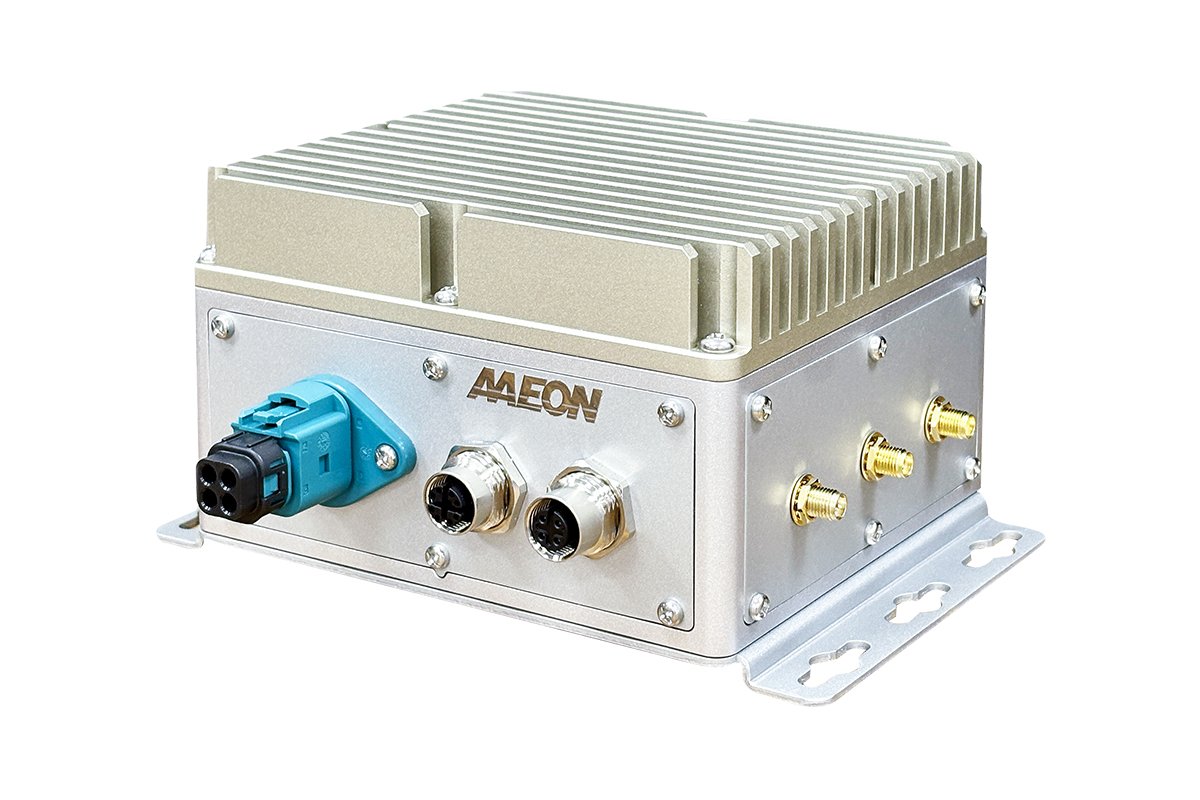
With an IP67-rating and support for four GMSL2 cameras, AAEON’s BOXER-8629AI has been recognized as a standout due to its potential to resolve deployment challenges across diverse environments.
Taipei, Taiwan – May 21 – Leading edge AI platform provider AAEON (Stock Code: 6579) is proud to announce that it has been honored with the Category Award for the BOXER-8629AI at the COMPUTEX Best Choice Award. The awards ceremony is due to take place during COMPUTEX Taipei, held from June 2nd to June 5th at Taipei Nangang Exhibition Center.
The BOXER-8629AI is a rugged, compact, IP67-rated advanced fanless embedded AI system powered by NVIDIA Jetson Orin Nano with DRAM directly on-module and high optimized memory efficiency for AI workloads. Despite measuring just 135mm x 120mm x 87.5mm, the system is equipped with a broad selection of features conducive to integration in autonomous vehicle, smart city, and other emerging sector applications. Central to this is the BOXER-8629AI’s support for four GMSL2 cameras for high-bandwidth, low-latency video acquisition, GNSS, 9-axis sensor, and IMU module support, as well as native CAN FD for actuator and motor control.
The product’s market potential is augmented by its rugged design, key for deployment in harsh industrial and outdoor environments. The BOXER-8629AI is IP67-rated, with its external I/O ports featuring O-ring sealing to the same standard to prevent water and dust ingress during operation.
AAEON has also highlighted the system’s modular design as a benefit to integrators, with custom I/O panels available for the purpose of meeting different project requirements. Meanwhile, the system is equipped with a broad 12V to 24V power input range with built-in ignition control and protection circuits, as well as military-grade vibration, shock, and drop resistance.
AAEON is honored to receive the award, particularly given the prestige of being highlighted by a platform that has been central to recognizing the functionality, innovation and market potential of new technological solutions for over 20 years. COMPUTEX, Asia’s largest annual ICT exhibition, plays a key role in showcasing the very best products that industry leading companies have to offer, providing a one-stop procurement platform for global buyers across industry segments.
The BOXER-8629AI will be on display at both the AAEON COMPUTEX booth (#J1310, 1st Floor, Hall 1), as well as the award-winning products display area (4th Floor, Hall 2) throughout the duration of the event.
21, May 2026
OPPO India expands Find X9 Series with advanced AI and imaging features
New Delhi, May 21: OPPO India today launched the Find X9s and Find X9 Ultra in India, expanding its flagship portfolio with smartphones that combine advanced imaging, AI experiences and flagship performance for creators. The OPPO Find X9s comes in Sunset Orange, Lavender Sky and Midnight Grey, while the Find X9 Ultra is available in Tundra Umber and Canyon Orange.
According to IDC’s Worldwide Quarterly Mobile Phone Tracker for Q1 2026, OPPO recorded 22% year-on-year growth, the highest among the top 5 brands. This has further strengthened OPPO’s position among the top three smartphone brands in India, with market share climbing to 15.3%. This momentum is a reflection of OPPO’s user-first innovation philosophy, one that has kept the brand firmly aligned with India’s premiumisation story.
Commenting on the launch Goldee Patnaik, Head of Communications, OPPO India said, “At OPPO, we have always looked at innovation through the lens of how people actually use their devices. The Find X9 Ultra brings together our most advanced imaging technologies, while the Find X9s extends the same flagship DNA in a slimmer and more lightweight form. Together, they reflect the changing expectations of India’s premium smartphone users and our continued focus on bringing flagship experiences to the market.”
OPPO Find X9 Ultra: New-Generation Hasselblad Camera System in Your Pocket
The Find X9 Ultra introduces OPPO’s new-generation Hasselblad Master Camera System, built for users who rely on smartphones as their primary camera.
At its core is a 50MP 10× optical zoom telephoto camera engineered as a built-in 230mm-equivalent teleconverter and powered by OPPO’s proprietary Quintuple Prism Periscope Structure. Working alongside the 200MP main and 200MP 3× telephoto cameras, the system delivers a focal range from 14mm to 460mm. The setup also includes a 50MP ultra-wide camera, a new True Color Camera and a 50MP front camera.
Supporting the system is OPPO’s LUMO Image Engine, which enhances dynamic range and detail, while Hasselblad Master, Portrait and XPAN modes bring creative flexibility and Hasselblad’s signature imaging experience.
For video, the Find X9 Ultra supports 4K recording at 60fps, 120fps Dolby Vision HDR and introduces 8K recording at 30fps for the first time on an OPPO flagship. Professional workflows are supported through O-Log2, ACES and 3D LUTs with real-time preview and LUT burn-in.
Up front, the Find X9 Ultra features a 6.82-inch 144Hz QHD+ ProXDR AMOLED display with peak brightness of up to 3,600nits and 2160Hz PWM dimming for enhanced viewing comfort. Powered by the Snapdragon 8 Elite Gen 5 platform, it packs a 7,050mAh silicon-carbon battery with 100W SUPERVOOC™ wired and 50W AIRVOOC™ wireless charging.
OPPO Find X9s: Flagship Experience in a Sleek Form Factor
Sharing the same imaging and flagship DNA as the Find X9 Series, the Find X9s features a 6.59-inch flat AMOLED display with ultra-thin 1.15mm symmetrical bezels, peak brightness of up to 3,600nits and 3840Hz PWM dimming for an immersive and comfortable viewing experience across entertainment and productivity.
Its 50MP triple-camera system, co-developed with Hasselblad, includes a 50MP main camera, 50MP ultra-wide camera, and a 50MP 3× periscope telephoto camera with support for 120× Super Zoom. Powered by OPPO’s LUMO Image Engine, the system enhances image quality while preserving natural colours and details across focal lengths.
Powered by the MediaTek Dimensity 9500s platform, the Find X9s pairs flagship performance with a 7,025mAh silicon-carbon battery and 80W SUPERVOOC™ charging for all-day endurance.
Both smartphones are engineered for durability with IP66, IP68, and IP69 certifications for water and dust resistance, alongside Swiss SGS five-star certification for full-unit drop and impact resistance. The devices also feature OPPO Splash Touch technology, enabling reliable touch responsiveness even when the display is wet.
ColorOS 16: AI built into everyday use
Both devices run the latest ColorOS 16, designed for a smoother, more personalised experience.
AI Mind Pilot, OPPO’s AI assistant, coordinates leading models, including Google Gemini, Perplexity and OpenAI models to deliver more contextual assistance. It works alongside AI Mind Space, which lets users instantly capture and organise information through a dedicated Snap Key.
AI Menu Translation helps users decode unfamiliar menus while travelling, and AI Bill Manager automatically organises physical and digital receipts. A redesigned Live Space brings notifications and live activities together in a cleaner interface, and the Find X9 Series adds support for Android’s enhanced Quick Share for cross-platform sharing.
OPPO introduces the new Enco Air5 Pro to elevate audio experience
Alongside the Find X9 Series, OPPO introduced the new Enco Air5 Pro, designed to deliver immersive audio experiences for users on the move. Equipped with up to 55dB Active Noise Cancellation and Triple-Mic AI Clear Calls, the earbuds intelligently reduce ambient noise while improving voice clarity.
OPPO Enco Air5 Pro is equipped with a 12mm titanium-coated driver, the Enco Air5 Pro delivers deep bass, detailed vocals and high-resolution audio, with support for LHDC 5.0 and Hi-Res Audio Wireless certification for premium wireless sound quality.
Designed for all-day comfort and endurance, the earbuds offer up to 54 hours of total playback and feature IP55 dust and water resistance. Features including dual-device connectivity, AI Translate support and customisable touch controls further enhance convenience for work, entertainment and travel.
Customers can avail of the following offers on the first sale of the OPPO Find X9 Series
-
Customers get up-to 10% instant cashback on OPPO e-Store, and mainline retailers using SBI Card, HDFC Bank, Kotak Bank, IDFC First Bank, Yes Bank cards and UPI. No-cost EMI is available for up to 9 months.
-
Customers get an Exchange Bonus of up-to 16% with Cashify and Servify.
-
Customers can avail Zero Down Payment schemes for up to 24 months from Bajaj Finserv, TVS Credit, HDB Financial Services, IDFC First Bank, DMI Finance, Cholamandalam Finance, Home Credit, Poonawala Fincorp and other leading finance partners.
-
Users who pre-order OPPO Find X9 Series before May 28 can get limited free Black Gold Gift Box worth INR 5000 for Find X9s and INR 11000 for Find X9 Ultra, including OPPO Enco Buds3 Pro+/ OPPO Enco Air 5 Pro and a Premium Phone Case.
-
The OPPO Find X9 Series comes with a 180-day hardware defect replacement.
-
Find X9 Series users get 3 months of complimentary Google AI Pro access with 5TB of Storage and more.
-
Find X9 Series users will get Jio benefits worth INR 35100, get FREE 5000GB Cloud Storage for 18 months and FREE Pro Gemini with Jio plan. You need to have an active unlimited 5G plan of ₹349 or above (Prepaid or Postpaid) from Jio.
21, May 2026
AVer HUB Series Now Includes 5-Year Warranty, Offering Lasting Support for Hybrid Workspaces
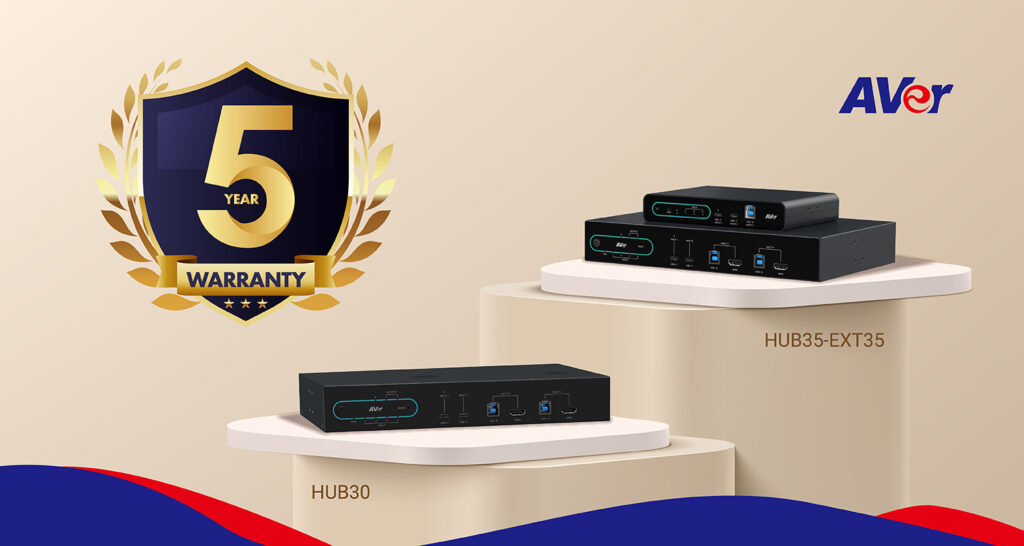
Taipei, Taiwan – May 21: AVer Information Inc., an award-winning provider of AI audio-video solutions, announces the extension of its industry-leading 5-year warranty to the HUB Series, including the HUB30 and HUB35-EXT35 4K BYOM Matrix Switchers. This underscores AVer’s commitment to providing organizations with long-term reliability and peace of mind for their essential meeting room infrastructure.
AVer understands that managing multiple meeting room devices can be a complex challenge and is committed to making these connections as seamless and efficient as possible. By providing a 5-year warranty, AVer ensures that the HUB Series, serving as the command center for the entire meeting space, is protected for the long haul. For the average user, this means fewer technical disruptions and the confidence that their meeting setup is built to last.
The HUB Series backed by this 5-year warranty can streamline device management in virtually every collaborative environment. Organizations in fields such as corporate business, hybrid education, and live event production can elevate their meeting spaces with these new 4K BYOM Matrix Switchers, which offer the following benefits:
ŸSmart Multi-Camera Switching (ConnectAI): The HUB Series enables seamless switching between two AVer cameras, using AI-driven algorithms for dynamic, multi-angle video in live streams, hybrid meetings, and video productions.
ŸCrystal-Clear Visuals: Video is delivered in 4K UHD resolution, ensuring exceptional visual clarity.
ŸCentralized Presentation Control: Supporting the CP10 G2 Touch Panel, a single user-friendly interface, presenters can effortlessly configure dual 4K displays for flexible viewing.
ŸBYOM-Ready Connectivity: These switchers offer versatile connection options — including HDMI, USB-C, and DisplayPort — while powering personal devices reliably during long sessions.
ŸFlexible Scalability: Whether using the plug-and-play HUB30 for standard meetings or the HUB35-EXT35’s included 4K USB extender for larger spaces like auditoriums, users maintain flawless signal integrity across any distance.
Originally introduced in 2023 for AVer’s Pro AV cameras and MT Series Matrix Tracking Boxes, this industry-leading 5-year warranty now brings that same long-term confidence to the expanding AVer Pro AV lineup. For further information about the warranty, please reach out to AVer or your local authorized dealer or distributor.