


15, Oct 2026
transcosmos participates in Mini Sapporo 2026 held in Sapporo City
As a member of the local community, providing work experience opportunities for children
Tokyo, Japan: Oct 15: transcosmos announced that it participated in Mini Sapporo 2026, held at Access Sapporo on Saturday, October 3 and Sunday, October 4, 2026. As a member of the Hokkaido/Sapporo community, the company participated in the event to provide children with opportunities to experience both work and consumption activities, helping them learn firsthand about the rewards and challenges of working and the way society functions.

Mini Sapporo is a work experience program for third- and fourth-grade elementary school students in Sapporo City and neighboring areas that provides a variety of experiential learning opportunities in support of the children’s right to grow to their full potential as stipulated in the Sapporo City Convention on the Rights of the Child. Through the event, children experience a series of activities that are rarely encountered in everyday life, including searching for jobs, working, receiving wages, and paying taxes. In addition, by using the wages they earn to shop and dine, they can enjoy learning about how society functions.
At the transcosmos booth, children experienced the work of a contact center agent helping customers resolve their problems using the generative AI role-playing system trans-AI Tutor. Children selected and spoke with AI-powered customer personas with a variety of characteristics, choosing for themselves whom they would assist. By listening carefully to identify each customer’s problems and aiming to provide support that would earn a “Thank you!”, they enjoyed learning the importance of communication.
Children who participated in the program received one handmade gift of their choice from a selection of original pocket notebooks, blank notebooks, and memo pads created by employees of transcosmos assist inc., transcosmos’s special subsidiary established to promote the employment of persons with disabilities.
transcosmos entered Sapporo City in 1980. Today, the company provides CX services, including contact centers and digital marketing, and BPO services with approximately 6,500 employees across 16 locations in the city. As a business with a strong presence in Sapporo City, transcosmos has been serving its community by making donations through the corporate version of furusato nozei—Japan’s hometown tax donation program—and by participating as a registered business under the Sapporo SDGs-driven Business Registration Program.
To demonstrate its gratitude to the local communities that have supported its business over many years, transcosmos will continue to engage in community-driven business activities. At the same time, with the aim of creating a sustainable society, transcosmos will help address the social challenges faced by local communities.
* transcosmos is a trademark or registered trademark of transcosmos inc. in Japan and other countries.
* Other company names and product or service names used here are trademarks or registered trademarks of respective companies.
|
- 0
- By Neel Achary

15, Oct 2026
A Fresh Start with ViaBTC: New Users Get 50% Off Mining Pool Fees for 30 Days
HONG KONG, Oct. 15, 2026 /PRNewswire/ — ViaBTC, a leading global cryptocurrency mining pool, has announced “A Fresh Start with ViaBTC,” a promotion for new users. Users who register between October 16, 2026, at 08:00 and November 15, 2026, at 08:00 (HKT) will receive a coupon offering 50% off mining pool fees for 30 days. The offer applies to mining BTC, LTC, ZEC, BCH, KAS, and DASH.
During the promotion, new users can mine with ViaBTC and access supporting services, including earnings settlement and asset management. ViaBTC has a decade of experience operating mining pools, with a global network of nodes supporting miners worldwide. The company completed SOC 2 Type I and Type II audits in 2025 and continues to improve its mining infrastructure and security practices.
ViaBTC brings mining and asset management together on a single platform. Once earnings are credited, users can view and manage multiple crypto assets within a single account, withdraw funds as needed, or use Auto Conversion to convert supported coin balances into BTC or USDT without first transferring assets to an exchange. For miners managing earnings across multiple coins, these services can reduce the need to move between platforms, making it easier to track balances and manage cash flow.
The campaign also includes dedicated support for large-scale miners and institutional clients. Through the “VIP Application” option on ViaBTC’s homepage, they can provide details of the coins they mine, their hashrate, and their contact information. ViaBTC’s business development team will then discuss tailored fee arrangements and mining support.
During the promotion, the coupon will be issued automatically upon successful registration. Users must activate it within 15 days of issuance to receive 50% off mining pool fees for 30 consecutive days from activation. The fee discount does not apply to coins earned through merged mining.
New users can register through the ViaBTC website to participate. Users with existing mining equipment can follow the instructions for their chosen coin in the official Mining Guide to configure their equipment and direct their hashrate to ViaBTC. Full campaign rules are available in the official announcement.
About ViaBTC
ViaBTC is a multi-cryptocurrency mining pool serving miners worldwide. Launched in 2016, it specializes in secure, stable, and efficient Proof-of-Work (PoW) mining services, supporting major PoW cryptocurrencies including BTC, LTC/DOGE, BCH, ZEC, and KAS. ViaBTC has served more than 2 million users across over 150 countries and regions. Its BTC, LTC/DOGE merged-mining, BCH, and ZEC pools rank among the world’s leading mining pools.
 View original content:https://www.prnewswire.co.uk/news-releases/a-fresh-start-with-viabtc-new-users-get-50-off-mining-pool-fees-for-30-days-302909916.html

15, Oct 2026
Elon Musk Envisions Mars as a Propellant Hub for Travel Across the Solar System

SpaceX CEO says Starship could enable missions to asteroids, Jupiter’s moons, Saturn and beyond with a propellant depot on Mars.
Oct 15: Elon Musk has outlined an ambitious vision for interplanetary transportation, suggesting that a propellant depot on Mars could transform SpaceX’s Starship into a reusable transport system capable of reaching destinations across the solar system.

Elon Musk says Starship’s fuel is mostly oxygen and easy to make on Mars, so a propellant depot there turns it into a generalized transport to anywhere in the solar system “Yes, and actually it’s mostly going to be an oxygen plant, but it’s because it’s 78% oxygen, 22% fuel. But the fuel is a simple fuel that is easy to create on Mars and many other parts of the solar system.” “So basically, and it’s all propulsive landing, no parachutes, nothing thrown away, it has a heat shield that’s capable of entering on Earth or Mars.” “We could even potentially go to Venus, but you don’t want to go there. Venus is hell, almost literally.” “But you could, it’s a generalized method of transport to anywhere in the solar system because the point at which you have a propellant depot on Mars, you can then travel to the asteroid belt and to the moons of Jupiter and then to Saturn and ultimately anywhere in the solar system.”
— Fireside Alpha (@firesidealpha) October 15, 2026
According to Musk, Starship’s propellant requirements are dominated by oxygen, which accounts for approximately 78% of the propellant by mass, while the remaining 22% is fuel. He said the fuel is relatively simple to produce and could be manufactured on Mars and potentially at other locations across the solar system.
Musk’s vision centres on establishing a propellant production facility on Mars, allowing Starship to refuel locally rather than relying entirely on supplies transported from Earth. Such infrastructure could potentially support increasingly ambitious missions to distant destinations.
He also highlighted Starship’s fully reusable design, which relies on propulsive landings rather than parachutes. Its heat shield is designed to withstand atmospheric re-entry on Earth and Mars, supporting the spacecraft’s intended role as a reusable interplanetary vehicle.
Musk said the system could potentially even reach Venus, although he described the planet’s extreme environment as an undesirable destination.
Looking further ahead, he suggested that a propellant depot on Mars could serve as a strategic staging point for missions to the asteroid belt, the moons of Jupiter, Saturn and other destinations throughout the solar system.
However, turning this vision into reality would require major advances in space-based fuel production, long-duration missions, orbital refuelling and infrastructure development. Establishing reliable propellant production on Mars remains a significant technological challenge.
If achieved, Musk’s concept could reshape the future of space exploration by making Mars more than a destination—it could become a refuelling hub for humanity’s expansion across the solar system.
15, Oct 2026
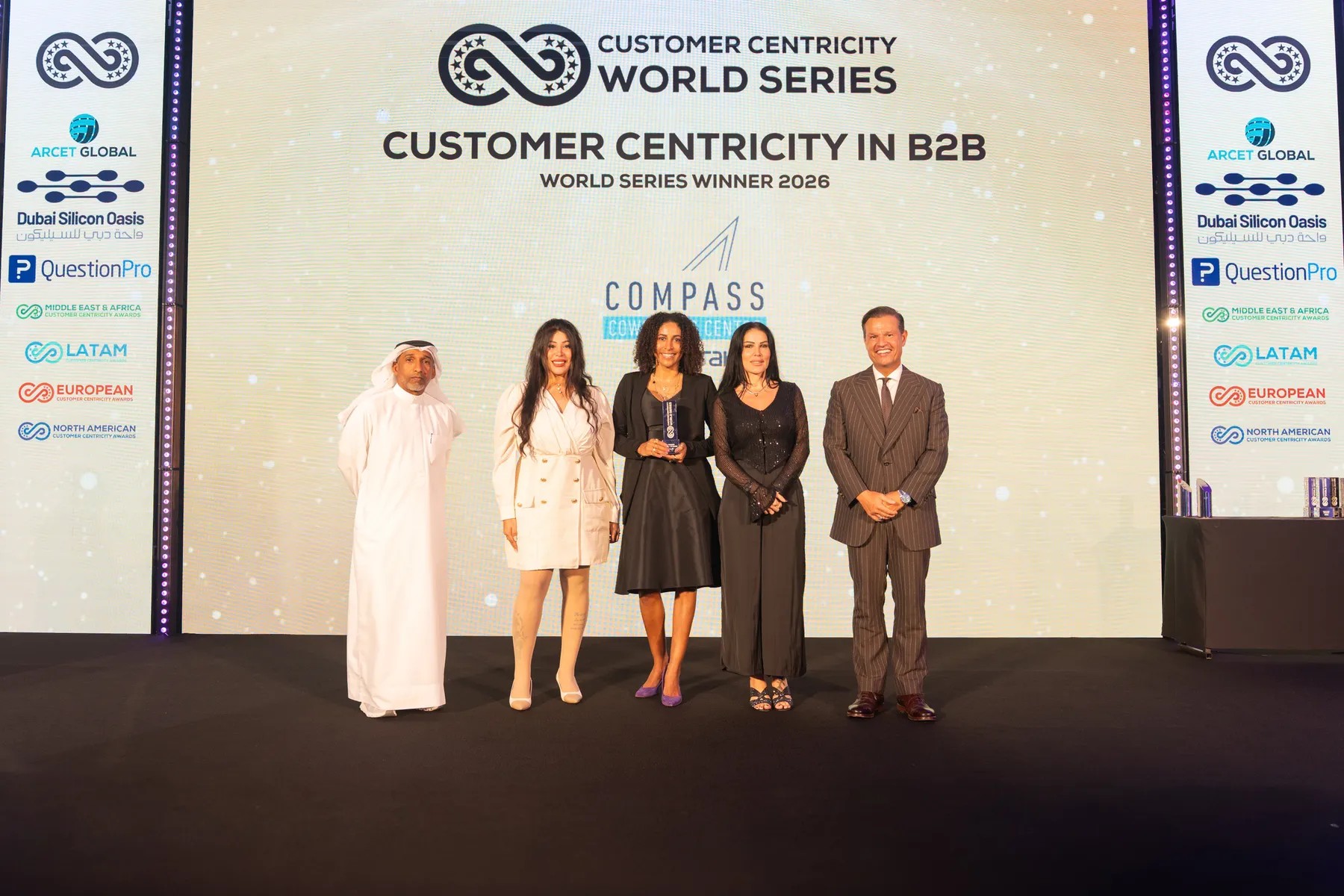
RAKEZ secures three honours at Customer Centricity World Series Awards 2026
|
15, Oct 2026
Relief from insolvency pressures unlikely before H2 2027, says Atradius
AMSTERDAM, Oct. 15, 2026 /PRNewswire/ — Global insolvencies are projected to increase by 5% in 2026, as businesses continue to face high input costs, trade tensions, elevated energy prices and tighter financing conditions. Insolvencies are expected to decline by 4% in 2027, with signs of normalisation expected to become visible during the second half of the year, according to the Atradius Insolvency Outlook published today.

Atradius notes that insolvencies have proven more persistent than anticipated earlier this year, prompting an upward revision to its 2026 forecast and a more modest decline in 2027.
“The business environment remains challenging as high input costs and trade tensions persist,” said Theo Smid, Senior Economist at Atradius. “Insolvencies are still expected to rise in 2026, based on realised data and our expectations for the remainder of the year. While we expect conditions to begin easing in 2027, this marks the start of a process rather than a full return to normal.”
However, the expected decline in insolvencies is not being driven by a significant improvement in business conditions. Instead, it reflects a gradual adjustment by businesses to a more challenging economic environment.
The latest forecast assumes that the most vulnerable firms will exit the market by early 2027, while surviving businesses continue to adapt their cost structures, financing arrangements, and pricing strategies to a higher-cost environment. This adaptation, rather than a significant improvement in economic conditions, is expected to drive the decline in insolvencies.
Regional developments
On a regional level, Europe and Asia-Pacific are both forecast to see insolvencies decline by 5%, while North America is expected to record a more modest 3% decrease. Across individual markets, the path to normalisation will not be uniform:
- UK insolvencies are expected to remain near historically high levels as post-pandemic debt, high borrowing costs and weak consumer demand continue to weigh on businesses
- Romania is one of the few markets where insolvencies are expected to increase further, reflecting ongoing fiscal, political and inflationary pressures
- Australia and South Korea are expected to drive much of the improvement in Asia-Pacific, as insolvencies ease from historically elevated levels
- In the US, insolvencies are expected to decline as firms adapt to the new environment of elevated inflation and interest rates, while economic growth remains relatively resilient
Read the full report: https://group.atradius.com/knowledge-and-research/reports/economic-research-insolvency-outlook-oct-2026
Press contact: Pavel Gómez del Castillo | pavel.gomezdelcastillo@atradius.com
 View original content to download multimedia:https://www.prnewswire.co.uk/news-releases/relief-from-insolvency-pressures-unlikely-before-h2-2027-says-atradius-302909811.html

15, Oct 2026
HSBC India commits INR 200 crore to advance financial literacy
Four-year programme to strengthen financial capability, fraud prevention and livelihood resilience
MUMBAI, India and NEW DELHI, Oct. 15, 2026 /PRNewswire/ — HSBC India today announced a INR 200 crore, four-year flagship philanthropy programme to strengthen financial literacy across India. The initiative will help communities move from access to active and informed participation in the formal financial system. The programme will build the knowledge, confidence and practical skills people need to use formal and digital financial services safely, make informed decisions, protect themselves from fraud and strengthen their livelihoods and financial resilience.
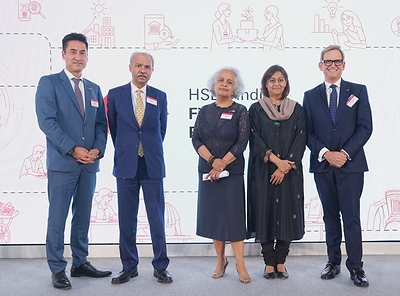
The programme was inaugurated by Pam Kaur, Group Chief Financial Officer, HSBC Holding plc together with Jo Miyake, Head-Banking, Asia and the Middle East, HSBC; Julian Wentzel, Group Chief Sustainability Officer, HSBC; Hitendra Dave, CEO, HSBC India; and Aloka Majumdar, MD, Head of Sustainability, HSBC India.
The programmme, from 2026 to 2030, will be delivered nationwide through non-profit, academic and research partners. It will focus particularly on women, youth, migrant workers, persons with disabilities, low-income households and first-time users of formal financial services. An Advisory Group of eminent professionals and sector experts will provide independent guidance, helping translate the programme’s ambition into practical, scalable and measurable outcomes.
India has made significant progress in expanding financial access. There are ~60 crore Pradhan Mantri Jan-Dhan Yojana accounts that have been opened, including ~33 crore held by women**. The Reserve Bank of India’s Financial Inclusion Index rose to 70 in March 2026 from 67 in March 2025*, reflecting gains across access, usage and quality. Yet, access alone is not enough, and the next phase must enable people to use financial services regularly, safely and confidently, supported by enhanced digital capability and consumer protection. HSBC India’s programme responds to this need by recognising financial capability as a foundational life skill that can strengthen outcomes across education, health, livelihoods and social security.
* Press Releases | Official Website of Reserve Bank of India
** Press Release: Press Information Bureau
The programme will be anchored on three pillars:
- Digital pathways to financial well-being – Enhancing adoption of technology and artificial intelligence to strengthen financial well-being of the underbanked communities. It will focus on building confidence in digital financial tools and promote their safe and responsible use.
- Financial capabilities and fraud prevention – Helping communities access and use formal financial products, make informed decisions, and identify and prevent fraud. It will address the specific risks faced by people newly entering the formal financial system or with limited digital confidence.
- Enhancing income pathways for communities – Promoting enterprise development and improve access to social protection schemes. It will help individuals and households strengthen their livelihoods, manage financial shocks and pursue more sustainable income opportunities.
Hitendra Dave, CEO, HSBC India, said, “India has built the foundations of financial inclusion at scale, but true financial well-being begins with the knowledge, confidence and practical skills to use financial services safely. The country’s digital public infrastructure has enabled citizens to access formal financial systems. As digital payments expand, and new technologies transform financial services, financial literacy and protection against fraud become essential to sustaining trust. Partnerships between industry, community, organisations, and academic institutions can help extend these capabilities to underserved communities and advance the vision of Viksit Bharat.”
Aloka Majumdar, MD, Head of Sustainability, HSBC India, added “First-time users of digital financial services can also be particularly vulnerable to phishing, identity theft and other forms of fraud which can cause financial loss and weaken trust in formal services. Our programme goes going beyond awareness-building to develop practical capability and safer financial behaviours, supporting the shift from financial access to lasting financial well-being.”
Notes to Editor:
HSBC India and Sustainability
HSBC India’s strategy to support sustainable economic growth, focuses on Community Investment (CSR interventions), Sustainable Operations, Sustainable Finance and Sustainability Risk.
The strategy is delivered through a combination of programmes, collaboration, and partnerships. We believe it requires a concerted effort between business, governments and other stakeholders on policies and programmes to support transition to a more sustainable future.
HSBC India
HSBC India offers a full range of banking and financial services through 34 branches across 22 cities. The Bank is at the forefront in arranging deals for Indian companies investing overseas and foreign investments into the country. HSBC is one of India’s leading financial services groups, with over 47,000 employees in its banking, investment banking and capital markets, asset management, insurance, software development and global resourcing operations in the country. It is a leading custodian in India.
HSBC Holdings plc
HSBC Holdings plc, the parent company of HSBC, is headquartered in London. HSBC serves customers worldwide from offices in 56 countries and territories. With assets of US$3,438bn at 30 June 2026, HSBC is one of the world’s largest banking and financial services organisations.
 View original content to download multimedia:https://www.prnewswire.com/in/news-releases/hsbc-india-commits-inr-200-crore-to-advance-financial-literacy-302909762.html

15, Oct 2026
AXISCADES’ XIDA to acquire Silicon Valley-based ITSJ business — a ready-made US base inside the AI hardware supply chain
Board approves the acquisition of ITSJ Group’s business by XIDA Inc.: qualified supplier positions with leading semiconductor-equipment makers and a hyperscaler, and a San Jose engineering and manufacturing base
- Inside the AI build-out from day one: ITSJ supplies sub-systems to two of the world’s top-five semiconductor-equipment manufacturers and to a leading hyperscale data-centre operator, with live purchase orders in hand.
- A ready-made Silicon Valley platform: design-to-build capability in San Jose — precision machining, PCB design and assembly, cable and box build, and full system integration, from prototype to production.
- Disciplined, performance-linked terms: consideration of up to US$ 7.0 million (≈ ₹67 crore), of which only US$ 2.5 million is cash at completion. The balance is XIDA shares vesting over 30 months and an earn-out of up to US$ 2.0 million tied to customer, revenue and margin milestones. As an asset purchase, ITSJ’s legacy liabilities stay with the seller.
BENGALURU, India, Oct. 15, 2026 /PRNewswire/ — AXISCADES Technologies Limited (NSE: AXISCADES) (BSE: 532395) announced that its Board of Directors has approved on October 14, 2026, the acquisition of substantially all the business assets of ITSJ Group, Inc. (“ITSJ”), a San Jose-based precision engineering and electronics manufacturer, by XIDA Inc. (“XIDA”), the group’s US AI-infrastructure company and a step-down subsidiary of AXISCADES. The transaction gives XIDA an operating base in Silicon Valley and direct supplier positions in two of the fastest-growing parts of AI hardware: semiconductor equipment and data-centre infrastructure.
Two sides of the AI build-out, one platform
Every advanced AI chip is made on equipment from a handful of toolmakers, and every AI rack has to be powered and cooled. ITSJ already sits in both supply chains. Founded in 2023, it has in under three years become a qualified supplier of sub-assemblies for semiconductor capital equipment and of data-centre cooling and infrastructure systems. Qualification with customers of this calibre usually takes years to earn; XIDA gains it from the start.
ITSJ has grown on the strength of its engineering and customer relationships. XIDA brings what is needed to scale it: capital, finance and quality systems, management depth, and the engineering bench of the AXISCADES group’s India-based design and manufacturing platform.
A US headquarters in Silicon Valley, and a tariff-resilient supply chain
On completion, XIDA plans to strengthen its global delivery capabilities, building on the engineering team that supports ITSJ today. This will create a diversified delivery model combining a US front end with Indian engineering capabilities, enhancing resilience to tariffs and evolving global trade dynamics. The acquisition advances XIDA’s focus on the physical layer of the AI build-out — data-centre cooling and semiconductor-equipment sub-systems — alongside the group’s heritage in electronics and embedded systems: from chip to cloud.
Dr. S. Ravi Narayanan, Chairman, AXISCADES Technologies, said: “AI runs on two things: the tools that make the chips, and the data centres that run them. ITSJ is XIDA’s gateway to both — supplier positions in Silicon Valley that take years to earn, ours from day one. We are delighted to welcome Chau and the ITSJ team as we build XIDA into a global AI-infrastructure company.”
About AXISCADES Technologies Limited
AXISCADES Technologies Limited (NSE: AXISCADES) (BSE: 532395) is an Indian technology group serving aerospace, defence, electronics and semiconductor customers worldwide. Its XIDA business focuses on AI infrastructure and deep technology — electronics design, semiconductor-equipment sub-systems, data-centre thermal systems and edge AI — from engineering centres in India and the United States.
www.axiscades.com
About ITSJ Group
ITSJ Group, Inc., founded in 2023 and headquartered in San Jose, California, is a precision engineering and electronics manufacturing company. It serves semiconductor-equipment and data-centre customers with CNC machining, PCB design and assembly, electrical cabinets, cable and harness assemblies, box build and system integration, from prototype to production.
Forward-looking statements
This release contains forward-looking statements, including about the proposed transaction, its timing and completion, customers, integration and expansion plans. They are based on current expectations and are subject to risks and uncertainties; actual results may differ materially. The transaction is subject to the execution of definitive agreements and the satisfaction of conditions precedent and approvals, and there is no assurance that it will be completed on the terms or timeline described, or at all. The company assumes no obligation to update these statements. This release is for information only and is not an offer or solicitation of securities in any jurisdiction.
 View original content:https://www.prnewswire.com/in/news-releases/axiscades-xida-to-acquire-silicon-valley-based-itsj-business–a-ready-made-us-base-inside-the-ai-hardware-supply-chain-302909825.html

15, Oct 2026
Huawei Proposes Next Generation OTN for AIDC-Centric All-Optical Network
VIENNA, Oct. 15, 2026 /PRNewswire/ — During NetworkX 2026, Huawei shared its vision for building the “LIGHTS” All-Optical Network at the Optical Transport Innovation Summit. Huawei outlined three waves of AI-driven opportunities for operators and explained how an AIDC-centric all-optical network, powered by Huawei’s Next Generation OTN solution, enables them to drive business growth.
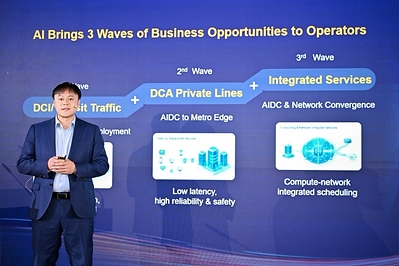
AI Drives Three Waves of Opportunities for Operators
The rapid evolution of AI unlocks three waves of opportunities for operators: DC interconnection for hyperscalers, private lines for enterprise computing power, and integrated computing and network services. This is reshaping optical transport: from a basic network serving consumer and home (ToC and ToH) users, to a business network serving enterprises (ToB) and AI; from administrative-division-based planning, to AIDC-centric planning.
NEXT GENERATION OTN Solution Enhances AIDC-Centric All-Optical Network
To seize these opportunities, operators need an AIDC-centric all-optical network. Huawei proposes the LIGHTS target network as a key priority for operators in the AI era, with six key capabilities: Low Latency, Intelligent Operation, Green Foundation, High Reliability, Tbps-level Capacity, and Security Assurance.
Gavin Gu, president of Huawei’s Optical Transmission Network Domain presented Huawei’s Next Generation OTN solution, which responds to the need to build the LIGHTS target network by covering both DCI and DCA scenarios.
For DCI, Next Generation OTN delivers 800G to 2T ultra-high-speed capacity and an OTN capacity pool, which uses minimal resources to pre-deploy capacity in multiple directions. It helps operators achieve fast time-to-market (TTM), maximize fiber capacity, and meet the Tbps-level bandwidth and rapid delivery requirements of DCI traffic.
For DCA, Huawei offers end-to-end (E2E) OXC for a meshed, one-hop direct architecture, millisecond-level WSON for guaranteed high availability, fgOTN for flexible bandwidth from 10Mbps to 1Gbps, and an integrated QKD solution for quantum encryption. In addition, Next Generation OTN has been upgraded in both hardware and software to deliver an end-to-end “zero-outage network.”
LIGHTS All-Optical Network Drives Business Growth
Powered by the LIGHTS all-optical network, operators are evolving from a bandwidth-only sales model to delivering core capabilities and value-added services. Computing-power private lines are advancing from a single bandwidth dimension to multiple dimensions covering bandwidth, latency, reliability, and security. This enables operators to offer differentiated services for different industries and improves pricing power. Meanwhile, the convergence of computing and network services is also accelerating. In Hubei, China, for example, operators are combining network and computing advantages to launch integrated services across industries such as education, healthcare and finance.
The LIGHTS all-optical network for the AI era is helping operators seize AI-driven opportunities, realize network monetization and achieve business growth. Huawei will collaborate with industry partners to advance technological innovation and business growth, accelerating the optical transport industry’s evolution into the AI era.
 View original content to download multimedia:https://www.prnewswire.co.uk/news-releases/huawei-proposes-next-generation-otn-for-aidc-centric-all-optical-network-302909845.html

15, Oct 2026
Sundaram Finance Revises Deposit Interest Rates From October 16, 2026

Chennai, Oct 15…..Effective 16th October 2026, Sundaram Finance increases Deposit Interest Rates for One Year Tenure by 0.30%and by 0.25% for Two & Three-year tenure respectively for both Regular and Senior Citizens.
·Regular: The interest rate for One-year deposits has been increased from 6.70% p.a. to 7.00% p.a. For two years, it has been increased from 7% p.a. to 7.25% p.a. & for three years it has been increased from 7.25%p.a. To 7.50%p.a.
·Senior Citizens: The interest rate for One-year deposits has been increased from 7.20% p.a. to 7.50% p.a. For two years, it has been increased from 7.50% p.a. to 7.75% p.a. & for three years it has been increased from 7.75%p.a. To 8.00%p.a.
Sundaram Finance currently has a deposit base of ₹6,088 crore, reflecting the continued trust and confidence of its deposit holders. Company enjoys AAA rating Stable from both ICRA and CRISIL, denoting highest safety for deposits
15, Oct 2026
TAT spotlights 2026 Nakhon Phanom Illuminated Boat Procession on the Mekong
Signature event moves towards “Must-Experience in Thailand” status through celebration of faith, illuminated craftsmanship and Mekong culture
BANGKOK, Oct. 15, 2026 /PRNewswire/ — The Tourism Authority of Thailand (TAT) is bringing the 2026 Nakhon Phanom Illuminated Boat Procession to wider international audiences as one of Thailand’s distinctive Mekong traditions. Taking place from 16–27 October around Nakhon Phanom Provincial Hall and the Mekong riverfront along Sunthorn Vijit Road, the celebration culminates on 26 October, marking the end of Buddhist Lent with illuminated boats, faith, craftsmanship and community spirit.

Ms. Thapanee Kiatphaibool, TAT Governor, said, “The Nakhon Phanom Illuminated Boat Procession is a powerful expression of faith, craftsmanship and Mekong community identity. TAT is elevating this living tradition by linking heritage, creativity and participation to create meaningful experiences and greater value for local communities. The evening programme also supports TAT’s Night Economy direction by encouraging longer stays and deeper exploration of Nakhon Phanom. In this way, distinctive signature events can develop into experiences visitors recognise as truly ‘Must-Experience in Thailand’.”
The festival combines Buddhist traditions, local craftsmanship, cultural performances, regional cuisine, community products and participatory experiences rooted in the province’s riverside way of life across 12 days and nights. Daily activities include illuminated-boat displays, boat-making skill insights, cultural performances and community showcase, while boats from TAT Nakhon Phanom Office, the Nakhon Phanom Provincial Administration and Nakhon Phanom University appear on selected evenings.
The main Illuminated Boat Festival on 26 October begins at 18.00, led by a TAT Nakhon Phanom Office showcase boat followed by 12 illuminated boats representing the province’s 12 districts. Competing in beauty and creativity categories for a royal trophy, each will take to the Mekong at 20-minute intervals. A non-competitive Nakhon Phanom University showcase boat then joins at 20.00, with the final district entry scheduled at 22.20.
Visitors can also see 13 ancient-style illuminated boats, 12 representing the zodiac signs and one collective boat for those who do not know their birth year. Visitors are invited to float banana-stalk boats and lamps on the Mekong from 16–26 October as part of traditional rituals associated with warding off misfortune and paying respect to the river, culminating with a ceremony at 15.00 on 26 October. The festival’s spiritual foundations are also expressed through merit-making, alms-giving, ritual offerings, and dances paying homage to Phra That Phanom.
The wider programme includes longboat races from 22–25 October, markets featuring locally made products, regional cuisine and community specialities, plus a traditional communal meal, pha khao laeng, showcasing local dishes and hospitality each evening. Nightly Molam performances and appearances by leading Isan artists add to the programme, connecting the illuminated boat tradition with Nakhon Phanom’s wider Mekong identity through riverside life, craftsmanship, food, music and community participation.
The Nakhon Phanom Illuminated Boat Procession forms part of TAT’s direction to elevate distinctive signature events towards “Must-Experience in Thailand” status. Alongside the Ubon Ratchathani Candle Procession and Sakon Nakhon Christmas Star Parade, the initiative presents Thailand’s living culture and community creativity as compelling reasons to discover destinations beyond established tourism centres.

 View original content to download multimedia:https://www.prnewswire.co.uk/news-releases/tat-spotlights-2026-nakhon-phanom-illuminated-boat-procession-on-the-mekong-302909664.html



