


15, Oct 2026
TAT spotlights 2026 Nakhon Phanom Illuminated Boat Procession on the Mekong
Signature event moves towards “Must-Experience in Thailand” status through celebration of faith, illuminated craftsmanship and Mekong culture
BANGKOK, Oct. 15, 2026 /PRNewswire/ — The Tourism Authority of Thailand (TAT) is bringing the 2026 Nakhon Phanom Illuminated Boat Procession to wider international audiences as one of Thailand’s distinctive Mekong traditions. Taking place from 16–27 October around Nakhon Phanom Provincial Hall and the Mekong riverfront along Sunthorn Vijit Road, the celebration culminates on 26 October, marking the end of Buddhist Lent with illuminated boats, faith, craftsmanship and community spirit.

Ms. Thapanee Kiatphaibool, TAT Governor, said, “The Nakhon Phanom Illuminated Boat Procession is a powerful expression of faith, craftsmanship and Mekong community identity. TAT is elevating this living tradition by linking heritage, creativity and participation to create meaningful experiences and greater value for local communities. The evening programme also supports TAT’s Night Economy direction by encouraging longer stays and deeper exploration of Nakhon Phanom. In this way, distinctive signature events can develop into experiences visitors recognise as truly ‘Must-Experience in Thailand’.”
The festival combines Buddhist traditions, local craftsmanship, cultural performances, regional cuisine, community products and participatory experiences rooted in the province’s riverside way of life across 12 days and nights. Daily activities include illuminated-boat displays, boat-making skill insights, cultural performances and community showcase, while boats from TAT Nakhon Phanom Office, the Nakhon Phanom Provincial Administration and Nakhon Phanom University appear on selected evenings.
The main Illuminated Boat Festival on 26 October begins at 18.00, led by a TAT Nakhon Phanom Office showcase boat followed by 12 illuminated boats representing the province’s 12 districts. Competing in beauty and creativity categories for a royal trophy, each will take to the Mekong at 20-minute intervals. A non-competitive Nakhon Phanom University showcase boat then joins at 20.00, with the final district entry scheduled at 22.20.
Visitors can also see 13 ancient-style illuminated boats, 12 representing the zodiac signs and one collective boat for those who do not know their birth year. Visitors are invited to float banana-stalk boats and lamps on the Mekong from 16–26 October as part of traditional rituals associated with warding off misfortune and paying respect to the river, culminating with a ceremony at 15.00 on 26 October. The festival’s spiritual foundations are also expressed through merit-making, alms-giving, ritual offerings, and dances paying homage to Phra That Phanom.
The wider programme includes longboat races from 22–25 October, markets featuring locally made products, regional cuisine and community specialities, plus a traditional communal meal, pha khao laeng, showcasing local dishes and hospitality each evening. Nightly Molam performances and appearances by leading Isan artists add to the programme, connecting the illuminated boat tradition with Nakhon Phanom’s wider Mekong identity through riverside life, craftsmanship, food, music and community participation.
The Nakhon Phanom Illuminated Boat Procession forms part of TAT’s direction to elevate distinctive signature events towards “Must-Experience in Thailand” status. Alongside the Ubon Ratchathani Candle Procession and Sakon Nakhon Christmas Star Parade, the initiative presents Thailand’s living culture and community creativity as compelling reasons to discover destinations beyond established tourism centres.

 View original content to download multimedia:https://www.prnewswire.co.uk/news-releases/tat-spotlights-2026-nakhon-phanom-illuminated-boat-procession-on-the-mekong-302909664.html

- 0
- By Sai Krishna

15, Oct 2026
Maaza Brings the Spirit of Aamontron to Bengal’s Pujo Celebrations
Inspired by the traditional Bengali mango leaf toran, Maaza brings the spirit of aamontron to life, celebrating the joy of welcoming everyone home for Pujo
KOLKATA, India, Oct. 15, 2026 /PRNewswire/ — This Pujo, Maaza®, India’s homegrown iconic mango drink, is bringing Bengal’s tradition of aamontron, or invitation, to life through Maaza Aamontron. Drawing inspiration from the traditional mango leaf toran that adorns Bengali doorways during auspicious occasions, the initiative celebrates the spirit of homecoming and hospitality through a festive installation at the heart of Pujo celebrations.

In Bengali households, the aamra pallav, a toran made with mango leaves, symbolises auspicious beginnings and a warm welcome to those who arrive. Taking inspiration from this familiar household ritual, Maaza is reimagining the traditional toran as a festive gateway, connecting the brand’s mango identity with a cultural practice deeply rooted in Bengal.
As part of Maaza Aamontron, visitors can experience the installation at Dum Dum Tarun Dal from 14 to 20 October 2026. The experience brings the traditional mango leaf toran into the public celebration, offering visitors an opportunity to engage with a familiar Bengali custom in a new setting.
The initiative also brings a thoughtful approach to festive décor, with Maaza using a compostable material for its torans. This allows the festive installation to celebrate Bengal’s traditions while considering sustainability beyond celebrations.
Sunainika Singh, Senior Director, Marketing – Nutrition, Coca-Cola India and Southwest Asia, said, “Pujo brings in the essence of homecomings, community and the warmth with which Bengal welcomes everyone. The mango leaf toran is a beautiful expression of this spirit, marking auspicious beginnings and extending an invitation to all who arrive. With Maaza Aamontron, we wanted to bring this familiar tradition into the larger canvas of Pujo. We have also explored how sustainable material innovation can be part of the festive experience, considering the life of an installation beyond the celebrations.”
Extending this spirit of welcome beyond the installation, Maaza will also bring the invitation to readers across West Bengal through a full-page invite in a prominent regional newspaper, inviting them to be part of the Pujo celebrations.
About Coca-Cola
Coca-Cola in India is one of the country’s leading beverage companies, offering a range of high-quality and refreshing beverage options to consumers. The company, in line with its vision of ‘Beverages For Life’ offers a wide portfolio of products which includes hydration, sports, sparkling, coffee, tea, nutrition, juice and dairy based products. In India its beverage range includes Coca-Cola, Coca-Cola Zero Sugar, Diet Coke, Thums Up, Thums Up XForce, Charged, Fanta, Limca, Sprite, Sprite Zero, Kinley Soda, Rimzim, Maaza, Minute Maid range of juices and Honest Tea. The Company also offers hydration beverages including Limca GlucoCharge, Smartwater, Kinley, Kinley Copper, Dasani and Bonaqua packaged drinking water. Premium products constitute Schweppes’ range and Smartwater. In addition, it offers a Costa Coffee range of tea and coffee. The Company is constantly transforming its portfolio, from reducing sugar in its drinks to bringing innovative new products to market.
The Company along with its owned bottling operations and franchise bottling partners has a strong network of over six million retail outlets through which it refreshes millions of consumers across the country. It seeks to positively impact people’s lives, communities, and the planet through water and packaging initiatives, sustainable agriculture and emission reductions across its value chain.
Globally together with its bottling partners, The Coca-Cola Company employs more than 700,000 people, helping to bring economic opportunity to local communities worldwide.
Learn more at www.cocacolacompany.com and follow us on Twitter, Instagram, Facebook and LinkedIn.

 View original content to download multimedia:https://www.prnewswire.com/in/news-releases/maaza-brings-the-spirit-of-aamontron-to-bengals-pujo-celebrations-302909721.html

15, Oct 2026
Proppy.ai Takes a Bengaluru-Bound Couple from Home Search to Booking in Just 72 Hours with AI-Led Discovery
How Proppy.ai helped two US-based buyers move from a six-month search to a Bengaluru home booking.
BENGALURU, India, Oct. 15, 2026 /PRNewswire/ — After more than six months of searching, two software developers living in the US found a 3BHK apartment in Bengaluru within 72 hours using Proppy’s AI-powered smart search, and were then guided by human experts to make a confident home-buying decision.

For Prasad and Sandhya, buying a home in Bengaluru was about planning for their future in India while making a practical decision in the present. Both software developers living in the US had spent more than six months looking for a 3BHK apartment for under ₹1.5 crore.
The plan was to have a home to return to when they moved back to India and rent it out in the meantime. But finding the right property from overseas was not straightforward. The couple had researched real estate agents and real estate portals in Bangalore, but said they wanted more transparent information before committing to a purchase.
They turned to Proppy.ai, an AI-powered property search platform in Bangalore that combines AI-assisted property evaluation with human guidance.
Proppy’s AI helped evaluate properties against the couple’s requirements, while a Dedicated Relationship Manager helped them understand the AI-curated options, compare projects, and assess potential risks.
This combination of AI property search in Bangalore and personalized guidance is intended to make property decisions more informed and the buying process easier to navigate, and more importantly – buy confidently.
For Prasad and Sandhya, this support helped them understand the risks associated with certain projects and move away from options that did not meet their expectations. With clearer information, guidance from their Dedicated Relationship Manager, and a more structured way to evaluate properties against their budget and long-term plans, they could make a more informed decision using 72 Hour Home Buying Challenge. The process culminated in a property booking within 72 hours, following a search that had lasted more than six months.
“Technology in real estate has mostly worked for the seller, helping builders find buyers. We built our AI to work for the buyer. It reads the information, asks the difficult questions, and helps buyers make decisions with greater clarity. Our experts check its work, and the buyer makes the final call,” said Niranjan, Founder, Proppy.ai.
Through its combination of AI-assisted search, human guidance, and post-booking support, Proppy.ai aims to help buyers move from property discovery towards informed ownership decisions.
About Proppy.ai
Proppy.ai is a property search and transaction platform in India, operated by Lit Proptech Pvt Ltd and based in Bengaluru. It uses AI, supported by human experts, to help buyers find, evaluate, shortlist, and negotiate residential properties, and provides access to relevant services throughout the ownership journey.
Frequently Asked Questions (FAQs)
1. How does Proppy.ai help buyers search for properties in Bangalore?
Proppy.ai uses AI-assisted property search and evaluation to help buyers assess residential properties against their requirements, understand project-related risks, and compare available options. A Dedicated Relationship Manager provides human guidance throughout the buying journey, right up to housewarming.
2. Can NRI’s overseas buyers search for property in Bangalore through Proppy.ai?
Proppy.ai’s AI-assisted property search and Dedicated Relationship Manager can help buyers navigate property options and understand the buying process. For overseas buyers, this support can be particularly useful when evaluating properties in Bengaluru while living abroad. Buyers should independently confirm any location-specific eligibility and transaction requirements that apply to them.
Social Links:
Instagram: https://www.instagram.com/proppy.ai/?hl=en
Facebook: https://www.facebook.com/people/proppyai/61577802043802/
YouTube: https://www.youtube.com/@proppy-ai
LinkedIn: https://www.linkedin.com/company/107919472/
Website: https://www.proppy.ai
 View original content to download multimedia:https://www.prnewswire.com/in/news-releases/proppyai-takes-a-bengaluru-bound-couple-from-home-search-to-booking-in-just-72-hours-with-ai-led-discovery-302909726.html

15, Oct 2026
AAEON Expands UP Brand Portfolio with New UP Display Kit to Meet Edge Computing and HMI Needs
AAEON’s first UP-branded display system delivers fanless edge computing, industrial connectivity, and a 15.6-inch multi-touch interface in one compact platform.
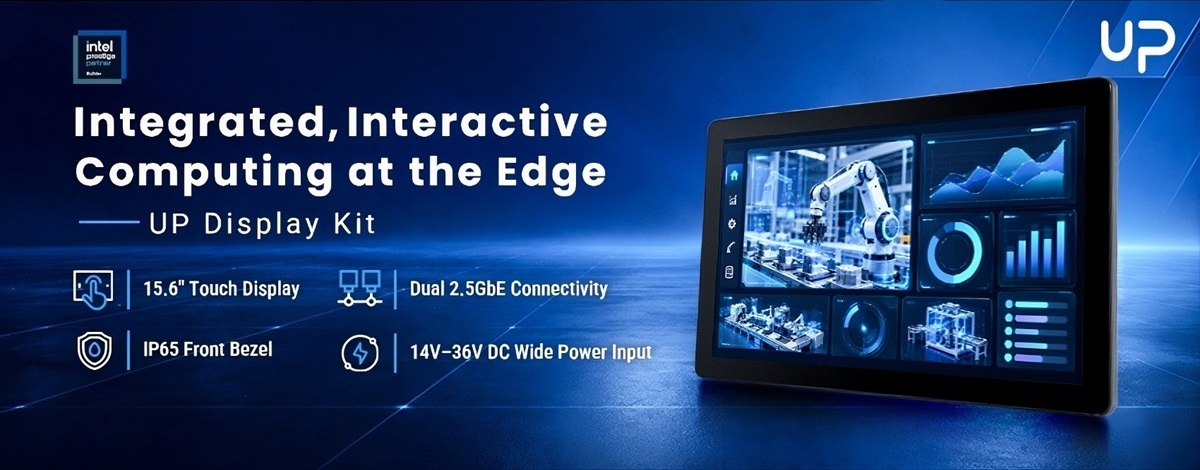
Taipei, Taiwan – Oct 15: Leading IPC provider AAEON (Stock Code: 6579) has released the UP Display Kit, an edge computing and HMI platform in one Intel® Processor N-series-powered compact system. The device is the first of its kind under the UP brand, which primarily targets the developer board and edge PC markets, representing an expansion of the brand’s product offerings.
The system has been made available in a range of SKUs featuring CPUs from across both the Alder Lake-N and Twin Lake generations of the efficiency-focused Intel® processor series, including the octa-core Intel® Core™ 3 Processor N355 and Intel® Core™ i3-N305 Processor, as well as the increasingly popular Intel® Processor N97.
AAEON states that the primary motivation behind the UP Display Kit is to integrate the user-friendliness of a high-spec display unit with the utility and reliability of an industrial edge PC. As such, industrial HMI, self-service kiosks, and smart retail terminals have been identified as potential applications for the product.
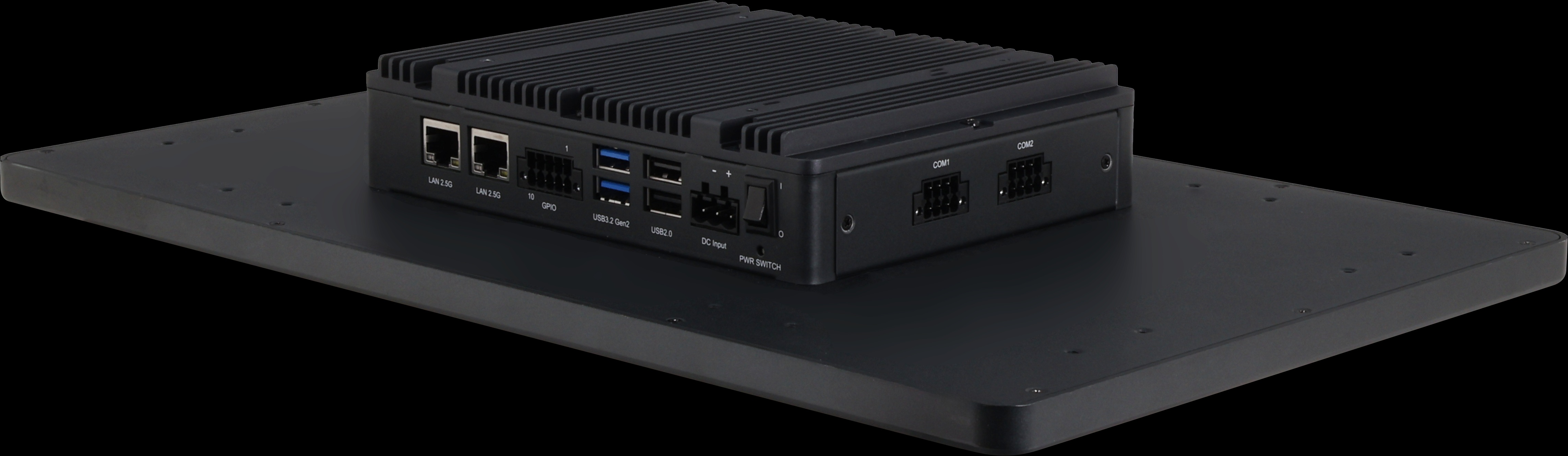
The UP Display Kit features a 15.6″ projected capacitive multi-touch display and OS support for both Windows® 11 LTSC and Ubuntu 22.04 LTS for UI design flexibility. Meanwhile, the device provides a number of interfaces conducive to its intended deployment environments, beginning with two 8-pin terminal block connectors for software-configurable RS-232/422/485 and an 8-bit GPIO. Joining these industrial I/Os are dual RJ-45 ports, each supporting 2.5GbE, and four USB ports (two USB 3.2 Gen 2, two USB 2.0).
For expansion, the UP Display Kit provides an M.2 2230 E-Key for Wi-Fi module installation, as well as two M.2 2280 M-Key slots, one offering a 4-lane PCIe Gen 3 interface for NVMe storage support and one dual-lane PCIe interface. Alongside these, the system supports up to 16GB of DDR5 via a SODIMM slot, while more conventional storage can be obtained through the option of up to 128GB of eMMC.
The display kit is designed for reliable, quiet operation in rugged environments, as illustrated by its IP65-rated front bezel, which grants protection against dust and water ingress. In addition to this, the kit supports either a 14V to 36V DC input with a dedicated ground screw or a standard 12V input, depending on configuration. As is typical of AAEON platforms designed for outdoor, industrial, or kiosk deployment, the system relies on passive cooling, using a heatsink within its chassis to ensure adequate dissipation.
15, Oct 2026
Bihar Boat Tragedy: 13 Children Dead, Seven Rescued in Vaishali; PM Modi Announces Ex-Gratia
Vaishali, Oct 15: In a heartbreaking incident, at least 13 children aged 15 years or below died after a boat carrying them capsized in Bihar’s Vaishali district on Tuesday evening. Seven people were rescued and taken to a hospital, where their condition was reported to be stable.
Representational Image
The incident occurred at around 8:30 pm when a boat carrying approximately 15 to 20 children capsized as they were travelling to attend a feast in a neighbouring village. The tragedy triggered an emergency rescue operation involving disaster response personnel and local divers.
Speaking to reporters, Vaishali District Magistrate Varsha Singh confirmed that 13 children had been found dead. She said the rescued individuals were taken to NMCH for treatment and that their condition was stable.
An SDRF team was deployed at the site, while local divers assisted in the search and rescue operation. Authorities were also working to establish whether anyone else remained missing.
PM Modi Announces Financial Assistance
Prime Minister Narendra Modi expressed deep grief over the loss of lives and extended condolences to the bereaved families.
In a statement shared by the Prime Minister’s Office on X, Modi said the tragedy was deeply painful and expressed hope for the speedy recovery of those injured. He also said the local administration was providing assistance to those affected.
The Prime Minister announced an ex-gratia payment of ₹2 lakh from the Prime Minister’s National Relief Fund (PMNRF) to the next of kin of each deceased person. Those injured in the incident will receive ₹50,000 in financial assistance.
Bihar CM Announces ₹4 Lakh Compensation
Bihar Chief Minister Samrat Choudhary also announced financial assistance of ₹4 lakh for the family of each deceased victim.
The tragedy has cast a pall of gloom over the affected area, with families facing the devastating loss of young children. The circumstances surrounding the capsizing are being examined as authorities continue to assess the incident.
Further details regarding the rescue operation and the circumstances that led to the tragedy are awaited.
15, Oct 2026
BIX 2026 Counts Down to Opening with Post-GLP-1 Session on the Next Obesity Treatment Market
-
Billy Cho , PE and Head of JVC, CBC Group
-
Huizhong Xiong , Vice President of Innovent Biologics
-
Inyoung Choi , PhD, Senior Executive Vice President and Head of R&D Division of Hanmi Pharmaceutical
-
Seulki Lee , CEO of D&D Pharmatech
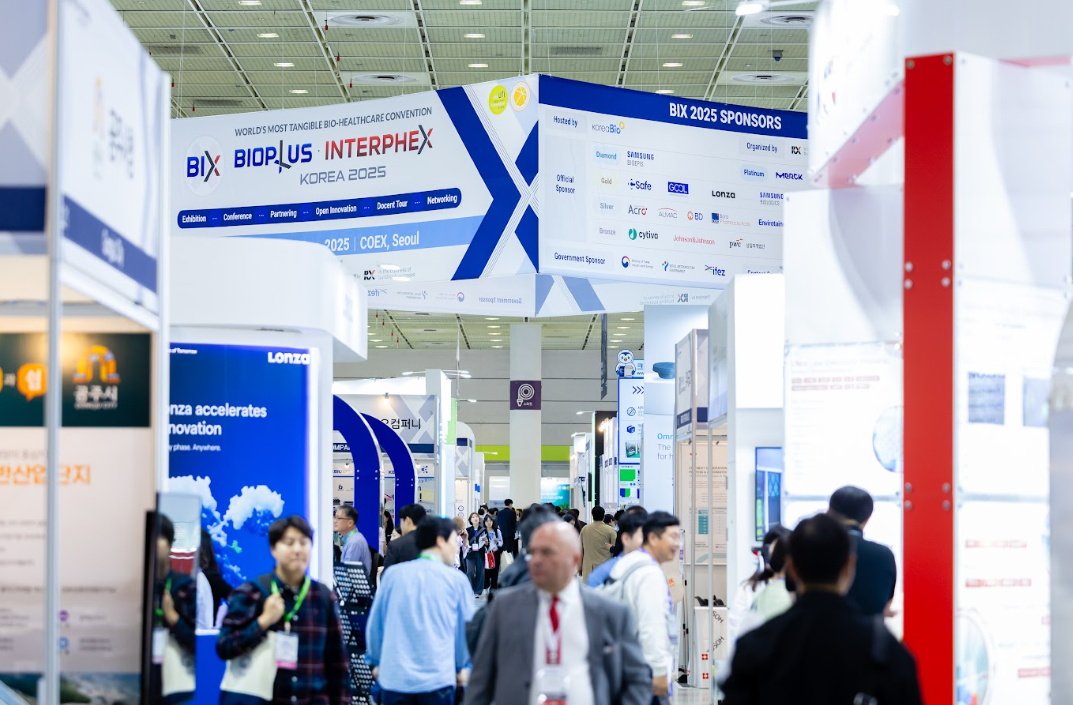
“The bioindustry’s business strategies are evolving rapidly as next-generation therapeutics, advances in AI, shifting investment and M&A dynamics, and intensifying global competition converge,” said Seung-kyou Lee, Vice President of Korea Biotechnology Industry Organization (KoreaBIO). “We hope BIX 2026 will be a platform where key players across the industry come together to share real-world market insights and strategies and discover new partners and business opportunities.”
15, Oct 2026
Railway Employees to Receive 78-Day Bonus Worth ₹2,009 Crore Ahead of Festive Season
New Delhi, Oct 15: In a major festive-season announcement, the Union Cabinet has approved a productivity-linked bonus equivalent to 78 days’ wages for around 11.41 lakh eligible railway employees for the financial year 2025-26.

Representational Image
The total financial outlay for the bonus is estimated at ₹2,009.61 crore, with each eligible employee entitled to receive a maximum payment of ₹17,951, according to the announcement.
The bonus recognises the contribution of railway personnel to the operational performance of Indian Railways, particularly in managing passenger services and freight transportation across the country.
Who Will Receive the Bonus?
The productivity-linked bonus will cover eligible non-gazetted railway employees across various categories. These include track maintainers, locomotive pilots, train managers, station masters, supervisors, technicians and other Group C staff.
The annual payment is traditionally announced ahead of the festive season, providing financial support to railway employees and recognising their contribution to the functioning of one of the world’s largest railway networks.
Railways Records Strong Freight and Passenger Traffic
The government cited Indian Railways’ operational performance during 2025-26 as part of the context for the bonus announcement.
According to the figures provided, the national transporter recorded freight loading of 1,670 million tonnes during the financial year. It also carried nearly 7.41 billion passengers over the same period.
Railway employees play a key role in maintaining train operations, ensuring passenger services run smoothly and facilitating the movement of goods across the country.
Bonus to Recognise Employees’ Contribution
The productivity-linked bonus scheme is intended to reward eligible railway personnel for their contribution to operational efficiency and overall performance. The payment also comes ahead of major festivals, including Durga Puja and Dussehra, when household expenditure typically rises.
With a payout exceeding ₹2,000 crore, the approval covers a substantial workforce across the railway network. The maximum bonus of ₹17,951 will apply to eligible employees in accordance with the applicable scheme provisions.
The decision underscores the importance of railway employees in sustaining passenger and freight operations while supporting the continued functioning of India’s extensive rail transport system.
15, Oct 2026
Altair Semiconductor Adds Iridium NTN Direct Support to ALT1350 and ALT1550 IoT Chipsets
MCLEAN, Va., Oct. 15: Iridium Communications Inc. (Nasdaq: IRDM), a leading provider of global voice, data, aircraft surveillance, and positioning, navigation, and timing (PNT) satellite services, today announced that Altair Semiconductor, a world leader in cellular IoT chips, is integrating Iridium NTN Direct℠ capability into Altair’s ALT1350 and next-generation ALT1550 IoT chipset platforms. With terrestrial cellular IoT and Iridium satellite connectivity on a single chipset, device manufacturers, module makers and mobile network operators (MNOs) will be able to extend IoT connectivity beyond the reach of terrestrial networks through the Iridium satellite network, without adding a separate satellite modem to their designs.
The partnership combines Altair’s cellular IoT chipset technology, among the most highly integrated low-power connectivity solutions available, with Iridium’s 3GPP standards-based non-terrestrial network (NTN) service, giving device manufacturers another chipset option for products that need connectivity beyond terrestrial cellular coverage. With the ultra-low-power ALT1350, these connectivity requirements can include asset tracking, logistics, smart metering and utilities, agriculture, vehicle telematics, industrial monitoring and remote infrastructure. With the ALT1550, these capabilities extend to a new generation of AI-powered 5G eRedCap devices, such as smart glasses, AI assistants and other wearables, that need to stay connected wherever they go.
“Altair has deep experience developing highly integrated, low-power IoT solutions, and we’re excited to work together to extend their reach with Iridium’s truly global satellite network,” said Tim Last, executive vice president, Iridium. “As a market leader in satellite IoT, Iridium is offering device manufacturers a powerful new way to develop connected products. Integrating Iridium NTN Direct into Altair’s chipsets will enable solutions and applications that require reliable, low-power connectivity beyond the limits of terrestrial networks.”
“Adding Iridium NTN Direct to our ultra-low-power LTE-M/NB-IoT ALT1350 and 5G eRedCap ALT1550 chipsets reflects our commitment to giving customers greater flexibility in how and where their IoT devices connect,” said Dima Feldman, VP Product Management and Marketing, Altair Semiconductor. “With Iridium’s truly global LEO satellite connectivity alongside terrestrial cellular, device manufacturers can more easily develop solutions that will reliably work anywhere they’re deployed.”
Iridium NTN Direct leverages Iridium’s fully operational, LEO satellite constellation and globally coordinated L-band spectrum to extend standards-based connectivity beyond terrestrial networks. The service is designed to support NB-IoT and direct-to-device (D2D) applications using compatible 3GPP standards-based chipsets, providing MNOs, chipset manufacturers and device makers with a path to extend connectivity through the Iridium satellite network.
Altair joins a growing ecosystem of partners bringing the Iridium NTN Direct service to market. A combination of chipmakers, module manufacturers, OEMs, device makers, and IoT developers is leading the next generation of NTN-cellular integration with Iridium NTN Direct.
15, Oct 2026
ALPS appoints Brian Turnbow to lead the development of next-generation AI data centers
The Italian scale-up has appointed Turnbow to lead its technical expansion into artificial intelligence and high-performance computing, with an energy-to-compute approach that aims to harness renewable energy sources and reuse existing assets to develop more sustainable compute infrastructure.
TRENTO, Italy, Oct. 15, 2026 /PRNewswire/ — ALPS announces the appointment of Brian Turnbow as Technical Director for AI. Founded in Trentino in 2018 and operating across four continents, the company is applying its expertise in designing, building and operating data centers integrated with energy systems to AI and HPC.

Access to power is one of the main constraints on AI infrastructure development. According to Terna data as of 31 August 2026, data center grid connection requests in Italy totalled more than 100 GW, up from around 30 GW at the end of 2024 — a rise that makes site selection and grid connection lead times critical.
ALPS’s energy-to-compute approach is based on a deliberate choice: locating data centers where energy is already available, including outside major hubs, to reduce reliance on congested areas of the grid. The company aims to integrate renewable energy sources and redevelop disused industrial sites, reusing existing grid connections, buildings and other assets wherever technically feasible. The aim is to develop more sustainable compute infrastructure, making use of local resources and, through asset reuse, limiting land take and reducing the need for new construction. This expansion complements ALPS’s ongoing mining operations, which continue in line with its business plan.
Turnbow will lead ALPS’s AI/HPC technical strategy, from assessing architectures and sites to engaging with technology and industrial partners. Italy will be a priority market. ALPS intends to bring its international expertise back to Italy and work with Italian engineering and industrial companies, drawing on their expertise in projects abroad as well.
“Italy and Europe have energy resources, industrial assets and technical expertise we can harness,” says Francesco Buffa, CEO and co-founder of ALPS. “Through our energy-to-compute approach, we want to turn the energy and industrial potential of the regions in which we operate into a competitive advantage and help narrow Europe’s AI gap.”
Turnbow brings over 25 years’ experience in telecommunications and digital infrastructure, having held technical roles at TWT, Unidata and CDLAN. He serves on the board of ITNOG.
“AI infrastructure starts well before GPU deployment,” says Brian Turnbow. “Every project must start with the workloads it needs to support and clients’ requirements, not just the available power. My goal is to translate these requirements into coherent design decisions, building flexible, scalable and sustainable computing capacity while making use of renewable energy sources and existing assets.”
About ALPS
ALPS designs, builds and operates data centers for energy- and compute-intensive applications, combining energy expertise with data center engineering and operations. Its international growth has been supported by Azimut through a €40 million transaction in 2023 and a €105 million club deal in 2024.
For more information: www.alps.it
 View original content to download multimedia:https://www.prnewswire.co.uk/news-releases/alps-appoints-brian-turnbow-to-lead-the-development-of-next-generation-ai-data-centers-302907479.html

15, Oct 2026
SailPoint creates flexible, high-performance collaboration spaces with Kramer AV
Integrated Kramer solution enables SailPoint’s Pune office to seamlessly transform two independent meeting rooms into one larger collaboration environment, with professional audio, 4K video, wireless collaboration and intuitive control.
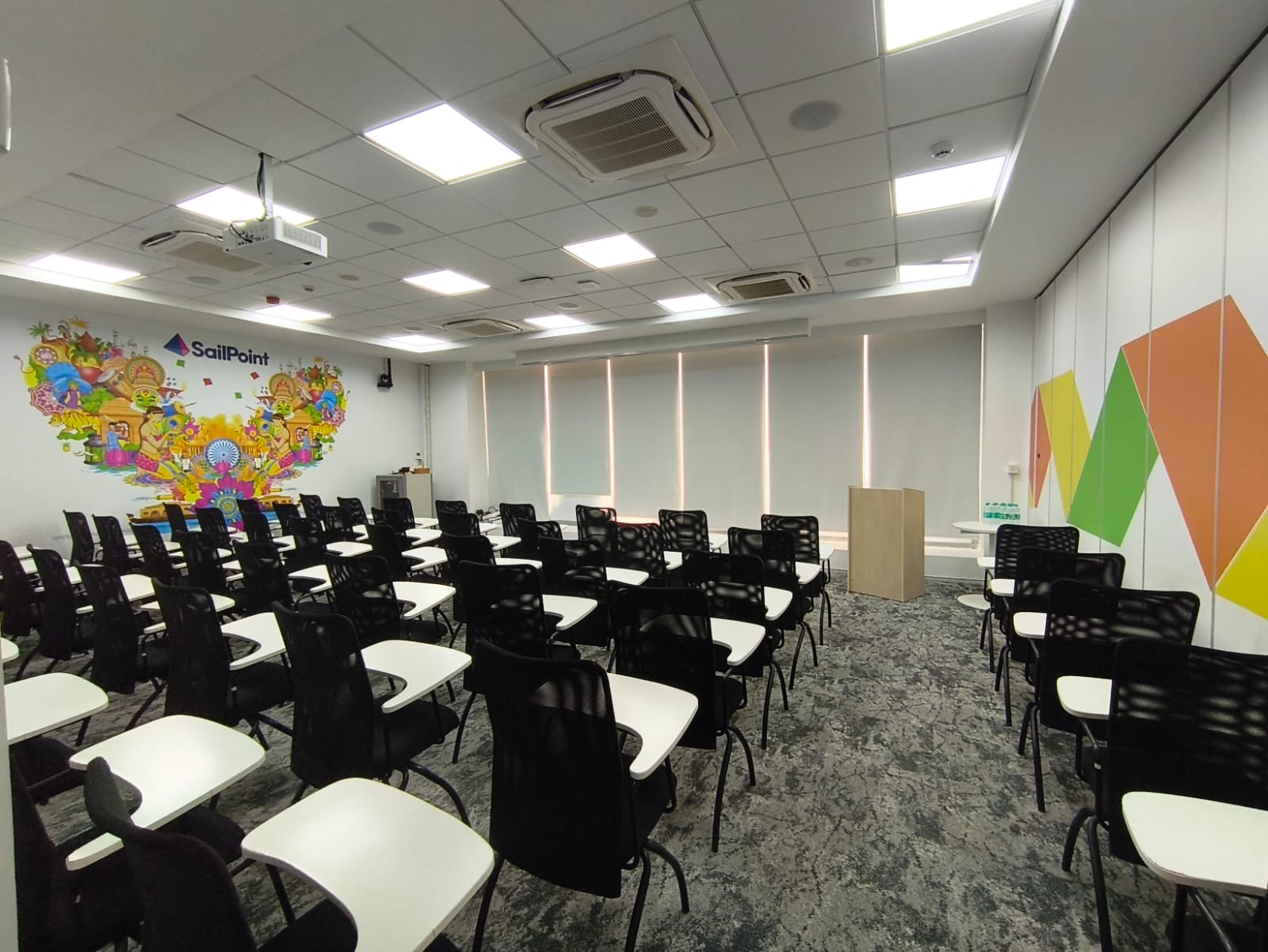
Tel Aviv, Israel – Oct 15 — Today’s workplace is more fluid than ever. Teams gather in person one hour, collaborate with colleagues across continents the next, and often need meeting spaces that can change just as quickly as the agenda itself. At its Pune office in India, SailPoint Technologies has embraced that flexibility, creating an intelligent collaboration environment powered by Kramer that supports meetings of different sizes and formats.
Founded in 2005, SailPoint Technologies is a global leader in enterprise identity security, helping organizations protect digital identities across increasingly complex IT environments. With collaboration playing an important role in its global operations, SailPoint required meeting spaces that could adapt easily to different needs while providing a consistent experience for both in-room and remote participants.
At the heart of the project was a common but complex AV challenge: enabling two neighboring meeting rooms to operate independently for everyday meetings, while also allowing them to become one larger space for executive presentations, training sessions and town hall events.
When the rooms are combined, the audio, video, USB and control environment also needs to work as one. When separated, each room needs to return to independent operation — without users having to manually reconfigure the technology.
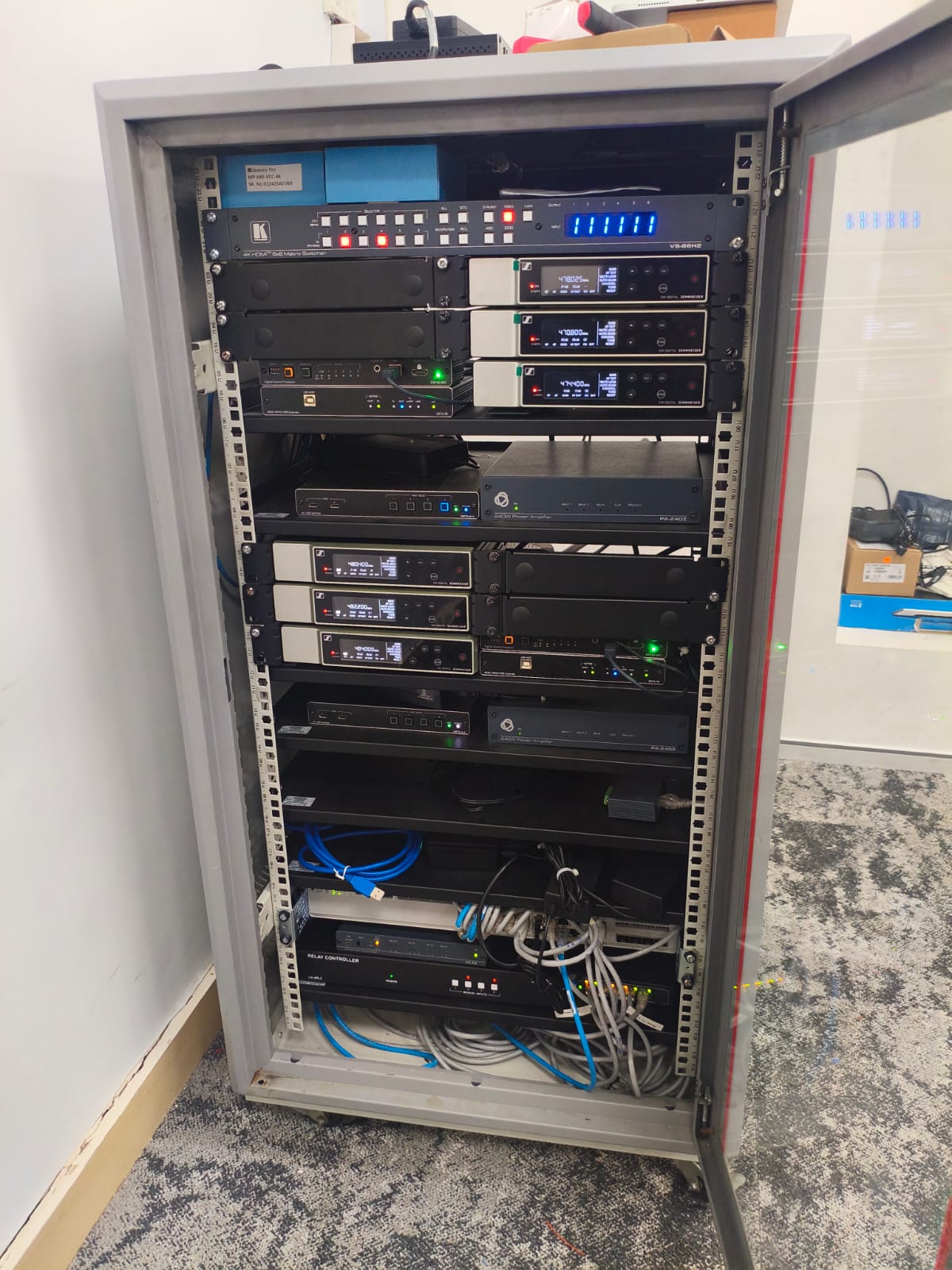
SailPoint partnered with SRSG Broadcast India Pvt. Ltd. to design and deliver a fully integrated Kramer solution combining professional audio, 4K video distribution, wireless collaboration, USB connectivity and centralized room control within a dedicated AV network.
At the touch of a button, users can select the required room configuration, with the underlying AV systems working together to support the selected environment. The result is a consistent experience whether the space is being used for a small team meeting, hybrid collaboration or a larger company event.
Flexible video and collaboration
At the core of the video architecture is the Kramer VS-66H2 matrix switcher, providing flexible routing of multiple video sources to displays across the rooms.
Kramer SWT3-22-HU-WP-T wall plates provide USB-C and HDMI connectivity for laptops, while Kramer VIA Connect3 enables wireless presentation and collaboration. This gives employees the flexibility to connect and share content in the way that best suits the meeting.
For long-distance signal distribution, Kramer EXT3-TR and TP-583R HDBaseT solutions transport 4K60 video and control signals over structured cabling, with USB extension provided by the EXT3-TR, creating a reliable infrastructure capable of supporting the different room configurations.
Clear, consistent hybrid communication
Professional audio was an equally important part of the design, particularly when the spaces are used for hybrid meetings.
Dual Kramer DSP-62-AEC digital signal processors provide acoustic echo cancellation, automatic microphone mixing and noise suppression, with dedicated processing logic supporting both independent and combined room configurations.
Audio is amplified through the Kramer PA-240Z and distributed through ceiling loudspeakers, providing consistent coverage across the spaces and supporting clear communication between in-room and remote participants.
Hybrid collaboration is further simplified through the Kramer SWT3-41-U, which enables cameras, microphones and other USB peripherals to be shared between the rooms. This removes the need to manually reconnect USB equipment when the room configuration changes and supports BYOD workflows across conferencing platforms such as Microsoft Teams and Zoom.
One-touch room control
Bringing the complete environment together is the Kramer KC-Virtual Brain1, coordinating video routing, audio processing, USB management and room-combine functionality through a centralized control platform.
Kramer RC-308 wall controllers provide straightforward one-touch operation for everyday users, while an Apple iPad interface provides access to additional controls when required.
Users can select Room 1, Room 2 or Combined mode, with the system coordinating the required AV functions behind the scenes. This reduces the complexity typically associated with divisible meeting spaces and enables users to focus on the meeting rather than the technology supporting it.
“This project demonstrates how intelligent system design and the Kramer ecosystem can transform modern meeting environments into flexible, high-performance collaboration spaces,” commented Ashish Papadkar, IT Support Specialist at SRSG Broadcast India Pvt. Ltd. “The seamless room management and centralized control architecture give SailPoint the operational simplicity and enterprise-grade reliability needed to support different meeting formats.”
For SailPoint’s IT team, the unified architecture also simplifies the environment that needs to be supported. A dedicated AV network provides a segregated infrastructure for the collaboration technology, while the integrated approach makes ongoing maintenance and future expansion easier to manage.
The result is a flexible collaboration environment designed to adapt from everyday meetings to hybrid sessions, training and larger events without requiring users to think about the technology behind it. Whether the rooms operate independently or as one combined space, the same Kramer infrastructure supports consistent video, audio, USB connectivity and control.


