


24, Jul 2026
CEPA Boosts UAE to India’s Third-Largest Trade Partner
New Delhi, July 24: The United Arab Emirates (UAE) has emerged as India’s third-largest trading partner under the Comprehensive Economic Partnership Agreement (CEPA), highlighting the growing strength of bilateral trade and economic cooperation between the two nations.
The milestone reflects the positive impact of the CEPA in enhancing market access, facilitating cross-border trade, and creating new opportunities for businesses across key sectors, including manufacturing, gems and jewellery, food processing, pharmaceuticals, engineering goods, and services.
Speaking on the occasion, officials emphasized that the agreement has significantly accelerated trade flows, strengthened investment partnerships, and deepened commercial engagement between India and the UAE. The continued expansion of economic ties is expected to support innovation, job creation, and sustainable economic growth in both countries.
The Government reaffirmed its commitment to leveraging the CEPA framework to further boost exports, attract investments, and enhance collaboration in emerging sectors such as technology, logistics, renewable energy, and digital commerce.
As India and the UAE continue to strengthen their strategic partnership, the CEPA remains a key driver of inclusive economic growth, improved competitiveness, and long-term prosperity for businesses and consumers in both countries.
- 0
- By Neel Achary

24, Jul 2026
Gati Shakti Cargo Terminals Draw INR 10,000 Crore in Private Capital
New Delhi, July 24: The Gati Shakti Cargo Terminal initiative has attracted approximately ₹10,000 crore in private investment, underscoring growing industry confidence in India’s logistics and infrastructure development agenda.
The substantial private sector participation is expected to accelerate the development of modern cargo terminals across the country, enhancing multimodal connectivity, improving freight efficiency, and reducing logistics costs. The investment aligns with the Government of India’s vision of building an integrated, technology-driven logistics network under the PM Gati Shakti National Master Plan.
The expanded cargo terminal network is anticipated to strengthen rail-based freight movement, improve supply chain reliability, and support key sectors including manufacturing, agriculture, e-commerce, and exports. The initiative is also expected to generate employment opportunities while promoting sustainable and efficient transportation solutions.
Officials stated that continued collaboration between the public and private sectors remains central to transforming India’s logistics ecosystem into a globally competitive network. The strong investment response reflects confidence in ongoing policy reforms and the country’s long-term infrastructure growth strategy.
The Government remains committed to facilitating faster project implementation, encouraging private participation, and creating world-class logistics infrastructure that supports economic growth, enhances ease of doing business, and reinforces India’s position as a global manufacturing and trade hub.
24, Jul 2026
US Cuts Tariffs on Indian Goods After Forced Labour Review
New Delhi, July 24: India has secured lower tariffs from the United States following developments related to forced labour compliance measures, marking a positive step for bilateral trade and providing relief to Indian exporters across key sectors.
The tariff adjustment reflects progress in addressing labour-related concerns and reinforces India’s commitment to strengthening ethical sourcing practices, transparency in supply chains, and adherence to internationally recognized labour standards.
The reduction in tariffs is expected to enhance the competitiveness of Indian exports in the US market, improve market access for domestic manufacturers, and support growth in labour-intensive industries. Industry stakeholders have welcomed the move, noting that it could boost export volumes, strengthen investor confidence, and deepen trade ties between the two countries.
Government and industry representatives emphasized that India will continue to work closely with international partners to promote responsible trade practices while ensuring sustainable economic growth and employment generation.
The latest development underscores the importance of continued collaboration between India and the United States in fostering resilient supply chains, expanding trade opportunities, and advancing shared economic priorities.
24, Jul 2026
Sensex, Nifty Fall in Early Trade Amid Spike in Global Oil Prices
Mumbai, July 24: Indian equity markets opened on a weak note on Friday, with the benchmark Sensex and Nifty indices declining nearly 1% in early trade after Brent crude oil prices crossed the $100-per-barrel mark, dampening investor sentiment.
The sharp rise in global crude oil prices has heightened concerns over inflation, higher import costs, and increased pressure on corporate earnings. The development triggered broad-based selling across key sectors, including banking, automobiles, financial services, and oil marketing companies.
Market participants are closely tracking geopolitical developments and movements in global energy markets, as sustained high crude prices could have significant implications for India’s inflation outlook, fiscal position, and economic growth.
Analysts expect market volatility to persist in the near term as investors assess the impact of elevated energy prices alongside upcoming domestic and global economic data. Despite the cautious start to the trading session, long-term market fundamentals remain supported by India’s resilient economic outlook and continued investor interest.
24, Jul 2026
Hawaiʻi Pacific University Hosts Symposium that Promotes Dialogue about Evidence-Based Evaluation of Genki Balls

(HONOLULU) – Hawaiʻi Pacific University (HPU) hosted a research symposium and panel discussion on July 17 at its Aloha Tower Marketplace campus where scientists presented the findings of a two-year field and laboratory study, conducted with the University of Hawaiʻi at Mānoa (UH Mānoa), evaluating whether Genki balls improve water quality in Hawaiʻi’s waterways. These findings were presented alongside research conducted in the Ala Wai Canal, highlighting the system’s complexity and the difficulty of attributing changes in environmental conditions to individual bioremediation efforts.
Genki balls are fermented mud balls made from mud, rice bran and molasses, combined with a commercial product called Effective Microorganisms, or EM, which is marketed as containing lactic acid bacteria, phototrophic bacteria and yeast.

Tossed into waterways, the balls are intended to sink to the bottom, break down organic “sludge” and improve water quality. The best-known local effort, the Genki Ala Wai Project, has deployed hundreds of thousands of the balls into Honolulu’s Ala Wai Canal since 2019, supported by community volunteers and ongoing third-party monitoring. EM is produced by EMRO USA and distributed locally through partners including EM Hawaiʻi LLC.
Titled HPU Talks: Evaluating Genki Balls for Hawaiʻi’s Waterways, the symposium brought together researchers, educators, resource managers and community partners for an afternoon of evidence-based discussion. Opening remarks were delivered by HPU College of Natural and Computational Sciences Dean Brenda Jensen, Ph.D., followed by a keynote address from Grieg Steward, Ph.D., Professor of Oceanography at UH Mānoa.
24, Jul 2026
Quote from Ashok Chandak on “Beyond Bengaluru – Future Powerhouse of the Global Economy
Equally important is the unprecedented policy momentum from both the Central and State Governments. Through initiatives such as the India Semiconductor Mission, Semicon India 2.0, the Electronics Components Manufacturing Scheme (ECMS), the Mobile Phone Manufacturing Scheme (MPMS), Production Linked Incentive (PLI), Electronics Manufacturing Clusters (EMC), the Design Linked Incentive (DLI), the Research, Development & Innovation (RDI) initiative and the National Quantum Mission, India has created one of the world’s most comprehensive technology policy frameworks. These initiatives, backed by investments running into over ₹2 lakh crore across multiple schemes and public-private projects, are transforming India’s position from a technology consumer to a global technology and manufacturing partner. States like Karnataka are further accelerating this transformation through progressive policies for GCCs, ESDM, startups and advanced manufacturing.
As this new ecosystem evolves, our approach to regional development must also evolve. The future lies in a hub-and-spoke model built on two complementary pillars—Design & Innovation, and Manufacturing. Karnataka is uniquely positioned for this transformation, with Bengaluru hosting 875+ Global Capability Centres, one of the world’s largest concentrations of semiconductor design talent, and a thriving startup ecosystem. Global experience shows that successful innovation regions do not weaken their anchor city; they strengthen it by developing specialized centres of excellence around it. Bengaluru should continue to lead as India’s global innovation hub, while cities like Mysuru can emerge as strategic centres for electronics manufacturing, semiconductor design, advanced engineering and product development.
‘Beyond Bengaluru’ is therefore not about decentralizing growth it is about multiplying Bengaluru’s strengths across Karnataka through connected, specialized ecosystems. Platforms such as Mysuru BTS play a vital role in bringing together industry, government, academia and startups to translate policy into partnerships, dialogue into investments, and investments into sustainable economic growth and high-value jobs.”
by- Ashok Chandak, President, IESA & SEMI India
“The next decade will not be defined by the race for bigger cities, but by the ability to build connected innovation ecosystems where design happens in one city, manufacturing in another, and both compete together on the global stage.” Added Ashok Chandak.
23, Jul 2026
Partnership with EnergyHub, Sunrun, and The Mobility House to Test Massachusetts Residential Vehicle-to-Grid Program for Eversource and National Grid Customers
23, Jul 2026
Rohde & Schwarz presents new software for three-phase power analysis on MXO series oscilloscopes
July 23: With the new R&S MXO-K333 3-phase power analysis software option, Rohde & Schwarz brings power analyzer-style insights directly to its MXO series oscilloscopes. Designed for engineers developing and debugging three-phase AC systems, the option delivers more than numerical results alone. It combines key power measurements with full waveform visibility, enabling users to quickly correlate power behavior with real signal events and troubleshoot issues faster.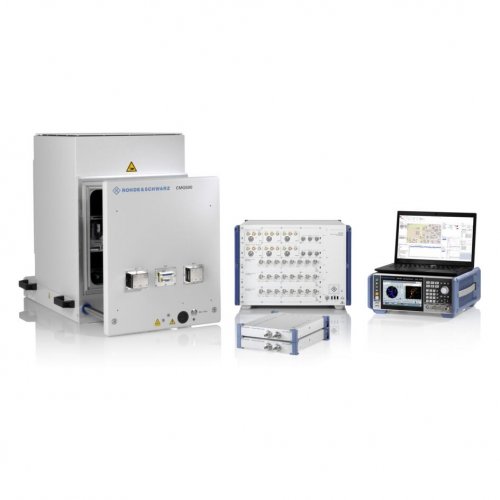
Caption: The R&S MXO-K333 software option provides comprehensive measurement functions for analyzing three-phase power systems.
Rohde & Schwarz has introduced the new R&S MXO-K333 software option for three-phase power analysis on its MXO series oscilloscopes. The software adds in-depth measurement and analysis functions for testing and debugging three phase power systems, drives and inverters.
Available for all four and eight channel models of the MXO 3, MXO 4, MXO 5 and 5C oscilloscopes, it supports the analysis of voltage and current signals in three-phase AC systems. This innovative test solution keeps the captured waveforms visible during measurement, allowing engineers to review power values and check transient behavior in the same instrument. Other oscilloscope functions such as math, spectrum analysis, measurement tracking and zone trigger remain available for further analysis.
A guided setup wizard assigns the oscilloscope channels to the voltage and current probes used for the three-phase analysis. It verifies the wiring and supports common two-wire, three-wire and four-wire configurations (2V2A, 3V3A and 3VN3A). After setup, the software provides cycle-by-cycle calculations for RMS values, power factor, active power, reactive power and total power. By defining the input and output configuration, users can also calculate the system’s three-phase efficiency. Additional analysis views include phasor display, harmonic analysis and THD measurements in line with IEC 61000-3-2 and MIL-STD-1399.
As an oscilloscope-based solution, the R&S MXO-K333 enables engineers to correlate three-phase power results directly with the underlying voltage and current waveforms in real time. This is especially valuable during R&D and debugging, when power behavior often must be analyzed alongside switching events, transients, control signals and communication activity. Users can combine the three-phase analysis with inherent MXO capabilities such as advanced triggering, FFT, automated measurements, track functions and protocol decoding. This allows engineers to move from power measurement to root-cause investigation in a single instrument.
23, Jul 2026
Mesonet crosses 100-station mark, serves wide range of Nebraska needs
July 23: To combat the raging wildfires that swept across western Nebraska this year, firefighters and emergency management personnel repeatedly drew on information from a key resource – the Nebraska Mesonet weather station network.
The University of Nebraska–Lincoln’s mesonet stations, operating throughout the state, have high value for firefighters, helping them recognize periods of elevated fire danger and adapt tactics as conditions change, said John Erixson, the Nebraska state forester.
“The mesonet’s real-time information – including wind speed and direction, soil moisture, humidity and temperature – helps firefighters, emergency managers and the team make critical decisions about where to position crews and equipment, how fires are likely to behave and where resources are needed most,” he said.
After mesonet data indicated particularly high fire risk for the Panhandle this year, the Nebraska Wildfire Advisory Group relocated the state’s single-engine air tanker from the Ainsworth area to Scottsbluff – a move that proved crucial in responding to the South Fork Fire.
“The value of the mesonet doesn’t end when the fire is out,” Erixson said. “Those same data help inform restoration efforts; monitor changing environmental conditions; and improve preparedness, planting and recovery.”
The mesonet network – begun in 1981 and part of the university’s School of Natural Resources – crossed the 100-station mark this year, with a total of 104 weather-monitoring sites statewide. The newest stations are near Cody, Lakeside, O’Neill and Scottsbluff.
“Agriculture is our biggest end user, but emergency managers, water managers and land managers are all using our data,” said Ruben Behnke, mesonet director.
Major institutional users include the Nebraska Emergency Management Agency, Nebraska’s 23 natural resources districts and the National Weather Service.
“The mesonet is an exceptional example of how Nebraska’s industries, communities and agricultural producers benefit every day from information provided by SNR and (Institute of Agriculture and Natural Resources) programs and research centers,” said Larkin Powell, professor and SNR director. “That work supports decisions that drive our economy while protecting our natural resources.”
Ken Herz, a farmer and rancher in south-central Nebraska and former president of Nebraska Cattlemen, said the mesonet system provides information of practical everyday use for his operations.
“The raw, real‑time data it provides is used by me and numerous agencies that, in turn, deliver me timely and critical information about weather, drought, wildfire risk and other conditions that directly affect my land, livestock and crops,” Herz said. “This system isn’t just helpful — it’s a foundational tool that supports safe, efficient and responsible agricultural management across our state.”
Mesonet data plays a crucial role in irrigation scheduling, helping farmers optimize water use by providing precise, real-time soil moisture and weather information.
“This enables efficient irrigation practices that conserve water, a vital natural resource, while maintaining crop health and yield,” Herz said.
In winter, Nebraska emergency management personnel find great value in data from the mesonet’s snow depth sensors.
“Our new precipitation gauges actually measure snow water equivalent,” Behnke said. “That helps land and water managers and emergency managers understand how much water is available to flood once the snow melts.”
Throughout the year, mesonet data are important in helping understand statewide drought conditions. The network “is a source of weather information for Nebraska that allows the National Drought Mitigation Center to create a detailed drought map for every corner of the state,” Powell said. “That’s critical for decisions made by Nebraska’s industries, communities and agricultural producers.”
Herz noted that governmental disaster aid programs often rely on data from the U.S. Drought Monitor, which incorporates mesonet information to assess drought severity and allocate resources effectively.
“This means that accurate, localized drought data helps secure timely financial assistance and support for affected agricultural communities, ensuring resilience and recovery during challenging conditions,” he said.
Grant funding is crucial for maintaining and adding to the Mesonet. In 2025, the system added 21 stations thanks to $1.48 million in funding from the U.S. Army Corps of Engineers, U.S. Department of Agriculture’s Farm Service Agency, and Lower Loup and Upper Elkhorn Natural Resources Districts.
This year, $904,936 in funding from the U.S. Army Corps of Engineers enabled installation of 10 additional stations, and $390,000 from NOAA will be awarded during the fall to support station maintenance and upkeep.
Achieving more regular funding support for grants as well as state funding is a central need for the system. That support can help the mesonet continue to fill in coverage gaps through additional stations and meet the system’s significant maintenance responsibilities.
A robust mesonet system clearly serves the public interest in multiple ways, Erixson said.
Firefighters and emergency management personnel have a particular appreciation, he said, because “every mesonet station we add strengthens our ability to support first responders, protect communities and build a more resilient Nebraska.”
23, Jul 2026
Centre Keeps Ethanol Blending Target at 20 pc, No Decision on Further Increase
New Delhi, July 23: The Central Government has clarified that there is no decision yet to increase ethanol blending in petrol beyond 20 per cent, maintaining the current blending target under the country’s biofuel policy.
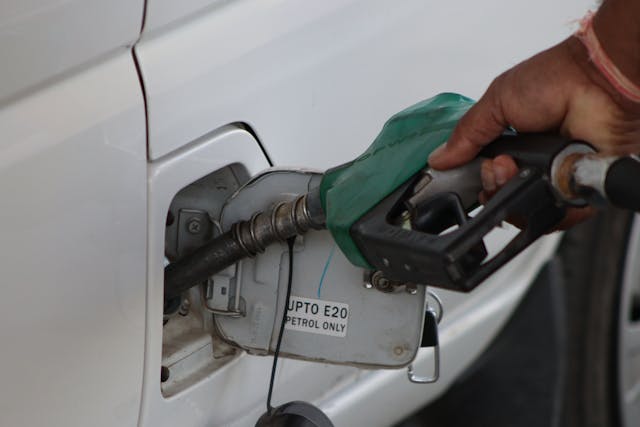
The government said the existing 20 per cent ethanol blending programme will continue, with focus on strengthening fuel security, reducing dependence on crude oil imports, and promoting cleaner energy alternatives.
Officials stated that any future revision to the blending target would require detailed evaluation of factors such as fuel availability, vehicle compatibility, production capacity, and technical feasibility.
India’s ethanol blending initiative has supported the growth of the biofuel sector while providing additional opportunities for farmers and related industries. The programme is also aimed at reducing carbon emissions and encouraging sustainable energy solutions.
The government reiterated that decisions regarding higher ethanol blending will be taken after assessing all relevant aspects and in consultation with stakeholders.


