


9, Sep 2026
DFI Introduces One Board, Two CPU Generations Mini-ITX Platform to Advance Physical AI for Robotics and Automation
TAIPEI, Sept. 9, 2026 /PRNewswire/ — DFI, a Qisda Group company and a global leader in embedded motherboards and industrial computers, introduces the ARH171/ARH173, expanding its AI-ready portfolio with a Mini-ITX platform built for space-constrained, mission-critical deployments. Powered by Intel® technologies, the ARH171/ARH173 is purpose-built to handle demanding Physical AI workloads from perception to reasoning, enabling next-generation smart logistics and industrial automation.

As Physical AI transitions to operational deployment, intralogistics is driving rapid mobile automation adoption. Mordor Intelligence projects the autonomous mobile robot (AMR) market to expand at a CAGR of nearly 15% through 2029 to counter labor shortages, while advanced systems like 3D cube storage robots require on-device AI to navigate floors, climb racks, and process dense sensor streams in real time.
Flexibility starts at the board level. The ARH171/ARH173 adopts a unified “One Board, Two Generations” architecture, supporting 16 Intel® Core™ Ultra processor options across Meteor Lake-U/H and Arrow Lake-U/H (15–28W; Intel vPro® available on select SKUs). Delivering up to 99 total platform TOPS on Arrow Lake-H models, its integrated Intel® Arc™ GPU and dedicated NPU accelerate AI inference via OpenVINO™, DirectML, and ONNX RT. This lowers reliance on discrete graphics, reducing thermal and spatial overhead while enabling system integrators to scale across performance tiers using a unified platform architecture. The launch will further leverage DFI’s core strengths in embedded computing to support Qisda Group’s overall strategy across its four AI business categories: “AI Vision & Display,” “AI Infrastructure,” “AI Solutions & Smart Manufacturing,” and “AI Hospital & Wellness Ecosystem.”
“System integrators developing next-generation autonomous logistics robots need to shorten validation cycles and avoid recurring redesign costs,” said Claire Tien, President of DFI. “By supporting two processor generations on a unified board architecture, the ARH171/ARH173 simplifies long-term platform planning, delivers on-chip AI acceleration, and supports continuous operation through hardware-level remote management.”
Once deployed, reliable operation and reduced on-site maintenance become critical. Engineered for 24/7 robotic deployments, the ARH173 features a 12–28V wide-range DC input, up to three 2.5GbE LAN ports, and modular M.2 expansion for flexible sensor integration. To simplify field maintenance, the optional DFI EXT-OOB module enables out-of-band power cycling and OS recovery even if the primary system is unresponsive, while integrated Intel vPro® technology (on select SKUs) provides comprehensive remote hardware management.
From board to system to solution, the ARH171/ARH173 delivers a deployment-ready foundation that consolidates dual-generation scalability, native AI performance, and remote management into a single validation point, reducing engineering overhead and accelerating the transition from pilot to production.
About DFI
Founded in 1981, DFI is a global leading provider of high-performance computing technology across multiple embedded industries. With its innovative design and premium quality management system, DFI’s industrial-grade solutions enable customers to optimize their equipment and ensure high reliability, long-term life cycle, and 24/7 durability in a breadth of markets including Industrial Automation, Medical, Gaming, Transportation, Energy, Mission-Critical, and Intelligent Retail.
 View original content to download multimedia:https://www.prnewswire.co.uk/news-releases/dfi-introduces-one-board-two-cpu-generations-mini-itx-platform-to-advance-physical-ai-for-robotics-and-automation-302873383.html

- 0
- By Sai Krishna

9, Sep 2026
Yubi Group Launches Yubi Asset Management, and its portfolio management service, Yubi PoleStar
New business brings Yubi’s credit-native underwriting intelligence to family offices and institutional allocators, launching at Global Fintech Fest 2026
MUMBAI, India, Sept. 9, 2026 /PRNewswire/ — Yubi, AI-powered credit OS for financial services, today announced the launch of Yubi Asset Management, its new asset management business, along with its first offering: Yubi PoleStar, a SEBI-registered portfolio management service built for family offices and institutional investors. The launch was announced at Global Fintech Fest 2026, with Gopal Srinivasan, Chairman, TVS Capital Funds and board member, Yubi Group, as chief guest.
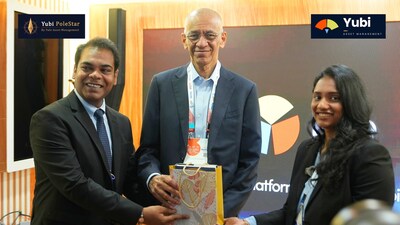
Yubi Asset Management Private Limited is a SEBI-registered Portfolio Manager. The company operates on top of Yubi’s existing credit market infrastructure, underwriting intelligence and origination pipeline, bringing the same credit-native discipline the Group has applied across lending, supply-chain finance, securitisation and the bond market to private portfolio management.
Yubi PoleStar runs several strategies across different investment horizons and risk appetites, serving corporates and HNIs seeking stable income and liquidity management, investors focused on long-term, all-weather wealth creation, and accredited investors and family offices seeking bespoke, multi-asset portfolios.
The strategies are built on what Yubi calls its six-gate credit architecture: a structured process spanning data ingestion and forensics, principal-level engagement, risk modelling, investment committee approval, structural and covenant design, and active surveillance, applied before and after every allocation. A weighted risk framework evaluates industry, business, financial and management risk on every credit under consideration, and portfolios are governed by a quarterly Investment Policy Committee, independent third-party valuation, and segregated custody with assets held in each client’s own name.
“Yubi has spent years building the infrastructure that connects India’s banks, NBFCs, enterprises and institutional investors across the credit lifecycle,” said Gaurav Kumar, Founder and CEO, Yubi Group. “Yubi Asset Management brings that same infrastructure and intelligence to a different set of investors: family offices and institutional allocators who want credit-native discipline applied to their own portfolios, not just to the markets they invest alongside.”
Yubi Asset Management is led by Anshul Baranwal, Chief Investment Officer, who brings 15 years of experience across UBS, ASK Private Wealth and ICICI Securities, and Irfan Mohammed, Director, who also serves as Managing Director at the Group company Aspero and has held senior roles at Vivriti Capital and Northern Arc.
“Debt investing in India has largely borrowed its models from equity,” said Anshul Baranwal, Chief Investment Officer, Yubi Asset Management. “We built Yubi PoleStar the other way around: credit-native from the ground up; bringing the seasoned underwriting and structuring discipline we’ve refined across market cycles directly into a portfolio format built for modern wealth generation and a governance framework built for allocators who want to see exactly where their capital sits, every day. It is a proven institutional framework now directly powering Yubi PoleStar.”
Yubi Group has facilitated over $36 billion in total credit across its businesses, and evaluates over 8 lakh loans a month through its proprietary risk-assessment models. Active in India’s primary debt market every year since 2020, the Group has led 850 primary NCD and MLD issuances, mobilised over ₹40,000 crore in capital across primary issuances, financed over 200 distinct issuers across the credit spectrum, and secured 96% of issuances through collateral-backed structuring, across 25+ lending and asset-class segments (as per Q3 FY26 issuance data, Yubi Group data).
Investors can learn more about Yubi PoleStar’s strategies and disclosure documents at www.yubiamc.com, or by writing to connect@yubiamc.com.
About Yubi Asset Management
Yubi Asset Management delivers investment solutions to Indian family offices, HNIs and institutional allocators. Its portfolio management services division, Yubi PoleStar, translates institutional credit heritage and technology-enabled execution into disciplined private portfolio management. Yubi Asset Management Private Limited is a SEBI-registered Portfolio Manager (Registration No. INP000010201).
About Yubi Group
Yubi Group is the world’s only AI-powered operating system (OS) for financial services, founded in 2020 by CEO Gaurav Kumar. The Group comprises YuVerse, Accumn, Spocto X, YuCollect, Yubi Wealth – subsidiaries that together deliver end-to-end AI-based solutions in lending, underwriting, collections and wealth management. Backed by leading investors including Peak XV, Insight Partners, Lightspeed, B Capital Group, Dragoneer, and TVS Capital, Yubi has facilitated over ₹3.2 lakh crore in credit and 3.5 crore transactions, serving 17,000+ enterprises and 6,200+ investors & lenders while reducing collections costs by 57%. The company is redefining transparency, compliance, and performance across India’s financial services sector. Visit www.go-yubi.com to learn more.
Yubi Asset Management Private Limited is a SEBI-registered Portfolio Manager (Registration No. INP000010201). SEBI registration granted by SEBI in no way guarantees performance of the intermediary or provides assurance of returns to investors. This release is not investment advice or a recommendation and must not be construed as a guarantee of returns. Yubi PoleStar is a newly registered PMS offering; past statistics referenced for Yubi Group entities pertain to the Group’s lending, distribution and origination businesses and do not represent the track record or AUM of Yubi Asset Management Private Limited. Investments in PMS are subject to market, credit and liquidity risks, including possible loss of principal. This document must be read together with the Disclosure Document filed with SEBI. Minimum investment is ₹50,00,000 (Fifty Lakhs) or such other amount as may be prescribed; where the offering is to Accredited Investors, certain regulatory relaxations may apply.
Photo: https://mma.prnewswire.com/media/3008969/Yubi_AMC_Launch.jpg
 View original content to download multimedia:https://www.prnewswire.com/in/news-releases/yubi-group-launches-yubi-asset-management-and-its-portfolio-management-service-yubi-polestar-302873627.html

9, Sep 2026
How we manage and engage with our horses shapes their personality

(Liehrmann_horse): Star, the author’s horse, scored very high in human sociability. Photographer: Océane Liehrmann
University of Turku, Finland | Sept 09: A new study reveals that horse personality is not only a matter of genetics, age, or breed but also systematically linked to how horses are housed, ridden, and cared for, and to the quality of the relationship they share with their owners. The findings underscore the importance of everyday management decisions for equine personality and welfare.
Horse personality has long been known to influence welfare, training outcomes, and the quality of human–horse interactions. While genetic and biological factors clearly play a role, far less has been known about how the human-shaped environment may contribute to building horse personality.
“Personality is not something that develops independently of its surroundings. Horses live in environments we create and relationships we build for them, and our results show that these matter,” says lead author of the study, Postdoctoral Researcher Océane Liehrmann from the University of Turku, Finland, and the Swedish University of Agricultural Sciences.
The research group conducted an international online survey during 2023–2024, gathering responses from 2,257 horse owners of about 2,767 horses across Europe, North America, and beyond. Owners rated their horses’ personalities using a 52-item questionnaire and provided detailed information about housing conditions, riding and groundwork frequency, quality time with their horses, headgear use, ownership history, and relationship duration.
Four windows into horse personality
Statistical analyses of the data revealed four distinct personality dimensions:
• Human Sociability: tendency to seek and enjoy interaction with people
• Attentiveness: capacity to focus on and cooperate with human cues
• Neuroticism: emotional reactivity and sensitivity to stress
• Horse Sociability: tendency to engage in affiliative, non-aggressive interactions with other horses
As expected, intrinsic factors such as age, sex, and breed were among the strongest drivers of personality scores. Warmbloods, for example, scored highest in Neuroticism, while draft horses scored lowest. Geldings consistently scored higher than mares in both Human Sociability and Attentiveness.

(Salinger_horses): The willingness to interact with strangers was one of the components of the human sociability factor. Photographer: B. Salinger.
Depth of the human–horse bond and riding frequency matter
The length and stability of the relationship were linked to Human Sociability: horses with the same owner for over ten years scored about 12 percent higher than those together less than a year, while horses that had passed through multiple owners scored lower than those bought directly from a breeder.
“These patterns suggest that familiarity and relational continuity contribute to how openly and comfortably horses engage with people. Frequent changes of owner or stable may leave a lasting mark on a horse’s willingness to seek human contact,” explains Liehrmann.
Owners who often spent unstructured time with their horses, being present, offering scratches, and not demanding anything from them, had horses that scored higher on Human Sociability. Riding frequency, then again, was tied to calmness: horses ridden 4–7 times a week scored higher on Attentiveness and lower on Neuroticism, while rarely ridden horses scored higher on Neuroticism. This possibly reflects habituation from regular training, or that calmer horses are simply chosen for regular use.
Solitary housing, fewer social skills
One of the clearest findings concerned Horse Sociability: horses housed alone consistently scored lower than those living with other horses, regardless of whether they lived in pairs or full herds.
This finding raises important welfare considerations. Horses housed alone may score lower because social isolation limits the expression of affiliative behaviour. It may also be that horses perceived as socially unfit are kept in isolation. In either case, the results point to social housing as an important consideration for both welfare and behavioural development.
Implications for horse welfare and management
The researchers emphasise that the study is cross-sectional and does not establish causation, and that the associations identified are modest. Longitudinal studies are needed to clarify whether management decisions shape personality, personality shapes management decisions, or both.
However, the findings show that housing conditions, the frequency and quality of human interactions, and the stability of the ownership history are all associated with measurable differences in personality profiles.
“Understanding how management and relationship factors interact with personality has direct implications for horse welfare. If we design environments that allow horses to develop socially, maintain stable relationships, and enjoy positive interactions with humans, we may be doing more than making horses easier to handle, we may help them develop their personality in a more positive way,” concludes Liehrmann.
The study was published in the journal Royal Society Open Science.
9, Sep 2026
Praacheen Kala Kendra To Organise Uttarbhanga Festival 2026 In Siliguri

Siliguri, West Bengal | Sept 09: Praacheen Kala Kendra, a prominent institution dedicated to the promotion and preservation of Indian classical arts, is set to organise the Uttarbhanga Festival 2026 in Siliguri, West Bengal, celebrating the rich traditions of classical music, dance and fine arts.
The two-day festival will be held on October 5 and 6, 2026, with programmes beginning at 5:00 PM onwards each day. The festival will take place at Dinabandhu Manch, Sachin Sarkar Sarani Road, Siliguri – 734001, West Bengal.
The event also marks the opening of Praacheen Kala Kendra’s regional office at Ashutosh Mukherjee Road, Upstairs Bani Library, College Para, Siliguri, Darjeeling (W.B.), further strengthening the organisation’s presence in the region and its efforts to promote Indian cultural heritage.
The Uttarbhanga Festival is envisioned as a platform to bring audiences closer to India’s diverse artistic traditions through performances and presentations centred around classical music, dance and fine arts. The festival aims to encourage greater appreciation of India’s cultural legacy while providing a space for artistic expression and engagement.
Praacheen Kala Kendra has invited art enthusiasts, cultural organisations, students and members of the public to attend the festival and experience the celebrations.
Event Details:
Event: Uttarbhanga Festival 2026
Dates: October 5 & 6, 2026
Time: 5:00 PM onwards
Venue: Dinabandhu Manch, Sachin Sarkar Sarani Road, Siliguri – 734001, West Bengal
Organiser: Praacheen Kala Kendra
Focus: Classical Music | Dance | Fine Arts
Supported by: Ministry of Culture, Government of India
All are cordially invited to be part of the Uttarbhanga Festival 2026.
9, Sep 2026
The Great Indian Space Race – Why Bigger Is Suddenly Better

– By Akash Pharande, Managing Director – Pharande Spaces
Indian home buyers are stretching their EMIs, their patience, and often whatever goodwill is left in their joint family WhatsApp groups. Everyone, with very few exceptions, now wants a big flat – even if it means longer, heftier EMI tenures. 3BHKs and above now get up to 50% of all property buyer demand. About a decade ago, it was just 30%.
Considering that property prices have also increased massively in the last ten years, that is NOT a small jump. Not surprisingly, developers are obligingly rolling out the required inventory. Flat sizes have grown across the board, and buyers just… absorb them.
There is no sign of shrinking ambition. Downgrading is firmly off the wish list. And no, this is not just another Insta phase that will peter out by the next monsoon. It is a very real, very visible shift in what Indians now want from and in their homes – space. Lots of it. As much as they can afford.
The trend has taken such a strong hold that there have actually been instances of some projects which had mostly smaller flats being converted to accommodate the demand for bigger homes.
Not among private builders who have already sold some parts of their projects – RERA makes it hard to just ‘scrap’ a small-flat project midway to turn it into one with bigger units without buy-in from their existing customers. But just this year, the Ghaziabad Development Authority (GDA) announced its intention to merge unsold smaller flats in schemes like ‘Madhuban Bapudham’ and ‘Indraprasth’ into bigger ones by knocking down the wall between two adjoining units – simply to revive stalled sales.
That’s the government, so not much complexity there. But private developers – and individual owners – who want to combine two adjacent flats into one larger ‘jodi’ flats, duplexes, or triplexes can only do so after getting a revised sanctioned plan from the municipal authority.
It’s worth mentioning that a previous pattern has actually reversed itself. Around 2016-2019, builders started reducing flat sizes and revamped their towers to include smaller 2 and 3BHK units because there was a lot of demand for such homes from budget-conscious first-time buyers.

What Actually Changed?
It is a popular notion that it was Covid-19 which brought on the ‘race for space’. However, that is not the case. This demand was already brewing, but the pandemic certainly did set it on fire.
Before Covid, flats had been getting smaller for years. The main issues were an affordability crunch and the fact that millennials who were interested in homeownership at all (most still preferred renting back then – unlike now) wanted low-maintenance setups. After the lockdowns descended, living rooms suddenly became offices, classrooms and gyms. Not to mention a war zone every time two family members needed the space for different reasons.
Some reports suggest that the bigger flat size trend started picking up almost right after the first lockdown lifted. Because of WFH, studying from home, and no access to gyms, Indians suddenly realised that they needed room to breathe.
But as a developer, I can assure you that affordability was maxing out even before 2020. So, what has changed? Not people’s budgets. If anything, the pandemic pushed more hopeful Indian homebuyers to the financial brink than any other single event I the past few decades.
Many had to postpone their dream of homeownership altogether and settled for renting instead. Others who were not as seriously impacted by job losses bought whatever affordable housing remained. Thereafter, the demand equation changed drastically – the new motto was “if at all, then go big.” The right kind of supply naturally followed, as it always does.
Paying More… for More
Prices in the premium, larger-home segment have shot up seriously in the last 2-3 years – in some markets by 40% or more. Land has obviously become pricier, as have construction materials. According to real estate consultants Anarock, the residential sales value went up by almost 20%, even though the actual number of housing sales barely moved.
Basically, Indians are willing to shell out a lot more for more space. Additional space is not a ‘good-to-have’ any longer – it is now non-negotiable.
The Home Office That Ate the Hall
A dedicated study/work room is now one of the top requirements. Balconies, which had begun vanishing in the metros over the years, are now mandatory.
Homebuyers today ask harder questions like “What will the maintenance cost be?”, “Will this flat fetch a good price on the resale market?”, and “Show me exactly how far the school, mall and hospital are from here – ask your salesperson to drive me there.” It is now homebuying tempered with risk management.
Anyone who was locked in a small flat with three generations fighting over one router back in 2020 now looks at buying a home like they would look at any investment decision, but the investment is not only financial – it’s also lifestyle. This home must work for us today and five years from now, whatever we decide to do. Like take up consulting from home instead of working from an office, have two more kids like Mum so badly wants us to, or retire in comfort and security.
The ‘buy-small-now-upgrade-later’ mindset is gone. Covid certainly did do that. Now, it’s only about forever homes. The starter homes concept is gone – at least for now. But not in all cases.
Where Small Still Wins
Smaller homes still have plenty of takers. In fact, studio apartments have staged a major comeback and are one of the fastest-growing segments on the young-professional housing space. Such homes are cheap to maintain and often easier to commute to because projects with studios mostly come up in the crowded city centres, which have grown around workplace hubs.
Young professionals, newly married or about-to-marry couples, and retirees who have taken a conscious call to downsize are the primary buyers. Smaller flats don’t work for growing families, but they still do for singles, young couples, and empty-nesters who prefer convenience to large empty spaces.
Which Cities Are Actually Driving This Trend?
Smaller homes are now largely a big-city story. In smaller cities and towns where land is much cheaper, buying small makes no sense. Every city has its own version.
Mumbai is obviously the epicentre of ultra-luxury, big-format living. There, wealthy buyers look for sprawling apartments and duplexes despite the costliest per-square-foot prices in India. In Delhi-NCR and Bengaluru, the prices of larger premium homes have also shot up, and such units find ready takers among corporate honchos and tech start-up founders.
Pune has its very own version, because work-from-home is still very much a factor here. In PMC, buyers look for 3 and 4 BHKs with dedicated workspaces. In the sister city of PCMC, large-format homes in its many integrated townships are the fastest sellers.
And tier 2 cities continue to do brisk business in studio apartments and compact 1, 1.5 and 2 BHKs, thanks largely to their young working populations.
Are Developers Following the Bigger Homes Trend, or Steering It?
Developers in cities like Mumbai, Pune and Bengaluru have mostly gone all-in on projects dominated by larger, amenity-rich homes. The simple reason is that buyers there care more about space and flexibility than about mere affordability. It is also sound business – premium, large-format homes have better profit margins.
Is This a Passing Fad, or Here to Stay?
The demand for bigger homes is entirely structural – and reflects how both the modern work environment and the real estate market are evolving. Hybrid work models, a focus on wellness, and investment sense drive demand for bigger homes, as they attract more buyers and yield higher resale prices.
This trend is not about to change. If anything, the new focus on bigger homes will grow over the years – though, because of depleting land resources, new bigger homes may not be quite as big as today in the future. They will also become more expensive, and the cost factor will begin to affect an increasing segment of our cities’ otherwise well-to-do populations.
As for smaller affordable housing, the story is far more dire. The fact is that many of today’s first-time homebuyers are challenged to buy bigger homes and are gradually also getting priced out of the entry-level market segment. They can see the storm coming, so the ‘budget stretch’ that everyone keeps talking about is sometimes not a courageous lifestyle choice but plain survival mode.
If they miss this opportunity, buying a 2 BHK two years from now, even with hopes to upgrade later, will be impossible as property prices rise, salaries stagnate, and many tech jobs disappear. It’s literally now or never – and “if at all, then go big.”
About the author:
Akash Pharande is Managing Director of Pharande Spaces, a leading real estate construction and development firm famous for its township projects in Greater Pune and beyond. Pharande Promoters & Builders, the flagship company of Pharande Spaces and an ISO 9001-2000 certified company, is a pioneer of townships in the region.
9, Sep 2026
Comviva announces Kalyanasundaram Sivasubramaniam to lead the DigiTech Business, Accelerating Platform-Led Growth and AI Transformation
NEW DELHI, Sept. 9, 2026 /PRNewswire/ — Comviva, a global leader in digital transformation solutions, today announced the appointment of Kalyanasundaram Sivasubramaniam as Product Unit Head for its DigiTech business. In this role, he will lead the strategic growth and evolution of Comviva’s DigiTech portfolio, including its intelligent digital business platform, BlueMarble.

Kalyanasundaram will be responsible for accelerating the next phase of DigiTech’s growth, strengthening its market leadership and scaling its platform-led business across global markets. With Comviva expanding its presence across strategic markets, particularly North America and Europe, he will focus on unlocking new growth opportunities, expanding the enterprise opportunity and deepening engagement with communications service providers and enterprises.
A key focus of his mandate will be to accelerate the evolution of Comviva’s platforms through Agentic AI, intelligent automation and autonomous capabilities. This will enable businesses to move beyond traditional digital transformation toward more adaptive, intelligent and outcome-driven operations. He will also work closely with customers, partners and the broader technology ecosystem to translate emerging market needs into differentiated platform capabilities and measurable business outcomes.
Kalyanasundaram joins Comviva from Salesforce, where he played a key role in building and scaling its Agentic Partner Cloud platform and business. He brings more than 25 years of experience across technology, product engineering and platform leadership, spanning telecom, enterprise technology and SaaS. During his career, he has held senior R&D, product and delivery leadership positions at Nokia Siemens Networks, Redknee, Dynacommerce and Netcracker, where he was involved in building technology platforms, leading complex product initiatives and scaling businesses across global markets.
Commenting on the appointment, Rajesh Chandiramani, Chief Executive Officer, Comviva, said: “Comviva is at an exciting inflection point in its growth journey, with a clear ambition to build a more agile, platform-led and AI-powered technology business with a significantly broader enterprise opportunity. DigiTech is an important pillar of this ambition, and BlueMarble gives us a strong foundation to build on our leadership in digital business transformation. Kalyanasundaram brings a distinctive combination of deep telecom expertise, enterprise technology experience and a proven track record of building and scaling platforms. His experience in emerging technologies, ecosystems and enterprise adoption will be invaluable as we expand into new markets, unlock new customer opportunities and accelerate our growth trajectory. We are delighted to welcome him to Comviva and look forward to the impact he will create for our customers, our business and our ecosystem.”
Kalyanasundaram Sivasubramaniam, Product Unit Head – DigiTech, Comviva, added: “I am excited to join Comviva at a pivotal moment in its growth and transformation journey. The company’s digital BSS and commerce portfolio provides a strong technology foundation to redefine how telecom operators and enterprises build, operate and scale their digital businesses. Having spent my career building technology platforms and scaling businesses across telecom and enterprise technology, I see a significant opportunity to build on Comviva’s strengths, accelerate the adoption of AI-led capabilities and expand into new markets and growth areas. I look forward to working closely with our customers, partners and leadership team to strengthen our market impact, create differentiated value and build an ambitious growth trajectory for present and beyond.”
With telecom operators and enterprises rapidly embracing AI, cloud and SaaS to drive greater agility, automation and business value, Comviva is strengthening its technology platforms and capabilities to build the next generation of Agentic AI-powered BSS solutions. Kalyanasundaram’s leadership will be instrumental in accelerating this agenda—scaling DigiTech and BlueMarble globally, deepening Comviva’s engagement with leading operators and enterprises, and driving stronger, sustainable growth through intelligent, AI-native digital business platforms.
About Comviva
Comviva empowers organizations to drive transformative growth with measurable business impact. Our AI-driven digital solutions and intelligent platforms enable our customers to unlock new revenue opportunities, enhance customer experiences, and simplify operational complexities to achieve exponential success.
From maximizing customer lifetime value to enabling large-scale digital transformation, Comviva is trusted by 200+ global communication service providers and enterprises to solve complex challenges and prepare for the future. With our solutions deployed across 100+ countries, Comviva has brought the benefits of digital innovation and mobility to billions worldwide. As a subsidiary of Tech Mahindra and a member of the Mahindra Group, Comviva is committed to driving growth, efficiency, and transformation for tomorrow.
For more information, visit us at www.comviva.com.

 View original content to download multimedia:https://www.prnewswire.com/in/news-releases/comviva-announces-kalyanasundaram-sivasubramaniam-to-lead-the-digitech-business-accelerating-platform-led-growth-and-ai-transformation-302873496.html

9, Sep 2026
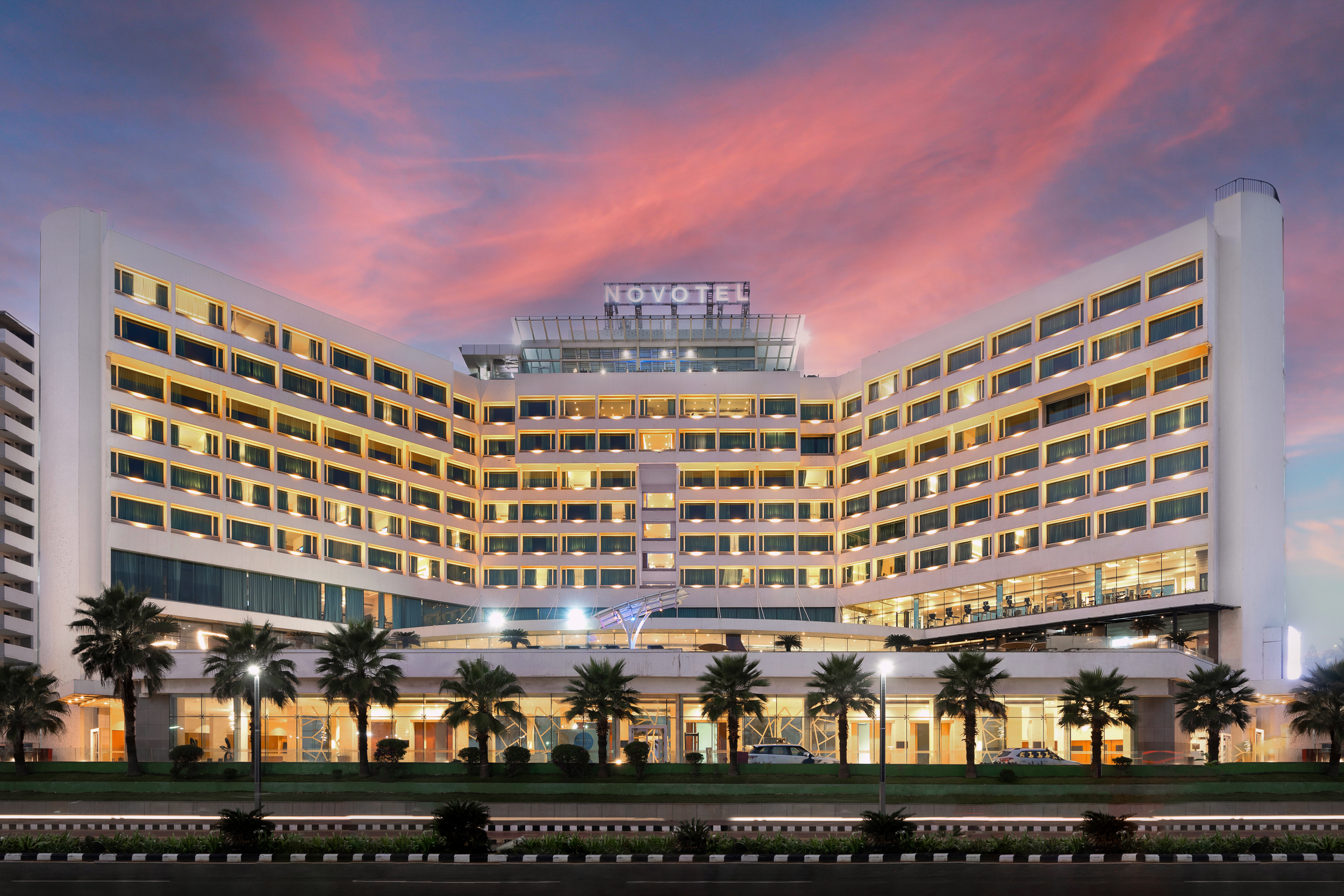
Novotel Visakhapatnam Varun Beach to Host 41st IATO Annual Convention as City Strengthens Its MICE Credentials
Sep 09: Novotel Visakhapatnam Varun Beach will host the 41st Indian Association of Tour Operators Annual Convention from 10–13 September 2026, bringing one of India’s most prominent tourism industry gatherings to Visakhapatnam.
Supported by the Government of Andhra Pradesh, the annual convention is among India’s key tourism industry forums, bringing together tour operators, hospitality leaders, policymakers, tourism boards, and stakeholders from across the country.
As the official venue, Novotel Visakhapatnam Varun Beach will host the convention’s key events, including delegate registrations, the inaugural ceremony, business sessions, networking events, the Indian Tourism Fair Travel Mart on 11 and 12 September, and evening cultural programmes. The inaugural session is expected to be attended by the Hon’ble Chief Minister of Andhra Pradesh, the Union Minister of Tourism, senior officials from the Ministry of Tourism, Government of India, and representatives from nearly 18 State Tourism Departments.
Located on Visakhapatnam’s iconic Beach Road overlooking the Bay of Bengal, Novotel Visakhapatnam Varun Beach is one of the city’s leading MICE destinations, offering expansive event spaces and contemporary hospitality for large-scale national and international events.
Lakshmi Sridhar, General Manager, Novotel Visakhapatnam Varun Beach, said,
“We are delighted to host the 41st IATO Annual Convention at Novotel Visakhapatnam Varun Beach. It is a proud opportunity to welcome India’s travel and tourism fraternity and showcase Visakhapatnam’s growing potential as a leading destination for leisure and MICE tourism. We look forward to delivering an exceptional experience that reflects the warmth and hospitality of the city.”
The convention will feature discussions on the future of Indian tourism, sustainable travel, destination development, and industry collaboration, alongside signature experiences including the IATO Run for Responsible Tourism, tourism awards, cultural evenings, and post-convention tours across Andhra Pradesh.
By hosting the 41st IATO Annual Convention, Novotel Visakhapatnam Varun Beach further strengthens its position as a preferred venue for marquee industry events while reinforcing Visakhapatnam’s growing prominence on India’s tourism and MICE map.
9, Sep 2026
Zithara.AI Partners with Tyaani Jewellery to Enable Smarter Customer Engagement
Hyderabad, Sep 09: Zithara.AI, an AI native customer engagement platform for offline retailers, has partnered with Tyaani Jewellery by Karan Johar to strengthen customer engagement through technology and data driven insights across the brand’s retail operations.
Through the partnership, Tyaani Jewellery will leverage Zithara.AI’s AI native CRM platform to bring greater structure to customer engagement and relationship management. The platform will enable the brand to organise customer information, understand engagement patterns, and create a more connected view of customer interactions. The platform will help Tyaani Jewellery strengthen its approach to customer engagement by enabling more structured and data driven interactions with its customers.
The collaboration is aimed at helping Tyaani Jewellery build stronger relationships with customers beyond individual transactions while creating greater opportunities to increase sales and repeat purchases. By using customer insights to identify relevant engagement opportunities, the platform will support the brand in following up with potential customers, re engaging existing customers and delivering more personalized communication based on customer preferences and purchase behaviour. This can help improve customer conversions, strengthen retention and enable retail teams to turn customer data into actionable insights that contribute to increased sales, stronger customer lifetime value and long term revenue growth.
Speaking about the partnership Mr. Manraj Singh, Chief Marketing Officer, Tyaani Jewellery said,
“Jewellery is a highly personal category, and the relationship between a brand and its customer extends well beyond a single purchase. As customer expectations evolve, it is important for us to understand their preferences and interactions better and use that understanding to create more meaningful experiences. Our association with Zithara.AI will help us bring greater intelligence and personalisation into our customer engagement, while enabling us to build stronger and more lasting relationships with our customers.”
Varun Kashyap, Co-Founder, Zithara.AI, said,
“Tyaani Jewellery has created a distinctive identity in the contemporary jewellery space, and its approach to engaging with modern consumers makes this partnership particularly meaningful for us. We see a strong opportunity to help the brand make better use of customer data and translate those insights into relevant, timely and personalised engagement. Our platform is designed to help retailers strengthen relationships throughout the customer journey rather than limit engagement to the point of purchase.”
Sridevi Reddy, Co-founder, Zithara.AI, added:
“Customer engagement in jewellery retail is increasingly about understanding the individual behind every transaction. With AI native capabilities, retailers can move from broad based communication towards experiences that are more relevant to customer preferences, behaviour and purchase journeys. Through our partnership with Tyaani Jewellery, we aim to support the brand in creating a more connected and intelligent customer engagement framework at scale.”
The partnership reflects the growing role of AI and customer data in shaping the next phase of jewellery retail, where personalised engagement and long term customer relationships are becoming increasingly important. Through the collaboration, Tyaani Jewellery and Zithara.AI aim to create a more connected and data driven approach to customer engagement that supports stronger relationships and the brand’s continued retail growth.
9, Sep 2026
NMIMS Bengaluru Celebrates Graduating Students at UG Degree Distribution Ceremony
Bengaluru, Sept 09: SVKM’s Narsee Monjee Institute of Management Studies, Bengaluru campus, hosted its UG Degree Distribution Ceremony, celebrating the academic achievements of its graduating students across diverse undergraduate programmes.
The ceremony brought together graduating students, faculty members, academic leaders, parents and distinguished guests to mark an important milestone in the students’ academic journey and recognize their accomplishments.
The UG Degree Distribution Ceremony celebrated graduates from the School of Commerce, School of Economics, School of Mathematics, Applied Statistics and Analytics, and School of Law, covering programmes including BBA, B.Sc. Finance, B.Com, B.Sc. Economics, B.Sc. Data Science, B.A., LL.B. Hons. and B.B.A., LL.B.
The ceremony was graced by Mr. Suresh Narayanan, Former Chairman and Managing Director, Nestlé India Limited, as the Chief Guest for the School of Commerce and C. K. Nandakumar, Senior Advocate and Practice Head, Law Chambers, who served as the Chief Guest for the School of Law. Ms. Sharda Balaji, Founder, NovoJuris Legal, was the Guest of Honour for the School of Law.
Mr. Suresh Narayanan, Former Chairman and Managing Director, Nestlé India Limited, said,
“Success and long-term integrity are guided by a strong internal compass. In an era of rapid technological change, power lies in simplicity, credibility, and compassion. Be the generation that leads not just with intellect and competence, but with character, empathy, and courage under fire.”
C. K. Nandakumar, Senior Advocate and Practice Head, Law Chambers Chief Guest, School of Law, said,
”Balance what you think is your entitlement with an expectation. It is important for you to assert a right, but equally important to fulfil your duty. ”
Ms. Sharda Balaji, Founder and Managing Partner, NovoJuris Legal, Founder, LexCapital Ventures & PaperKlips Business Solutions said
“You are entering a profession which is changing faster than you predict. Your job is not to predict the future; your job is to become the kind of person who can thrive in whatever future that arrives”
A key highlight of the ceremony was the recognition of Harjas Gulati, a graduate of the B.A., LL.B. programme, who secured the 3rd Rank across NMIMS campuses, reflecting academic excellence and commitment throughout the programme.
The UG Degree Distribution Ceremony celebrated the students’ academic accomplishments while marking their transition into the next phase of their professional and personal journeys. The occasion reflected NMIMS Bengaluru’s continued commitment to academic excellence, holistic development and preparing future-ready graduates equipped to navigate an evolving world with knowledge, integrity and purpose.
9, Sep 2026
Turkish Airlines to Become Liverpool FC’s Main Club Partner from the 2027/28 Season

Bengaluru, September 09, 2026: Turkish Airlines, the airline that flies to more countries than any other, has announced that it will become Liverpool Football Club’s Main Club Partner from 1 June 2027 with the airline’s logo appearing on the front of the men’s, women’s and academy shirts from the start of the 2027/28 season.
The announcement marks the next chapter in Liverpool FC’s commercial history and will represent the first change to the Club’s Main Club Partner in 17 years.
From June 2027, Turkish Airlines will become Liverpool FC’s Main Club Partner, bringing together two organisations with a shared international reach and a commitment to connecting people around the world. LFC’s supporter base spans every continent, while Turkish Airlines connects people, cultures and destinations around the world through its extensive international flight network, flying to more countries than any other airline from its Istanbul hub.
The new partnership will also mark a significant moment in the history of the LFC shirt. The front of the shirt is one of the most recognisable positions in world sport and one that the Club has historically reserved for long-term and meaningful partnerships.
Turkish Airlines will become part of that history from the 2027/28 season, as Liverpool FC enters a new chapter both on and off the pitch.
Turkish Airlines CEO Ahmet Olmuştur said: “Liverpool Football Club is one of the world’s most recognised and respected football clubs, with an exceptional heritage and a truly global community of supporters. We are very pleased that Turkish Airlines will become the Club’s Main Club Partner and that our name will take its place on one of the most iconic shirts in world sport.
As the airline that flies to more countries than any other, connecting people, cultures and continents is at the heart of who we are. This partnership brings together two global brands united by their international reach, commitment to excellence and ability to inspire millions of people around the world.
The agreement also marks an important new chapter in Turkish Airlines’ long-standing support for global sport. We believe in the unique power of sport to transcend borders and bring communities together. As we begin this new chapter, we look forward to moving forward together with Liverpool FC and its supporters around the world.”
Liverpool FC Chief Commercial Officer Ben Latty said “This is a milestone announcement for Liverpool FC and we are delighted to welcome Turkish Airlines as our Main Club Partner from June 2027. The front of the Liverpool shirt holds a special place in the history of our club. Turkish Airlines is a globally recognised organisation with an extensive international network, and we look forward to beginning our partnership and building a strong relationship together, with already strong foundations built from those special memories back in 2005.
This announcement also provides an opportunity to recognise the extraordinary contribution Standard Chartered has made to Liverpool FC over the past 17 years. They have been an important part of our journey through an exceptional period in the club’s history, and we are delighted that Standard Chartered will remain part of the Liverpool FC family as a Global Partner from 2027. As we prepare for this transition, we look forward to this new season and welcoming Turkish Airlines as our Main Club Partner from June 2027.”


