


11, Jul 2026
SHANTI Act Implementation Takes Centre Stage at NITI Aayog Meet
New Delhi, July 11: NITI Aayog held consultations with key stakeholders to discuss the implementation framework of the SHANTI Act, focusing on three major pillars aimed at strengthening the country’s development and regulatory ecosystem.
The discussions brought together representatives from government departments, industry, experts, and other stakeholders to deliberate on strategies for effective implementation of the Act and ensuring coordinated efforts among all concerned parties.
The stakeholders highlighted the importance of developing a robust framework, enhancing institutional coordination, promoting innovation, and ensuring smooth execution of initiatives under the SHANTI Act.
During the consultations, emphasis was placed on creating an efficient mechanism that supports sustainable growth, improves governance, and encourages greater participation from various sectors.
NITI Aayog underscored the importance of collaborative efforts between policymakers, industry leaders, and experts to achieve the objectives of the Act and translate its vision into actionable outcomes.
The stakeholder engagement is part of NITI Aayog’s efforts to build a comprehensive implementation roadmap and ensure that the benefits of the SHANTI Act reach all relevant sectors effectively.
- 0
- By Neel Achary

11, Jul 2026
Piyush Goyal Calls for Stronger Productivity Ecosystem
New Delhi, July 11: Union Minister for Commerce and Industry Piyush Goyal chaired a meeting of the National Productivity Council (NPC) to review initiatives aimed at strengthening India’s productivity ecosystem and enhancing the country’s global competitiveness.
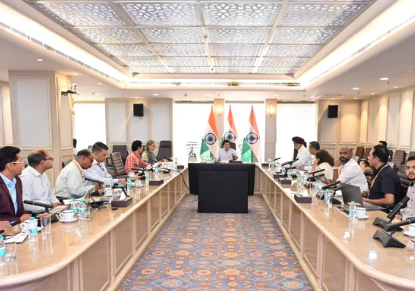
Pic Credit: https://x.com/PiyushGoyal
During the meeting, the Minister emphasized the need to foster a culture of productivity, innovation, and efficiency across industries, services, and government institutions. He called for greater adoption of modern technologies, digital transformation, skill development, and best management practices to improve operational efficiency and drive sustainable economic growth.
The discussions focused on expanding the reach of productivity initiatives, promoting capacity building among industries—particularly Micro, Small and Medium Enterprises (MSMEs)—and encouraging collaboration between government, academia, and industry to enhance productivity standards.
Goyal underscored the importance of productivity as a key driver of economic development, employment generation, and global competitiveness. He urged the National Productivity Council to intensify awareness programmes, training, consultancy services, and research initiatives that help businesses improve quality, reduce costs, and increase efficiency.
The meeting also reviewed the Council’s ongoing programmes and explored strategies to strengthen institutional support for productivity enhancement in line with the government’s vision of building a globally competitive and self-reliant economy.
The National Productivity Council continues to play a pivotal role in promoting productivity-led growth by providing training, consultancy, and capacity-building support across various sectors of the economy.
11, Jul 2026
India, New Zealand Strengthen Trade, Investment Ties
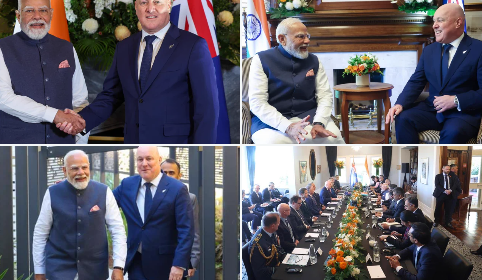
Pic Credit: https://x.com/PMOIndia
New Delhi, July 11: Prime Minister Narendra Modi has invited New Zealand businesses and investors to expand their presence in India, highlighting the country’s vast opportunities across key sectors including manufacturing, infrastructure, renewable energy, technology, agriculture, food processing, innovation, and the digital economy.
The call came as India and New Zealand reaffirmed their commitment to strengthening bilateral economic relations by accelerating the implementation of the proposed Free Trade Agreement (FTA). The two countries agreed to fast-track negotiations and deepen cooperation to enhance trade in goods and services, promote investments, and facilitate greater economic engagement.
The leaders emphasized that a comprehensive and balanced FTA would unlock new opportunities for businesses in both countries by improving market access, reducing trade barriers, and fostering stronger collaboration across strategic sectors. The agreement is also expected to boost exports, create employment opportunities, and strengthen resilient supply chains.
Prime Minister Modi underscored India’s emergence as one of the world’s fastest-growing major economies and encouraged New Zealand companies to take advantage of the country’s investor-friendly policies, expanding infrastructure, and robust manufacturing ecosystem. He highlighted the government’s commitment to ease of doing business and its focus on innovation-driven growth.
Both sides also agreed to strengthen cooperation in agriculture, dairy, education, tourism, clean energy, digital technologies, and skill development, while encouraging greater collaboration between businesses, startups, and research institutions.
The renewed commitment to advancing the FTA reflects the shared vision of India and New Zealand to elevate their economic partnership, expand bilateral trade, and create new avenues for sustainable growth and investment. Officials from both countries are expected to continue discussions to expedite the agreement and deliver tangible benefits to businesses and consumers alike.
The development marks another significant step in deepening India–New Zealand strategic and economic ties, with both nations expressing confidence that enhanced trade and investment cooperation will contribute to long-term prosperity and mutual growth.
11, Jul 2026
West Asia Crisis Weighs on Indian Markets; Sensex, Nifty Slip
Mumbai, July 11: India’s benchmark equity indices, the BSE Sensex and NSE Nifty 50, ended the week with modest losses as escalating geopolitical tensions in West Asia dampened investor sentiment and triggered cautious trading across global financial markets.
Despite a resilient domestic economic outlook and continued foreign institutional investor (FII) buying during the week, markets remained under pressure due to growing concerns over the impact of the West Asia conflict on global crude oil prices, inflation, and overall economic stability.
Market participants largely adopted a wait-and-watch approach, with volatility increasing as investors closely monitored geopolitical developments and their potential implications for global trade and energy supplies. Sectors sensitive to rising input costs, including automobiles, aviation, and consumer goods, witnessed selective selling, while defensive sectors offered limited support to the broader market.
Analysts noted that although the weekly decline remained moderate, investor sentiment was influenced by uncertainty in international markets. However, India’s strong macroeconomic fundamentals, healthy corporate earnings expectations, and sustained domestic institutional investments helped limit the downside.
Going forward, market experts believe investor focus will remain on geopolitical developments, crude oil price movements, corporate earnings announcements, inflation trends, and global central bank policy decisions, all of which are expected to shape market direction in the near term.
While short-term volatility may persist, analysts remain optimistic about the long-term outlook for Indian equities, supported by robust economic growth, policy stability, and continued participation from domestic investors.
11, Jul 2026
Fujitsu Group achieves gold medal in EcoVadis sustainability rating
July 11: Fujitsu Limited today announced that the Fujitsu Group has received a gold medal in the sustainability rating conducted by EcoVadis, an international rating agency. This marks the first time the Fujitsu Group has achieved a gold medal, ranking it among the top 5% of companies assessed, in recognition of its continuous improvement in sustainability initiatives.
11, Jul 2026
FIIs Turn Net Buyers, Infuse INR 4,670 Crore into Indian Equity Markets This Week
Mumbai, July 11: Foreign Institutional Investors (FIIs) emerged as net buyers in the Indian equity market this week, investing a total of ₹4,670 crore, marking a significant turnaround in foreign fund flows and reflecting renewed confidence in India’s economic and market fundamentals.

The latest investment comes after a period of cautious trading by overseas investors and is being viewed as a positive signal for the domestic stock market. Analysts attribute the renewed buying interest to India’s resilient economic growth, stable macroeconomic environment, easing inflationary pressures, and optimism surrounding upcoming corporate earnings.
The sustained inflow of foreign capital has provided additional support to benchmark equity indices, strengthening overall market sentiment and improving liquidity. Market experts believe that continued FII participation could further enhance investor confidence and contribute to market stability in the coming weeks.
The renewed buying trend also highlights India’s attractiveness as a preferred investment destination among emerging markets, supported by strong domestic consumption, robust policy reforms, and long-term growth prospects.
However, analysts caution that foreign investment flows are likely to remain sensitive to global factors, including interest rate decisions by major central banks, geopolitical developments, and international economic conditions. Despite these uncertainties, the week’s net investment indicates a positive shift in overseas investor sentiment towards Indian equities.
Market participants will continue to closely monitor global cues, domestic macroeconomic data, and the ongoing corporate earnings season for further direction on foreign portfolio investments.
The latest FII inflows are expected to provide additional momentum to the Indian capital markets and reinforce confidence among domestic and international investors alike.
11, Jul 2026
Umiya Buildcon Announces Q1 FY27 Financial Results; Products Business Continues Growth Momentum
Bengaluru, July 11: Umiya Buildcon Limited, a publicly listed dual-sector company, today announced its financial results for the first quarter ended June 30, 2026, reporting steady operational performance across its products, solutions and real estate businesses despite ongoing global supply chain challenges.
Real Estate Segment
The Real Estate segment continued to progress in line with planned execution schedules. Development activities at the company’s ongoing projects, including Umiya Bricklane and Umiya Prism, continued during the quarter, with the management focused on timely execution and long-term value creation.
Commenting on the results, Mr. Aniruddha Mehta, Chairman and Managing Director, Umiya Buildcon Limited, said, “Our Q1 performance reflects the strength of our diversified business model and disciplined execution across our businesses. The products business vertical which is our focus area continued to deliver healthy year-on-year growth, while our real estate projects progressed as planned. With a strong order pipeline, continued focus on indigenous innovation and steady project execution, we remain confident of creating sustainable long-term value for our stakeholders.”
Products Segment
During the quarter, the company delivered steady operational performance across its business segments, supported by disciplined execution, a diversified business model, and continued focus on innovation and customer engagement. Compared to the corresponding quarter of the previous financial year, the company recorded encouraging performance across its core business segments.
The global electronics supply chain continues to face significant challenges, particularly in the availability of RAM (Memory) and PCB (Printed Circuit Board) components, due to the reallocation of manufacturing capacity towards cloud services and AI data centres. This has led to component shortages, rising prices, and longer lead times across the commercial electronics industry.
Despite these headwinds, the Products vertical delivered year-on-year growth of 78.83% in Q1, supported by proactive supply chain planning, prudent inventory management, and strong customer engagement.
The Products segment remained the company’s key growth driver, with continued focus on indigenous networking products, solutioning capabilities, and investments in Research & Development across network operating systems, next-generation switching technologies, and data centre networking solutions. Demand from telecom, enterprise, and government customers remained healthy, backed by a strong order pipeline.
Group Captain C.S. Krishnadas (Retd), Chief Executive Officer, Umiya Buildcon Limited, added, “The quarter was marked by disciplined execution despite continued supply chain pressures across the global electronics industry. Our teams remained focused on ensuring timely deliveries, strengthening customer engagement and advancing our indigenous technology roadmap. As demand for secure networking and digital infrastructure continues to grow, we remain committed to enhancing our capabilities and executing opportunities across our technology and solutions businesses.”
Solutions Segment
The Solutions segment continued to execute ongoing projects in the telecom and digital infrastructure space while maintaining operational efficiency and customer service standards. The company remains focused on timely project execution and strengthening its presence in government and enterprise networking solutions.
During the quarter, promoter share acquisitions, wherever applicable, were duly disclosed to the Stock Exchanges in line with the applicable disclosure requirements. The company remains committed to maintaining high standards of corporate governance, operational excellence and regulatory compliance.
Looking ahead, the management remains optimistic about the opportunities in both the technology and real estate businesses. With a healthy order pipeline, ongoing project execution and continued investments in innovation and manufacturing capabilities, the company is well positioned to deliver sustainable long-term growth and create value for all stakeholders.
11, Jul 2026
Hanyang University Researchers Achieve Controllable Doping in Organic Semiconductors
An innovative method leveraging solvent polarity to regulate doping could unlock new applications in wearable electronics and self-powered sensors
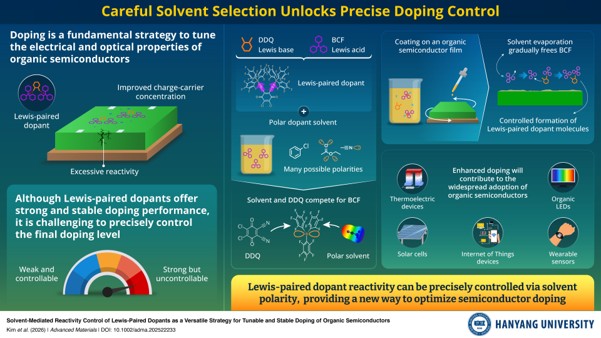
July 11: Lewis-paired dopants are a promising way to achieve strong, stable doping in organic semiconductors, but their high reactivity makes precise control over doping levels difficult. In a recent study, researchers from Korea tackled this issue by showing that solvent polarity can regulate dopant reactivity during processing. Using this new strategy, they achieved finely tunable, efficient, and stable doping across multiple organic semiconductors, supporting the development of next-generation flexible and sustainable organic electronics.
Organic semiconductors are paving the way for a new generation of lightweight, flexible electronics, including bendable displays, printable circuits, wearable sensors, and devices that harvest energy from their surroundings. A key factor behind the performance of these technologies is doping—a process by which molecules are introduced into a semiconductor to control the number of charge carriers it can support.
Achieving the right amount of doping, however, remains a major challenge in organic semiconductors. Researchers have long sought doping systems that combine three important characteristics: strong doping ability, high controllability, and long-term stability. A recent and promising development called Lewis-paired dopants addresses two of these problems. These complexes, formed when two complementary molecules known as a Lewis acid and a Lewis base interact, are remarkably stable and offer exceptional doping strength. Unfortunately, their high reactivity makes it difficult to control the final doping level of the semiconductor material, which needs to be fine-tuned rather than simply maximized.
To tackle this problem, a research team led by Professor Jaeyoung Jang and Dr. Sang Beom Kim from Hanyang University, Korea, investigated whether the reactivity of Lewis-paired dopants could be controlled through smart solvent selection. Their study, was made available online in the Advanced Materials journal on March 29, 2026, demonstrates a practical strategy for achieving strong, controllable, and stable doping in organic semiconductors by regulating dopant behavior through solvent polarity.
The researchers focused on a Lewis-paired dopant composed of two molecules, DDQ and BCF, and examined how it behaved in six solvents with different polarities. Using spectroscopy techniques and advanced computational modeling, they discovered that in highly polar solvents, BCF gets captured by solvent molecules, preventing the dopant pair from forming efficiently when the solution is applied to the semiconductor. Conversely, in solvents with moderate polarity, such as ethyl acetate, this capture is short-lived. Simply put, as the mildly polar solvent evaporates during processing, BCF is gradually released and free to pair up with DDQ. This enables fine-tuned control over doping without damaging the semiconductor film nor altering the dopant chemistry itself.
Using ethyl acetate as the processing solvent, the team achieved finely tunable doping across multiple organic semiconductors, even ones considered chemically difficult to dope. The resulting materials reached a high thermoelectric power factor and Seebeck coefficient, which are key performance metrics describing how effectively a material converts heat into electrical energy. “Our simple solvent-mediated strategy provides a new way to optimize semiconductor doping without designing entirely new dopant molecules,” says Prof. Jang. “This approach could pave the way to high-performance and stable organic thermoelectric materials for self-powered wearable devices and low-power sensors.”
Because precise control of charge carriers is important in many organic electronic technologies, the findings of this work have broad engineering implications. Potential applications include thermoelectric generators, solar cells, organic light-emitting diodes, healthcare sensors, and Internet-of-Things devices. “We believe this concept will influence the design of future organic electronic materials and help accelerate the development of next-generation flexible and sustainable electronics,” concludes Prof. Jang.
10, Jul 2026
Indian Railways Strengthens Safety Network with Rs 206 Crore Kavach Project in Northern Railway
New Delhi, July 10: Indian Railways has approved a major safety enhancement project worth Rs 206 crore for the deployment of the Kavach automatic train protection system across a 680-kilometre section of Northern Railway.
The initiative aims to further strengthen railway safety by introducing advanced technology designed to prevent train collisions, improve operational control, and provide enhanced protection during train movement.
Under the project, Kavach technology will be installed across selected sections of the Northern Railway network, enabling real-time communication between locomotives and railway signalling systems. The system will assist in preventing accidents caused by signal-related errors and improve the overall safety of train operations.
Railway officials said the project is part of Indian Railways’ ongoing efforts to modernise its safety infrastructure and expand the use of indigenous technology across the national rail network.
The implementation of Kavach is expected to improve passenger safety, enhance operational efficiency, and support the vision of building a safer and more technologically advanced railway system.
10, Jul 2026
Chapman Freeborn helps restore Air Zimbabwe’s Harare–London Gatwick route

July 10: Chapman Freeborn, the global aircraft charter and leasing specialist and part of Avia Solutions Group, has supported Air Zimbabwe with a tailored ACMI (Aircraft, Crew, Maintenance and Insurance) capacity solution for the planned resumption of direct scheduled services between Harare and London Gatwick.
Expected to restart by the end of July 2026, the route will reconnect Zimbabwe and the United Kingdom with direct scheduled flights for the first time in more than 14 years. The service will be operated by Spanish carrier Plus Ultra using an Airbus A330 aircraft under a long-term ACMI agreement, with initial operations expected to include three weekly frequencies between Harare and London Gatwick.
Under the agreement, Plus Ultra will provide the aircraft, crew, maintenance and insurance, while the flights will operate under Air Zimbabwe’s flight code. Chapman Freeborn delivered the ACMI and contract management support required to help structure the long-haul operation, working closely with all stakeholders throughout the planning process.
The resumption of the route marks more than the return of a direct air service. It restores a vital commercial, tourism and cultural link between Zimbabwe and the United Kingdom, while enhancing travel options for the Zimbabwean diaspora, business travellers and tourists. The service is also expected to strengthen direct air freight capacity for time-sensitive exports, including horticultural and other perishable products destined for the UK market.
“This is an important milestone for Air Zimbabwe and a significant step in restoring direct connectivity between Zimbabwe and the United Kingdom. We are proud to have played an important role in supporting this project, working closely with Air Zimbabwe and Plus Ultra to help deliver the right structure for the route.
Across Africa, we continue to see growing demand for flexible capacity solutions as airlines rebuild networks, respond to passenger demand and manage fleet requirements more efficiently. ACMI can play an important role in supporting that growth, particularly on strategic routes where speed, flexibility and operational reliability are essential,” said Linas Dovydenas, President – IMEA at Chapman Freeborn.
“Long-haul ACMI programmes require close coordination between airlines, operators, aviation authorities and commercial partners—from aircraft suitability and operational planning to regulatory compliance and service readiness. In this case, our team supported the project from a capacity and contract management perspective, helping bring together the right structure for a strategically important route. This project demonstrates how collaborative ACMI solutions can help airlines restore critical routes and return strategically important services to the market,” said Daniel Huggins, Director – ACMI & Leasing at Chapman Freeborn.
Chapman Freeborn’s dedicated ACMI team supports airlines worldwide with short-, medium- and long-term capacity requirements across narrowbody, widebody, regional and cargo aircraft. Through tailored aircraft leasing and ACMI solutions, the company helps carriers optimise fleet capacity, restore key routes and respond effectively to complex operational requirements.


