


10, Jul 2026
Gandhinagar to Witness Major Green Expansion Under Gujarat’s ‘Van Kavach’ Initiative
Gandhinagar, July 10: Gujarat is set to strengthen its environmental conservation efforts with the expansion of the ‘Van Kavach’ forest model, under which around 600 hectares of land in Gandhinagar will be developed into green zones.
The initiative aims to increase forest cover, promote biodiversity, and create sustainable green spaces in and around the state capital. The project will focus on scientific plantation techniques, ecosystem restoration, and long-term maintenance of the newly developed forest areas.
Officials said the expansion of the ‘Van Kavach’ model is part of Gujarat’s broader efforts to address environmental challenges, improve air quality, and enhance urban ecological balance.
The planned green cover development is expected to provide multiple environmental benefits, including carbon reduction, improved climate resilience, and increased habitat for native plant and animal species.
The state government has emphasised coordinated efforts among various departments and stakeholders to ensure effective implementation and long-term success of the project.
- 0
- By Neel Achary

10, Jul 2026
Jharkhand to Conduct ‘Chunav Pathshala’ at All Polling Booths for Electoral Roll Verification
Ranchi, July 10: The Jharkhand government will organise ‘Chunav Pathshala’ at all polling booths across the state on July 14 to facilitate electoral roll verification and assist citizens in updating their voter details.
The initiative, aimed at strengthening the accuracy of electoral rolls, will provide voters an opportunity to verify their information, raise corrections, and seek assistance regarding voter registration-related processes.
Officials associated with the election administration have been directed to ensure effective coordination and public participation during the programme. Booth-level officers will be present at polling stations to guide citizens through the verification process and address their queries.
The ‘Chunav Pathshala’ initiative is part of ongoing efforts to improve voter services, increase awareness, and ensure that eligible citizens are properly included in the electoral database.
Authorities have appealed to voters to participate in the programme and verify their details to help maintain updated and error-free electoral rolls ahead of future elections.
10, Jul 2026
Auckland Sky Tower Showcases India’s Tricolour During PM Modi’s Historic Visit
Auckland, July 10: Auckland’s iconic Sky Tower was illuminated in the colours of the Indian national flag, marking Prime Minister Narendra Modi’s historic visit to New Zealand and celebrating the strong and growing ties between the two countries.
The special illumination featured the saffron, white, and green colours of the Indian tricolour, symbolising friendship, cooperation, and the deepening partnership between India and New Zealand.
The gesture reflected the warm welcome extended to Prime Minister Modi during his visit and highlighted the close cultural, economic, and diplomatic relations shared by the two nations.
The landmark display attracted attention across Auckland and served as a symbolic celebration of India-New Zealand relations, with communities joining in commemorating the occasion.
Prime Minister Modi’s visit is expected to further strengthen bilateral cooperation in areas including trade, technology, education, innovation, and people-to-people connections.
10, Jul 2026
Indian Railways Revises Advance Ticket Booking Period, Introduces 60-Day Reservation Window
New Delhi, July 10: Indian Railways has implemented its revised advance reservation policy, bringing a major change to the ticket booking system for passengers travelling across the country.
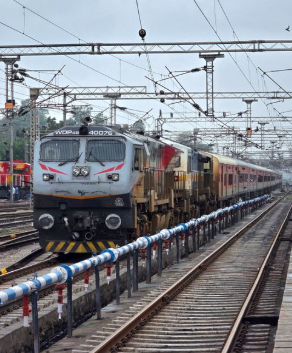
As per the updated policy, passengers can now book train tickets up to 60 days in advance, replacing the earlier 120-day advance reservation period. The revised booking window has come into effect from Friday and will apply to future reservations across the railway network.
The move is aimed at making the ticket reservation process more efficient and aligned with passenger travel patterns. Railway authorities have advised travellers to plan their journeys according to the new reservation timeline while booking tickets through authorised railway platforms and reservation counters.
The revised policy is expected to provide greater clarity in advance planning and help improve the overall management of train reservations.
Indian Railways continues to introduce passenger-friendly measures to enhance travel convenience, improve service delivery, and ensure a smoother booking experience for millions of passengers nationwide.
10, Jul 2026
Intuitive signs MoU with Fortis Hospital to establish India’s first Total Program Observation site in a non-metro city
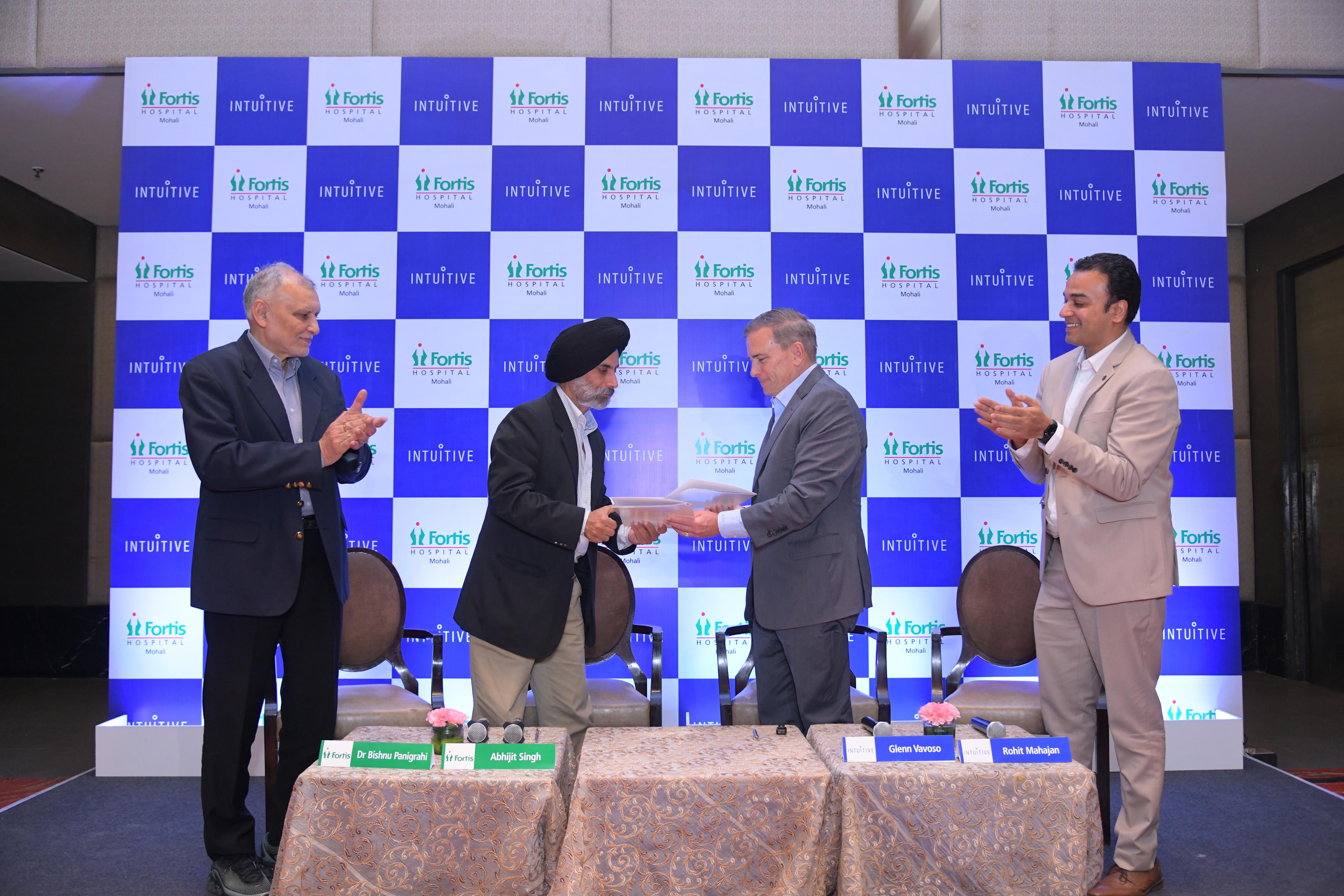
July 10: Intuitive, a global technology leader in minimally invasive care and the pioneer of robotic-assisted surgery (RAS) and Fortis Mohali, today announced the signing of a Memorandum of Understanding (MoU) to establish India’s first Total Program Observation (TPO) site in a non–metro city. The Memorandum of Understanding (MoU) was signed in the presence of Glenn Vavoso , Senior Vice President and President, Intuitive Asia Pacific; and Rohitt Mahajan , Vice President and General Manager, Intuitive India, Abhijit Singh , Head – Strategic Business Unit (SBU), Fortis Mohali; Dr. Bishnu Panigrahi , Group Head – Medical Strategy and Operations, Fortis Healthcare;
The collaboration reflects a shared vision to support the next phase of robotic-assisted surgery in India, with a focus on programme maturity, structured training, patient safety and multidisciplinary readiness. The TPO site at Fortis Hospital Mohali will create a peer-to-peer learning platform for healthcare professionals to observe how an established robotic programme is built, governed and sustained in a real-world Indian healthcare setting.
Fortis Hospital Mohali has developed a multidisciplinary robotic-assisted surgery programme across specialties including gynaecology, gastrointestinal oncology, urology and head and neck surgery. The hospital has completed more than 3,600 robotic-assisted procedures, supported by 18 robotic surgeons and two da Vinci surgical systems. Serving patients across Punjab, Haryana, Himachal Pradesh, Chandigarh and neighbouring regions, Fortis Hospital Mohali offers a valuable non–metro reference point for institutions looking to strengthen robotic-assisted surgery programmes in similar healthcare settings.
Through the TPO site, visiting surgeons, care teams, hospital administrators and executive leaders will have the opportunity to engage in structured peer-to-peer learning with an established robotic-assisted surgery programme. Beyond clinical observation, participants will gain exposure to the broader elements that support programme maturity, including surgeon training pathways, multidisciplinary team coordination, operating room workflows, patient safety processes, programme governance, executive alignment, financial planning and long-term service development.
Sharing a global perspective, Glenn Vavoso, Senior Vice President and President, Intuitive Asia Pacific, said, “Across the world, we are seeing healthcare systems increasingly focused on building robotic-assisted surgery programmes that are sustainable, scalable and integrated into broader models of clinical excellence. Total Program Observation sites support this by enabling healthcare teams to observe established programmes and apply relevant learnings within their own institutions. Fortis Hospital Mohali’s inclusion in this global network is a testament to India’s growing leadership in robotic-assisted surgery and its commitment to advancing high-quality, minimally invasive care through collaboration, education and peer learning.”
Commenting on India’s evolving robotic-assisted surgery landscape, Rohitt Mahajan, Vice President and General Manager, Intuitive India, said, “Robotic-assisted surgery in India is entering a new phase of growth, where success will be defined not just by technology adoption, but by building sustainable, high-quality surgical programmes. Fortis Hospital Mohali’s recognition as India’s first Total Program Observation site in a non–metro city reflects the growing maturity of the ecosystem and the important role experienced institutions can play in advancing best practices, strengthening capabilities and expanding access to minimally invasive care across the country.”
Commenting on the collaboration, Abhijit Singh, Head – Strategic Business Unit (SBU), Fortis Mohali, said, “Robotic-assisted surgery continues to expand across India, healthcare institutions are increasingly looking to understand how to build sustainable programmes around the technology. Total Program Observation supports this need by enabling structured peer-to-peer learning across clinical, operational and leadership functions. It also reflects a shared commitment to strengthening training, sharing best practices in programme governance and safety processes, and helping hospitals build the capabilities required to deliver advanced minimally invasive care with greater consistency.”
This collaboration is expected to strengthen India’s robotic-assisted surgery ecosystem by creating a practical learning platform for hospitals seeking to build or enhance their own programmes, particularly beyond major metropolitan centres.
10, Jul 2026
Sensex, Nifty Rally Nearly 1 pc on Strong IT and Financial Sector Support
Mumbai, July 10: Indian equity markets ended the trading session on a positive note, with benchmark indices Sensex and Nifty gaining around 1%, led by strong performances from information technology and financial sector stocks.
The BSE Sensex witnessed broad-based buying interest, while the Nifty 50 also moved higher as investors responded positively to improving market sentiment and renewed confidence in key sectors.
IT stocks emerged as major contributors to the rally, supported by optimism around technology sector growth and positive corporate developments. Financial stocks, including banking and lending companies, also recorded strong gains, providing further momentum to the market.
Analysts said improved investor participation, favourable global cues, and buying interest in heavyweight stocks supported the upward movement. Market participants will continue to monitor corporate earnings, economic indicators, and global developments for further direction.
The session reflected renewed investor confidence, with sectoral strength helping Indian benchmarks close firmly in the green.
10, Jul 2026
PM Modi Receives Warm Welcome in Auckland
Auckland, July 10: Prime Minister Narendra Modi arrived in Auckland on Friday, marking the beginning of his visit to New Zealand. He was warmly received by New Zealand Prime Minister Christopher Luxon upon arrival.
The two leaders exchanged greetings and shared a warm embrace, reflecting the close and friendly relations between India and New Zealand.
During his visit, Prime Minister Modi is expected to hold discussions with Prime Minister Luxon on strengthening bilateral cooperation and expanding partnerships in areas of mutual interest, including trade, investment, education, technology, and regional issues.
The visit highlights the commitment of both countries to further deepen their relationship and explore new avenues of collaboration for mutual growth and development.
10, Jul 2026
Gujarat Honoured with National Horticulture Excellence Award
Gandhinagar, July 10: Gujarat has been conferred a national award in recognition of its outstanding achievements in the horticulture sector, reflecting the state’s sustained efforts to boost agricultural productivity, promote innovation, and enhance farmers’ livelihoods.
The award acknowledges Gujarat’s significant progress in expanding horticultural cultivation, improving productivity, adopting modern farming practices, and implementing farmer-centric initiatives. State officials said the recognition underscores the government’s commitment to strengthening the horticulture sector through technology-driven interventions, efficient resource management, and value-chain development.
The state government attributed the achievement to the collective efforts of farmers, agricultural scientists, extension workers, and various departments engaged in promoting sustainable horticultural development. It noted that continuous policy support, improved irrigation infrastructure, and the adoption of advanced cultivation techniques have contributed to Gujarat’s impressive performance.
Officials said the recognition would further encourage the state to accelerate initiatives aimed at increasing horticultural production, enhancing market access, promoting exports, and improving income opportunities for farmers.
The award reaffirms Gujarat’s position as one of the country’s leading horticulture-producing states and highlights its commitment to advancing sustainable and inclusive agricultural growth.
10, Jul 2026
Flood Relief: Gujarat Disburses Financial Assistance to 2,500 Families in Surat
Surat, July 10: The Gujarat government has provided financial assistance to more than 2,500 families affected by the recent floods in Surat as part of its ongoing relief and rehabilitation efforts.
The aid was disbursed to eligible beneficiaries to help them cope with immediate losses and support their recovery. The initiative is part of the state government’s broader commitment to ensuring timely assistance for those impacted by the natural calamity.
According to officials, the financial assistance was released following damage assessments conducted by the district administration. Authorities said the relief process is continuing, and eligible families yet to receive assistance will be covered in subsequent phases.
The state government has directed officials to expedite relief measures, monitor the rehabilitation process, and ensure that all genuine claims are addressed promptly. It also reaffirmed its commitment to restoring normalcy in flood-affected areas through sustained support and rehabilitation initiatives.
The assistance is expected to provide much-needed relief to thousands of affected residents as recovery efforts continue across the flood-hit areas of Surat.
10, Jul 2026
Investor Confidence Remains Strong as SIP Inflows Rise, Gold ETFs See Record Surge
Mumbai, July 10: Investor participation in India’s mutual fund industry remained resilient in June, with Systematic Investment Plan (SIP) contributions climbing to a three-month high, while Gold Exchange Traded Funds (ETFs) witnessed a sharp jump in inflows amid heightened interest in safe-haven investments.
The latest industry data reflects continued confidence among retail investors, who maintained steady SIP investments despite market fluctuations. The rise in monthly SIP contributions underscores the growing preference for disciplined, long-term wealth creation through mutual funds.
At the same time, Gold ETFs recorded a remarkable surge in inflows of over 570 per cent compared to the previous month, signalling increased demand for gold as investors sought to diversify their portfolios and hedge against global economic uncertainty.
Analysts said the twin trends point to a balanced investment strategy, with investors continuing to invest in equity markets through SIPs while allocating more funds to gold to manage risk and preserve wealth.
The robust inflows into both SIPs and Gold ETFs highlight the evolving investment landscape in India, where retail investors are increasingly embracing diversified portfolios to navigate changing market conditions.


