


9, Jul 2026
Three Trekkers Go Missing on Malyagiri Hill in Odisha’s Angul; Search and Rescue Operation Underway
Angul, July 9 (UDN): A major search and rescue operation is underway after three trekkers reportedly went missing while trekking on Malyagiri Hill, the highest peak in Odisha, located in Angul district.

According to official sources, the group had ventured into the hilly terrain for a trekking expedition when three members lost contact with the rest of the team. Following information from fellow trekkers and local residents, district authorities, police, forest personnel, and trained rescue teams were immediately mobilised to trace the missing individuals.
Rescue teams are combing the dense forest and rugged hill slopes despite challenging terrain and adverse weather conditions. Officials said every effort is being made to locate the trekkers safely, with search operations continuing on multiple routes leading to the hilltop.
Authorities have appealed to the public to avoid spreading unverified information and urged trekkers and tourists to exercise caution while venturing into forested and mountainous areas, particularly during the monsoon season when trails become slippery and visibility is reduced.
The identities of the missing trekkers have not yet been officially disclosed. Further details are awaited as the rescue operation continues.
- 0
- By Neel Achary

9, Jul 2026
International Workshop on AI-Driven Semiconductor and Energy Efficient Hardware, Concludes Successfully at T-Hub, Hyderabad
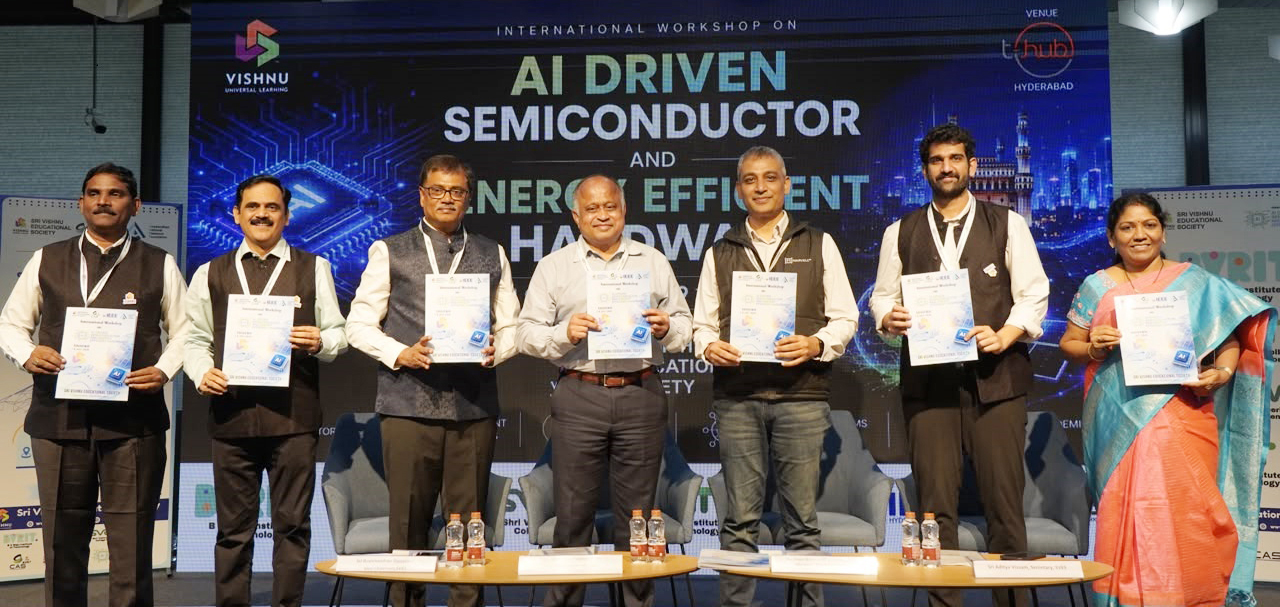
Hyderabad, July 09: A two-day International Workshop on Artificial Intelligence Driven Semiconductor and Energy Efficient Hardware was successfully organized on 7–8 July 2026 at T–Hub, Hyderabad; by the Sri Vishnu Educational Society (SVES), with active contribution from Penn State University, USA. SVES comprising Vishnu Institute of Technology (VIT), Shri Vishnu Engineering College for Women (SVECW), BVRIT Hyderabad College of Engineering for Women (BVRITH), and B V Raju Institute of Technology (BVRIT) technically cosponsored by Anusandhan National Research Foundation (ANRF), IEEE CAS Chapter Hyderabad section.
The workshop brought together more than 350 eminent academicians, researchers, industry leaders, policymakers and students from across India and abroad to deliberate on the rapidly evolving landscape of Artificial Intelligence, Very Large-Scale Integration, semiconductor technologies, advanced packaging, photonics, edge computing and intelligent power electronics and hardware systems.
The workshop commenced with an inspiring inaugural session, during which Mr. Aditya Vissam, Secretary, Sri Vishnu Educational Society (SVES), addressed the gathering. He highlighted the visionary initiatives undertaken by SVES in transforming its educational institutions to meet the demands of the Artificial Intelligence era. Elaborating on the revolutionary measures introduced across SVES institutions, he emphasized the integration of AI into teaching, learning, research, innovation, and skill development to prepare students for emerging technologies and future careers. He also underscored India’s growing opportunities in semiconductor manufacturing, chip design, advanced packaging, and AI–driven technologies, stressing the need for engineering graduates to acquire industry-relevant competencies. Motivating the participants, he encouraged students to actively engage with the eminent speakers, make the most of the learning opportunities offered by the workshop, and equip themselves to contribute meaningfully to India’s vision of becoming a global semiconductor powerhouse. His inspiring address set an enthusiastic tone for the two-day workshop and was warmly appreciated by the participants.
The inaugural session was followed by an address by Mr Ravichandran Rajagopal, Vice chairman of SVES. An inspiring keynote address by Prof. Madhavan Swami Nathan of Penn State University, USA, who highlighted the future of 3D Heterogeneous Integration and its transformative role in next-generation semiconductor systems. Technical sessions throughout the first day featured and distinguished experts including Mrs. Nupur Shah, Mr. Navin Bishnoi of Marvell Technology, Prof. Sharath Sriram of RMIT University, Mr. Ravikanth Reddy of NXP, Dr. Charan Gurumurthy of Tata Electronics, Dr. Bhagwati Prasad of IISc Bangalore, Dr. Suraj Rengarajan of Applied Materials India, Dr. Nikita Ambasana of SimYog Technology, and Mr. Sharat Babu Kotamraju of AMD. Their presentations covered AI-enabled network transformation, semiconductor innovation, bio sensing, edge computing, memory technologies, advanced packaging, semiconductor testing, and Physical AI.
A major highlight of the first day was an engaging panel discussion on “Education, Research, and Innovation Ecosystem for VLSI & Semiconductors” where experts from leading universities and industries deliberated on strengthening India’s semiconductor ecosystem through collaborative research, industry-academia partnerships, and skill development. Another thought-provoking panel focused on Edge AI in Semiconductors, addressing FPGA acceleration, chip validation, processor architectures, and future semiconductor design paradigms.
The second day featured advanced technical sessions by national and internationally acclaimed speakers including Prof. Rohit Sharma (IIT Ropar), Dr. Manish Kumar Hooda (India Semiconductor Mission), Prof. Christos Argyropoulos (Penn State University, USA), Dr. Yutaka Uematsu (Hitachi, Japan), Mr. Paul Ilanghovan (Kaynes Semicon), Dr. Sai Rama Krishna Malladi (IIT Hyderabad), and Dr. Harsha Sanjeev (CMTI, Bangalore). The deliberations focused on signal and thermal co-design, startup ecosystems, graphene-based terahertz photonics, advanced semiconductor devices, MEMS technologies, and photonics characterization.
The workshop also featured an insightful panel discussion on “From Silicon to Systems: Power-Aware AI Computing through Algorithm and Hardware Co-Optimization” emphasizing sustainable AI hardware development and next-generation computing architectures.
The concluding technical sessions included lectures on VLSI design for neural networks, energy–efficient FPGA accelerators, advanced packaging for SiC and GaN technologies, AI-enabled metrology tools, power electronics for AI infrastructure, and advanced glass substrate metallization delivered by Prof. Asral of UNIMAP, Malaysia, Dr. Akshay of IIT Bhubaneswar, Prof. Satya Savithri, Director R & D, JNTUH, Mr. Vijay of IVP Semiconductors, Mr. Parikshit Sengupta of Horiba India, Prof. Pradeep Dixit, IIT Bombay.
The speakers were honoured by Mr. K. Sai Sumanth, Joint Secretary, SVES. These sessions provided participants with valuable insights into emerging research directions and industrial practices shaping the future semiconductor ecosystem.
The workshop served as an excellent platform for knowledge exchange between academia, industry, and research organizations, inspiring students and faculty to pursue innovation in semiconductor technologies and AI-enabled hardware systems. The event concluded with a Vote of Thanks by Dr. Sanjay Dubey, Principal BVRIT and SVES Team, expressing gratitude to all the distinguished speakers, panellists, organizers, participants, and supporting institutions for making the workshop a grand success.
9, Jul 2026
Security Alert at Puri Srimandir Ahead of Rath Yatra; Kolkata Man Detained for Allegedly Flying Drone Over Temple
Puri, July 9 (UDN): Security agencies swung into action after a drone was allegedly flown over the Shree Jagannath Temple in Puri on Thursday morning, triggering fresh concerns over the security of the 12th-century shrine just days ahead of the annual Rath Yatra.

Representational Image
According to officials, the unmanned aerial vehicle was seen hovering over the temple complex for several minutes, including around the sacred Neelachakra, reportedly capturing aerial photographs and videos. The sighting drew the attention of security personnel deployed around the temple, where stringent surveillance measures are in place due to the upcoming festival.
Following a swift search operation, a special security team traced the suspected drone operator near Mangu Math in Mati Mandap Sahi, close to the temple. The individual, identified as Jayakrishna Mondal, a resident of Kolkata, was detained for questioning. The drone was seized and handed over to Singhadwar Police Station along with the operator.
Police have launched an investigation to examine the drone’s stored footage and determine the nature of the images and videos captured during the flight. Authorities are also verifying whether the operator had obtained the mandatory permissions required for drone operations in the area and whether any provisions of aviation or security regulations were violated.
The incident has renewed concerns over the enforcement of the no-fly zone around the Shree Jagannath Temple, particularly as Puri prepares to host lakhs of devotees during Rath Yatra. Security agencies are expected to review existing surveillance and anti-drone measures to prevent similar incidents during the festival.
Further investigation is in progress.
8, Jul 2026
Akhil Bharatiya Jansangh Charts Independent Electoral Path, Uttar Pradesh Polls First Milestone
New Delhi, July 8, 2026
The Akhil Bharatiya Jansangh (ABJS) has announced that it will contest all upcoming local body, Assembly and Lok Sabha elections independently across the country. The party has also appointed senior leader Bharat Godhania as the Convener of the National Election Management and Campaign Committee. The announcement was made during a press conference held at the Press Club of India on Wednesday.
Party leaders said that a National Election Management Committee will be constituted under the leadership of Bharat Godhania to oversee the party’s election strategy, organisational expansion and campaign activities across the country. They said the party would field its candidates in all elections across the country, including the upcoming Uttar Pradesh Assembly elections, with full preparation.
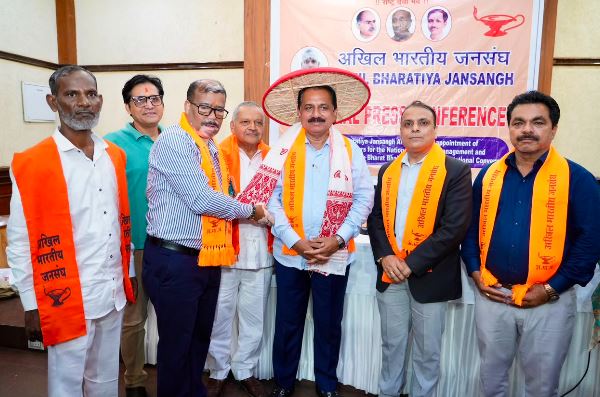
National General Secretary Rakesh Kaul Gorkha said that during the celebration of the 126th birth anniversary of Dr. Syama Prasad Mookerjee, held at the Constitution Club on July 5, the party’s Parliamentary Board decided to appoint Bharat Godhania as the Convener of the National Election Management and Campaign Committee. He said that the committee, under Godhania’s leadership, would formulate strategies for all upcoming elections and lead the party’s election campaign.
Pramod Sopti, President of the Delhi unit, recalled the contributions of Dr. Syama Prasad Mookerjee, Pandit Deendayal Upadhyaya and Prof. Balraj Madhok, and said the party remains committed to taking their ideals to every citizen. He added that under the leadership of National President Acharya Dr. Bharat Bhushan Pandey, the organisation has been continuously working to strengthen itself across 13–14 states.
Assam State President Rugeswar Khundwal said that the Election Management Committee has been constituted to strengthen the party’s election preparations. He expressed confidence that under the leadership of Bharat Godhania, the party would contest the upcoming Uttar Pradesh elections and other elections across the country with greater organisational strength.
Addressing the gathering, Bharat Godhania said that he would discharge the responsibility entrusted to him with complete dedication. He said the party would strengthen its organisation down to the booth level and contest all upcoming elections across the country with full strength.
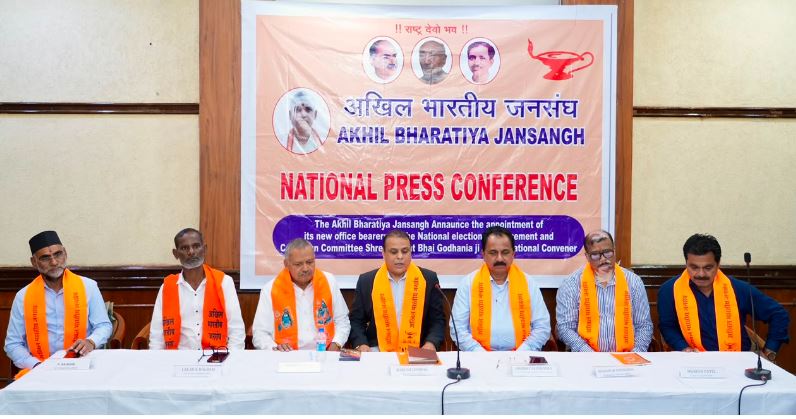
The press conference was attended by P. Kaushik (Vice President, Rajasthan), Lalaji K. Balram (Convener, Telangana), Pramod Sopti (President, Delhi), Rakesh Kaul Gorkha (National General Secretary), Bharat Godhania (Convener, National Election Management and Campaign Committee), Rugeswar Khundwal (President, Assam), and Mukesh Patel (General Secretary, Gujarat), along with several other national and state office-bearers of the party.
The party leadership said that Akhil Bharatiya Jansangh will accelerate its organisational expansion in the coming days and contest all upcoming elections across the country independently with full preparation and organisational strength.
8, Jul 2026
Genespire and SR-TIGET Show Durable Preclinical Efficacy of Liver-Directed Gene Therapy for Methylmalonic Acidemia
Milan, Italy, July 08 — Genespire, in collaboration with researchers at the San Raffaele Telethon Institute for Gene Therapy (SR-TIGET), has today announced the publication of preclinical data supporting the potential of its liver-directed immune-shielded lentiviral gene therapy approach to treat methylmalonic acidemia (MMA), a severe inherited metabolic disorder.
The findings, published in the Journal of Hepatology, show that a single systemic administration of a lentiviral vector encoding the MMUT gene led to sustained improvements in disease features in a validated mouse model of MMA, with effects lasting for the average lifespan of laboratory mice. Since the mice were treated when young, the study supports the durability of the gene therapy through postnatal growth and maturation of the liver.
MMA is caused by a deficiency of methylmalonyl-CoA mutase, an enzyme that plays a critical role in the body’s metabolism of food. Its absence results in the accumulation of toxic metabolites that lead to recurrent metabolic crises, growth failure, neurological impairment, and multi-organ damage.
In the study, researchers also treated mice with a dose containing an optimized MMUT transgene, thereby improving therapeutic efficacy. In the same mouse model of MMA, this version exhibited a dose-dependent improvement of metabolomic biomarkers, with gene transfer efficiency exceeding 80% of the liver.
The study also highlights that genetically corrected cells in the liver may, over time, replace the diseased ones, suggesting that therapeutic efficacy may progressively improve even when starting at lower initial doses.
“Together, these findings indicate that Genespire is on a clear path towards the long-term correction of metabolic diseases which impact the liver and other organs,” said Lucia Faccio, CEO of Genespire. “We believe our approach has the potential to translate into human health in the form of a single-administration treatment for patients with MMA, and are committed to continuing our efforts in bringing our lead asset for MMA, GENE202, to the clinic. We would like to extend our gratitude to everyone involved in the research project, especially those at the SR-TIGET.”
“We are confident that this study, together with other previous studies from our group at SR-TIGET, provides a comprehensive pre-clinical data package enabling the initiation of clinical testing in pediatric patients affected by MMA” concludes Dr Alessio Cantore, group leader at SR-TIGET and Associate Professor at Vita-Salute San Raffaele University, who supervised and coordinated the study and signed it as senior author.
8, Jul 2026
Next Frontier in Indian Textiles: How Everything Furr is Crafting One-of-a-Kind Luxury
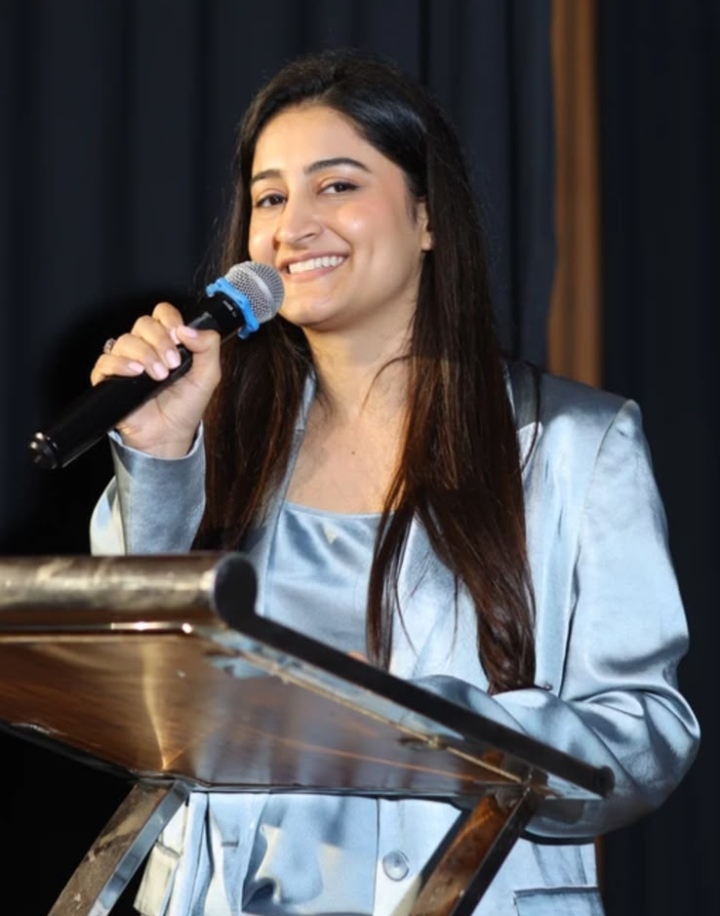
My journey to entrepreneurship has been shaped by a highly diverse background. I started in the field of science, which instilled in me a strong analytical mindset. Later, I transitioned into the corporate world, working in the fast-paced consulting sector in Gurgaon. This consulting experience was pivotal, as it equipped me with the strategic skills, business acumen, and operational knowledge required to build a brand from the ground up.
8, Jul 2026
Poshan Tracker Achieves Milestone with 8.93 Crore Beneficiary Coverage
New Delhi, July 8: The Poshan Tracker platform has achieved a major milestone by recording 8.93 crore beneficiaries across the country, strengthening the government’s efforts to improve nutrition monitoring and service delivery.
The digital platform has become an important tool for tracking the progress of nutrition programmes and ensuring better coordination among frontline workers, beneficiaries, and implementing agencies. It enables real-time monitoring of key services provided to children, pregnant women, and lactating mothers.
Through digital record-keeping and data-driven monitoring, Poshan Tracker has helped improve transparency, efficiency, and accountability in the delivery of nutrition services. The platform assists frontline workers in maintaining beneficiary records, tracking health indicators, and ensuring timely support reaches those in need.
Officials said the nationwide adoption of the platform reflects the growing role of technology in strengthening public welfare programmes. The data generated through Poshan Tracker also helps authorities assess ground-level requirements and plan more effective interventions.
With its expanding reach, Poshan Tracker continues to support efforts towards improving nutrition outcomes and ensuring wider access to essential services for vulnerable sections of society.
8, Jul 2026
MP Expands Digital Healthcare Reach Under Ayushman Bharat Mission
Bhopal, July 8: The Madhya Pradesh Government is working to expand digital healthcare services to the remotest parts of the state under the Ayushman Bharat Digital Mission (ABDM), with the aim of improving access to quality and affordable healthcare through technology.
The initiative focuses on strengthening digital health infrastructure and connecting patients, healthcare institutions, and service providers through an integrated digital ecosystem. The expansion is expected to benefit people living in rural and remote areas by making healthcare services more accessible and efficient.
Through the use of digital platforms, citizens will be able to access healthcare facilities more conveniently, while medical institutions will benefit from improved coordination, better record management, and smoother delivery of services.
Officials said the move will help reduce geographical barriers in healthcare access and support timely medical assistance for people in underserved regions. The government is also focusing on promoting the use of digital tools to improve transparency, efficiency, and the overall quality of healthcare services.
The expansion of ABDM services is part of Madhya Pradesh’s broader efforts to use technology-driven solutions to strengthen the health sector and ensure that modern healthcare facilities reach every section of society.
8, Jul 2026
Fibe’s New Campaign Shows Why Aspirations Shouldn’t Come with Compromises
Pune, July 08: Fibe, a digital lending platform in India, today unveiled its new brand film campaign created using AI. The campaign is rooted in a simple yet deeply relatable truth, that as aspirations keep expanding, financial constraints often step in as the unwelcome “pause button,” pushing people to delay, scale down, or rethink their plans. The campaign explores how timely access to credit can help consumers pursue important life goals.
The campaign, titled Jiyo Full Size, reflects the realities of today’s Indian consumers, who are increasingly focused on improving everyday living, whether it is managing essential expenses, upgrading lifestyles, planning meaningful experiences, or investing in personal goals. At the heart of this three-part AI-led brand film series is the familiar Indian expression, “Paisa kahan se aayega?”, which serves as the creative springboard for the campaign.
This witty and engaging campaign transforms the familiar expression into the memorable sonic mnemonic, “Paisa yahan se aayega”, creating a distinctive thread across the three films while reinforcing the campaign‘s central idea.
Across the three films, Fibe uses humour and visual metaphors to show how financial constraints can make life’s biggest aspirations feel unexpectedly small. A groom’s wedding horse suddenly shrinks, an international flight becomes miniature, and a woman’s dream home setup is reduced in size. As each moment returns to its full scale, the idea behind the campaign comes to life.
Speaking about the campaign, Sudesh Shetty, Chief Marketing Officer, Fibe, said, “Our latest campaign is called Jiyo Full Size and is a natural extension of what Fibe has always stood for – enabling the aspirations of India’s middle-income consumers. Whether it’s a dream wedding, a long-awaited holiday or creating a home you truly love, these are some of the moments for which consumers most often turn to personal loans, but they’re also the moments where financial constraints can sometimes lead to compromise. We wanted to capture that reality in a way that felt relatable, optimistic and memorable. AI gave us a fresh creative canvas to bring this idea to life, while staying true to our belief that aspirations deserve to be lived full size.”
The campaign was developed in partnership with Punt Creative, with AI serving as a key creative tool to create a distinctive visual language for the films. Rather than using AI simply as a production technique, it was used to translate a familiar consumer insight into imaginative visual storytelling.
Commenting on the campaign, Harsh Shah, Managing Director, Punt Creative, said, “For young India, dreams are never small. The challenge often comes now when money becomes the reason to compromise. With this campaign, we wanted to capture that feeling in a fresh, entertaining, and highly visual way. AI helped us dramatise the emotion of dreams becoming smaller in a format that is instantly relatable and memorable. Through the campaign we are reinforcing Fibe’s promise of helping consumers access timely credit so they do not have to scale down life’s big plans.”
The campaign is currently live across Fibe’s digital and social media platforms and is aimed at engaging digitally savvy consumers across India. Fibe offers financing of up to ₹10 lakh through its app, built for salaried professionals across India who need access to credit for the moments that matter most to them.
8, Jul 2026
IIT Bhubaneswar Lends Technical Expertise for Safe Construction of Kendrapara Rath Yatra Chariot
Kendrapara, July 8 (UDN): In a unique blend of tradition and technology, the Indian Institute of Technology (IIT) Bhubaneswar is providing engineering support for the construction of the chariot for the upcoming Baladevjew Temple Rath Yatra at Ichapur in Odisha’s Kendrapara district.
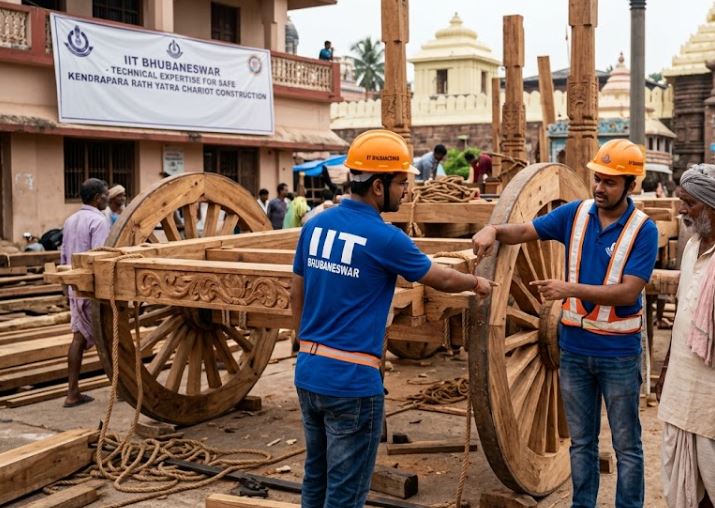
Representational Image
The annual Rath Yatra, scheduled to commence on July 16, will witness the procession of the temple’s towering 67-foot-high, 14-wheeled chariot, ‘Bramahataladhwaja’. The initiative follows last year’s festival, during which four wheels of the chariot were damaged, causing the structure to tilt while being pulled by devotees.
To strengthen safety measures, the temple administration sought technical guidance from experts of the School of Mechanical Sciences, IIT Bhubaneswar. The institute’s engineering team has been monitoring the construction process and advising temple authorities on structural stability, material selection and safe operational practices.
During a recent inspection, IIT experts recommended the use of fresh timber for the construction wherever possible and highlighted the importance of maintaining uniform structural strength across the chariot. Owing to a shortage of quality timber, however, the temple authorities are reusing some components from last year’s chariot after thorough inspection and necessary repairs.
As part of the safety overhaul, 10 new wheels are being built, while four wheels from the previous chariot are being refurbished for reuse. Around 45 traditional carpenters have been engaged in the construction work, which began in early May.
The IIT team also surveyed the nearly 2-kilometre route between the Baladevjew Temple and the Mausima Temple and identified sections of uneven road that could affect the smooth movement of the massive chariot. The experts recommended repairs to the procession route before the festival to minimise operational risks.
Temple authorities said approximately 2,700 cubic feet of sal and other timber has been procured for the construction, although around 4,000 cubic feet is required to build the chariot entirely with new wood. The shortage has necessitated the selective reuse of timber without compromising safety standards.
The collaboration between IIT Bhubaneswar and the temple administration is being seen as an innovative effort to integrate scientific expertise with traditional craftsmanship. Authorities expressed confidence that the engineering intervention will help ensure the safe conduct of one of Kendrapara’s most significant religious festivals while preserving its centuries-old heritage.