


8, Jul 2026
IIT Bhubaneswar Lends Technical Expertise for Safe Construction of Kendrapara Rath Yatra Chariot
Kendrapara, July 8 (UDN): In a unique blend of tradition and technology, the Indian Institute of Technology (IIT) Bhubaneswar is providing engineering support for the construction of the chariot for the upcoming Baladevjew Temple Rath Yatra at Ichapur in Odisha’s Kendrapara district.
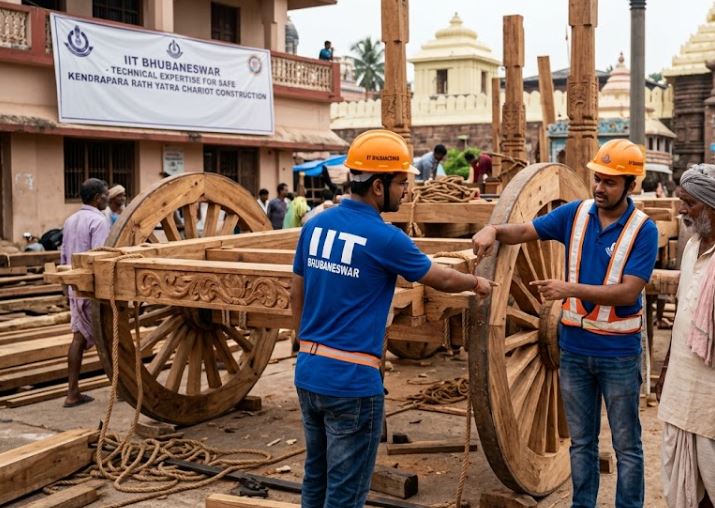
Representational Image
The annual Rath Yatra, scheduled to commence on July 16, will witness the procession of the temple’s towering 67-foot-high, 14-wheeled chariot, ‘Bramahataladhwaja’. The initiative follows last year’s festival, during which four wheels of the chariot were damaged, causing the structure to tilt while being pulled by devotees.
To strengthen safety measures, the temple administration sought technical guidance from experts of the School of Mechanical Sciences, IIT Bhubaneswar. The institute’s engineering team has been monitoring the construction process and advising temple authorities on structural stability, material selection and safe operational practices.
During a recent inspection, IIT experts recommended the use of fresh timber for the construction wherever possible and highlighted the importance of maintaining uniform structural strength across the chariot. Owing to a shortage of quality timber, however, the temple authorities are reusing some components from last year’s chariot after thorough inspection and necessary repairs.
As part of the safety overhaul, 10 new wheels are being built, while four wheels from the previous chariot are being refurbished for reuse. Around 45 traditional carpenters have been engaged in the construction work, which began in early May.
The IIT team also surveyed the nearly 2-kilometre route between the Baladevjew Temple and the Mausima Temple and identified sections of uneven road that could affect the smooth movement of the massive chariot. The experts recommended repairs to the procession route before the festival to minimise operational risks.
Temple authorities said approximately 2,700 cubic feet of sal and other timber has been procured for the construction, although around 4,000 cubic feet is required to build the chariot entirely with new wood. The shortage has necessitated the selective reuse of timber without compromising safety standards.
The collaboration between IIT Bhubaneswar and the temple administration is being seen as an innovative effort to integrate scientific expertise with traditional craftsmanship. Authorities expressed confidence that the engineering intervention will help ensure the safe conduct of one of Kendrapara’s most significant religious festivals while preserving its centuries-old heritage.
- 0
- By Neel Achary

8, Jul 2026
Adani Energy Project Opens New Chapter in Kenya-India Economic Partnership
New Delhi, July 8: The Adani Energy project has marked a significant step forward in strengthening economic cooperation between Kenya and India, paving the way for a new phase of collaboration in the energy sector.
The project is expected to enhance infrastructure development, support Kenya’s energy requirements, and deepen bilateral ties between the two countries. The initiative reflects the growing partnership between India and Kenya in areas including investment, technology, and sustainable development.
The development comes as both nations continue to explore opportunities for greater cooperation in key sectors. Energy infrastructure remains a major area of focus, with investments aimed at improving reliability, expanding capacity, and supporting economic growth.
The project is also seen as a reflection of the increasing role of Indian companies in Africa’s infrastructure and development landscape. Through such partnerships, India and Kenya are working towards strengthening trade and investment relations while creating new opportunities for mutual growth.
Officials said the initiative represents a broader commitment to expanding India-Kenya cooperation and building stronger economic links between the two nations.
8, Jul 2026
India’s Finest. World’s Best. The Leela Ranked the World’s 2 Best Hotel Brand in the Travel plus Leisure World’s Best Awards 2026 Survey

India, July 08: The Leela Palaces, Hotels and Resorts has been ranked the #2 Best Hotel Brand in the World in the Travel + Leisure World’s Best Awards 2026 Survey, one of the travel industry’s most prestigious global rankings. Voted by the discerning Travel + Leisure readers from around the world, the recognition places The Leela among the world’s finest luxury hospitality brands and reinforces its position as the leading Indian luxury hospitality brand on the global stage. Further strengthening this achievement, The Leela Palace Udaipur has been ranked the No. 2 Resort in India and is featured in the top 100 Hotels in the World, while The Leela Palace New Delhi has been recognised and ranked #2 among the Best City Hotels in India in the same survey.
As The Leela celebrates Four decades of True Indian Luxury, this recognition marks another defining milestone in the brand’s journey. Having previously been ranked the World’s Best Hotel Brand in 2020 and 2021 and #3 in 2023 and 2024, this latest recognition reflects four decades of consistently delivering gracious Indian hospitality, exceptional guest experiences and the timeless philosophy of Atithi Devo Bhava – “Guest is God.”
The Travel + Leisure World’s Best Awards Survey is among the travel industry’s most respected global benchmarks of excellence, recognising the world’s finest travel experiences as voted by Travel + Leisure’s international readership. Hotels are evaluated across key parameters including rooms and facilities, location, service, dining experiences and overall value.
Across its award-winning portfolio of palaces, hotels and resorts, The Leela continues to celebrate India’s rich culture, heritage and craftsmanship through experiences that are distinctly Indian in character and global in appeal. The enduring trust of its guests is reflected in an industry-leading Net Promoter Score of 86, one of the strongest indicators of guest advocacy and loyalty, reinforcing the brand’s commitment to consistently delivering exceptional experiences.
Speaking on the occasion, Mr. Anuraag Bhatnagar, Chief Executive Officer, The Leela Palaces, Hotels and Resorts, said, “To be recognised among the world’s finest hotel brands in the year that we celebrate forty years of The Leela makes this honour especially meaningful. It is a powerful affirmation of the vision on which The Leela was founded, that a luxury hospitality brand rooted in Indian values could proudly represent the very best of India among the world’s leading hospitality brands.
This recognition belongs to every associate who brings our ethos of Atithi Devo Bhava to life every day, to every guest who has placed their trust in us, and to our owners and partners who have believed in our journey. While we are proud of this milestone, it also inspires us to continue raising the bar as we take The Leela into its next chapter of growth.”
As The Leela enters its fifth decade, the brand continues to build on a legacy of excellence through thoughtful expansion, continued investment in its people, and the creation of distinctive luxury experiences that celebrate India’s rich heritage with contemporary relevance. Backed by a strong portfolio, a clear growth strategy and an enduring commitment to excellence, The Leela is well-positioned for long-term sustainable growth and value creation for all its stakeholders.
Explore the complete list of Travel + Leisure World’s Best Awards 2026 winners, at https://www.travelandleisure.com/worlds-best-awards-best-hotel-brands-11952456 and discover the world of The Leela at www.theleela.com.
8, Jul 2026
Prime Volleyball League Receives FIVB Recognition
New Delhi, July 8: The Prime Volleyball League (PVL) has received recognition from the International Volleyball Federation (FIVB), marking a significant milestone for the league and Indian volleyball.
The recognition by the global governing body is expected to further strengthen the league’s position on the international stage and provide a boost to the growth and development of volleyball in India. The upcoming fifth season of the league is scheduled to begin on November 30.
The new season will bring together top Indian and international players, offering fans an exciting showcase of competitive volleyball. The league has played a key role in providing a professional platform for players and increasing the popularity of the sport across the country.
With the backing of FIVB recognition, PVL aims to further enhance its standards, attract wider global attention, and contribute to the development of volleyball talent in India.
The organisers said preparations for Season 5 are underway, with teams gearing up for another action-packed edition of the tournament.
8, Jul 2026
Biometric UPI Transactions Cross 600 Million Mark in June, Reach Rs 25,416 Crore in Value
New Delhi, July 8: Biometric authentication-based Unified Payments Interface (UPI) transactions recorded significant growth in June, crossing 600 million transactions with a total value of Rs 25,416 crore.
The rise in biometric-enabled UPI payments reflects the growing acceptance of secure and convenient digital payment methods among users across the country. Fingerprint-based authentication has helped make digital transactions easier and more accessible, particularly for people in rural and remote areas.
The increase in transaction numbers highlights the expanding reach of India’s digital payment ecosystem and the growing trust among users in technology-driven financial services. Biometric authentication has emerged as an important tool in promoting financial inclusion by enabling smoother access to banking and payment facilities.
Officials said the continued growth of biometric UPI transactions is a sign of increasing adoption of cashless payment solutions. The system is expected to further strengthen secure and user-friendly digital transactions as more people embrace digital financial services.
The latest milestone reflects the rapid evolution of India’s digital economy and the efforts to create a more inclusive and accessible payment ecosystem for citizens.
8, Jul 2026
Andhra Pradesh Officials’ Visit to Kotia Villages Rekindles Odisha–Andhra Border Dispute
Koraput, July 8 (UDN): The decades-old border dispute between Odisha and Andhra Pradesh has resurfaced after a team of Andhra Pradesh government officials reportedly carried out census-related verification in several villages under the disputed Kotia Gram Panchayat in Koraput district.
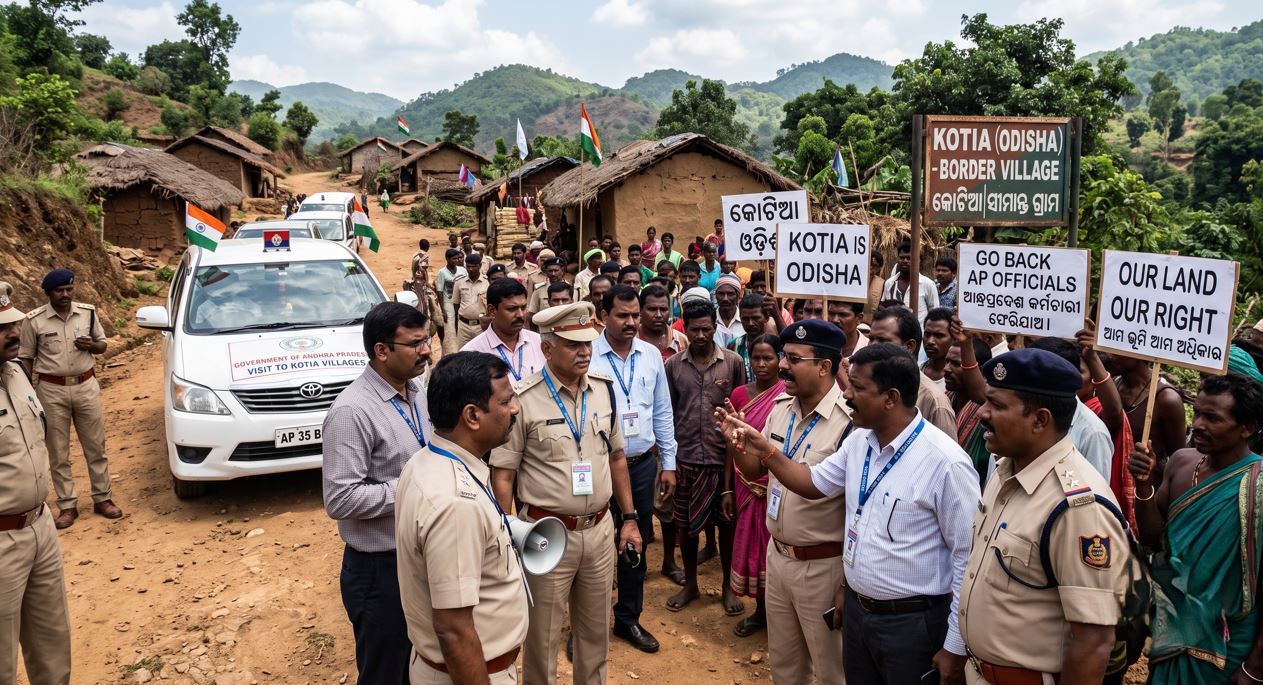
Representational Image
According to local sources, the Andhra Pradesh team, led by Salur Tehsildar Suresh Babu from Parvathipuram Manyam district, visited Upper Sembi, Lower Sembi and Nedibalasa villages. The delegation reportedly included Booth Level Officers (BLOs), Anganwadi workers, education officials and other government functionaries.
During the visit, officials are said to have undertaken door-to-door verification, collecting previously issued census forms and reviewing the status of digitisation of demographic data. Local representatives from the Andhra Pradesh side also reportedly accompanied the team during the exercise.
The reported administrative activity has once again drawn attention to the long-pending territorial dispute over the Kotia cluster of villages, claimed by both Odisha and Andhra Pradesh. While Odisha has already completed its census-related work in the region, the latest exercise by Andhra Pradesh has triggered fresh concerns over competing administrative claims.
The development comes barely a month after a visit by an Andhra Pradesh minister to Nedibalasa village for the inauguration of a road project, an event that had also sparked political and administrative debate in both states.
Although the situation remained peaceful, the latest visit has reignited discussions over the recurring administrative interventions by both states in the disputed villages. Residents of the Kotia region have frequently witnessed welfare programmes and official visits from both governments as the boundary issue remains unresolved.
The border dispute over the Kotia villages is currently pending before the Supreme Court, where both Odisha and Andhra Pradesh have staked their claims over the territory. Officials said any long-term resolution will depend on the outcome of the legal proceedings.
Meanwhile, the Odisha district administration is monitoring the situation closely. An official statement on the reported visit was awaited at the time of filing this report.
8, Jul 2026
Gujarat Expands Fuel Tax Relief for Fishermen with Major Policy Change
July 8: In a move aimed at providing greater financial relief to the fishing community, the Gujarat Cabinet has approved a key amendment to the state’s diesel Value Added Tax (VAT) relief scheme by removing the boat length criterion, allowing more fishermen to benefit from the subsidy.
The revised policy is expected to make the scheme more inclusive by extending eligibility to a larger number of fishing vessel owners, irrespective of the size of their boats. The decision is intended to ease the financial burden of rising fuel costs, one of the biggest operational expenses for fishermen.
State government officials said the amendment reflects the government’s commitment to strengthening the fisheries sector and improving the livelihoods of coastal communities. By broadening the scope of the scheme, the government aims to ensure that welfare benefits reach more beneficiaries engaged in marine fishing.
The Cabinet believes the revised policy will not only support fishermen economically but also encourage greater participation in the fisheries sector, which plays a vital role in Gujarat’s coastal economy. The updated diesel VAT relief scheme is expected to come into effect as per the government’s notified guidelines.
8, Jul 2026
EDII’s Journal of Entrepreneurship Strengthens India’s Global Presence in Entrepreneurship Research
India,July 8: The peer-reviewed, Journal of Entrepreneurship , is a quarterly published Journal published by the SAGE Publications on behalf of the Entrepreneurship Development Institute of India , Ahmedabad. The Journal of Entrepreneurship enjoys strong international visibility and scholarly impact.

Edited by Dr. Sunil Shukla, Director General, EDII, the journal is indexed in Scopus, the Emerging Sources Citation Index of Web of Science, the ABDC Journal Quality List, EconLit , ProQuest, EBSCO and ANVUR – the Italian National Agency for the Evaluation of Universities and Research Institutes. The journal has an H-Index of 37. It has a Journal Impact Factor of 2.5.
Established in 1992, JoE brings together academics, researchers, policymakers, educators, and practitioners from across the world to explore emerging issues in entrepreneurship. The journal serves as a multidisciplinary forum for advancing entrepreneurship research, theory, and practice, particularly in the context of emerging and developing economies.
The journal publishes original research, conceptual papers, perspectives, case studies and commentaries on a broad range of topics including entrepreneurship theory, entrepreneurial behaviour, entrepreneurial strategy, entrepreneurial ventures, family business, social entrepreneurship, international entrepreneurship, leadership, innovation and entrepreneurial ecosystems. It invites contributions from a variety of disciplines, including economics, psychology, sociology, anthropology, history and management. Studies from different national and cultural contexts are encouraged. This framework enables researchers to explore entrepreneurship from various analytical lenses, generating insights that are meaningful for both academia and practice.
Speaking about the journal‘s journey and its contribution to entrepreneurship, Dr. Sunil Shukla, Editor, Journal of Entrepreneurship, said,
“Over the last three decades, the Journal of Entrepreneurship has sought to provide a credible platform for advancing entrepreneurship knowledge. The last one year has been especially momentous as the H-Index of the journal increased from 34 to 37 and its Impact Factor from 1.9 to 2.5. In an era when research contributions of India are gaining more and more international significance, The JoE’s achievements signify the rising importance of research in entrepreneurship and its role in economic growth and stability.”
With entrepreneurship playing an increasing role within both the global economy and innovation ecosystems, this journal provides valuable insights, that guide both policymakers and educators.
8, Jul 2026
Government Steps Up El Niño Preparedness as Monsoon Boosts Kharif Sowing
New Delhi, July 8: The Centre has intensified its preparedness measures to address the potential impact of El Niño while expressing confidence over the progress of the ongoing kharif season, aided by improved monsoon conditions across several parts of the country.
According to official data, kharif sowing has reached 350.85 lakh hectares, reflecting steady progress in agricultural activities following the revival of monsoon rains. The increase in cultivated area is expected to support crop production and provide relief to farmers after concerns over delayed rainfall in some regions.
The government is closely monitoring weather patterns and their possible impact on agriculture, with a special focus on mitigating risks associated with El Niño. Ministries and state governments have been directed to maintain preparedness and ensure timely interventions to safeguard crop health, water availability, and farmers’ livelihoods.
Officials said contingency plans are in place to respond to any weather-related challenges, including the availability of quality seeds, irrigation support, and other agricultural inputs. Regular coordination is also being maintained with state authorities to review rainfall distribution, reservoir levels, and crop conditions.
The Centre reiterated its commitment to supporting farmers through proactive planning and continuous monitoring, while emphasizing that favourable monsoon conditions in recent weeks have significantly improved the pace of kharif sowing across the country.
8, Jul 2026
Cashless Healthcare Scheme Brings New Medical Benefits for UP Teachers and Education Staff
Lucknow, July 8: The Uttar Pradesh government has launched a new cashless healthcare scheme aimed at providing easier and more accessible medical treatment facilities to teachers and employees working in the education sector.
Under the initiative, eligible teachers and education department staff will be able to avail cashless medical services at empanelled hospitals, reducing the financial burden of healthcare expenses and ensuring timely access to quality treatment.
The scheme is designed to strengthen healthcare support for the education community by streamlining the process of medical assistance and eliminating the need for beneficiaries to make upfront payments for covered treatments.
Officials said the initiative reflects the state government’s commitment to improving the welfare and social security of teachers and education personnel, who play a vital role in strengthening the state’s education system.
The programme will cover eligible employees as per government guidelines, with hospitals providing treatment under the approved cashless mechanism. The move is expected to bring greater convenience, transparency and efficiency to healthcare delivery for beneficiaries.
The Uttar Pradesh government said the scheme will help create a more supportive working environment for teachers and education staff by ensuring better access to healthcare facilities.
With the launch of this initiative, the state aims to enhance employee welfare while promoting a more inclusive and technology-driven healthcare support system.


