


8, Jul 2026
AdClarity Expands CTV Ad Intelligence Across 20 Countries, Delivering the Industry’s Widest Cross-Market Coverage
NEW YORK, NY, July 8, 2026.BIScience, the company behind AdClarity, the world’s leading AI-powered ad intelligence platform, today announced the expansion of its Connected TV (CTV) ad intelligence to 19 new countries, bringing total tracked CTV ad spend to $70 billion across 20 markets. The expansion gives brands competitor benchmarking across countries, agencies a single source of truth for global CTV, and publishers demand signals by market.
CTV is becoming a central part of the TV ecosystem as linear viewing declines, evolving rapidly with more platforms, formats, and countries entering the space. It is growing faster than any other major channel and now represents 10 percent of all tracked ad spend globally. In the United States alone, CTV now represents a 16 percent share of all US ad spend tracked by AdClarity.
To help organizations make more informed decisions with global media intelligence, BIScience has added CTV coverage in Canada, the United Kingdom, Germany, Australia, Brazil, France, Indonesia, Italy, Norway, the Philippines, Singapore, South Korea, Switzerland, Thailand, Saudi Arabia, Poland, Spain, New Zealand, and Denmark. Each market includes local platform depth. For example, the United Kingdom features Channel 4 and ITV, Germany includes Joyn and Sky, and Australia covers 10 Play, 7plus, 9Now, and Stan.
With this release, BIScience’s AdClarity now combines the industry’s widest cross-market CTV coverage with AI-powered ad intelligence. Built on one consistent methodology across markets and media, including CTV, AdClarity gives teams a unified way to compare activity, uncover competitive shifts, and move from data to decisions faster. Customers report generating insights in under 10 seconds, reducing manual analysis by 85% through AI-driven automation, and saving an average of 7,980 hours annually per customer.
AdClarity’s panel of 30 million opt-in users spans 132 streaming platforms, 5 million smart TVs, and 52 countries, with 8 years of historical depth. AdClarity serves 27 percent of the Fortune 500, including Adidas, Amazon, Booking.com, Disney, Shell, Sony, and Wix. The platform is also used by four of the five top global advertising agencies and seven of the top ten global market research companies.
“Global advertisers don’t work in silos, and their intelligence tools shouldn’t either. By expanding AdClarity’s CTV coverage to 20 markets and integrating built-in AI, we’ve unified the cross-media view and bridged the gap between seeing data and taking action. One methodology, one platform. Total visibility across every screen,” said Dorit Kaplan, VP Product and Strategy at BIScience.
AdClarity CTV coverage is available now across all 20 markets as a premium add-on. Existing clients can extend immediately. To learn more, visit https://adclarity.com.
- 0
- By Neel Achary

7, Jul 2026
Odisha to Introduce Cashless Land Registration System Soon, Says Revenue Minister
Bhubaneswar, July 7 (UDN): The Odisha government is preparing to introduce a fully cashless land registration system, a move aimed at making property transactions more transparent, efficient and corruption-free. Revenue and Disaster Management Minister Suresh Pujari on Tuesday said the new mechanism has been designed to simplify the registration process while reducing the need for citizens to visit government offices.

Representational Image
Announcing the initiative, the Minister said the government has finalised the framework for implementing the digital system, under which all financial transactions related to land registration will be carried out through cashless modes. The initiative is expected to eliminate cash handling and enhance transparency in property transactions across the state.
Under the proposed system, buyers and sellers will no longer be required to visit sub-registrar offices to submit applications after finalising a land deal. Instead, the registration process will be carried out digitally, with both parties required to appear only at the final stage for identity verification and execution of the sale deed.
Once the registration is completed, the digitally registered sale deed will be made available online, enabling applicants to access the document without waiting for a physical copy. The government believes the digital workflow will significantly reduce processing time and improve service delivery.
Speaking on the initiative, Pujari said the reform is intended to remove the role of middlemen, streamline procedures and make sub-registrar offices free from corrupt practices. He added that the operational modalities for the new system have already been finalised and the government is gearing up to launch the initiative soon.
The proposed cashless registration system forms part of the Odisha government’s broader push towards digital governance and citizen-centric public services. Officials expect the initiative to improve accountability, increase efficiency in land administration and provide a seamless, hassle-free experience for people buying or selling property in the state.
7, Jul 2026
Maoist Arms Dump Busted in Nuapada; Huge Cache of Weapons, Explosives Seized Near Odisha-Chhattisgarh Border
Nuapada, July 7 (UDN): In a significant breakthrough in the ongoing anti-Maoist operations, security forces on Tuesday unearthed a concealed Maoist arms dump deep inside the Patahara Reserve Forest near the Odisha-Chhattisgarh border in Nuapada district, recovering a large cache of firearms, explosives, ammunition, and other operational materials believed to have been stockpiled by Maoist cadres.
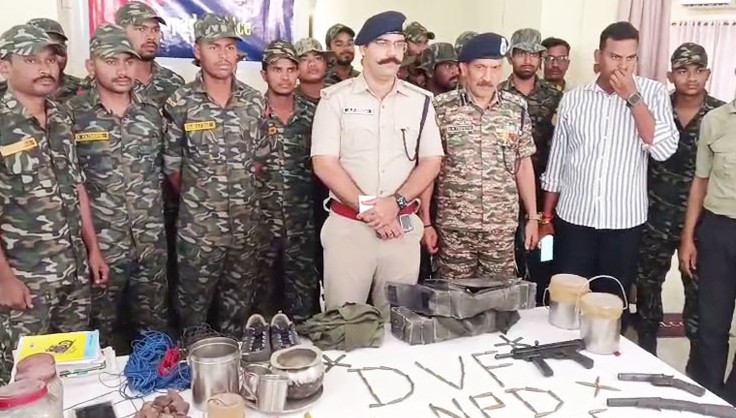
The recovery was made during a joint intelligence-led operation conducted by the District Voluntary Force (DVF) and the Central Reserve Police Force (CRPF) in the Barpat Donger forest under the jurisdiction of Boden police station. The operation was launched following credible intelligence developed by the Nuapada District Police regarding the presence of a hidden Maoist cache in the forested region.
The search operation was carried out under the supervision of Nuapada Superintendent of Police Amritpal Singh, who monitored the combing exercise in the difficult hilly terrain. During the operation, security personnel discovered a concealed underground dump containing a substantial quantity of arms, explosives, and equipment allegedly used by members of the banned Communist Party of India (Maoist).
According to police, the recovered cache included two country-made firearms, a country-made carbine with a magazine, 29 rounds of 7.62×39 mm AK-series ammunition, 54 rounds of 7.62×51 mm SLR ammunition, two tiffin improvised explosive devices (IEDs), eight gelatin sticks, around 1.5 kg of gunpowder, a detonator, batteries, a solar panel, electrical and codex wires, a multimeter, testing equipment, a wire cutter, Maoist uniforms, haversacks, shoes, medicines, cooking utensils, and Maoist literature.
Investigators suspect the recovered materials formed part of an old Maoist logistics and weapons cache concealed in the reserve forest for future operational use. The seizure is expected to significantly weaken the logistical capabilities of Maoist operatives active along the Odisha-Chhattisgarh border.
Speaking on the operation, SP Amritpal Singh said security forces have intensified combing and area domination exercises in the region to detect additional hidden dumps and prevent Maoist activities.
Following the recovery, surveillance has been strengthened across the border areas, with security agencies maintaining a high level of vigilance to curb the movement of Maoist cadres and dismantle their support infrastructure.
Police said sustained intelligence-based operations will continue in the region as part of the coordinated strategy to eliminate Left Wing Extremism and ensure peace and security in the border districts.
7, Jul 2026
PM Modi Pays Tribute to Biju Patnaik in Indonesian Parliament, Highlights Odisha Leader’s Historic Role in Bilateral Ties
Jakarta/New Delhi, July 7 (UDN): Prime Minister Narendra Modi on Thursday paid glowing tributes to former Odisha Chief Minister Biju Patnaik while addressing the Indonesian Parliament, recalling the legendary leader’s extraordinary contribution to Indonesia’s freedom struggle and describing his courage as a defining chapter in the long-standing friendship between the two countries.
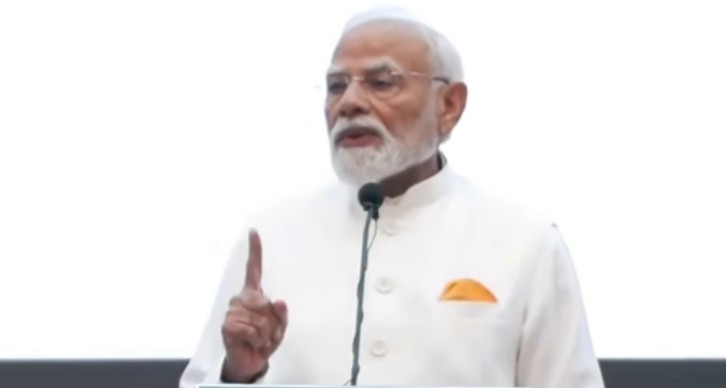
Highlighting the shared history of India and Indonesia, the Prime Minister said Biju Patnaik played a pivotal role during Indonesia’s fight for independence by safely airlifting the country’s then Prime Minister and Vice President to India at a crucial juncture. He noted that India’s unwavering support for Indonesia’s independence, including raising the issue at the United Nations, helped forge an enduring partnership between the two nations.
“India became a strong voice for Indonesia’s independence at the United Nations. Biju Patnaik safely airlifted Indonesia’s then Prime Minister and Vice President to India. This courageous act brought the two nations closer,” Prime Minister Modi said in his address.
The Prime Minister’s remarks underscored Biju Patnaik’s enduring legacy as a statesman whose humanitarian values and fearless actions continue to symbolise the deep historical bond between India and Indonesia. His recognition in the Indonesian Parliament was seen as a tribute not only to the iconic Odia leader but also to the shared democratic values and mutual respect that have shaped bilateral relations over the decades.
During his visit, Prime Minister Modi was conferred the Bintang Adipurna, Indonesia’s highest civilian honour, in recognition of his contribution to strengthening ties between the two countries. The award marks the 34th international honour received by the Prime Minister.
Accepting the honour, Modi dedicated the award to the people of India and said it reflected the enduring friendship between the two nations. He described the recognition as a symbol of the centuries-old cultural, historical, and civilisational links that continue to guide the India-Indonesia partnership.
The visit also witnessed the signing of several agreements aimed at expanding cooperation in strategic and technological sectors. The two countries agreed to strengthen collaboration in defence, including missile systems and related technologies, electronic voting machine (EVM) manufacturing, battery systems for defence applications, and port infrastructure development, reflecting a growing strategic partnership in the Indo-Pacific region.
The Prime Minister’s reference to Biju Patnaik’s historic mission was widely viewed as a proud moment for Odisha, reaffirming the former Chief Minister’s lasting contribution to international diplomacy and the strong foundation he helped build for India-Indonesia relations.
7, Jul 2026
Berhampur Railway Station Set for INR 300-Crore World-Class Makeover; Redevelopment to Begin Soon
Berhampur, July 7 (UDN): Berhampur Railway Station is poised for a major transformation as Indian Railways has approved a comprehensive redevelopment project worth ₹300 crore to convert the station into a world-class transportation hub. The ambitious project aims to modernise passenger amenities, strengthen infrastructure, and improve overall rail connectivity in southern Odisha.
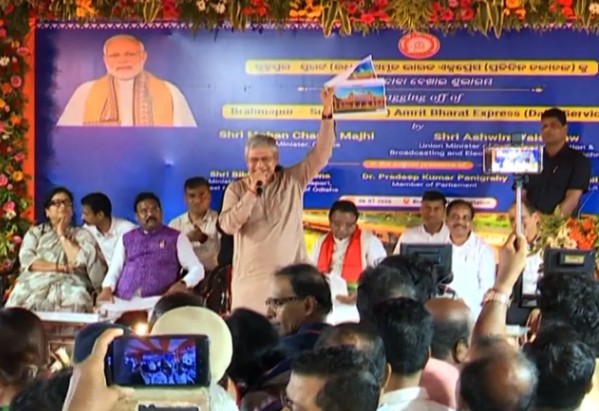
Announcing the project, Union Railway Minister Ashwini Vaishnaw said the redevelopment will be executed in two phases. He informed that all preparations for the first phase have been completed and construction work is expected to commence shortly.
“Berhampur Railway Station will be developed with world-class facilities. The work will be carried out in two phases. All preparations for Phase I have been completed, and the work will begin very soon,” the Railway Minister said.
The redevelopment plan includes the construction of a modern station building equipped with state-of-the-art passenger amenities, improved circulation areas, enhanced accessibility, upgraded waiting halls, digital information systems, better security arrangements, and other infrastructure aimed at providing a seamless travel experience.
The announcement has generated enthusiasm among residents, business communities, and railway passengers, who see the project as a significant step towards improving transportation infrastructure in the region. Many believe the upgraded station will not only enhance passenger convenience but also boost tourism, trade, and economic activities across southern Odisha.
While welcoming the Centre’s decision, several social organisations and railway users have urged the government to complement the infrastructure upgrade with better train connectivity. They have reiterated their long-standing demand to make Berhampur a regular originating and terminating station for more long-distance trains, arguing that the city’s growing passenger volume justifies additional services.
They have also sought the introduction of a direct train between Berhampur and Puri, pointing out that thousands of devotees from Ganjam district travel to the pilgrim town throughout the year. A dedicated service, they said, would significantly ease travel for pilgrims and other passengers.
In addition, the organisations have appealed for senior citizen-friendly facilities at the redeveloped station, including improved seating arrangements, barrier-free access, escalators, lifts, and dedicated assistance services to ensure greater comfort for elderly passengers.
The ₹300-crore redevelopment is expected to redefine Berhampur Railway Station as one of Odisha’s key railway gateways, offering modern infrastructure and world-class amenities while supporting the region’s expanding transportation needs.
7, Jul 2026
Odisha Tightens Traffic Enforcement; Vehicles Without Mandatory Documents to Be Seized
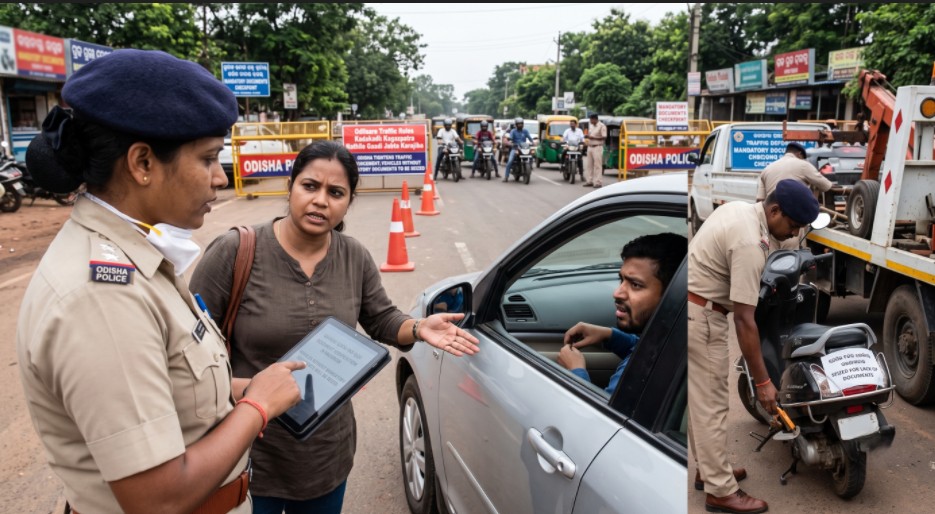
Bhubaneswar, July 7 (UDN): In a bid to improve road safety and ensure stricter compliance with motor vehicle laws, the Odisha government has introduced tougher enforcement measures against traffic violations, empowering officials to seize vehicles operating without mandatory documents.
Representational Image
The State Transport Authority (STA) has issued a fresh directive authorising enforcement officials to impound vehicles found plying without valid fitness certificates, insurance, permits, or other statutory documents. The move marks a shift from the earlier practice of imposing fines alone and is aimed at keeping unfit and non-compliant vehicles off the state’s roads.
The revised guidelines place special emphasis on habitual offenders. Vehicles repeatedly found violating provisions of the Motor Vehicles Act will now be liable for seizure, with authorities expected to adopt a zero-tolerance approach towards recurring violations.
Officials said the decision is intended to strengthen road safety by ensuring that only legally compliant and roadworthy vehicles operate on public roads. The Transport Department believes the stricter enforcement will help reduce accidents linked to poorly maintained vehicles and encourage vehicle owners to keep their documents updated.
The STA has also directed enforcement personnel to carry out regular inspections and strictly implement the new guidelines. The circular cautions that officials failing to conduct inspections diligently or enforce the provisions effectively may face disciplinary action, underscoring the government’s focus on accountability.
The crackdown has already begun across the state. During a routine inspection in Bhubaneswar on Tuesday, transport officials seized a private bus travelling from Cuttack to Berhampur after it was found operating without a valid fitness certificate.
Authorities have appealed to vehicle owners and transport operators to ensure that all mandatory documents, including fitness certificates, insurance, permits, registration certificates and driving licences, remain valid to avoid penal action. The Transport Department is expected to intensify enforcement drives across Odisha in the coming days as part of its broader strategy to improve road safety and strengthen compliance with traffic regulations.
7, Jul 2026
Nayax brings a new AI layer to the MoMa management app for vending and self-service operators
HERZLIYA, Israel, July 7, 2026 – Nayax Ltd., a global commerce enablement, payments, and loyalty platform, today announced a new AI layer in MoMa, its mobile management app for unattended and self-service operators, designed to help operators know what matters, make better decisions, and act faster from wherever they are.
Running an unattended or self-service business means making decisions without always being on site. Operators run leaner today, often acting not only as business owners but also as route planners, technicians, stock managers, and customer support, moving between locations to keep every machine, site, and transaction under control. Their challenge is turning the right data into decisions that maximize their time and bottom line, helping them grow efficiently and at scale.
That is the idea behind the new AI layer in MoMa. With new capabilities like the AI Assistant, Planogram AI Suggestions, and Visual Recognition, Nayax helps operators move from monitoring their business to knowing what matters most. It reflects Nayax’s focus on ease of doing business: giving operators the confidence to make better decisions and the ability to act on them.
Joshua Lloyd, a six-year Nayax customer who manages more than 200 vending machines across the United Kingdom with JDJ Vending Services Ltd, said Nayax gives him confidence without needing to carry every machine in his head all day.
“It helps me be a lot more present, even as a dad. I do not need to worry so much. I can just open my phone, see that all my machines are working, and go play with my son,” said Lloyd.
MoMa already helps operators manage their business from anywhere. From their phone, they can monitor sales and machine activity, manage inventory and planograms, update prices, process refunds, and handle remote actions across one machine or a full fleet. The new AI layer strengthens that operating flow: know, control, and act.
Operators can now know what is happening, with real-time AI insights across sales, machines, stock, and unusual activity. The MoMa AI Assistant answers questions in plain language from the operator’s own business data, so they can ask which machines are underperforming or why revenue dropped at a location, without building a report or digging through dashboards.
They can control decisions with AI-driven data. Planogram AI Suggestions uses machine-level sales data to recommend changes to product mix and placement, showing which products to swap, which slots to prioritize, and which no longer earn their space. Demand-based smart picklists help operators restock smarter and plan site visits around what machines actually need.
And they can act faster, with remote and bulk actions from price changes and restarts to refunds and firmware updates across the fleet. With the AI layer built in, operators act on the insights that matter.
Visual Recognition reduces the manual work of planogram setup: an operator photographs a machine and MoMa builds the planogram from the image, up to 5X faster than mapping it by hand. This makes it easy to add planograms and enrich the business data behind better decisions.
“Our customers run their businesses on their own time and capital, and our job is to make that simpler,” said Yair Nechmad, CEO and Co-Founder of Nayax. “Every feature we build starts with the same question: what does the operator need to run a better business? The new AI layer in MoMa is another step in that direction. It helps operators know what matters, control decisions with better data, and act faster from wherever they are.”
7, Jul 2026
Mizoram University Museum Gains National Recognition for Biodiversity Conservation Efforts
July 7: The Natural History Museum of Mizoram University has been awarded the Designated Repository status, recognising its contribution towards preserving and documenting the region’s rich biological diversity.
The recognition allows the museum to function as an authorised facility for the conservation, storage, and management of biological specimens collected during scientific research and biodiversity studies.
The new status is expected to strengthen research activities by providing scientists, researchers, and students with better access to valuable natural history collections. It will also support biodiversity documentation and conservation initiatives in Mizoram and the northeastern region.
Officials said the designation reflects the importance of preserving natural heritage and building scientific resources for future research and education.
The achievement marks a significant milestone for Mizoram University and highlights the growing role of academic institutions in advancing biodiversity conservation and environmental studies.
7, Jul 2026
India to Get New Monthly Services Growth Tracker from July 14
New Delhi, July 7: The Central Government is set to launch a new monthly Index of Services Production from July 14, aimed at providing a clearer picture of the performance and growth trends of India’s rapidly expanding services sector.
The new index will track changes in service-sector activity and provide timely data to policymakers, businesses, and researchers for better assessment of economic trends.
The services sector plays a crucial role in India’s economy, contributing significantly through industries such as information technology, finance, transport, communication, trade, and professional services. The introduction of a monthly index is expected to improve the monitoring of these activities and strengthen economic analysis.
Officials said the initiative will help capture the changing dynamics of the services economy and provide a more regular indicator of sectoral performance.
The launch reflects the government’s efforts to enhance the country’s statistical systems and provide more accurate, timely, and comprehensive economic data for planning and decision-making.
7, Jul 2026
Ancient Indian Connection Unearthed as 2,000-Year-Old Gold Rings Found in Thailand
Bangkok, July 7: A significant archaeological discovery in Thailand has shed new light on the ancient cultural and trade links between India and Southeast Asia, with the recovery of two gold rings believed to be around 2,000 years old.

The rings were found during an excavation at the Don Yai Thong archaeological site in Phetchaburi province, along with human remains and other ancient artefacts, according to Thailand’s Fine Arts Department.
One of the gold rings features an inscription in the ancient Brahmi script, an early Indian writing system. Archaeologists have identified the inscription as “pusarakhitasa,” which is believed to refer to protection by Pushya, an auspicious constellation mentioned in Indian astronomical traditions.
The discovery has attracted attention from historians as it offers valuable clues about the movement of people, ideas, and trade across the Indian Ocean region more than two millennia ago.
The second ring, a plain gold band, was also recovered from the same burial site. Experts believe the jewellery may have belonged to an individual from an affluent section of ancient society.
The Don Yai Thong site, located about 130 kilometres southwest of Bangkok, has revealed several important artefacts, including human skeletons, pottery, bronze objects, and gold ornaments, suggesting the presence of an organised ancient settlement and ceremonial burial practices.
Archaeologists said the findings will help researchers better understand early maritime connections and cultural exchanges between the Indian subcontinent and Southeast Asia.
The recovered artefacts are expected to be preserved and later displayed for the public as part of efforts to highlight Thailand’s rich archaeological heritage.


