


7, Jul 2026
Odisha’s Rail Network Gets Major Fillip as Daily Berhampur–Udhna Amrit Bharat Express and New Puri–Koraput Express Begin Operations
Berhampur, July 7 (UDN): Odisha’s railway infrastructure received a significant boost on Monday with the launch of two key passenger services—the Daily Berhampur–Udhna (Surat) Amrit Bharat Express and the new Puri–Koraput Express—aimed at improving connectivity within the State and with western India.
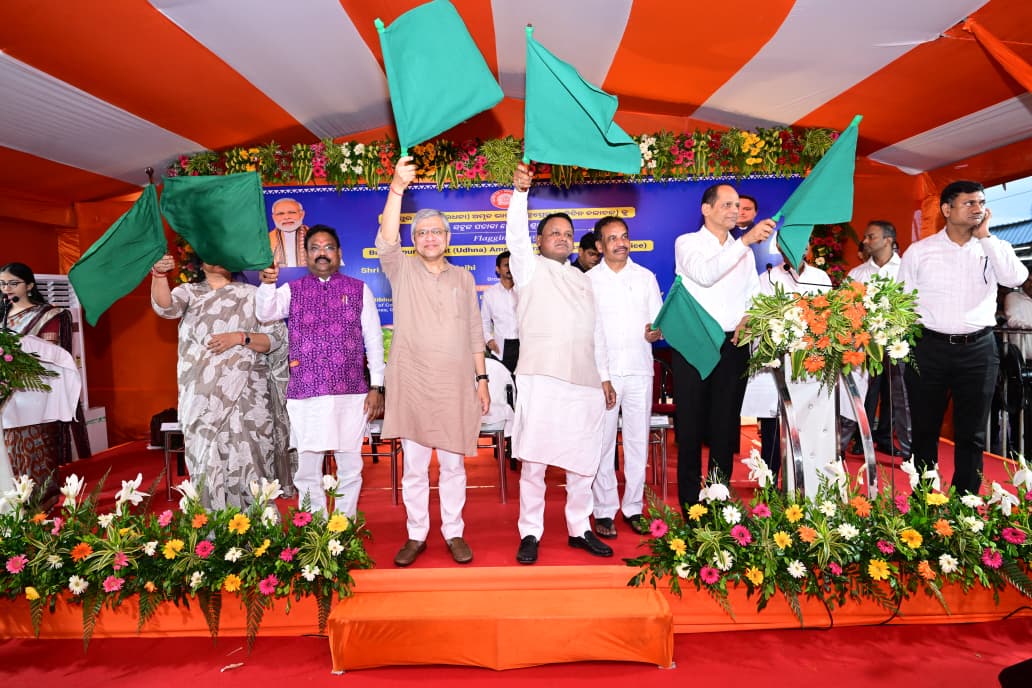
The two trains were flagged off by Chief Minister Mohan Charan Majhi and Union Railway Minister Ashwini Vaishnaw during separate inauguration ceremonies held at Berhampur and Puri railway stations.
A major highlight of the announcement was the conversion of the Berhampur–Udhna Amrit Bharat Express from a tri-weekly service into a daily train. The move addresses a long-standing demand from passengers, particularly the large number of migrant workers, traders, students and families travelling regularly between Odisha and Gujarat.

Connecting Berhampur with Surat, one of India’s leading textile and industrial hubs, the train also serves important destinations across Andhra Pradesh, Chhattisgarh and Maharashtra. Railway officials believe the daily service will provide greater travel flexibility, reduce waiting periods and strengthen economic and social ties between the regions.
The newly introduced Puri–Koraput Express is expected to significantly improve intra-state rail connectivity by linking the coastal belt with western and southern Odisha. The train will pass through several important stations, including Khurda Road, Bhubaneswar, Angul, Sambalpur, Bargarh Road, Balangir, Titlagarh, Kesinga, Muniguda, Rayagada, Kakiriguma and Damanjodi, before reaching Koraput.
According to railway officials, the new service will enhance accessibility to tribal and interior districts, facilitate tourism to religious and scenic destinations, improve trade and business connectivity, and offer passengers a more convenient travel option across the State.
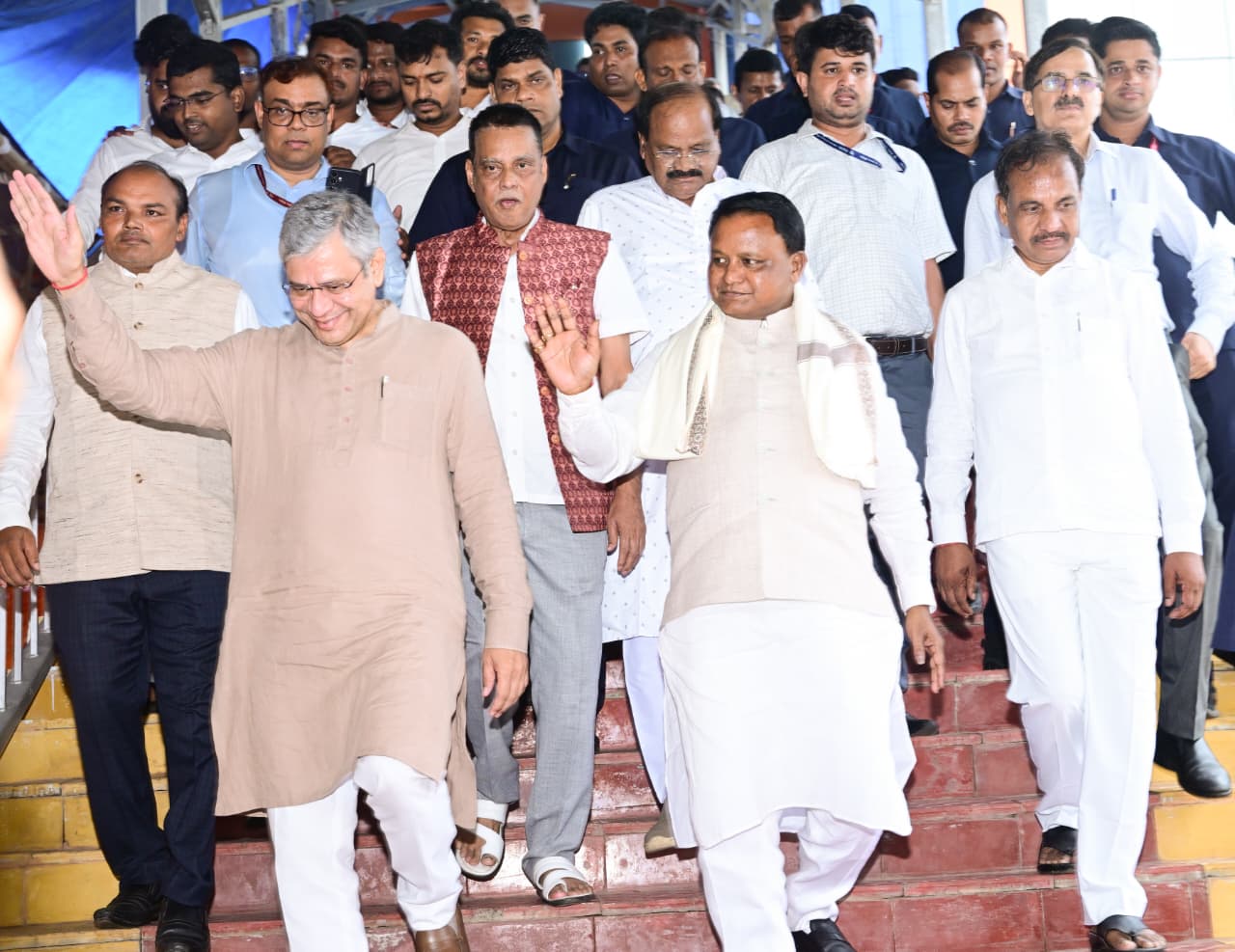
Speaking on the occasion, Chief Minister Mohan Charan Majhi said Odisha is emerging as a key driver of India’s development and highlighted the Centre’s increased investment in the State’s railway sector.
“Odisha will serve as a growth engine for a developed India. The unprecedented investment in railway infrastructure will accelerate the State’s economic transformation and make Odisha more prosperous in the years ahead,“ he said.
Union Railway Minister Ashwini Vaishnaw emphasised the importance of the Berhampur–Surat rail corridor, noting the strong social and economic ties between the two cities due to the large Odia population living and working in Surat.
“The Daily Berhampur–Udhna Amrit Bharat Express will greatly benefit passengers travelling between the two regions. Berhampur Railway Station will also be transformed into a world-class station. The design has been finalised, Phase-I preparations are complete, and construction will commence soon after the groundbreaking ceremony,” the Minister said.
The launch of the two services is expected to ease passenger demand, improve regional mobility and strengthen Odisha’s integration with major economic centres, while reinforcing Indian Railways’ efforts to expand modern, accessible and inclusive rail connectivity across the country.
- 0
- By Neel Achary

6, Jul 2026
Amarya Bajaj wins Dutch Junior Open U-13 squash title
New Delhi, July 6: Indian squash prodigy Amarya Bajaj has won the U-13 girls’ title at the Dutch Junior Open, marking a significant achievement in her young sporting career.
Amarya delivered a strong performance throughout the tournament, showcasing consistency, agility, and control to secure the championship in her age category. Her victory adds to India’s growing presence in junior squash on the international stage.
Officials and coaches associated with the sport praised her achievement, noting that such performances reflect the rising depth of junior talent in Indian squash. The win is expected to boost her confidence as she prepares for upcoming international and national competitions.
6, Jul 2026
Hockey India announces sub-junior men’s camp for Youth Hockey5s Asian C’ship
New Delhi, July 6: Hockey India has announced the list of players selected for the sub-junior men’s national coaching camp ahead of the upcoming Youth Hockey5s Asian Championship.
The selected players will undergo intensive training focused on fitness, speed, and skills required for the fast-paced Hockey5s format. The camp is part of preparations for the continental tournament.
Officials said selections were based on recent performances in national-level events and talent identification programmes. The initiative aims to strengthen grassroots development and build a competitive squad for international competition.
6, Jul 2026
Glasner appointed new Nottingham Forest head coach
Nottingham, July 6: Nottingham Forest have appointed Oliver Glasner as their new head coach, marking a fresh leadership change at the Premier League club.
The club confirmed the appointment, stating that Glasner will take charge of the first team with immediate effect. He is expected to lead preparations ahead of upcoming fixtures and work closely with the club’s management on squad development and performance goals.
Glasner, known for his tactical approach and recent success in European football, will be tasked with strengthening Nottingham Forest’s competitiveness in domestic and league competitions.
Club officials expressed confidence that his experience and coaching style will help improve results and bring stability to the team.
6, Jul 2026
India’s steel production grows 5.9% in April–June: Report
New Delhi, July 6: India’s steel production recorded a growth of 5.9% during the April–June quarter, according to a recent report.
The report said the increase was driven by strong demand from infrastructure, construction, and manufacturing sectors, along with steady domestic consumption. Improved capacity utilisation across steel plants also supported the upward trend.
It added that government-led infrastructure development and ongoing industrial activity continue to boost steel demand in the country. However, global price fluctuations and external market conditions remain key factors to watch in the coming months.
Overall, the sector’s performance reflects sustained economic activity and continued investment in core industries.
6, Jul 2026
INR 2,000 Crore Impact Venture Fund, Among India’s Largest, Launched by Next Bharat Ventures
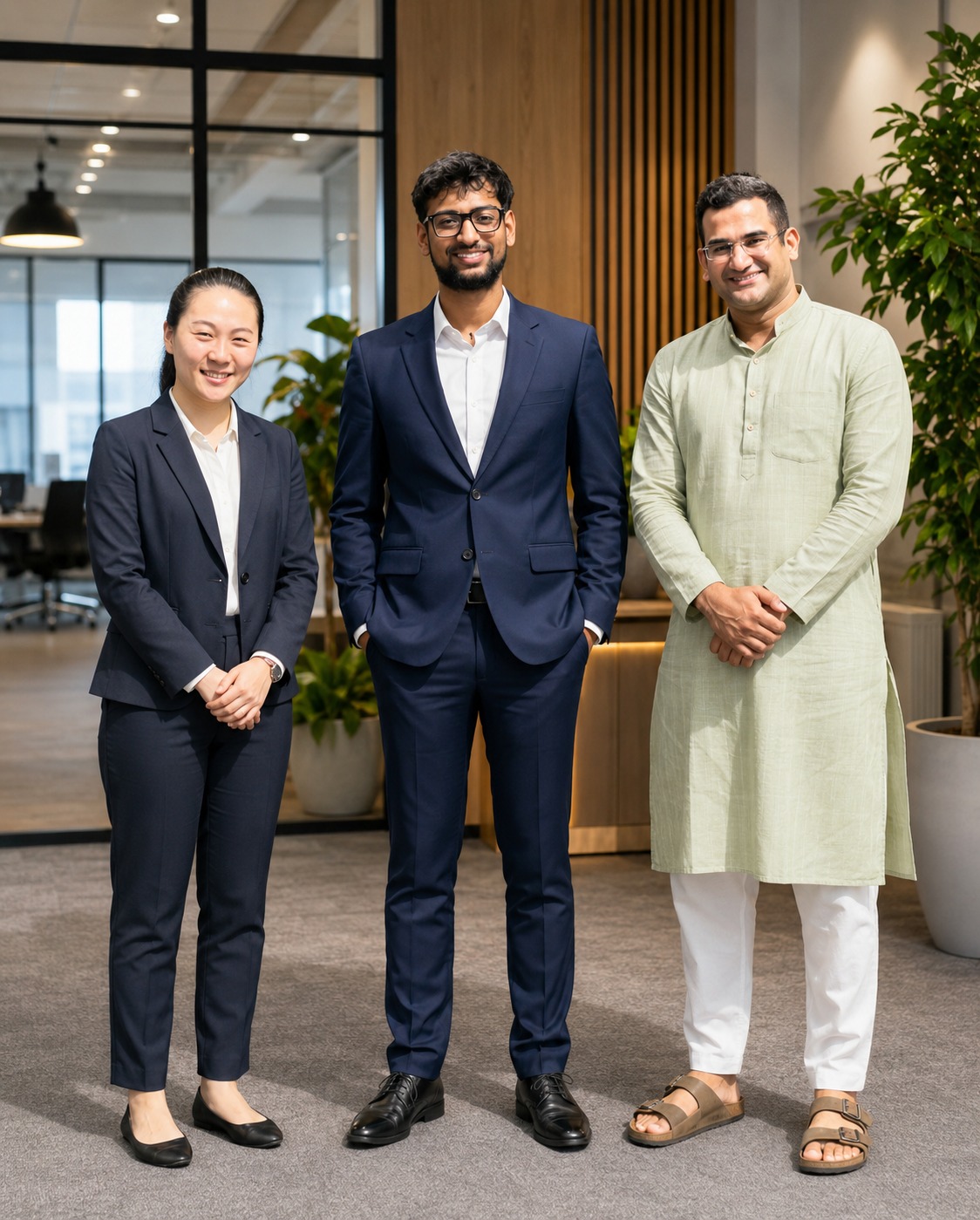
Bengaluru, July 06: Next Bharat Ventures IFSC Private limited today announced the launch of its second fund of INR 2000 crore, making it among the largest impact-focused venture fund in India. This second corpus will enable Next Bharat to significantly expand its support towards “Impact Entrepreneurs” building to improve quality of life and sustainable livelihoods across rural India and migrated and urban marginalised communities.
6, Jul 2026
Army Chief meets President at Rashtrapati Bhavan
New Delhi, July 6: Chief of the Army Staff General Dhiraj Seth, along with his spouse Komal Seth, called on President Droupadi Murmu at Rashtrapati Bhavan in a courtesy meeting.
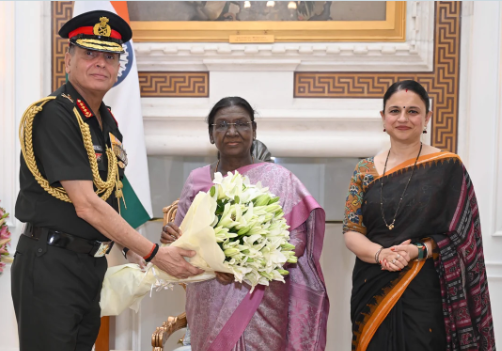
Pic Credit: https://x.com/rashtrapatibhvn
The Army Chief met the President as part of a formal interaction at the President’s official residence in the national capital. The meeting is part of routine engagements between the top leadership of the armed forces and the constitutional head of the country.
Officials said such interactions provide an opportunity for the Army leadership to brief the President on key developments related to national security, operational preparedness, and ongoing institutional initiatives, while also strengthening coordination at the highest level of governance.
The visit reflects the continued tradition of dialogue and engagement between the armed forces and the Rashtrapati Bhavan, underscoring the Army’s commitment to constitutional values and national service.
6, Jul 2026
India proposes BRICS virtual anti-drug network at Guwahati meet
Guwahati, July 6: India has proposed the creation of a BRICS virtual anti-drug network to strengthen cooperation among member countries in combating drug trafficking and related transnational crimes, according to officials.
The proposal was discussed during a BRICS-related meeting held in Guwahati, where India highlighted the need for faster information sharing, coordinated enforcement actions, and improved digital intelligence mechanisms among member nations.
Officials said the proposed platform would help member countries exchange real-time data on drug trafficking routes, suspect networks, and emerging synthetic drug threats. It is aimed at improving coordination between law enforcement agencies and enhancing collective response capabilities.
India also emphasized the growing challenge of narcotics trafficking through digital platforms and cross-border networks, urging stronger international collaboration to address the issue effectively.
6, Jul 2026
UN Global Dialogue opens with urgent call for safe and inclusive AI that benefits all
AI safety, accountability and human oversight among topics to be discussed
Geneva, July 06 – The United Nations today kicked off a global dialogue bringing together governments, tech companies, academia, civil society and the technical community to facilitate discussions on artificial intelligence governance.
“AI is advancing at runaway speed. The question is whether we will govern it together – or let it govern us. For the first time, the AI Dialogue gives every country a seat at the table. We must now turn global participation into global action – to make AI safer, fairer, more accessible and more ethical,” said UN Secretary-General, António Guterres.
The inaugural session of the Global Dialogue on AI Governance (AI Dialogue) seeks to ensure that governance reflects the priorities of all nations, not just the most technologically advanced, and that the benefits of AI are shared by all.
Discussions will address various themes including the opportunities and implications of this technology; how to bridge the AI divide; international cooperation on AI governance; and robust human oversight of AI systems, consistent with international law, to ensure safety and security.
“This Global Dialogue is not merely about regulating a technology. It is about defining a shared vision in which technological progress goes hand in hand with human dignity, equity, and sustainable development,” said Annalena Baerbock, President of the UN General Assembly. “If governed responsibly and collectively, AI has the potential to accelerate progress across nearly every Sustainable Development Goal, offering powerful new tools in healthcare, education, scientific research, disaster preparedness, and agriculture.
“It is about demonstrating to the people of the world that the United Nations is not lost in the past or too slow to act; that it is, in fact, able and willing to move on the most pressing and emerging issues of our time.”
Why this platform, why now
AI is already being governed — through national regulations, technical standards, procurement frameworks, and bilateral agreements — but unevenly. Governance frameworks have been shaped predominantly by countries with advanced AI sectors, while the countries most exposed to AI’s consequences have had the least say in how those frameworks are designed.
The AI Dialogue corrects that imbalance. Mandated by the UN General Assembly, it gives every government an equal seat. Developing countries and the Global South participate with full standing to shape outcomes — not as observers.
“The credibility of this first Global Dialogue has been built through an open and participatory process that continues here in Geneva. Our collective success will be defined by every voice, perspective, experience, and contribution that is shaping the path forward for AI,” said Egriselda López, Permanent Representative of El Salvador to the UN and Co-Chair of the Dialogue.
Fellow Co-Chair and Permanent Representative of Estonia to the UN, Rein Tammsaar, said that “leveraging the convening power of the UN, we must start transforming artificial intelligence into a global public good that benefits all of humanity while ensuring safety by design and meaningful human oversight. For this to happen, the first Global Dialogue on AI Governance in Geneva should spark AI’s San Francisco moment.”
Six months of global consultations
Since January 2026, structured global consultations have taken place across thematic, regional, and virtual formats, drawing in governments, civil society, the private sector, academia, and the technical community. More than 1,500 written submissions were submitted from organisations and individuals across all regional groups.
The result of the written submissions revealed different priorities among the groups: For example, governments were the only stakeholder group to place capacity-building first. Most other groups ranked safety first. Other themes that ranked high in priority include transparency, accountability and human oversight, as well as social, economic, ethical, cultural and linguistic implications. One area of consensus from the consultations is that participants want to see continuity in this process: more than 500 submissions called for the process to continue beyond July.
The Dialogue takes place one week after the Independent International Scientific Panel on Artificial Intelligence launched its preliminary report handing the governments who convene there a shared evidence base to build policy from. The Panel, composed of independent scientists and experts from every region, outlines trends in AI and warns that current safeguards cannot keep pace with the growth of AI’s capabilities.
The Panel comprises 40 members serving in their personal capacity, independent of any government, company, or institution, including the United Nations. Members were selected from more than 2,600 candidates through an open call and independent review process. The Panel is co-chaired by Yoshua Bengio (Canada) and Maria Ressa (Philippines).
Doreen Bogdan-Martin, Secretary-General, ITU: “For AI to benefit all people, technology and international cooperation must move forward together. The Global Dialogue on AI Governance has sharpened the world’s focus on building an AI future that includes everyone, especially the 2.2 billion people who have yet to join the digital world.”
Khaled El-Enany, Director-General, UNESCO: “Humanity’s rich and diverse cultural and linguistic heritage is our greatest source of creativity, identity and resilience, but we must ensure Artificial Intelligence strengthens, rather than erodes this diversity. Global AI governance is essential to protect all voices, empower all cultures, and guarantee that innovation reflects the full breadth of human culture.”
Amandeep Singh Gill, Under-Secretary-General and Special Envoy for Digital and Emerging Technologies: “The Global Digital Compact gave the multilateral system two things it never had before: an independent scientific panel to assess AI’s impacts and opportunities, and a global dialogue where every government has a seat at the table. Today, for the first time, both come together. That is what makes 6 July a turning point — not just for AI governance, but for how the international community responds to transformative technology.”
6, Jul 2026
ABDM Crosses 104 Crore Linked Health Records Milestone
July 6: The Ayushman Bharat Digital Mission (ABDM) has achieved a major milestone by linking over 104 crore health records across its digital health ecosystem.
The initiative aims to create a unified and secure digital health infrastructure in India, enabling individuals to access and manage their health records seamlessly across healthcare providers. The system is designed to improve continuity of care, reduce duplication of medical records, and enhance efficiency in healthcare delivery.
Officials said the growing adoption of ABDM reflects increasing participation from citizens, healthcare facilities, and digital health platforms. The system is also expected to support better medical decision-making by providing doctors with easier access to patient history, subject to consent-based sharing.
The mission continues to expand its reach across states and healthcare institutions, strengthening India’s digital health framework and supporting long-term healthcare reforms.


