


13, Oct 2026
Limca Launches Its First-Ever Delhi City Can, Celebrating the Spirit, Art and Energy of the Capital
Homegrown brand Limca celebrates the spirit of India’s cities, bringing their distinctive culture and local identity to life through limited-edition City Cans.
NEW DELHI, Oct. 13, 2026 /PRNewswire/ — Limca, Coca-Cola India’s iconic beverage, has unveiled its first-ever Limca Delhi City Can – a limited-edition collectible that celebrates the unmistakable spirit of the national capital. Created under the idea ‘One City, One Can: Crafted for Collection’, the special edition reimagines the everyday Limca can as a canvas of local pride, capturing the city’s heritage, culture and urban energy. Featuring some of the city’s most iconic landmarks including India Gate, Qutub Minar and Jantar Mantar, alongside elements of Delhi’s local life such as the Metro and auto rickshaws, the design reflects Delhi’s unique blend of timeless history and contemporary life, making the capital instantly recognizable.

More than a refreshing beverage, the Delhi City Can introduces a new collectible experience for consumers. Created as a limited-edition release, it is designed to inspire discovery, sharing and collectibility, while offering young, urban consumers a fresh way to celebrate the city they call home.
The launch also brings the City Can idea to life through a consumer-led social activation on Instagram featuring Bollywood actor Ananya Panday. The activation will further bring artists and creators into the conversation, encouraging them to share their own interpretations of the city’s culture, landmarks and everyday experiences. Together, these voices invite Delhiites to engage with the City Can beyond the product and celebrate the many elements that make the capital uniquely their own.
Sundeep Bajoria, Vice President, Integrated Operations, Coca-Cola India & Southwest Asia said, “For over five decades, Limca has been a part of India’s refreshment story, building a lasting relationship with consumers through its signature lemony refreshment. Taking this legacy forward, the Limca Delhi City Can captures the heartbeat of the capital, celebrating its culture through the eyes of the people who live it every day. Powered by our expansive retail network, we aren’t just offering a refreshing drink, we are placing a piece of the city’s rich and vibrant identity right into the hands of the consumers who make it special.”
Anant Agarwal, Vice Chairman, MMG Group said, “We are delighted to partner with Limca on this first-of-its-kind initiative that brings Delhi’s distinctive character to life through the limited-edition city cans. We take great pride in partnering for this unique launch and bringing it to consumers across Delhi, backed by our strong distribution capabilities and retail network. We believe the city cans will resonate strongly across consumers and further deepen Limca’s longstanding connection with the city.”
The Limca Delhi City Can is now rolling out across Delhi, giving consumers an opportunity to collect a special edition that celebrates the capital’s unique character.
About Coca-Cola:
Coca-Cola in India is one of the country’s leading beverage companies, offering a range of high-quality and refreshing beverage options to consumers. The company, in line with its vision of ‘Beverages For Life’ offers a wide portfolio of products which includes hydration, sports, sparkling, coffee, tea, nutrition, juice and dairy based products. In India its beverage range includes Coca-Cola, Coca-Cola Zero Sugar, Diet Coke, Thums Up, Thums Up XForce, Charged, Fanta, Limca, Sprite, Sprite Zero, Kinley Soda, Rimzim, Maaza, Minute Maid range of juices and Honest Tea. The Company also offers hydration beverages including Limca GlucoCharge, Smartwater, Kinley, Kinley Copper, Dasani and Bonaqua packaged drinking water. Premium products constitute Schweppes’ range and Smartwater. In addition, it offers a Costa Coffee range of tea and coffee. The Company is constantly transforming its portfolio, from reducing sugar in its drinks to bringing innovative new products to market.
The Company along with its owned bottling operations and franchise bottling partners has a strong network of over six million retail outlets through which it refreshes millions of consumers across the country. It seeks to positively impact people’s lives, communities, and the planet through water and packaging initiatives, sustainable agriculture and emission reductions across its value chain.
Globally together with its bottling partners, The Coca-Cola Company employs more than 700,000 people, helping to bring economic opportunity to local communities worldwide. Learn more at www.cocacolacompany.com and follow us on Twitter, Instagram, Facebook and LinkedIn.

 View original content to download multimedia:https://www.prnewswire.com/in/news-releases/limca-launches-its-first-ever-delhi-city-can-celebrating-the-spirit-art-and-energy-of-the-capital-302906938.html

- 0
- By Sai Krishna

13, Oct 2026
Dept and IVYSON Connect Korea and Brazil With “We Talk”, “Lembra”
BRASILIA, Brazil, Oct. 13, 2026 /PRNewswire/ — Dept, a South Korean singer-songwriter affiliated with unikorn union Inc. and Brazilian artist IVYSON affiliated with Babel Produções are joining forces for a collaboration presented in English and Portuguese. Their English-language release, “We Talk,” arrives on Oct 14, 2026, followed by its Portuguese-language Brazilian counterpart, “Lembra,” on Oct 22, 2026.

Dept has built an international audience through songs such as “Strawberry Champagne,” “Green,” “Van Gogh,” “Whenever It Rains” and “Winter Blossom.” His smooth, polished melodies and emotionally driven lyrics have helped his music connect with listeners across Asia and beyond.
His international collaborations include work with American artist Ashley Alisha, Thai singer NONT TANONT and Vietnamese singer Hoàng Dũng. This latest project brings that spirit of musical exchange to Brazil through his collaboration with IVYSON, pairing Dept’s emotional R&B and indie-pop approach with a new creative partnership across languages.
The lyrics of “We Talk” explore the quiet distance between two people trying to talk about love. Images of neon light, rain and hesitant conversation create an intimate, reflective mood, with the recurring question at the heart of the song expressing the uncertainty of a fragile connection.
The collaboration extended beyond the recording process. During Dept’s visit to Brazil, the two artists met in person to film the project’s music video, bringing their musical exchange into a shared visual production on location.
During the same visit, Dept also met fans in São Paulo, creating a direct connection with Brazilian listeners. The project continues his work with artists across different countries, connecting Korea and Brazil through music and visual storytelling.
“We Talk,” credited to Dept and IVYSON, will be available across major music streaming platforms. The Portuguese-language “Lembra” is credited to Dept and IVYSON.
 View original content to download multimedia:https://www.prnewswire.co.uk/news-releases/dept-and-ivyson-connect-korea-and-brazil-with-we-talk-lembra-302906779.html

13, Oct 2026
Sundaram Finance Hosts a One-of-its-Kind Customer Meet, ‘Sundaram Circle’ at Mohali
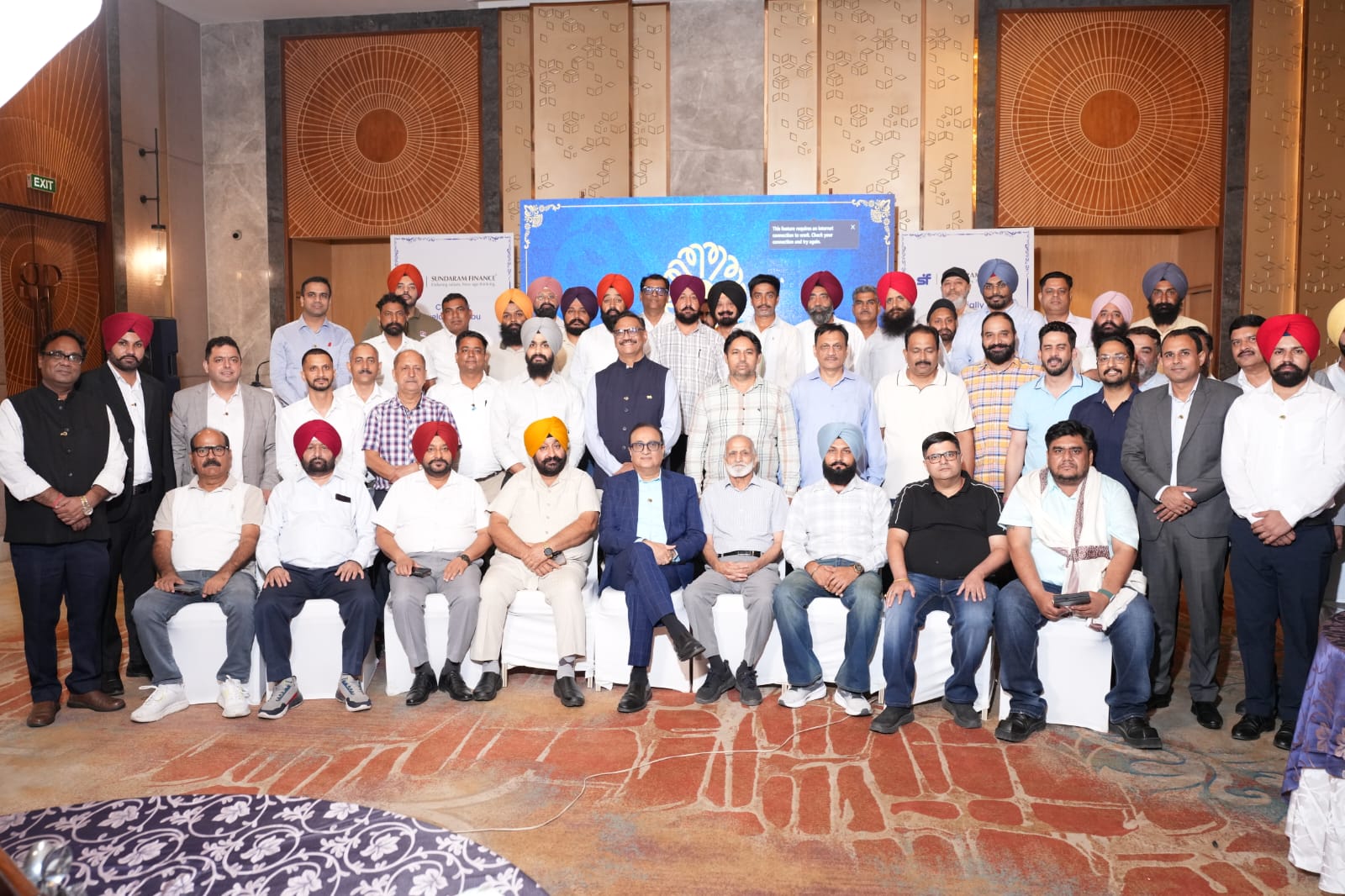
Mohali, 13 October, 2026: In an era where most interactions have shifted to digital platforms, Sundaram Finance reaffirmed its commitment to human connectedness by hosting Sundaram Circle, a one-of-its-kind customer meet at Mohali. The event, themed “Where Legacy Meets Loyalty — and Welcomes the Next Generation”, brought together long-standing commercial vehicle customers and their next generation for an evening of connection, reflection, and forward-looking conversations. Around 25 customers partook in the event.
The company’s leadership emphasized that while the world shifts toward virtual convenience, Sundaram Finance continues to value the power of in-person connections. “Relationships aren’t built over screens — they’re nurtured through handshakes, smiles, and shared time,” a senior leader shared.
This belief echoes our founder Shri T.S. Santhanam’s guiding mantra: “Contact. Contact. Contact.” — the cornerstone of lasting customer relationships. Long before customer-centricity was a trend, our founder’s father, Sri Sundaram Iyengar, pioneered several such initiatives in the bus transport sector as early as 1924.
The whole event embodies Sundaram Finance’s 360° commitment, delivering comprehensive solutions through the Group’s companies: Sundaram Finance, Sundaram Home, Sundaram Mutual, Royal Sundaram, Sundaram Business Services, and Sundaram Alternates. This 360° approach extends beyond transactions. Sundaram Finance is in the business of everyday connectedness, where partnerships power livelihoods, support businesses, and help dreams take shape. The Group’s work is complemented by CSR initiatives in health, education, culture, and sustainability, including its Green Task Force, which focuses on long-term environmental impact.
The customer meet featured addresses by senior leadership, conversations with next-generation entrepreneurs and business owners, and discussions on how Sundaram Finance and the Group’s solutions continue to meet evolving needs. The leaders also felicitated long-standing customers with special recognition mementos, honouring their enduring association with the company. Long-standing customers shared their journeys, while first-time attendees experienced the company’s relationship-driven approach, a hallmark that sets Sundaram Finance apart in today’s fast-paced, transactional marketplace.
The evening closed with a reaffirmation of Sundaram Finance’s commitment to be a steady partner, not just for the next transaction, but for the next moment in every customer’s journey.
13, Oct 2026
Brompton LED processing brings Hollywood-grade virtual production to VG Media Studio in Germany
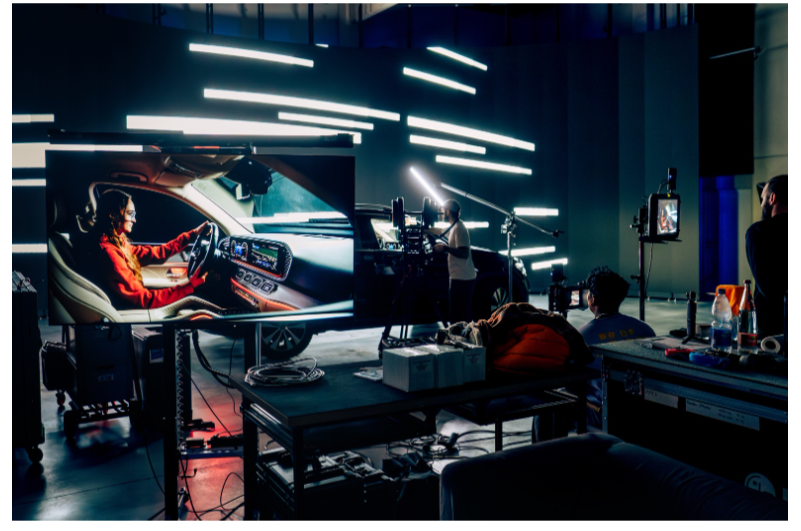
Oct 13: VG Media Studio, a full-service marketing and production agency based in Laichingen near Stuttgart, Germany, has installed Brompton Technology LED processing as part of a new virtual production facility designed to support everything from advertising and automotive work to short films and feature-length productions.
Virtual production was not originally part of the studio’s plans. During the development of the wider complex, however, the team began discussions with LG around its LED technology and its ambitions for an official reference studio in Europe. This led VG Media Studio to consider how LED, processing and tracking could work together to create a high-performance virtual production environment.
The decision was ultimately driven by a desire to give productions more options while maintaining the reliability and efficiency needed to keep projects moving. As a full-service marketing agency, VG Media Studio regularly looks for alternative approaches to production, whether that means a different camera angle, a social-first concept or a particular visual treatment.
That same approach informed the design of the LED studio, with technical performance and ease of operation key considerations. Brompton processing provides the superior colour precision, camera flexibility, and operational reliability required across the studio’s varied workload.
The studio is built around an LG LED volume, Mo-Sys tracking and Brompton Tessera processing, and is already being used for a diverse range of productions for external companies looking to harness virtual production facilities, equipment, and expertise.
The LED setup comprises more than 100 square metres of LG LED, with two 4K Tessera SX40 processors driving the wall and a Tessera S8 powering the ceiling. Each SX40 is paired with two Tessera XD 10G data distribution boxes. The system can operate at up to 60fps, with the potential to reach 120fps through further configuration.
VG Media Studio operates two spaces within the facility: the main LED studio offering approximately 250 square metres of space in front of the wall, alongside a 70-square-metre studio that can be used as a conventional film or photography space. Together, they allow the team to accommodate different production requirements under one roof.
“I really like the Brompton system we have here because it’s super fast and reliable,” says Simon Brüstl, Virtual Production Engineer at VG Media Studio. “The UI is really clean and has all the functions you need during operation. It just does the job that it has to do.”
The system is designed to make day-to-day operation straightforward. Brompton’s integration with Stream Deck allows the team to control the LED stage from a familiar interface, while its colour pipeline provides a precise and consistent result across different cameras.
Integration with Mo-Sys adds another layer of flexibility. VG Media Studio can use Mo-Sys markers that are visible to the tracking system but hidden from the production camera, allowing tracking information to be displayed without compromising the camera image. Frame Remapping can provide different LED feeds for individual cameras in multi-camera productions, while Custom Markers can display text, cues, or other instructions for the crew without appearing in the final shot.
“Brompton processing supports any production that needs the best camera performance, best visual colour performance, and of course, accuracy and reliability,” says Oliver Dier, Technical Solutions Manager (EMEA) at Brompton Technology. “VG asked us to deliver exactly that.”
“We try to individually explore the option of filming in front of the wall with each of our customers, and already have done that in some parts,” adds Philipp Offermann, Head of Management and Booking at VG Media Studio. “But the overall goal is mainly to rent our facilities, equipment and know-how to external production companies. We are really happy with the results, our partners, and the support we’re getting, and we are proud to be able to offer the best Hollywood-grade products on the market to our customers.”
The studio has already hosted a wide range of work, including external commercial productions, a short film with multiple settings, car commercials and a full movie production in July 2026. VG Media Studio’s wider client base includes Adobe, Alb Gold, Bosch eBike Systems, Porsche AG, SONY, Swarovski, Tamron and Wieland-Werke, among others.
With a growing range of productions already taking place in the space, VG Media Studio sees the new facility as an extension of its wider production offering, combining its existing creative and marketing expertise with a virtual production environment capable of serving both its own clients and external production teams.
“It has been fantastic to see this installation come together and to watch VG Media Studio put it straight to work on such a varied slate of productions,” concludes Dier. “The team knew exactly what they wanted from day one, and that clarity made for a smooth collaboration from planning through to delivery. Seeing the studio already booked up with external productions just months after going live shows what’s possible when the right technology is paired with the right team.”
13, Oct 2026
Drone Spotted Over Puri Srimandir Again, Raises Fresh Security Concerns
Puri, Oct 13 (UDN): Security concerns have resurfaced at the Shree Jagannath Temple in Puri after a drone was reportedly spotted flying over the shrine early Tuesday morning, despite restrictions prohibiting drone operations in the area.

Representational Image
According to reports, the drone was seen hovering above the temple at around 5 am. It is suspected that footage of the shrine may have been recorded, although this has not been officially confirmed.
The identity of the drone operator and the location from which the device was controlled remain unknown. Police have initiated an investigation to establish the circumstances surrounding the incident.
Repeated Drone Sightings Raise Alarm
The latest sighting has renewed questions about the enforcement of security restrictions around the centuries-old temple, which attracts large numbers of devotees throughout the year.
Similar drone sightings have reportedly occurred over the Srimandir in the past, despite the area being designated a no-drone zone. The repeated incidents have heightened concerns about the effectiveness of existing surveillance and enforcement measures.
The unauthorised use of drones over a major religious site has also raised questions about potential risks to the temple’s security and the privacy of devotees.
Devotees Seek Stronger Anti-Drone Measures
The incident has drawn displeasure from devotees, who have called for stronger steps to prevent unauthorised aerial activity over the shrine.
Some have demanded the installation of dedicated anti-drone technology to detect, track and prevent drones from entering restricted airspace around the temple.
They have urged the authorities to strengthen monitoring and ensure that existing restrictions are enforced effectively to prevent similar incidents.
Operator Yet to Be Identified
Police are investigating the latest sighting, but details about the operator, the drone’s purpose and whether any footage was recorded remain unclear.
Further information from the authorities is awaited regarding the findings of the investigation and any additional security measures that may be introduced.
The incident has once again brought the protection of Puri Srimandir into focus, with devotees calling for more effective safeguards around one of Odisha’s most important religious landmarks.
13, Oct 2026
Tata Power and Imperial College London Collaborate to Advance Next-Generation Energy Systems and Accelerate India–UK Net-Zero Ambitions
Chandigarh, 13 October 2026: Tata Power, one of India’s largest integrated power companies, and Imperial College London, a world-leading UK University, have signed a Memorandum of Understanding (MoU) to explore opportunities for collaboration in research, technology and knowledge exchange across critical areas of the energy transition.
The collaboration will focus on areas including grid flexibility, energy storage, AI and ML applications in energy, and advanced energy systems. The partnership will seek to connect Tata Power’s experience of developing and operating energy infrastructure at scale with Imperial’s research expertise across digital technologies and decarbonisation.
The partnership comes as India and the UK deepen cooperation on clean energy and climate action. Under the India–UK Vision 2035, the two countries have identified energy storage and grid transformation as areas for greater cooperation, alongside joint work on AI, renewables, energy storage, hydrogen and carbon capture. The Vision also highlights the Net Zero Innovation Partnership as a vehicle for supporting deep-tech solutions and new markets for climate innovation.
Commenting on the partnership, Business and Trade Secretary, UK Government Jonathan Reynolds said: “When great British research teams up with the ambition and expertise of Indian business, there is huge potential to make a real difference. This partnership is a great example of our fantastic new trade deal bringing opportunities to life, and will help turn ideas into cleaner, smarter energy solutions – supporting good jobs and growth in both our countries.”
Harjinder Kang, His Majesty’s Trade Commissioner for South Asia and British Deputy High Commissioner for Western India, said: “The partnership between Imperial College London and Tata Power is a great example of the UK and India combining their strengths to turn innovation into impact. Bringing together world-class UK research and Indian industrial expertise will help accelerate next-generation energy solutions, unlock new commercial opportunities and support sustainable growth in both countries.”
Dr. Praveer Sinha, CEO & MD, Tata Power, said: “India’s energy transition is entering a phase where scale, flexibility and reliability will be as important as the pace of renewable energy growth. The next generation of grids, storage and digital energy systems will need to work together to meet a rapidly evolving demand landscape. Our collaboration with Imperial College will help solve real-world industry challenges with deep research and new thinking and explore solutions that can be relevant not only to India’s energy journey, but also to the wider global transition.”
The partnership reflects a shared interest in translating research and innovation into practical applications. Tata Power brings extensive experience across power generation, transmission, distribution and renewable energy, while Imperial contributes research capabilities spanning energy systems, engineering, digital technologies, economics and decarbonisation.
Professor Mary Ryan, Vice Provost (Research and Enterprise) at Imperial College London, said: “As one of the largest energy companies in the world’s most populous country, Tata Power has expertise across a range of energy technologies and the scale needed to deliver the cleaner and more resilient energy systems we urgently need. This makes the company a fantastic partner for Imperial, which brings not only world-leading frontier research capabilities in science, engineering and business, but a model of convergence science that looks beyond individual disciplines to tackle challenges too large for standard approaches to innovation.”
By bringing these capabilities together, the partnership aims to support the development and demonstration of solutions that can contribute to more flexible, resilient and lower-carbon energy systems, while creating opportunities for knowledge exchange and innovation between India and the UK.
13, Oct 2026
Southwest Monsoon Retreats Further Across Odisha, IMD Reports
Bhubaneswar, Oct 13 (UDN): The Southwest Monsoon has withdrawn from additional areas of Odisha, with the India Meteorological Department (IMD) confirming its further retreat as of October 12.

Representational Image
According to the Meteorological Centre in Bhubaneswar, the monsoon has completely withdrawn from Sundargarh, Jharsuguda, Sambalpur, Deogarh, Subarnapur, Bargarh, Nuapada, Balangir, Kalahandi and Nabarangpur districts.
The seasonal system has also receded from most parts of Mayurbhanj, Keonjhar, Angul, Boudh and Kandhamal districts, as well as some areas of Dhenkanal, Rayagada, Koraput and Malkangiri.
The latest update indicates that the monsoon withdrawal is progressing across Odisha, although parts of the state remain under its influence.
Withdrawal Line Extends Across Eastern India
The IMD stated that the withdrawal line of the Southwest Monsoon continues to pass through 27.0°N/90.5°E, Dhubri, Kolkata, Angul, Khammam, Honavar and 14.0°N/73.0°E.
The line marks the approximate boundary separating areas from which the monsoon has withdrawn from those where it continues to prevail.
Angul’s inclusion in the withdrawal line reflects the ongoing retreat of the seasonal system across parts of Odisha and neighbouring regions.
Northeast Monsoon Rains May Begin Soon
The weather department said conditions are becoming favourable for the Southwest Monsoon to withdraw from the remaining parts of the country over the next two to three days.
The same period is also expected to favour the commencement of northeast monsoon rainfall over the southern peninsula.
The transition marks the seasonal shift from the southwest monsoon, which brings the bulk of India’s annual rainfall, towards the northeast monsoon phase that contributes significantly to rainfall in parts of southern India.
Further updates from the IMD will indicate how the withdrawal progresses across the remaining areas and when the seasonal transition advances over the southern peninsula.
13, Oct 2026
Moldova Robotics Team Wins FIRST Global Challenge 2026, Taking Gold and Two Silver Medals in South Korea
|
|
|
|
13, Oct 2026
European Real Estate Institutional Investors Want Less Operational Disruption And Faster Payback Certainty To Accelerate Action On Energy Efficiency
Oct 13: New research by re:sustain which explores energy efficiency across the real estate investment portfolios of European real estate institutional investors, shows that when asked to choose the two key factors that will accelerate action on poor energy performance, less operational disruption and quicker payback certainty were ranked as the most important.
Re:sustain, the leading science-based technology platform which optimises the energy consumption of real estate assets, surveyed 200 European real estate institutional asset managers in the UK, Germany, France, Netherlands, Spain and Italy, with a combined AUM of €296 billion.
Reducing operational disruption was the most important factor cited by 79% of respondents that they believe will accelerate action to improve the energy performance of their assets. Faster payback certainty was the second most important factor (65%), reflecting the significant upfront investment needed to save some assets from devaluing or becoming ‘stranded’.
Clearer regulatory signals ranked third (55%), highlighting concerns over the complexity of regulations and the need to comply with diverse local, regional and national codes, as well as policy uncertainty as a result of frequent shifts in global climate commitments and unclear enforcement mechanisms.
Better performance verification ranked fourth (40%). Although the majority of respondents (82%) said that the quality of the data collected from across their real estate portfolios is good at helping them identify areas for improvement, only 47% are highly confident when it comes to using it to make capital allocation decisions. Almost half (47%) said they are “quite confident” and 7% said it needs to be used with other analysis, rather than on its own.
Crucially, the research also showed that almost two thirds (62%) of respondents said that only 20-40% of their assets have an up-to-date building management system – a vital tool that significantly helps accelerate the energy performance of buildings, reduces costs and minimises downtime as a result of costly equipment breakdown.
Commenting on the research Katie Whipp, Chief Business Officer at re:sustain, said: “Energy efficiency has moved from a sustainability objective to a core driver of asset performance and resilience. In a more volatile energy environment, institutional investors are not lacking intent – they are constrained by the perceived complexity, distruption, and uncertainty of execution. What our research shows clearly is that the market is prioritising solutions that deliver immediate, measurable outcomes without interrupting operations or requiring significant upfront capital. That is a fundamental shift.
“The ability to optimise energy performance quickly, with high confidence in payback, is now directly linked to net operating income and long-term asset value. The challenge – and opportunity – is turning data into action at scale, and doing so in a way that fits within the operational realities of real estate portfolios.”
re:sustain was founded in 2021 by scientists who recognised that while data was being collected about real estate energy consumption, it wasn’t improving usage. To solve this problem, the re:sustain team developed innovative technology which uses collected building management system data (BMS) to create a highly calibrated digital twin of each building – an accurate model that reflects real asset performance. This dynamic thermal model allows for precise simulations and analyses, eliminating guesswork and enabling targeted interventions.
The proprietary re:sustain engine processes the digital twin data and the BMS data to identify inefficiencies and improvement opportunities, whilst calculating potential carbon savings. This remote approach allows for targeted optimisations and detailed mechanical insights on existing systems, reducing energy use, carbon emissions, and operational costs in support of sustainability goals—all without requiring Capex from asset owners or business interruption for occupiers.
To date, buildings using re:sustain technology have enjoyed 37% average annual energy savings in a process that takes just four to six weeks to implement.
13, Oct 2026
Xinhua Silk Road: “Courtyard economy” spurs rural cultural tourism in central China county
BEIJING, Oct. 13, 2026 /PRNewswire/ — After becoming a trendy topic abroad earlier this year, “country walk” has been gaining popularity among inbound tourists to China.

In Changsha County, central China’s Hunan Province, a small village named Xiangfeng Village is riding the wave of “country walk” and leveraging “courtyard economy” to boost rural tourism.
Among its foreign visitors, seven youths from six countries including the United States, Germany and Malaysia have lived in the village while filming the popular TV reality show “From Far Lands to China’s Farmlands”.
Acting as “new farmers”, these energetic foreign youths worked side by side with local villagers to experience the courtyard-centered rural cultural tourism in Xiangfeng Village.
Apart from converting idle rural houses into spaces featuring popular international styles, they also tried herbal hot pot and experienced intangible cultural heritage (ICH) activities, while enjoying oven-baked bread and specialty coffee there.
What impressed them most was not only the delicious Chinese food, but also the enchanting rural life in Xiangfeng Village where agritainment thrives and Chinese and foreign cultures intertwine in harmony.
After the second season of “From Far Lands to China’s Farmlands” amassed 420 million views online, the TV reality show that became a sensation in China brought Chinese rural tourism into the spotlight again.
When the young people from Malaysia and Georgia decided to formally settle there, Changsha County used these small courtyards to create not only new rural consumption scenarios, but also platforms to present the Chinese-style rural micro-vacations to the world.
Original link: https://en.imsilkroad.com/p/352515.html
 View original content to download multimedia:https://www.prnewswire.co.uk/news-releases/xinhua-silk-road-courtyard-economy-spurs-rural-cultural-tourism-in-central-china-county-302906854.html



