


3, Nov 2026
Pune Metro’s Pink Line Sets New Benchmark With All-Women Operations and Solar-Powered Energy
New Delhi, Nov 3: Pune’s urban transport infrastructure is poised for a significant transformation with the upcoming inauguration of Metro Line 3, popularly known as the Pink Line. The 23-km elevated corridor has drawn attention for two distinctive features — an all-women train operating team and a plan to meet nearly 30 per cent of its electricity requirements through solar energy.
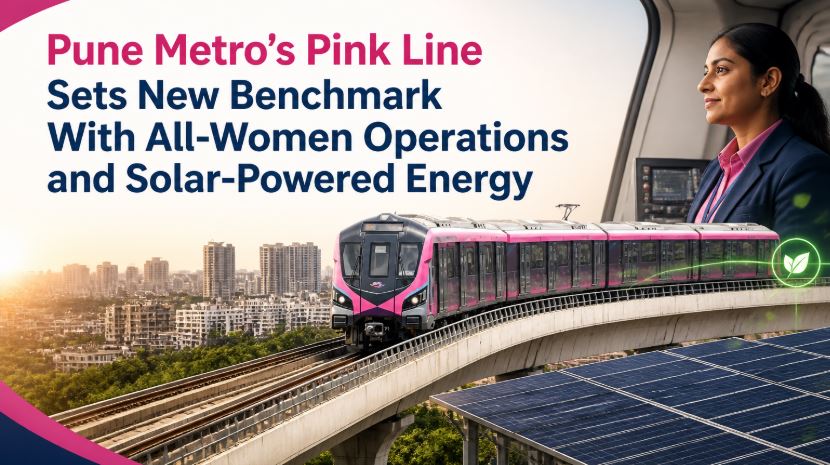
Representational Image
Prime Minister Narendra Modi is scheduled to inaugurate the much-anticipated corridor, which will connect the Hinjewadi IT hub with Shivajinagar, offering a major boost to urban mobility in Pune.
Ahead of the inauguration, Maharashtra Cabinet Minister Chandrakant Patil highlighted the project’s emphasis on commuter convenience, women’s empowerment and environmental sustainability.
Describing the corridor as an important addition to Pune’s transport network, Patil said it would make daily journeys faster, easier and more comfortable for thousands of residents, particularly IT professionals and students travelling between Hinjewadi and central Pune.
He also underlined the significance of placing women at the forefront of metro operations and adopting solar energy to meet a substantial share of the project’s power requirements.
Women’s Empowerment Meets Green Mobility
One of the most notable aspects of Pune Metro Line 3 is its all-women train operating team, reflecting a significant step towards greater participation of women in the urban transport sector.
The proposed use of solar energy to meet around 30 per cent of the corridor’s electricity demand is another major feature, highlighting the project’s focus on sustainable public transportation.
Together, these initiatives are being viewed as an effort to combine inclusive employment opportunities with environmentally responsible infrastructure development.
Connectivity Boost for Pune’s IT Hub
BJP Bihar President Sanjay Saraogi welcomed the upcoming inauguration, describing it as an important milestone in Maharashtra’s infrastructure development.
He said the new metro corridor would significantly benefit students, IT professionals and other daily commuters travelling between Hinjewadi and Shivajinagar. The improved connectivity is expected to save commuting time and reduce travel-related stress for thousands of people.
Bihar Minister Ram Kripal Yadav also praised the Centre’s emphasis on infrastructure development, pointing to investments in highways, bridges, metro networks and railway connectivity across the country.
23.2-Km Corridor to Ease Urban Congestion
Developed by the Pune Metropolitan Region Development Authority (PMRDA), Metro Line 3 is an elevated corridor stretching approximately 23.2 kilometres, with 23 stations connecting Maan near Hinjewadi to the District Court station in central Pune.
The project has an estimated cost of Rs 8,313 crore and is being implemented under a public-private partnership (PPP) model.
Besides improving access to the Hinjewadi IT Park, the corridor is expected to ease pressure on Pune’s road network, reduce dependence on private vehicles and provide commuters with a more efficient public transport alternative.
With its focus on modern connectivity, women’s participation and renewable energy, Pune Metro’s Pink Line is emerging as a noteworthy example of how urban infrastructure can combine technological progress with social inclusion and environmental sustainability.
- 0
- By Neel Achary

3, Nov 2026
RIDES-2026 to Focus on Next-Generation Infrastructure and Sustainable Engineering Solutions
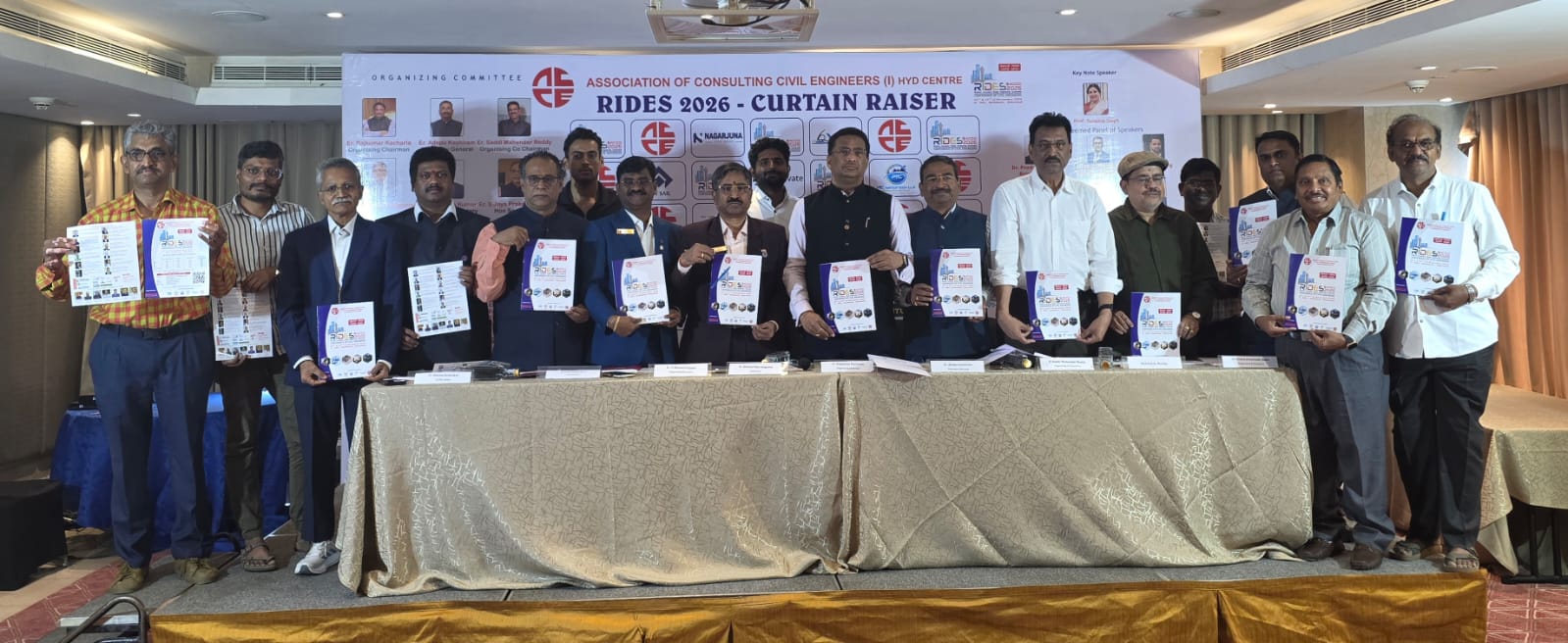
Hyderabad, Nov 03: The Association of Consulting Civil Engineers (India) (ACCE(I)), Hyderabad Centre, is organising RIDES-2026 – Conference of Civil Engineers along with Build-Tech Expo 2026 on November 26 and 27 at the Engineering Staff College of India (ESCI), Gachibowli, Hyderabad.
The two-day event is expected to bring together over 1,000 civil engineering professionals, structural engineers, architects, contractors, industry leaders, academicians, researchers and students to discuss emerging challenges and technological advancements in the construction and infrastructure sectors.
The conference will feature eminent national and international experts, with Prof. Sunaina Singh, former Vice-Chancellor of Nalanda University, delivering the keynote address on the restoration, rehabilitation and remodelling of the historic Nalanda structures dating back to 415 BC. Dr. Pradeep Kumar Ramancharla (CSIR-CBRI, Roorkee) will address climate-resilient infrastructure, disaster preparedness and earthquake and flood risks, while Dr. Sandeep Shirkhedkar will highlight LiDAR, GIS and Digital Twin applications in infrastructure development. Prof. Dr.-Ing. Marwan Alzaylaie will discuss advanced deep foundation engineering, while Dr. V. Rajendran, Dr. N. Ananda Valli (Director, CSIR-SERC, Chennai), and Dr. Mohammed Sajid Abbasi will share expertise in structural rehabilitation, structural health monitoring and long-span spatial structures. Sessions on digital engineering, BIM-integrated design and 3D concrete printing will be led by Roy Aniruddha and Er. V. Umamaheswaran (L&T Construction). Other technical deliberations will cover high-rise plumbing, sustainable green roofs, vertical transportation and composite structures, presented by Er. Veeresh S.C., Dr. Ankit Garg, Er. V. Jagadish Kumar and Er. Gururaj S. Thali, highlighting emerging technologies and sustainable engineering solutions for the future of civil engineering.
With increasing challenges from climate change, extreme weather events, rapid urbanisation and ageing infrastructure, RIDES-2026 aims to promote resilient, sustainable and innovative engineering solutions. The conference will also facilitate knowledge exchange and strengthen collaboration between industry, academia and government agencies.
Alongside the conference, Build-Tech Expo 2026 will showcase innovative construction materials, advanced machinery, engineering software, sustainable building solutions and emerging technologies. The exhibition will provide a platform for product demonstrations, networking and business development and will also be open to the public.
The event is being organised under the leadership of ACCE(I) Hyderabad Centre Chairman – Er. Bheem Rao Jaligama , Organising Chairman – Er. Rajkumar Kacharla, ACCE(I)Secretary General – Er. Adepu Kashiram, Organising Co-Chairman – Er.Saddi Mahender Reddy, Vice- Chairman & Organising Secretary -Er. C Ramesh, Hon- Secretary Er. D.S Jaya Prakash, Organising Treasurer -Er. Rudra Amarnath Babu, Media Convener- Er. Akkala Sudhakar.
Event: RIDES-2026 Conference of Civil Engineers & Build-Tech Expo
Dates: November 26–27, 2026
Venue: ESCI, Gachibowli, Hyderabad
Registration: www.accei-rides.com
3, Nov 2026
Piyush Goyal Pushes for Faster Clearances, Better Funding to Strengthen India’s Bioeconomy
New Delhi, Nov 3: Union Commerce and Industry Minister Piyush Goyal has called for a more supportive policy environment, faster regulatory approvals and easier access to finance to accelerate India’s growing bioeconomy and strengthen its position in the global biotechnology sector.
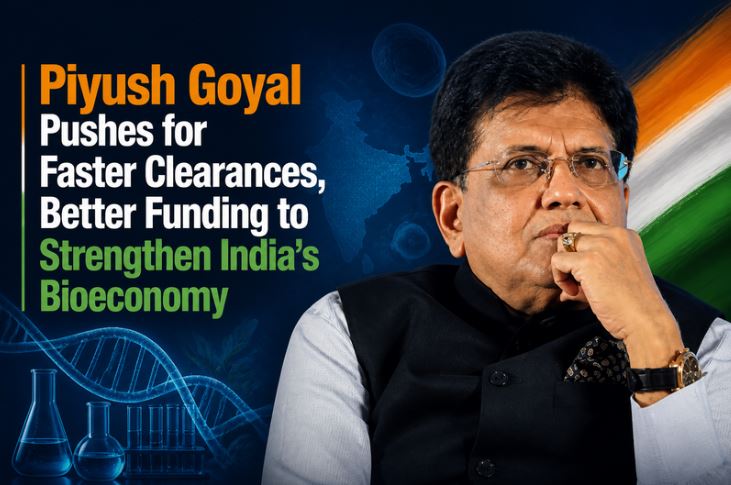
Representational Image
Addressing a high-level roundtable titled ‘India’s Bioeconomy Opportunity: Role of Startups in Driving Innovation and Growth’ in New Delhi, Goyal emphasised the need to harness India’s scientific expertise, research capabilities and entrepreneurial potential to drive innovation and expand the country’s bioeconomy.
According to an official statement from the Commerce Ministry, the minister also stressed the importance of implementing recommendations emerging from the discussions within a defined timeframe.
The meeting focused on addressing key challenges faced by biopharma startups, particularly regulatory delays, funding constraints, inadequate infrastructure and limited collaboration between research institutions and industry.
Single-Window Clearances, Regulatory Reforms on Agenda
The roundtable, organised by the Department for Promotion of Industry and Internal Trade (DPIIT) in collaboration with NITI Aayog and NITI Frontier Tech Hub, explored several measures to create a more enabling ecosystem for biotechnology startups.
Among the major proposals discussed were the introduction of a regulatory sandbox, single-window clearance mechanisms, alignment with international regulatory standards and simplification of patent application procedures.
Participants underlined that reducing procedural hurdles and improving access to regulatory support would help startups bring innovative products to market faster and expand their operations.
Shared Infrastructure to Support Biopharma Startups
The discussions also highlighted the need to strengthen common research and testing infrastructure to reduce the operational burden on emerging companies.
The proposed development of shared laboratories, testing facilities and clinical trial infrastructure was identified as an important step towards lowering costs and encouraging innovation.
The participants also reviewed Biopharma SHAKTI, announced in the Union Budget 2026-27, and discussed ways to strengthen its role in supporting India’s biopharmaceutical ecosystem.
Stronger Industry-Academia Collaboration Emphasised
Distinguished Fellow at NITI Aayog Debjani Ghosh highlighted the importance of closer cooperation among startups, established industries, academic institutions and government agencies to build a globally competitive bioeconomy.
NITI Aayog Member Gobardhan Das, meanwhile, stressed the need to enhance India’s research capabilities and ensure that scientific breakthroughs are translated into commercially viable products.
The roundtable further deliberated on boosting domestic life sciences manufacturing, speeding up customs clearance for laboratory equipment and research reagents, and simplifying access to government schemes and regulatory assistance.
Focus on Coordinated Policy Action
The Commerce Ministry said participants also emphasised stronger coordination among different ministries to ensure consistent policy interventions and faster resolution of challenges affecting the sector.
The discussions come amid growing efforts to position biotechnology and biopharmaceuticals as key drivers of India’s innovation-led economic growth.
With faster approvals, improved financing opportunities and better research infrastructure emerging as major priorities, the proposed measures are aimed at helping Indian startups scale up, strengthen domestic manufacturing and compete more effectively in international markets.
3, Nov 2026
izmo Microsystems Successfully Develops and Qualifies Indigenous Pitch Detector for Defence Avionics
Achievement demonstrates integrated electronics design, advanced semiconductor packaging and military grade manufacturing capabilities.
BENGALURU, India, Nov. 3, 2026 /PRNewswire/ — izmo Limited (NSE: IZMO) (BSE: 532341) today announced that its semiconductor subsidiary, izmo Microsystems Pvt. Ltd., has successfully developed and completed defence qualification of an indigenous Pitch Detector – a critical avionics component that senses aircraft pitch attitude and provides correction data to the gyromagnetic compass navigation system. The component is used across multiple military aircraft and helicopter platforms currently in active service.

The original foreign origin Pitch Detector faced irregular and limited supply from its overseas manufacturer, creating operational challenges for platforms dependent on it. izmo Microsystems undertook a complete indigenization program to develop a fully compatible Indian replacement, reducing dependence on imported components and strengthening domestic supply chain resilience.
izmo Microsystems successfully reengineered the original component without access to its design documentation, redesigned the electronics using modern technology, and manufactured a fully compatible replacement in India. The component was developed and manufactured at the Company’s DSIR recognised advanced semiconductor packaging facility in Bangalore, and successfully qualified to military reliability standard MIL-PRF-38534.
The achievement demonstrates izmo Microsystems’ ability to undertake complete product development programs, from design and engineering through manufacturing and qualification. These integrated capabilities position the Company to address a wider range of defence and aerospace indigenization opportunities, particularly where imported components are obsolete, difficult to procure or no longer supported by their original manufacturers.
The development also reflects the growing maturity of izmo Microsystems’ technology platform, which combines advanced electronics design with high reliability semiconductor packaging and manufacturing. These capabilities support the Company’s activities across defence, aerospace, silicon photonics and other advanced semiconductor applications.
India’s defence budget for FY2026–27 stands at ₹7.85 lakh crore, including ₹2.19 lakh crore for capital expenditure, reflecting the Government’s continued commitment to defence modernization and self reliance. With increasing emphasis on indigenous procurement and import substitution, izmo Microsystems sees growing opportunities to apply its engineering and manufacturing capabilities across the defence electronics sector.
About izmo Microsystems Pvt. Ltd.
izmo Microsystems Pvt. Ltd. is the advanced semiconductor packaging subsidiary of NSE/BSE listed izmo Limited. Based in Bengaluru, the Company operates a state-of-the-art facility providing integrated design, packaging and manufacturing services across silicon photonics, RF and microwave electronics, 3D System-in-Package integration, hermetic packaging and high reliability defence electronics.
For more information, visit www.izmomicro.com / www.izmoltd.com or contact:
|
Media Contact izmomicro Communications Email: info@izmomicro.com Investor Contact izmo Limited No. 177/2C, Bilekahalli Industrial Area, Bannerghatta Road, Bangalore 560076 CIN: L72200KA1995PLC018734 Email ID: investors@izmoltd.com |
Caution Concerning Forward- Looking Statements: Certain statements in this document may be forward-looking statements. Such forward-looking statements are subject to certain risks and uncertainties like regulatory changes, local political or economic developments, and many other factors that could cause our actual results to differ materially from those contemplated by the relevant forward-looking statements. Further, past performance is not necessarily indicative of future results. Given these risks, uncertainties and other risk factors, viewers are cautioned not to place undue reliance on these forward-looking statements. The Company will not be in any way responsible for any action taken based on such statements and undertakes no obligation to publicly update these forward-looking statements to reflect subsequent events or circumstances.
 View original content to download multimedia:https://www.prnewswire.com/in/news-releases/izmo-microsystems-successfully-develops-and-qualifies-indigenous-pitch-detector-for-defence-avionics-302927518.html

3, Nov 2026
Effective Exhibition Stand Designs in Germany: A Complete Guide to Creating Impactful Trade Fair Booths
Introduction
Germany is one of the world’s leading destinations for international trade fairs, business exhibitions, and industry events. From advanced manufacturing and automotive technology to healthcare, consumer goods, and digital innovation, German exhibitions provide businesses with valuable opportunities to connect with potential customers, showcase products, and strengthen their market presence.
However, participating in a trade fair is not simply about securing floor space. The design of an exhibition stand plays a critical role in attracting visitors, communicating brand values, and encouraging meaningful business conversations.
Effective exhibition stand designs in Germany combine visual appeal, functional layouts, brand storytelling, and sustainable construction. A well-planned booth should capture attention from the aisle while providing visitors with a comfortable and engaging environment.
Whether a business is exhibiting at Hannover Messe, Messe Frankfurt, or another major German trade fair, the right exhibition stand can transform a simple display into a powerful marketing asset.
For businesses planning their next exhibition, GPTOnline.ai can also support content planning and marketing communication, helping create a consistent brand message before, during, and after the event.
Why Exhibition Stand Design Matters in Germany
German trade fairs attract professional audiences who often arrive with specific business objectives. Visitors may be comparing suppliers, evaluating technologies, exploring partnerships, or searching for practical solutions.
An effective stand must therefore do more than look attractive. It needs to communicate value quickly and make interaction effortless.
1. Create a Strong First Impression
Visitors frequently encounter multiple exhibitors within a short period. A distinctive exhibition stand helps a business become recognizable in a crowded exhibition hall.
Effective design elements include:
-
A clear and prominent brand identity.
-
High-quality graphics and visual displays.
-
Strategic lighting that highlights important products.
-
Open and welcoming entrance areas.
-
A concise headline communicating the company’s main offering.
The goal is to make the business instantly recognizable and give visitors a compelling reason to stop.
2. Communicate Brand Identity
An exhibition stand is a physical representation of a company’s identity.
For example, a technology company may use clean architectural lines, interactive screens, and minimalist graphics. A premium furniture brand may focus on natural materials, sophisticated lighting, and carefully arranged product displays.
The most effective exhibition stand designs reflect the brand’s personality while remaining consistent with its existing marketing materials.
3. Encourage Meaningful Business Conversations
A beautiful stand is only valuable when it supports the company’s exhibition objectives.
A successful design should provide appropriate space for:
-
Product demonstrations.
-
Initial visitor engagement.
-
Business meetings.
-
Private discussions.
-
Lead collection and follow-up planning.
According to the Association of the German Trade Fair Industry (AUMA), a successful exhibition stand should function as a communication space that encourages interaction and supports the company’s objectives.
Source: AUMA – Stand Design and Construction
Key Elements of Effective Exhibition Stand Designs in Germany
Creating a successful exhibition booth requires a combination of creativity, functionality, and careful planning.
1. A Clear and Attractive Layout
The layout determines how visitors enter, move through, and interact with the exhibition stand.
An effective layout should:
-
Keep the entrance open and inviting.
-
Make important products visible from the aisle.
-
Separate demonstration areas from meeting spaces.
-
Avoid unnecessary barriers and overcrowding.
-
Provide sufficient room for visitors and staff.
A practical approach is to divide the stand into four functional zones:
| Zone | Primary Purpose |
|---|---|
| Reception | Welcome visitors and introduce the brand |
| Product display | Showcase products and key innovations |
| Interaction | Support demonstrations and engagement |
| Meeting area | Conduct business discussions |
This structure creates a natural visitor journey without making the stand feel overly complicated.
2. Strategic Lighting and Visual Appeal
Lighting is one of the most effective tools for improving exhibition stand visibility.
A carefully designed lighting system can highlight products, create depth, and establish the right atmosphere.
Popular lighting techniques include:
-
LED accent lighting: Highlights products and architectural details.
-
Backlit graphics: Improves visibility of brand messages.
-
Ambient lighting: Creates a comfortable environment.
-
Spotlighting: Directs attention toward important exhibits.
-
Integrated lighting: Combines illumination with architectural features.
For German exhibition halls, where neighboring stands may compete for attention, lighting should create visual distinction without becoming distracting.
3. High-Quality Materials and Finishes
Material selection influences both the appearance and perceived quality of an exhibition stand.
Common materials include:
-
Reusable aluminum structures.
-
Engineered wood and timber finishes.
-
Fabric graphics.
-
Glass and acrylic display elements.
-
Recyclable panels.
-
High-quality modular flooring systems.
A combination of durable materials and thoughtful detailing can create a professional appearance while supporting repeated use across multiple exhibitions.
4. Clear Brand Messaging
Exhibition visitors usually scan rather than read lengthy displays.
A stand should communicate three things quickly:
-
Who is the company?
-
What does it offer?
-
Why should visitors care?
Use short headlines, recognizable graphics, and benefit-focused messaging.
For example, instead of displaying a long technical paragraph, a manufacturing company could use a headline such as:
“Precision Engineering for the Next Generation of Manufacturing.”
Supporting graphics and a live demonstration can then explain the technical details.
5. Interactive Product Demonstrations
Interactive experiences provide visitors with a reason to engage.
Depending on the industry, exhibition stand designers can incorporate:
-
Live product demonstrations.
-
Touchscreen product configurators.
-
Augmented reality experiences.
-
Virtual product walkthroughs.
-
Interactive digital presentations.
-
Hands-on product testing.
The key is to ensure that technology serves a clear purpose.
A simple, well-executed demonstration can be more effective than a complex digital installation that visitors find difficult to understand.
3, Nov 2026
Lufthansa Group increases operating profit – strong demand and cost discipline more than offset higher fuel costs
-
With 12.2 billion euros the strongest-revenue quarter in the company’s history – an increase of nine percent
-
More than half a billion euros in additional costs due to higher fuel prices
-
Adjusted EBIT nevertheless rises six percent to 1.4 billion euros
-
Unit cost increase at network airlines limited to half a percent thanks to moderate growth and strict cost management
-
Lufthansa Cargo triples operating profit to 162 million euros
-
Lufthansa Technik increases its prior-year result by more than 50 percent with an Adjusted EBIT of 200 million euros
Carsten Spohr, Chairman of the Executive Board and CEO of Deutsche Lufthansa AG, says:
“The past quarter was the strongest in terms of revenue in the history of the Lufthansa Group. We succeeded in increasing operating profit by six percent compared to the previous year. With rising revenues amid consistently high demand and strict cost discipline, we were able to more than offset the increase in fuel costs of approximately half a billion euros. Our investments in modernizing our fleet and in-flight products are increasingly paying off. The focus remains on Lufthansa Airlines. Following the successful turnaround in reliability and customer satisfaction, we must now accelerate the financial turnaround of our core brand through both previously planned and additional measures, in order to restore it to its position as the flagship and benchmark of the Lufthansa Group in terms of value creation as well.”
Third-quarter result improved despite higher fuel costs
Lufthansa Group revenue increased nine percent year‑on‑year to 12.2 billion euros (previous year: 11.2 billion euros). The company recorded an operating profit (Adjusted EBIT) of 1.4 billion euros, an increase of six percent compared with the prior year (previous year: 1.3 billion euros) – despite a significant increase in fuel costs of 543 million euros compared with the prior year. The company succeeded in more than compensating for the cost increase through strong operating revenues and cost discipline.
Demand developed robustly across all segments in the third quarter. At the network airlines, average yields rose seven percent versus the prior year, driven by strong demand for premium tickets and on the routes to Asia and North America.
Eurowings also benefited from strong demand in European point‑to‑point traffic and achieved yields eight percent higher than in the previous year. At the same time, Lufthansa Cargo and Lufthansa Technik delivered results significantly above the prior year and thus made a strong contribution to the quarterly result.
The Adjusted EBIT margin fell slightly to 11.5 percent (previous year: 11.9 percent). Net income rose by around 300 million euros due to the improved operating result, positive valuation effects and a negative tax effect in the prior‑year period, to 1.3 billion euros (previous year: 966 million euros). Adjusted free cashflow reached roughly the prior‑year level at 793 million euros (previous year: 818 million euros).
Network airlines report strong demand and pursue cost discipline
The Group’s network airlines expanded their capacity for the first time this year in the third quarter compared with the prior year. Available seat capacity increased by 1.6 percent, primarily on long-haul routes. Growth was concentrated mainly in South America and Africa as well as selected routes to Asia. Yields rose 6.8 percent while load factor declined by 1.3 percentage points versus the prior year. Combined, these two metrics resulted in unit revenue growth of 5.2 percent versus the prior year, reflecting robust demand. This demand strength was driven notably by the premium segment as well as by traffic to Asia and North America.
Due to the sharply increased jet fuel prices caused by the conflict in the Middle East, fuel costs at the network airlines rose by more than 400 million euros compared with the previous year. Unit costs excluding fuel and emissions expenses increased by 0.5 percent compared with the previous year and were therefore well below the current inflation rate. Key factors for successful cost management were lower expenditure for fees and charges as well as reduced project costs. As part of the Lufthansa Airlines Turnaround Program, automation and digitalization were consistently advanced, which also had a favorable effect on the development of unit costs. In addition, capacity growth led to a fix cost degression.
Overall, the network airlines generated an Adjusted EBIT of 853 million euros, 108 million euros less than in the previous year. SWISS, Austrian Airlines and Brussels Airlines outperformed their prior-year results in the third quarter. Lufthansa Airlines, however, was burdened not only by rising fuel prices but also by costs of approximately 65 million euros resulting from the strikes in the first half of the year.
Point-to-point airlines continue to see strong intra-European demand
Eurowings reduced its capacity in the third quarter by 3.5 percent compared with the previous year, as flights to the Gulf region were initially suspended against the backdrop of the crisis in the Middle East and then replaced primarily by shorter routes to Southern Europe. Unit revenues rose by 10.0 percent, also driven by strong demand for premium offerings on European routes and additional revenues from the sale of ancillary services.
Unit costs excluding fuel and emissions expenses rose by 4.8 percent compared with the previous year, particularly because of reduced capacity and due to higher personnel costs and increased charges and fees, especially in Mallorca (Spain).
The equity result from the SunExpress joint venture amounted to 103 million euros in the third quarter, 20 million euros above the previous year.
Overall, Adjusted EBIT in the point-to-point airlines segment increased by 16 million euros to 214 million euros in the third quarter of 2026.
Lufthansa Technik and Lufthansa Cargo with significant profit increases
Demand for Lufthansa Technik’s maintenance, overhaul and repair services remains consistently high. Revenue rose by 20 percent year-on-year to 2.3 billion euros (previous year: 1.9 billion euros), with the increase mainly resulting from business with external customers. Adjusted EBIT of 200 million euros exceeded the prior-year level with an increase of 54 percent (previous year: 130 million euros). The Adjusted EBIT margin in the third quarter also rose by 1.9 percentage points to 8.6 percent.
Lufthansa Cargo was able to expand its capacity in the third quarter by five percent compared with the previous year, driven by ITA Airways belly capacity. At the same time, Lufthansa Cargo succeeded in increasing the volume of cargo shipped by seven percent and thus raising load factors by three percentage points compared with the previous year.
Against the backdrop of the crisis in the Middle East, demand in the air freight business remained high. Lufthansa Cargo once again achieved strong yields, which were 22 percent above the previous year. Lufthansa Cargo tripled its operating profit to 162 million euros (previous year: 49 million euros) and achieved an Adjusted EBIT margin of 15.6 percent (previous year: 6.0 percent).
The Lufthansa Group’s balance sheet continues to ensure financial stability and flexibility
Operating cashflow fell by approximately 500 million euros in the first nine months of the year compared with the previous year to around 3.4 billion euros. The decline is primarily due to lower operating profit and reduced ticket prepayments at the reporting date at the end of September because of shorter booking cycles compared with the previous year. Net investments amounted to 1.2 billion euros (previous year: 1.8 billion euros), significantly below the prior-year level, mainly due to higher cash inflows from sale-and-lease-back transactions of aircraft. At 1.8 billion euros, adjusted free cashflow after the first nine months of the year nearly reached the prior-year level.
The Group also reported a strong balance sheet in the third quarter of 2026. As of 30 September 2026, net debt including net pension liabilities stood at 7.3 billion euros, well below the level at the end of 2025 (8.3 billion euros). In addition, the total liquidity available to the company amounted to 11.8 billion euros at the end of September, which was above the level at year-end 2025. High liquidity strengthens the Lufthansa Group’s resilience to market volatility while at the same time providing the necessary financial flexibility.
Till Streichert, Chief Financial Officer of Deutsche Lufthansa AG:
“We improved our result compared with the previous year, despite higher fuel costs weighing on the quarterly result by more than half a billion euros – we are satisfied with that. This was supported by robust demand in passenger traffic, our discipline on unit costs and the strong earnings contributions from Lufthansa Cargo and Lufthansa Technik. We also expect a healthy demand environment for the fourth quarter. Due to the unchanged geopolitical situation, our expected fuel bill for the full year is rising to 9.3 billion euros. However, with a hedging ratio for our passenger airlines of around 86 percent for 2026 and already more than 60 percent for 2027, we are well positioned relative to the market. Given how far into the year we are and the higher fuel costs, we are refining our earnings forecast to between 1.7 and 2.0 billion euros. We are confident that we will achieve this range, in line with capital market expectations. Where we end up within this range will depend not only on fuel costs and demand but, in particular, on Lufthansa Cargo’s earnings performance in the fourth quarter.”
3, Nov 2026
Fadi Al Kurdi, Founder and CEO of FFA Kings, Secures UAE CMA Finfluencer Licence
Dubai, Nov 03 – Fadi Al Kurdi, Founder and CEO of FFA Kings LLC-FZ, today announced securing a finfluencer licence from the UAE Capital Market Authority (CMA), marking an important milestone in his professional journey in financial market analysis and digital financial content.
Based in Dubai, Al Kurdi specialises in foreign exchange (FX) market analysis and provides commentary covering forex, cryptocurrencies, stocks, indices and commodities. Through his professional activities and social media presence, he engages with and educates audiences interested in financial markets and investment-related developments.
This licensing milestone comes amid increased attention to the regulation of financial content across the UAE. It reflects a nationwide push for transparency, accountability, and responsible communication when discussing financial markets with the public, standards that Al Kurdi has championed throughout his career.
Al Kurdi’s professional focus aligns with the growing role of digital platforms and financial content creators in making market information accessible to wider audiences. By breaking down high-level market intelligence, he bridges the gap between institutional analysis and the everyday investor, empowering his followers to make informed financial decisions.

“Receiving the finfluencer licence from the UAE CMA is an important achievement in my professional journey,” said Fadi Al Kurdi, Founder and CEO at FFA Kings LLC-FZ. “I believe that financial content comes with a responsibility to communicate market developments clearly, transparently and responsibly. This recognition reinforces my commitment to providing audiences with informed market analysis and contributing to a more knowledgeable financial community.”
This development underscores the evolving landscape for financial content creators in the UAE, where regulatory authorisation and responsible engagement are increasingly important considerations for professionals communicating with investors and the wider public.
3, Nov 2026
Mashreq launches generative AI capabilities to strengthen fraud risk management with Clari5
BENGALURU, India, Nov. 3, 2026 /PRNewswire/ — Mashreq, a leading financial institution in the MENA region, has launched new generative AI capabilities within its fraud platform in collaboration with Clari5 – A Perfios Company. The move brings tangible benefits across three priority areas: enhancing fraud detection effectiveness, improving analyst productivity, and supporting stronger investigative decision-making.
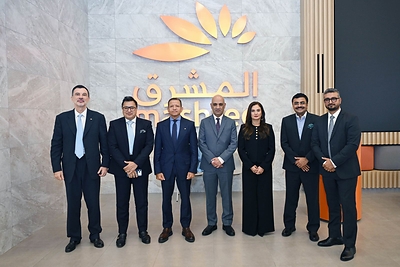
Announced at Mashreq’s Innovation Hub in Dubai in the presence of senior leadership from both organizations, the launch demonstrates how generative AI can be applied within a banking environment to complement the expertise and judgement of fraud professionals.
Ahmed Abdelaal, Group Chief Executive Officer at Mashreq, said: “In an increasingly digital financial landscape, fraud is becoming more sophisticated, and the way banks respond must adapt accordingly. At Mashreq, we are committed to implementing AI responsibly in areas where it can have a meaningful impact, strengthening the resilience of our operations and the trust our customers place in us.”
Nitin Chugh, MD and Group CEO, Perfios, said: “Our collaboration with Mashreq demonstrates how generative AI can help banks tackle the growing complexity of financial crime by bringing together disparate information, accelerating investigations and enabling better-informed decisions. The goal is to augment investigators’ expertise, not automate judgement, while ensuring AI operates with the rigour and accountability that financial crime management demands.”
Rivi Varghese, Co-Founder and CEO, Clari5, said: “Banks don’t need AI that acts on its own. They need AI they can govern by their own rules. Clari5 has shown how AI can operate on-premises inside a bank’s own environment, grounded in the bank’s context, and remain auditable, explainable and under human control. We are proud to have gone live with Mashreq and set an example of how enterprise-grade AI should operate in managing financial crime.”
Rania Nerhal, Group Chief Client Experience & Conduct Officer at Mashreq, said: “The value of generative AI lies in its ability to help us interpret relevant information and respond to emerging risks with greater speed, consistency, efficiency, and precision. This launch is part of our continued investment in deploying the latest technology to evolve our fraud risk management framework.”
Developed through the ongoing collaboration between Mashreq and Clari5, the new capabilities further strengthen the bank’s fraud detection platform. They are designed to deliver two key benefits:
- Seamless customer experience: Supporting faster, more consistent, and more effective fraud detection.
- Greater consumer trust: Reinforcing confidence in the bank’s ability to protect customers and respond to emerging risks.
About Mashreq:
Mashreq is a leading financial institution headquartered in Dubai, serving individuals, entrepreneurs, corporates, and institutions across the UAE and key regional and international markets. With a heritage spanning nearly six decades, Mashreq combines digital-first innovation with deep relationship banking across retail banking, corporate and investment banking, global markets, transaction banking, Islamic banking, wealth management, and treasury. The bank delivers secure, advanced, and customer-centric experiences while actively driving the transition toward a sustainable economy. Through a robust Environmental, Social, and Governance (ESG) framework, Mashreq is committed to facilitating sustainable finance, fostering responsible operations, and delivering positive societal impact.
With an extensive international footprint spanning the UAE, Oman, Qatar, Kuwait, Bahrain, Egypt, Pakistan, Türkiye, India, the UK, the US, and Hong Kong, Mashreq seamlessly connects regional businesses with global markets while maintaining deep local expertise.
Guided by its core purpose to help customers Rise Every Day, Mashreq partners with clients to navigate change, unlock sustainable growth opportunities, and achieve long-term success.
For more information, please visit: www.mashreq.com
About Clari5:
Clari5 – A Perfios Company, is the leading provider of real-time financial crime management platforms for banks, insurance companies, telcos and other financial institutions worldwide. Powered by AI-native capabilities, Clari5 helps detect, prevent, report and investigate financial crime in real time. Trusted by 80+ banks across 30+ countries for over two decades, Clari5 unifies fraud and AML on a single platform. It processes 12+ billion transactions every month and protects more than 1 billion accounts. Clari5 is part of the Perfios group, India’s largest B2B SaaS TechFin, serving over 1,000 financial institutions across 18 countries. To know more, visit www.clari5.com.

 View original content to download multimedia:https://www.prnewswire.com/in/news-releases/mashreq-launches-generative-ai-capabilities-to-strengthen-fraud-risk-management-with-clari5-302927445.html

3, Nov 2026
MIT World Peace University selects D2L to help transform campus learning
MIT-WPU will transition from Moodle to D2L Brightspace, supporting more than 25,000 learners
NEW DELHI, Nov. 3, 2026 /PRNewswire/ — D2L, a global leader in learning technology, announced that MIT World Peace University (MIT-WPU), a premier higher education institution in India, has selected D2L Brightspace as its learning platform. Under a three-year agreement, MIT-WPU will transition from Moodle to D2L Brightspace to support more than 25,000 learners.
The transition advances MIT-WPU’s efforts to strengthen campus learning and support evolving teaching approaches. With D2L Brightspace and H5P, the university will help faculty create more interactive and scalable learning experiences, helping provide learners with a more personalized digital learning environment.
“Moving from Moodle to D2L Brightspace is an important step in MIT-WPU’s digital transformation,” said Prof. (Dr.) Raviraja N. Seetharam, Vice Chancellor of MIT-WPU. “As we continue to evolve our approach to teaching and learning, this transition will help our faculty make learning more engaging, while supporting students throughout their academic journey and preparing them for what’s ahead.”
“MIT-WPU’s vision of powering the future through education and innovation reflects a shared belief that learning can create lasting progress,” said Lee Poteck, Chief Executive Officer, D2L India Private Ltd. and Chief Revenue Officer, D2L. “With Brightspace and H5P, we’re proud to support the university in giving faculty new ways to create engaging, interactive experiences at scale—and helping more than 25,000 learners build the knowledge and skills to contribute to their communities and the world. We look forward to working together to advance that vision.”
About MIT World Peace University
MIT World Peace University (MIT-WPU), Pune, is a renowned institution with a legacy of over 44 years, dedicated to nurturing academic excellence and innovation. The university offers more than 150 programmes at undergraduate and postgraduate levels, with experiential learning that combines theoretical knowledge with practical application. Learn more.
About D2L
D2L is transforming the way the world learns, helping learners achieve more than they dreamed possible. Working closely with customers all over the world, D2L is on a mission to make learning more inspiring, engaging and human. Find out how D2L helps transform lives and delivers outstanding learning outcomes in K-12, higher education and businesses.
X: @D2L
© 2026 D2L Corporation.
The D2L family of companies includes D2L Inc., D2L Corporation, D2L Ltd, D2L Australia Pty Ltd, D2L Europe Ltd, D2L Asia Pte Ltd, D2L India Pvt Ltd, D2L Brasil Soluções de Tecnologia para Educação Ltda and D2L Sistemas de Aprendizaje Innovadores, S. de R.L. de C.V.
All D2L and H5P marks are owned by the D2L group of companies. Please visit D2L.com/trademarks for a list of D2L marks. All other trademarks are the property of their respective owners.
 View original content:https://www.prnewswire.com/in/news-releases/mit-world-peace-university-selects-d2l-to-help-transform-campus-learning-302927002.html

3, Nov 2026
Cohere Launches Defence AI Accelerator in Singapore to Advance Secure, Enterprise-Grade AI Deployment for Sovereign Customers
Initiative will help public sector organizations move sovereign AI applications from pilot projects to mission-ready operations
SINGAPORE, Nov. 3, 2026 /PRNewswire/ — Cohere, a leading provider of sovereign AI for regulated industries and governments, today announced the establishment of a Defence AI Accelerator in Singapore, designed to help defence organizations and other sovereign customers rapidly transition from AI experimentation to operational deployment in highly secure environments.

The Defence AI Accelerator will serve as a dedicated hub for defence-focused AI innovation, offering hands-on collaboration, technical expertise, and engineering advisory to support the end-to-end journey from proof-of-concept to production systems. Unlike traditional technology showcases, the accelerator is built around practical deployment: enabling sovereign customers to experiment with Cohere’s models and agentic AI platform, North, in real-world environments and scale proven solutions into operational infrastructure.
The announcement is a part of Cohere’s plans to quadruple its regional presence by the end of 2027 through new investments, local partnerships, and additional offices across APAC. The Defence Accelerator will support the company’s goal of expanding support for the public sector in Singapore, strengthening collaboration with public sector institutions, and reinforcing its position as the enterprise‑ready platform for organizations with the highest standards for privacy, security, and transparency.
“Across the region, governments and enterprises are moving beyond experimentation and looking for trusted partners to help them deploy agentic AI in secure operational environments,” said Andrew Chang, Vice President of APAC, Cohere. “The Defence AI Accelerator brings together Cohere’s sovereign AI platform, engineering expertise, and deployment experience to help customers build, test, and scale AI systems that meet the highest standards for security, governance, and operational reliability.”
Cohere’s platform enables sovereign customers to maintain full control over their data and AI infrastructure, with support for on-premises, air-gapped, and hybrid deployments suited to the most sensitive mission-critical environments. The accelerator will leverage Cohere’s enterprise-grade North platform, which has already demonstrated its ability to operate securely in security-sensitive settings through successful deployments with several regulated organizations in Singapore.
As part of the accelerator, participants will gain access to the technology, expertise, and deployment support needed to operationalize AI securely at scale, including:
- Hands-on collaboration with Cohere engineers to move AI projects from proof-of-concept to production
- Secure environments to develop, test, and validate AI applications for mission-critical use cases
- Integration support for existing systems, workflows, and operational environments
- Flexible deployment options across on-premises, hybrid, and air-gapped infrastructure
- Governance frameworks and administrative controls to manage AI systems securely and responsibly
- Access to enterprise-grade AI models and the North platform designed for high-priority workloads and large-scale deployments
The Defence AI Accelerator comes as sovereign AI investment is at an all-time high across APAC: IDC expects 80% of APAC enterprises to prioritize AI sovereignty for mission-critical workloads as sovereign AI becomes the region’s second-highest government investment priority.
About Cohere
Cohere, founded in 2019, is a leading provider of sovereign AI for regulated industries and governments that enables organizations to own, operate and govern their AI systems with greater control over their data, infrastructure, and deployment. Our all-in-one platform provides maximum security, privacy, and deployment flexibility across public and private clouds, on-premises environments, and fully air-gapped settings. Headquartered in Toronto, Cohere operates in San Francisco, London, New York, Berlin, Montreal, Ottawa, Singapore, Paris, Tokyo, United Arab Emirates, and Seoul, serving customers worldwide. For more information, visit cohere.com.
Media Contact: Cohere, Amanda Taggart, Vice President, Communications, press@cohere.com
 View original content to download multimedia:https://www.prnewswire.com/in/news-releases/cohere-launches-defence-ai-accelerator-in-singapore-to-advance-secure-enterprise-grade-ai-deployment-for-sovereign-customers-302927220.html



