


3, Nov 2026
Lufthansa Group increases operating profit – strong demand and cost discipline more than offset higher fuel costs
-
With 12.2 billion euros the strongest-revenue quarter in the company’s history – an increase of nine percent
-
More than half a billion euros in additional costs due to higher fuel prices
-
Adjusted EBIT nevertheless rises six percent to 1.4 billion euros
-
Unit cost increase at network airlines limited to half a percent thanks to moderate growth and strict cost management
-
Lufthansa Cargo triples operating profit to 162 million euros
-
Lufthansa Technik increases its prior-year result by more than 50 percent with an Adjusted EBIT of 200 million euros
Carsten Spohr, Chairman of the Executive Board and CEO of Deutsche Lufthansa AG, says:
“The past quarter was the strongest in terms of revenue in the history of the Lufthansa Group. We succeeded in increasing operating profit by six percent compared to the previous year. With rising revenues amid consistently high demand and strict cost discipline, we were able to more than offset the increase in fuel costs of approximately half a billion euros. Our investments in modernizing our fleet and in-flight products are increasingly paying off. The focus remains on Lufthansa Airlines. Following the successful turnaround in reliability and customer satisfaction, we must now accelerate the financial turnaround of our core brand through both previously planned and additional measures, in order to restore it to its position as the flagship and benchmark of the Lufthansa Group in terms of value creation as well.”
Third-quarter result improved despite higher fuel costs
Lufthansa Group revenue increased nine percent year‑on‑year to 12.2 billion euros (previous year: 11.2 billion euros). The company recorded an operating profit (Adjusted EBIT) of 1.4 billion euros, an increase of six percent compared with the prior year (previous year: 1.3 billion euros) – despite a significant increase in fuel costs of 543 million euros compared with the prior year. The company succeeded in more than compensating for the cost increase through strong operating revenues and cost discipline.
Demand developed robustly across all segments in the third quarter. At the network airlines, average yields rose seven percent versus the prior year, driven by strong demand for premium tickets and on the routes to Asia and North America.
Eurowings also benefited from strong demand in European point‑to‑point traffic and achieved yields eight percent higher than in the previous year. At the same time, Lufthansa Cargo and Lufthansa Technik delivered results significantly above the prior year and thus made a strong contribution to the quarterly result.
The Adjusted EBIT margin fell slightly to 11.5 percent (previous year: 11.9 percent). Net income rose by around 300 million euros due to the improved operating result, positive valuation effects and a negative tax effect in the prior‑year period, to 1.3 billion euros (previous year: 966 million euros). Adjusted free cashflow reached roughly the prior‑year level at 793 million euros (previous year: 818 million euros).
Network airlines report strong demand and pursue cost discipline
The Group’s network airlines expanded their capacity for the first time this year in the third quarter compared with the prior year. Available seat capacity increased by 1.6 percent, primarily on long-haul routes. Growth was concentrated mainly in South America and Africa as well as selected routes to Asia. Yields rose 6.8 percent while load factor declined by 1.3 percentage points versus the prior year. Combined, these two metrics resulted in unit revenue growth of 5.2 percent versus the prior year, reflecting robust demand. This demand strength was driven notably by the premium segment as well as by traffic to Asia and North America.
Due to the sharply increased jet fuel prices caused by the conflict in the Middle East, fuel costs at the network airlines rose by more than 400 million euros compared with the previous year. Unit costs excluding fuel and emissions expenses increased by 0.5 percent compared with the previous year and were therefore well below the current inflation rate. Key factors for successful cost management were lower expenditure for fees and charges as well as reduced project costs. As part of the Lufthansa Airlines Turnaround Program, automation and digitalization were consistently advanced, which also had a favorable effect on the development of unit costs. In addition, capacity growth led to a fix cost degression.
Overall, the network airlines generated an Adjusted EBIT of 853 million euros, 108 million euros less than in the previous year. SWISS, Austrian Airlines and Brussels Airlines outperformed their prior-year results in the third quarter. Lufthansa Airlines, however, was burdened not only by rising fuel prices but also by costs of approximately 65 million euros resulting from the strikes in the first half of the year.
Point-to-point airlines continue to see strong intra-European demand
Eurowings reduced its capacity in the third quarter by 3.5 percent compared with the previous year, as flights to the Gulf region were initially suspended against the backdrop of the crisis in the Middle East and then replaced primarily by shorter routes to Southern Europe. Unit revenues rose by 10.0 percent, also driven by strong demand for premium offerings on European routes and additional revenues from the sale of ancillary services.
Unit costs excluding fuel and emissions expenses rose by 4.8 percent compared with the previous year, particularly because of reduced capacity and due to higher personnel costs and increased charges and fees, especially in Mallorca (Spain).
The equity result from the SunExpress joint venture amounted to 103 million euros in the third quarter, 20 million euros above the previous year.
Overall, Adjusted EBIT in the point-to-point airlines segment increased by 16 million euros to 214 million euros in the third quarter of 2026.
Lufthansa Technik and Lufthansa Cargo with significant profit increases
Demand for Lufthansa Technik’s maintenance, overhaul and repair services remains consistently high. Revenue rose by 20 percent year-on-year to 2.3 billion euros (previous year: 1.9 billion euros), with the increase mainly resulting from business with external customers. Adjusted EBIT of 200 million euros exceeded the prior-year level with an increase of 54 percent (previous year: 130 million euros). The Adjusted EBIT margin in the third quarter also rose by 1.9 percentage points to 8.6 percent.
Lufthansa Cargo was able to expand its capacity in the third quarter by five percent compared with the previous year, driven by ITA Airways belly capacity. At the same time, Lufthansa Cargo succeeded in increasing the volume of cargo shipped by seven percent and thus raising load factors by three percentage points compared with the previous year.
Against the backdrop of the crisis in the Middle East, demand in the air freight business remained high. Lufthansa Cargo once again achieved strong yields, which were 22 percent above the previous year. Lufthansa Cargo tripled its operating profit to 162 million euros (previous year: 49 million euros) and achieved an Adjusted EBIT margin of 15.6 percent (previous year: 6.0 percent).
The Lufthansa Group’s balance sheet continues to ensure financial stability and flexibility
Operating cashflow fell by approximately 500 million euros in the first nine months of the year compared with the previous year to around 3.4 billion euros. The decline is primarily due to lower operating profit and reduced ticket prepayments at the reporting date at the end of September because of shorter booking cycles compared with the previous year. Net investments amounted to 1.2 billion euros (previous year: 1.8 billion euros), significantly below the prior-year level, mainly due to higher cash inflows from sale-and-lease-back transactions of aircraft. At 1.8 billion euros, adjusted free cashflow after the first nine months of the year nearly reached the prior-year level.
The Group also reported a strong balance sheet in the third quarter of 2026. As of 30 September 2026, net debt including net pension liabilities stood at 7.3 billion euros, well below the level at the end of 2025 (8.3 billion euros). In addition, the total liquidity available to the company amounted to 11.8 billion euros at the end of September, which was above the level at year-end 2025. High liquidity strengthens the Lufthansa Group’s resilience to market volatility while at the same time providing the necessary financial flexibility.
Till Streichert, Chief Financial Officer of Deutsche Lufthansa AG:
“We improved our result compared with the previous year, despite higher fuel costs weighing on the quarterly result by more than half a billion euros – we are satisfied with that. This was supported by robust demand in passenger traffic, our discipline on unit costs and the strong earnings contributions from Lufthansa Cargo and Lufthansa Technik. We also expect a healthy demand environment for the fourth quarter. Due to the unchanged geopolitical situation, our expected fuel bill for the full year is rising to 9.3 billion euros. However, with a hedging ratio for our passenger airlines of around 86 percent for 2026 and already more than 60 percent for 2027, we are well positioned relative to the market. Given how far into the year we are and the higher fuel costs, we are refining our earnings forecast to between 1.7 and 2.0 billion euros. We are confident that we will achieve this range, in line with capital market expectations. Where we end up within this range will depend not only on fuel costs and demand but, in particular, on Lufthansa Cargo’s earnings performance in the fourth quarter.”
- 0
- By Neel Achary

3, Nov 2026
Fadi Al Kurdi, Founder and CEO of FFA Kings, Secures UAE CMA Finfluencer Licence
Dubai, Nov 03 – Fadi Al Kurdi, Founder and CEO of FFA Kings LLC-FZ, today announced securing a finfluencer licence from the UAE Capital Market Authority (CMA), marking an important milestone in his professional journey in financial market analysis and digital financial content.
Based in Dubai, Al Kurdi specialises in foreign exchange (FX) market analysis and provides commentary covering forex, cryptocurrencies, stocks, indices and commodities. Through his professional activities and social media presence, he engages with and educates audiences interested in financial markets and investment-related developments.
This licensing milestone comes amid increased attention to the regulation of financial content across the UAE. It reflects a nationwide push for transparency, accountability, and responsible communication when discussing financial markets with the public, standards that Al Kurdi has championed throughout his career.
Al Kurdi’s professional focus aligns with the growing role of digital platforms and financial content creators in making market information accessible to wider audiences. By breaking down high-level market intelligence, he bridges the gap between institutional analysis and the everyday investor, empowering his followers to make informed financial decisions.

“Receiving the finfluencer licence from the UAE CMA is an important achievement in my professional journey,” said Fadi Al Kurdi, Founder and CEO at FFA Kings LLC-FZ. “I believe that financial content comes with a responsibility to communicate market developments clearly, transparently and responsibly. This recognition reinforces my commitment to providing audiences with informed market analysis and contributing to a more knowledgeable financial community.”
This development underscores the evolving landscape for financial content creators in the UAE, where regulatory authorisation and responsible engagement are increasingly important considerations for professionals communicating with investors and the wider public.
3, Nov 2026
Mashreq launches generative AI capabilities to strengthen fraud risk management with Clari5
BENGALURU, India, Nov. 3, 2026 /PRNewswire/ — Mashreq, a leading financial institution in the MENA region, has launched new generative AI capabilities within its fraud platform in collaboration with Clari5 – A Perfios Company. The move brings tangible benefits across three priority areas: enhancing fraud detection effectiveness, improving analyst productivity, and supporting stronger investigative decision-making.
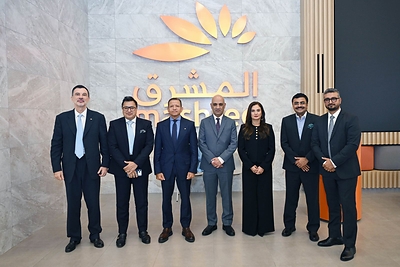
Announced at Mashreq’s Innovation Hub in Dubai in the presence of senior leadership from both organizations, the launch demonstrates how generative AI can be applied within a banking environment to complement the expertise and judgement of fraud professionals.
Ahmed Abdelaal, Group Chief Executive Officer at Mashreq, said: “In an increasingly digital financial landscape, fraud is becoming more sophisticated, and the way banks respond must adapt accordingly. At Mashreq, we are committed to implementing AI responsibly in areas where it can have a meaningful impact, strengthening the resilience of our operations and the trust our customers place in us.”
Nitin Chugh, MD and Group CEO, Perfios, said: “Our collaboration with Mashreq demonstrates how generative AI can help banks tackle the growing complexity of financial crime by bringing together disparate information, accelerating investigations and enabling better-informed decisions. The goal is to augment investigators’ expertise, not automate judgement, while ensuring AI operates with the rigour and accountability that financial crime management demands.”
Rivi Varghese, Co-Founder and CEO, Clari5, said: “Banks don’t need AI that acts on its own. They need AI they can govern by their own rules. Clari5 has shown how AI can operate on-premises inside a bank’s own environment, grounded in the bank’s context, and remain auditable, explainable and under human control. We are proud to have gone live with Mashreq and set an example of how enterprise-grade AI should operate in managing financial crime.”
Rania Nerhal, Group Chief Client Experience & Conduct Officer at Mashreq, said: “The value of generative AI lies in its ability to help us interpret relevant information and respond to emerging risks with greater speed, consistency, efficiency, and precision. This launch is part of our continued investment in deploying the latest technology to evolve our fraud risk management framework.”
Developed through the ongoing collaboration between Mashreq and Clari5, the new capabilities further strengthen the bank’s fraud detection platform. They are designed to deliver two key benefits:
- Seamless customer experience: Supporting faster, more consistent, and more effective fraud detection.
- Greater consumer trust: Reinforcing confidence in the bank’s ability to protect customers and respond to emerging risks.
About Mashreq:
Mashreq is a leading financial institution headquartered in Dubai, serving individuals, entrepreneurs, corporates, and institutions across the UAE and key regional and international markets. With a heritage spanning nearly six decades, Mashreq combines digital-first innovation with deep relationship banking across retail banking, corporate and investment banking, global markets, transaction banking, Islamic banking, wealth management, and treasury. The bank delivers secure, advanced, and customer-centric experiences while actively driving the transition toward a sustainable economy. Through a robust Environmental, Social, and Governance (ESG) framework, Mashreq is committed to facilitating sustainable finance, fostering responsible operations, and delivering positive societal impact.
With an extensive international footprint spanning the UAE, Oman, Qatar, Kuwait, Bahrain, Egypt, Pakistan, Türkiye, India, the UK, the US, and Hong Kong, Mashreq seamlessly connects regional businesses with global markets while maintaining deep local expertise.
Guided by its core purpose to help customers Rise Every Day, Mashreq partners with clients to navigate change, unlock sustainable growth opportunities, and achieve long-term success.
For more information, please visit: www.mashreq.com
About Clari5:
Clari5 – A Perfios Company, is the leading provider of real-time financial crime management platforms for banks, insurance companies, telcos and other financial institutions worldwide. Powered by AI-native capabilities, Clari5 helps detect, prevent, report and investigate financial crime in real time. Trusted by 80+ banks across 30+ countries for over two decades, Clari5 unifies fraud and AML on a single platform. It processes 12+ billion transactions every month and protects more than 1 billion accounts. Clari5 is part of the Perfios group, India’s largest B2B SaaS TechFin, serving over 1,000 financial institutions across 18 countries. To know more, visit www.clari5.com.

 View original content to download multimedia:https://www.prnewswire.com/in/news-releases/mashreq-launches-generative-ai-capabilities-to-strengthen-fraud-risk-management-with-clari5-302927445.html

3, Nov 2026
MIT World Peace University selects D2L to help transform campus learning
MIT-WPU will transition from Moodle to D2L Brightspace, supporting more than 25,000 learners
NEW DELHI, Nov. 3, 2026 /PRNewswire/ — D2L, a global leader in learning technology, announced that MIT World Peace University (MIT-WPU), a premier higher education institution in India, has selected D2L Brightspace as its learning platform. Under a three-year agreement, MIT-WPU will transition from Moodle to D2L Brightspace to support more than 25,000 learners.
The transition advances MIT-WPU’s efforts to strengthen campus learning and support evolving teaching approaches. With D2L Brightspace and H5P, the university will help faculty create more interactive and scalable learning experiences, helping provide learners with a more personalized digital learning environment.
“Moving from Moodle to D2L Brightspace is an important step in MIT-WPU’s digital transformation,” said Prof. (Dr.) Raviraja N. Seetharam, Vice Chancellor of MIT-WPU. “As we continue to evolve our approach to teaching and learning, this transition will help our faculty make learning more engaging, while supporting students throughout their academic journey and preparing them for what’s ahead.”
“MIT-WPU’s vision of powering the future through education and innovation reflects a shared belief that learning can create lasting progress,” said Lee Poteck, Chief Executive Officer, D2L India Private Ltd. and Chief Revenue Officer, D2L. “With Brightspace and H5P, we’re proud to support the university in giving faculty new ways to create engaging, interactive experiences at scale—and helping more than 25,000 learners build the knowledge and skills to contribute to their communities and the world. We look forward to working together to advance that vision.”
About MIT World Peace University
MIT World Peace University (MIT-WPU), Pune, is a renowned institution with a legacy of over 44 years, dedicated to nurturing academic excellence and innovation. The university offers more than 150 programmes at undergraduate and postgraduate levels, with experiential learning that combines theoretical knowledge with practical application. Learn more.
About D2L
D2L is transforming the way the world learns, helping learners achieve more than they dreamed possible. Working closely with customers all over the world, D2L is on a mission to make learning more inspiring, engaging and human. Find out how D2L helps transform lives and delivers outstanding learning outcomes in K-12, higher education and businesses.
X: @D2L
© 2026 D2L Corporation.
The D2L family of companies includes D2L Inc., D2L Corporation, D2L Ltd, D2L Australia Pty Ltd, D2L Europe Ltd, D2L Asia Pte Ltd, D2L India Pvt Ltd, D2L Brasil Soluções de Tecnologia para Educação Ltda and D2L Sistemas de Aprendizaje Innovadores, S. de R.L. de C.V.
All D2L and H5P marks are owned by the D2L group of companies. Please visit D2L.com/trademarks for a list of D2L marks. All other trademarks are the property of their respective owners.
 View original content:https://www.prnewswire.com/in/news-releases/mit-world-peace-university-selects-d2l-to-help-transform-campus-learning-302927002.html

3, Nov 2026
Cohere Launches Defence AI Accelerator in Singapore to Advance Secure, Enterprise-Grade AI Deployment for Sovereign Customers
Initiative will help public sector organizations move sovereign AI applications from pilot projects to mission-ready operations
SINGAPORE, Nov. 3, 2026 /PRNewswire/ — Cohere, a leading provider of sovereign AI for regulated industries and governments, today announced the establishment of a Defence AI Accelerator in Singapore, designed to help defence organizations and other sovereign customers rapidly transition from AI experimentation to operational deployment in highly secure environments.

The Defence AI Accelerator will serve as a dedicated hub for defence-focused AI innovation, offering hands-on collaboration, technical expertise, and engineering advisory to support the end-to-end journey from proof-of-concept to production systems. Unlike traditional technology showcases, the accelerator is built around practical deployment: enabling sovereign customers to experiment with Cohere’s models and agentic AI platform, North, in real-world environments and scale proven solutions into operational infrastructure.
The announcement is a part of Cohere’s plans to quadruple its regional presence by the end of 2027 through new investments, local partnerships, and additional offices across APAC. The Defence Accelerator will support the company’s goal of expanding support for the public sector in Singapore, strengthening collaboration with public sector institutions, and reinforcing its position as the enterprise‑ready platform for organizations with the highest standards for privacy, security, and transparency.
“Across the region, governments and enterprises are moving beyond experimentation and looking for trusted partners to help them deploy agentic AI in secure operational environments,” said Andrew Chang, Vice President of APAC, Cohere. “The Defence AI Accelerator brings together Cohere’s sovereign AI platform, engineering expertise, and deployment experience to help customers build, test, and scale AI systems that meet the highest standards for security, governance, and operational reliability.”
Cohere’s platform enables sovereign customers to maintain full control over their data and AI infrastructure, with support for on-premises, air-gapped, and hybrid deployments suited to the most sensitive mission-critical environments. The accelerator will leverage Cohere’s enterprise-grade North platform, which has already demonstrated its ability to operate securely in security-sensitive settings through successful deployments with several regulated organizations in Singapore.
As part of the accelerator, participants will gain access to the technology, expertise, and deployment support needed to operationalize AI securely at scale, including:
- Hands-on collaboration with Cohere engineers to move AI projects from proof-of-concept to production
- Secure environments to develop, test, and validate AI applications for mission-critical use cases
- Integration support for existing systems, workflows, and operational environments
- Flexible deployment options across on-premises, hybrid, and air-gapped infrastructure
- Governance frameworks and administrative controls to manage AI systems securely and responsibly
- Access to enterprise-grade AI models and the North platform designed for high-priority workloads and large-scale deployments
The Defence AI Accelerator comes as sovereign AI investment is at an all-time high across APAC: IDC expects 80% of APAC enterprises to prioritize AI sovereignty for mission-critical workloads as sovereign AI becomes the region’s second-highest government investment priority.
About Cohere
Cohere, founded in 2019, is a leading provider of sovereign AI for regulated industries and governments that enables organizations to own, operate and govern their AI systems with greater control over their data, infrastructure, and deployment. Our all-in-one platform provides maximum security, privacy, and deployment flexibility across public and private clouds, on-premises environments, and fully air-gapped settings. Headquartered in Toronto, Cohere operates in San Francisco, London, New York, Berlin, Montreal, Ottawa, Singapore, Paris, Tokyo, United Arab Emirates, and Seoul, serving customers worldwide. For more information, visit cohere.com.
Media Contact: Cohere, Amanda Taggart, Vice President, Communications, press@cohere.com
 View original content to download multimedia:https://www.prnewswire.com/in/news-releases/cohere-launches-defence-ai-accelerator-in-singapore-to-advance-secure-enterprise-grade-ai-deployment-for-sovereign-customers-302927220.html

3, Nov 2026
New OhMD Outcomes Turns Healthcare Organizations’ Goals Into Automated Patient Workflows
BURLINGTON, VT, 11.3.2026 – OhMD, a voice and text AI company built for healthcare organizations, today announced the launch of OhMD Outcomes, designed around the results healthcare organizations want to achieve rather than the individual features they have to assemble to get there.
Instead of asking healthcare systems to piece together messaging, automation, and patient engagement tools, OhMD Outcomes starts from the goal. Organizations describe the objective in plain language, and OhMD builds the voice and text AI agents and workflow automations to achieve it. If an organization wants to reduce the care gaps in annual wellness visits, OhMD Outcomes identifies the patients who are due, reaches them by text or voice, helps them book a visit, follows up with those who don’t respond, and tracks how many gaps are closing, so the team can see whether the workflow is working and adjust it.
Many voice AI tools answer patient calls, but when they can’t resolve the issue, the patient goes back into the queue. OhMD’s voice and text AI agents are embedded in the EHR and other systems healthcare teams already use, giving staff a view of every patient touchpoint at the time of care. When a conversation needs a person, a staff member picks up where the AI left off.
“Healthcare organizations don’t wake up wanting more software. They wake up wanting their A/R under control and their wellness visits scheduled,” said Ethan Bechtel, CEO and Co-Founder of OhMD. “For years the industry has sold them features and left them to figure out the rest. OhMD Outcomes flips that. Because it sees every patient touchpoint, you tell it the result you need, and the workflows and AI agents are built around it.”
OhMD Outcomes sits on top of OhMD’s existing products, so current customers gain outcome-level structure without replacing what they already use.
What happens next?
Beta access opens in mid-November 2026 and will soon be available to OhMD’s large network of existing healthcare organizations. To learn more about the software, book a demo with the OhMD team at https://www.ohmd.com/demo.
3, Nov 2026
RevealDx expands leadership naming Ryan Brevard M.D. as Director of Clinical Programs and David Austin as Vice President of Sales
AI-powered radiology startup with first-of-its-kind lung cancer software shares team growth
SEATTLE, WA – (Nov. 3, 2026) – RevealDx, a leader in AI characterization of lung nodules, today announces the appointment of Medical Advisor Ryan Brevard M.D. to Director of Clinical Programs, and medtech and startup executive David Austin as the company’s Vice President of Sales.
American Board of Emergency Medicine Certified, Dr. Brevard has over 23 years working in critical care and emergency medicine practice and has spent the last four as a Medical Advisor to RevealDx. As Director of Clinical Programs, Dr. Brevard will work with hospitals and radiology groups to build lung nodule programs around RevealAI-Lung, bringing a referring physician’s view of what a radiology report needs to say to change a patient’s care.
Transitioning from his previous role to the now Director of Clinical Programs, Ryan Brevard M.D. explains that, “Having advised RevealDx through FDA clearance, I’m honored to now lead the clinical programs that bring RevealAI-Lung to hospitals and radiology groups, so patients with an incidental lung nodule get an answer from their first CT instead of waiting months for a repeat scan.”
These new appointments demonstrate a period of significant growth for the company after attaining FDA clearance earlier this year for nodule risk assessment with RevealAI-Lung, heading toward other regulatory milestones of its kind for other upcoming products.
Joining RevealDx as Vice President of Sales, David Austin brings nearly 30 years of commercial leadership experience, with deep expertise in diagnostic imaging, radiology, and medical technology commercialization. He previously held senior sales leadership roles at Siemens Healthineers and Hologic and has a proven track record of building sales organizations, developing go-to-market strategies, and driving growth for emerging healthcare technology companies. Most recently, he served as a Fractional Chief Sales Officer with Chief Outsiders, advising small and mid-sized businesses on commercial strategy and revenue growth.
RevealDx Vice President of Sales, David Austin, expresses that, “I’m looking forward to stepping into this new role with RevealDx, to help accelerate the company’s potential to improve
clinical decision-making, accelerate diagnosis, and ultimately improve patient outcomes. I’m excited for the opportunity to help bring this technology to more healthcare providers.”
3, Nov 2026
Cyclone Murasu Brings Heavy Rain, Strong Winds To Tamil Nadu As Northeast Monsoon Gains Strength
Chennai, Nov 3 (UDN): The northeast monsoon has intensified across parts of southern India under the influence of Severe Cyclonic Storm Murasu, which crossed the southern Andhra Pradesh coast near Ongole early Tuesday, triggering heavy rainfall, strong winds and rough sea conditions across coastal areas.

Representational Image
Although the storm moved inland over Andhra Pradesh, its impact was felt in neighbouring Tamil Nadu and Puducherry, where unsettled weather and continuous rainfall were reported.
According to the India Meteorological Department (IMD), Cyclone Murasu crossed the Andhra Pradesh coastline between Nellore and Narsapur, near Ongole, during the early hours of Tuesday, between 3:30 am and 5:30 am.
At the time of landfall, the system was packing sustained wind speeds of 100-110 kmph, with gusts reaching up to 120 kmph. The cyclone crossed the coast near latitude 15.53 degrees north and longitude 80.22 degrees east.
Cyclone Triggers Heavy Rainfall And Coastal Disruption
The storm had intensified into a severe cyclonic system over the Bay of Bengal early Monday before advancing towards the northwest. As it approached the Andhra Pradesh coast, its circulation influenced weather conditions across northern Tamil Nadu and adjoining regions.
Puducherry witnessed continuous rainfall from midnight, while several areas along the southern Andhra Pradesh coast experienced intense showers and powerful winds.
Ongole and nearby coastal settlements bore the brunt of the storm as it approached land. In Chirala, strong winds uprooted trees, while high waves battered stretches of the coastline, raising concerns over damage to property and disruption to normal activities.
Rough sea conditions were also reported along coastal areas as the cyclone’s circulation moved closer to land.
Storm’s Movement Influences Northeast Monsoon
Before making landfall, Cyclone Murasu was positioned over the west-central Bay of Bengal, approximately 160 km from Chennai and 180 km from Nellore.
Its movement towards the Andhra Pradesh coast contributed to intensified rainfall activity across parts of northern Tamil Nadu, where the northeast monsoon is currently active.
The cyclone’s influence highlights the significant role of weather systems developing over the Bay of Bengal in shaping rainfall patterns across India’s eastern and southeastern coastal regions during the northeast monsoon season.
Coastal Areas Remain Under Weather Watch
With the cyclone maintaining considerable intensity during landfall, heavy rainfall, strong winds and rough seas remained major concerns for coastal communities.
The storm’s impact has also raised concerns over possible waterlogging, damage to infrastructure and disruption to transportation and everyday activities in affected areas.
The northeast monsoon remains an important source of rainfall for Tamil Nadu and neighbouring regions. Weather developments associated with Cyclone Murasu are therefore being closely watched as the system moves inland and its influence extends across parts of southern India.
3, Nov 2026
CM Mohan Majhi, Naveen Patnaik Mourn Demise Of Padma Shri Neurosurgeon Dr Ashok Mahapatra
Bhubaneswar, Nov 3 (UDN): Odisha Chief Minister Mohan Charan Majhi and Leader of Opposition Naveen Patnaik have expressed profound grief over the demise of eminent neurosurgeon and Padma Shri awardee Professor Dr Ashok Kumar Mahapatra, remembering him as an outstanding medical professional whose contributions brought national recognition to Odisha.

Dr Mahapatra, who passed away at AIIMS, New Delhi, on Monday evening at the age of 74, was widely respected for his pioneering work in neurosurgery, medical research and healthcare development.
In his condolence message, Chief Minister Mohan Charan Majhi described Dr Mahapatra as one of India’s most distinguished neurosurgeons and a prominent figure in medical science.
The Chief Minister said his remarkable contributions had enriched the healthcare sector and brought immense pride to Odisha as well as the country. He further noted that the doctor’s dedication to medical services and research would remain unforgettable.
Expressing solidarity with the bereaved family, Majhi offered his heartfelt condolences and prayed to Lord Jagannath for the eternal peace of the departed soul.
Naveen Patnaik Remembers His Contributions To Medical Science
Leader of Opposition Naveen Patnaik also expressed deep sorrow over the passing of the renowned neurosurgeon.
In his message, the former Chief Minister highlighted Dr Mahapatra’s extraordinary achievements in medical science, particularly his success in performing several rare and complex surgical procedures.
Naveen said Dr Mahapatra would always be remembered for his significant role in the establishment of AIIMS Bhubaneswar and his efforts towards making advanced healthcare facilities accessible to people in Odisha.
Describing his demise as an irreparable loss for both Odisha and India, Patnaik extended his heartfelt condolences to the grieving family and prayed for the departed soul.
A Legacy That Transcends Generations
Dr Ashok Kumar Mahapatra earned nationwide recognition for leading the historic 2017 separation surgery of conjoined twins Jaga and Balia at AIIMS, New Delhi. The challenging operation became a landmark achievement in Indian neurosurgery.
He also served as the founding Director of AIIMS Bhubaneswar, playing a crucial role in strengthening Odisha’s healthcare infrastructure and medical education.
The Government of India honoured him with the Padma Shri in 2024 in recognition of his exceptional contributions to medicine.
The condolence messages from the state’s top political leaders reflect the widespread respect Dr Mahapatra commanded across political and professional circles. His passing leaves behind a remarkable legacy of medical excellence, service and dedication that will continue to inspire generations of healthcare professionals.
3, Nov 2026
LinearB launches Agentic Studio to give enterprise engineering leaders and coding agents the context to ship better software faster
Boston, Massachusetts – Nov 03; LinearB, a Leader in the 2026 Gartner Magic Quadrant for Developer Productivity Insight Platforms, today launched Agentic Studio, a key part of the next generation of developer productivity platforms.
Historically, productivity platforms gave engineering leaders metrics. LinearB now turns everything happening across software delivery into context that people and agents can consume and act on. Engineering leaders ask questions in plain language and get answers and next steps. They define the context surface with role-based access built in, and AI assistants help extend that context and build metrics, artifacts and dashboards. Coding agents receive that context, so they understand their task and environment better and make smarter decisions.
Acting on that context matters more than ever. LinearB’s 2026 AI benchmarks, covering 2.7 million pull requests across more than 250 organizations, show that developers who use AI most heavily nearly doubled their merged pull requests year over year. Yet the software factory faces new problems. In LinearB’s 2026 Software Engineering Benchmarks Report, AI-assisted pull requests were 2.6 times larger than unassisted ones at the 75th percentile, and agent pull requests waited more than five times longer for review.
“Context is the new king,” said Ori Keren, CEO and co-founder of LinearB. “We realized we hold a knowledge graph that nobody else has of everything happening across the software delivery lifecycle, and that’s exactly what agents and teams need to deliver high quality software, faster. So we rebuilt LinearB around it.”
LinearB’s effort skill, now in early access, matches a coding agent’s effort to the task. It gauges a change’s business relevance, complexity and risk using the code quality in the area, recent service incidents and ownership history. Low risk changes use less effort and fewer tokens. Complex, risky or high priority changes get more effort and careful, tested edits. More skills are on the way, focused on accelerating downstream stages of the software factory, such as review and merge.
Kraken used LinearB’s MCP server with AI to find what was really slowing its code reviews. The answer wasn’t large changes. It was time zones and reviewer availability. Kraken cut review time at the 90th percentile by more than half in four months. “That’s the structural shift,” said Nik Sudan, engineering operations lead at Kraken. “It moves leaders from anecdote-driven to evidence-driven.”
The Agentic Studio is available now to all LinearB customers. Agent skills are available in early access.
Why it matters now
Engineering leaders have more data than ever and less time to use it. Boards and CFOs now ask whether AI spend is paying off, and a dashboard full of numbers doesn’t answer that. At the same time, coding agents write more of the code, and they start every task knowing nothing about the codebase’s history.
Productivity platforms have always been good at measuring. The next step is turning what they measure into action. That means answers for the people running engineering, and context for the agents doing more of the work.
What LinearB does
LinearB collects data from across the software delivery lifecycle and makes it usable. It normalizes data from different Git and project management systems into one model, matches each engineer’s identities across tools, and links every change from ticket to release. It adds AI attribution and industry benchmarks, so leaders can tell whether a number is good or bad.
The engineering context layer delivers that knowledge to people and to agents.
Engineering leaders ask questions in plain language, like where delivery is stuck, how their developers are doing and whether AI is paying off. Instead of reading a chart, they get an answer and a next step. They can build their own metrics and pull the same context into AI tools like Claude through MCP.
Coding agents get the same context through MCP and agent skills. The first skill, now in early access, matches an agent’s effort to the task. It checks how complex and risky a change is, using the code’s rework rate, recent incidents and ownership history. Simple, low risk changes use less effort and fewer tokens. Complex or risky changes get more effort and careful, tested edits, which raises quality where it matters most. The skill works with any coding agent, and leaders can see how often agents were routed to low, medium and high effort.
The platform is built for the enterprise, with role based access and guardrails on what agents can do.
Journey and milestones
LinearB started by giving engineering leaders visibility into how their teams deliver software. Years of integration work across the software delivery lifecycle gave it one of the largest datasets on how engineering teams work. Its 2026 Software Engineering Benchmarks Report drew on more than 8.1 million pull requests from 4,800 engineering teams in 42 countries. As AI coding tools spread, LinearB added AI attribution and connected to more of the tools teams use.
In 2026, Gartner named LinearB a Leader in its first Magic Quadrant for Developer Productivity Insight Platforms, for both its ability to execute and its completeness of vision. Early customer response to the context layer is strong. The AI assistant and MCP access show the highest user retention of any features LinearB has released.
“These are exciting times to rethink our role in the software ecosystem,” said Ori Keren. “Everyone else is focused on writing code. We realized we hold a knowledge graph of everything happening across the software delivery lifecycle, and that’s exactly what developers and agents need. So we rebuilt LinearB around it. We don’t build the software factory. We instrument it, so leaders know what to do next and agents make smarter decisions on every change.”
“For years, engineering leaders told us the same thing. Metrics are useful, but they don’t tell you what to do,” added Dan Lines, co-founder and COO of LinearB. “A dashboard says your cycle time is two days. So what? Now a leader can ask what to improve in their engineering organization and get a clear answer. And when that same context goes to coding agents, the platform isn’t just reporting anymore. It’s acting.”
Market trends
LinearB’s 2026 AI benchmarks, built from 2.7 million pull requests and 83,000 developers across 253 engineering organizations between February and May 2026, show why measuring AI isn’t enough on its own. The teams pulling ahead are the ones acting on what they learn.
- Heavy AI users are pulling away. The typical developer who uses AI on at least 75% of coding days merged 96% more pull requests per week than a year earlier. The typical developer using no AI merged 3.6% fewer.
- Adoption is shallower than the hype suggests. Even at elite organizations, AI assists only 54% of pull requests.
- Agents still need people. At the 90th percentile, autonomous agents open 4.7% of pull requests. At elite organizations, 79% of agent pull requests merge within 30 days, compared with 92% of human only pull requests. At fair organizations, agent yield drops to 37%. The likely reason is ownership. When no developer owns an agent’s pull request, it often never merges.
- AI code review is the fastest win. Pull requests with an AI review merge at the highest rate of any type and lift yield by up to five percentage points.
- AI costs are climbing fast at the top. Token spend at the 90th percentile reached $35.20 per developer per coding day, up nearly 75% in three months, while the median barely moved.
Engineering leaders already use LinearB to answer the questions their boards are asking about AI. “I use LinearB data and charts directly in my board decks, because my board is specifically asking questions about our use of AI and what our ROI is,” said Ken Ringdahl, CTO of Emburse.
Forward-looking vision
The effort skill is the first in a library of agent skills. Each one turns LinearB’s context into an action an agent or a leader can take. Next, LinearB will focus on helping teams merge and govern AI generated code safely, and on cutting what engineering organizations spend on AI. The goal is the one productivity platforms have always promised, helping teams deliver better software faster. LinearB now does it by giving people answers and giving agents the context to act.


