


30, Oct 2026
PM-KISAN Disbursements Cross Rs 4.64 Lakh Crore; 24 Instalments Credited to Farmers
New Delhi, Oct 30: The Centre has disbursed more than Rs 4.64 lakh crore to farmers across India through 24 instalments of the Pradhan Mantri Kisan Samman Nidhi (PM-KISAN) scheme, highlighting the scale of the government’s direct financial assistance programme for agricultural households.

According to a government factsheet issued on Friday, eligible farmer families receive Rs 6,000 annually under the scheme in three equal instalments, with the money transferred directly into their bank accounts.
Rs 60,000 Crore Allocated in Union Budget
The Union Budget for 2026–27 has earmarked Rs 60,000 crore for the PM-KISAN scheme.
In another major decision, the Union Cabinet in July 2026 approved the continuation of the programme from 2026–27 to 2030–31, with a total financial outlay of Rs 3.15 lakh crore.
The government said the decision reflects its continued commitment to supporting farmers’ income security and strengthening the rural economy.
How Farmers Receive PM-KISAN Benefits
Under the scheme, eligible landholding farmer families receive annual assistance of Rs 6,000, paid in three instalments of Rs 2,000 each.
To receive the benefit, farmers must ensure that their land records are seeded on the PM-KISAN portal, their bank accounts are linked with Aadhaar and their e-KYC verification is completed.
The scheme was launched on February 24, 2019, to provide income support to farmer families across the country who meet the prescribed eligibility criteria.
Direct Payments Help Meet Agricultural Expenses
The financial assistance is intended to help farmers meet essential agricultural and household expenses.
According to the government factsheet, the funds enable beneficiaries to make timely investments in seeds, fertilisers, irrigation, agricultural machinery and other farming requirements.
The assistance is also intended to reduce dependence on informal sources of credit and improve the financial stability of rural households.
Multi-Level Verification Ensures Direct Fund Transfer
PM-KISAN operates through a digital payment and verification system designed to ensure that financial assistance reaches eligible beneficiaries.
Farmers can register through the PM-KISAN portal, mobile application or Common Service Centres (CSCs). State governments verify their eligibility and upload beneficiary details to the portal.
The system subsequently validates Aadhaar and bank account information and screens applications to identify ineligible beneficiaries.
After approval by the state authorities, beneficiary records are forwarded to the Public Financial Management System (PFMS) for account verification. Payment requests are then processed following the issuance of sanction orders by the Department of Agriculture and Farmers Welfare.
The funds are transferred through sponsor banks and the National Payments Corporation of India (NPCI) directly into beneficiaries’ bank accounts.
PM-KISAN Among World’s Largest DBT Programmes
The government describes PM-KISAN as one of the world’s largest Direct Benefit Transfer (DBT) initiatives.
By eliminating intermediaries in the payment process, the scheme seeks to improve transparency, ensure timely delivery of assistance and strengthen financial inclusion among farming households.
With more than Rs 4.64 lakh crore disbursed through 24 instalments, PM-KISAN remains a major component of the Centre’s efforts to provide direct income support to farmers.
- 0
- By Neel Achary

30, Oct 2026
How Businesses in Dubai Can Build Trust Through Data Privacy

Dubai’s rapidly expanding digital economy is creating new opportunities for businesses across retail, banking, healthcare, real estate, tourism and technology. As companies increasingly depend on digital platforms, customer databases, artificial intelligence and online transactions, protecting personal information has become an important part of building long-term business relationships.
For customers, trust is no longer based only on product quality, pricing or service standards. They also want to know how businesses collect their personal information, where it is stored, who can access it and whether it is being used responsibly. A company that fails to protect customer information risks losing more than data; it can also damage its reputation, customer relationships and future revenue.
This is making data privacy an important business priority in Dubai. Companies that combine regulatory compliance with transparent communication and strong cybersecurity practices can strengthen customer confidence while building a more sustainable digital business.
Data Privacy Is Becoming a Business Priority in Dubai
Businesses across Dubai are embracing digital transformation to improve efficiency, understand consumer behaviour and deliver personalised services. Online payments, mobile applications, cloud platforms and AI-powered customer management systems have become increasingly important to everyday operations.
However, the growing use of digital services also means companies handle larger volumes of sensitive information, including contact details, financial records, identification documents and purchasing histories.
Businesses in the UAE are expected to handle customer information responsibly by ensuring it is collected, stored and used securely. Companies operating in Dubai must also follow the relevant data protection requirements to protect customer privacy and maintain trust.
For companies, compliance should not be treated simply as a legal obligation. Responsible data management can help reduce business risks, strengthen brand credibility and make customers more comfortable using digital services.
Transparency Can Strengthen Customer Relationships
One of the simplest ways businesses can build trust is by communicating clearly about how customer information is used.
Customers should not have to navigate lengthy legal documents to understand what happens to their personal data. Companies can make privacy policies more accessible by explaining what information they collect, why they need it, how long they retain it and whether it is shared with third parties.
Clear consent mechanisms are equally important. Businesses should give customers meaningful choices when collecting information for marketing, promotional campaigns or personalised recommendations.
Dubai’s multicultural business environment also makes accessible communication important. Companies serving customers from different linguistic and cultural backgrounds can improve understanding by providing privacy information in relevant languages.
When customers understand how their information is handled, they are more likely to engage with digital platforms and maintain confidence in the business.
Strong Cybersecurity Must Become Part of Daily Operations
Transparent communication alone cannot establish trust unless businesses have effective security measures in place.
Cyberattacks, unauthorised access, phishing and accidental data exposure can affect organisations of every size. For businesses handling financial information, healthcare records or identity documents, even a single security incident can have serious consequences.
Companies should therefore make cybersecurity part of their everyday operations rather than treating it as an occasional technology investment.
Important measures include:
-
Data encryption: Protect sensitive information during storage and transmission.
-
Multi-factor authentication: Add additional verification steps to prevent unauthorised account access.
-
Access management: Restrict employee access to customer information according to their professional responsibilities.
-
Regular security audits: Identify vulnerabilities and address weaknesses before they become serious problems.
-
Employee training: Educate staff about phishing, password security and responsible information handling.
-
Incident response planning: Establish procedures for identifying, containing and reporting data breaches where required.
Businesses should also avoid collecting information they do not genuinely need. Limiting the amount of personal data stored can reduce exposure and make information management more efficient.
AI and Personalisation Must Respect Customer Privacy
Artificial intelligence is changing how businesses in Dubai interact with consumers. Retailers use customer data to recommend products, financial institutions analyse transaction patterns, and service providers use automated systems to improve customer support.
These technologies can create more convenient and personalised experiences. However, excessive data collection and unclear profiling practices can make customers uncomfortable.
Businesses need to strike a balance between personalisation and privacy. Customers should understand when their information is being used for automated recommendations, targeted advertising or other data-driven services.
Companies should also review the accuracy, security and fairness of the systems they deploy. Sensitive customer information must not be exposed unnecessarily through poorly managed AI tools or third-party technology platforms.
Responsible AI adoption can help businesses improve efficiency without compromising the confidence of the people using their services.
Data Protection Can Create a Competitive Advantage for SMEs
Data privacy is often associated with large financial institutions and multinational corporations, but it is equally relevant to small and medium-sized enterprises.
Dubai’s growing startup and SME ecosystem includes online retailers, digital agencies, hospitality businesses, property consultants and professional service providers. Many of these companies collect customer information through websites, booking systems, mobile applications and marketing platforms.
For smaller businesses, a privacy-related incident can be particularly difficult to manage because they may have limited financial and technical resources.
Investing in basic security practices, using reliable technology providers and maintaining clear privacy policies can help SMEs establish credibility without requiring large-scale technology infrastructure.
A business that demonstrates responsible information management may also find it easier to build partnerships with larger organisations that expect vendors to follow appropriate security and compliance standards.
Privacy Compliance Requires Continuous Attention
Data protection is not a one-time exercise. Regulations, technology systems and business operations continue to evolve, making regular reviews necessary.
Companies should identify the personal information they collect, map how it moves through their systems and review which employees or external service providers can access it.
They should also establish clear data retention policies, procedures for responding to customer requests and processes for managing security incidents
30, Oct 2026
PM Modi Likely to Visit Brussels in December to Sign India-EU Free Trade Agreement
New Delhi, Oct 30: Prime Minister Narendra Modi is expected to visit Brussels in December to formally sign the India-European Union Free Trade Agreement (FTA), marking a major step forward in economic and trade relations between India and the 27-member European bloc.

European Council President Antonio Costa announced the proposed visit on Thursday while speaking at an event organised by the Montreal Council on Foreign Relations in Canada.
“Prime Minister Modi will come in December to sign the deal,” Costa said, indicating that the signing ceremony could take place ahead of a scheduled meeting of European leaders beginning December 17 in Brussels.
India-EU Trade Deal Enters Final Stage
India and the European Union concluded negotiations on the landmark trade agreement earlier this year following extensive discussions aimed at expanding market access and strengthening economic cooperation.
Prime Minister Modi and European Commission President Ursula von der Leyen had jointly announced the conclusion of negotiations during the European leaders’ visit to India.
The agreement is expected to create an integrated market covering more than two billion people and representing around one-fourth of the global economy.
FTA Could Become Operational Within Months
Commerce and Industry Minister Piyush Goyal had earlier indicated that the proposed agreement could become operational within four to five months after its formal signing.
The pact is expected to reduce trade barriers, improve market access and create fresh opportunities for businesses, exporters and investors on both sides.
Major Boost for Indian Exporters
Under the agreement, India has secured market access for more than 99 per cent of its exports to the European Union by trade value, according to the details shared by the government.
The improved access is expected to benefit Indian industries and support the Centre’s Make in India initiative by expanding opportunities in one of the world’s largest consumer markets.
The agreement also includes commitments in services and provisions relating to the mobility of skilled Indian professionals.
India-EU Economic Partnership in Focus
The European Union is among India’s largest trading partners, with substantial exchanges in both goods and services.
During 2024–25, bilateral trade in goods reached approximately $136.54 billion. India’s exports to the EU stood at around $75.85 billion, while imports were valued at approximately $60.68 billion.
Trade in services between the two sides reached around $83.10 billion in 2024.
India and the European Union are among the world’s largest economies, together accounting for approximately 25 per cent of global GDP and nearly one-third of global trade.
Strategic Significance Beyond Trade
The proposed FTA is being viewed as more than a conventional trade arrangement, with the potential to deepen investment, industrial cooperation and strategic engagement.
Once signed and implemented, the agreement is expected to strengthen economic links between the two sides, provide greater predictability for businesses and open new avenues for cooperation.
Modi’s proposed December visit to Brussels is therefore expected to be an important milestone in the evolving India-EU partnership.
30, Oct 2026
Uttarakhand Helicopter Crash: Six Feared Aboard Aircraft That Went Down Near Joshimath
Chamoli, Oct 30: A helicopter operated by a private aviation company crashed near Chai village, close to Joshimath in Uttarakhand’s Chamoli district, on Friday, prompting an extensive search and rescue operation. Six people were reportedly on board the aircraft.

Representational Image
The crash is believed to have occurred in the Vishnuprayag area, along the route between Badrinath and Joshimath. The condition and whereabouts of the passengers were not immediately known.
Helicopter Reportedly Disappeared After Take-Off from Badrinath
According to preliminary information, the helicopter, bearing registration number VT-HCX and operated by Trans Bharat Aviation, took off from Badrinath at around 1:12 pm on Friday.
Its last reported contact was near the Army post atop Hathi Pahad, opposite Joshimath.
Officials later received reports of a burning white object in the forest above the JP Dam, raising suspicions that the helicopter had crashed in the area.
SDRF and District Teams Join Rescue Operation
Following the incident, teams from the district administration, disaster management department and State Disaster Response Force (SDRF) were mobilised to locate the aircraft and rescue those on board.
Medical teams have also been rushed to the area to provide emergency assistance. Additional helicopters have been deployed for aerial reconnaissance and to help locate the crash site.
Deputy Superintendent of Police Madan Singh Bisht said officials were gathering information about the incident.
Chamoli District Magistrate Gaurav Kumar said the administration launched rescue efforts immediately after receiving the alert. Officials are coordinating with the helicopter operator to assess the situation.
Chief Minister Dhami Monitors Situation
Uttarakhand Chief Minister Pushkar Singh Dhami confirmed the helicopter crash and said he was closely monitoring the developments.
In a post on social media platform X, he said a joint rescue operation involving the district administration, disaster management department and SDRF was underway.
The Chief Minister also directed officials to ensure that any seriously injured passengers receive immediate evacuation and treatment at advanced medical facilities.
He expressed hope for the safe return of everyone on board.
Bad Weather Hampers Search Efforts
Persistent rainfall and dense cloud cover in the region have reportedly made search and rescue operations challenging.
Authorities are continuing efforts to locate the aircraft and establish the condition of the passengers. Further information about the cause of the crash and the fate of those on board is awaited.
Incident Raises Fresh Concerns Over Char Dham Helicopter Operations
The crash comes after two emergency landings involving helicopters operating on Uttarakhand’s Char Dham routes earlier this month.
One aircraft reportedly made an emergency landing in Rudraprayag due to adverse weather, while another was forced to land in Tehri following a technical issue.
The latest incident has renewed attention on weather-related challenges and safety concerns surrounding helicopter operations in the Himalayan region.
30, Oct 2026
Five Years, Two MVR Installations: SED’s Technology Delivers Proven Performance at Wave Sugar Dhanaura
Performance from the first installation led to a repeat order, with two MVR systems now recording five years of combined operation at Wave Industries’ Dhanaura sugar unit.
MOHALI, India, Oct. 30, 2026 /PRNewswire/ — Industrial technology earns its strongest validation when performance leads to repeat adoption. At Wave Industries Pvt. Ltd.’s Sugar Division in Dhanaura, Spray Engineering Devices Limited’s in-house Mechanical Vapour Recompression (MVR) technology has moved beyond a single installation to two successfully operating systems, with a combined operating record of five years.

The first project involved the commissioning of an MVR-based concentrator by SED. The system has operated successfully for two years, maintaining steam consumption at approximately from 34% to 32% and delivering around 2% steam savings. Its operating performance subsequently led Wave Industries to place a repeat order for a juice concentrator, extending SED’s MVR technology to a second application within the same unit.
The second installation has now completed three years of successful operation, also keeping up the steam consumption at about 32% to 29.5% and giving around 2.5% steam savings. Together, the two installations provide a sustained operating reference for MVR technology across successive applications at the same sugar plant.
The significance of the Dhanaura experience lies in that progression. The first installation established the operating performance; the resulting repeat order extended the technology’s application, and the second system has continued to deliver against the same steam-economy objective. The result is not a single commissioning milestone, but five years of operating experience across two MVR installations.
SED’s in-house MVR technology recovers vapour generated during evaporation and mechanically recompresses it for reuse as the heating medium. By reducing dependence on fresh steam, the technology supports lower steam demand during concentration and can be integrated with evaporation systems according to plant requirements.
For the second application, SED combined MVR with plate-type falling-film evaporation technology and integrated process controls for juice concentration. The system was designed around the plant’s process requirements while maintaining the targeted steam performance.
These projects demonstrate the value of sustained technology performance in industrial operations: two MVR installations, 29.5% steam consumption and 2.5% steam savings across each application, followed by repeat adoption at the same site. It places five years of field operation behind SED’s in-house MVR technology and shows how performance at one installation can translate into continued adoption within the same plant.
About Spray Engineering Devices Limited (SED)
Spray Engineering Devices Limited (SED) is a global engineering and technology company specializing in energy-efficient evaporation, drying, wastewater treatment and Zero Liquid Discharge (ZLD) solutions. With expertise across sugar, semiconductor, solar, chemical, pharmaceutical, and biofuel industries, SED develops advanced process technologies that help manufacturers improve resource efficiency, recover water and reduce environmental impact.

 View original content to download multimedia:https://www.prnewswire.com/in/news-releases/five-years-two-mvr-installations-seds-technology-delivers-proven-performance-at-wave-sugar-dhanaura-302924820.html

30, Oct 2026
Manipal Hospitals Launches ‘Manipal Kids First Responder Service’ for 24/7 Paediatric Emergency Support
BENGALURU, India, Oct. 30, 2026 /PRNewswire/ — When a child develops a high fever in the middle of the night, has difficulty breathing or experiences a sudden seizure, parents are often faced with a critical question: Is this serious, and where should I go for help? In such moments, uncertainty can delay medical attention when every minute matters.
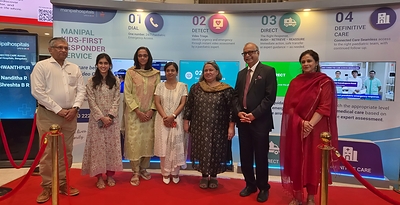
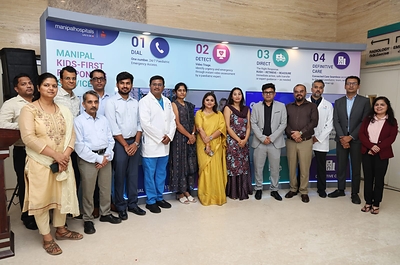
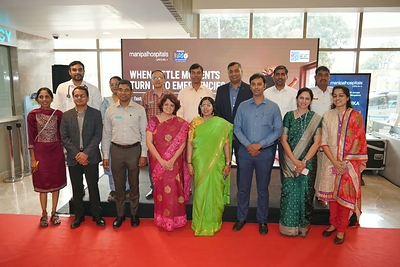
To address this gap, the Department of Paediatric Emergency Medicine, in collaboration with Manipal Ambulance Response Services (MARS), has recently launched the Manipal Kids First Responder Service, connecting families, schools and childcare institutions with paediatric emergency specialists through real-time video consultations, clinical triage and ambulance-assisted emergency response.
Available 24/7 through 080 2222 1111, the service helps caregivers recognise potentially serious conditions and understand whether a child needs immediate hospital care, ambulance assistance or supportive care at home.
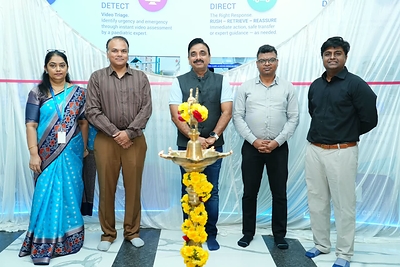
Addressing the event, Dr. H. Sudarshan Ballal, Chairman, Manipal Hospitals, said, “It is really distressing when a young child becomes sick at night or over the weekend and you don’t know who to call. Children can be bright and chirpy one minute and very sick the next. Through the Manipal Kids First Responder Service, parents get 24/7 real-time video consultations with paediatric ER specialists. We provide the right diagnosis, differentiate emergencies from non-emergencies, and direct you accordingly. This service is also integrated with our emergency ambulance system if a hospital transfer becomes necessary.”
Explaining the need for the initiative, Dr. A. Sivagnanam, HOD & Consultant – Paediatric Emergency, Manipal Hospital Old Airport Road, said, “The golden hour is often lost before a child reaches us because parents are uncertain about whom to call and where to go. With nine paediatric-capable branches across Bengaluru and MARS, we wanted to connect our services and create a coordinated emergency support system for children.”
When a parent, teacher or caregiver calls the helpline, a trained agent at the command centre at Manipal Hospitals, asks a few essential questions before connecting the caller with a paediatric emergency or critical care specialist through video consultation, typically within two to three minutes.
Highlighting the importance of timely intervention, Dr. Gunda Srinivas, Consultant – Paediatric Emergency & Paediatrics, Manipal Hospital Kanakapura Road, said, “In children, recognising an emergency and initiating the right treatment promptly can significantly influence outcomes. Through this service, we aim to bridge the gap between recognising a problem and accessing appropriate care by connecting families with expert guidance without unnecessary delay.”
Dr. Sampath Kumar Shettigar, Consultant – Paediatrics & Neonatology, Manipal Hospital Whitefield, said, “Children are not small adults, and paediatric emergencies require a different approach from adult emergencies. The golden hour and platinum minutes are critical windows during which early recognition and prompt medical intervention can make a profound difference to a child’s outcome. This service aims to help families recognise potential emergencies and access appropriate medical guidance without delay.”
A video triage helps categorise the response into three pathways: ‘Rush, Retreat or Reassure’. This means if a child is critically unwell, the family is advised to rush to the nearest appropriate emergency facility. If ambulance support is needed, MARS is activated to transport the child to a suitable Manipal Hospital. For less urgent concerns, supportive-care guidance and follow up is provided as appropriate.
Highlighting the uncertainty parents face during emergencies, Dr. Akshay Ballal, Consultant – Paediatrician and Paediatric Intensive Care Specialist, Manipal Hospital Sarjapur Road, said, “When a child is unwell at 2 a.m., most parents aren’t looking for a hospital. They’re looking for someone to tell them whether this is serious. If a doctor can see the child on a video call within minutes, that uncertainty often eases, and we can explain whether to come in, send an ambulance or stay home and watch. If the child needs hospital care, the team can also prepare for the arrival.”
The service also supports schools and childcare institutions, where caregivers may need immediate guidance when a child becomes unwell or sustains an injury.
Dr. Dilip Kumar Venkatesan, Consultant – Paediatrics and Paediatric Emergency, Manipal Hospital Yelahanka, said, “A blocked nose, a minor fall, fever or vomiting can leave parents anxious and uncertain about what to do next, especially during odd hours. Not every call needs to end in a hospital visit; what matters is that no parent has to make that decision alone.”
Through timely specialist guidance, ambulance coordination and access to hospital care, Manipal Kids First Responder Service aims to help families navigate emergencies with greater confidence.
With its message, Dial. Detect. Direct., the initiative seeks to ensure that caregivers have expert guidance when they need to make critical decisions about a child’s health.
For more information, please visit: https://www.manipalhospitals.com/
Or call: 080 2222 1111

 View original content to download multimedia:https://www.prnewswire.com/in/news-releases/manipal-hospitals-launches-manipal-kids-first-responder-service-for-247-paediatric-emergency-support-302924833.html

30, Oct 2026
IMD Issues Yellow Warning for Thunderstorms in Odisha; Gusty Winds Likely in Several Districts Till November 4
Bhubaneswar, Oct 30 (UDN): The India Meteorological Department (IMD) has issued a yellow warning for thunderstorms, lightning and gusty winds in several parts of Odisha over the next five days, with the alert remaining in force until November 4.

Representational Image
According to the weather bulletin, isolated locations in multiple districts are likely to experience thunderstorms accompanied by lightning and gusty surface winds reaching 30–40 kmph, with gusts of up to 50 kmph.
October 30–31: Thunderstorm Alert Across 14 Districts
For the period up to 8:30 am on October 31, thunderstorms with lightning and gusty winds are very likely at one or two places in Baleswar, Bhadrak, Jajpur, Kendrapada, Jagatsinghpur, Cuttack, Sundargarh, Keonjhar, Mayurbhanj, Gajapati, Ganjam, Puri, Khordha and Nayagarh.
October 31–November 1: Southern Odisha on Alert
Between 8:30 am on October 31 and 8:30 am on November 1, the yellow warning will cover Rayagada, Koraput, Malkangiri, Gajapati and Ganjam districts.
Isolated places in these districts may experience thunderstorms accompanied by lightning and gusty winds.
November 1–2: Warning Extended to Coastal and Southern Districts
The IMD has forecast similar weather conditions between 8:30 am on November 1 and 8:30 am on November 2.
The alert will remain in force for Baleswar, Bhadrak, Jajpur, Kendrapada, Jagatsinghpur, Cuttack, Rayagada, Koraput, Malkangiri, Gajapati, Ganjam, Puri, Khordha and Nayagarh.
November 2–4: Thunderstorm Activity to Continue
The weather office has also issued yellow warnings for the following two 24-hour periods:
November 2–3: Rayagada, Koraput, Malkangiri, Gajapati, Ganjam, Puri, Khordha and Nayagarh.
November 3–4: The same eight districts are likely to experience isolated thunderstorms accompanied by lightning and gusty surface winds.
Residents Advised to Remain Alert
With thunderstorms and lightning likely at isolated locations, residents in the warned districts should remain cautious during adverse weather conditions.
People are advised to follow official weather updates and take necessary precautions during lightning and thunderstorms.
30, Oct 2026
Cambrex Breaks Ground on $120 Million Expansion in Charles City, Iowa
EAST RUTHERFORD, N.J., Oct. 30, 2026 /PRNewswire/ — Cambrex, a leading global contract development and manufacturing organization (CDMO), today marked the groundbreaking of its $120 million expansion at its Charles City, Iowa facility.

The expansion will add 160,000 liters of manufacturing capacity, increasing the site’s total capacity by approximately 25% to nearly one million liters, supporting the development and commercial manufacturing of small molecule active pharmaceutical ingredients (APIs) and synthetic peptides. The project is anticipated to be completed in the fourth quarter of 2028.
Cambrex celebrated the start of construction with a groundbreaking ceremony on October 29, bringing together company leaders, employees, state and local officials and members of the Charles City community. The milestone comes as the Charles City site celebrates its 100th anniversary, marking a century of operations at the facility.
“This groundbreaking marks an important milestone in our continued investment in U.S. manufacturing and in the Charles City site,” said Claudio Russolo, Chief Operating Officer and incoming Chief Executive Officer, Cambrex. “As the site celebrates its 100th anniversary, this expansion reflects both its long history and its continued importance to our future. By expanding commercial-scale capacity for both small molecule and peptide manufacturing, we are strengthening our ability to support customers as their programs advance from development through commercialization.”
The Charles City facility provides development and manufacturing services for small molecule APIs, synthetic peptides and pharmaceutical intermediates, supporting projects from clinical development through commercial-scale production. The expansion builds on the site’s existing infrastructure and technical expertise while providing additional capacity to meet customer demand.
About Cambrex
Cambrex is a leading global contract development and manufacturing organization (CDMO) that provides drug substance development and manufacturing across the entire drug lifecycle, as well as comprehensive analytical services.
With over 45 years of experience and a team of 2,000 experts servicing global clients from North America and Europe, Cambrex offers a range of specialized drug substance technologies and capabilities, including continuous flow, controlled substances, peptide synthesis, solid-state science, biocatalysis, material characterization, complex synthetics, and highly potent APIs.

 View original content to download multimedia:https://www.prnewswire.co.uk/news-releases/cambrex-breaks-ground-on-120-million-expansion-in-charles-city-iowa-302924343.html

30, Oct 2026
transcosmos expands the scope of trans-scManager services
Combining AI and BPO to provide one-stop support from inventory visualization to demand forecasting and shipping instructions
Tokyo, Japan, Oct 30: transcosmos today announced that it has expanded the capabilities of trans-scManager, a service that supports supply-demand adjustment and planning operations across the supply chain, and will launch new features for demand forecasting, replenishment planning, and inventory allocation optimization.
To date, trans-scManager has provided inventory visualization, inbound and outbound analysis, inventory assessment, and inventory replenishment support based on PSI information (*) held by companies. With the addition of new capabilities for demand forecasting, replenishment planning, and inventory allocation optimization, the scope of the service now expands beyond inventory visualization and analysis to support forecasting, planning, and execution.
In recent years, the environment surrounding supply-demand operations has changed significantly due to the expansion of the e-commerce market, increasingly diverse consumer needs, shorter product life cycles, external factors such as weather events and natural disasters, fluctuations in procurement lead times, rising logistics costs, and labor shortages. In addition, demand forecasting and inventory planning have become increasingly complex as product assortments expand, production and shipment volumes become smaller, and promotional activities increase.
At the same time, in many supply-demand operations, sales performance data, inventory information, promotion and campaign information, event information, and weather data are dispersed across multiple departments and systems, requiring personnel to use multiple tools to consolidate information, make decisions, and develop plans. As a result, these operations often depend heavily on the experience and judgment of individual personnel, which can lead to lost sales opportunities due to stockouts, excess inventory, and increased workloads in logistics operations caused by more frequent emergency shipments.
With its enhanced capabilities, trans-scManager combines AI-powered demand forecasting and supply-demand planning with the BPO expertise that transcosmos has developed through operations such as order processing, inventory allocation, and shipping. This enables one-stop support for the entire process, from demand forecasting and supply-demand planning to shipping instructions.
AI performs tasks such as data collection and assessment, forecasting, and the creation of adjustment proposals, while BPO supports decision-making and approvals, exception handling, stakeholder coordination, progress management, and effectiveness evaluation. By combining these capabilities, transcosmos helps clients establish supply-demand operations tailored to their business needs and provides ongoing support for their continuous improvement.
trans-scManager service overview
– Data preparation and visualization
Digitizes and cleanses PSI data to visualize inventory status and supply-demand balances.
– Analysis and assessment
Supports the identification and improvement of issues such as excess inventory and stockout risks through inbound and outbound inventory analysis, inventory assessment, periodic analysis, and reporting.
– Demand forecasting
Forecasts demand using sales and shipment performance data, promotional information, and external factors such as weather, selecting the most appropriate forecasting model for each product from multiple forecasting models. In addition, when product renewals result in fragmented historical sales data, data continuity is maintained through measures such as record matching, enabling continuous improvements in forecasting accuracy.
– Supply-demand and inventory planning
Calculates order quantities and replenishment volumes based on demand forecasts as well as information such as current inventory levels, safety stock, and lead times. Supports the prevention of stockouts and inventory optimization through inventory replenishment and inventory transfers.
– Operational support
Supports the continuous improvement of supply-demand operations through the creation of shipping data based on finalized plans, coordination with shipping locations and transportation providers, decision-making and approvals, exception handling, progress management, and effectiveness evaluation.
By combining AI and BPO, transcosmos provides one-stop support spanning inventory visualization and analysis, demand forecasting, supply-demand and inventory planning, shipping instructions, and operational support. Through these services, transcosmos helps clients maximize sales opportunities, optimize inventory and logistics costs, and operate sustainable supply chains.
* PSI: An abbreviation for Production/Purchase, Sales/Shipment, and Inventory.
* transcosmos is a trademark or registered trademark of transcosmos inc. in Japan and other countries.
* Other company names and product or service names used here are trademarks or registered trademarks of respective companies.
30, Oct 2026
Odisha to Establish Agriculture Colleges in Bolangir and Mayurbhanj, Veterinary Colleges in Two More Locations
Bhubaneswar, Oct 30 (UDN): The Odisha government has decided to establish two new agriculture colleges in Bolangir and Mayurbhanj districts, along with veterinary colleges at Chiplima and Sonepur, Deputy Chief Minister KV Singh Deo announced on Thursday.

The decisions have received approval from Chief Minister Mohan Charan Majhi, marking a significant step towards strengthening agricultural and veterinary education in the state.
Four New Colleges Planned Across Odisha
According to Singh Deo, the government plans to set up agriculture colleges in Bolangir and Mayurbhanj, while Chiplima and Sonepur have been selected for the proposed veterinary colleges.
The initiative is expected to expand opportunities for students seeking higher education in agriculture and veterinary sciences while strengthening the state’s agricultural education infrastructure.
Deputy CM Appeals to Farmers to Complete Registration
Alongside the announcement, Singh Deo urged farmers who have not yet completed their registration to do so without delay.
He said the Agriculture Secretary had also appealed to farmers to complete the registration process at the earliest.
The appeal comes as the state government continues its efforts to extend assistance to farmers affected by recent extreme weather conditions.
Government Assures Support to Cyclone-Affected Farmers
Referring to crop losses caused by Cyclone Arnab over the past three to four days, the Deputy Chief Minister assured that the government would provide support to affected farmers.
He said ministers had visited the affected districts following directions from Chief Minister Mohan Charan Majhi to assess the ground situation and review the extent of agricultural damage.
The government is taking stock of the losses and working towards extending necessary assistance to farmers whose crops have been damaged.
Focus on Agricultural Education and Farmer Welfare
The proposed colleges are expected to strengthen Odisha’s agricultural and veterinary education network. At the same time, the government’s assurance of assistance and appeal for timely farmer registration underline its focus on supporting the farming community.
The next steps will involve implementing the decisions to establish the institutions and extending relief to farmers affected by Cyclone Arnab.


