


9, Oct 2026
MEXC and Payward Highlight Collaboration as Crypto and TradFi Converge at TOKEN2049
MUTSAMUDU, Comoros, Oct. 9, 2026 /PRNewswire/ — MEXC,a pioneer in 0-fee digital asset trading, and Payward, the parent company of Kraken, shared their perspectives on the convergence of crypto and traditional finance during a TOKEN2049 Singapore panel. MEXC CEO Vugar Usi Zade and Payward Co-CEO Arjun Sethi, discussed how broader market access, retail demand and collaboration between platforms could shape the future of global trading.
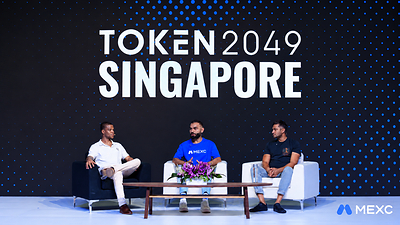
Crypto and TradFi Move Closer Together
An important theme was the shift toward more connected, always-on markets. Vugar said blockchain infrastructure is challenging traditional market structures built around fixed trading hours, while users increasingly expect access to different asset classes through a more seamless experience.
“Over the next five years, we’ll see a convergence toward a singular platform where asset classes and investments can move quickly and smoothly,” said Vugar. “Retail will be the main driver.”
Arjun highlighted the infrastructure challenge behind this shift, noting that 24/7 trading is ultimately about bringing assets and collateral into a more connected financial environment.
“24/7 trading really means: how do you bring all that collateral into one place?” said Arjun.
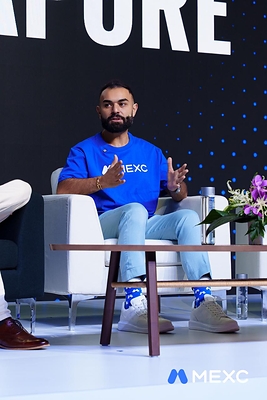
Collaboration Over Competition
Both speakers also highlighted collaboration as an important part of scaling the next generation of global trading platforms.
Arjun noted that serving a much larger global user base will require platforms to work with partners that bring different strengths in their respective markets, explicitly pointing to MEXC as one such example.
“The only way to do that is to partner with folks, including MEXC, to be able to help succeed in their core markets,” said Arjun.
Vugar similarly emphasized that exchanges can increasingly build on one another’s strengths rather than approach every opportunity purely through competition. MEXC brings a retail-first approach, deep liquidity and broad experience in perpetual markets across crypto and TradFi assets, while Payward brings global financial infrastructure, professional trading capabilities and strong market experience in the United States.
The discussion built on the two companies’ earlier indication that they are exploring broader collaboration, with both executives pointing to infrastructure, market access and distribution as areas where greater connectivity between platforms could create value.
Trust and access were also highlighted as essential foundations for this evolution. Vugar described trust and access as two of the most important elements in building future financial platforms, while Arjun emphasized the importance of transparency as the industry becomes more connected.
The panel pointed to a future in which crypto and TradFi become increasingly connected, with collaboration between platforms helping bring together market access, infrastructure and user reach to serve a broader global audience.
About MEXC
Founded in 2018, MEXC is a leading global multi-asset trading platform built as your 0-fee gateway to infinite opportunities. Serving users across 170+ markets, MEXC provides simple and efficient access to crypto, stocks, tokenized assets, derivatives, and a growing range of TradFi-linked opportunities through one account and one gateway.
With 0 trading fees, deep liquidity, broad asset coverage, and a high-performance trading experience, MEXC is designed for retail users who want to discover earlier, act faster, and trade with fewer barriers. As crypto and traditional finance continue to converge, MEXC is committed to making global opportunities more accessible, helping users trade freely and MEXCmize every opportunity.
MEXC Official Website| X | Telegram |How to Sign Up on MEXC
Risk Disclaimer:
This content does not constitute investment advice. Given the volatility of financial markets, including digital assets, tokenized assets, and traditional financial products, investors should carefully assess market conditions, underlying asset fundamentals, and potential financial risks before making any investment or trading decisions.

 View original content to download multimedia:https://www.prnewswire.co.uk/news-releases/mexc-and-payward-highlight-collaboration-as-crypto-and-tradfi-converge-at-token2049-302903470.html

- 0
- By Sai Krishna

9, Oct 2026
CFMOTO 675SR-R to Become Official Motorcycle for 2027 WorldWCR
HANGZHOU, China, Oct. 9, 2026 /PRNewswire/ — The 675SR-R, CFMOTO’s high-performance three-cylinder sportbike, has reached an agreement with the Fédération Internationale de Motocyclisme – FIM and Dorna WSBK Organization – DWO, to become the official motorcycle for the FIM Women’s Circuit Racing World Championship (WorldWCR) from the 2027 season. This marks the first time a Chinese motorcycle manufacturer has been appointed as the designated supplier for an FIM World Championship-level one-make series.

Established in 2024, WorldWCR is the first world-level road racing championship created exclusively for female riders. As a one-make series, all riders compete on identical motorcycles, testing rider skill while providing a validation of motorcycle performance. WorldWCR is one of four series under the WorldSBK umbrella, alongside SPB (Sportbike), SSP (Supersport) and SBK (Superbike).
Proven Performance Lays the Racing Foundation
The production 675SR-R is powered by CFMOTO’s in-house-developed 675cc liquid-cooled three-cylinder engine, producing peak power of 70 kW (95 hp) at 11,000 rpm and peak torque of 70 N•m at 8,250 rpm, providing a solid foundation for racing evolution.
In the British Superbike Championship (BSB), the 675SR-R has been tested in competition over two seasons. It claimed a podium in its first season, becoming the first Chinese-built production motorcycle to finish on a BSB podium.
The 675SR-R’s racing DNA also comes from joint development by CFMOTO and the Aspar team, CFMOTO’s technical partner in Moto2 and Moto3. During development, Aspar riders and its technical team were deeply involved in testing, directly benefiting the production model’s track performance.

From winning the Moto3 manufacturers’ world championship to now becoming the one-make model for WorldWCR, CFMOTO is using its track performance to reshape the global market’s perception of China’s motorcycle industry.

Outlook: A New Global Phase for CFMOTO
The 2027 WorldWCR season will mark the 675SR-R’s first large-scale competitive appearance in the world’s premier women’s motorcycle racing championship. CFMOTO will provide a comprehensive technical support system, including race bike preparation, parts supply and an on-site technical team.
 View original content to download multimedia:https://www.prnewswire.co.uk/news-releases/cfmoto-675sr-r-to-become-official-motorcycle-for-2027-worldwcr-302903485.html

9, Oct 2026
Tejas Networks and Qualcomm jointly demonstrate 6G Integrated Sensing and Communications (ISAC) technology at India Mobile Congress 2026
BENGALURU, India, Oct. 9, 2026 /PRNewswire/ — Tejas Networks (BSE: 540595) (NSE: TEJASNET) in collaboration with Qualcomm Technologies is demonstrating Integrated Sensing and Communication (ISAC) at the India Mobile Congress (IMC) 2026.

As the industry looks beyond 5G and towards 6G, new technological frontiers are being explored to transform communication networks into intelligent digital infrastructure. Integrated Sensing and Communication (ISAC) is one such foundational technology, enabling next-generation wireless networks to function as pervasive radar systems for enhanced situational awareness. The joint demonstration highlights how ISAC can leverage communication signals to detect and track objects in the surrounding environment, such as moving vehicles on city roads and drones in strategic areas, without requiring dedicated sensing infrastructure. By combining connectivity, sensing, and AI-driven analytics, ISAC has the potential to create more adaptive, context-aware, and efficient digital infrastructure.
The demonstration brings together Tejas Networks’ 5G base station and Qualcomm Technologies’ Radio Unit (RU) and Distributed Unit (DU) chipsets, supported by low-power compute and AI inference capabilities. By enabling connectivity and sensing on a common infrastructure foundation, it illustrates how existing 5G networks can evolve to support applications such as drone and vehicle tracking, traffic management and critical-infrastructure monitoring. It also provides a tangible step towards the AI-native architecture envisioned for 6G.
Dr. Kumar N. Sivarajan, Chief Technology Officer of Tejas Networks, said, “ISAC is emerging as one of the most promising technology directions for future 6G networks. By integrating communication and environmental sensing within the same network infrastructure, ISAC unlocks transformative applications across transportation, public safety, industrial automation, smart cities, and defence. This ability to generate and monetize spatial intelligence also enables a significant new value proposition for mobile operators, extending their role beyond high-speed connectivity to providing real-time environmental insights for commercial and strategic use cases.”
“Strong industry partnerships are essential to translating the vision for 6G into practical capabilities. Our collaboration with Tejas Networks demonstrates wide-area sensing on live 5G infrastructure, showing how wireless networks can extend beyond connectivity to deliver real-time intelligence about their surroundings. For Qualcomm, this marks an important step in India’s journey towards 6G, laying the foundation for sensing-based services that can create new value for operators and support more informed decision-making across industries,” said Rajen Vagadia, President, Qualcomm India.
The joint showcase highlights an evolution in the role of wireless networks, from connecting people and devices to understanding the environments around them. As the industry advances towards 6G, ISAC offers a path to build on existing network infrastructure, creating new opportunities for operators to deliver sensing-based services and for industries to make more informed, real-time decisions.
About Tejas Networks Limited
Tejas Networks Ltd. designs and manufactures high-performance wireline and wireless networking products for telecommunications service providers, internet service providers, utilities, defence and government entities in over 75 countries. Tejas Networks Ltd. is a part of the Tata Group, with Panatone Finvest Ltd. (a subsidiary of Tata Sons Pvt. Ltd.) being the majority shareholder.
For more information, visit Tejas Networks Ltd. at http://www.tejasnetworks.com
About Qualcomm
Qualcomm is a global computing leader at the center of the AI era, enabling intelligence to scale from the most personal devices to large‑scale infrastructure. Building on more than four decades of innovation, we develop platforms and solutions that bring together advanced AI, high‑performance, low-power computing and industry‑leading connectivity — powering products and services used around the world. At Qualcomm, we are engineering human progress.
Qualcomm Incorporated includes our licensing business, QTL, and the vast majority of our patent portfolio. Qualcomm Technologies, Inc., a subsidiary of Qualcomm Incorporated, operates, along with its subsidiaries, substantially all of our engineering and research and development functions and substantially all of our products and services businesses, including our QCT semiconductor business. Snapdragon and Qualcomm branded products are products of Qualcomm Technologies, Inc. and/or its subsidiaries. Qualcomm patents are licensed by Qualcomm Incorporated. Qualcomm, Snapdragon, Qualcomm Dragonwing and Qualcomm Dragonfly are trademarks or registered trademarks of Qualcomm Incorporated.
SAFE HARBOUR
Certain statements in this release concerning our future growth prospects are forward-looking statements, which involve a number of risks, and uncertainties that could cause actual results to differ materially from those in such forward-looking statements due to risks or uncertainties associated with our expectations with respect to, but not limited to, our ability to successfully implement our strategy and our growth and expansion plans, technological changes, our exposure to market risks, general economic and political conditions in India which have an impact on our business activities or investments, changes in the laws and regulations that apply to the industry in which the Company operates. The Company does not undertake to update any forward-looking statements that may be made from time to time by or on behalf of the Company.
 View original content to download multimedia:https://www.prnewswire.com/in/news-releases/tejas-networks-and-qualcomm-jointly-demonstrate-6g-integrated-sensing-and-communications-isac-technology-at-india-mobile-congress-2026-302903418.html

9, Oct 2026
Charmacy Milano Celebrates 6th Birthday With Carnival Sale and Rs 1.8 Lakh Creator Hunt
Charmacy Milano Carnival Sale Begins October 12: Unlock Flat 20% OFF, 10% Cashback, and 9 Days of Daily Arcade Rewards
Mumbai-based vegan, cruelty-free beauty brand hosts a 9-day festive event on charmacyworld.com from October 12-20.
MUMBAI, India, Oct. 9, 2026 /PRNewswire/ — Mumbai-based vegan and cruelty-free colour cosmetics brand Charmacy Milano will mark its sixth birthday on October 18 by launching the Charmacy Carnival, a nine-day festive event running from October 12 to 20 on charmacyworld.com. The celebration will feature Flat 20% OFF, 10% Cashback, daily arcade rewards and a Rs 1.8 lakh creator hunt, along with a live makeup masterclass series.

“Charmacy started with a simple idea and a team of three working from home. Six years on, we are on India’s leading beauty platforms and in 69+ stores, and we wanted our community to celebrate with us. The Carnival is our thank-you, with strong savings, daily rewards and a chance for creators to win big,” said Sanket Kothari, Co-Founder & CEO and Amit Maker, Co-Founder & CMO, Charmacy Milano.
Charmacy Creator Hunt Offers Rs 1.8 Lakh in Products
As part of the birthday celebration, Charmacy Milano is inviting shoppers to participate in the Charmacy Creator Hunt. Participants who purchase products worth Rs 1,499 or more can create one reel featuring a Charmacy product in any format.
Three winners will receive Charmacy products worth Rs 1 lakh, Rs 50,000 and Rs 30,000, respectively. The initiative gives customers an opportunity to create beauty content while participating in the brand’s sixth-birthday celebration.
Live Makeup Masterclasses to Focus on Wedding and Festive Looks
The Carnival will also feature live makeup masterclasses hosted by four Well Known Makeup Artists, with sessions covering wedding, Navratri-inspired & Karva Chauth looks. The sessions will offer viewers practical makeup inspiration for the festive and wedding season.
Daily Arcade Rewards Add an Interactive Element
The Daily Arcade Rewards will give shoppers an additional way to participate throughout the nine-day Carnival. Customers can take part in the daily arcade activity during the campaign period for a chance to unlock rewards, adding an interactive element to the birthday celebration beyond the sale offers.
Our Hero Products Featured During the Carnival
The Carnival will spotlight selected Charmacy Milano products across complexion, eyes and lips, including the CMC Hydrating Primer, CMC Skin Tint, CMC Quad Pallete, CMC Foundation, and CMC Kiss Drip.
The selection reflects the brand’s focus on trend-led colour cosmetics designed for everyday wear as well as festive and occasion-led makeup.
Event Details
Event: Charmacy Carnival
Occasion: Charmacy Milano’s 6th Birthday
Dates: October 12-20, 2026
Duration: 9 days
Website:charmacyworld.com
Offer: Flat 20% OFF + 10% Cashback
Special Features: Charmacy Creator Hunt, Live Makeup Masterclasses and Daily Arcade Rewards
About Charmacy Milano
Charmacy Milano is a Mumbai-based vegan and cruelty-free colour cosmetics brand that makes trend-led, high-performance makeup accessible to Indian consumers. Charmacy Milano is available on charmacyworld.com, Nykaa, Amazon, Flipkart, Myntra, Tira, Purplle and Zepto, and in 69+ offline stores across India.
 View original content to download multimedia:https://www.prnewswire.com/in/news-releases/charmacy-milano-celebrates-6th-birthday-with-carnival-sale-and-rs-1-8-lakh-creator-hunt-302903436.html

9, Oct 2026
MIDEA COMPLETES THE ACQUISITION OF ESAOTE
Midea Group marks its commitment to healthcare and innovation by completing the acquisition of Esaote
GENOA, Italy, Oct. 9, 2026 /PRNewswire/ — Esaote S.p.A., a leader in the medical imaging sector, announces the completion of the controlling stake acquisition of its share capital by Midea – the Chinese global technology group headquartered in the district of Shunde, Foshan.

The transaction is aimed at fostering synergies between Esaote and Midea’s Healthcare Division to increase international competitiveness. Esaote will be part of Midea Healthcare and will continue to operate as an independent global medical equipment company, headquartered in Genoa, Italy, with R&D and manufacturing facilities in Italy and the Netherlands.
For Esaote, it represents a great opportunity: Midea, a highly reputed and well-established global player, with proven industrial expertise and a well-developed international network, will accelerate Esaote’s growth through targeted investments in R&D, operations and manufacturing capabilities.
The new partnership will provide Esaote with enhanced access to a broader technology ecosystem, complementary imaging capabilities and a larger innovation platform. Esaote would be ideally positioned to leverage on product development, shorten innovation cycles and explore new applications and market segments.
Meanwhile, the transaction will strengthen Midea’s positioning on the medical imaging business globally. Midea’s comprehensive product portfolio – covering DR, high-field MRI, CT and DSA – perfectly complements Esaote’s globally recognized premium brand and proven strengths in ultrasound, open and dedicated MRI systems, as well as medical IT solutions, creating robust synergies between both parties.
The company will continue to be led by Franco Fontana, who has been confirmed by the new shareholders in his role as CEO.
STATEMENT from FRANCO FONTANA, CEO of Esaote: “This transaction sets an exciting new era for Esaote. In the last years, the company has expanded its international operations and has gained increasing world-wide recognition by the clinical and the scientific communities. Empowered by Midea, one of the most successful technology group, Esaote will proudly contribute its vision and innovation to advance the healthcare further”.
STATEMENT from JINLEI CHEN, President of Midea Healthcare Division: “Esaote acquisition represents a strategic fit with Midea Healthcare. ESAOTE brings outstanding expertise, strong innovation capabilities, and a respected reputation. By combining its technology and vision with Midea Healthcare’s technology and international resources, we believe we can further expand its global reach and contribute to the advancement of healthcare. We are excited to begin this new chapter together.”
STATEMENT from ERIC WANG, Executive President of Midea Group: “We are delighted to welcome Esaote to Midea Group. This acquisition marks an important step in our healthcare strategy and reflects our long-term commitment to supporting innovative medical technologies with global potential. The combination of Esaote and Midea will result in a comprehensive and more diversified imaging offering, broadening customer choice and improving access to advanced diagnostic technologies in international markets”.
About Esaote: Esaote is a leading Italian innovator in medical imaging. In fiscal year 2025, the Group reported revenues of EUR 267 millions, of which 70% in international markets. The company is among the top ten manufacturers of ultrasound and open and dedicated MRI world-wide and one of the leader in medical IT. The company has about 1,160 employees, 20% of which are engaged in R&D. a sector in which Esaote invests about 12% of its annual revenues. Through its subsidiaries and a widespread sales network, Esaote is present in over 100 countries worldwide. www.esaote.com
About Midea: Midea Group Co., Ltd., headquartered in Shunde, Foshan, Guangdong Province, is a global Chinese technology group founded in 1968 and active across seven business segments: smart home, industrial technology, building technology, robotics and automation, new energy, healthcare, and smart logistics. The Midea Group’s global revenue in 2025 amounted to about USD 64.3 billion worldwide. The company is listed on the Shenzhen Stock Exchange (SZSE) and on the Main Board of The Stock Exchange of Hong Kong Limited (SEHK). Midea ranks No.231 in the Fortune Global 500 ranking in 2026. In recent years, Midea has established Midea Healthcare Division, that focuses on intelligent medical imaging equipment and solutions.
© Copyright Esaote 2026

 View original content to download multimedia:https://www.prnewswire.co.uk/news-releases/midea-completes-the-acquisition-of-esaote-302902502.html

9, Oct 2026
BMW Golf Cup 2026 India winners set to represent the country at the World Final
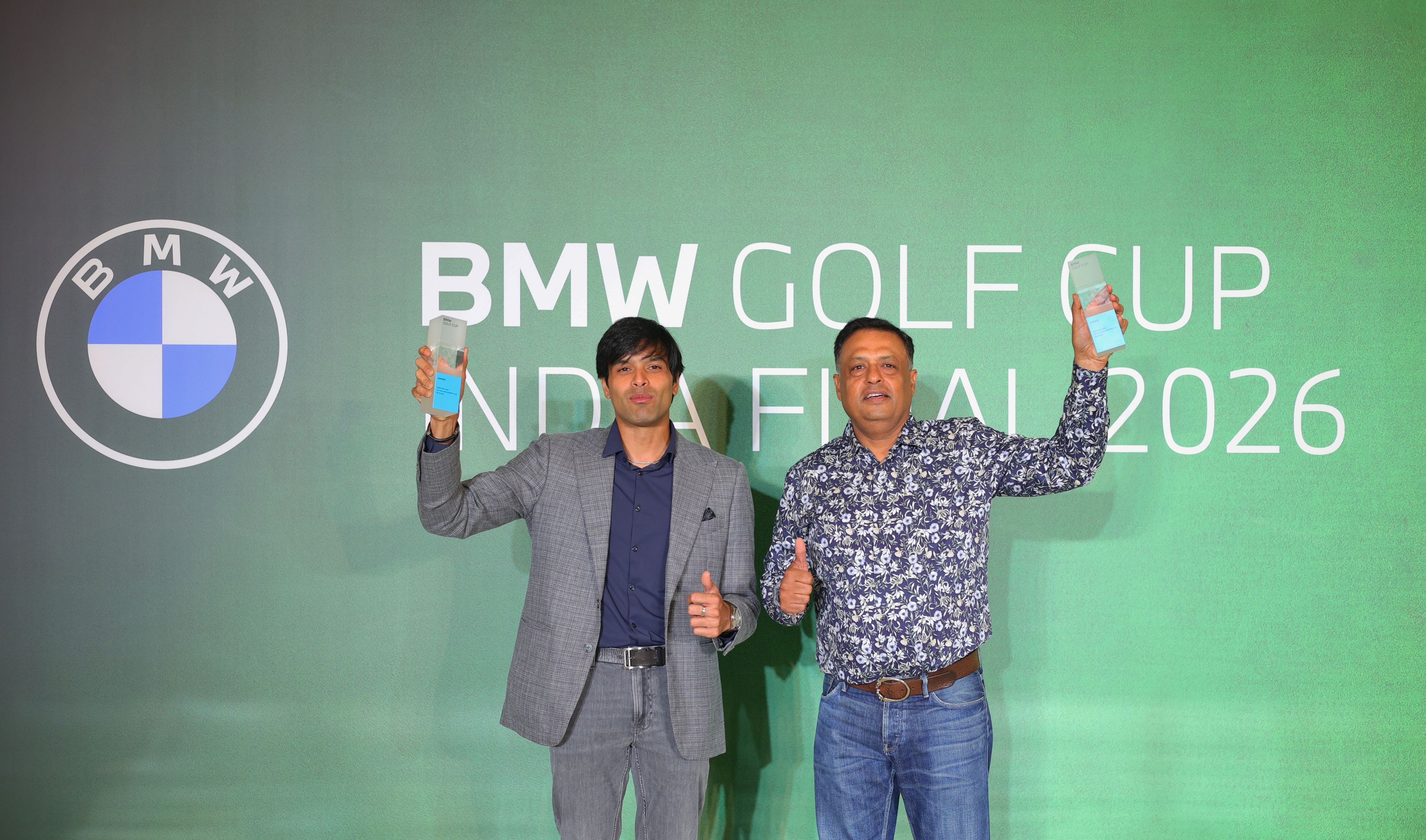
Gurugram | Oct 09. BMW Group India today announced the winners of the 16th edition of the BMW Golf Cup 2026 final, held at DLF Golf and Country Club, Gurugram. Anish Bhujle – Category A and Vikas Mahajan – Category B emerged victorious in their respective handicap categories and will represent India at the BMW Golf Cup World Final scheduled to be held in South Africa in March 2027.
Mr. Hardeep Singh Brar, President & CEO, BMW Group India said, “The BMW Golf Cup is more than a celebration of sporting excellence, it is a powerful expression of performance, passion and the strength of the BMW community. This year, the tournament reached a new milestone, bringing together 2,300 amateur golfers from across India, with 40 exceptional players advancing to the national final. I congratulate our winners on this outstanding achievement. As they step onto the global stage to represent India at the World Final, they carry the pride and support of the entire BMW community. Through distinctive experiences such as the BMW Golf Cup, we continue to bring our customers together and create memorable moments that reflect the spirit of BMW.”
The national final brought together 40 leading amateur golfers who qualified through regional tournaments held at spectacular golf courses across Chennai, Hyderabad, Mumbai, Pune, Ahmedabad, Delhi, Vadodara, Jaipur, Bengaluru, Lucknow, Patna, Kolkata and Gurugram. This season attracted 2,300 participants, the finalist competed for national honours and the opportunity to represent India at the pinnacle of the BMW Golf Cup.
At the final, Anish Bhujle from Mumbai claimed the title in Category A for handicaps upto 12, while Vikas Mahajan from Muradabad won the Category B for handicaps 13-28. The two champions will form Team India at the BMW Golf Cup World Final, competing against leading amateur golfers from participating nations.
BMW Golf Cup, one of the world’s largest amateur golf tournament series can trace its roots back a quarter of a century to a British-based initiative that ran on its own for five years before going international. The tournament started as the BMW Invitation Tournament in UK. It has now developed into a global series with 1,000 qualifying tournaments involving 100,000 players in up to 40 countries. The best players from each nation qualify for the highlight, the BMW Golf Cup World Final, where the individual titles are contested in three categories.
The BMW Golf Cup 2026 has two categories, A (for handicaps up to 12) and B (for handicaps 13 – 28). The winners of the individual handicap categories qualify for the National Final. The winners in each of the two handicap categories in the National Final qualify to take part in the World Final of BMW Golf Cup.
9, Oct 2026
CM Majhi Calls on Odisha’s Youth to Embrace Gopabandhu Das’s Ideals of Service and Sacrifice
Bbubaneswar, Oct 9 (UDN): Odisha Chief Minister Mohan Charan Majhi on Friday called upon the younger generation to draw inspiration from the life and ideals of Utkalmani Pandit Gopabandhu Das, urging them to balance personal ambitions with a commitment to social welfare and nation-building.

The Chief Minister made the appeal while paying floral tributes to the legendary freedom fighter, social reformer and literary figure on his birth anniversary at the Odisha Legislative Assembly premises.
Remembering Gopabandhu Das as an enduring symbol of Odia identity and pride, Majhi highlighted his lifelong dedication to the service of the poor, the underprivileged and people affected by natural calamities such as floods and cyclones.
Gopabandhu’s Legacy of Selfless Service
Majhi said Gopabandhu Das placed the welfare of others above his personal comfort and happiness, dedicating his life to helping vulnerable sections of society.
He described the revered leader as a pioneer of India’s freedom movement who embraced simplicity and championed values closely associated with Mahatma Gandhi.
The Chief Minister also recalled Gopabandhu’s contributions as a social worker, writer and poet, noting that his work helped spread awareness and strengthen the spirit of the freedom struggle.
His commitment to social reform and public service, Majhi said, continues to offer valuable lessons for generations to come.
Youth Urged to Combine Ambition with Social Responsibility
Calling on young people to follow Gopabandhu’s example, Majhi said they should pursue their aspirations while remaining sensitive to the needs of society and the nation.
He emphasised that the ideals of compassion, sacrifice, simplicity and service remain relevant as Odisha works towards a more inclusive and prosperous future.
The Chief Minister also reaffirmed his government’s commitment to public welfare, faster development and the overall progress of the state.
Vision of Samruddha Odisha 2036
Linking Gopabandhu Das’s ideals with the state’s development goals, Majhi said the vision of ‘Samruddha Odisha 2036’ should be pursued in the spirit of dedication and public service exemplified by the eminent leader.
He stressed the importance of carrying forward Gopabandhu’s legacy while working towards a prosperous Odisha that creates opportunities and improves the lives of its people.
Odisha Assembly Speaker Surama Padhy, Revenue and Disaster Management Minister Suresh Pujari, Ekamra-Bhubaneswar MLA Babu Singh and other dignitaries were present at the commemorative programme.
The observance served as a tribute to Gopabandhu Das’s enduring contribution to Odisha’s social, cultural and political life, while renewing the call for young people to uphold his ideals through meaningful service to society.
9, Oct 2026
Wynn Officially Unveils the Highly Acclaimed 2027 Wynn Signature Chinese Wine Awards in November
In a first, Beijing will host the Judging Week, where the competition’s
international panel of wine experts explore China’s rich culture and wine terroir
MACAO, Oct. 9, 2026 /PRNewswire/ — “Wynn Signature” – the exclusive lifestyle brand at Wynn – will unveil the full-year calendar and promotional roadmap for the 2027 Wynn Signature Chinese Wine Awards on November 9, 2026. Entries and wine sample submissions will open on March 1, 2027. In a first for the awards, Beijing will host the Judging Week from August 21 to 25, culminating in the annual Awards Ceremony, which will take place in Macao on October 29, 2027.
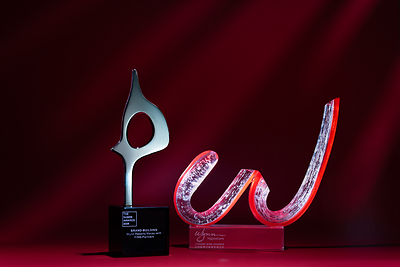
As a premier, internationally recognized competition dedicated exclusively to China’s wine industry, the Wynn Signature Chinese Wine Awards has rapidly evolved since its debut in 2024. In just a few short years, it has established itself as a benchmark platform that integrates wine education, industry exchange, stringent judging standards, and diversified promotions to accelerate the global advancement of the Chinese wine industry. Now in its fourth edition, the competition is set to achieve yet another major milestone: the Judging Week will move beyond Macao for the first time, taking this prestigious event to the nation’s capital of Beijing.
In August next year, an authoritative panel of internationally renowned judges will gather in Beijing not only to conduct their meticulous wine evaluations, but also to immerse themselves in the country’s exceptional culinary culture and rich cultural heritage. Moving beyond “judging Chinese wines” to truly “experiencing China’s terroir”, the judges will explore the stories of the land and the cultural depth embodied in every bottle, becoming global ambassadors for Chinese wine.
International recognition highlights the platform’s growing influence
Further underscoring the competition’s growing influence, the Wynn Signature Chinese Wine Awards became the sole recipient of the Diamond SABRE Award – the highest honor in the Brand Building category at the 2026 SABRE Awards Asia-Pacific in August. The Wynn Signature Chinese Wine Awards was also one of only seven Diamond Award recipients selected from more than 2,000 entries across the region.
The SABRE Awards (Superior Achievement in Branding, Reputation and Engagement) are widely regarded as one of the Asia-Pacific region’s most prestigious honors in brand communications and public relations. This accolade not only recognizes Wynn’s achievements in brand building and cultural promotion, but also affirms the competition’s role in propelling Chinese wines onto the international stage, enhancing Macao’s influence as a world-class gastronomy and tourism destination, and establishing a globally recognized platform for the Chinese wine industry.
A stage for China’s finest wines: Telling the stories of Chinese terroir
Following the successful conclusion of the 2026 Awards Ceremony, Wynn has unveiled a wave of promotional initiatives to celebrate the award-winning Chinese wines. By partnering with authoritative media, international industry networks, and renowned dining establishments, Wynn continues to elevate these wines on diverse stages, further solidifying the influence of Chinese wines in high-end culinary markets both at home and abroad.
On August 14 in Shanghai, Wynn served as Lead Partner for the 2026 Fine Dining Investment Forum hosted by Jiemian News of the Shanghai United Media Group. During the forum and welcome reception, Wynn hosted a dedicated booth featuring three award-winning wines from the Wynn Signature Chinese Wine Awards, offering guests an opportunity to discover and taste some of China’s finest wines. That evening, Executive Chef Kevin Zhu of Lakeview Palace, the acclaimed contemporary Jiangnan restaurant at Wynn Palace, participated in the event’s “12-Hands Collaboration Dinner”. To showcase the exceptional quality and versatility of premium Chinese wines during the dinner, Wynn also presented one of the award-winning wines from the Wynn Signature Chinese Wine Awards to more than 100 high-end dining investors, restaurateurs, industry professionals and media guests.
On September 7 and 8, Executive Chef Tam Kwok Fung of Chef Tam’s Seasons at Wynn Palace partnered with Head Chef Reina Chen of Fumée to present the “Symphony of Terroir & Seasons” wine-pairing dinner in Shenzhen. Celebrating the interplay between seasonal ingredients and the essence of Chinese terroir, the dinner featured award-winning wines from the Wynn Signature Chinese Wine Awards, highlighting the potential of Chinese wines in fine dining settings.
On September 29, Wynn was invited by the Deqin County People’s Government of Yunnan Province to participate in the launch of the Meili Snow Mountain Boutique Wine Tourism Route, held during the “2026 Deqin-Meili Snow Mountain 12th Xianzi Cultural Arts Festival”. Through the Wynn Signature Chinese Wine Awards, Wynn provided the planning and content development for the Deqin Meili Wine Region Tourism Route Map published by the Deqin County Bureau of Culture and Tourism. Drawing on the judging panel’s expertise and in-depth research – combined with first-hand exploration of Deqin – Wynn curated a bespoke itinerary linking representative wineries, landmark attractions and distinctive local experiences. This new wine route seamlessly blends magnificent natural scenery with the high-altitude wine industry, creating an innovative cultural tourism model designed to elevate the global visibility of China’s premium wine-producing regions.
From October 12 to 16, Wynn will participate in the 47th World Congress of Vine and Wine alongside the General Assembly of the International Organisation of Vine and Wine (OIV) in Yinchuan, Ningxia. Founded in 1924, OIV is one of the world’s leading intergovernmental organizations dedicated to the vine and wine sector. Marking the first time the event is being held in China – and Asia as a whole – Wynn will showcase award-winning wines from the Wynn Signature Chinese Wine Awards at the Congress, highlighting the exceptional terroir, diversity, and achievements of China’s premier wine regions to global industry experts, buyers, and media.
Shortly after the Congress, Wynn will serve as the Strategic Wine Partner at the Tatler Best Awards Asia-Pacific 2026 taking place in Shanghai from October 22 to 24. Across a curated series of events – including a welcome reception, celebratory party and chef collaboration dinners – Wynn will showcase the refinement and diversity of Chinese wines to a distinguished audience of approximately 700 guests. This prestigious gathering will bring together hospitality executives, prominent restaurateurs, members of the Tatler community, high society, media representatives and key opinion leaders from 25 cities across the Asia-Pacific and the Middle East.

 View original content to download multimedia:https://www.prnewswire.co.uk/news-releases/wynn-officially-unveils-the-highly-acclaimed-2027-wynn-signature-chinese-wine-awards-in-november-302903396.html

9, Oct 2026
Hisense Brings AI Companion Suite to Life with a Social Kitchen
QINGDAO, China, Oct. 9, 2026 /PRNewswire/ — Hisense, a leading brand in global consumer electronics and home appliances, is bringing its vision of “Innovating a Brighter Life” into the heart of the home with the new PureSmart Duo Series — a refrigerator series designed as the intelligent center of the kitchen and now being rolled out across global markets.

Building on the AI Companion Suite introduced at IFA 2026, Hisense is extending its vision of AI beyond appliances to create connected experiences across the home. Through the ConnectLife platform, the PureSmart Duo Series brings people, appliances and experiences together, making AI a more natural part of everyday life.
This vision comes to life through Hisense’s Social Kitchen — where technology helps the kitchen become a hub for connection. Rather than merely supporting food preparation, AI Companion Suite brings cooking, entertainment and communication together, creating opportunities for families and friends to spend time in the space.

One four-door refrigerator in the PureSmart Duo Series combines 611 liters of storage with a 21-inch smart screen, along with features designed to support everyday cooking, entertaining and connection in the kitchen. Its integrated ice and water system offers crescent ice, crushed ice and UV-purified water with a 99.9% sterilization rate, making it easy to serve drinks for any occasion. Entertainment lives here too: stream shows through the VIDDA platform, watch live TV or play music on the 21-inch screen while you cook, dine or unwind — so the decisive goal or the season finale is never missed mid-recipe.
On weekends, families can pick a recipe together while connected appliances simplify preparation. During gatherings, the refrigerator becomes a social hub —guests can use Beverage Master feature on the smart screen to choose their favorite drinks and follow step-by-step instructions to create them together, while hosts spend less time managing the kitchen and more time enjoying the people around them.
For Hisense, AI Companion Suite is about more than intelligent appliances. It is about creating warmer connections through technology — making the kitchen a place where people naturally come together.
About Hisense
Hisense, founded in 1969, is a globally recognized leader in home appliances and consumer electronics with operations in over 180 countries, specializing in delivering high-quality multimedia products, home appliances, and intelligent IT solutions. According to Omdia, Hisense ranks No. 1 globally in the 100-inch and over TV segment (2023-2026H1). As The Origin of RGB MiniLED, Hisense continues to lead the next-generation RGB MiniLED innovation. As the official sponsor of the FIFA World Cup 2026TM, Hisense is committed to global sports partnerships as a way to connect with audiences worldwide.
 View original content to download multimedia:https://www.prnewswire.co.uk/news-releases/hisense-brings-ai-companion-suite-to-life-with-a-social-kitchen-302903321.html

9, Oct 2026
Astrogate Labs and Spacebeam Sign Strategic Partnership to Advance End-to-End Space-to-Ground Laser Communications
Indian laser communication terminal developer and South Korean optical ground station company to collaborate on interoperability demonstrations and OGS-as-a-Service and commercial optical communication solutions across India, the Republic of Korea and global markets
BENGALURU, India, Oct. 9, 2026 /PRNewswire/ — Astrogate Labs, an Indian deep-tech company developing Free-Space Optical Communication (FSOC) systems for space applications, and Spacebeam Inc., a South Korean optical communications company developing optical ground station infrastructure, have signed a Memorandum of Understanding (MoU) on Strategic Partnership to advance the validation, demonstration and commercialization of end-to-end space-to-ground laser communication solutions.

The MoU was executed during the International Astronautical Congress (IAC) 2026 in Antalya, Türkiye, bringing together two complementary components of the optical communications chain: Astrogate’s AstroLink, the Optical Communication Terminals (OCTs) for satellites and Spacebeam’s Osong Optical Ground Station (OGS) infrastructure for receiving and processing optical signals on Earth.
Under the partnership, the companies will collaborate on laser link verification and demonstration testing, progressing from terrestrial/air-to-ground testing to a space-to-ground demonstration involving a satellite integrated with Astrogate’s OCT and reception through Spacebeam’s OGS.
The partnership will also explore the development of an Optical Ground Station-as-a-Service (OGSaaS) model, under which satellite operators using Astrogate’s optical communication terminals could access Spacebeam’s OGS network for optical data reception. This creates a potential pathway toward a turnkey space-to-ground optical communications service, combining the onboard terminal and ground reception infrastructure required to move high-throughput data from orbit to Earth.
“The value of optical communications is ultimately realized when the space and ground segments work together as one end-to-end link. This partnership brings Astrogate’s optical communication terminals together with Spacebeam’s optical ground infrastructure to work toward that objective,” said Nitish K. Singh, Founder & CEO, Astrogate Labs.
“We see this collaboration as an opportunity to move beyond individual technology demonstrations and explore how optical communications can be delivered as an integrated service to satellite operators. By combining capabilities across India and the Republic of Korea, we can also explore new commercial pathways for space-to-ground optical communications globally,” said Kim Jung-Hoon, Founder & CEO, Spacebeam.
The partnership builds on Astrogate’s work in developing indigenous optical communication systems for space. The company has developed space-to-ground laser communication terminals and has previously completed cross-compatibility testing with the University of Western Australia’s TeraNet mobile optical ground station.
As satellite constellations and Earth-observation missions generate increasing volumes of data, the ability to move that data efficiently from orbit to ground is becoming an important part of the space infrastructure ecosystem. Optical communications offer a high-throughput communications pathway that can complement conventional RF systems, particularly for data-intensive missions.
About Astrogate Labs
Astrogate Labs designs and manufactures indigenous Free Space Optical Communication terminals for space and other high-performance communication applications, integrating proprietary Pointing, Acquisition and Tracking systems, optical modems and other subsystems developed in-house. Headquartered in Bengaluru, with an office in Durham, England, the company has validated its technology with end-users including ISRO and the University of Western Australia’s TeraNet mobile optical ground station and is extending its portfolio from space-to-ground terminals to Optical Inter-Satellite Links.
About Spacebeam Inc.
Spacebeam Inc. is a South Korean space optical communications company developing optical ground station technology for high-speed communication between ground and orbit. Its capabilities include satellite tracking, optical communication, optical signal reception and decoding, and adaptive optics for maintaining stable optical links through the atmosphere.
Contact:
Dhivya Abirami
Marketing & Communications
media@astrogatelabs.com
www.astrogatelabs.com
 View original content to download multimedia:https://www.prnewswire.com/in/news-releases/astrogate-labs-and-spacebeam-sign-strategic-partnership-to-advance-end-to-end-space-to-ground-laser-communications-302903383.html



