


11, Oct 2026
Strategic Collaboration between a Global School Operator GEMS Education and a Mumbai-Based School Operator Cresmonde Schools
MUMBAI, India, Oct. 11, 2026 /PRNewswire/ — GEMS Education, one of the world’s largest operators of private schools, has entered into a strategic collaboration with a Mumbai-based school operator Cresmonde Schools for its existing schools in Vikhroli and Kalyan, and two new schools planned in Malwani and Kalyan. Cresmonde Schools have a tie-up with a Finnish curriculum partner and are developed with a vision to provide international exposure for their students. This collaboration between two school operators – one global and one local – has been shaped with the future of education in mind. GEMS Education believes India holds immense potential for such collaborations in school education.
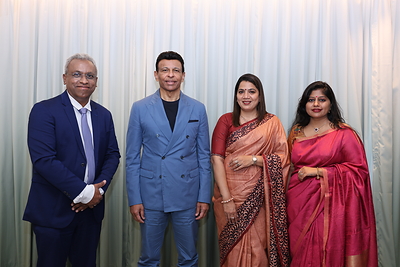
As part of this collaboration, GEMS Education will leverage its global GEMS brand, academic and global operational expertise to enhance teaching and learning at these four Cresmonde Schools in line with its global standards, while aligning educational opportunities with the aspirations of parents and students. This unique relationship is GEMS Education’s first collaboration with a local school operator in the MMR. These two private school operators, have chosen to come together for the betterment of education. This is consolidation of the right intent, driven by a shared belief that together we can add more value and strength to what we deliver to our learners and their families. Education is no longer only national; it is international. A collaboration between a city-based operator and a global operator will set a trend, and in time it will be seen as a historic milestone for Indian education.
The organisation hopes to build on this foundation by collaborating with many more quality driven school operators to create future-ready learning opportunities for learners across the region. Presently, the GEMS network is one of the fastest-growing school operators across the nation, bringing together like-minded school operators for a shared mission.
At the heart of GEMS Education’s philosophy is a teacher-first, child-first approach. The organisation believes that the true strength of a school lies in the quality of its teaching and learning, rather than in its infrastructure alone. Teachers are empowered as leaders, and every decision prioritises meaningful learning experiences and the holistic development of every child.
“We see tremendous potential in collaborating with existing school operators in India. Such a global – local collaboration brings the best of both worlds, with education that is rooted locally and connected globally. Through our collaboration with Cresmonde Schools, we aim to offer diverse curriculum choices, strengthen teaching and learning practices, and create a future focused learning environment that meets the aspirations of families.” – Francis Joseph, India CEO, GEMS Education
“We are proud to partner with GEMS Education, a global school operator with a strong legacy of more than 65 years in delivering high-quality education. This collaboration will significantly enhance the academic and learning environment for our students in Vikhroli, Kalyan and Malwani. By combining our local commitment with GEMS’ global expertise and our tie-up for the Finnish curriculum, we aim to create future-ready schools that prepare learners for success in an increasingly interconnected world.” – Anita Dewoolkar, Founder Trustee, Cresmonde Schools
About GEMS Education
GEMS Education is one of the world’s leading, oldest and largest private K-12 education providers, with a legacy spanning more than 65 years. GEMS was founded in 1959 in Dubai by two passionate Indian teachers.
Today, GEMS educates more than 200,000 students from over 176 nationalities through its global network of owned and managed schools, supported by more than 20,000 employees, including over 10,000 educators and school leaders representing 112 nationalities. Having educated more than 500,000 students over the decades, GEMS offers a wide range of curricula – including IB, British, Indian (CBSE/ICSE/State), Cambridge and American programmes – preparing young people with the knowledge, character and confidence to thrive in a rapidly changing world.
Guided by its enduring mission to put a quality education within the reach of every learner, everywhere, GEMS combines academic rigour with character development, wellbeing, innovation and strong partnerships with families and communities. Over the past five years, GEMS students have been accepted into more than 2,000 universities across 71 countries, including all eight Ivy League universities in the US and all 24 Russell Group universities in the UK. In the last four years alone, more than 3,500 GEMS graduates have attended the world’s top 100 universities, over 2,200 have progressed to Russell Group universities, almost 2,000 have enrolled at the world’s top 50 universities, and more than 60 have gone on to Ivy League institutions.
Through its expanding network and philanthropic initiatives, GEMS continues to create opportunities for young people to become leaders, innovators and positive changemakers in their communities and beyond.
For more details, please visit www.gemseducation.com and www.gemseducationindia.com.
 View original content to download multimedia:https://www.prnewswire.com/in/news-releases/strategic-collaboration-between-a-global-school-operator-gems-education-and-a-mumbai-based-school-operator-cresmonde-schools-302905171.html

- 0
- By Sai Krishna

11, Oct 2026
THE LEGO GROUP INVITES FANS TO MASH-UP STAR WARS™ AND MARVEL UNIVERSES FOR THE FIRST TIME EVER IN LEGO IDEAS® CHALLENGE
- New LEGO Ideas® challenge invites fans to create a first-of-its-kind cross-universe moment in LEGO bricks to celebrate iconic storytelling worlds of Star Wars™ and Marvel.
- The announcement was made at New York Comic Con during a panel featuring Kevin Smith; actor, director and Marvel Comics writer.
- Now open, fans can choose from three building themes – vehicles, characters, or scenes – to inspire the Star Wars and Marvel mash-up and submit via the LEGO Ideas platform.
NEW YORK, Oct. 11, 2026 /PRNewswire/ — Today at New York Comic Con (NYCC), the LEGO Group announced a first-of-its-kind LEGO® Ideas challenge. For the first time ever, fans are invited to mash-up Star Wars™ and Marvel by reimagining characters, vehicles and scenes from the two universes in LEGO form.

What’s more, the LEGO Ideas platform means that once the build has been submitted and fans have voted on the design, the favourite submissions will then become immortalised as an official LEGO product.
Fede Begher, Senior Vice President and Head of Product Group at the LEGO Group, said: “This challenge is a milestone for LEGO Ideas and our fan community. For the first time ever, fans can build with both Marvel and Star Wars in a single LEGO Ideas challenge, unlocking entirely new possibilities for creativity and storytelling. We know our fans never stop imagining new ways to bring their favourite worlds together, and we’re excited to see the originality, passion and innovation they bring to this unique crossover.”
As a tribute to the landmark 50th anniversary of the Star Wars franchise in 2027, the Star Wars/Marvel: Hope Assembles comic series was unveiled this past summer. Launching in January, it’s the first-ever crossover between the Star Wars and Marvel Comics universes. The LEGO Ideas challenge celebrates that crossover and honours the 50th anniversary.
Open from today, fans simply need to visit ideas.lego.com, choose from three challenge themes of mashing up Star Wars and Marvel vehicles, characters or scenes, review all challenge rules and guidelines, and then get building with LEGO elements. Voting for the submissions begins December 15, 2026, with the Grand Prize Selections being announced next year.
For more information, please visit ideas.lego.com/campaigns/hope-assembles.
About the LEGO Group
The LEGO Group’s mission is to inspire and develop the builders of tomorrow through the power of play. The LEGO System in Play, with its foundation in LEGO bricks, allows children and fans to build and rebuild anything they can imagine.
The LEGO Group was founded in Billund, Denmark in 1932 by Ole Kirk Kristiansen, its name derived from the two Danish words LEg GOdt, which mean “Play Well”.
Today, the LEGO Group remains a family-owned company headquartered in Billund. Its products are now sold in more than 120 countries worldwide.
For more information: www.LEGO.com
About the LEGO Ideas platform
LEGO Ideas offers fans the opportunity to submit their own brick creations with the chance to have their concept brought to life with the help of LEGO master designers and a share of the profits. Find out more at www.ideas.LEGO.com.
STAR WARS and related properties are trademarks and/or copyrights, in the United States and other countries, of Lucasfilm Ltd. and/or its affiliates. © & TM Lucasfilm Ltd.
© 2026 MARVEL

 View original content to download multimedia:https://www.prnewswire.co.uk/news-releases/the-lego-group-invites-fans-to-mash-up-star-wars-and-marvel-universes-for-the-first-time-ever-in-lego-ideas-challenge-302905160.html

11, Oct 2026
‘Hope of Light’ Illuminates Gachibowli Stadium Ahead of 9th Global Grace Cancer Run 2026
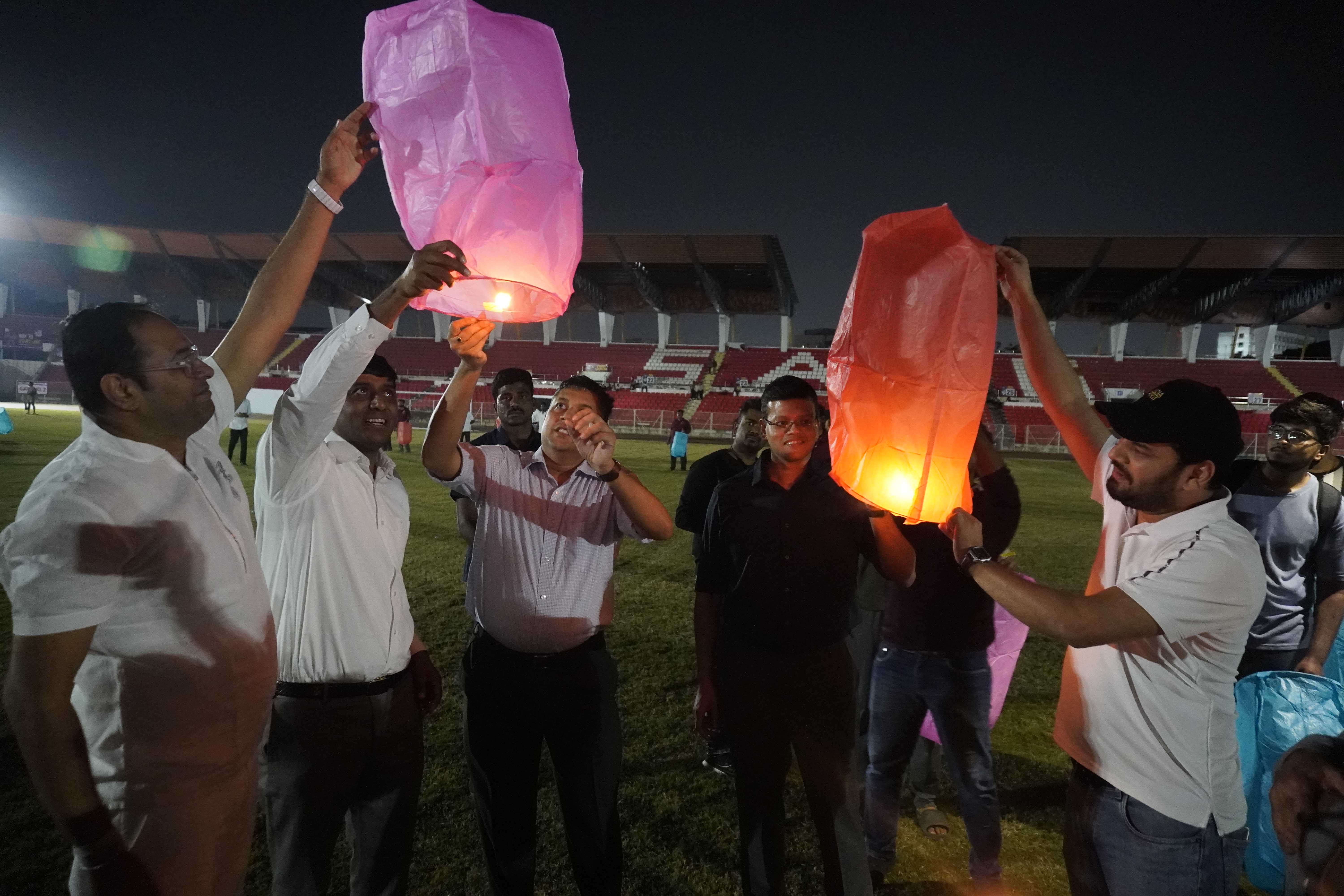
Hyderabad, Oct 11: In a moving expression of solidarity, remembrance and hope, ‘Hope of Light’, a unique initiative of Grace Cancer Foundation, was organised at Gachibowli Stadium on Saturday night, ahead of the 9th Edition of the Global Grace Cancer Run 2026.
The event brought together around 500 students and volunteers from different walks of life, who joined hands to illuminate the stadium with lanterns and candles, transforming the night into a powerful symbol of hope, compassion and collective resolve in the fight against cancer.
Mr. Avinash Mohanty, Mr. Avinash Mohanty, Commissioner of the Telangana Standards Authority for Food and Essential Drugs (TG SAFE) was the Chief Guest. He launched the initiative along with Dr. Chinnababu Sunkavalli, Founder and CEO of Grace Cancer Foundation; Dr. Prameela Rani Sunkavalli, Trustee of Grace Cancer Foundation; and Mr. Ramesh Kaza of the Society for Cyberabad Security Council (SCSC), by releasing a lantern into the night sky.
As the lantern rose into the darkness, it carried a message that transcended words—a tribute to those who lost their lives to cancer, a salute to those who fought the disease and emerged victorious, and a beacon of awareness for those who have yet to understand the importance of prevention and early detection.
The evening unfolded through two evocative activities. While one group of students and volunteers released illuminated lanterns into the sky, symbolising hope and the triumph of light over darkness, another group lit candles and walked around the stadium in a solemn procession.
‘Hope of Light’ represents the many emotions and experiences associated with cancer. It honours the lives lost, celebrates the courage of cancer survivors, acknowledges the struggles of patients and their families, and reminds society that no one facing cancer should feel alone. Each lantern symbolised a life, a memory, a prayer and a promise to work towards a future where cancer is detected early, treated effectively and prevented wherever possible.
Light has always symbolised life, knowledge and the possibility of a new beginning. Through this initiative, Grace Cancer Foundation sought to convey that even in moments of uncertainty and despair, hope can illuminate the way forward. The gathering also served as a reminder that awareness, timely screening, preventive healthcare and community participation are essential to reducing the burden of cancer.
Speaking on the occasion, Mr. Avinash Mohanty appreciated the efforts of Grace Cancer Foundation and described the Global Grace Cancer Run as a commendable initiative that combines public participation with a meaningful social purpose.
“I understand that Grace Cancer Foundation has been receiving requests from various State Governments to plan and implement cancer screening initiatives in their respective states. This reflects the importance of the Foundation’s work and the growing recognition of the need to take cancer awareness and screening to communities. Initiatives like the Global Grace Cancer Run help bring people together for a cause that touches countless lives,” he said.
Through ‘Hope of Light’, Grace Cancer Foundation reinforced a simple yet powerful message: Light is a symbol of life. Let us remember every life lost, stand beside every life fighting cancer, and bring the light of awareness to every life we can reach.
11, Oct 2026
Parents’ Forum Organises Protest to Highlight Children’s Constitutional Rights
GURUGRAM, October 11, 2026:
The Parents Forum for Stem Cells in Autism and Cerebral Palsy held a peaceful demonstration at Subhash Chandra Bose Park in Gurugram on Sunday and released an open letter seeking protection of children’s rights under Article 21 of the Constitution. The Forum addressed the letter to the President of India, the Prime Minister, the Union Health Minister, the Chief Justice of India and all judges of the Supreme Court.
The demonstration focused on concerns raised by families following the Supreme Court judgment in Yash Charitable Trust & Ors. v. Union of India & Ors., W.P. (C) 369/2022, concerning stem cell therapy for autism. The Forum, which says it represents around 5,000 parents and families, urged the authorities to consider the concerns of families whose children have undergone the treatment.
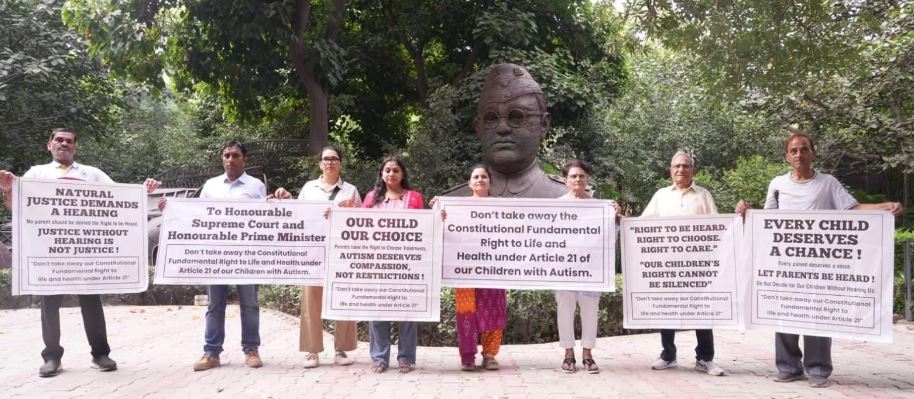
Dr Seema Mehrotra, a doctor and parent of an autistic child, said her child had shown improvement after undergoing stem cell therapy. “I am speaking not only as a doctor but also as a mother. I have personally witnessed improvement in my child, and I believe the experiences of families like ours deserve to be heard and examined fairly,” she said.
Many parents and grandparents also participated in the protest, sharing their concerns about the impact of the judgment on children who are already receiving or have previously undergone treatment. Sonia, one of the participating family members, said the gathering reflected the collective concern of families seeking recognition of their experiences and a meaningful opportunity to present their views.
The parents questioned whether affected families received an adequate opportunity to present their views during the proceedings. They also called for consideration of scientific papers, patient testimonials and other evidence submitted in the case.
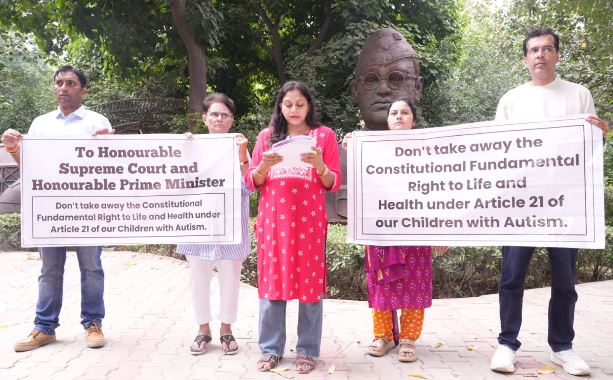
In its open letter, the Forum urged the authorities to protect children’s fundamental rights, provide parents with a proper hearing and evaluate the scientific literature and reported patient experiences placed on record. It also called for due consideration of the work of Indian doctors and hospitals.
The Forum expressed concern over the direction to transition children already undergoing stem cell therapy towards institutions conducting clinical trials. It argued that the availability of suitable trials and the practical challenges involved in transferring children’s care require consideration.
The parents also highlighted the distinction between stem cell-derived products manufactured by companies and autologous cell procedures, in which cells are taken from and returned to the same patient. They called for the relevant regulatory framework and the perspectives of patients, families and treating doctors to receive due consideration.
The Forum further raised concerns about the implications of the judgment for children already receiving treatment and urged the authorities to consider the circumstances of affected families before implementing measures that could alter their access to care.
The organisers chose Gurugram for the demonstration, citing reported restrictions on public gatherings in Delhi. They said the protest aimed to bring attention to the concerns of parents and seek a meaningful opportunity for affected families to be heard.
Through the open letter, the Forum called for a fair consideration of the scientific, medical and legal issues involved, emphasising that decisions concerning children with autism and cerebral palsy should take their welfare and individual circumstances into account.
The Forum reiterated its demand for the protection of children’s rights under Article 21 and urged the authorities to address the concerns raised by families affected by the judgment.
11, Oct 2026
Record-Breaking Cancer Survivors’ Participation Marks 9th Global Grace Cancer Run
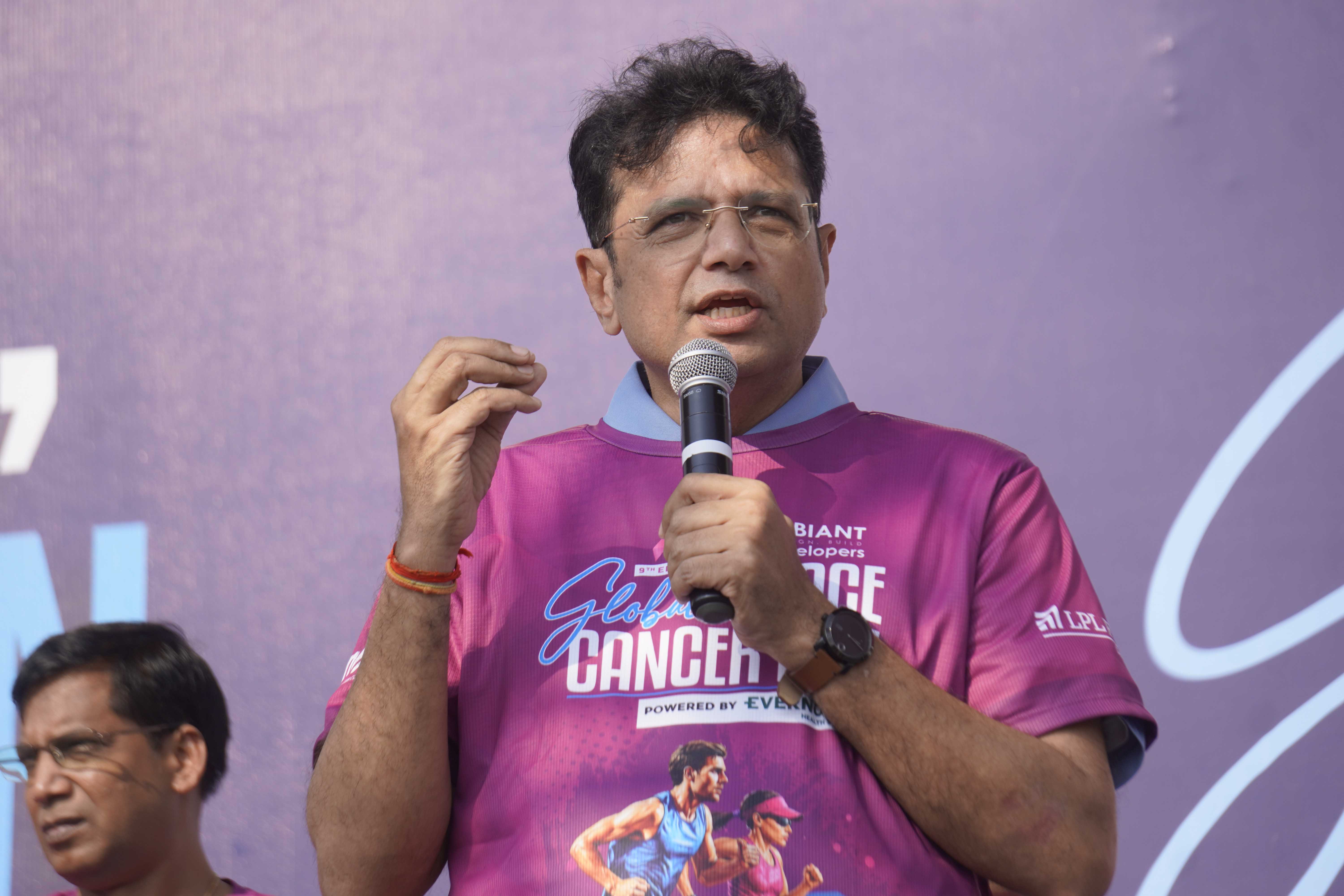
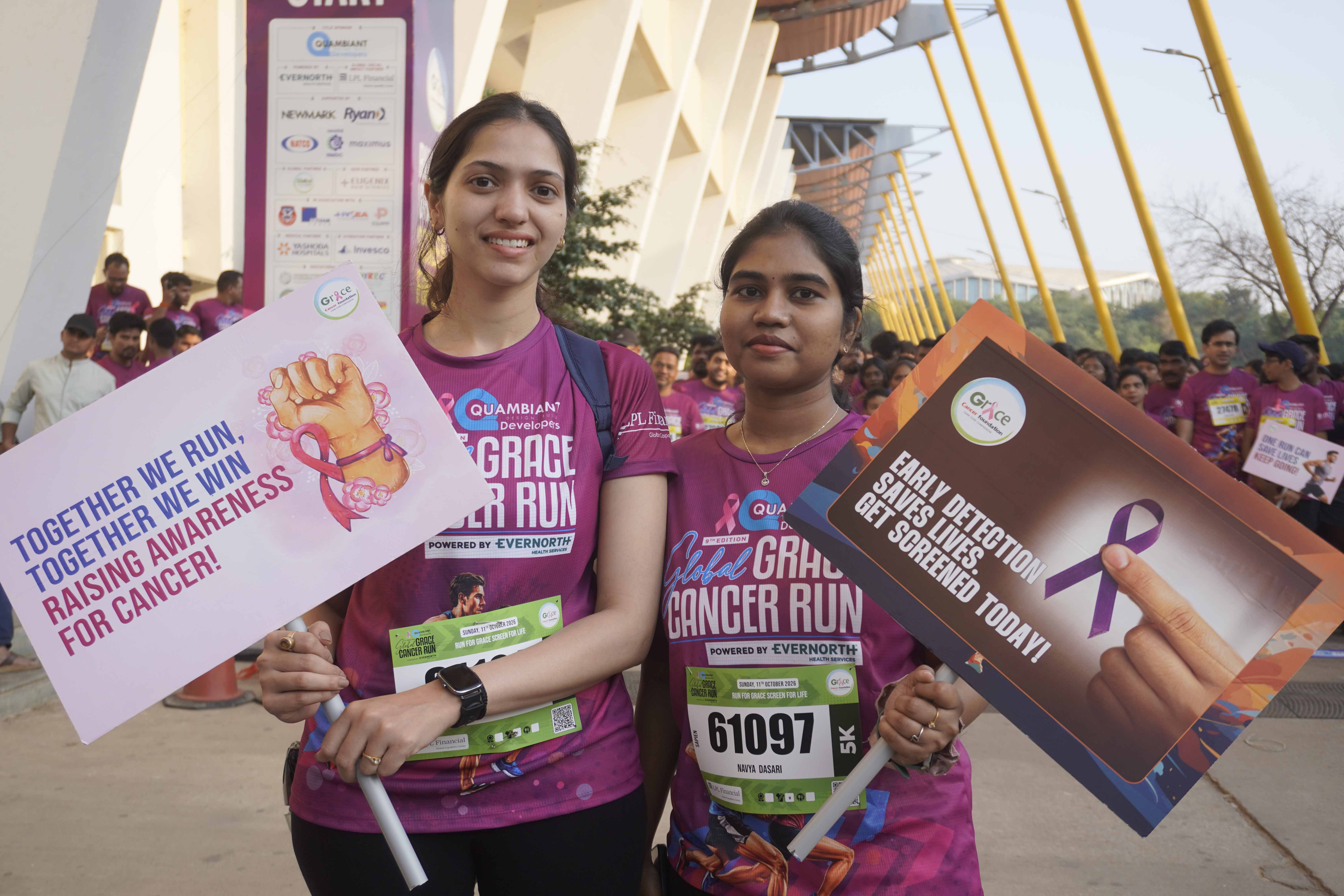
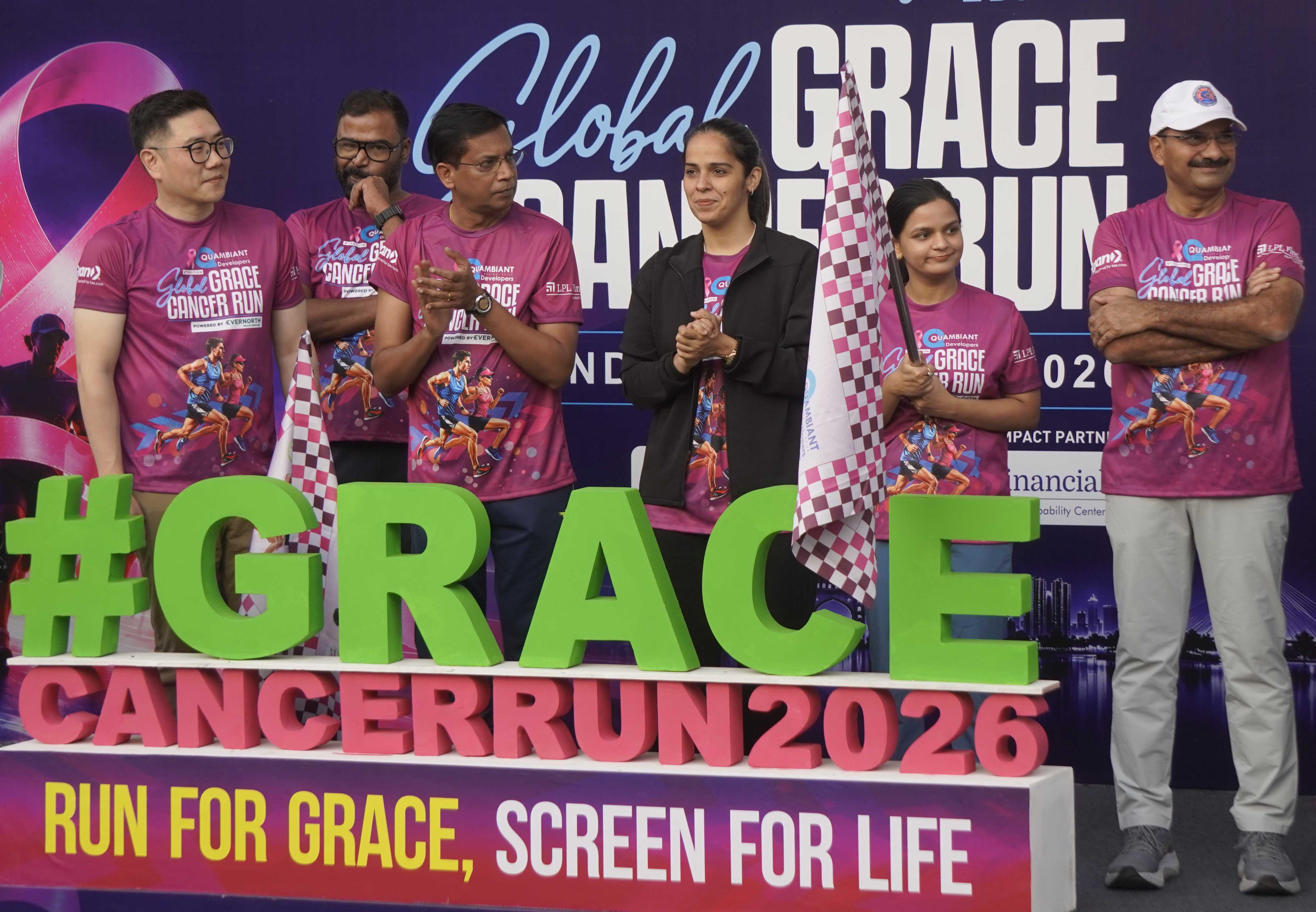
Hyderabad, October 11, 2026: More than 35,000 Runners including 300 Cancer Survivors, the biggest ever cancer survivors to participate in any Cancer Run participated in the 9th Edition of Quambiant Global Grace Cancer Run 2026 powered by Evernorth Health Services held on Sunday at Gachibowli Stadium.
The participation of approximately 300 cancer survivors was a major highlight, creating a powerful collective statement of hope, courage and resilience. Organised by Hyderabad-based Grace Cancer Foundation under the theme “Run for Grace. Screen for Life,” the event continues to strengthen public awareness about cancer prevention and the importance of timely diagnosis.
Chief Minister A. Revanth Reddy, who could not attend the event due to prior engagements, sent a letter conveying his message to the participants. Dr. Chinnababu Sunkavalli, Founder and Global CEO of Grace Cancer Foundation and Senior Consultant Robotic Surgical Oncologist, read the letter to the gathering.
In his message, the Chief Minister commended the work of Grace Cancer Foundation and appreciated the services rendered by Dr. Chinnababu Sunkavalli. He emphasised the importance of early detection and observed that initiatives such as the Global Grace Cancer Run strengthen public awareness about cancer.
The winners of the men’s and women’s 10K categories received cash prizes of ₹25,000, ₹15,000 and ₹10,000 for the first, second and third places, respectively. The prizes were presented by Telangana Minister D. Sridhar Babu, MP Mallu Ravi and film actress Anaswara Rajan.
In the men’s 10K category, Mukesh Bhambhu secured first place, followed by Rohit Binnar in second place and Nikhar Bhalavi in third place.
In the women’s 10K category, Uma Marripally won first place, while Rajeshwari secured second place and Kalyani finished third.
Speaking after the distribution of prizes to the winners of the 10K run, Shri D. Sridhar Babu, Minister in the Telangana Government, said that participation in the run could help save lives, as the funds raised would support free cancer screening.
He said the initiative also created greater public awareness about the disease. While politicians contribute to social change through their responsibilities in public life, Dr. Chinnababu Sunkavalli and the participants were fulfilling their social responsibility by supporting a cause that could benefit thousands of people.
The Minister observed that the willingness of so many people to participate despite it being a Sunday, when many prefer to remain at home, reflected their commitment to society. He added that the participation of more than 35,000 runners was a reflection of Hyderabad’s civic spirit and social consciousness.
Shri Mallu Ravi, Member of Parliament and a cancer survivor, shared his personal experience with the disease. He said he was diagnosed with cancer in 2005, underwent treatment in the United States and had since recovered.
Emphasising the importance of early diagnosis, he said that cancer can be treated successfully when detected early. He also highlighted the emotional toll of the disease, observing that its impact extends beyond physical health and can undermine a patient’s hope.
His message underscored the importance of awareness, timely medical intervention and emotional support for patients and their families.
Dr. Chinnababu Sunkavalli announced that Grace Cancer Foundation would undertake cancer screening initiatives in the constituencies represented by Chief Minister A. Revanth Reddy and Minister D. Sridhar Babu. Following a request from MP Mallu Ravi, the Foundation also agreed to include Nagar Kurnool, his constituency, in the proposed initiative.
Dr. Chinnababu also announced that Grace Cancer Foundation is listed on the Social Stock Exchange, marking an important development in its efforts to advance its social-impact mission.
Film actress Anaswara Rajan urged people to give priority to their health rather than allowing daily chores and other commitments to take precedence. Her message reinforced the importance of preventive healthcare, healthy living and regular medical check-ups.
Among the distinguished guests were Shri V.C. Sajjanar, IPS, Commissioner of Police, Hyderabad; Dr. Ramesh Masthipuram, IPS, Commissioner of Police, Cyberabad; Ms. Srijana Gummalla, IAS, Municipal Commissioner, Cyberabad Municipal Corporation; Ms. Laura Williams, U.S. Consul General in Hyderabad; Ms. Saina Nehwal, Olympic bronze medallist and Indian badminton player
Other prominent participants included Ministers Mr. Yogendranath Reddy Bommu, Founder and Managing Director, Quambiant Developers and title sponsor of the run; Mr. Kalyan Thota, Senior Director, Finance Operations, Evernorth Health Services; Mr. Ramesh Kaza, Executive Vice President and Country Head, LPL Financial; Shri Sunpreet Singh, IPS, Joint Commissioner of Police (Traffic), Cyberabad Commissionerate; Shri Arekapudi Gandhi, MLA representing Serilingampally; and Mr. Lakshmi Narayana Dronamraju, Founder and CEO of EQUIPPPP.
The dignitaries participated in and supported the various flag-off ceremonies, lending their support to the cancer awareness movement.
As a curtain-raiser to the main event, Grace Cancer Foundation organised “Hope of Light” at Gachibowli Stadium on Saturday night a night before the event. Around 300 participants took part in the initiative, which featured the release of illuminated lanterns as a symbolic tribute to lives lost to cancer, a celebration of survivors and a message of solidarity with patients undergoing treatment.
Mr. Avinash Mohanty, Commissioner of the Telangana Standards Authority for Food and Essential Drugs (TG SAFE), was associated with the event.
Funds raised through the Global Grace Cancer Run will support free cancer screening for underprivileged communities. Through its mobile screening initiatives, Grace Cancer Foundation aims to reach one lakh people with free screening for non-communicable diseases (NCDs), bringing preventive healthcare services closer to rural communities.
Over the past 13 years, the Foundation reports that its initiatives have reached approximately 1.5 crore people across more than 130 countries. Its work encompasses cancer awareness, preventive healthcare, early detection, treatment support, rehabilitation and research.
The Foundation has trained 4,500 volunteers, organised more than 3,000 events and reached over 870 villages. Its initiatives have facilitated the detection of cancer in 1,983 individuals and provided more than 2,313 free HPV vaccine doses to underprivileged beneficiaries.
LPL Financial was the Global Social Impact Partner for the 2026 edition, while Evernorth Health Services powered the event.
The 9th Edition of the Global Grace Cancer Run reaffirmed the importance of collective action in the fight against cancer, with its central message that early detection saves lives, awareness empowers communities and access to screening can make a meaningful difference.
Score:
Men’s 10K Category
1st Place: Mukesh Bhambhu – 30:25 (Chip Time)
2nd Place: Rohit Binnar – 30:33 (Chip Time)
3rd Place: Nikhar Bhalavi – 31:43 (Chip Time)
Women’s 10K Category
1st Place: Uma Marripally – 39:42 (Chip Time)
2nd Place: Rajeshwari – 41:53 (Chip Time)
3rd Place: Kalyani – 45:23 (Chip Time)
Prize Money (Both Categories)
1st Place: ₹25,000
2nd Place: ₹15,000
3rd Place: ₹10,000
10, Oct 2026
Zoomlion Expands Mining Machinery Business as International Revenue Grows
CHANGSHA, China, Oct. 10, 2026 /PRNewswire/ — Zoomlion Heavy Industry Science & Technology Co., Ltd. (“Zoomlion”) is expanding its mining machinery business and strengthening international operations. In the first half of 2026, its mining machinery business grew by more than 57.20% year on year, while company-wide international revenue rose 12.45% to RMB 15.535 billion, accounting for 57.25% of total revenue.

Zoomlion is developing its construction, agricultural and mining machinery businesses across three major global equipment markets. Its mining portfolio covers excavation, loading, haulage, crushing and screening.
Flagship models include the ZE4000G, a 400-tonne mining excavator, and the ZTE520 hybrid electric-drive mining truck, with a rated payload of 300 tonnes.
Zoomlion’s mining engineering roots stretch back decades. In 1987, its predecessor, the Changsha Construction Machinery Research Institute, received a State Council award for developing a complete open-pit mining system capable of handling 10 million tonnes a year.
Zoomlion attributes the recent growth of its mining business to its focus on lowering equipment operating costs through continual product development, real-world testing and new technologies.
The company develops its equipment based on conditions in operating mines. In a previously reported six-month period, Zoomlion’s research teams visited around 150 mines worldwide, identifying and addressing more than 50 technical challenges and incorporating field findings into product development.
“We calculate operating costs across the full equipment lifecycle so customers can see the economic benefit,” said Wu Yuanfeng, deputy general manager of Zoomlion Mining Machinery. “Our pure-electric products can cut costs by more than 50%, and hybrid models can improve profitability by 15% or more, helping mines move toward more efficient, higher-quality operations.”
Electrified mining equipment is also a growing focus for Zoomlion. Its hybrid mining trucks can cut fuel consumption by up to 40%, while its 100-tonne-class battery-electric mining trucks have logged more than 8,000 hours of stable operation. Its ZT160HEV hybrid mining truck can support up to 18 hours of continuous autonomous operation.
Zoomlion is also using automation and digital technology to improve mine productivity. The company has deployed autonomous trucks, remotely operated excavators and a system to coordinate mining fleets. At a large open-pit metal mine in northern China, the system increased average daily trips per truck by over 10%, according to Zoomlion.
The business has also gained traction across several international markets, with electrified equipment delivered to coal mines in Indonesia, open-pit mines in Argentina and projects in Ecuador and several African countries.
In the first half of 2026, Zoomlion’s international revenue reached RMB 15.535 billion, up 12.45% year on year. International business accounted for 57.25% of total revenue, an increase of 1.67 percentage points from a year earlier. The company said growth in South America, Europe, Southeast Asia, Africa and East Asia outpaced its overall international growth rate.
To support its international business, Zoomlion is strengthening localized manufacturing, sales and service capabilities. As of June 30, 2026, it operated more than 30 primary business hubs, over 530 secondary and tertiary outlets, and more than 300 spare parts warehouses worldwide. Its Hungarian aerial work platform factory began production, while its German facility was expanded and upgraded into a multipurpose hub.
“Our overseas front-line operations and back-office teams are now digitally connected, enabling seamless 24-hour coordination,” said Liu Jianqiang, Zoomlion’s marketing director and deputy general manager of its overseas business.
The expansion of mining machinery and the continued growth of international operations are broadening Zoomlion’s sources of revenue. In the first half of 2026, its mining machinery business grew by more than 57.20% year on year, while the company continued to build localized capabilities in overseas markets.
 View original content to download multimedia:https://www.prnewswire.co.uk/news-releases/zoomlion-expands-mining-machinery-business-as-international-revenue-grows-302905062.html

10, Oct 2026
India Must Transition from a Consumer to a Creator of Technology: Dr. Jitendra Singh says at PHDCCI’s 121st Annual Session
“Minister underscores public–private synergy, indigenous manufacturing and accelerated innovation across quantum technology, nuclear science, biotechnology, space and pharmaceuticals”
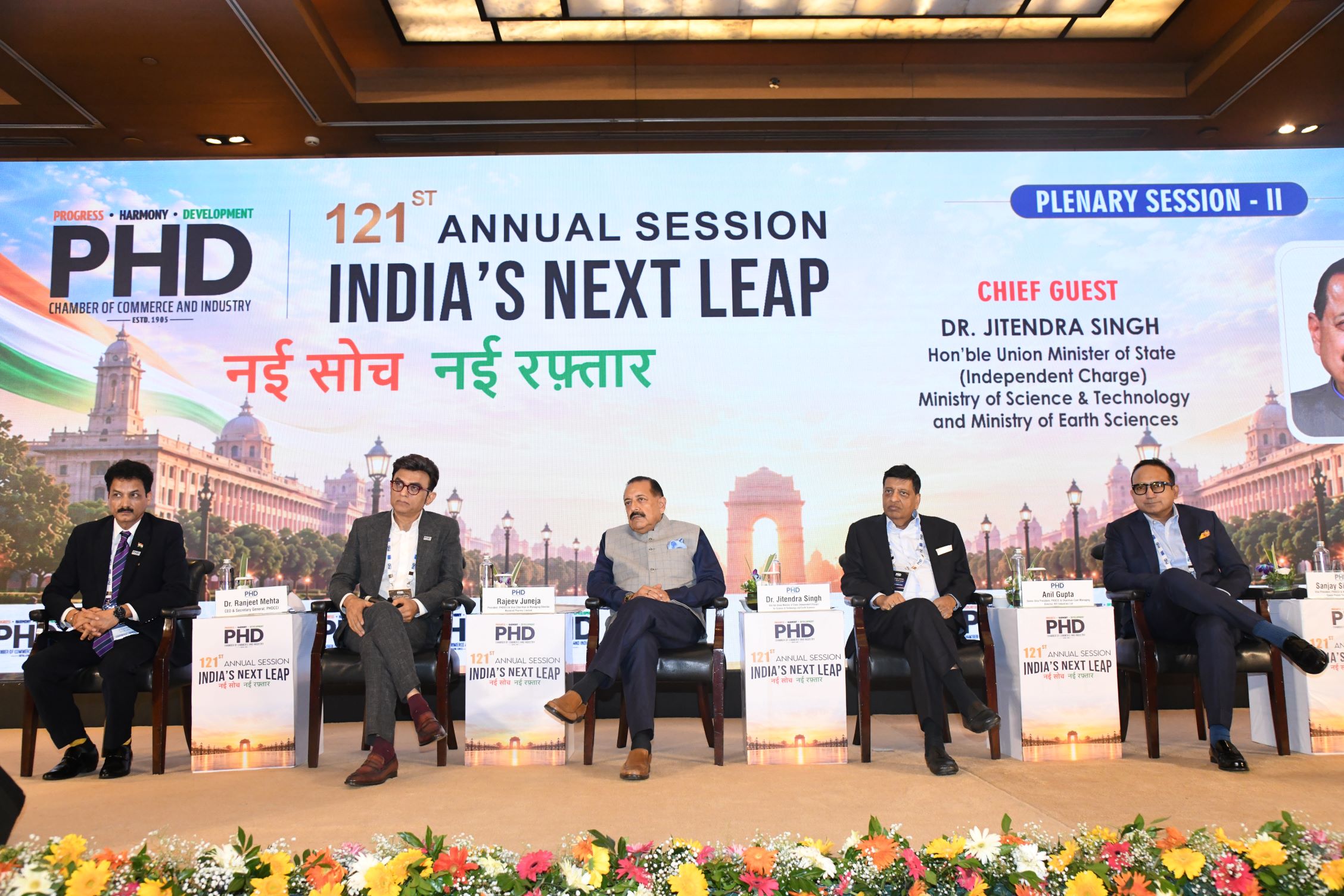
New Delhi | October 2026: Dr. Jitendra Singh, Hon’ble Union Minister of State (Independent Charge) for Science & Technology and Earth Sciences, Government of India, addressed the 121st Annual Session of the PHD Chamber of Commerce and Industry (PHDCCI) in New Delhi, highlighting that this moment is a celebration of PHDCCI as a century old institution and a witness to the journey of India, pre-independence to present.
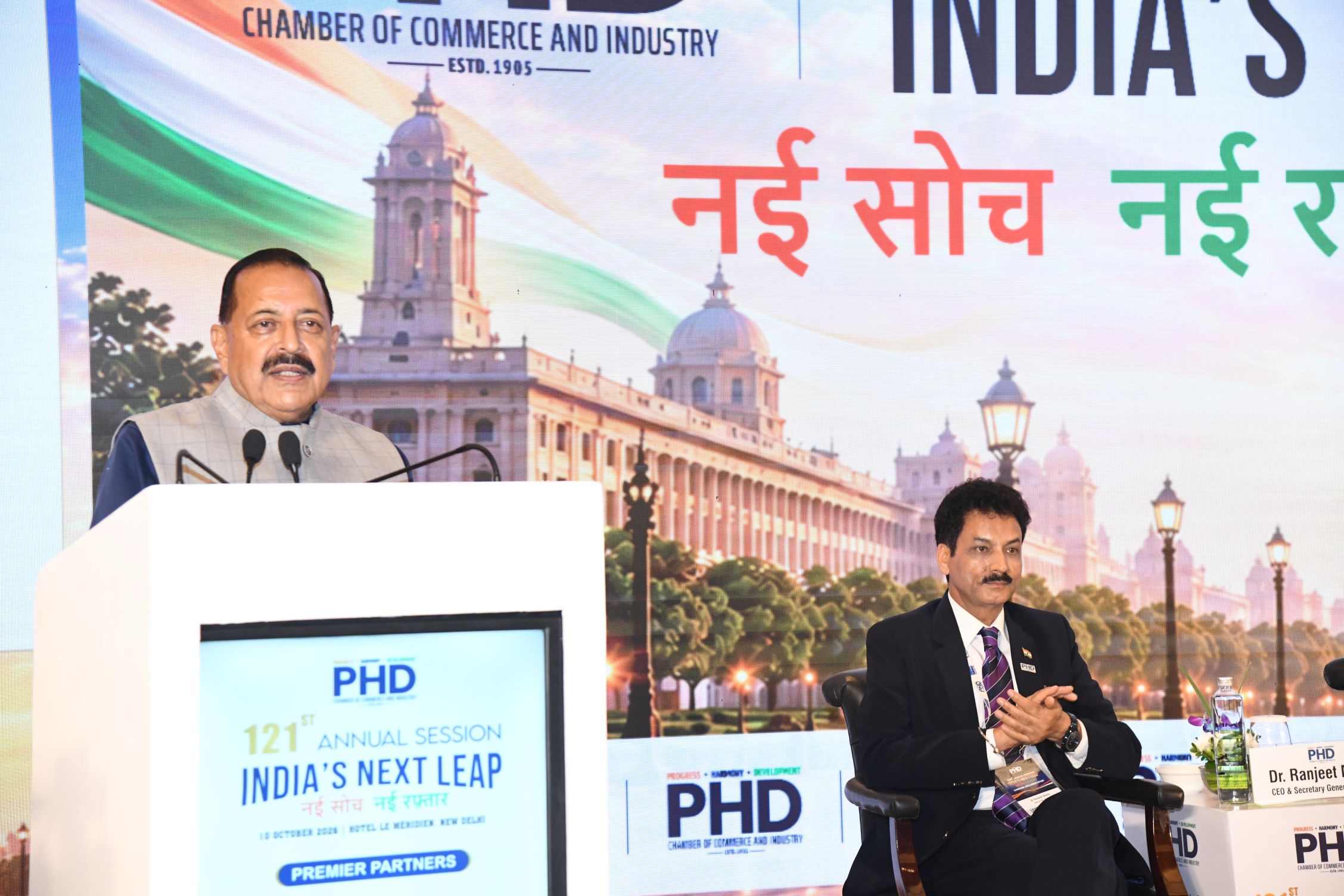
Dr. Jitendra Singh emphasised that India’s highest priority must be to transform itself from a consumer of technologies developed elsewhere into a creator, developer and manufacturer of advanced technologies.
Hon’ble Dr. Jitendra Singh said “PHDCCI serves as an important medium to accelerate and promote government initiatives and called for strong and early entry of industry in government projects”
Highlighting the growing importance of indigenous research, innovation and industrial capabilities, the Minister underscored the need for stronger and earlier linkages between the Government, scientific institutions, startups and private industry. He stressed that India’s ambition must extend beyond operating sophisticated technologies to designing, developing, manufacturing and commercializing them domestically.
The expansion of India’s space startup ecosystem provides an important example of this transition. Government data indicate that the number of space startups increased from one in 2014 to more than 400 by February 2026. This development illustrates the potential of policy reform, institutional support and private-sector participation to build new technology-intensive industries, he said.
Dr. Singh applauded the role of PHDCCI in creating an ecosystem for collaboration between Government and Industry to create next generation technology. He emphasized that the objective should be to build enterprises capable of creating globally competitive technologies, rather than limiting entrepreneurship to the adoption or adaptation of existing products. This requires access to research infrastructure, patient capital, testing facilities, skilled talent and predictable pathways from laboratory research to commercial deployment.
The Minister highlighted the National Quantum Mission (NQM), approved in April 2023 with an outlay of ₹6,003.65 crore over eight years, as an important example of India’s commitment to frontier technology development. The Mission focuses on four major areas: quantum computing, quantum communication, quantum sensing and metrology, and quantum materials and devices. Four thematic hubs have been established to coordinate research, infrastructure development, entrepreneurship and industry collaboration, he said.
The progress underscores the importance of coordination between Government, research institutions and industry in translating scientific objectives into technological outcomes. The Minister’s emphasis on synergy is particularly relevant to ensuring that research advances move beyond demonstrations towards scalable, reliable and commercially deployable systems.
The expansion of private participation in nuclear-related research and nuclear medicine can create opportunities in advanced diagnostics, oncology research, medical technologies and specialised equipment. Closer collaboration between public research institutions, healthcare providers, biotechnology companies and domestic manufacturers can also support the development of indigenous products and reduce critical import dependencies.
The Minister highlighted biotechnology as another important area for technology-led economic transformation. India’s BioE3 Policy—Biotechnology for Economy, Environment and Employment—provides a framework for strengthening high-performance biomanufacturing and developing bio-based products. The policy promotes collaboration among academia, startups, industry and research institutions across areas including bio-based chemicals, biopolymers, precision biotherapeutics, climate-resilient agriculture and other emerging applications.
India’s space programme demonstrates how sustained public investment and expanding private-sector participation can create new industrial capabilities. The growth of the space startup ecosystem, alongside the development of indigenous launch vehicles, satellite systems and space applications, reflects the potential for domestic technology creation.
Greater integration between biotechnology research, genetic research, nuclear medicine and pharmaceutical manufacturing can support the development of new diagnostic and therapeutic applications. Early participation by private companies can help identify commercial requirements, strengthen clinical and manufacturing capabilities, and accelerate the translation of research into products, he added.
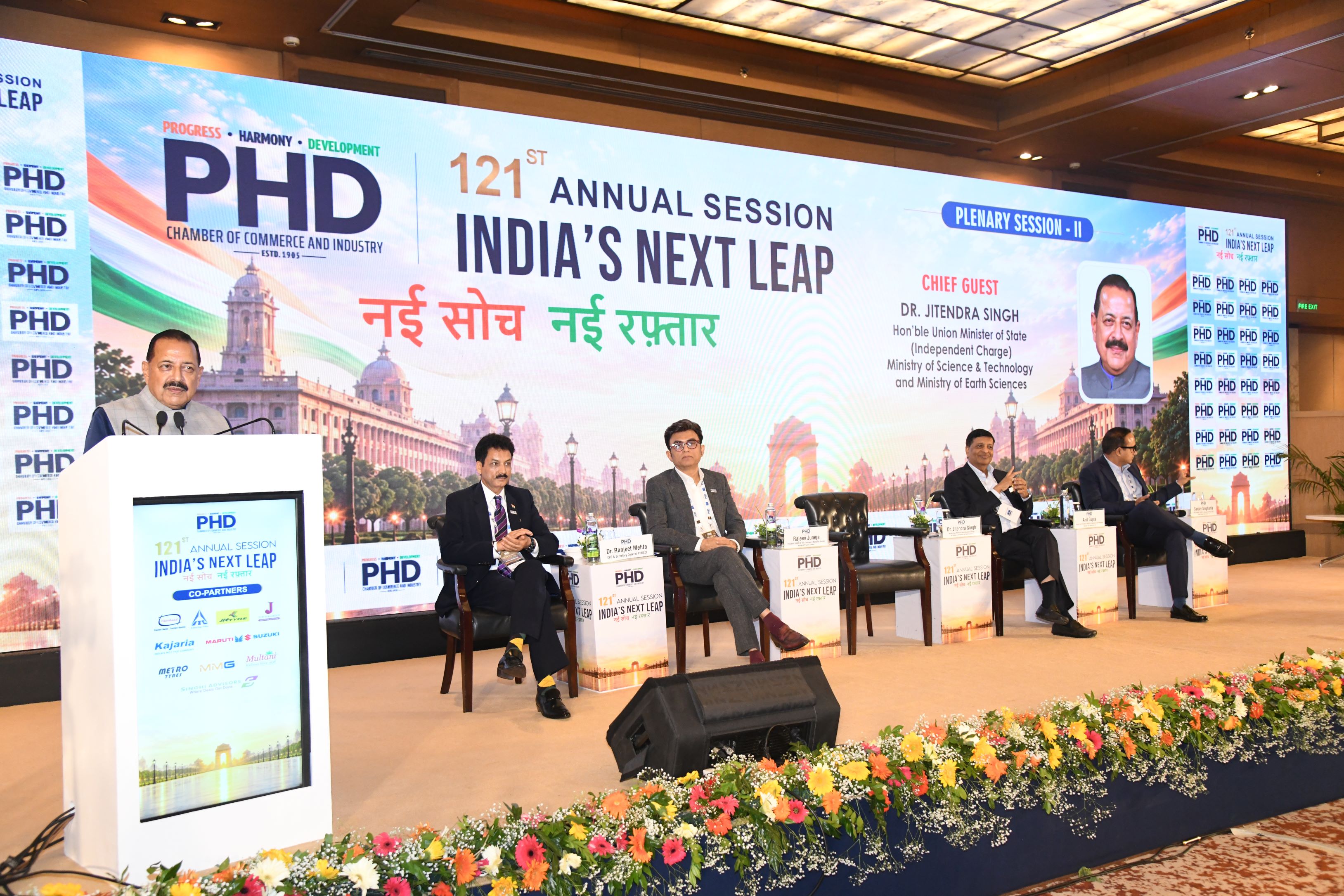
Setting the context and felicitating the Guest, Shri Rajeev Juneja, President, PHDCCI, said that Hon’ble Dr. Jitendra’s journey represents his commitment to science and technology. He emphasized PHDCCI’s proud 121 year old legacy with MSMEs being at its heart. He mentioned that making India a creator of technology, connecting entrepreneurship with science and technology and better public health care are the main areas where Hon’ble Dr. Jitendra’s guidance has been crucial. Shri Sanjay Singhania, Vice President delivered the Vote of thanks. Shri Anil Gupta, Senior Vice President and Dr Ranjeet Mehta, CEO & Secretary General, PHDCCI shared the Dais with Hon’ble Union Minister of State (Independent Charge), along with President and Vice President, PHDCCI.
10, Oct 2026
Business Correspondents Lead Nationwide Drive to Update Nominations in BSBD Accounts under DFS Special Campaign 6
National, October 10 2026: Across India’s rural and semi‑urban landscape, Business Correspondents (BCs) have taken up a critical challenge—ensuring that millions of Basic Savings Bank Deposit (BSBD) account holders update their nomination details. The implementation aims to provide depositors the flexibility to make nominations as per their preference, while ensuring uniformity, transparency, and efficiency in claim settlement across the banking system.
The campaign comes at a crucial time. As of 31 August 2026, nomination updation remains pending estimated in about 37% of BSBD accounts. A significant proportion of these accounts estimated at 78% are located in rural & semi-urban areas and 56% accounts are owned by Women, with limited financial literacy, migration, and lack of awareness about basic banking safeguards.
SBI has also launched a campaign this month to update nominations in 6.90 crore BSBD accounts, out of 18.62 crore eligible accounts, where the process is still pending. Around 55–60% of these accounts are in rural areas.
With this backdrop, BCs across the country have mobilised their Customer Service Points (CSPs) to reach out to customers, explain the importance of nomination, and update details in the Core Banking System (CBS). Early trends indicate that BCs have already begun updating nominee details for lakhs of accounts, with daily monitoring and field‑level reviews ensuring momentum throughout the campaign period.
This drive is not only about compliance it is about strengthening customer trust, and ensuring that rural households remain connected to the formal banking system. By guiding customers through the nomination process, BCs are helping transform inactive accounts into active, secure financial assets.
Ashish Misra, Deputy CEO, BLS E‑Services, said: “Our BCs have embraced this challenge with remarkable commitment. In rural India, many customers are unaware of essential processes like nomination. Through this campaign, we are not just updating records, we are educating families, strengthening financial security, promote customer convenience, and ensuring that every account holder understands the value of keeping their account active and future-ready.”
Mr. Dharanidhar Tripathy, Managing Director, Business Correspondent Resource Council (BCRC), said: “Nomination is a fundamental protection for every customer, especially in rural communities where financial literacy is still developing. This coordinated effort by BCs is helping bridge that gap. This is a significant step towards building a more informed and financially resilient rural India.”
Through this campaign, BCs supported institutionally by SBI and BLS E‑Services are helping ensure that every BSBD account holder has a nominated beneficiary and understands the importance of maintaining an active account. The initiative is expected to substantially improve the quality of financial inclusion across the country.
10, Oct 2026
Chandigarh University Launches Campus Tank Season 2 with US $15-Million Funding Pool to Help Young Innovators Take Ideas to Market; Accelerate India’s Start-up Growth
Chandigarh University Launches CU-IRP in Collaboration with IIT Madras as a Plug-and-Play R&D Hub to Connect Industry with Academic Research and Startups
CHANDIGARH, India, Oct. 10, 2026/PRNewswire/ — Chandigarh: Expanding funding opportunities for India’s next generation of entrepreneurs, Chandigarh University has launched Season 2 of Campus Tank – ‘India’s Next Unicorn’, India’s first university-led startup launchpad with a US$15-million funding pool up from US$6 million in Season 1, providing young innovators opportunity to pitch their ideas and access investors, mentorship and support to take their ideas to market and strengthen India’s start-up growth and build capacity to develop market-ready products and technology-driven enterprises.
The announcements was made on the second day of the national-level Incubator & Capital Summit 2026 and ISBACON 2026, organised by Chandigarh University Technology Business Incubator (CU-TBI) in association with the Indian Science and Technology Entrepreneurs Parks and Business Incubators Association (ISBA) at Chandigarh University that brought together 400 incubators institutions from over 20 States and Union Territories, 100 curated startups, 80 investors and more than 60 government, policy and industry delegates on a common platform to strengthen India’s startup and deep-tech capabilities. The launch builds on the overwhelming response to Season 1 that recorded 21,789 registrations from more than 1,200 cities including over 10,800 registrations from universities and colleges. The new season brings together eight investment partners including APNA, Venture Catalysts, Aeravti Ventures, PedalStart, Eaglewings, Faad, Be an Angel and Cube Founders Space.
Naveen Jindal, Member of Parliament and Chairman, Jindal Steel attended as Chief Guest alongside Member of Parliament (Rajya Sabha) and Chancellor of Chandigarh University, Satnam Singh Sandhu. The prominent among other dignitaries who participated in the summit were Kris Gopalakrishnan, Co-founder, Infosys, Nirmit Parikh, Group CEO, Apna, Hemant Malhotra, COO, Venture Catalysts (VCats), Prof V Kamakoti, Director, IIT Madras, Dr. Gaurav Raina, Professor, IIT Madras, Dr Preet Deep Singh, Public Policy, Amazon, Umesh V. Waghmare, Secretary, Department of Science and Technology (DST), Government of India among others.
Speaking on the occasion, Naveen Jindal, Member of Parliament and Chairman of Jindal Steel said, “India’s journey towards Viksit Bharat 2047 will be driven by youth of the nation pursuing their own ideas, passions and aspirations. Unlike 10 or 20 years ago, young people today have access to far greater opportunities, knowledge, funding and platforms to turn their ideas into reality. India does not lack talent or imagination what young innovators need is the right opportunity, an encouraging environment and support to realise their potential. Initiatives such as Chandigarh University Innovation and Research Park, in collaboration with IIT Madras, and Campus Tank Season 2 can help bridge this gap by connecting promising founders with investors, mentors and resources.”
“I would leave young entrepreneurs with three thoughts, start before you feel completely ready, test your ideas, fail early and learn fast, think big, but build solutions that address real problems and genuine needs and stay rooted because success without service to society is incomplete. Pursue your ideas with passion but remain open to criticism and learn from setbacks. Success takes time and requires conviction, teamwork and perseverance as I experienced during my decade-long effort to secure the right to fly the national flag. Enjoy the journey, not just the outcome. And when you succeed, take others along with you. In a country as large and diverse as India, our progress must also create opportunities for those who are less fortunate.”
Rajya Sabha MP and Chandigarh University Chancellor Satnam Singh Sandhu said, “Campus Tank is an initiative by Chandigarh University aimed at providing young people from small towns and villages with a platform, mentorship and investment opportunities to turn their startup ideas into reality. A nation progresses by drawing inspiration from the vision of its national leadership. After Independence, people spent much of their time striving to meet basic needs. However, in 2014, the country witnessed a new ray of hope with the vision of Viksit Bharat and Aatmanirbhar Bharat. Today, the world’s perception of India and Indians has changed and every Indian is filled with confidence and believes that India will become a developed nation by 2047. Inspired by Prime Minister Narendra Modi’s vision, Chandigarh University recognized its responsibility in nation-building and launched initiatives such as Campus Tank. He believes that the contribution an educational institution can make to nation-building is difficult for any other institution to replicate. It is essential to transform the potential of young people into opportunities and contribute to building a self-reliant and developed India.”
Nirmit Parikh, Group CEO, Apna said, “The first season of Campus Tank was a huge success and the second season of Campus Tank will be even better with three key themes. First, with the advent of AI, jobs in India and across the world need a lot of reskilling and upskilling. So lots of startups will come up inside that space. Secondly, AI models need pre-training and post-training, so I’ll be excited to see startups coming inside that space. And the third thing is applied AI. So I’m excited about startups in these three areas. I strongly believe that India will not only build applied AI solutions for India but also for the world,”.
Hemant Malhotra, COO, Venture Catalysts (VCats) said, “The real opportunity lies in discovering promising founders beyond metro cities and supporting them at the right time. India’s next unicorn could emerge from anywhere, and what matters is identifying founders solving real problems, demonstrating customer traction and understanding their markets. At Venture Catalysts, our commitment goes beyond funding to mentoring startups, strengthening their go-to-market strategies and connecting them with the right mentors and incubation support to scale their businesses. Our participation in Campus Tank Season 2 reflects a long-term commitment to Chandigarh University and its startups. Together, we aim to help promising founders access the capital, guidance and support they need to build scalable businesses and take their ventures to the next level.”
India Needs Partnerships for Innovation, IIT Madras-Chandigarh University MoU to Drive innovation at Scale, says Dr Gaurav Raina, Professor, IIT Madras
Dr Gaurav Raina, Professor, IIT Madras said, “IIT Madras Research Park which has incubated 575 startups valued at over 8.5 billion US dollars, generated more than 10,000 jobs, in past 15 years. Our next vision is to have a startup a day and our 2030 vision is to have an IPO a month. Given the size of our country and the problems we have, there’s an opportunity over the next 20-25 years to have 10,000 unicorns. For this, just building platforms for innovation is not going to be enough. For innovation at scale, we don’t need just platform but partnerships also. And it is in that context that we have actually an MOU between Chandigarh University and the IIT Madras Innovation and Research ecosystem to actually build innovation at scale,’
Chandigarh University Launches CU-IRP in Collaboration with IIT Madras as a Plug-and-Play R&D Hub to Connect Industry with Academic Research and Startups
Complementing the Campus Tank Season 2 announcement, Chandigarh University launched the Chandigarh University Innovation & Research Park (CU-IRP) in collaboration with IIT Madras which will serve as a plug-and-play R&D hub for industry, bringing corporate research centres closer to university researchers, faculty, students and startups to facilitate industry-linked research, product development and the translation of innovations into market-ready solutions. The CU-IRP launch was attended by MP Satnam Singh Sandhu and MP Naveen Jindal, along with representatives of IIT Madras. The launch also included the announcement of a ₹50-crore innovation and startup fund to provide financial support to promising ventures and strengthen the commercialisation of research and the development of startups.
Modelled on the IIT Madras Research Park, CU-IRP’s Phase 1 pilot is planned across 30,000–40,000 square feet, providing dedicated space for research, incubation and R&D to bring industry, academic expertise and startups together to develop market-ready solutions. It will bring together Centres of Excellence and advanced laboratories, C-Hub’s incubation and venture infrastructure, and industry consultancy and sponsored research. Planned facilities include MakerSpace; Frontier Labs focused on Artificial Intelligence, Bose-Einstein Quantum and Robotics; and industry anchor laboratories in GeoAI, Automation & Exoskeleton, Biotech and Agritech. A Product Studio and an Intellectual Property and Technology Transfer Office will further support product development and the transfer of research innovations towards commercial applications. CU-IRP will also serve as a platform for credit-based participation by faculty and students in industry projects, enabling companies to work directly with academic teams on research, technology development and product innovation.
Campus Tank Season 1 Winners Announced; Krvvy, Offlyn and Medoc Health Emerge as Winners
The programme on the second day included the announcement of the winners of the Campus Tank Season 1. The Campus Tank Season 1 recognized three startups for their innovation and business potential.
Krvvy was adjudged as the winner which was co-founded by Thapar University engineering graduates Yash Goyal and Anant Bhardwaj. The women’s innerwear and shapewear brand focuses on comfort, fit and products designed around Indian body types. It received a proposed ₹4-crore investment commitment from Venture Catalysts against a ₹12-crore funding round and a ₹60-crore valuation.
Offlyn, founded by Kumar Ayush Sinha, a postgraduate in Technology and Business Management from Masters’ Union and R. V. College of Engineering alumnus Arpit Arora is a platform for discovering, booking and hosting offline experiences including workshops, supper clubs and social gatherings. It received a proposed funding allocation of ₹3.85 crore at a ₹25-crore post-money valuation.
Medoc Health, founded by Chandigarh University alumnus Utkarsh Luthra, develops hospital management and healthcare technology. With a proposed ₹1-crore funding allocation, it serves 98 hospitals across five states and reported ₹1.26-crore revenue in FY2025–26, with an estimated valuation of ₹24 crore. Together, the three winners span consumer products, offline experiences and healthcare technology.
ICS26 Demo Day featured startup pitches across four tracks, followed by recognition of four track winners and an Investor’s Choice award. The summit also included an industry roundtable on “The Future of R&D on Indian Campuses”, examining the role of industry partnerships in university research and innovation.
About Chandigarh University
Chandigarh University is a NAAC A+ Grade University and QS World Ranked University. This autonomous educational institution is approved by UGC and is located near Chandigarh in the state of Punjab. It is the youngest university in India and the only private university in Punjab to be honoured with A+ Grade by NAAC (National Assessment and Accreditation Council). CU offers more than 109 UG and PG programs in the field of engineering, management, pharmacy, law, architecture, journalism, animation, hotel management, commerce, and others. It has been awarded as The University with Best Placements by WCRC.
Website address: https://www.cuchd.in/
 View original content to download multimedia:https://www.prnewswire.com/in/news-releases/chandigarh-university-launches-campus-tank-season-2-with-us-15-million-funding-pool-to-help-young-innovators-take-ideas-to-market-accelerate-indias-start-up-growth-302905041.html

10, Oct 2026
Pune Vet Performs Urinary Bladder Tumour Removal (TURBT) on Shih Tzu Dog Using Minimally Invasive Surgery
Pune: Blood in the urine in an elderly dog can easily be mistaken for a urinary infection or another routine urinary problem. In Angel’s case, the symptom persisted for nearly six months. The 15-year-old female Shih Tzu, weighing just 5.6 kg, was eventually found to have two tumours, each measuring 2 cm, in her urinary bladder, which were later diagnosed as transitional cell carcinoma (TCC).
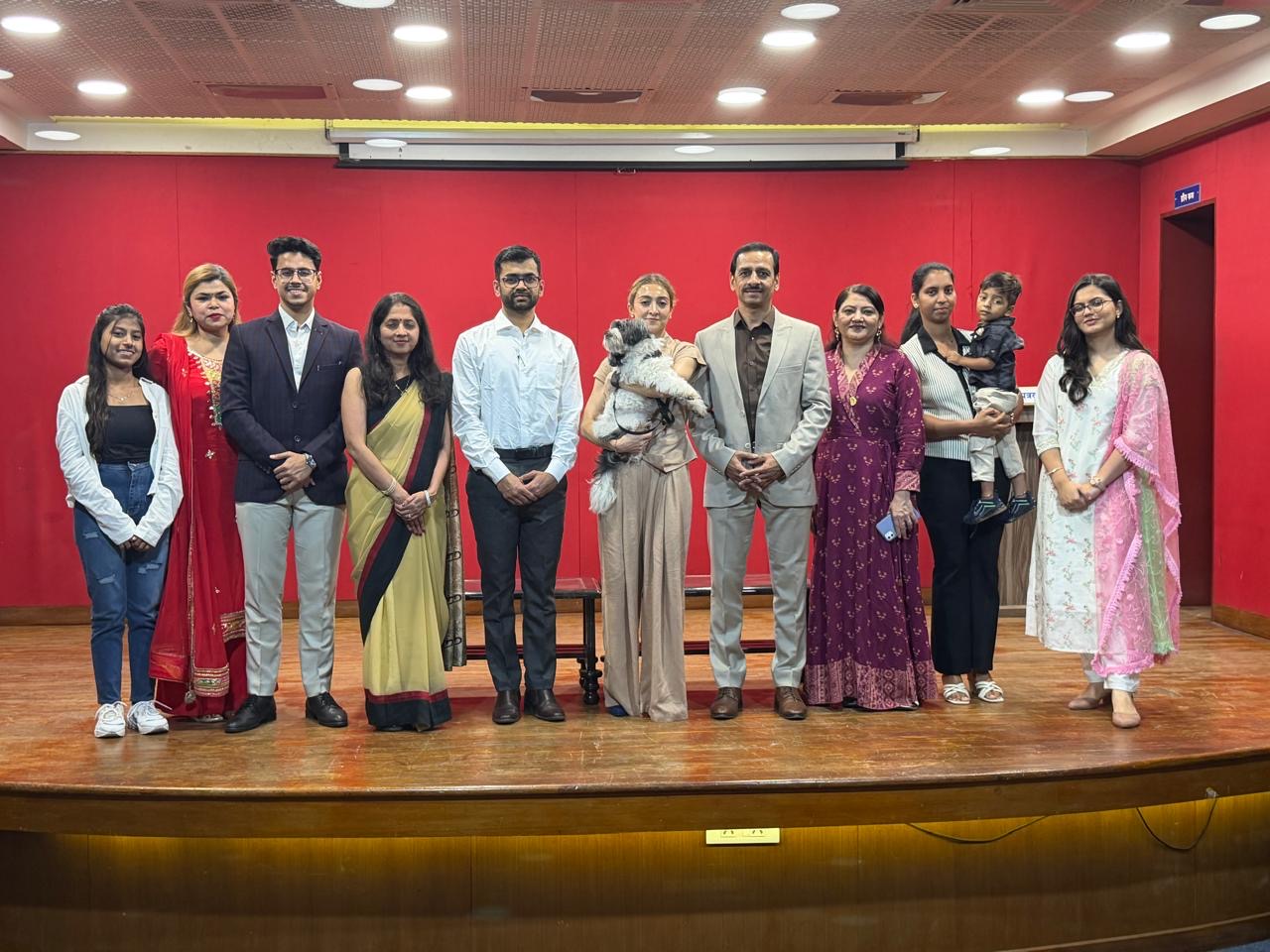
A team led by Dr. Narendra Pardeshi, Veterinary Minimally Invasive Laparoscopic Surgeon, along with Dr. Oojas Pardeshi, Veterinary Assistant Surgeon; Dr. Radheshyam Chaudhari, Urosurgeon(Humans Uro surgeon); Mrs. Reena Haribhat, Veterinary Assistant; Ankita Dwivedi; Tanuja Mungale; and budding veterinarian Anwesha Bhat, at The Small Animal Clinic, Pune, performed a minimally invasive Transurethral Resection of Urinary Bladder Tumour (TURBT), reported as the first such procedure performed in India. The approach enabled the team to remove the tumours through the natural urinary passage, avoiding conventional open bladder surgery and reducing surgical trauma and blood loss. Angel’s prolonged health struggle began with a symptom that could easily have been mistaken for a routine urinary problem. For nearly six months, the 15-year-old Shih Tzu continued to pass blood in her urine, even though her appetite remained normal. Concerned by the persistent bleeding, her pet parent, Miss Arora, sought further medical evaluation at The Small Animal Clinic, Pune, on September 11. A urine examination detected cancerous cells, prompting the veterinary team to investigate further. A CT scan subsequently revealed two aggressive tumours, each measuring 2 cm, in Angel’s urinary bladder, which were later diagnosed as transitional cell carcinoma (TCC). Considering Angel’s age and small size, the operating team explored a minimally invasive option that could remove the tumours while reducing surgical trauma.
Dr. Narendra Pardeshi, Veterinary Surgeon at Dr. Pardeshi’s Small Animal Clinic, Pune, said, “Angel’s case required careful consideration because she is 15 years old and weighs only 5.6 kg. While her appetite was normal, the fact that she had been passing blood in her urine for several months could not be ignored. Our investigations confirmed that this was not simply a urinary infection or stone, but two bladder tumours, which were later identified as transitional cell carcinoma. Considering her age, small size, and the location of the tumours, we wanted to avoid putting her through a major abdominal surgery if a safer alternative was possible. This led us to choose Transurethral Resection of Urinary Bladder Tumour (TURBT), a minimally invasive approach that allowed us to reach the bladder through the natural urinary passage using a resectoscope.”
The procedure, carried out on September 11, is reported by the team to be the first TURBT performed in India, offering a minimally invasive approach to bladder tumour removal in dogs.
Dr. Narendra Pardeshi further explained, “The minimally invasive procedure involved passing a camera through the female genital and urinary tract into the bladder, followed by the insertion of a small resectoscope. Using a monopolar system, we carefully removed the tumours. The procedure lasted around 2.5 to 3 hours, with blood loss of less than 5 mL. In a dog weighing just 5–6 kg, conventional open surgery could involve higher blood loss, making the minimally invasive approach particularly valuable for an elderly and small-sized patient. The procedure was performed under anaesthesia with advanced ventilatory support, and Angel was able to walk within around 15 minutes after the operation. She was discharged the same day. Her blood in the urine started returning to normal over the next two to three days, and she has not had further bleeding since then. It has now been around three weeks, and she is active, alert, and doing well. This approach, which is routinely used in human medicine, allowed us to apply minimally invasive technology to a veterinary bladder tumour and avoid the trauma associated with conventional open surgery.”
The tumour tissue has been sent for histopathological evaluation, while staging is currently underway. Depending on the final staging and pathology findings, the team may consider administering anti-cancer medication directly into the bladder rather than using systemic chemotherapy, if clinically appropriate.
Dr. Pardeshi added, “Bladder cancer is seen in dogs, but it is not always diagnosed early because blood in the urine can initially be attributed to infection, stones, or other urinary problems. Angel’s case shows why persistent blood in the urine should not be ignored, particularly in an older dog. The important aspect of this case is not only the diagnosis but also the minimally invasive way in which the tumours could be treated. We hope that such techniques will open new possibilities for veterinary patients who may otherwise have to undergo more invasive surgery.”
“Angel has been part of our family for so long. Seeing blood in her urine for months was worrying, but we are relieved that Dr. Narendra Pardeshi and his team identified the problem and treated her. We are grateful for the care Angel received,” concluded Miss Ankita Arora, Angel’s pet parent.


