


29, Oct 2026
From Pitch to Pilot: Lee Kuan Yew Global Business Plan Competition Opens Global Search for Deep Tech Urban Solutions and Sustainability focused Founders
- Finalists compete for over S$2.5 million (US$2 million) in prizes and gain a pathway to SMU’s Urban SustaInnovator accelerator and US$10 million USI Fund
SINGAPORE, Oct. 29, 2026 /PRNewswire/ — For many deep-tech start-ups tackling urban and sustainability challenges, the biggest hurdle is not developing breakthrough technologies, but finding the customers, partners and opportunities to deploy them at scale.
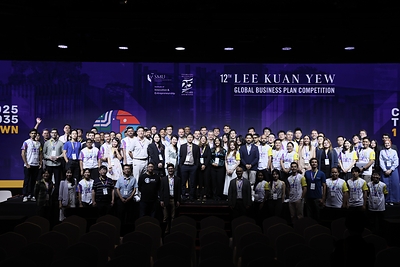
Addressing this challenge, the 13th Lee Kuan Yew Global Business Plan Competition (LKYGBPC) today opened applications for university founders and recent graduates seeking to turn frontier ideas into real-world impact. Organised by Singapore Management University’s Institute of Innovation & Entrepreneurship (SMU IIE), LKYGBPC is one of Asia’s most globally representative deep-tech start-up competitions, spanning 12 focus areas including climate tech, energy, food and land use, urban mobility, longevity and healthtech, and sustainable materials and circularity.
Fifty finalists will be flown to Singapore 28 September to 1 October 2027 to compete for over S$2.5 million in prizes and take part in an Innovation Festival featuring investor engagement, mentorship, and connections with corporate and ecosystem partners.
Beyond the Competition: A Gateway to SMU’s Urban SustaInnovator (USI) accelerator
Selected LKYGBPC finalists can join SMU’s Urban SustaInnovator (USI) accelerator, launched in 2025, which supports start-ups through market access, pilot projects and strategic introductions across Asia. In May 2026, SMU IIE launched the USI Fund to back promising ventures as they pilot and scale.
“Founders of breakthrough technologies can create value only when they reach the people, industries, and communities they are designed to serve. SMU created LKYGBPC as a platform to help founders bring their innovative ideas to life by connecting them with the partners, markets and opportunities needed to turn innovation into real-world impact. Now, through the USI programme and USI Fund, we offer a post-competition pathway to pilot, scale, and raise capital throughout Asia,” said Rony Palathinkal, Head of the LKYGBPC and Urban SustaInnovator at SMU IIE.
One of the biggest challenges for sustainability start-ups is getting access to the right partners to validate and deploy new technologies.
SMU is uniquely positioned to help startups make these connections with its network of Overseas Centres in Bangkok, Jakarta, Ho Chi Minh City and Shenzhen, and its International Advisory Councils in eight countries. “SMU’s expansive network of partners from industry, government and community across Asia enables us to forge connections that enable startups to cross borders and scale their innovative solutions,” says Professor Sun Sun Lim, SMU’s Vice President of Partnerships and Engagement, and Lee Kong Chian Professor of Communication & Technology.
Singapore-based Standard Physics (formerly Inviscid AI), founded by Qiu Ziming and Kabir Jain, was a finalist in the 12th LKYGBPC before joining Y Combinator’s Winter 2026 cohort and SMU’s inaugural Urban SustaInnovator (USI) accelerator. The startup uses physics-informed AI and IoT-powered digital twins to optimise energy efficiency in buildings and data centres. Through USI, it secured a pilot with The GEAR by Japanese construction giant Kajima and is discussing three more opportunities. It has also raised US$2.3 million in seed funding led by Square Peg Capital and is preparing to launch an AI-powered agentic engineering platform. Jain credits Y Combinator’s start-up expertise and USI’s regional network for supporting its growth.
“The accelerators were very complementary. YC was good at getting us from zero to one, and then USI has been very helpful in getting us from one to 10. The USI team can make the right introductions and help you grow,” said Jain.
Singapore is strengthening its position as a global sustainability innovation hub, providing start-ups with opportunities to pilot, validate and scale technologies across Asia and beyond. This government-led ambition is backed by the S$37 billion RIE 2030 plan, including S$10.8 billion for mission-oriented research, and a S$40 million USS Translation Fund to support the development and commercialisation of urban and sustainability solutions.
Building a Global Pipeline of Innovation
Established by SMU in 2002, LKYGBPC is a biennial competition open to start-ups with at least one founder currently enrolled in a university programme or who graduated within the past five years. Its 12th edition in October 2025 attracted over 1,500 entries from founders representing 1,200 universities across 91 countries. Finalists from the 9th to 12th editions have collectively raised over S$1 billion. Finalists from the 9th to 12th editions have collectively raised over S$1 billion. Finalists from the 9th to 12th editions have collectively raised over S$1 billion.
Said Shirley Wong, Entrepreneur-in-Residence at SMU IIE, Chairperson of the 13th LKYGBPC Advisory Committee, and Managing Partner of TNF Ventures: “As Asia continues to urbanise, the region presents both complex challenges and significant opportunities for innovation. LKYGBPC brings together founders worldwide and connects them with Singapore’s ecosystem of industry, investors and institutions to accelerate solutions with regional and global impact.”
Applications are open at https://iie.smu.edu.sg/lkygbpc and close on 31 March 2027.
 View original content to download multimedia:https://www.prnewswire.com/in/news-releases/from-pitch-to-pilot-lee-kuan-yew-global-business-plan-competition-opens-global-search-for-deep-tech-urban-solutions-and-sustainability-focused-founders-302920237.html

- 0
- By PRNewswire

29, Oct 2026
ESENTIA increases Adjusted EBITDA in 3Q26, reduces leverage and advances its growth strategy
- Adjusted EBITDA reached US$86.0 million in 3Q26, up 1.3% from 3Q25, and US$262.5 million in the first nine months of the year, an increase of 3.5%.
- The Net Debt / LTM Adjusted EBITDA ratio declined to 3.9x as of September 30, 2026, from 4.1x at year-end 2025.
- The Company is advancing its Expansion Plan and expects to expand its presence toward the Pacific region through the signing of an agreement to acquire EOM, owner of the Guadalajara–Manzanillo gas pipeline, subject to regulatory approvals and other closing conditions.
MEXICO CITY, Oct. 29, 2026 /PRNewswire/ — ESENTIA Energy Development, S.A.B. de C.V. (BMV: ESENTIA) (“ESENTIA” or the “Company”), announced its unaudited financial results for the third quarter of 2026, reporting Adjusted Revenues of US$111.7 million and Adjusted EBITDA of US$86.0 million, while strengthening its financial position and continuing to advance its energy infrastructure expansion strategy. Read the full report here. https://esentiaenergy.com/wp-content/uploads/2026/10/Earnings_Release_3Q26_ENG.pdf
During the quarter, Adjusted EBITDA increased 1.3% year over year to US$86.0 million, driven mainly by the natural gas marketing business, which benefited from higher sales volumes and a higher contribution margin, as well as increased interruptible transportation services and a greater contribution from joint ventures, alongside the stable base provided by long-term transportation contracts.
The Net Debt / LTM Adjusted EBITDA ratio declined to 3.9x from 4.1x at year-end 2025, reflecting growth in Adjusted EBITDA and a reduction in gross debt.
Net income for the quarter totaled US$24.5 million, down 13.1% from the same quarter of the prior year, mainly due to a higher tax burden. In the first nine months of the year, net income increased 18.9% to US$65.9 million, while natural gas sales volumes grew 15%, with a 14% increase in contribution margin.
“As we close out 2026 and look ahead to 2027, our priorities are clear: continue delivering results, complete Phase I, close and integrate EOM, and develop with discipline the opportunities that support ESENTIA’s long-term growth,” said Daniel Bustos, Chief Executive Officer of ESENTIA.
ESENTIA continues to execute its Expansion Plan as expected. Phase I remains on track to achieve mechanical completion of the Aguascalientes Compression Station in the first quarter of 2027, in line with budget, with 100% of its capacity covered by firm contracts. Phase II, which is expected to enter service in the second quarter of 2028, already has firm contracts covering 56% of its capacity.
In this context, the agreement to acquire EOM, owner of the Guadalajara–Manzanillo gas pipeline, represents a significant step in the Company’s expansion strategy toward the Pacific region and complements its long-term growth outlook. The Company expects to finance the acquisition entirely with its own funds, with no additional debt, and to complete it during the first half of 2027, subject to regulatory approvals and other closing conditions.
Adjusted Revenues and Adjusted EBITDA are non-IFRS measures; their definitions and reconciliations are included in the quarterly report. This press release contains forward-looking statements that are subject to risks and uncertainties. Please refer to the quarterly report for further information.
About ESENTIA Energy Development:
ESENTIA Energy Development is a leading company in Mexico’s energy sector, specializing in natural gas transportation and marketing. With more than 20 years of experience, we develop infrastructure projects that drive growth and broaden access to energy, contributing to Mexico’s well-being and sustainable development. We operate Mexico’s largest privately owned interconnected natural gas system, delivering reliable, low-cost natural gas from Waha, Texas, through central Mexico to the country’s main industrial regions. At ESENTIA Energy Development, we operate to the highest safety standards and maintain a strong commitment to sustainability and respect for the communities where we operate. For more information visit www.esentiaenergy.com
Contact Information
Lisa Carrillo
Communications Manager
lcarrillo@esentia-energy.com
Patricia Fid Martín
Senior Director, Investor Relations and Capital Markets
pfid@esentia-energy.com
 View original content to download multimedia:https://www.prnewswire.co.uk/news-releases/esentia-increases-adjusted-ebitda-in-3q26-reduces-leverage-and-advances-its-growth-strategy-302923085.html

29, Oct 2026
UN Chief Expresses Grief Over Deadly Train Collision in Spain
UNITED NATIONS, Oct 29: United Nations Secretary-General António Guterres has expressed profound sorrow over a deadly train collision in central Spain that reportedly claimed at least 68 lives and left dozens of others injured.

In a statement issued through his spokesperson, Stéphane Dujarric, Guterres extended his heartfelt condolences to the bereaved families and conveyed his solidarity with the people and government of Spain following the devastating accident.
The tragedy occurred on the Madrid–Seville railway corridor in Toledo province on Wednesday morning, when a state-operated Renfe high-speed train reportedly struck the rear of a stationary Iryo passenger train. The collision triggered a major emergency response, with rescue personnel and medical teams rushing to the scene to assist the injured and search for survivors.
Spanish Prime Minister Pedro Sánchez announced three days of official national mourning in response to the disaster. Visiting an emergency command centre near the crash site, Sánchez pledged a thorough judicial and technical investigation to establish the circumstances that led to the collision.
“We will get to the bottom of this,” Sánchez said, stressing that authorities would examine every possible factor, including human error, operational lapses and potential failures in railway safety systems.
The prime minister also emphasised that the government’s immediate priorities were to rescue survivors, provide medical treatment to the injured and support families affected by the tragedy. Authorities are expected to assess the physical and technical evidence as part of the investigation.
Preliminary reports indicate that the two trains were operating within the same railway corridor when the collision occurred. Investigators are working to determine how the trains came to occupy the same section of track and whether any procedural or technical shortcomings contributed to the disaster.
The incident has prompted renewed attention to railway safety and emergency preparedness, while the country mourns those who lost their lives. Officials have pledged accountability if the investigation identifies negligence or failures in safety procedures.
As rescue and recovery efforts continue, Spain faces a period of national grief, with authorities focused on supporting survivors, informing families and establishing the facts behind one of the country’s most devastating recent rail tragedies.
29, Oct 2026
MITTI LABS & SALESFORCE PARTNER TO SCALE WATER-SAVING RICE FARMING PRACTICES THAT REDUCE METHANE EMISSIONS
Salesforce will purchase 500,000 high-integrity, data-backed methane reduction credits from Mitti Labs by 2030, bringing water resilience to India’s smallholder farmers.
SAN FRANCISCO and BENGALURU, India, Oct. 29, 2026 /PRNewswire/ — Deep-tech company Mitti Labs today announced a five-year carbon credit offtake agreement with Salesforce to scale Climate-smart rice farming across tens of thousands of smallholder farms in India. Coming just weeks after Mitti Labs’ offtake agreement with Google, this new partnership shows the growing corporate demand for satellite-verified rice methane credits as a scalable offset solution with near-term impact.

Climate-smart rice farming replaces traditional continuous irrigation with alternate irrigation, where farmers let their fields dry out during safe windows in the growing cycle. This low-cost practice shift helps the world grow more rice with less water, while abating methane emissions derived from microbe growth in oxygen-free soils. Alternate irrigation can cut methane emissions by up to 50% and water usage by up to 40%, without affecting yields.
Agriculture is responsible for 40% of all human-induced methane emissions, which are a powerful driver of climate change. Methane traps 85 times more heat than CO₂ but only stays in the atmosphere for a decade, meaning that every ton that is not emitted today delivers a fast, tangible reduction in near-term warming.
Commitments from companies like Salesforce are helping Mitti Labs scale these practices. Mitti Labs plans to scale its operations to meet this demand: by 2028, it plans to issue 2 million credits per year from its projects located in India and Southeast Asia.
“Salesforce is a founding member of the Beyond Alliance’s Superpollutant Action Initiative. We know that superpollutant reduction is one of the best ways to slow near-term warming, and we are committed to directing capital toward high-impact mitigation efforts. Reducing methane emissions from rice farming is a scalable climate solution that also helps preserve water resources for future generations,” said Jamila Yamani, PhD., Director of Climate & Energy at Salesforce.
Every credit delivered under the agreement will be backed by field-level evidence and satellite-verified field dry-downs. Mitti Labs’ GeoAI platform, developed with support from NASA, fuses high-resolution satellite radar with field-collected ground truth to track flooding, soil moisture and crop health across individual smallholder plots. This provides credit buyers with transparent, independently verifiable proof of impact at a scale that manual monitoring is not able to match.
Beyond reducing methane emissions, the partnership is projected to save 700 billion liters of water, or roughly eighteen months of Bengaluru’s annual supply, easing pressure on groundwater retrievals in regions where rice farming competes with urban and industrial water usages.
“Carbon credit buyers are increasingly asking not just what impact a project delivers, but how they can see it for themselves. Having Salesforce join Google in backing rice methane reductions shows that high-integrity, data-verified agricultural credits are becoming a core part of serious climate offsetting strategies. This agreement lets us reach tens of thousands more farmers with practices that cut emissions, save water and strengthen livelihoods,” said Xavier Laguarta, co-founder at Mitti Labs.
With Salesforce’s support, Mitti Labs will deepen its engagement with rice farming communities and expand the ‘digital twins’ GeoAI datasets that support the roll-out of its programs. As demand for the world’s staple crop continues to grow and rainfall patterns become less predictable, the next five years in the partnership offer a chance to strengthen food security and realize the full potential of rice farming as a climate solution.
About Mitti Labs
Mitti Labs combines satellite technology, AI and field operations to create a water and climate resilient future for rice farming. To date, its programs have saved 500 billion liters of water — the equivalent of Bengaluru’s annual supply. In July 2026, Mitti Labs received an ‘A’ rating from leading ratings agency Sylvera in recognition of its rigorous implementation and measurement protocols.
Mitti Labs customers include global technology, service, food and agriculture businesses such as Google, Cool Effect, Ebro Foods, and Syngenta. Since launching in 2023, Mitti Labs has grown to 150 employees and secured $12.5 million from investors such as Lightspeed India, Aramco Ventures, Voyager Ventures, Godrej Industries Group, Cisco Foundation, Francis Family Fund, and Volta Circle. Visit mittilabs.earth to learn more.
 View original content to download multimedia:https://www.prnewswire.com/in/news-releases/mitti-labs–salesforce-partner-to-scale-water-saving-rice-farming-practices-that-reduce-methane-emissions-302919109.html

29, Oct 2026
Inntot Recognized as an official STMicroelectronics Authorized Partner for Software-Defined Radio Digital Radio Receiver Solutions
Collaboration brings together STMicroelectronics’ automotive tuner technology and Inntot’s Software-Defined Radio IP to support cost-effective, multi-standard digital radio solutions
KOCHI, India, Oct. 29, 2026 /PRNewswire/ — Inntot Technologies, a leading provider of Software-Defined Radio (SDR) and in-cabin audio technologies, today announced that it has been recognized as an official STMicroelectronics Authorized Partner. The collaboration combines STMicroelectronics’ high-performance automotive radio tuners with Inntot’s highly competitive and optimized SDR software IPs, offering global Automotive Tier-1 suppliers and automakers a complete, cost-effective digital radio receiver solution.

The combined solution enables automakers and Tier-1 suppliers to support multiple digital radio standards, including Digital Radio Mondiale (DRM), Digital Audio Broadcasting (DAB/DAB+) and China Digital Radio (CDR), within automotive infotainment systems without the need for dedicated hardware decoders.
As the global automotive industry shifts toward integrated cockpits and Software-Defined Vehicles (SDVs), Tier-1 suppliers face increasing pressure to lower Bill of Materials (BOM) costs while maintaining high audio performance.
By pairing STMicroelectronics’ RF tuner ICs (such as the STA709/STA710 series, TDA7707/TDA7708 series) with Inntot’s high performing, lightweight, low-CPU-usage SDR stacks, the solution offers several benefits:
- Reduced Hardware Complexity: Eliminates dedicated baseband Integrated Circuits (ICs), minimizing board space, power consumption, and thermal dissipation.
- Multi-Standard Global Coverage: Supports key broadcast standards across global regions (Europe, APAC, GCC, India, and the Americas) via software configuration.
- Faster Time-to-Market: Pre-validated middleware, hardware abstraction layers and OS abstraction layers accelerate system integration for Automotive Grade Linux (AGL), Android Automotive OS, and RTOS environments.
- Seamless Switching and Rich Data Services: Fully supports advanced features including seamless blending from analog to digital and vice-versa, alerts including emergency warning, album art/slideshows, Service and Program Information (SPI) and TPEG traffic notifications.
“Automotive radio is increasingly becoming a software-defined experience, giving automakers greater flexibility to address different standards and markets through software,” said Rajith Nair, CEO of Inntot Technologies. “Our partnership with STMicroelectronics is an important step in advancing that transition and bringing scalable digital radio solutions to more vehicle platforms globally.”
The joint STMicroelectronics and Inntot SDR receiver solutions supporting DRM, DAB/DAB+, CDR standards are now available for evaluation, sampling, and integration into automotive Tier-1 infotainment programs.
About Inntot
Inntot is a leading Software-Defined Radio (SDR) and In-Cabin Audio Technology company. Inntot’s SDR IP portfolio supports Digital Audio Broadcasting (DAB/DAB+), Digital Radio Mondiale (DRM), China Digital Radio (CDR), HD Radio, DTS AutoStage, and RadioDNS. With SDR deployments in more than 2.6 million cars and deployment underway in 4.4 million cars, the company holds 13 granted patents in the digital radio domain. Inntot is a member of WorldDAB and its technical committee and DRM Consortium and its technical committee. Inntot is also the winner of Digital Radio Mondiale Enterprise Award 2020.
Inntot Contacts
Media: info@inntot.com
Website: www.inntot.com
 View original content to download multimedia:https://www.prnewswire.com/in/news-releases/inntot-recognized-as-an-official-stmicroelectronics-authorized-partner-for-software-defined-radio-digital-radio-receiver-solutions-302922618.html

29, Oct 2026
Xobin Introduces AI Interview Auditor to Make AI-Led Hiring More Trustworthy
A new AI agent designed to review AI-conducted interviews, identify evaluation inconsistencies, and help organizations make more reliable hiring decisions.
CHENNAI, India, Oct. 29, 2026 /PRNewswire/ — Xobin, a talent intelligence platform, today announced Xobin AI Interview Auditor, a new AI-powered solution designed to independently review interviews conducted by AI.

As more organizations adopt AI interviews to screen and evaluate candidates, a new challenge is emerging: How can companies be confident that the AI interviewer is making reliable assessments?
Xobin aims to address this challenge with an AI agent that reviews the interview itself.
Who Is Checking the AI Interviewer?
AI interviews are helping companies evaluate candidates at scale. But organizations also need a way to check whether those interviews were conducted and evaluated appropriately.
Xobin AI Interview Auditor is designed to examine AI interview conversations and help organizations answer important questions:
- Did the AI ask relevant questions for the role?
- Did it properly evaluate the candidate’s answers?
- Did it overlook important information?
- Was the evaluation consistent with the interview conversation?
- Are the final scores and recommendations supported by evidence?
The goal is simple: AI interviews should be auditable, not just automated.
An Independent Review of AI Interviews
Xobin AI Interview Auditor introduces an additional layer of review to the AI hiring process.
Instead of relying entirely on the conclusions generated by an AI interviewer, organizations can use the auditor to identify potential inconsistencies and areas requiring human attention.
Each AI interview report now carries a quality badge, a short scorecard and plain-language flags. These show hiring teams at a glance whether the interview met Xobin’s quality standards and which sessions need a closer look, such as “this interview had long delays” or “the candidate tried to steer the AI off topic.”
Xobin’s in-house team also reviews all flagged audit reports to keep improving how the auditor and AI interviewer perform.
This approach is intended to improve transparency and give hiring teams greater confidence in AI-assisted hiring decisions.
Building on Xobin’s Existing AI Interview Capabilities
Xobin already offers Guided AI Interviews, enabling organizations to evaluate candidates through structured, interactive AI-led conversations.
These interviews also support the evaluation of emerging AI-era skills, including AI fluency, prompt engineering, and vibe coding.
Through Xobin’s existing real-time prompt editor, candidates can demonstrate how they interact with AI, construct and refine prompts, and approach practical problem-solving challenges.
For software development roles, this enables employers to assess how candidates use AI-assisted coding tools, rather than relying exclusively on traditional coding questions or theoretical knowledge.
With the introduction of AI Interview Auditor, Xobin is adding an independent review capability to its existing AI interviewing technology.
While Guided AI Interviews assess candidates, AI Interview Auditor assesses the quality and reliability of the AI interviewer’s evaluation.
Building Trust in AI Hiring
“AI is increasingly being trusted to interview candidates and recommend who should move forward. But who is checking whether the AI got it right?” said Guruprakash Sivabalan, Founder and CEO of Xobin.
“We believe the future of AI hiring requires more than automation. It requires accountability. Every AI interview should be explainable, reviewable, and supported by evidence.”
About Xobin
Xobin is a talent intelligence platform used by 5000+ organizations in 55+ countries, helping organizations make evidence-based decisions across hiring, talent development, and workforce management. Its solutions include AI interviews, skill assessments, psychometric assessments, and talent intelligence.
Website: https://xobin.com
Media contact
Guruprakash Sivabalan
Founder and CEO, Xobin
Email: guru@xobin.com
Website: www.xobin.com
 View original content to download multimedia:https://www.prnewswire.com/in/news-releases/xobin-introduces-ai-interview-auditor-to-make-ai-led-hiring-more-trustworthy-302922433.html

29, Oct 2026
Tata Communications to Build India’s AI Super Highway
Planned USD 400 – 450 million investment to create 10,000 km of AI-ready connectivity infrastructure linking India’s key data center and AI hubs
NEW DELHI, Oct. 29, 2026 /PRNewswire/ — Tata Communications, a leading global communications technology player, today announced strategic investments of close to USD 450 million to build an AI super highway in India – a high-speed, low-latency network fabric connecting India’s key AI data-centre corridors. The company will build around 10,000 kilometers of the new long-haul fiber across India, creating one of the country’s largest AI-ready connectivity network. Integrated with Tata Communications’ global network backbone, the AI super highway will provide customers with a seamless, end-to-end connectivity fabric, supporting the performance, resilience and scale required for next-generation AI workloads.
India’s data centre industry is poised for significant growth in the near future, driven by accelerating cloud adoption, AI deployment, increasing data localisation requirements, and growing enterprise demand for resilient, high-capacity digital infrastructure. As data centre capacity expands rapidly across the country, connectivity is becoming as critical as compute power and energy availability in enabling the next generation of digital services.
Rupesh Chokshi, Chief Product and Technology Officer, Executive Vice President & Global Business Head – Network Services, Tata Communications, said, “The AI economy needs more than compute. It needs a network built for speed, scale and resilience. Tata Communications has long played a foundational role in enabling India’s digital economy, and our AI Network Fabric builds on that legacy. Our AI Network Fabric will give our global customers the ultra-low-latency, high-capacity and resilient connectivity they need to scale AI with confidence. By connecting India’s AI and data center hubs to the world, we are enabling our customers to grow and helping fuel India’s next chapter of economic growth.”
The investment aims to strengthen India’s emergence as a global AI and cloud connectivity gateway, intending to meet the unprecedented demand from hyperscale and neocloud providers, AI workloads, digital-native businesses, Global Capability Centres (GCCs), enterprises and emerging cloud platforms. It will enable global hyperscalers, digital platforms and multinational enterprises to scale their operations in India with confidence as the country enters its next phase of digital transformation.
The first phase of the program will focus on the Mumbai-Pune-Hyderabad-Chennai corridor, one of India’s most important AI and hyperscale growth routes. Subsequent phases will expand connectivity into emerging East Coast and Western India data centre ecosystems, including Vizag, Bhubaneswar, Jamnagar, GIFT City and other strategic locations. By linking the key AI corridors and data centre clusters with international cable landing stations, Tata Communications will enable seamless connectivity between India and major global AI hubs across, positioning India as a strategic gateway in the global digital infrastructure landscape.
In parallel, Tata Communications will continue to support existing enterprise and data centre connectivity requirements by scaling its current National Long Distance and metro network footprint, ensuring continued support for current growth while building capacity for future demand.
 View original content:https://www.prnewswire.com/in/news-releases/tata-communications-to-build-indias-ai-super-highway-302922213.html

29, Oct 2026
Stroke Cases More Than Double in Odisha in Two Years, Raising Health Concerns
Bhubaneswar, Oct 29: Odisha is witnessing a sharp rise in stroke cases, with the number reported annually more than doubling in two years, according to state government data. The increase has raised concerns among medical professionals over the growing burden of stroke and the need for early diagnosis, timely treatment and stronger public awareness.

The issue has gained significance on World Stroke Day, observed on October 29, as doctors stress the importance of recognising warning signs and seeking emergency medical care without delay.
Odisha recorded 4,252 stroke cases in 2023–24, while the number crossed 9,000 in 2025–26, official figures indicate. Doctors attribute the growing burden to a combination of health conditions and lifestyle-related factors, including hypertension, diabetes, obesity, smoking, unhealthy diets and physical inactivity. Genetic predisposition may also contribute to an individual’s risk.
Every Minute Matters in Stroke Treatment
Neurologists warn that the first four-and-a-half hours after the onset of stroke symptoms can be crucial for eligible patients. Timely medical assessment and appropriate treatment during this period can improve recovery prospects and reduce the risk of lasting disability.
Professor Dr Lulup Kumar Sahu emphasised the importance of acting quickly when stroke symptoms appear, urging people not to ignore warning signs or delay reaching a hospital.
Common symptoms include sudden facial drooping, weakness in an arm, difficulty speaking and paralysis or weakness affecting one side of the body. Sudden vision problems, loss of balance and severe unexplained headaches may also signal a medical emergency.
Doctors advise immediate hospital evaluation if any of these symptoms develop. The four-and-a-half-hour period is not a reason to wait, as treatment options depend on the patient’s condition, the type of stroke and how quickly medical care is received.

Representational Image
SCB Medical College, AIIMS Bhubaneswar Report Rising Cases
The increasing number of patients is also being reflected at major healthcare institutions in the state.
The Neurology Department at SCB Medical College and Hospital in Cuttack treats around 400 stroke patients annually, with doctors reporting an upward trend. AIIMS Bhubaneswar has observed a similar pattern, according to the report.
Medical experts say the trend highlights the need to strengthen stroke awareness, improve access to specialised neurological care and encourage people to manage underlying health conditions before complications arise.
Understanding the Two Types of Stroke
Stroke generally occurs in two main forms, both of which can cause serious damage to the brain.
Ischaemic stroke: Occurs when a blood clot blocks a blood vessel supplying blood to the brain, depriving brain tissue of oxygen.
Haemorrhagic stroke: Occurs when a blood vessel in the brain ruptures, leading to bleeding that damages surrounding tissue.
Distinguishing between the two is essential because their treatments differ. Medical professionals must assess the patient and determine the appropriate course of action before treatment begins.
Senior Neurology Consultant Dr Laxmidhar Padhi has highlighted the importance of receiving medical attention within the critical early window, when eligible patients may benefit from time-sensitive interventions.
Rural Communities Face Significant Stroke Risk
The burden of stroke is also a concern in rural Odisha, where access to specialised healthcare can be challenging.
A study published in The Lancet Regional Health – Southeast Asia under the Indian Council of Medical Research’s National Stroke Registry Programme highlighted the risk faced by rural communities. According to the findings cited in the report, one in every seven people in rural Cuttack faces a lifetime risk of stroke.
The research examined stroke incidence and mortality across five regions of India during 2018–19. SCB Neurology Professor Dr Ashok Kumar Mallik was among the study’s co-authors.
The findings underline the importance of early symptom recognition, accessible emergency services and better management of risk factors, particularly in areas where reaching a specialised hospital may take considerable time.
Prevention and Awareness Remain Key
Doctors recommend regular monitoring of blood pressure and blood sugar, maintaining a healthy weight, following a balanced diet, avoiding tobacco and engaging in regular physical activity to reduce stroke risk.
For people with hypertension, diabetes or other underlying conditions, regular medical consultations and adherence to prescribed treatment are particularly important.
As Odisha’s reported stroke numbers continue to rise, health experts are calling for greater public awareness and improved access to timely care. Their central message on World Stroke Day is clear: recognising symptoms early and reaching a hospital immediately can make a critical difference to survival and long-term recovery.
29, Oct 2026
Total Investment of Approx. USD 6.8 Million in Product Development for Malaria, NTDs and Other Emerging & Re-emerging Infectious Diseases Such as Ebola Disease
TOKYO, Oct. 29, 2026 /PRNewswire/ — The Global Health Innovative Technology (GHIT) Fund announced today a total investment of approximately JPY 1.06 billion (USD 6.8 million1) in nine R&D projects for the development of drugs, vaccines and diagnostics for malaria, neglected tropical diseases (NTDs) and emerging & re-emerging infectious diseases such as Ebola disease. 2
Investment of approx. JPY 450 million (USD 2.9 million1) for Clinical Validation, Regulatory Approval and Programmatic Launch of Rapid Diagnostic Test for Trachoma
Trachoma is an NTD caused by infection with the bacterium Chlamydia trachomatis. It remains a public health problem and is responsible for causing blindness or visual impairment in approximately 1.9 million people globally. Currently, nearly 92 million people live in endemic areas and remain at risk of blindness due to trachoma3.
Trachoma control programs currently rely on Mass Drug Administration (MDA) of antibiotics. This creates a critical demand for a point-of-care rapid diagnostic test (RDT) to guide timely and accurate field-level decision-making on when to start or stop MDA.
The GHIT Fund has decided to invest approximately 450 million yen in a project to develop a rapid diagnostic test for trachoma, led by Drugs and Diagnostics for Tropical Diseases (DDTD), Medical & Biological Laboratories Co., Ltd. (MBL), The Carter Center, and Big Eye Diagnostics, Inc. Supported by the GHIT Fund since 2024, the project aims to establish a diagnostic test that fully complies with the WHO Target Product Profile (TPP). This new investment will further accelerate clinical evaluations, regulatory approvals, and programmatic launch.
The GHIT Fund Invests Approximately JPY 210 Million (USD 1.3 million1) to Meet Urgent Need for Rapid Diagnostic Development for Ebola Disease
Ever since the World Health Organization (WHO) declared a Public Health Emergency of International Concern (PHEIC) on May 17, 2026 (Japan time) in response to the outbreak of Ebola disease caused by the Bundibugyo virus in the Democratic Republic of the Congo (DRC) and Uganda, the GHIT Fund has focused its support on product development for rapid diagnostic technologies and point-of-care (POC) testing for filovirus infections, including Ebola disease.
An outbreak with over 4,500 deaths as of October 21, 2026, has been reported in the DRC4. Rapid diagnosis is essential to prevent transmission, and the GHIT Fund has decided to invest a total of approximately JPY 210 million (USD 1.3 million1) in three projects for the rapid diagnosis of Ebola disease. For details, please refer to Appendix 1.
1) Development of a new RT-LAMP/nucleic acid chromatography diagnostic device for rapid screening of for the Bundibugyo virus led by Medical & Biological Laboratories Co., Ltd. and Nagasaki University in Japan.
2) Development and field investigation of a lateral flow immunoassay for the Ebola hemorrhagic fever Bundibugyo strain in the DRC led by Saitama University in Japan.
3) Development of a LAMP-based assay for detection of Bundibugyo virus (BDBV) led by Eiken Chemical Co. Ltd. in Japan.
In addition, the GHIT Fund will invest a total of approximately JPY 400 million (approx. USD 2.5 million1) in the following five R&D projects. These include a project to develop a next-generation vaccine against Lassa fever, which is widespread in West Africa, as well as rapid antigen tests (RAT) for high-priority zoonotic pathogens, specifically the Nipah and Hendra viruses, which pose a risk of severe outbreaks with potential “Disease X” pandemic capacity. Investment will also cover product development for malaria and neglected tropical diseases (NTDs), such as dengue fever, chikungunya, and Chagas disease.
- Construct and formulation optimization and efficacy evaluation of a bivalent mRNA-lipid nanoparticle vaccine for Lassa virus led by the University of Osaka (Center for Advanced Modalities and Drug Delivery System [CAMaD], Research Institute for Microbial Diseases [RIMD], and Graduate School of Medicine [UOsaka Med]) and The University of Texas Medical Branch (UTMB).
- Strategic high-performance immunoglobulins for epidemic and lethal diseases, and to develop a highly accurate rapid antigen test (RAT) for detecting Nipah virus (NiV) and Hendra virus (HeV) infections, both of which have the potential to cause severe outbreaks, led by PATH and iBody Inc.
- Improving antimalarial potency of antisense oligonucleotides through bioinformatics and machine-learning algorithms led by Eisai Co., Ltd. and Medicines for Malaria Venture (MMV).
- Innovative approaches to improve success rate in Chagas disease drug discovery led by Nagasaki University, Eisai Co., Ltd., Drugs for Neglected Diseases initiative and University of Dundee.
- Rapid whole-blood multiplex antigen test for serotype-specific dengue and chikungunya detection led by VisGene, Ltd., University of Miyazaki, Mahidol University, Universidad Nacional Mayor de San Marcos in Peru and Centro de Investigaciones Tecnologicas, Biomedicas y Medioambientales in Peru.
Please refer to Appendix 1 for detailed descriptions of these projects and their development stages.
As of September 30, 2026, there are 53 ongoing projects, including 26 discovery projects, 14 preclinical projects, and 13 clinical trials5 in the GHIT Fund’s portfolio. The total amount of investments since 2013 is JPY 48.1 billion (USD 305 million1) (Appendix 2).
1 USD 1 = JPY 157.31, the approximate exchange rate on Sep 30, 2026.
2 These awarded projects were selected and approved as new investments from among proposals to RFP2025-002 and RFP2026-001 for the Target Research Platform, the Screening Platform, the Hit-to-Lead Platform, and the Product Development Platform.
3 WHO: https://www.who.int/news-room/fact-sheets/detail/trachoma
4 Centers for Disease Control and Prevention https://www.cdc.gov/ebola/situation-summary/index.html
5 This number includes projects in the registration phase.
The GHIT Fund is a Japan-based international public-private partnership (PPP) fund that was formed between the Government of Japan, multiple pharmaceutical companies, the Gates Foundation, Wellcome, and the United Nations Development Programme (UNDP). The GHIT Fund invests in and manages an R&D portfolio of development partnerships aimed at addressing neglected diseases, such as malaria, tuberculosis, and neglected tropical diseases, which afflict the world’s vulnerable and underserved populations. In collaboration with global partners, the GHIT Fund mobilizes Japanese industry, academia, and research institutes to create new drugs, vaccines, and diagnostics for malaria, tuberculosis, and neglected tropical diseases. https://www.ghitfund.org/
Appendix 1. Project Details
ID: G2026-104
|
Project Title |
Progressing a Fully TPP-Compliant, Field-Validated, and Manufacturable Trachoma RDT to Regulatory Approval and Programmatic Launch. |
|
Collaboration Partners |
1. Drugs & Diagnostics for Tropical Diseases (USA) 2. Medical & Biological Laboratories Co., Ltd. (Japan) 3. The Carter Center (USA) 4. Big Eye Diagnostics, Inc. (BEDx/USA) |
|
Disease |
Trachoma |
|
Intervention |
Diagnostics |
|
Stage |
Clinical Validation, Registration |
|
Awarded Amount |
JPY 456,338,720 (USD 2.9 million) |
|
Status |
Continued project |
|
Summary |
[Project objective] The primary objective is to bring the new trachoma dipstick rapid test from an advanced, manufacturable candidate to regulatory acceptance and programmatic launch in 2028. The test is designed for high-throughput laboratory testing of dried blood spots and serum and has already demonstrated the performance, usability, heat stability, and affordability expected by trachoma programs. During this project, the consortium will establish a verification and validation (V&V) plan in consultation with relevant WHO and technical experts, conduct the required V&V studies both in the laboratory and in the field using production-quality pilot lots, compile a complete regulatory dossier, and support a launch decision by global trachoma stakeholders. A second objective is conditional on programmatic demand: the consortium is also evaluating a cassette version that uses the same assay strip but adds a blood filter, enabling testing with fingerstick blood at or near the point of care. Evidence on performance, cost, operational feasibility, and user and community acceptance will guide whether this format should also proceed through verification, validation, regulatory review, and launch. A third, objective is to advance pre-conjugated, freeze-dried Pgp3 multiplex bead assay (MBA) beads which have been shown in the precursor project, G2024-108, to maintain the same diagnostic performance as freshly prepared beads – yet with proven thermal stability for at least two weeks at room temperature. This project will optimize and scale the process, assess reproducibility and thermal stability, obtain independent laboratory validation, and produce pilot lots. Together, these objectives aim to provide trachoma programs with practical diagnostic options spanning centralized laboratories, field settings, and integrated multiplex surveillance. Finally, this project will also continue manufacturing the new Pgp3 dipstick to cover immediate and pressing programmatic needs while waiting for regulatory approval to be secured. [Project design] |
|
Project Detail |
https://www.ghitfund.org/investment/portfoliodetail/detail/281/en |
ID: G2026-124
|
Project Title |
Development of a new RT-LAMP / nucleic acid chromatography diagnostic device for the rapid screening of Bundibugyo virus |
|
Collaboration Partners |
1. Medical & Biological Laboratories Co., Ltd. (Japan) 2. Nagasaki University (Japan) |
|
Disease |
Ebola Disease |
|
Intervention |
Diagnostics |
|
Stage |
Product design |
|
Awarded Amount |
JPY 171,000,000 (USD 1.1 million) |
|
Status |
New project |
|
Summary |
[Project objective] The objective of this project is to develop a novel diagnostic device for the rapid and, user-friendly detection of Bundibugyo ebolavirus. Given the limited availability of laboratory infrastructure and trained healthcare personnel in outbreak-affected regions, the project aims to establish a diagnostic system that can be used in field settings, including healthcare facilities and community clinics, without requiring sophisticated laboratory equipment. By enabling early identification of infected individuals and timely implementation of infection control measures, the proposed system is expected to contribute to reducing disease transmission and supporting outbreak containment. [Project design] Furthermore, the platform may be adaptable to the detection of other Ebola virus species, providing a valuable tool for preparedness against future outbreaks. |
|
Project Detail |
https://www.ghitfund.org/investment/portfoliodetail/detail/282/en |
ID: T2026-193
|
Project Title |
Development and field investigation of a lateral flow immunoassay for the Ebola hemorrhagic fever Bundibugyo strain in the Republic of Congo |
|
Collaboration Partners |
1. Saitama University (Japan) |
|
Disease |
Ebola Disease |
|
Intervention |
Diagnostics |
|
Stage |
Technical Feasibility |
|
Awarded Amount |
JPY 20,000,000 (USD 0.1 million) |
|
Status |
New project |
|
Summary |
[Project objective] The objective of this project is to develop a portable diagnostic kit capable of detecting Ebola virus infection with high sensitivity in less than 15 minutes. The test will be designed for use by frontline healthcare workers without requiring laboratory infrastructure, enabling earlier detection, patient isolation, and treatment. Ultimately, the project aims to support global Ebola control efforts and contribute to improved public health outcomes through faster and more accessible diagnosis. [Project design] |
|
Project Detail |
https://www.ghitfund.org/investment/portfoliodetail/detail/283/en |
ID: T2026-194
|
Project Title |
Development of a LAMP-based assay for detection of Bundibugyo virus |
|
Collaboration Partners |
1. Eiken Chemical Co. Ltd. (Japan) |
|
Disease |
Ebola Disease |
|
Intervention |
Diagnostics |
|
Stage |
Technical Feasibility |
|
Awarded Amount |
JPY 19,506,586 (USD 0.1 million) |
|
Status |
New project |
|
Summary |
[Project objective] The project aims to develop a prototype reverse-transcription LAMP reagent that can detect Bundibugyo (BDBV) rapidly and specifically. The target is to achieve a 15-minute result while maintaining sensitivity comparable to existing real-time PCR assays. The project will also evaluate whether the assay can be used with multiple real-time PCR instruments. Ultimately, the prototype developed through this project is intended to undergo external pre-evaluation by WHO or other public health organizations to demonstrate its potential utility for future clinical applications. [Project design] |
|
Project Detail |
https://www.ghitfund.org/investment/portfoliodetail/detail/284/en |
ID: T2025-257
|
Project Title |
Construct and formulation optimization and efficacy evaluation of a bivalent mRNA-lipid nanoparticle vaccine for Lassa virus |
|
Collaboration Partners |
1. The University of Osaka (Center for Advanced Modalities and Drug Delivery System, CAMaD) (Japan) 2. The University of Osaka (Research Institute for Microbial Diseases, RIMD) (Japan) 3. The University of Texas Medical Branch at Galveston (UTMB/USA) 4. The University of Osaka (Graduate School of Medicine, UOsaka Med) (Japan) |
|
Disease |
Lassa Fever |
|
Intervention |
Vaccines |
|
Stage |
Vaccine Design |
|
Awarded Amount |
JPY 100,000,000 (USD 0.6 million) |
|
Status |
New project |
|
Summary |
[Project objective] The objective of this project is to advance a safe, effective, and field‑deployable bivalent mRNA-LNP vaccine against Lassa virus (LASV) by encoding both LASV GPC and NPL within a single bicistronic mRNA construct. This approach aims to enhance antigenic breadth, improve protective immunity, and streamline manufacturing for future deployment in resource‑limited settings. During the project period, we will evaluate vaccine efficacy and immunogenicity in multiple animal models, including a bona fide LASV infection model, and optimize LNP formulations for improved thermal stability. These efforts will accelerate the transition toward clinical development of a thermostable, accessible LASV mRNA vaccine. [Project design] |
|
Project Detail |
https://www.ghitfund.org/investment/portfoliodetail/detail/285/en |
ID: T2026-152
|
Project Title |
Strategic High-Performance Immunoglobulins for Epidemic and Lethal Diseases (SHIELD) |
|
Collaboration Partners |
1. PATH (US) 2. iBody Inc. (Japan) |
|
Disease |
Nipah and Hendra virus Infection |
|
Intervention |
Diagnostics |
|
Stage |
Technical Feasibility |
|
Awarded Amount |
JPY 99,900,000 (USD 0.6 million) |
|
Status |
New project |
|
Summary |
[Project objective] Our goal is to deliver an affordable, robust, easy-to-use, and highly accurate RAT that detects and discriminates between Nipah virus (NiV) and Hendra virus (HeV) infections. This tool will enable early outbreak detection in rural and LRSs, reducing transmission and saving lives. [Project design] |
|
Project Detail |
https://www.ghitfund.org/investment/portfoliodetail/detail/286/en |
ID: S2025-211
|
Project Title |
Improving antimalarial potency of antisense oligonucleotides through bioinformatics and machine-learning |
|
Collaboration Partners |
1. Eisai Co., Ltd. (Japan) 2. Medicines for Malaria Venture (MMV/Switzerland) |
|
Disease |
Malaria |
|
Intervention |
Drug |
|
Stage |
Screening |
|
Awarded Amount |
JPY 24,031,200 (USD 0.1 million) |
|
Status |
New project |
|
Summary |
[Project objective] The primary objective of this project is to use bioinformatic approaches and machine learning algorithms to further expand on our previous findings and identify ASOs against Plasmodial genes with improved potency and broader target coverage that are active across multiple parasite species. [Project design] |
|
Project Detail |
https://www.ghitfund.org/investment/portfoliodetail/detail/287/en |
ID: T2025-261
|
Project Title |
Innovative approaches to improve success-rate in Chagas disease drug discovery |
|
Collaboration Partners |
1. Nagasaki University (Japan) 2. Eisai Co., Ltd. (Japan) 3. Drugs for Neglected Diseases initiative (Switzerland) 4. University of Dundee (UK) |
|
Disease |
Chagas disease |
|
Intervention |
Drug |
|
Stage |
Drug Discovery |
|
Awarded Amount |
JPY 99,910,714 (USD 0.6 million) |
|
Status |
New project |
|
Summary |
[Project objective] The main objective of this project is to increase the success rate of Chagas disease drug discovery by identifying promising drug candidates more reliably at an earlier stage. Specifically, the project aims to:
By achieving these goals, the project will help ensure that only the most promising compounds move forward in the drug development pipeline. This reduces the risk of late-stage failure and supports the development of treatments that are more likely to prove effective for patients. [Project design] First, a high-throughput laboratory test is used to rapidly measure how quickly compounds kill the parasites that cause Chagas disease inside human cells. This allows thousands of compounds to be screened efficiently and identifies those with strong anti-parasitic activity. Second, a complementary imaging-based test examines whether parasites return after treatment is stopped. This step is critical for identifying compounds that truly eliminate all parasites. Third, the project investigates why certain drug combinations work better than single drugs. By understanding the biological mechanisms behind these effects, researchers can design more effective combination therapies. Together, these steps form a screening ‘pipeline’ that moves from fast testing to deeper biological understanding, ensuring robust and reliable results. |
|
Project Detail |
https://www.ghitfund.org/investment/portfoliodetail/detail/288/en |
ID: T2025-283
|
Project Title |
Rapid Whole-Blood Multiplex Antigen Test for Serotype-Specific Dengue and Chikungunya Detection |
|
Collaboration Partners |
1. VisGene, Ltd. (Japan) 2. University of Miyazaki (Japan) 3. Mahidol University (Thailand) 4. Universidad Nacional Mayor de San Marcos (UNMSM/Peru) 5. Centro de Investigaciones Tecnologicas, Biomedicas y Medioambientales (CITBM /Peru) |
|
Disease |
Dengue, Chikungunya |
|
Intervention |
Diagnostics |
|
Stage |
Technical Feasibility |
|
Awarded Amount |
JPY 77,790,558 (USD 0.4 million) |
|
Status |
New project |
|
Summary |
[Project objective] The objective of this project is to develop and validate a rapid antigen test capable of simultaneously detecting and differentiating dengue virus serotypes 1–4 and chikungunya virus directly from whole blood within 15 minutes. Differences among dengue virus serotypes are known to influence clinical outcomes and the risk of severe disease. This test is intended to support early diagnosis, appropriate patient management, and effective outbreak response. [Project design] |
|
Project Detail |
https://www.ghitfund.org/investment/portfoliodetail/detail/289/en |
*All amounts are listed at an exchange rate of USD 1 = JPY 157.31, the approximate exchange rate on September 30, 2026.
Appendix 2. Investment Overview (as of September 30, 2026)
Investments to date
Total investments: JPY 48.1 billion (USD 305 million1)
Total invested projects: 158 (53 active projects and 105 completed projects)
To learn more about the GHIT Fund’s investments, please visit
Investment Overview: https://www.ghitfund.org/investment/overview/en
Portfolio: https://www.ghitfund.org/investment/portfolio/en
Advancing Portfolio: https://www.ghitfund.org/investment/advancingportfolio/en
Clinical Candidates: https://www.ghitfund.org/investment/clinicalcandidates/en
For more information, contact:
Katy Lenard at +1-202-494-2584 or klenard@burness.com
Eriko Mugitani at +81-36441-2032 or eriko.mugitani@ghitfund.org
 View original content:

29, Oct 2026
HR Strategies for Employee Engagement: Building a Motivated, Productive and Loyal Workforce

Introduction
Employee engagement has become a strategic priority for organisations seeking sustainable growth, improved productivity and long-term business success. In an increasingly competitive business environment, companies can no longer rely solely on salaries, incentives and traditional management practices to retain talented employees. They must create a workplace where people feel valued, motivated, supported and connected to organisational goals.
Human Resources (HR) plays a crucial role in developing and implementing strategies that improve employee engagement. From transparent communication and career development to employee recognition, workplace flexibility and leadership support, effective HR practices can significantly influence how employees perceive their work and contribute to business objectives.
Employee engagement goes beyond job satisfaction. While a satisfied employee may be comfortable with their role, an engaged employee demonstrates commitment, takes initiative, collaborates with colleagues and actively contributes to organisational success.
For businesses of all sizes, developing a comprehensive employee engagement strategy is essential to building a resilient, innovative and high-performing workforce.
1. Establish Clear Communication Channels
Effective communication is the foundation of employee engagement. Employees are more likely to feel connected to their organisation when they understand its objectives, priorities, challenges and expectations.
HR departments should establish communication channels that encourage transparency and enable employees to share their ideas, concerns and feedback without hesitation.
Regular team meetings, leadership town halls, internal newsletters, employee portals and one-to-one discussions can help maintain a consistent flow of information. Managers should communicate organisational changes clearly and explain how these changes may affect individual roles and responsibilities.
Two-way communication is particularly important. Employees should have opportunities to ask questions, express concerns and contribute suggestions. HR teams can introduce anonymous feedback mechanisms, employee surveys and open-door policies to encourage participation.
When employees believe their opinions matter, they are more likely to develop trust in management and feel a stronger sense of belonging.
2. Recognise and Reward Employee Contributions
Recognition is a powerful tool for strengthening employee engagement. Employees who believe their efforts are appreciated are more likely to remain motivated and committed to their responsibilities.
HR teams should develop structured recognition programmes that acknowledge achievements, teamwork, innovation, customer service and consistent performance.
Recognition does not always need to involve financial rewards. Public appreciation during team meetings, personalised thank-you messages, certificates, additional learning opportunities and flexible benefits can also make employees feel valued.
However, recognition programmes should be transparent and fair. Organisations must ensure that rewards are based on clear criteria rather than personal relationships or managerial preferences.
A balanced approach can combine monetary incentives, performance bonuses, promotions and non-financial recognition. Managers should also encourage peer-to-peer recognition, allowing colleagues to appreciate one another’s contributions.
By creating a culture of appreciation, organisations can reinforce positive behaviour and improve workplace morale.
3. Invest in Employee Training and Career Development
Career development is a major factor influencing employee motivation and retention. Employees want to know that their organisation is interested in their professional growth and future opportunities.
HR departments should identify skill gaps, assess employee aspirations and design learning programmes that support both individual development and business requirements.
Training initiatives may include technical workshops, leadership development, mentoring, cross-functional assignments, professional certifications and online learning programmes.
Individual development plans can help employees understand the skills they need to progress within the organisation. Regular career discussions also enable managers to identify high-potential employees and prepare them for future responsibilities.
Internal mobility should be encouraged wherever possible. Promoting qualified employees into new roles or offering opportunities to work across departments can improve retention while reducing recruitment costs.
In a rapidly changing business environment, continuous learning is particularly important. Organisations that invest in employee development are better positioned to adapt to new technologies, evolving customer expectations and changing market conditions.
4. Promote Work-Life Balance and Workplace Flexibility
Work-life balance has become an important consideration for employees across industries. Excessive workloads, inflexible schedules and prolonged workplace stress can reduce engagement and increase the risk of burnout.
HR teams should develop policies that support employees in managing professional responsibilities alongside personal commitments.
Depending on operational requirements, organisations can consider flexible working hours, hybrid work arrangements, remote work options, compressed workweeks and improved leave policies.
Managers should focus on outcomes and performance rather than measuring commitment solely through the number of hours employees spend at their desks.
Clear workload allocation is equally important. HR teams should regularly review staffing levels, deadlines and work distribution to identify potential pressure points.
Organisations should also discourage unnecessary after-hours communication and promote reasonable boundaries between work and personal life.
Workplace flexibility must be implemented fairly, with clear eligibility criteria and measurable expectations. When employees feel trusted to manage their responsibilities, they are more likely to demonstrate accountability and commitment.
5. Build a Positive and Inclusive Workplace Culture
Workplace culture influences how employees interact with colleagues, respond to challenges and perceive their organisation. A positive culture encourages collaboration, mutual respect, accountability and shared purpose.
HR departments should define organisational values and ensure that they are reflected in everyday workplace practices. Diversity, equity and inclusion should be integrated into recruitment, promotion, performance management and leadership development.
Employees should have equal opportunities to contribute, regardless of their background, role or level of seniority. Discrimination, harassment, bullying and unfair treatment must be addressed through clear policies and appropriate reporting mechanisms.
HR teams should also encourage collaboration between departments through cross-functional projects, team-building activities and knowledge-sharing sessions.
Social events can strengthen workplace relationships, but they should not replace meaningful improvements in management practices, workload distribution or employee well-being.
A healthy organisational culture is created when leadership behaviour consistently reflects the values the company promotes.
6. Strengthen Leadership and Managerial Effectiveness
Managers have a direct influence on employee engagement because they shape employees’ day-to-day working experiences. Even well-designed HR policies may fail if managers do not implement them effectively.
Organisations should invest in leadership development programmes that help managers communicate clearly, provide constructive feedback, resolve conflicts and support employee growth.
Managers should be trained to recognise signs of disengagement, such as declining participation, reduced collaboration, persistent frustration or changes in performance.
Regular one-to-one meetings can help employees discuss challenges, clarify expectations and identify opportunities for improvement. These conversations should focus not only on performance but also on workload, career aspirations and workplace support.
HR teams should also hold managers accountable for their contribution to employee engagement. Leadership assessments can include indicators such as team retention, employee feedback, development progress and the quality of performance discussions.
A supportive manager can help employees feel confident, respected and motivated, while poor management can undermine trust even in an otherwise attractive workplace.
7. Use Employee Feedback to Drive Continuous Improvement
Employee engagement strategies are most effective when they respond to employees’ actual experiences rather than management assumptions.
HR departments should regularly collect feedback through pulse surveys, annual engagement surveys, focus groups, exit interviews and confidential conversations.
Surveys may assess leadership trust, job satisfaction, workload, recognition, career opportunities, team relationships and confidence in organisational communication.
However, collecting feedback is only the first step. HR teams must analyse the findings, identify recurring issues and communicate the actions the organisation intends to take.
For example, if employees report limited career progression, HR may introduce internal job postings, structured career discussions and mentoring programmes. If workload concerns are widespread, management may need to review staffing requirements and operational processes.
Employees should receive updates on the progress of these initiatives. When organisations request feedback but fail to respond, employees may become less willing to participate in future surveys.
A continuous feedback cycle helps HR teams identify emerging concerns and make evidence-based improvements.
8. Prioritise Employee Well-Being and Mental Health
Employee well-being is closely connected to workplace performance, attendance and retention. Organisations that overlook employee health and stress levels may face higher absenteeism, reduced productivity and increased turnover.
HR departments should adopt a comprehensive approach to physical, mental and emotional well-being.
Possible initiatives include employee assistance programmes, access to counselling resources, wellness workshops, stress-management training, health awareness campaigns and appropriate medical benefits.
Managers should be encouraged to discuss workloads and workplace pressures without stigmatising employees who need support.
Organisations must also address the underlying causes of workplace stress. Wellness programmes cannot compensate for unreasonable deadlines, persistent understaffing, unclear responsibilities or unsupportive management.
Employee well-being should therefore be incorporated into workforce planning, leadership practices and organisational policies.
When employees feel that their health and personal needs are respected, they are more likely to trust their employer and maintain sustainable performance.
9. Align Individual Roles With Organisational Goals
Employees are more likely to remain engaged when they understand how their work contributes to the organisation’s wider mission.
HR teams should work with business leaders to translate corporate objectives into clear departmental targets and individual performance expectations.
Employees should understand not only what they are expected to accomplish but also why their contributions matter.
For example, a customer service employee should understand how their work influences customer satisfaction and retention. Similarly, a production employee should recognise how quality control affects operational efficiency and brand reputation.
Goal-setting frameworks such as Objectives and Key Results (OKRs) or clearly defined Key Performance Indicators (KPIs) can help organisations connect individual responsibilities with business priorities.
These frameworks should be supported by regular progress discussions, realistic targets and access to the resources employees need to succeed.
A strong sense of purpose can encourage employees to take ownership of their work, contribute new ideas and collaborate more effectively with colleagues.
10. Leverage Technology to Improve Employee Engagement
Digital HR tools can help organisations improve communication, simplify administrative processes and gain better insights into employee experiences.
Employee self-service portals, learning management systems, performance management platforms, digital recognition tools and engagement survey software can make HR services more accessible.
Artificial intelligence can also support selected HR activities, such as identifying recurring themes in employee feedback, recommending relevant training resources and assisting with routine HR queries.
However, technology should complement rather than replace meaningful human interaction. Sensitive employee concerns, workplace conflicts and career discussions often require empathy, judgement and personal attention.
HR departments must also ensure that employee data is handled securely and that engagement analytics are used transparently and responsibly.
Technology is most valuable when it reduces administrative friction, enables timely support and gives HR teams more time to focus on employee development and organisational culture.
11. Create Opportunities for Employee Participation and Innovation
Employees often have valuable insights into operational challenges, customer expectations and opportunities for improvement. Organisations can strengthen engagement by involving employees in decisions that affect their work.
HR teams and business leaders can introduce suggestion schemes, innovation challenges, employee committees, cross-functional projects and structured problem-solving sessions.
Employees should be encouraged to share ideas without fear of ridicule or unfair consequences. Managers should explain how suggestions are evaluated and recognise contributions that lead to meaningful improvements.
Participation can also extend to workplace policies, team processes and internal initiatives, provided the organisation establishes clear decision-making responsibilities.
Not every employee suggestion can be implemented. Nevertheless, transparent explanations and constructive discussions help maintain trust.
When employees have opportunities to influence outcomes, they can develop a stronger sense of ownership and become active contributors to organisational improvement.
12. Measure Employee Engagement Through Meaningful HR Metrics
Organisations need reliable indicators to evaluate whether their engagement strategies are producing results.
HR teams should establish a baseline, set measurable objectives and review progress at regular intervals. A combination of employee feedback and workforce performance data provides a more complete picture than any single metric.
Important indicators include:
-
Employee engagement scores: Measure employees’ reported commitment, motivation and connection to the organisation.
-
Employee turnover rate: Track the proportion of employees leaving during a defined period.
-
Employee retention rate: Assess the organisation’s ability to retain its workforce.
-
Absenteeism rate: Monitor absence patterns and investigate potential workplace issues.
-
Internal promotion rate: Evaluate opportunities for career progression and talent development.
-
Training participation: Assess access to and participation in learning initiatives.
-
Employee Net Promoter Score (eNPS): Measure employees’ willingness to recommend their organisation as a place to work.
-
Manager effectiveness scores: Assess employees’ perceptions of leadership support and communication.
-
Productivity and quality indicators: Examine whether workforce initiatives correspond with improvements in relevant operational outcomes.
These measures should be interpreted carefully. For example, a high eNPS does not automatically prove that employees are engaged, and low turnover may reflect limited external opportunities rather than strong workplace satisfaction.
HR teams should analyse trends across departments, roles and employee groups while protecting individual privacy. Combining quantitative data with interviews and open-ended feedback helps identify the reasons behind the numbers.
13. Develop a Structured Employee Engagement Action Plan
Employee engagement requires consistent implementation rather than isolated initiatives. HR departments can begin with a practical action plan that identifies priorities, responsibilities and measurable outcomes.
A structured approach may include the following stages:
Stage 1: Assess the current situation. Conduct an employee engagement survey, review turnover data and identify major workplace concerns.
Stage 2: Identify priority areas. Select the most significant issues, such as management communication, workload, recognition or career development.
Stage 3: Define measurable objectives. Establish realistic targets for engagement scores, employee retention, training participation or other relevant indicators.
Stage 4: Assign ownership. Identify the HR leaders, department heads and managers responsible for implementing each initiative.
Stage 5: Launch targeted initiatives. Introduce specific interventions based on employee feedback rather than applying identical solutions across every department.
Stage 6: Monitor progress. Review key indicators, gather employee feedback and assess whether the interventions are working.
Stage 7: Refine the strategy. Adjust programmes based on results, changing business needs and employee expectations.
This process enables HR departments to focus resources on the initiatives most likely to address organisational challenges.
Challenges in Implementing Employee Engagement Strategies
Despite the benefits, organisations may encounter several obstacles when implementing employee engagement initiatives.
Limited budgets can restrict access to training, wellness programmes and technology. Resistance to change may arise when managers are accustomed to traditional leadership practices. Employees may also hesitate to provide honest feedback if they fear negative consequences.
Another challenge is treating engagement as an HR responsibility alone. HR departments can design programmes and provide guidance, but business leaders and line managers must create the conditions that allow employees to thrive.
Organisations should avoid introducing too many initiatives simultaneously. A large number of disconnected activities can create administrative pressure without addressing the underlying causes of disengagement.
The most effective approach is to identify a small number of high-impact priorities, involve employees in designing solutions and demonstrate visible progress over time.
Conclusion
Employee engagement is a strategic business priority that influences workforce stability, organisational culture and the ability to achieve long-term objectives. Effective HR strategies must go beyond occasional rewards and team-building activities to address the everyday experiences that shape employees’ attitudes towards their work.
Transparent communication, meaningful recognition, career development, workplace flexibility, supportive leadership, employee well-being and continuous feedback form the foundation of a strong engagement framework.
Technology and HR analytics can strengthen these efforts by improving access to services and helping organisations identify workforce trends. However, lasting engagement ultimately depends on trust, fairness, respect and consistent management behaviour.
Businesses that treat employees as active contributors to organisational success are better positioned to develop a motivated and adaptable workforce. By measuring outcomes, listening to employee concerns and continuously refining their practices, HR teams can build workplaces where people feel valued, perform effectively and see a future for themselves within the organisation.