


9, Oct 2026
Hisense Brings AI Companion Suite to Life with a Social Kitchen
QINGDAO, China, Oct. 9, 2026 /PRNewswire/ — Hisense, a leading brand in global consumer electronics and home appliances, is bringing its vision of “Innovating a Brighter Life” into the heart of the home with the new PureSmart Duo Series — a refrigerator series designed as the intelligent center of the kitchen and now being rolled out across global markets.

Building on the AI Companion Suite introduced at IFA 2026, Hisense is extending its vision of AI beyond appliances to create connected experiences across the home. Through the ConnectLife platform, the PureSmart Duo Series brings people, appliances and experiences together, making AI a more natural part of everyday life.
This vision comes to life through Hisense’s Social Kitchen — where technology helps the kitchen become a hub for connection. Rather than merely supporting food preparation, AI Companion Suite brings cooking, entertainment and communication together, creating opportunities for families and friends to spend time in the space.
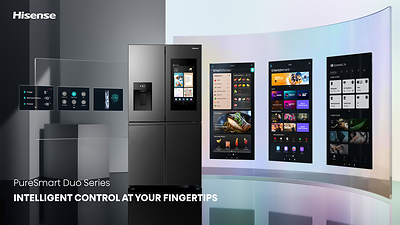
One four-door refrigerator in the PureSmart Duo Series combines 611 liters of storage with a 21-inch smart screen, along with features designed to support everyday cooking, entertaining and connection in the kitchen. Its integrated ice and water system offers crescent ice, crushed ice and UV-purified water with a 99.9% sterilization rate, making it easy to serve drinks for any occasion. Entertainment lives here too: stream shows through the VIDDA platform, watch live TV or play music on the 21-inch screen while you cook, dine or unwind — so the decisive goal or the season finale is never missed mid-recipe.
On weekends, families can pick a recipe together while connected appliances simplify preparation. During gatherings, the refrigerator becomes a social hub —guests can use Beverage Master feature on the smart screen to choose their favorite drinks and follow step-by-step instructions to create them together, while hosts spend less time managing the kitchen and more time enjoying the people around them.
For Hisense, AI Companion Suite is about more than intelligent appliances. It is about creating warmer connections through technology — making the kitchen a place where people naturally come together.
About Hisense
Hisense, founded in 1969, is a globally recognized leader in home appliances and consumer electronics with operations in over 180 countries, specializing in delivering high-quality multimedia products, home appliances, and intelligent IT solutions. According to Omdia, Hisense ranks No. 1 globally in the 100-inch and over TV segment (2023-2026H1). As The Origin of RGB MiniLED, Hisense continues to lead the next-generation RGB MiniLED innovation. As the official sponsor of the FIFA World Cup 2026TM, Hisense is committed to global sports partnerships as a way to connect with audiences worldwide.
 View original content to download multimedia:https://www.prnewswire.co.uk/news-releases/hisense-brings-ai-companion-suite-to-life-with-a-social-kitchen-302903321.html

- 0
- By Sai Krishna

9, Oct 2026
Astrogate Labs and Spacebeam Sign Strategic Partnership to Advance End-to-End Space-to-Ground Laser Communications
Indian laser communication terminal developer and South Korean optical ground station company to collaborate on interoperability demonstrations and OGS-as-a-Service and commercial optical communication solutions across India, the Republic of Korea and global markets
BENGALURU, India, Oct. 9, 2026 /PRNewswire/ — Astrogate Labs, an Indian deep-tech company developing Free-Space Optical Communication (FSOC) systems for space applications, and Spacebeam Inc., a South Korean optical communications company developing optical ground station infrastructure, have signed a Memorandum of Understanding (MoU) on Strategic Partnership to advance the validation, demonstration and commercialization of end-to-end space-to-ground laser communication solutions.

The MoU was executed during the International Astronautical Congress (IAC) 2026 in Antalya, Türkiye, bringing together two complementary components of the optical communications chain: Astrogate’s AstroLink, the Optical Communication Terminals (OCTs) for satellites and Spacebeam’s Osong Optical Ground Station (OGS) infrastructure for receiving and processing optical signals on Earth.
Under the partnership, the companies will collaborate on laser link verification and demonstration testing, progressing from terrestrial/air-to-ground testing to a space-to-ground demonstration involving a satellite integrated with Astrogate’s OCT and reception through Spacebeam’s OGS.
The partnership will also explore the development of an Optical Ground Station-as-a-Service (OGSaaS) model, under which satellite operators using Astrogate’s optical communication terminals could access Spacebeam’s OGS network for optical data reception. This creates a potential pathway toward a turnkey space-to-ground optical communications service, combining the onboard terminal and ground reception infrastructure required to move high-throughput data from orbit to Earth.
“The value of optical communications is ultimately realized when the space and ground segments work together as one end-to-end link. This partnership brings Astrogate’s optical communication terminals together with Spacebeam’s optical ground infrastructure to work toward that objective,” said Nitish K. Singh, Founder & CEO, Astrogate Labs.
“We see this collaboration as an opportunity to move beyond individual technology demonstrations and explore how optical communications can be delivered as an integrated service to satellite operators. By combining capabilities across India and the Republic of Korea, we can also explore new commercial pathways for space-to-ground optical communications globally,” said Kim Jung-Hoon, Founder & CEO, Spacebeam.
The partnership builds on Astrogate’s work in developing indigenous optical communication systems for space. The company has developed space-to-ground laser communication terminals and has previously completed cross-compatibility testing with the University of Western Australia’s TeraNet mobile optical ground station.
As satellite constellations and Earth-observation missions generate increasing volumes of data, the ability to move that data efficiently from orbit to ground is becoming an important part of the space infrastructure ecosystem. Optical communications offer a high-throughput communications pathway that can complement conventional RF systems, particularly for data-intensive missions.
About Astrogate Labs
Astrogate Labs designs and manufactures indigenous Free Space Optical Communication terminals for space and other high-performance communication applications, integrating proprietary Pointing, Acquisition and Tracking systems, optical modems and other subsystems developed in-house. Headquartered in Bengaluru, with an office in Durham, England, the company has validated its technology with end-users including ISRO and the University of Western Australia’s TeraNet mobile optical ground station and is extending its portfolio from space-to-ground terminals to Optical Inter-Satellite Links.
About Spacebeam Inc.
Spacebeam Inc. is a South Korean space optical communications company developing optical ground station technology for high-speed communication between ground and orbit. Its capabilities include satellite tracking, optical communication, optical signal reception and decoding, and adaptive optics for maintaining stable optical links through the atmosphere.
Contact:
Dhivya Abirami
Marketing & Communications
media@astrogatelabs.com
www.astrogatelabs.com
 View original content to download multimedia:https://www.prnewswire.com/in/news-releases/astrogate-labs-and-spacebeam-sign-strategic-partnership-to-advance-end-to-end-space-to-ground-laser-communications-302903383.html

9, Oct 2026
Rising Digital Demand to Drive India’s Mobile Network Growth Through 2030
New Delhi, Oct 9: India’s mobile network traffic is expected to grow at an annual rate of 17 per cent between 2025 and 2030, supported by increasing smartphone usage, wider 5G adoption and growing demand for digital services, according to a report.
The rising use of mobile internet for video streaming, online gaming, digital payments and other online activities is expected to drive data consumption over the coming years.
As digital services become an increasingly important part of everyday life, telecom operators will need to expand network capacity and improve connectivity to meet the growing demand. The expansion of 5G services is also expected to support faster data speeds and more reliable connections.
The growth in mobile traffic is likely to create new opportunities for India’s telecommunications industry, encouraging investment in network infrastructure and advanced technologies.
At the same time, telecom companies will need to focus on improving service quality, managing network congestion and keeping mobile data services affordable for consumers.
The expected increase in mobile network traffic highlights the growing importance of digital connectivity in India’s economy. Continued investment in reliable telecommunications infrastructure will be essential to support businesses, consumers and the country’s expanding digital ecosystem.
9, Oct 2026
1,200 Children to Take the Field at Mobile Creches’ Annual Sports Meet in Delhi
New Delhi, Oct 09, 2026: The children of the people who build our cities, grow our food and keep communities running will take centre stage this Sunday as Mobile Creches hosts its Annual Sports Meet – “Kheltey Raho, Khiltey Raho” at the Thyagaraj Sports Complex, New Delhi.
Around 1,200 children from 50 Mobile Creches centres will participate in the sporting event on October 11, turning the track into a field of running, cheering, competing and celebration. The event will be joined by Pooja Dhanda, Indian wrestler, 2018 Commonwealth Games silver medallist and 2019 Arjuna Award recipient, as the Chief Guest. The event will also include an award distribution ceremony.
For Mobile Creches, the sports meet is more than a sporting event. It reflects a larger belief that every child deserves the right to play, learn, grow and be celebrated — irrespective of where their parents work or where their family lives.
Across India, construction workers raise buildings and infrastructure, families working in brick kilns make the bricks that shape our cities, and tea garden workers help put tea on tables across the country. Their children often grow up alongside these workplaces, with families moving in search of work or living in communities where access to quality childcare and early learning can be limited.
For more than five decades, Mobile Creches has worked to address this gap by taking childcare to where families live and work.
Founded in 1969, the organisation runs creches and learning centres across construction sites, urban settlements, brick kilns, tea gardens and rural and tribal communities, providing daycare, early learning, nutrition and health support close to children’s homes and their parents’ workplaces.
The organisation currently works across 17 states through more than 5,000 childcare centres and has reached over one million children, while training more than 20,000 care workers who form the backbone of its early childhood programmes.
From a creche to the sports field
The Annual Sports Meet brings this everyday work into focus.
At Mobile Creches centres, play is treated not as a reward, but as an essential part of childhood. Through play and early learning, children develop physical strength, confidence, social skills and a sense of belonging.
“Play is not a reward for children who have everything. It is how every child learns to trust, to try and to belong, For children from the communities we work with, this sports meet is the day the country turns around and says: we see you.” said Sumita Mishra, CEO, Mobile Creches.
The sports meet is an opportunity to see that belief in action — children lining up at the starting line, running their races, cheering for friends, experiencing the excitement of competition and celebrating each other’s achievements.
The programme will begin with an Indian Map formation and National Anthem, followed by a Torch Lighting Ceremony. Sporting activities will then take place across the track, with children participating age-wise.
Pooja Dhanda, whose own journey in wrestling has taken her to the international sporting arena, will join the children as Chief Guest. Her presence will add another dimension to the day’s message — that talent can come from every corner, and opportunity can help it find its field.
A celebration of the circle around every child
Mobile Creches believes that no child grows alone. Around every child is a circle of care — parents and families, the didis and care workers at the creches, communities, employers and developers who enable childcare spaces at worksites, and partners who support the organisation’s work.
The Annual Sports Meet brings this circle together on one field.
For one day, the children of families who spend their days building, growing and powering the country will not be on the sidelines. They will take the field, compete, cheer, laugh and be applauded.
And that, for Mobile Creches, is the spirit of “Kheltey Raho, Khiltey Raho” — because every child deserves the chance to play, compete and be cheered.
9, Oct 2026
From Soil to Smart Farming: How Technology Is Reshaping India’s Agricultural Economy
Artificial intelligence, agricultural drones, digital marketplaces and smart irrigation are opening new possibilities for Indian agriculture, helping farmers improve productivity, manage risks and discover fresh sources of income.
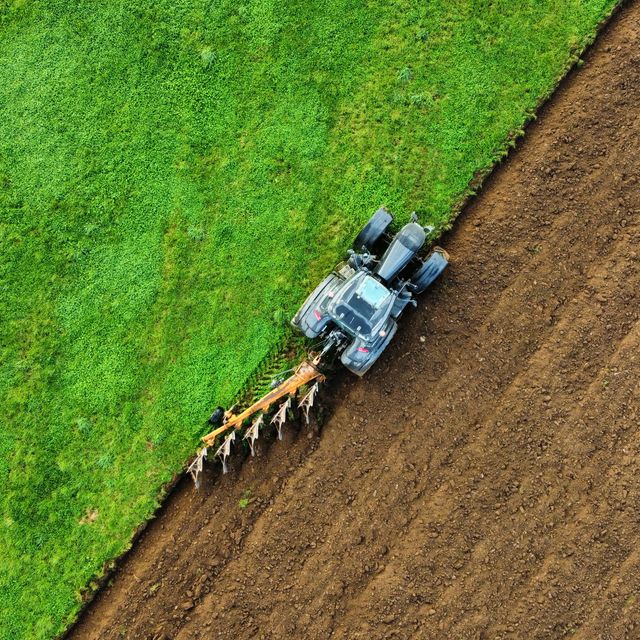
India’s agricultural landscape is undergoing a quiet but significant transformation. Across the country’s villages and farming communities, technology is creating new ways to grow crops, manage resources and connect agricultural produce with markets. While traditional knowledge and farmers’ experience remain indispensable, digital tools are increasingly helping them make more informed decisions in a changing economic and climatic environment.
The shift is about more than modernising cultivation. It is about strengthening the entire agricultural value chain—from choosing the right crop and managing water to reducing post-harvest losses, accessing buyers and creating new rural businesses.
Agriculture and allied activities contribute around 18 per cent of India’s Gross Value Added (GVA), making the sector an important pillar of the economy. Foodgrain production reached an estimated 357.73 million tonnes in the 2024–25 crop year, highlighting India’s substantial production capacity and the importance of farming to national food security.
Yet higher production does not automatically translate into higher farm incomes. Unpredictable weather, rising input costs, limited storage and fluctuating market prices continue to challenge farmers. Technology offers practical ways to address some of these pressures while opening new opportunities for rural entrepreneurship and economic growth.
Artificial Intelligence Brings Timely Advice to Farmers
For a farmer, a timely decision can make a considerable difference to the season’s outcome. Knowing when to sow, how to respond to a pest outbreak or when to irrigate can influence both crop quality and cultivation costs.
Artificial intelligence and mobile-based advisory services are making agricultural information more accessible. Farmers can increasingly use digital platforms to obtain weather updates, crop management guidance, pest alerts and information about government support programmes.
Government initiatives such as the Kisan e-Mitra chatbot help farmers access information about agricultural schemes in regional languages. Bharat-VISTAAR, an AI-based agricultural advisory initiative, represents a further step towards bringing agricultural information and digital guidance together in a more accessible format.
The potential is considerable. When reliable agricultural data is combined with local weather information, crop requirements and expert knowledge, digital tools can help farmers make more informed decisions.
However, the success of AI in agriculture will depend on the quality of its recommendations. Advice must reflect local growing conditions and remain understandable to farmers with different levels of digital literacy. Technology works best when it complements farmers’ experience and the guidance of agricultural experts.
Agricultural Drones Turn Innovation into Rural Opportunity
Agricultural drones are introducing greater speed and precision to selected farm operations. They can help monitor crops, identify areas requiring attention and apply agricultural inputs where appropriate.
For farmers, these services can reduce the time and labour required for certain tasks. Their effectiveness, however, depends on crop conditions, equipment quality, operator training and safe application practices.
The financial model is equally important. Many small and marginal farmers may find it difficult to purchase and maintain drones individually. Shared services and affordable rental models can make the technology more accessible without placing a heavy financial burden on individual cultivators.
This creates opportunities for rural entrepreneurs, trained drone operators and women’s self-help groups to provide agricultural services and earn additional income. In this way, a technology designed to support cultivation can also become a source of employment and enterprise in rural communities.
Digital Markets Help Farmers Look Beyond the Local Mandi
Growing a good crop is only half the challenge; selling it at a fair price is equally important.
Farmers have traditionally depended on local mandis and established trading networks. These markets remain essential, but limited price information, transport costs and restricted buyer access can sometimes reduce farmers’ bargaining power.
Digital platforms such as the electronic National Agriculture Market (e-NAM) aim to broaden market access by connecting agricultural markets through online trading and information services.
By March 2026, e-NAM had integrated 1,656 mandis across 23 states and four Union Territories, with more than 1.80 crore farmers registered, according to reported government figures.
For farmers, digital market access can make it easier to compare prices and explore trading opportunities. For agricultural businesses, it can improve connections with producers and support more organised procurement.
Nevertheless, digital access must be backed by physical infrastructure. Transparent grading, accurate weighing, efficient transportation, suitable storage and timely payments remain critical to ensuring that farmers can turn market information into better commercial outcomes.
Smart Irrigation Makes Every Drop Count
Water availability is becoming an increasingly important consideration for agricultural planning. In areas affected by irregular rainfall or water stress, efficient irrigation can help farmers manage one of their most valuable resources.
Drip irrigation delivers water close to plant roots, while soil-moisture sensors help assess when irrigation may be needed. Automated systems can support more precise water management, reducing unnecessary use when properly designed and maintained.
When combined with weather forecasts and crop-specific guidance, these technologies can help farmers plan irrigation more effectively. The benefits vary according to soil conditions, crop type, local climate and the cost of installation.
Making efficient irrigation affordable for smaller farms will be important to expanding adoption. Access to financing, technical support and suitable maintenance services can help farmers use these systems more effectively over time.
Agriculture Is Creating a New Generation of Rural Businesses
Technology’s influence extends well beyond the field. India’s agricultural economy offers opportunities in machinery rentals, drone services, soil testing, food processing, cold storage, packaging and logistics.
Young entrepreneurs can build businesses that solve practical problems for farmers, from arranging equipment during peak cultivation periods to helping transport produce to processing units and buyers.
Food processing is particularly important because it can increase the value of agricultural produce before it reaches consumers. Better storage and cold-chain facilities can also help preserve perishable crops and reduce losses after harvest.
Farmer-producer organisations and cooperatives can strengthen these opportunities by helping cultivators purchase inputs collectively, share equipment, negotiate with buyers and access services that might otherwise be too expensive for individual farmers.
This broader approach creates the possibility of a more diversified rural economy—one in which livelihoods depend not only on growing crops but also on the businesses and services that support agriculture.
Closing the Gap Between Technology and the Small Farmer
Despite its promise, agricultural technology is not equally accessible everywhere. Small landholdings, limited internet connectivity, affordability concerns and gaps in digital literacy can slow adoption.
Farmers also need confidence that the tools they use are reliable and relevant to their circumstances. AI recommendations require dependable data, drones need trained operators, and digital marketplaces work best when supported by efficient transport and storage.
Addressing these challenges will require collaboration among government institutions, agricultural universities, technology companies, financial institutions and farmer organisations. Regional-language services, practical demonstrations, affordable equipment and accessible financing can help ensure that technological progress reaches small and marginal farmers as well as larger agricultural enterprises.
The objective should not be to replace traditional knowledge with machines, but to combine generations of farming experience with tools that improve decision-making and reduce avoidable risks.
The Future of Farming Lies in Better Returns for Farmers
India’s agricultural transformation will ultimately be judged by its impact on farmers’ livelihoods. Higher production matters, but so do lower costs, reduced crop losses, stronger bargaining power and access to dependable markets.
Artificial intelligence can improve access to information, drones can support efficient farm operations, digital platforms can connect producers with buyers, and smart irrigation can help conserve water. Meanwhile, rural enterprises in processing, storage and logistics can create additional employment and help retain more economic value within farming communities.
The next stage of progress will depend on making these solutions affordable, practical and widely accessible. Technology must serve the farmer’s needs, rather than becoming another expense that is difficult to recover.
The real promise of smart farming is not simply producing more food—it is building an agricultural economy in which farmers make better decisions, rural businesses thrive and a greater share of the value created by every harvest reaches the people who grow it.
9, Oct 2026
IMC 2026: From Connectivity to Deployment at Scale, Fibocom Strengthens Its IoT Presence in India
NEW DELHI, Oct. 9, 2026 /PRNewswire/ — Fibocom (300638.SZ; 0638.HK), a leading global provider of wireless communication modules and AI solutions, presented its latest portfolio at India Mobile Congress 2026, as growing adoption of 5G, energy digitalization and connected mobility creates new demand for IoT deployment across India.
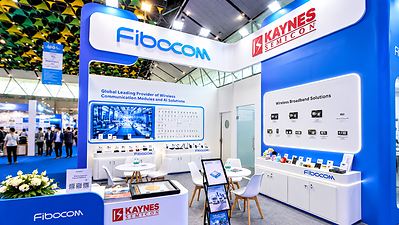
At the show, Fibocom highlighted applications spanning wireless broadband, energy, vehicle and asset management. Its FWA portfolio included 5G modules as well as CPE, ODU and MiFi solutions, while smart meters, vehicle tracking devices and EV battery trackers demonstrated how cellular connectivity is moving deeper into vertical applications.
For smart metering, Fibocom provides 4G connectivity for GridCrest’s smart meter solution for the Indian market, enabling electricity consumption data and device event information to be transmitted over mobile networks to utility management platforms for remote meter reading and monitoring.
Products for the Indian market continue to strengthen support for local frequency bands and NavIC. The mass-produced MGB series of GNSS modules addresses different positioning needs, with dual-frequency products supporting capabilities such as NavIC and RTK.
As IoT projects move toward deployment at scale, customers increasingly need device solutions tailored to specific applications. At IMC, Fibocom and Indian IoT ODM Grid-OS jointly showcased devices for payment and vehicle tracking applications, combining Fibocom’s wireless connectivity with Grid-OS’s local product development capabilities.
Fibocom’s AI companion solution MagiCore and AI Dongle were also on display, extending Fibocom’s portfolio from connectivity to edge AI.
“Fibocom has built a strong presence in India, working closely with local partners across payments, energy and asset tracking. Together, we support customers in taking IoT devices from product development and pilot validation to volume production and large-scale deployment,” said Thales Zhang, Vice President and Head of the Global Marketing and Computing Solutions Business Group at Fibocom.
About Fibocom
Founded in 1999, Fibocom provides cellular, AI, automotive and GNSS modules, together with AI toolchains, AI Agent, global connectivity and cloud services, serving industries including robotics, consumer electronics, transportation, retail and energy.

 View original content to download multimedia:https://www.prnewswire.com/in/news-releases/imc-2026-from-connectivity-to-deployment-at-scale-fibocom-strengthens-its-iot-presence-in-india-302903331.html

9, Oct 2026
New Asia Forum Targets US$30 Billion in Investment into the New Asia at Its Inaugural Edition in Bali
Under the Patronage of His Excellency Prabowo Subianto, President of the Republic of Indonesia
JAKARTA, Indonesia, Oct. 9, 2026 /PRNewswire/ — A new global platform for investment, capital formation and economic partnership will launch 3-4 December in Bali, Indonesia. The New Asia Forum has set a target of US$30 billion in investment into the New Asia at its inaugural edition. The forum will connect long-term capital with the opportunities shaping Asia’s next decade.
Powered by Danantara Indonesia (Indonesia’s sovereign fund) and produced by Richard Attias & Associates, New Asia Forum is being created with a clear ambition: to become the global gateway to the New Asia, connecting long-term capital with the projects, partnerships and policymakers capable of transforming vision into investment.
The world’s economic center of gravity is shifting. A new generation of economies is emerging across the region; increasingly connected, technologically ambitious, investment-driven and capable of financing its own future. Asia-Pacific already generates close to 60% of global economic growth (IMF, 2025). Yet, it attracts far less of its share of long-term international capital. New Asia Forum aims to close that gap.
Unlike traditional conferences, New Asia Forum is designed around transaction readiness, capital deployment and execution. The US$30 billion target will be pursued through a curated pipeline of investment-ready opportunities. Heads of state, ministers, sovereign investors and global CEOs will turn diligence into signed commitments across eight strategic sectors:
1. Strategic Resources and Downstreaming 2. Energy and Power 3. Mobility and Advanced Manufacturing 4. Digital Infrastructure and AI 5. Food and Agribusiness 6. Trade and Connectivity 7. Tourism and Creative Economy 8. Education and Human Capital
New Asia Forum will track commitments and progress across editions, creating an ongoing platform of accountability, partnership and investment.
Rosan Roeslani, Chief Executive Officer of Danantara Indonesia and Minister of Investment to the Republic of Indonesia, said, “New Asia Forum brings long-term global capital closer to the opportunities being created across Indonesia and the wider region. As Indonesia‘s sovereign investor and a founding partner of the Forum, Danantara Indonesia is inviting partners together to unlock these opportunities for long-term value. Under the patronage of President Prabowo Subianto, this is Indonesia engaging the world from a position of confidence, ambition, and collaboration.“
“For decades, Asia has been viewed primarily as a destination for global capital. That story is changing,” said Richard Attias, Founder and Chairman of Richard Attias & Associates. “The New Asia will not simply attract capital. It will increasingly create it, direct it and determine where it can have the greatest impact. We are entering one of the most important investment cycles of our generation, and Asia is at its center.”
The inaugural New Asia Forum will be an invitation-only gathering of more than 1,000 leaders, featuring over 100 speakers and over 40 sessions across two days.
 View original content:https://www.prnewswire.co.uk/news-releases/new-asia-forum-targets-us30-billion-in-investment-into-the-new-asia-at-its-inaugural-edition-in-bali-302903308.html

9, Oct 2026
Chelsea FC announces new global partnership with GAC
GUANGZHOU, China and LONDON, Oct. 9, 2026 /PRNewswire/ — Chelsea Football Club today announced a global partnership, with GAC – one of the world’s fastest growing global automotive businesses – which sees them become the club’s Official Automotive Partner. The partnership brings together Chelsea’s global football community and GAC’s growing global automotive business, creating closer connections with fans and consumers in the UK, across Europe and beyond.

Chelsea FC has one of the largest global fan bases in the world with millions of supporters across Europe and beyond. GAC are one of China’s largest automobile manufacturers and the partnership comes at a time when GAC is expanding its global reach and into new markets with its range of high-quality, practical models.
GAC and Chelsea FC first joined forces for the 2026 pre-season tour and this new chapter together will see vehicles from GAC’s AION range escorting the men’s team to Stamford Bridge on selected matchdays. GAC and Chelsea FC will also collaborate on digital storytelling, fan experiences and engagement including car displays, providing opportunities for the Chelsea family to discover GAC and its vehicles.
The UK and Europe are important markets in GAC’s international development. The partnership with Chelsea FC adds a new dimension to this work, complementing product introductions, sales-channel development and customer support. It will help GAC reach audiences beyond traditional automotive channels as the company continues to build its presence across the region.
GAC’s European lineup includes the AION V electric SUV and the AION UT compact electric hatchback, offering options for family travel and everyday mobility. Both models reflect the company’s focus on practical usability, technology and quality.
The partnership also forms part of GAC’s One GAC 2.0 global strategy and its Local for Local approach. By combining the partnership’s international reach with activities shaped around local interests, GAC and Chelsea FC will build lasting connections together with supporters and customers.
 View original content to download multimedia:https://www.prnewswire.co.uk/news-releases/chelsea-fc-announces-new-global-partnership-with-gac-302903310.html

9, Oct 2026
SGS WINS SAF SUPPLY CHAIN EXCELLENCE AWARD AT INDIA SAF CONCLAVE & AWARDS 2026
NEW DELHI, Oct. 9, 2026 /PRNewswire/ — We are proud to announce that we have been recognized with the SAF Supply Chain Excellence Award – Testing, Inspection, Verification & Quality Assurance at the India SAF Conclave & Awards 2026, held on September 29 at Bharat Mandapam, New Delhi.
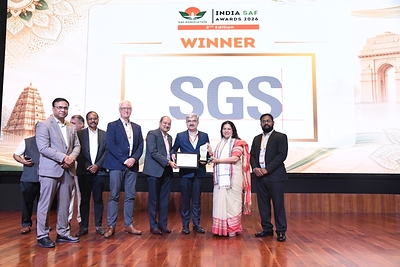
This prestigious recognition highlights our contribution to strengthening quality, integrity, transparency and confidence across the Sustainable Aviation Fuel (SAF) value chain through its testing, inspection, verification and quality assurance capabilities.
As the global aviation industry accelerates its transition towards lower-carbon fuels, SAF is emerging as a strategic lever for aviation decarbonization. For the SAF market to move from ambition to scale, however, the integrity of the entire value chain will be critical. Robust testing, independent verification, traceability, quality assurance and compliance are essential to creating the confidence required for investment, adoption and long-term market growth.
The recognition at the two-day India SAF Conclave & Awards 2026 highlights the growing importance of independent assurance in building a credible and future-ready SAF ecosystem. The conclave brought together industry leaders, policymakers and key stakeholders to advance dialogue and collaboration around the development of India’s sustainable aviation fuel landscape.
SGS Managing Director for India, Bangladesh and Sri Lanka, Amit Thakkar said, “We are proud to receive the SAF Supply Chain Excellence Award for Testing, Inspection, Verification & Quality Assurance. This recognition is a strong endorsement of the role that independent assurance plays in building confidence in an emerging and strategically important industry. As SAF moves towards greater commercialization, the ability to demonstrate quality, sustainability, traceability and compliance across the value chain will be fundamental to market credibility and scale.”
He added, “The transition to SAF represents more than an energy transition; it is a transformation of an entire aviation value chain. SGS brings global expertise, technical depth and independent assurance to help stakeholders navigate this complexity with confidence. Our focus is on enabling a SAF ecosystem that is transparent, resilient and fit for scale — supporting the industry as it moves decisively towards a more sustainable future.”
This award reflects the collective efforts of SGS teams working across testing, inspection, verification, quality assurance and sustainability, as well as our continued engagement with stakeholders shaping the future of sustainable fuels.
Arjan Praat, Global Vice President – Oil, Gas & Chemicals Analytical Services, SGS; Amit Thakkar, Managing Director – India, Bangladesh & Sri Lanka, SGS; and Mehar Kuchimanchi, Director – Natural Resources, SGS in India, represented SGS at the conclave and received the award, recognising the company’s contribution to the development of India’s growing SAF ecosystem.
With its multidisciplinary expertise across the sustainable fuels value chain, SGS is positioned to support industry stakeholders with testing, inspection, verification, certification, quality assurance and sustainability solutions that help strengthen supply-chain integrity, manage compliance requirements and build confidence in SAF.
ABOUT SGS
SGS is the world’s leading Testing, Inspection and Certification company. We operate a network of over 2,500 laboratories and business facilities across 115 countries, supported by a team of over 100,000 dedicated professionals. With more than 145 years of service excellence, we combine the precision and accuracy that define Swiss companies to help organizations achieve the highest standards of quality, compliance and sustainability.
Our brand promise – when you need to be sure – underscores our commitment to trust, integrity and reliability, enabling businesses to thrive with confidence. We proudly deliver our expert services through the SGS name and a portfolio of trusted specialized brands, including Applied Technical Services, Brightsight, Bluesign and Nutrasource.
Media Contact:
Geeta Kataria
Geeta.kataria@sgs.com

 View original content to download multimedia:https://www.prnewswire.com/in/news-releases/sgs-wins-saf-supply-chain-excellence-award-at-india-saf-conclave–awards-2026-302903315.html

9, Oct 2026
Harness Acquires Augment Code, Advancing the Autonomous SDLC from Idea to Production
Oct 09, 2026: Harness, the Autonomous SDLC PlatformTM company, today announced that it has acquired select Augment Code assets, including Cosmos and the Auggie CLI products, the Code Context Engine, and related technology. The team behind these products will join Harness, accelerating its work to make the entire software development lifecycle increasingly autonomous.
Cosmos will become Harness Cosmos Software Factory Agent, with a clear role: automate engineering work from idea to code. From there, Harness‘s existing agents for software delivery, security testing, runtime protection, and cost management take over, carrying the work into production and operations, creating a seamless agent to agent experience.
Connecting Augment’s Code Context Engine with Harness’s Software Delivery Knowledge Graph provides insights across the full SDLC — what’s being built, and what happens to it once it ships. Harness is bringing codebase understanding together with delivery context, so Harness Cosmos can make better-informed changes upfront, and Harness agents can use downstream findings to correct and verify them.
“AI’s impact on software will not be measured by how much code it generates, but by how much valuable software reaches customers,” said Jyoti Bansal, founder and CEO of Harness. “Augment Code built Cosmos to create a software factory for repeatable engineering work. With this acquisition, we are bringing code context together with delivery and production context to help agents make better changes from the start. When Harness downstream agents identify an issue while testing, securing, or deploying code, they send it back to Cosmos with the context to fix it.”
“We set out to bring AI to the entire software development lifecycle, starting with context-aware coding,” said Igor Ostrovsky, co-founder and CTO of Augment Code. “Joining Harness is the next step toward that vision. Together, we can make engineering work increasingly autonomous, with engineers stepping in only where judgment really matters. We’ve seen software factories transform how companies build software. Now, with Harness, that same transformation is within reach for every team already on the Harness platform — and every team getting started.”
Introducing the Harness Cosmos Software Factory Agent
Harness Cosmos takes engineering work from idea to merge-ready code. When a requirement is written, a ticket is assigned, or a bug is reported, a fleet of Cosmos agents plans the change, writes the code and tests, and opens a pull request. Each agent works in its own isolated VM and pulls in an engineer only where judgment is needed, like approving a design or making the final merge.
Cosmos agents run as a continuous loop through ticket, code, and review. When a reviewer comments or a check fails, an agent fixes the issue on the same pull request. Teams can fork prebuilt Experts like Project Builder, PR Author, Deep Reviewer, and PR Fixer, tune each one to their own codebase, and deploy it organization-wide.
Augment’s Code Context Engine keeps a live map of the codebase, so changes fit the code already there. Model routing matches each task to the right model, and built-in integrations connect to GitHub, Jira, and Slack. Shared memory carries lessons from each review into the next change, and versioning and budget controls let teams run autonomous coding across the entire engineering organization.
What leaves the factory is a reviewed pull request, ready for Harness agents to test, secure, and deploy.
Shared context from code to production
Harness’s Software Delivery Knowledge Graph connects delivery and operational information, including builds, deployments, infrastructure, security, and costs. Augment’s Code Context Engine brings that same specificity to the code itself.
Before a change is written, Harness Cosmos will pull together the delivery context that should shape it: test cases, security requirements, past incidents and their remediations. Once that change exists, Harness‘s downstream agents will use codebase context to reason about dependencies, risk, and what validation it needs. If something fails, the agents can loop until resolution.
Extending the Harness Autonomous SDLC Platform
Harness Cosmos joins the Harness platform, automating engineering work from idea to code. No matter how that code is written, the Harness platform already takes it the rest of the way:
- Software Delivery Agent moves changes safely to production
- Security Testing Agent finds and fixes risk before production
- Runtime Protection Agent protects applications, APIs, and AI in production
- Cost Management Agent controls and optimizes cloud and AI costs
The integration vision focuses on connecting Harness Cosmos workflows with the policies, permissions, and approvals that already govern the Harness platform, bringing the same discipline to creating a change that enterprises already expect when releasing one.
Availability
Harness Cosmos is now available. To learn more, read the announcement blog post, visit the website, or get started now.


