


9, Oct 2026
5Paisa Launches ‘Investor Connect’ – Financial Planning Program for Over 5,000 CBSE Teachers
MUMBAI, India, Oct. 9, 2026 /PRNewswire/ — 5Paisa Capital, one of India’s leading AI-first investment platforms has launched ‘Investor Connect’, a series of financial planning programs for teachers across CBSE schools in India in partnership with Centre for Investment Education and Learning (CIEL). The program aims to reach 5,000 teachers.
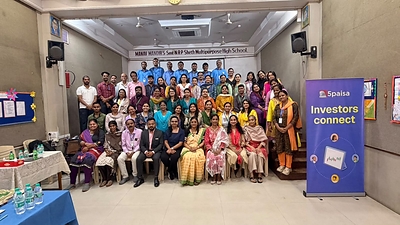
CBSE schools together employ more than a million teachers. That reach gives the initiative the potential to build meaningful financial awareness at scale, especially among women, who make up a significant majority of the teaching community.
Investor Connect is not a basic financial literacy session. Each program is a practical Financial Goal Planning Workshop that helps teachers link their life aspirations to disciplined financial planning and informed investing.
The workshops focus on the goals that matter most to teachers and their families including – children’s education, home ownership, retirement, emergency preparedness and long-term wealth creation.
The sessions are conducted by experienced CIEL trainers who combine financial-market knowledge with practical, relatable examples. An interactive format keeps teachers engaged and helps them apply the concepts directly to their own financial goals.
The 5Paisa Capital – CIEL partnership aims to give teachers greater financial confidence and sharper decision-making skills. Because educators shape the families and communities around them, empowering them financially creates a powerful multiplier effect that reaches well beyond the individual.
The Investor Connect program is running successfully across CBSE schools in Mumbai. CIEL and 5Paisa Capital plan to extend the workshops to CBSE schools across India as they work toward the goal of reaching 5,000 teachers.
About 5paisa Capital
5paisa Capital Ltd. is one of India’s leading digital-first brokers, offering cost-effective and technology-driven financial services to retail investors. With a mission to democratize investing, 5paisa continues to innovate at the intersection of finance and technology, delivering seamless trading and investing solutions to millions across the country.
Media Contact:
Sourav Mishra | 5paisa Capital | sourav.mishra@iifl.com
 View original content to download multimedia:https://www.prnewswire.com/in/news-releases/5paisa-launches-investor-connect–financial-planning-program-for-over-5-000-cbse-teachers-302903038.html

- 0
- By Sai Krishna

9, Oct 2026
Embark and Tavant Partner to Enable AI-Ready Global Capability Centres in India
The partnership brings together Embark’s end-to-end GCC setup and operations capabilities with Tavant’s AI, data and digital engineering expertise to help enterprises build, scale and transform GCCs in India
BENGALURU, India, Oct. 9, 2026 /PRNewswire/ — Embark, a premier, fully integrated service provider dedicated to accelerating the establishment and expansion of Global Capability Centres (GCCs) in India, and Tavant, a leading platform-powered AI transformation specialist, today announced a strategic partnership to help global enterprises design, build, operate and transform GCCs in India.

The partnership combines Embark’s end-to-end GCC expertise—from strategy, entity setup, location and workspace planning to talent, enabling functions and operations—with Tavant’s strengths in data, GenAI, agentic AI, software engineering and enterprise platforms. Together, the companies offer an integrated approach to GCC creation and transformation, aligning business, operational and technology priorities under a single engagement model.
For organisations setting up a new GCC in India, the partnership helps reduce the fragmentation typically associated with establishing a centre. It brings GCC strategy, location, entity setup, workspace, talent and enabling functions together with AI and data readiness, technology pods and AI-enabled engineering, so technology teams can start building capability in parallel with the foundational setup rather than waiting for every element to be in place.
The partnership offers flexible engagement models, from Assisted Build, Build–Operate–Transfer (BOT) and Employer of Record (EOR). This lets enterprises choose the right level of ownership and support at each stage of their India expansion.
For existing GCCs, the collaboration will support transformation through diagnostic assessments, Data & AI Centres of Excellence and embedded technology pods. The focus will be on helping organisations move from project-based delivery to end-to-end product ownership, scale AI initiatives from pilot to production, and build deeper long-term data and AI capabilities.
“Our teams can start building AI and data capability from day one, while Embark runs the operating foundation in parallel. We’ve built and run engineering teams in India for over 25 years, so we know what it takes to turn a centre into a place where products get built, not just supported. For our clients, that means a GCC that is taking AI from pilot to production from the start, not a year down the line,” said Sarvesh Mahesh, CEO, Tavant.
“AI is becoming a foundational capability for the next generation of GCCs, and we believe it needs to be considered from the very beginning of the GCC journey. Our partnership with Tavant brings together Embark’s expertise in building and operating GCCs with Tavant’s strengths in AI, data and digital engineering, enabling enterprises to build more AI-first centres in India. Together, we can help organisations create GCCs that deliver business value from day one, and are ready to scale as AI reshapes how work gets done,” said Aravind Maiya, Co-Founder & CEO, Embark.
By combining GCC infrastructure and operational readiness with technology and AI execution, Embark and Tavant aim to provide a more connected approach to building capability centres that can evolve with changing business priorities.
About Embark:
Established in 2025, Embark is a premier, fully integrated service provider dedicated to accelerating the establishment and expansion of Global Capability Centres (GCCs) in India. Embark simplifies the expansion of global companies in India by serving as a single-source execution partner, providing global organisations everything they need to build their Global Capability Centres, with AI at the core of their design and solution process from the ground up. By integrating practitioner-led expertise with the institutional-grade workplace and infrastructure backing of the Embassy Group – a pioneer in Indian real estate with over three decades of experience – Embark’s comprehensive service suite from Blueprint to Breakthrough encompasses strategy, operations, talent and workplace solutions, under a single accountable model. Through this synergistic approach, Embark empowers global companies to thrive and scale in India’s vibrant ecosystem while maintaining focus on their core innovation mission.
For more details visit https://embarkgrp.com/
About Tavant:
Tavant is a leading Platform-powered AI transformation specialist focused on helping enterprises unlock the power of AI and accelerate enterprise agentic AI automation. Combining deep business expertise, relentless client focus, extraordinary AI, Data and Digital Engineering DNA, and a proprietary Agentic Engineering Platform, Tavant delivers intelligent automation and AI-driven business transformation to global Fortune 500 enterprises. Headquartered and founded in Silicon Valley, Tavant operates globally with offices and development centers in the US, Europe, India, and Japan. For more information, visit tavant.com or follow Tavant on LinkedIn.

 View original content to download multimedia:https://www.prnewswire.com/in/news-releases/embark-and-tavant-partner-to-enable-ai-ready-global-capability-centres-in-india-302902530.html

9, Oct 2026
Partnership to Scale AI and Multi-Cloud Workloads Across Singapore, Australia and New Zealand
A partnership that enables centralized, observable, and scalable environments for AI and multi-cloud workloads across Singapore, Australia, and New Zealand
-
Orange Business APAC and Aviatrix join forces in the Asia-Pac region to expand the partnership beyond Europe by combining strengths to help enterprises connect, secure, and manage their cloud infrastructure.
-
This partnership leverages the connectivity, managed services, and cybersecurity expertise of Orange Business, and the cloud-native networking and security capabilities of Aviatrix.
Organizations within Asia Pacific namely Singapore, Australia, and New Zealand will soon benefit from the worldwide capabilities offered by Orange Business and Aviatrix following their collaboration in this region. This latest partnership sees the two companies delivering a joint value proposition that combines Orange Business’s global connectivity and managed services with Aviatrix’s cloud-native networking and security expertise, beginning with the three key markets above.
The expansion further builds on the global partnership that Orange Business and Aviatrix announced earlier this year. Additionally, Aviatrix will also grant Orange Business first right of refusal for opportunities in China, Hong Kong, India, Malaysia, South Korea, and Taiwan.
Orange Business is a global operator, digital solutions integrator and platform player and the enterprise division of the Orange Group, with more than 20 years of presence across Asia-Pacific. Aviatrix, founded in 2014, delivers the only secure networking architecture built specifically for the cloud, providing centralized security and visibility across every cloud environment from a single platform.
In an increasingly AI-based landscape where organizations are drawn to innovate faster, scale more efficiently, and deliver new services to customers, AI workloads also expand the attack surface and increase the complexity of cloud networking. AI environments span multiple clouds, regions, containers, Kubernetes clusters, and AI agents. According to a study on 2026 global threat landscape (source: CrowdStrike 2026 Global Threat Report: Evasive Adversary Wields AI), a reported 82% of detections are now malware-free—adversaries use valid credentials and trusted identity flows to move through authorized pathways, bypassing traditional detection entirely. This is why organizations need secure, high-performance connectivity with consistent visibility, centralized governance, and policy enforcement that holds on whether a compromise has been detected.
Orange Business and Aviatrix address this challenge by providing a secure, scalable foundation for multi-cloud and AI workloads:
-
Securing distributed AI environments: Aviatrix secures the network traffic connecting AI data sources, models, and applications across multi-cloud environments. Built-in containment ensures that security policies hold as to whether a breach has been detected, with high-performance encryption at up to 100 Gbps cloud-to-cloud and up to 1 Tbps data-center-to-cloud.
-
Simplifying multi-cloud networking: A centralized, software-defined platform for managing, monitoring, and securing cloud connectivity, thereby replacing fragmented, cloud-by-cloud approaches.
-
Visibility and enforcement for AI workloads: See how AI applications communicate across clouds, identify risks, and enforce policy on AI-to-AI and AI-to-data connections—without adding architectural complexity.
Additionally, the partnership seeks to benefit organizations in different areas. Firstly, organizations can expect to reduce the total cost of ownership by optimizing network usage and avoiding unnecessary costs. Real-time visibility into cloud resources and consumption supports more accurate financial planning through efficient traffic management and Aviatrix’s cloud-native capabilities that support real-time visibility into cloud resources and consumption.
Secondly, the joint proposition offers secure connectivity within the cloud and to the cloud. This is achieved through the Orange Business Evolution Platform – a proven, high-performance network infrastructure that can integrate AI workloads with existing offices, data centers, SD-WAN, and security environments. Also, key to note: the Orange Evolution Platform infrastructure hosts Aviatrix in over 40 locations globally that allows Aviatrix to be deployed without additional hardware complexity, and with the flexible advantage of monthly billing option that supports different commercial and operating models, thereby easing an organization’s process in connecting and managing their cloud environments.
Finally, the partnership also extends traffic visibility and policy enforcement across connected SD-WAN, LAN, and cloud networking environments as a standard managed service – helping organizations see what their workloads are doing, enforce consistent policy, and improve resilience across multi-cloud connectivity. Orange Business and Aviatrix support the full cloud networking lifecycle – from design and deployment through operation and optimization. Organizations can thus choose from self-service, co-managed, or fully managed operating models based on their business needs.
9, Oct 2026
Odisha Approves Additional INR 100.83 Crore for Puri’s ABADHA Development Projects
Puri, Oct 9 (UDN): The Odisha government has approved an additional ₹100.83 crore for infrastructure and heritage development projects in Puri under the Augmentation of Basic Amenities and Development of Heritage and Architecture (ABADHA) scheme, taking the total project cost to ₹658.03 crore from the earlier ₹557.19 crore.

Representational Image
Chief Minister Mohan Charan Majhi sanctioned the enhanced allocation to support ongoing works aimed at improving facilities in the pilgrim town, with major components including the Jagannath Ballav Pilgrim Centre (JBPC), the proposed Market Complex, Shree Setu and the extension of the Musa River project.
2,000-Seat Hall Planned at Pilgrim Centre
A significant portion of the revised budget will address the expanded construction requirements at the Jagannath Ballav Pilgrim Centre. A modern multi-purpose hall with seating for around 2,000 people is planned on the centre’s fifth floor.
The proposed facility is expected to provide additional space for large spiritual, cultural and other organised gatherings, strengthening the centre’s role in accommodating activities associated with Puri’s religious and cultural life.
The additional funding will also meet other project-related requirements arising from the expanded scope of construction.
Infrastructure Push for Pilgrim City
The revised allocation will support several infrastructure initiatives intended to improve amenities and facilitate movement and access in Puri, one of Odisha’s most important religious destinations.
Projects covered under the funding enhancement include the Market Complex, Shree Setu and the Musa River project extension, alongside development work at the Jagannath Ballav Pilgrim Centre.
The ABADHA scheme is designed to strengthen basic amenities while preserving and enhancing the heritage character of Puri. The latest financial revision is aimed at ensuring that ongoing projects can meet their expanded requirements.
Government Reaffirms Commitment to Puri’s Development
Chief Minister Majhi reiterated the state government’s commitment to providing the resources needed for the development of Puri, emphasising that funding would not be allowed to become a constraint for projects associated with the sacred town.
The additional allocation reflects the government’s focus on improving infrastructure for pilgrims and visitors while advancing Puri’s development as a major heritage and spiritual destination.
With the total project outlay now standing at ₹658.03 crore, the revised funding is expected to support the expanded scope of work across key development sites. The overall impact will depend on the progress and timely completion of the respective projects.
9, Oct 2026
Odisha Seeks MSME-Friendly GST Reforms, Faster Refunds at 57th GST Council Meeting
New Delhi, Oct 9 (UDN): Odisha has called for a more business-friendly Goods and Services Tax (GST) framework, with a focus on faster refunds, simplified registration procedures and fewer compliance-related discrepancies to ease the burden on micro, small and medium enterprises (MSMEs).

The issues were discussed at the 57th meeting of the GST Council, chaired by Union Finance Minister Nirmala Sitharaman in New Delhi on October 8, 2026. Representing Odisha Chief Minister Mohan Charan Majhi, state Cabinet Minister Prithviraj Harichandan, who holds the Law, Works and Excise portfolios, presented the state’s priorities on improving tax administration and reducing procedural hurdles for businesses.
Chief Ministers, state finance ministers, nominated ministers from states and Union Territories, and senior government officials participated in the meeting.
Faster Refunds to Improve Business Cash Flow
One of the key areas of discussion was the proposed system-based processing and sanction of GST refunds to ensure quicker disbursal, greater transparency and better tracking for eligible taxpayers.
The Council also considered proposals concerning refunds of input tax credit (ITC) on capital goods used for zero-rated supplies, along with ITC on input services and capital goods under the inverted duty structure.
These measures, if implemented, could help exporters and manufacturers unlock working capital currently tied up in tax credits, improving liquidity and supporting business expansion.
Simpler GST Registration for Small Businesses
Simplifying GST registration emerged as another priority, particularly for small enterprises and taxpayers operating in rural and semi-urban areas.
The discussions focused on clearer guidelines and practical tools to make registration more accessible and reduce procedural difficulties for businesses entering the formal tax system.
For MSMEs, which often operate with limited administrative resources, a more straightforward registration process could reduce compliance costs and allow entrepreneurs to devote greater attention to production, employment and growth.
Measures to Reduce Return Filing Discrepancies
The Council also considered recommendations from the Working Group on GST Returns and Processes, in which Odisha’s State GST team participated.
The proposals cover improvements in return filing and alternative mechanisms for correcting tax liabilities and input tax credit claims. The objective is to minimise mismatches that can trigger notices and create additional compliance work for genuine taxpayers.
Odisha officials also contributed to discussions on process-oriented refund reforms through the GST Law Committee.
A more predictable correction mechanism could help businesses resolve discrepancies efficiently while enabling tax authorities to focus on cases requiring closer scrutiny.
Enforcement Provisions Under Review
Another proposal discussed at the meeting concerned removing arrest provisions for certain economic offences where existing GST law may provide adequate mechanisms for addressing violations.
The proposal seeks to establish a clearer balance between effective tax enforcement and greater confidence among compliant businesses. Any changes would depend on the Council’s decisions and the applicable legal process.
Reforms Geared Towards Ease of Doing Business
The discussions form part of broader efforts to improve tax administration, support economic activity and advance the national vision of Viksit Bharat by 2047.
For MSMEs and small businesses in Odisha, faster refunds, easier registration and fewer procedural disputes could help reduce paperwork, improve cash flow and create a more predictable business environment.
The proposals discussed at the meeting signal a continued focus on making GST compliance more transparent, accessible and responsive to the needs of businesses. Their eventual impact will depend on the formal decisions taken by the GST Council and the implementation of the approved measures.
9, Oct 2026
Odisha Dy CM Pravati Parida Meets Union Minister Annapurna Devi at Women and Child Development Summit
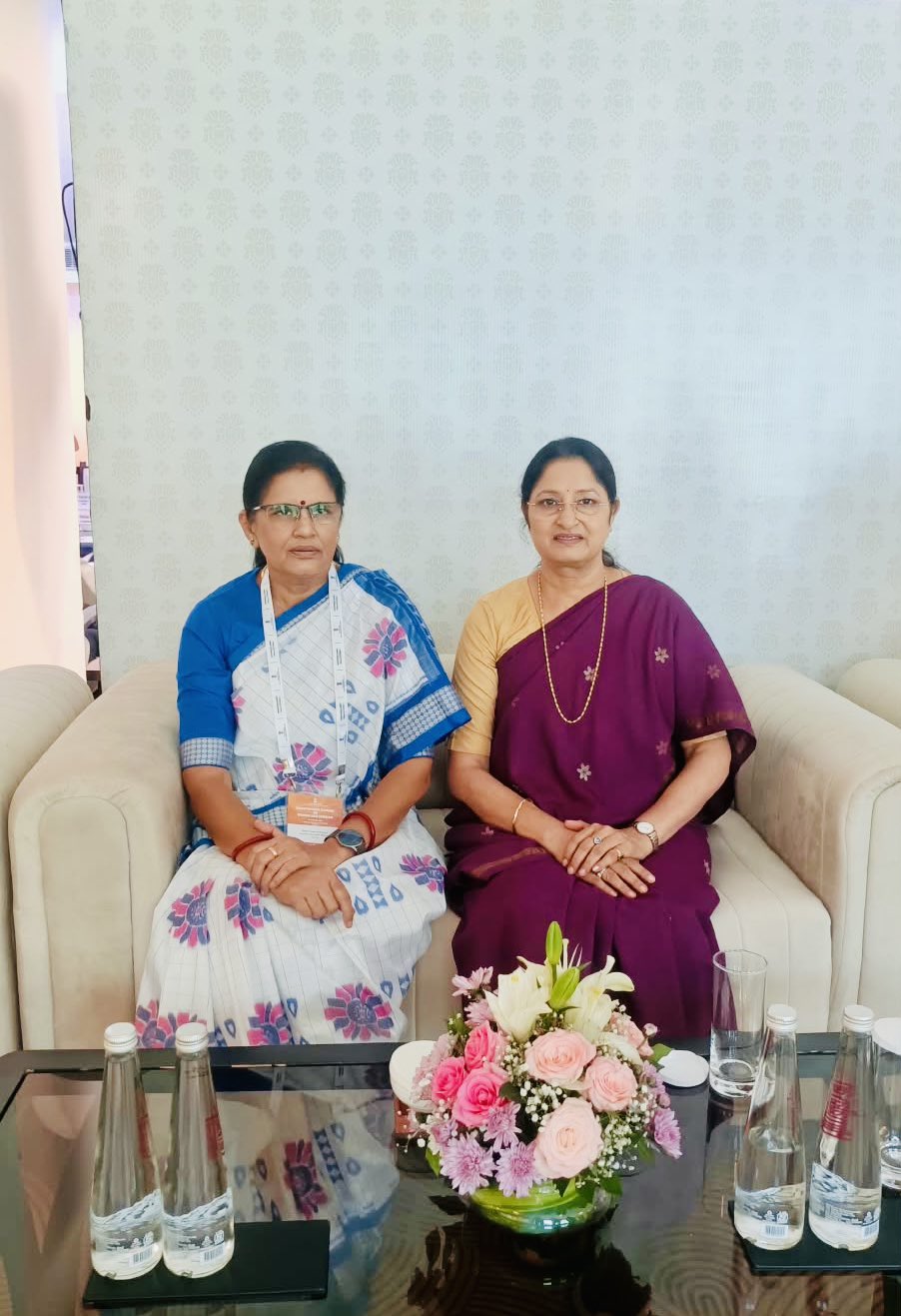
New Delhi, Oct 9 (UDN): Odisha Deputy Chief Minister Pravati Parida attended the two-day Departmental Summit of the Union Ministry of Women and Child Development in New Delhi, holding discussions with Union Minister Annapurna Devi on strengthening welfare initiatives for women and children.
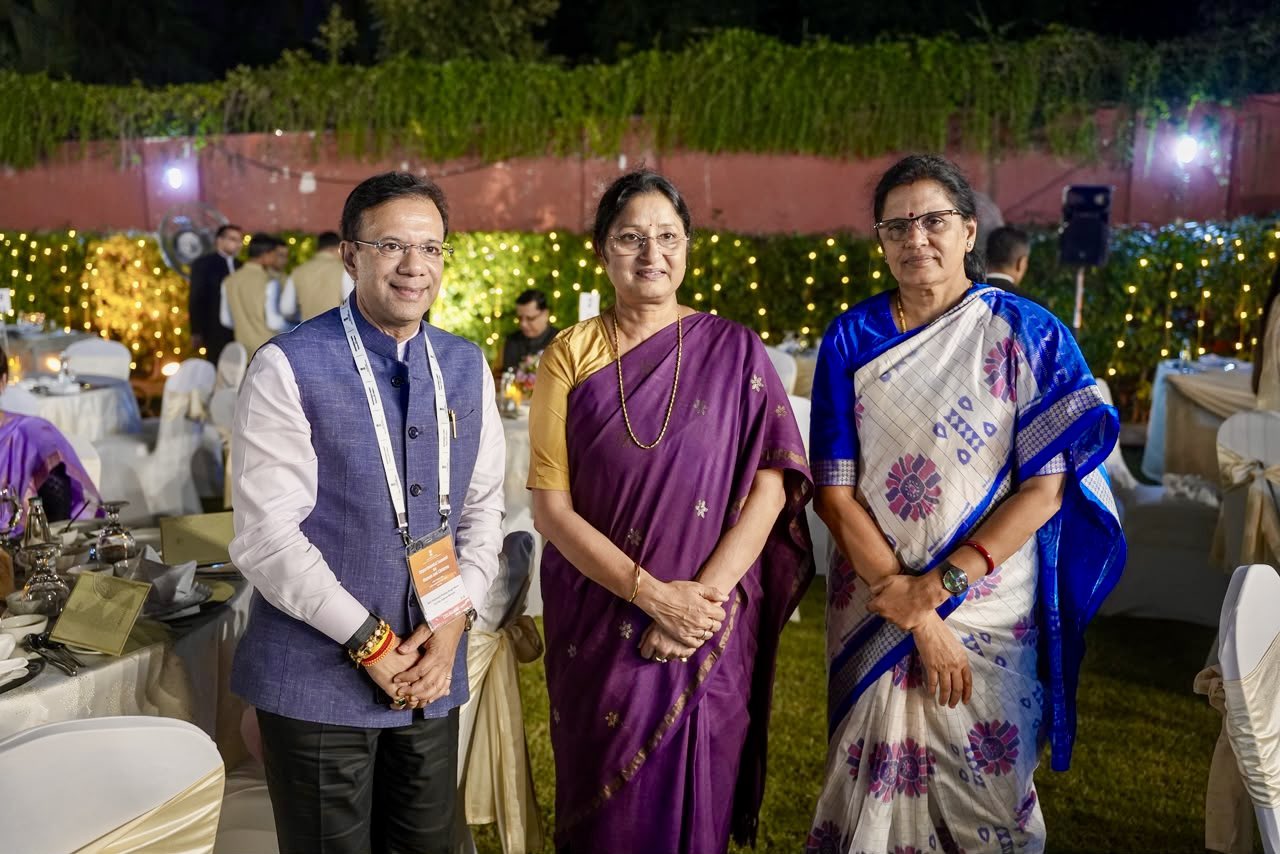
Pic Credit: x.com/PravatiPOdisha
The summit, being held on October 8 and 9, brings together representatives from the Centre, states and Union Territories to discuss policy priorities, improve coordination and strengthen the implementation of key programmes in the women and child development sector.
Mrinalini Darswal, Commissioner-cum-Secretary of Odisha’s Women and Child Development Department, is also participating in the deliberations.
Focus on Nutrition, Child Protection and Women’s Safety
The discussions at the summit are centred on four major areas: improving nutrition and early childhood education through the transformation of Anganwadi Centres, strengthening child protection systems, enhancing women’s safety through effective institutional and legal mechanisms, and expanding women-focused empowerment initiatives.
These priorities aim to improve access to essential services and strengthen the delivery of welfare programmes at the grassroots level.
Odisha Looks to Strengthen Centre-State Coordination
Parida’s participation provides Odisha an opportunity to share its experiences and initiatives in women and child development while learning from successful practices implemented by other states and Union Territories.
The meeting with Annapurna Devi also comes amid efforts to improve coordination between the Centre and state governments on policies concerning nutrition, child welfare, women’s security and economic empowerment.
Effective collaboration between the two levels of government is considered essential to ensuring that welfare schemes reach intended beneficiaries and deliver measurable outcomes.
Time-Bound Action Plan Expected
The summit is expected to conclude with a time-bound action plan outlining specific responsibilities, implementation deadlines and monitoring mechanisms.
The proposed framework is intended to improve accountability, strengthen programme implementation and enhance service delivery across the country.
The deliberations are expected to contribute to a more coordinated approach towards improving the well-being, protection and empowerment of women and children, with states playing a key role in translating policy priorities into effective action on the ground.
9, Oct 2026
US Congress to Honour Indian Pilot Smit Machchhar for Courage During Mid-Air Attack
WASHINGTON, Oct 9: Indian airline captain Smit Machchhar is set to receive recognition in the official Congressional Record of the US House of Representatives for his reported bravery during a mid-air attack aboard a Flydubai flight, an incident that allegedly put the lives of 172 passengers and crew members at risk.

Representational Image
Indian-American Congressman Raja Krishnamoorthi announced that he would place a statement honouring the Indian pilot in the Congressional Record, recognising his determination to protect those on board despite sustaining serious injuries.
According to the account shared by the congressman, the incident occurred on September 30 aboard Flydubai Flight 1073, which was travelling from Dubai to Tel Aviv. The aircraft was reportedly involved in a serious cockpit emergency after its first officer allegedly attacked Machchhar with an axe and attempted to take control of the aircraft.
Pilot’s Courage Helps Prevent Potential Disaster
The account stated that the aircraft descended approximately 16,000 feet in around 30 seconds during the incident, creating a potentially catastrophic situation.
Despite his injuries, Machchhar reportedly managed to reach and open the cockpit door, allowing passengers and crew members to enter and help subdue the alleged attacker.
Two reserve Flydubai pilots who were travelling on board subsequently took control of the aircraft and landed it safely in Tabuk, Saudi Arabia.
The flight was reportedly carrying 172 people, including 27 children and four American citizens.
Congressman Praises Captain’s Presence of Mind
Krishnamoorthi praised the captain’s composure and determination, saying his actions gave those aboard the aircraft an opportunity to intervene and avert a possible tragedy.
The congressman also highlighted the families whose loved ones were able to survive the ordeal, describing the pilot’s actions as an example of courage under extraordinary pressure.
He extended his best wishes to Machchhar, his wife, Sonal, their two children and the entire family, expressing hope for the captain’s full recovery from his injuries.
Krishnamoorthi also urged fellow lawmakers to recognise the Indian pilot’s actions.
An Indian Pilot with 17 Years of Experience
Machchhar, an Indian national, reportedly has 17 years of flying experience, including 11 years serving as a captain. His experience and actions during the emergency were highlighted in the congressman’s statement as key elements of the account.
The planned recognition in the Congressional Record would place the pilot’s reported actions on the official record of the US House of Representatives.
The Congressional Record documents proceedings, debates and other statements made in Congress. Members of the House and Senate may also use it to formally acknowledge individuals and significant events.
Note: The details of the incident, the planned congressional recognition and the flight’s reported emergency should be independently verified through official US congressional records, Flydubai and relevant aviation authorities before publication.
9, Oct 2026
Nana Patekar Cremated with Full State Honours at Pune Farmhouse; Film Fraternity Pays Tribute
PUNE, Oct 9 (UDN): Actor Nana Patekar was reportedly cremated with full state honours at his farmhouse in Donje village in Pune district on Thursday, according to a report published by OMMCOM NEWS. The last rites were said to have been attended by members of the film fraternity, political leaders and a large number of admirers.

Representational Image
The reported state honours included a three-gun salute as people gathered to pay their final respects to the veteran actor, whose performances have earned him a prominent place in Indian cinema.
Film Personalities Attend Last Rites
Several personalities from the entertainment industry reportedly arrived at the farmhouse to attend the funeral. Those named in the report included actor Jackie Shroff, directors Anil Sharma and Anees Bazmee, and producer Firoz Nadiadwala.
Maharashtra Chief Minister Devendra Fadnavis was reported to have paid his respects at Pune airport, while Deputy Chief Minister Eknath Shinde reportedly visited the farmhouse.
The gathering reflected the affection and admiration that the actor has commanded among colleagues, associates and audiences over the years.
Bollywood Expresses Grief
The report also cited messages of condolence from prominent figures in the Indian film industry.
Actor Salman Khan reportedly paid tribute through an Instagram Story, addressing Patekar affectionately as “bhau” and wishing him peace.
Ajay Devgn was also reported to have shared a tribute on X, recalling the veteran actor’s ability to evoke a wide range of emotions through his performances. Kamal Haasan reportedly remembered Patekar as an extraordinary artist and highlighted his contributions beyond cinema, including his reported work supporting farmers and volunteering during the Kargil War.
A Career Marked by Powerful Performances
Nana Patekar has been widely recognised for his intense screen presence and memorable performances across Hindi and Marathi cinema. His distinctive acting style and ability to portray complex characters have made him a notable figure in Indian entertainment.
Beyond his film career, his reported involvement in social initiatives has also drawn attention, adding another dimension to his public image.
Verification note: The reported death and funeral details, including the cause of death, attendance and official honours, should be confirmed through reliable independent sources before this story is published as factual news.
9, Oct 2026
Eminent Personality Receives 76th Honorary Doctorate from the Institute of Advanced Research, Gandhinagar
Gandhinagar, Gujarat, Oct 9 (UDN): On the occasion of its 15th Foundation Day, the Institute of Advanced Research (IAR), Gandhinagar, Gujarat, conferred an honorary doctorate in recognition of the recipient’s distinguished achievements and contributions.
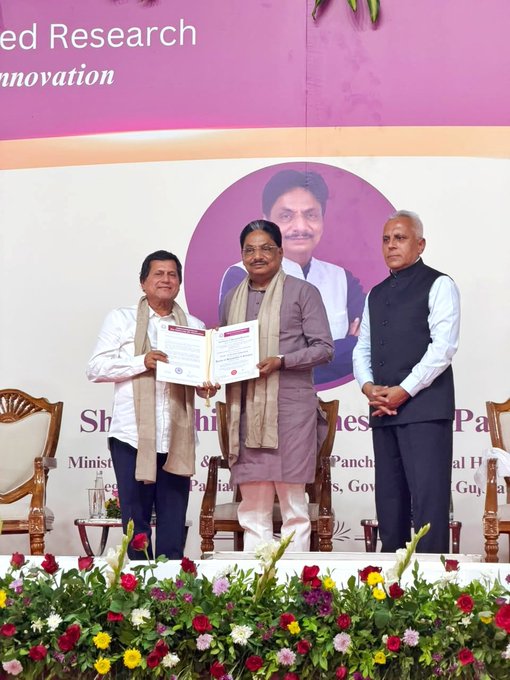
76th Honorary Doctorate I am grateful to the Institute of Advanced Research, Gandhinagar, Gujarat, for conferring an honorary doctorate on me on its 15th Foundation Day. This is my 76th honorary doctorate, and I receive it with humility. My heartfelt thanks to the Governing Body and the entire IAR family for this honour.
— Achyuta Samanta (@achyuta_samanta) October 8, 2026
This honour marks the 76th honorary doctorate received by the recipient, making it a significant milestone in an accomplished journey of academic recognition and professional achievement. The honour was accepted with deep humility and gratitude.
Expressing heartfelt appreciation, the recipient extended sincere thanks to the Governing Body of the Institute of Advanced Research and the entire IAR family for this prestigious recognition. The honour reflects the institute’s commitment to acknowledging distinguished individuals and celebrating their contributions to society.
In a message of gratitude, the recipient stated, “I am deeply grateful to the Institute of Advanced Research, Gandhinagar, for conferring this honorary doctorate upon me on the occasion of its 15th Foundation Day. Receiving my 76th honorary doctorate is a humbling experience. I extend my heartfelt thanks to the Governing Body and the entire IAR family for this honour and recognition.”
The occasion marked a memorable milestone in the institute’s Foundation Day celebrations and underscored the importance of recognising excellence, dedication, and meaningful contributions to society.
9, Oct 2026
University of Houston Launches Centennial Year Celebration, Marking 100 Years of Opportunity and Impact
President Khator celebrates UH’s legacy of access and impact during State of the University, launching bold vision for the next 100 years
Key Takeaways
- A century of opportunity: Founded in 1927 to bring higher education within reach of working Houstonians, the University of Houston begins its Centennial year celebrating 100 years of expanding access and opportunity.
- A century of impact: From 460 students and 15 faculty members to a nationally recognized Tier One research university, UH enters its Centennial from a position of strength, with record research activity and growing impact in areas critical to Houston and the United States.
- A century takes shape: A year of Centennial events, storytelling and traditions will coincide with major investments in UH’s future, including new and expanded facilities, a growing research enterprise and continued investment in students and the community UH was created to serve.
HOUSTON, Oct. 9 – Nearly 100 years ago, a group of determined Houston high school seniors asked their city for something that did not yet exist: a path to higher education for people who needed to work and stay in Houston.
The University of Houston was created to answer that call.
A century later, that commitment to opportunity remains at the heart of UH as it prepares to mark its 100th anniversary with a yearlong Centennial celebration honoring its history, celebrating its people and looking boldly toward its next century.
University of Houston President Renu Khator kicked off the Centennial celebration during her 2026 State of the University address Thursday, tracing UH’s journey from 460 students and 15 faculty in 1927 to a major research university serving nearly 49,000 students with record research activity, growing academic and health enterprises and a campus undergoing significant transformation.
“Today, we stand here on the eve of the University of Houston’s yearlong Centennial celebration,” Khator said. “As we smile with pride at our present and look with great anticipation to our future, we must not forget that it is our past that has brought us here. Our history is the foundation of all our present and future successes.”
A University Built by the City, for the City
By 1926, Houston was becoming the most populous city in Texas. Seeking higher education opportunities for working people who could not afford to leave their jobs or the city, 12 students from multiple Houston high schools approached the Houston Board of Education for help. A year later, the first classes began. By 1934, the institution had grown to become the University of Houston.
That founding principle — creating opportunity by meeting the needs of the moment — has endured even as those needs have changed. During World War II, UH adapted its curriculum to support the war effort and military trainees. When Houston’s economy was devastated by the 1980s oil bust, the University developed programs to prepare displaced workers for emerging industries. Through hurricanes and other challenges, UH opened its facilities and resources to its community. Amid the COVID-19 pandemic, the University launched a new medical school with a mission centered on improving health and healthcare access in communities across Houston and Texas.
That same spirit helped transform a small college serving working Houstonians into a Tier One research university. UH is reporting $300 million in research expenditures this year, with faculty advancing discoveries in health, energy, advanced materials, technology and other areas critical to Houston and the nation. The University’s next goal is $500 million in annual research expenditures.
“Today, students, for whom we built this University, are writing the new victory chapter for the University of Houston,” Khator said.
Celebrating the People Who Make UH
The centennial year will also celebrate the generations of people who made its progress possible. Generations of students, faculty, staff, alumni and supporters whose stories stretch from the classroom to the Moon. Through events, traditions and storytelling, UH will bring those stories to life as the Cougar community celebrates the people and moments that shaped its first 100 years.
The Next Century Takes Shape
The Centennial is not simply a look back at UH’s first 100 years. As UH celebrates its history, signs of its future are already taking shape across campus.
Over the next 12 months, the University will unveil major improvements designed to reshape the campus experience for the next generation of Cougars. Centennial Hall, a new first-year residence hall; a new Dining Commons; and an expanded Student Center North are all planned to open in 2027. Construction is already underway on a new home for the Hobby School of Public Affairs, and UH will soon break ground on a new Medical Research Building and an Innovation Hub.
The physical transformation reflects broader momentum across the University. UH enters its second century with a growing research enterprise, expanding leadership in health and energy, ambitious academic programs and continued investment in the students and community it was created to serve.
For 100 years, the University of Houston has met the moment. Now, it is preparing to meet the next one.


