


27, May 2026
BFSI Takes Centre Stage in India’s AI-Driven IT-BPM Workforce Transformation: Finds Han Digital Solution
Bangalore, May 27: Han Digital Solution, business consulting and talent advisory company, released findings from its India IT-BPM Talent Intelligence Report 2026, highlighting how artificial intelligence is driving one of the most significant workforce transformations across India’s technology and business operations ecosystem.
According to Han Digital’s talent intelligence insights, BFSI has emerged as a strategic nucleus of India’s IT-BPM growth story, contributing the largest share of industry revenues, while simultaneously becoming the strongest driver of AI-resilient operations hiring. At a time when automation and AI-led process optimization are significantly reducing recruitment across traditional non-banking operational functions; demand for skilled BFSI operations talent continues to accelerate, driven by the sector’s need for human-led governance, compliance, risk management, and decision-making capabilities. This shift marks a defining moment for India’s talent economy.
“India is witnessing a structural reset in enterprise hiring,” said Saravanan Balasundaram, Founder & CEO, Han Digital Solution. “AI is undoubtedly transforming the future of operations, but what we are seeing in the BFSI sector is equally important. Enterprises are doubling down on skilled human talent for high-accountability operational environments. The demand today is no longer for large generic workforces, but for productivity-ready professionals who can work alongside AI systems, manage regulatory complexity, and bring operational judgment that technology alone cannot replace.”
According to the study, non-banking operations hiring across outsourcing and support functions has declined by nearly 40–50% over the past 12 months compared to the previous year. In contrast, Banking and Insurance operations hiring has accelerated significantly across India, with more than 15,000–20,000 new roles created during the last year alone.
India’s broader IT-BPM industry continues to remain a global growth engine, with total sector revenue projected to reach $315 billion in FY26, reflecting a 6.1% year-on-year increase. BPM revenue alone is estimated at $59 billion, while the BFSI vertical contributes nearly 42% of the overall IT-BPM industry revenue, reinforcing its position as the sector’s most dominant growth contributor.
The demand surge spans a wide range of operational functions including banking back-office operations, live underwriting support, loan processing, mortgage operations, KYC and AML compliance, claims adjudication, financial crime operations, treasury support, collections management, and regulatory reporting. Han Digital estimates that BFSI hiring across India is expected to grow by 8–9% year-on-year during 2026–27, with the sector projected to create nearly 200,000 permanent jobs by 2030.
The hiring momentum is being distributed across multiple employer segments. BFSI Global Capability Centres (GCCs) account for nearly 30–40% of current hiring demand, with India now hosting approximately 190 BFSI GCCs employing more than 550,000 professionals. IT services and BPM firms contribute another 20–30% of hiring activity as they continue expanding dedicated banking operations delivery centres across the country. Specialized BPO operators focused on financial processing, claims management, and compliance operations make up the remaining demand, particularly for mid-level operational talent.
One of the strongest workforce trends identified through this study is the sharp rise in demand for professionals with one to four years of experience. This segment now represents nearly 40% of total BFSI operations hiring demand. Organizations increasingly prefer professionals who already possess process understanding, compliance awareness, and operational maturity, enabling them to work effectively in AI-enabled operating environments without extensive training cycles.
“AI is eliminating repetitive tasks, but it is simultaneously increasing the value of domain-aware operational talent,” added Saravanan. “The future workforce model will belong to professionals who combine operational expertise with digital adaptability. India is uniquely positioned to become the global hub for this next generation of BFSI operations talent.”
Geographically, Bengaluru continues to dominate the BFSI hiring landscape, accounting for nearly 35–40% of total demand, followed by Pune and Mumbai at 20–25%, Hyderabad at 15–20%, and Chennai at 15–20%. However, the next phase of expansion is increasingly shifting toward Tier-II delivery ecosystems including Coimbatore, Ahmedabad, Jaipur, Kochi, Indore, and Lucknow, where enterprises are finding strong talent availability, lower attrition levels, and significant cost advantages.
With India’s BFSI GCC market projected to grow from $40 billion in 2023 to nearly $125–135 billion by 2032, alongside the Indian fintech economy expected to touch $550.9 billion by 2033, Han Digital believes the ongoing hiring acceleration represents far more than a temporary workforce trend. It signals the emergence of a new AI-enabled operating model where India will continue to play a central role in powering the global financial services workforce of the future.
- 0
- By Neel Achary

27, May 2026
Schneider Electric strengthens smart building and home automation ecosystem with Samsung SmartThings integration
Paris (France), May 26: Schneider Electric, a global energy technology leader, today announced that its SpaceLogic KNX solution can now be integrated with Samsung SmartThings for residential settings and SmartThings Pro* for enterprise-scale buildings and multi-site operations.
Samsung has streamlined its certification process, enabling Schneider Electric to rapidly bring its full SpaceLogic KNX portfolio into the SmartThings ecosystem. As a result, Schneider Electric is expanding the range of connected devices available to homeowners and facility managers through a single platform.
The integration enables users to monitor and control SpaceLogic KNX devices through the SmartThings ecosystem, providing a single interface to manage building functions such as lighting, blinds, temperature control, sensors, and energy systems. This empowers users to optimize energy consumption across residential and commercial environments, enabling them to reduce buildings’ carbon footprint through smart automation.
“Interoperability has become increasingly important in both residential and commercial environments, where customers expect connected systems to work together seamlessly,” said Laurent Roussel, SVP Commercial & Channel at Schneider Electric. “Integrating SpaceLogic KNX with Samsung SmartThings expands how customers can manage their connected devices, personalize their automation experience and gain greater visibility into energy usage across homes and buildings.”
Centralizing Energy and Commercial Building Management
Managing energy and building systems across multiple commercial locations has traditionally meant navigating a fragmented landscape of products from different manufacturers, siloed data, and disconnected controls, leaving facility managers with no single view of what’s happening across their portfolio.
The SpaceLogic KNX integration with SmartThings Pro enables facility managers to monitor and manage energy consumption for multiple commercial locations through centralized dashboards. SpaceLogic KNX devices can now be integrated into SmartThings Pro to monitor lighting, blinds, HVAC, occupancy, and energy consumption across commercial spaces.
Centralizing Connected Home Control
Smart home technology has delivered remarkable capability, but managing it has often meant juggling a growing number of separate apps, incompatible systems, and devices that don’t talk to each other. For homeowners, home builders, and residential contractors, that fragmentation has been one of the biggest barriers to realizing the full potential of connected home investments.
But now, the integration enables the management of SpaceLogic KNX solutions and other connected home products within the SmartThings application. This gives homeowners a more centralized way to control connected devices like smart appliances and electronics like TVs, simplifying day-to-day management of comfort, lighting, and household energy use.
27, May 2026
BioRestorative Completes Phase 2 Dosing of BRTX-100, Advancing Lead Regenerative Spine Program Toward 2027 Topline Data
MELVILLE, N.Y., May 26 (GLOBE NEWSWIRE) — BioRestorative Therapies, Inc. (“BioRestorative,” “BRTX,” or the “Company”) (Nasdaq:BRTX), a late-stage clinical regenerative medicine company focused on stem cell-based therapies and products, today announced that the last patient has been dosed in its fully enrolled Phase 2 clinical trial evaluating BRTX-100 for the treatment of chronic lumbar disc disease (cLDD), completing treatment administration in the Company’s lead clinical program and advancing the study into the next stage of blinded follow-up ahead of expected topline safety and efficacy data in Q2 2027.
The prospective, randomized, double-blind, sham-controlled, single-disc Phase 2 study enrolled approximately 99 patients across U.S. clinical sites and is designed to evaluate the safety and preliminary efficacy of BRTX-100 in patients with painful chronic lumbar disc disease. Subjects were randomized in a 2:1 ratio to receive either BRTX-100 or control treatment. The primary safety endpoints for the trial include the frequency and severity of adverse events and serious adverse events, as well as imaging-related findings. The primary efficacy responder endpoint is defined as at least a 30% improvement from baseline in both pain — as measured by the Visual Analog Scale — and function –as measured by the Oswestry Disability Index, at week 52. Study follow-up assessments are being conducted at weeks 2, 12, 26, 52 and 104, with MRI evaluations at baseline, week 52 and week 104.
“Completion of dosing in our Phase 2 BRTX-100 trial represents an important transition point for BioRestorative,” said Lance Alstodt, BioRestorative Chief Executive Officer. “We have now completed treatment administration in a rigorously designed, randomized, double-blind, sham-controlled study of our lead regenerative spine candidate, and the program is moving through blinded follow-up toward the 52-week efficacy assessment and expected topline safety and efficacy data in the second quarter of 2027. Importantly, this milestone also comes as we continue Phase 3 readiness activities following our Type B meeting with the FDA, where the agency did not raise clinical safety concerns and provided alignment on key elements of the late-stage development pathway.
“With Phase 2 dosing now complete, we believe BioRestorative is positioned to advance the next phase of BRTX-100 development while reducing expenses and redirecting operational focus and resources toward additional value-creation priorities, including the continued commercialization of our BioCosmeceutical platform,” Mr. Alstodt continued. “Our objective is to build from this milestone with discipline, clinical rigor and a clear focus on advancing our regenerative medicine platform across both therapeutic and commercial opportunities.”
BRTX-100 is BioRestorative’s proprietary autologous, hypoxically cultured mesenchymal stem cell therapy designed for delivery into the harsh, low-oxygen, low-nutrient environment of the intervertebral disc. Patients in the trial received a single intradiscal injection of BRTX-100 consisting of 40 x 10^6 cells administered in approximately 1.5 cc through a minimally invasive outpatient procedure.
Eligible patients enrolled in the study were required to have chronic low back pain persisting for at least six months, failure of conservative therapy for at least six months, MRI-confirmed single symptomatic lumbar disc disease and minimum baseline pain and disability thresholds. Major exclusion criteria included prior lumbar surgery at the index level and prior biologic or cellular disc interventions.
BioRestorative has previously reported favorable blinded safety and preliminary efficacy data from the ongoing Phase 2 trial, including sustained improvements in pain and functional measures across multiple follow-up periods and MRI findings suggestive of potential disc remodeling in certain subjects. In previously disclosed blinded datasets, the Company reported clinically meaningful improvements across pain and function measures, including Visual Analog Scale, Oswestry Disability Index, Roland-Morris Disability Questionnaire and Functional Rating Index assessments. To date, the Company has reported no dose-limiting toxicities or serious adverse events related to BRTX-100 in the safety cohorts evaluated. These blinded findings have been presented at scientific and industry conferences and disclosed through prior Company announcements.
BRTX-100 has received Fast Track designation from the U.S. Food and Drug Administration for the treatment of chronic lumbar disc disease. BioRestorative previously announced a positive outcome from a Type B meeting with the FDA regarding key elements of a potential Phase 3 program and a pathway toward future BLA-enabling activities. The Company expects to continue advancing Phase 3 preparation activities while blinded follow-up in the Phase 2 study continues, with topline safety and efficacy data expected in Q2 2027.
27, May 2026
EPFO 3.0 to Enable Instant PF Withdrawal via UPI, ATM Access
New Delhi, May 27 (BNP): In a major move aimed at simplifying provident fund services and improving user convenience, the Employees’ Provident Fund Organisation (EPFO) is set to introduce “EPFO 3.0,” a revamped digital framework expected to allow instant provident fund (PF) withdrawals through UPI and ATM-like systems.

Representational image
The upgraded system is designed to make PF transactions faster, more seamless, and user-friendly, significantly reducing processing delays while enhancing accessibility for millions of salaried employees across the country.
One of the biggest highlights of EPFO 3.0 is the proposed instant PF withdrawal facility through Unified Payments Interface (UPI), enabling subscribers to access eligible funds directly into their bank accounts within a shorter timeframe. In addition, EPFO is also working on ATM-based withdrawal mechanisms, allowing users to access PF money more conveniently, similar to banking transactions.
The new digital ecosystem is expected to streamline claim settlements and reduce paperwork by integrating advanced verification systems and automation. Subscribers may no longer need to wait several days for claim approvals, as faster digital authentication and direct payment systems are likely to accelerate fund transfers.
EPFO 3.0 is also expected to improve user experience through simplified account management, better digital services, and enhanced transparency. Officials indicate that the platform may support real-time updates, easier claim tracking, and quicker grievance resolution mechanisms.
Among the anticipated changes are simplified Know Your Customer (KYC) verification processes, improved digital interface for members, and stronger integration with banking and digital payment infrastructure to enable smoother transactions.
The initiative is expected to benefit crores of EPFO subscribers, particularly salaried employees seeking quicker access to emergency funds for healthcare, housing, education, marriage, or other financial needs.
Key expected features of EPFO 3.0 include:
• Instant PF withdrawal through UPI integration
• ATM-like access to provident fund withdrawals
• Faster claim settlement and automated verification
• Simplified KYC and improved digital services
• Enhanced transparency and claim tracking systems
• Improved user interface and grievance redressal
The move is seen as part of the government’s broader push towards digital governance and ease of living, aiming to modernise employee welfare services through technology-driven reforms.
Officials are expected to release detailed operational guidelines and rollout timelines in the coming months.
27, May 2026
Nicolas Cage in Spider Noir on Prime Video Sneak Peek
May 27 : Prime Video’s upcoming series Spider–Noir brings the world of Spider-Man into a darker, moodier space, following a black and white noir style that feels straight out of a classic detective story with comic book blood running through it. Led by Nicolas Cage in his first television project, the series leans into the sharp shadows, heightened drama and pulpy energy of the Spider–Noir universe, making it a natural fit for an actor who has always drawn from film, art and larger than life performance.

Speaking about what drew him to Spider–Noir, Nicolas Cage shared,
“I had been imagining a performance presentation for quite some time. It’s no secret that I’m influenced by different art forms, and I had been largely influenced by the pop art of Warhol and Lichtenstein. Just as in “Wild at Heart,” when I drew on Warhol, I thought wouldn’t it be interesting to do a Lichtenstein performance—utilizing comic book energy and fusing it with a classic black and white style of film acting. And lo and behold, along came “Spider–Noir.” My interests were predominantly cinema-based; however, when I learned “Spider–Noir” would be episodic television, I thought that format would lend itself well to my concept since comic books are inherently episodic.”
Along with Academy Award winning actor Nicolas Cage, the series stars Lamorne Morris , Li Jun Li, Abraham Popoola, Karen Rodriguez, Jack Huston, and Brendan Gleeson. Guest star cast includes Lukas Haas, Cameron Britton, Cary Christopher, Michael Kostroff, Scott MacArthur, Joe Massingill, Whitney Rice, Amanda Schull, Andrew Caldwell, Amy Aquino, Andrew Robinson, and Kai Caster.
Spider–Noir is produced by Sony Pictures Television exclusively for MGM+ and Prime Video. Emmy Award winning director Harry Bradbeer directed and executive produced the first two episodes. Oren Uziel and Steve Lightfoot serve as co-showrunners and executive producers. The series premieres on May 27, 2026, exclusively on Prime Video across India and in over 240 countries and territories worldwide. It will be available to stream in English, Hindi, Tamil, Telugu, Kannada and Malayalam in both, authentic black & white and true-hue full color.
27, May 2026
Nisus Finance Reports Q4 FY26 Results
Mumbai, May 27: Nisus Finance Services Co Limited, an alternative investment and urban infrastructure platform, announced its audited financial results for the second half and financial year ended March 31, 2026, reporting strong operational growth, platform expansion, and sustained profitability despite temporary geopolitical disruptions in Q4.
Strong Core Business Performance
Nisus Finance’s core business of fund management and transaction advisory delivered robust growth in FY26:
- Total Income: INR 141.07 crore (↑110% YoY)
- Profit After Tax (PAT): INR 67.76 crore (↑108% YoY)
- EBITDA: INR 100.80 crore
- EBITDA Margin: 70.5%
Assets under management (AUM) grew 67% YoY to INR 2,631 crore, driven by investments across India and Dubai, strategic exits, and strong traction in private credit and urban infrastructure opportunities.
Core Business Financial Highlights (Excluding NCCCL)
| Particulars (₹ Cr) | Q4 FY26 | H2 FY26 | FY26 | FY25 |
|---|---|---|---|---|
| Total Income | 27.42 | 66.19 | 141.07 | 67.30 |
| EBITDA | 14.47 | 42.45 | 100.80 | 44.80 |
| EBITDA Margin (%) | 57.1% | 66.9% | 71.5% | 66.1% |
| PAT | 11.05 | 31.25 | 67.76 | 32.58 |
| PAT Margin (%) | 40.3% | 47.21% | 48.0% | 48.4% |
Q4 FY26 Performance and Outlook
The fourth quarter witnessed a temporary moderation in revenue due to deferred investment activity linked to geopolitical developments in West Asia. The company clarified that the impact was event-driven and non-structural, with several India and UAE transactions expected to be completed in FY27.
Consolidated Performance (Including NCCCL)
On a consolidated basis, including New Consolidated Construction Company Limited (NCCCL), Nisus Finance reported:
- Total Income: ₹574.92 crore
- PAT: INR 83.08 crore
- EBITDA Margin: 24.73%
Consolidated Financial Highlights (Including NCCCL)
| Particulars (₹ Cr) | Q4 FY26 | H2 FY26 | FY26 |
|---|---|---|---|
| Total Income | 203.58 | 432.62 | 574.92 |
| EBITDA Margin (%) | 13.5% | 18.69% | 24.73% |
| PAT | 25.12 | 46.15 | 83.08 |
| PAT Margin (%) | 12.3% | 10.67% | 14.5% |
NCCCL Integration and Order Growth
NCCCL, acquired during FY26, continued to strengthen Nisus Finance’s integrated infrastructure platform, adding over INR 1,200 crore in new orders till May 26, enhancing medium-term execution visibility.
International Expansion
The company’s Dubai-focused AUM grew 223% YoY to ₹1,516 crore, supported by investments in income-generating residential assets and high-yield opportunities. The UAE portfolio remained resilient despite regional geopolitical disruptions, reporting zero impairment and continued NAV appreciation.
Commenting on the performance, Dr. Amit Goenka, Chairman & Managing Director, said:
“FY26 was a defining year for Nisus Finance. We scaled the platform meaningfully while remaining resilient through global uncertainty. Despite temporary disruptions in cross-border investment activity in Q4, we exceeded our revenue guidance and maintained strong profitability. Our India and UAE businesses continued to show momentum, and the acquisition of NCCCL has further strengthened our integrated urban infrastructure strategy. We enter FY27 with a strong pipeline across fund management, structured credit, redevelopment, and infrastructure opportunities.”
Strategic Focus Ahead
During the year, the company also advanced strategic initiatives including Ni-YAM, a hybrid credit and asset appreciation platform, along with plans for SM REIT structures and GIFT City feeder platforms.
Nisus Finance reaffirmed its focus on capital preservation, disciplined underwriting, and long-term value creation, while continuing to expand its cross-border investment and advisory capabilities.
With a diversified platform spanning fund management, transaction advisory, strategic investments, and infrastructure execution, the company remains well-positioned to benefit from growing demand for alternative capital and urban infrastructure financing across India and the GCC region.
27, May 2026
Royal Enfield brings its high-octane Grrr Nights and Underground experience to Bengaluru
Bengaluru, May 27 : Royal Enfield’s GRRR Nights x Underground arrives in Bengaluru on May 30, 2026 bringing together motorcycling, music and automotive subculture for a high-energy evening.

What: GRRR Nights – an immersive evening celebrating motorcycling and its subcultures, performance machines, music and expression.
When: Saturday – May 30, 2026, 3:00PM onwards
Where: Aruani Grid, Bengaluru
Tickets now live on District
Key Highlights to watch out for :
- Live Shows where professional stunt riders push the limits of balance, control and machine capability.
- Drag & Drift Club that will offer a closer look at the craft of controlled speed and machine handling.
- Custom Motor Vehicle Showcase that will put on display a set of uniquely built Guerrilla 450s and other Royal Enfield motorcycles and 60+ super/tuned cars celebrating creativity and individuality.
- Supercar & Superbike Meetup that gathers high-performance machines including Formula 4 cars and automotive enthusiasts under one roof!
- Wheelie Zone showcases precision bike control, balance, and stunt-riding skills in a thrilling performance setup!
- Introduction of the Corner Raid, Guerrilla 450’s street Racing IP.
- Brodha V – Delivering his sharp wordplay, and high-energy stage presence
- DJ Talam and DJ Stoke who are set to keep the energy high through the night.
- DJ Frankie will get the crowd going with his electrifying set packed with all the crowd-favourite tunes
- Other showcases and experiences that are a must watch include,
- Choreographed Fire Performance by trainer professionals adding dramatic visual energy to the evening.
- Pre-Event Drag Race hosted on an airstrip ahead of the main event, with the action being live-streamed for audiences at the venue
- Thrilling Drift Showcases by some of the country’s top car drifters, including Sanam Sekhon, alongside adrenaline-pumping motorcycle stunt performances by Padma Prasanth and Team Never Enough
27, May 2026
The Making of Texture: Inside the Techniques That Create Depth in Modern Rugs
Jaipur , May 27 : In contemporary interiors, texture has become one of the defining elements of luxury. Beyond colour and pattern, designers today are increasingly focused on how surfaces interact with light, movement, and touch. Rugs, in particular, have evolved from flat decorative pieces into highly tactile design elements that add depth, softness, and architectural character to a space.
What often appears effortless in a finished rug, however, is the result of highly engineered craftsmanship.
Behind every textured rug lies a complex interplay of weaving techniques, yarn combinations, pile variations, and finishing processes. From loop and cut pile constructions to carving, high-low weaving, and mixed material surfaces, modern rug texture is carefully constructed rather than accidental.
“Texture today is one of the most important aspects of rug design,” says Deepak Khanna, Founder of Man Made Rugs. “People are looking for rugs that create dimension and atmosphere within a space. Achieving that requires a deep understanding of technique, material behaviour, and craftsmanship.”
One of the most widely used methods in textured rug making is the combination of loop and cut pile weaving. Loop pile retains the yarn in its looped form, creating a structured and slightly raised surface, while cut pile produces a softer and smoother finish. By combining both techniques within a single rug, artisans can create subtle contrasts in height, density, and tactile feel.
This variation allows patterns to emerge through texture rather than obvious colour shifts, aligning with the growing preference for tonal and understated interiors.
High-low weaving further enhances this sense of depth. Through carefully controlled pile height differences, certain sections of the rug sit higher while others recede, creating sculptural surfaces that respond differently to light and movement. In minimalist interiors especially, these nuanced details bring warmth and complexity without overwhelming the space visually.
Material innovation also plays a significant role in contemporary textured rugs. Designers are increasingly blending wool with silk, bamboo silk, linen, and other speciality yarns to create layered tactile effects. Matte and reflective fibres interact differently with light, allowing surfaces to shift subtly throughout the day.
The result is a rug that feels visually dynamic despite using restrained colours and minimal patterning.
Carving techniques add another layer of sophistication. After weaving, artisans often hand-carve sections of the rug to sharpen patterns, enhance depth, or create fluid transitions between textures. This finishing process requires precision and craftsmanship because even small inconsistencies can alter the visual balance of the rug.
Importantly, these innovations are not replacing handmade craftsmanship. Instead, they are expanding its possibilities.
According to Deepak Khanna, Founder of Man Made Rugs, modern rug making is increasingly defined by the balance between artisanal skill and contemporary design thinking.
“Handmade rugs today are evolving far beyond traditional motifs,” he explains. “There is a growing focus on texture, material layering, and surface experimentation. The craftsmanship remains deeply rooted in hand processes, but the design language is becoming more architectural and globally relevant.”
This shift reflects broader movements within contemporary interiors, where subtlety is becoming more valuable than ornamentation. Rather than relying on bold patterns or excessive decoration, designers are using texture to create emotional warmth and spatial depth.
As a result, the technical construction of rugs is becoming just as important as their visual appearance.
The future of rug design is likely to be defined not by louder aesthetics, but by more intelligent craftsmanship. In that future, texture will continue to play a central role, quietly shaping how spaces feel, absorb light, and create comfort in increasingly refined ways.
27, May 2026
La Tarté’s Summer Plate Is Fresh, Bright, and Completely in Season
May 27 : Tucked into Delhi’s dining landscape as a modern wine and espresso bar, La Tarté has always been about more than a meal; it’s about the hour spent lingering over something good. This summer, the brand deepens that intent with a new seasonal menu drawn from the unhurried café culture of New York, Florence, Nice, and Milan, reimagined for a Delhi audience that knows exactly what it wants from a table.
The Summer Menu arrives as a full sensory experience; lemon-inspired décor installations, Mediterranean-toned aesthetics, and a spread designed to carry guests from a slow morning coffee into an easy afternoon of wine and conversation. Live stations and interactive pasta-making experiences sit alongside the food menu, making the visit as much about participation as it is about dining.
On the plate, the kitchen leans into the season’s best; Watermelon & Feta Salad, Mango Avocado Salad, and freshly handmade pasta selections anchor a menu built on bright, balanced flavours. The Mango Tres Leches rounds out the dessert offering with the kind of indulgence that still feels appropriate for the heat, while the Boozy Tiramisu has quietly become a table favourite.
The beverage list is where summer really takes shape. Iced coffees, matcha-forward coolers, and wine pairings have been crafted to move through the day; whether the occasion calls for a mid-morning Coconut Cloud Matcha, an afternoon Iced Shaken Espresso, or a Vanilla Cold Foam Latte as the light shifts. Ingredients like mango purée, coconut cream, cold-brew espresso, and seasonal fruit run consistently through the list, keeping things cohesive and considered.
Speaking to the vision behind the menu, Raayyaana Arora of La Tarté shares:
“For us, summer is less about just introducing seasonal dishes and more about creating a feeling. We wanted La Tarté’s Summer Menu to reflect the kind of café and wine culture we experienced while travelling; where people spend hours over iced coffees, fresh food, conversations, and wine in spaces that feel effortless yet elevated.”
Throughout the season, the menu will continue to evolve; limited-edition beverages, curated wine evenings, and pasta-making workshops under the Love Station concept will keep things dynamic well beyond launch. The Summer Menu is available daily across La Tarté outlets from 10 AM to 11 PM, with an average spend of INR 2,000–₹3,500 for two for the full dining experience, and INR 500–₹800 for two over coffee.
27, May 2026
NIT Rourkela Develops AI-Powered Autofocus Technology for Faster Disease Detection
Rourkela, May 27 (BNP): In a major technological breakthrough that could transform healthcare diagnostics, researchers at the National Institute of Technology (NIT) Rourkela have developed an artificial intelligence (AI)-enabled autofocusing technology designed to significantly improve microscopic imaging used in biomedical diagnostics.
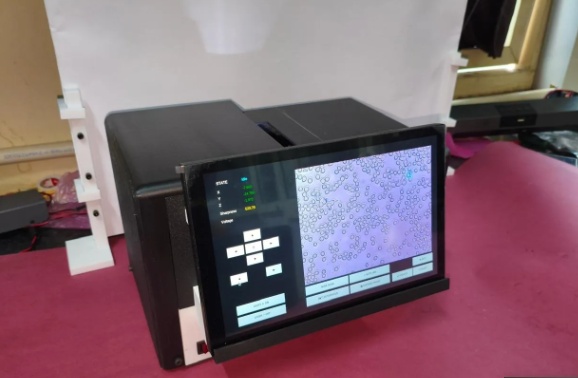
The innovative system has already demonstrated promising laboratory-scale results in detecting Acute Lymphoblastic Leukaemia (blood cancer) and malaria, marking an important step toward affordable, next-generation healthcare diagnostics in India.
Developed by the Department of Biotechnology and Medical Engineering at NIT Rourkela in collaboration with Glowvista Instruments Private Limited — a startup incubated at the institute’s Foundation for Technology and Business Incubation (FTBI) Centre — the technology is capable of delivering rapid, accurate, and repeatable microscopic imaging results with minimal human intervention. The research team has also secured a patent for the innovation titled “A Method for Autofocusing in Optofluidic Microsystems and Processes.”
Microscopy technology plays a vital role in modern healthcare diagnostics by enabling doctors and researchers to closely examine cells, tissues, microorganisms, and other biological structures that are invisible to the naked eye. It is extensively used in diagnosing diseases such as cancer, malaria, tuberculosis, and various pathology-related disorders, while also supporting drug development and point-of-care diagnostics.
However, conventional microscopy systems remain heavily dependent on manual focusing, making them time-intensive and susceptible to human error. Such limitations often lead to inconsistent imaging, inaccurate diagnosis, and delays in treatment — challenges that become particularly critical when handling complex biological samples or urgent medical conditions.
To address these concerns, the NIT Rourkela team developed an optofluidic digital microscopy platform integrated with deep learning algorithms, optical imaging systems, and automated motion control. The system continuously analyses microscopic images in real time and intelligently adjusts focus through an automated feedback mechanism, significantly improving imaging precision and operational speed.
According to the institute, the technology was developed at an estimated cost of around Rs 1.20 lakh and has delivered encouraging outcomes during testing. Besides detecting Acute Lymphoblastic Leukaemia and malaria, the system reportedly demonstrated the ability to conduct complete blood cell counts through advanced blood-cell classification techniques.
The research team comprises Prof. Earu Banoth, Assistant Professor in the Department of Biotechnology and Medical Engineering at NIT Rourkela and Founder-Director of Glowvista Instruments Pvt. Ltd.; Dr. Shaik Ahmadsaidulu, a research graduate at NIT Rourkela; and incubatee members Amol Lalchand Salve and Padmanaban Selvakumar from Glowvista Instruments.
Explaining the vision behind the innovation, Prof. Banoth said the team aims to develop a simple handheld diagnostic system capable of delivering performance comparable to imported automated microscopy technologies. He added that the researchers plan to expand the platform for multiple biomedical applications and field-level deployment, making advanced diagnostic capabilities more accessible and affordable.
Key features of the developed system include AI-powered intelligent autofocus, real-time image processing, automated focus adjustment, cloud-enabled learning, and enhanced imaging of complex biological samples.
Researchers believe the technology could find applications across biomedical diagnostics, digital pathology, AI-assisted microscopy, portable healthcare devices, smart laboratory automation, and remote diagnostic systems.
The project received financial support from the Anusandhan National Research Foundation (ANRF), the Department of Science and Technology (DST), and the Department of Biotechnology (DBT), Government of India.
Officials at NIT Rourkela said the innovation aligns with the Government of India’s “Make in India” initiative and highlights the institute’s continued focus on developing affordable indigenous healthcare technologies to strengthen disease diagnosis and improve access to quality medical care.


