


15, Oct 2026
Phonak launches Roger On Sphere™: the first AI-powered remote microphone to separate speech from noise in real time
Stäfa, Switzerland – October 15, 2026 – Phonak today announced Roger On Sphere™, the world’s first remote microphone powered by a deep neural network (DNN) that separates speech from background noise in real time. It helps people with hearing loss follow conversations in busy restaurants, meetings, family gatherings and social events, over distance and in groups, where hearing aids alone may not be enough.
“Roger has transformed communication in demanding listening environments for nearly two decades,” said Alain Kertész, Senior Director Roger. “Roger On Sphere brings AI-driven speech separation to a remote microphone, giving users greater clarity and confidence in situations that were previously difficult to manage.”
Clearer speech in more situations
Roger On Sphere combines Phonak Sphere technology with the proven Roger wireless protocol. It continuously analyzes the surroundings and separates speech from noise in every microphone mode and at every noise level.
Compared with its predecessor, it delivers an additional 3 dB signal-to-noise ratio benefit. This is equivalent to roughly 50% less noise power, allowing users to communicate in environments with twice the noise level.¹
One microphone for work, home and social life
The device automatically adapts its microphone mode to meetings, lectures, online calls, restaurants, family gatherings and car journeys, so users do not need to adjust settings.
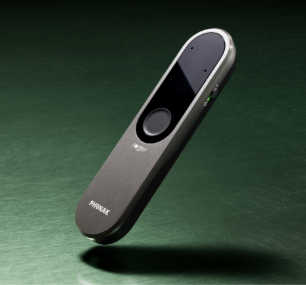
Key features:
- AI-powered real-time speech-from-noise separation through RogerSense OS™
- Automatic adaptation across multiple listening situations
- Reliable, low-latency Roger wireless transmission
- Broad compatibility with hearing aids, cochlear implants and other hearing solutions, including products across the Sonova portfolio such as Phonak Naída and Virto hearing aids and Advanced Bionics cochlear implant systems
- Enhanced hardware design and updated myRogerMic experience
By making conversations easier to follow and reducing listening effort, Roger On Sphere helps people take a fuller part in life at work, at home and in social settings. Phonak encourages hearing care professionals to demonstrate the device in the clinic so clients can experience the benefits firsthand.
Phonak Roger On Sphere is available in most markets as of mid-November 2026.
References
1 Roh M, Gigandet X, & Sans M. (2026). Expand your world, with Roger On Sphere. Phonak Insight.
* Based on a 3 dB SNR benefit in typical operating range
- 0
- By Neel Achary

15, Oct 2026
BioLab Holdings Launches EmeraNova™ to Advance the Future of Tissue Restoration
15, Oct 2026
Excel Dryer’s headquarters earns WELL Silver Certification, setting a new standard for workplace wellness
FM Architecture chosen to drive innovation showing how wellness-centered design creates healthy sustainable workplaces while serving as an educational resource
East Longmeadow, Mass.— Excel Dryer’s newly renovated corporate headquarters has earned WELL Silver Certification, recognizing the company’s ambitious effort to create a workplace centered on sustainability and employee health, comfort, collaboration and productivity. When Excel Dryer set out to transform its East Longmeadow headquarters, the company wanted to create a workplace that put those principles into practice and needed the right architecture and design partner to bring that vision to life.
“I sent out a request for proposal to multiple architecture firms with one very clear and lofty goal for this project: design the most beautiful, healthiest and sustainable office space in the world!” said William Gagnon, executive vice president and COO of Excel Dryer, Inc. “Ultimately, FM Architecture was selected, and they delivered an amazing space.”
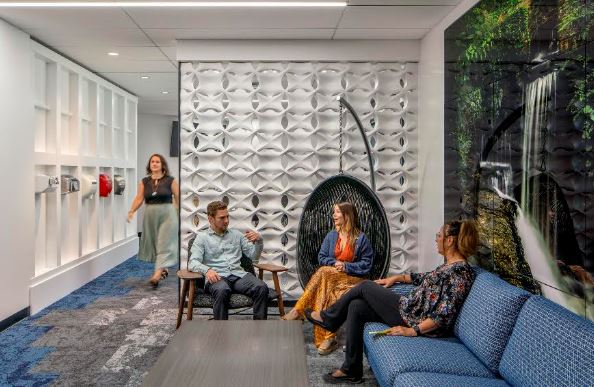
Boston-based Fennick McCredie Architecture (FM Architecture) led the design of the renovation, working closely with Excel Dryer to turn that vision into a functional workplace. From the beginning, both teams approached the project as an opportunity to demonstrate how thoughtful architecture can support the people who use the space every day.
“From the beginning, Excel Dryer challenged us to think beyond a traditional office renovation. They wanted a workplace that would embody their commitment to innovation and sustainability while creating an exceptional and healthy environment for their employees,” said Deborah Fennick, cofounder and design principal at FM Architecture. “That shared ambition gave us the opportunity to design a space where wellness and design excellence are truly interconnected.”
Following guidelines established by the International WELL Building Institute, the completed Excel Dryer Healthy Office Oasis project has earned WELL Silver Certification. The WELL Building Standard recognizes spaces designed to support occupant health and well-being through strategies addressing areas including air, water, light, movement, materials, comfort and mind.
“WELL gave us a framework for looking at the workplace holistically, not simply as a collection of sustainable features, but as an environment that can actively support the people who use it every day,” said Katherine Brekka, senior associate and sustainability practice leader at FM Architecture. “From air quality and natural light to materials, acoustics and ergonomics, each decision was considered through the lens of occupant health and well-being. Achieving WELL Silver Certification validates that comprehensive approach.”
Throughout the 5,000-square-foot renovation, FM Architecture incorporated design elements intended to support indoor environmental quality, comfort and employee experience. Features include a LifeAire air purification system with MERV 13 filters and activated carbon, a vegetative roof, living walls, floor-to-ceiling windows, daylight-optimized and self-tuning lighting, ergonomic workstations, acoustic ceilings, modular glass partitions and sound masking systems. Flooring made from recycled fishing nets collected in developing countries further supports the project’s emphasis on thoughtful material selection and sustainability.
The renovation also gave Excel Dryer an opportunity to put into practice many of the healthy building and sustainability principles it advocates within the built environment. The headquarters restrooms include the D|13 Integrated Sink System featuring the XLERATORsync Hand Dryer, incorporating touchless hand drying directly into the sink area as part of the overall workplace design, reducing reliance on single-use paper towels.
For employees, the result is a workplace intentionally designed around their daily experience. For visiting architects, designers, engineers, distributors, representatives and customers, the headquarters serves as a working demonstration of how healthy building principles can move from specification and design goals into a completed commercial space.
The project also extends beyond the physical renovation. Excel Dryer offers approved continuing education courses centered on the renovation and the WELL Building Standard, giving architects and designers opportunities to explore healthy buildings, sustainable restroom design and strategies that support occupant wellness while earning continuing education credits.
For Excel Dryer, achieving WELL Silver Certification represents both validation of the completed project and a milestone in the collaboration between the company and FM Architecture. The Healthy Office Oasis now provides a tangible example of how wellness, sustainability, innovation and thoughtful design can come together in a modern workplace.
15, Oct 2026
Multiliquid Closes Seed Round Led by Polychain with Participation from Strobe Ventures, CMT Digital, Metalayer Ventures, Generative Ventures and Circle Ventures, Bringing Total Funding to $8 Million
LOS ANGELES, Oct. 15, 2026 /PRNewswire/ — Uniform Labs, the developer of Multiliquid, the institutional liquidity protocol for tokenized assets, today announced the close of its seed round led by Polychain, with participation from Strobe Ventures, CMT Digital, Metalayer Ventures and Generative Ventures, and Circle Ventures, bringing Multiliquid’s total funding to $8 million.

Tokenized assets, from Treasuries and money market funds to private credit and other real-world assets, represent the fastest-growing frontier in institutional digital finance. However, market adoption remains constrained by traditional primary subscription and redemption cycles that can take days to settle. With federal stablecoin frameworks like the GENIUS Act prohibiting payment stablecoin issuers from paying yield directly to holders, institutions require programmatic rails to rotate between yield-bearing tokenized investments and transactional stablecoins 24/7, at scale, without balance-sheet drag.
Multiliquid delivers that infrastructure. It is a neutral, compliance-first liquidity layer that lets holders swap blue-chip tokenized assets and stablecoins in a single atomic transaction. The protocol supports tokenized funds from premier asset managers, including Wellington Management, VanEck, Janus Henderson and Fasanara, as well as major stablecoins, including USDC.
“Tokenization only matters if the assets are actually liquid,” said Will Beeson, Founder and CEO of Multiliquid. “Traditional capital markets rely on deep repo facilities and overnight lending to keep liquidity moving. On-chain finance requires the same institutional plumbing. Having Polychain lead this round, joined by Strobe Ventures, CMT Digital, Metalayer Ventures, Generative Ventures and Circle Ventures, validates our focus: liquidity and continuous settlement are the next foundational layer for institutional adoption.”
“Tokenized assets have started to gain traction but liquidity remains the bottleneck. Multiliquid is building the connective layer for institutions to move seamlessly between tokenized funds and stablecoins across issuers and venues. Will’s deep experience in this market is unmatched, and we’re excited to back this breakthrough project,” said Olaf Carlson-Wee, Founder of Polychain.
About Multiliquid
Multiliquid is a 24/7 instant settlement platform for tokenized assets, providing continuous, atomic conversion between regulated real-world assets and stablecoins. Founded by veterans of Standard Chartered and UniCredit, Multiliquid enables institutions to eliminate settlement friction across on-chain capital markets. Learn more at multiliquid.xyz.
Contact: team@multiliquid.xyz
 View original content to download multimedia:https://www.prnewswire.co.uk/news-releases/multiliquid-closes-seed-round-led-by-polychain-with-participation-from-strobe-ventures-cmt-digital-metalayer-ventures-generative-ventures-and-circle-ventures-bringing-total-funding-to-8-million-302910319.html

15, Oct 2026
Shanghai Electric Showcases Integrated Solutions to Drive Industrial Innovation at CIIF 2026
19 integrated solutions span intelligent robotics, industrial AI, computing infrastructure, heavy-duty gas turbines and nuclear power equipment
SHANGHAI, Oct. 15, 2026 /PRNewswire/ — The 2026 China International Industry Fair (CIIF) took place Oct. 12-16 at the National Exhibition and Convention Center (Shanghai). Shanghai Electric showcased 19 integrated solutions spanning intelligent robotics, industrial AI, computing infrastructure, heavy-duty gas turbines and nuclear power equipment. The portfolio demonstrated the company’s capabilities in collaborative innovation across its businesses, with AI integrated throughout industrial processes.
Embodied Intelligence Components
On the opening day of the fair, Shanghai Electric launched an integrated component solution for embodied intelligence robotics covering five categories: bearings, fasteners, screws, joint modules and dexterous hands. The solution brings together capabilities ranging from precision transmission components to fully integrated robotic hands, supporting applications in humanoid robots, industrial robots and collaborative robots.
Products on display included miniature bearings with inner diameters as small as 0.6 millimeters, highly corrosion-resistant “Xuanwu” fasteners, inverted planetary roller screws, rotary and linear joint modules, and a dexterous robotic hand with 22 degrees of freedom.
AI in Wind Power and Battery Manufacturing
Shanghai Electric’s AI-enabled digital solution for wind power demonstrates AI applications throughout the design, manufacturing, operation and maintenance of wind power equipment. Through closed-loop, data-driven workflows, the solution improves R&D efficiency, ensures product quality and optimizes operation and maintenance decisions.
Its integrated production-line solution for lithium battery smart factories covers the entire battery production process. It provides customers with a comprehensive suite of solutions for automated battery production, encompassing planning and design, process implementation, auxiliary utility systems and environmental control to meet requirements for automation, digitalization and intelligent manufacturing.
Computing Infrastructure and Energy Management
Shanghai Electric’s data center compute rack uses two-phase liquid cooling to provide precise chip-level temperature control, with liquid-cooling capacity exceeding 200 kW per rack and a fivefold increase in computing density. The solution also supports retrofits of existing data centers. Integration with an Internet of Things platform enables system-wide energy savings and predictive maintenance.
The company’s cloud-edge collaborative smart energy management and control system is built around a cloud-edge-device collaborative architecture. It uses AI algorithms for generation and load forecasting and optimized multi-energy dispatch, creating a closed loop of sensing, analysis, decision-making and execution. The system has achieved continuous off-grid operation in applications including oilfield microgrids, demonstrating reliable power supply and flexible regulation under extreme operating conditions.
Heavy-Duty Gas Turbine Solutions
Also on the opening day of CIIF, Shanghai Electric launched an AI-powered, end-to-end intelligent solution for heavy-duty gas turbines. The solution spans the full lifecycle from development to operation and maintenance, encompassing design simulation, flexible intelligent manufacturing, AI-based quality inspection, supply chain coordination and intelligent operation and maintenance.
Shanghai Electric exhibited its gas turbine control system for the first time. Developed entirely in-house, the system was commissioned at Shenzhen Energy’s Ganlu project in June 2026. The company offers simple-cycle and combined-cycle gas-fired power solutions in the 75 MW to 800 MW classes. It has also completed China’s first hydrogen-blending demonstration on an operational large F-class heavy-duty gas turbine.
Nuclear Power Equipment
Uniquely positioned to supply complete nuclear island main equipment for both pressurized water reactors and high-temperature gas-cooled reactors — as well as core equipment for fusion systems — Shanghai Electric presented its solutions across the nuclear power value chain through interactive exhibits. The displays covered Hualong One, Guohe One, high-temperature gas-cooled reactors and nuclear fusion equipment.
In nuclear fusion, Shanghai Electric has achieved 36 breakthroughs in key manufacturing technologies, established four core manufacturing capabilities and obtained 15 patents.
 View original content to download multimedia:https://www.prnewswire.co.uk/news-releases/shanghai-electric-showcases-integrated-solutions-to-drive-industrial-innovation-at-ciif-2026-302910202.html

15, Oct 2026
Symphony by Wix Integrates Link’s Wallet for Agents, Built by Stripe, Enabling AI Agents to Make Payments on Behalf of Small Businesses
With Link’s wallet for agents, Symphony’s AI agents go from flagging what needs attention to handling it, keeping inventory stocked, bills paid, and deadlines met on the owner’s behalf, with every purchase approved first
NEW YORK, October 15, 2026 – Wix.com Ltd. (NASDAQ: WIX), today announced that Symphony by Wix, the standalone multi-agent system for small and medium-sized businesses and solopreneurs, now connects to Link, Stripe’s digital wallet. The integration allows Symphony’s team of AI agents to make payments on the business owner’s behalf, taking execution one step further. Symphony’s agents already know how a business operates and work as a coordinated team across it, executing tasks and surfacing growth opportunities. With Link connected, they can now carry that work through to payments, so a task is finished rather than handed back to the owner.
Most AI tools for business stop at insight. They find the problem, draft the email, or flag the risk, and then hand the final step back to the owner. With Link connected, Symphony’s agents can carry tasks through to payment, with business owners approving each purchase before it is made. For small business owners, that means stock is reordered before it runs out, invoices are paid before they fall overdue, and entry fees are covered before a deadline passes, none of it landing back on the owner’s to-do list.
Every payment runs inside a system the owner controls. With Link’s wallet for agents, buyers review and approve each spend request, while Stripe uses a secure payment token or one-time virtual card for the transaction. In practice, it can play out across the whole life of a business:
-
A new owner is setting up their business. Symphony identifies the required registration fees and pays them, so the business is registered before the first sale.
-
A candle shop’s best-selling scent drops below five units. Symphony reorders from the usual supplier and pays overnight, so the owner wakes up to “reordered” rather than “almost out.”
-
A supplier invoice lands on a Friday afternoon. Symphony confirms the amount matches the purchase order and pays it that day, instead of it sitting until the owner has a free hour.
-
A local farmer’s market closes applications in three days. Symphony pays the entry fee right away, so the opportunity is secured rather than left on a list that expires.
-
A customer leaves a two-star review over a late delivery. Symphony sends a complimentary gift card the same day to make good.
Symphony’s agents never see the owner’s underlying payment details, and each card is capped at the approved amount. Approval can be given within a 10-minute window from any device, by WhatsApp or SMS.
“Since launch, Symphony has been built to act on behalf of business owners, not just advise them,” said Ronny Elkayam, COO of Wix. “Connecting Link is the last mile of that promise. An agent that can find an overdue invoice or an expiring grant deadline is useful. An agent that can get it paid, with the owner’s approval and inside clear limits, is a teammate. That is the difference between knowing what to do and having it handled.”
“People start businesses to solve problems and serve customers. Routine tasks like ordering supplies and paying bills take valuable time away from that work,” said Jay Shah, business lead for Link at Stripe. “With Link’s wallet for agents, Symphony can handle more of those tasks, giving business owners more time to focus on what matters most to them.”
The Link integration follows Symphony’s August launch and extends the platform’s expansion into the operational layer of how SMBs manage, automate, and grow. The connection is rolling out to Symphony users with a US-based Link account, with payments made in US dollars.
15, Oct 2026
Helius CEO Mert Mumtaz Joins the NEAR Foundation Council
The Solana infrastructure leader and privacy advocate joins NEAR Foundation’s governing body to help bring privacy to onchain markets and will judge the upcoming NEAR Hackathon
San Francisco, CA – 15 October 2026 – NEAR Foundation’s Council (NFC), the governing body responsible for oversight of the Foundation and its most significant decisions, today announced the appointment of Mert Mumtaz, CEO of Helius and privacy advocate. Bringing a proven operator’s technical rigor, market judgment, and deep expertise in cross-chain privacy infrastructure, Mumtaz will help guide the Foundation’s product strategy, ecosystem growth, and governance as NEAR expands its private onchain market vision. He will also serve as a judge for the upcoming NEAR Hackathon, starting November 1.
Mert joins current Council members Illia Polosukhin, Co-Founder of NEAR Protocol; Diogo Mónica, Co-founder of Anchorage Digital; Chris Donovan, former COO of NEAR Foundation; and Bowen Wang, founder of NEAR One. Leveraging his background as a technical operator and cross-chain builder, Mumtaz will help steer the Foundation’s product development, go-to-market execution, and ecosystem strategy as NEAR advances its privacy-focused onchain vision.
“Mert is a rare force in crypto, with a unique ability to be both correct and vocal about it,” said Illia Polosukhin, Co-Founder of NEAR Protocol. “He was an early NEAR Intents adopter and advocate before most of the industry caught on, and the whole NEAR ecosystem and I personally have benefited from his candor and support. Mert’s conviction, technical depth, and direct approach will be a great asset for the NEAR Foundation Council as we work to bring private assets and markets to every chain. His sharp perspective and shared belief in the vision will be a major advantage for NEAR in shaping what we build next.”
At Helius, Mert leads the build-out of the infrastructure that teams including Phantom, Jupiter, Coinbase, and Bitwise use to build on Solana, from RPC nodes and data streaming to transaction delivery and validators. An early user of NEAR Intents, Mert has since called NEAR the market of markets for its role in industry-wide infrastructure connecting chains and liquidity. Mert has proven he can spot where the industry is going long before it arrives, and as a vocal celebrant of the NEAR ecosystem, his voice on the Foundation Council will be a valuable asset in driving the NEAR ecosystem forward.
“There is no world in which crypto succeeds but distinct markets are gatekept exclusively through CEXes,” said Mert Mumtaz, CEO of Helius. “We already have that and it’s called TradFi. For crypto to win, we need connected, unstoppable liquidity at planetary scale. A market of markets. Neither Solana, Zcash, or Bitcoin can win on their own, we must work together. And NEAR is how.”
Mert will also join the judging panel for the upcoming NEAR Hackathon, a two-week build sprint on NEAR’s stack, including NEAR Intents and NEAR AI Cloud. Development runs November 1 to 14, with results announced by November 18. Mert judges alongside Illia Polosukhin; Eddy Lazzarin of a16z crypto; Avichal Garg of Electric Capital; Kain Warwick of Synthetix and Infinex; Haseeb Qureshi of Dragonfly; and Stepan Gershuni of cyber•Fund, with Claude Code and Codex reviewing as AI judges.
NEAR is building where markets across every chain meet, for people and AI agents alike, with confidentiality as a core primitive. NEAR Intents has processed more than $33 billion in all-time volume, with confidential TVL now over $160 million. near.com is confidential by default. Users trade across chains from an account they control and keep their positions and history to themselves.
Mert has argued that NEAR is a crucial component of this cycle’s progress, his vision for a privacy renaissance is aligned with NEAR Intents’ vision of universal, private markets. NEAR is excited to welcome him to the Foundation. For more information about NEAR Foundation, please visit https://near.foundation/.
15, Oct 2026
IGEL Appoints U.S. Zero Trust Leader Randy Resnick to Advance the IGEL Adaptive Secure Endpoint Platform™ Strategy
Former DoD and NSA cybersecurity executive brings nearly four decades of technical and mission leadership to advance the IGEL Adaptive Secure Endpoint Platform™ (IASEP™) across Zero Trust, cyber resilience, AI, and multi-framework governance for Government and Critical Industries globally
FORT LAUDERDALE, Fla., Oct. 15, 2026 /PRNewswire/ — IGEL®, a global software company delivering the IGEL Adaptive Secure Endpoint Platform™ (IASEP™), today announced that Randy Resnick, a recognized Zero Trust leader and architect, has joined IGEL as Field CTO, Government and Critical Industries.
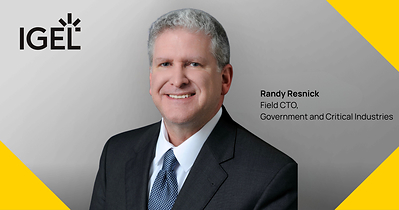
Resnick brings nearly four decades of technical, cybersecurity, and program leadership spanning the U.S. Department of Defense (DoD) and National Security Agency (NSA). Most recently, as Senior Advisor and Director of the DoD Zero Trust Portfolio Management Office, Resnick led the Department’s efforts to develop, coordinate, and operationalize Zero Trust across one of the world’s largest and most complex technology environments.
He authored the original DoD Zero Trust Strategy and helped pioneer the DoD and National Security System Zero Trust Reference Architectures, Maturity Model, Innovation Labs, and independent assessment approaches. His work successfully moved Zero Trust from a theoretical concept into an implementable national defense strategy. Previously, Resnick spent over 34 years at the NSA in senior technical leadership roles, including Zero Trust Strategic Lead, Cybersecurity Innovations Director, Chief of Information Assurance Engineering, and the first Chief of the NSA Red Team. His contributions have earned him honors such as the 2024 Wash100 Award and recognition as a 2024 CyberScoop 50 Cybersecurity Visionary.
“Randy is recognized internationally for his leadership in Zero Trust, but what makes him particularly important as an advisor to IGEL customers and partners is his ability to take transformational cybersecurity concepts from strategy and architecture through program development and operational implementation,” said Klaus Oestermann, CEO of IGEL. “That combination of technical vision, leadership and execution is exceptionally well aligned with the next phase of market adoption of the IGEL Adaptive Secure Endpoint Platform™.”
Bridging National Security Frameworks to Commercial Critical Infrastructure
Resnick’s decision to transition from leading the defense sector’s Zero Trust strategy to a commercial software leader serves as a powerful market validation of IGEL’s platform approach. IGEL is advancing IASEP™ to address the enterprise edge where IT, OT, cloud, applications, containers, open-source technologies, AI, and users converge. The platform combines control, data, and execution planes to enable organizations to apply policy, establish trusted execution, and generate governance evidence across diverse workloads.
Resnick will help expand these capabilities, directly translating national security-grade frameworks into battle-tested architectures for commercial critical infrastructure and government sectors alike, including financial services, healthcare, transportation, energy, and utilities. His mission will extend internationally across NATO and Five Eyes countries, as well as Japan, Singapore, South Korea, and the Middle East.
“IASEP™ gives us the opportunity to apply these lessons more broadly and securely to the enterprise edge, bringing together trust, resilience, and governance across IT, OT, and emerging workloads in an architecture that organizations can easily operationalize at a scale of their choosing,” said Resnick.
John Walsh, Senior Vice President and Field CTO, Government and Critical Industries at IGEL, added: “Having known Randy for many years through his work at the NSA and later watching him lead the strategic development and implementation of Zero Trust within the Department of Defense, I am extremely confident in Randy’s technical leadership, program discipline, and ability to turn transformational ideas into operational capability at extraordinary scale.”
Extending the Architecture Through the Ecosystem
Resnick’s role will involve close collaboration with customers and across IGEL’s product, engineering, partner, and go-to-market organizations to translate requirements from government and critical industries into repeatable platform capabilities. This work will also integrate with the IGEL Ready ecosystem, combining IASEP™ with technology partners across silicon, identity, networking, SASE/SSE, cloud, virtualization, and AI. This effort contributes to increasingly sophisticated security and operational outcomes, from identity, segmentation, and comply-to-connect through workload isolation, contextual policy, observability, resilience, and governance.
About IGEL
IGEL® is a global software company delivering the IGEL Adaptive Secure Endpoint Platform™, a trusted and governed endpoint platform for secure access to cloud, VDI, DaaS, SaaS, Secure Browsers, enterprise applications, as well as OT endpoints. At its foundation is IGEL OS, an immutable operating system that helps reduce endpoint attack surface, preserve a known-good endpoint state, and support secure access across distributed work environments. Through the IGEL Preventative Security Model®, the platform adds attested workload delivery, centralized governance, and contextual enforcement, aligning endpoint security with Zero Trust and SSE/SASE architectures from key IGEL Ready partners.
IGEL Business Continuity & Disaster Recovery™ (BC&DR) helps organizations restore secure access on Windows endpoints affected by ransomware, other cyberattacks, or outages. Founded in 2001, IGEL is headquartered in Germany with U.S. offices in San Francisco and Fort Lauderdale, working with an ecosystem of 130 leading technology brands. Learn more at www.igel.com.
Windows is a trademark of the Microsoft group of companies.
 View original content to download multimedia:https://www.prnewswire.co.uk/news-releases/igel-appoints-us-zero-trust-leader-randy-resnick-to-advance-the-igel-adaptive-secure-endpoint-platform-strategy-302909377.html

15, Oct 2026
G-P Reports Strong Performance and Accelerating Q3 2026 Momentum: On Track to Exceed $450M ARR and $100M Core Operating Profits in 2026
Category-defining global employment leadership and rapid adoption of agentic AI drive record profitability, scaling revenue and exceeding elite Rule-of-40 efficiency
BOSTON, Oct. 15, 2026 /PRNewswire/ — G-P (Globalization Partners), G-P (Globalization Partners), the leader in AI-driven global employment, ranked No. 1 by industry analysts, today released its Q3 financial and operational performance update. The company announced it is firmly on track to deliver record full-year 2026 results, driven by rapid customer adoption of its agentic AI-first Global Employment Platform and market-leading compliance infrastructure.

2026 Performance & Trajectory Highlights
- Top-Line ARR Acceleration: On track to exceed $450 million in ARR by year-end, growing customers and revenue more than 20% compared to FY2025.
- Elite Operational Leverage: Projecting $100 million in core operating profits, demonstrating high capital efficiency that generates strong positive cashflow and comfortably clears the Rule-of-40 threshold while continuing to fund continuous R&D and core product and platform innovation.
- Consolidated #1 Market Position: Unanimously recognized as the #1 Global EOR provider across major industry analyst evaluations, including IEC, QKS and NelsonHall.
“Our performance this year demonstrates what’s possible when category leadership is matched with relentless innovation,” said Nicole Sahin, founder and CEO of G-P. “By grounding our agentic AI architecture in more than a decade of proprietary global employment and compliance data, we’re giving organizations the intelligence and infrastructure they need to build and manage global teams with greater speed and confidence. As we continue to exceed our revenue and profitability goals, we’re proving that market-leading innovation and sustained financial performance move in tandem.”
Core Drivers of Success
G-P makes it fast and easy for companies to hire, onboard, and manage talent anywhere in the world without having to navigate global legal, HR, and tax complexities. Through its global employment products – G-P Employer of Record (EOR), G-P Contractor™ and G-P Gia™, its award-winning AI Global HR Agent – the company combines more than 14 years of compliance expertise across 180+ countries with AI-powered technology embedded directly into enterprise workflows – helping organizations scale global teams with speed, confidence and local precision.
G-P’s momentum and category leadership are driven by three key strategic pillars:
- Agentic AI Execution: Strategic execution of an early AI vision, seamlessly integrating production-grade automation and agentic AI capabilities across global employment and compliance and workforce operations.
- Defensible Compliance Infrastructure: Over a decade of investment in building direct entity networks and local HR compliance engines spanning 180+ countries.
- Cross-Functional Execution: Sustained operational execution across G-P’s product, engineering, revenue and marketing teams.
Outlook for 2027: Embedded EOR & Ecosystem Expansion
As G-P enters the final quarter of 2026 and looks ahead to 2027, the company anticipates continued revenue acceleration and operational leverage, anchored by two major platform initiatives:
- Embedded EOR Expansion: Rolling out native, white-label embedded EOR capabilities across a network of premier strategic enterprise partners.
- G-P Gia™ Everywhere: Expanding G-P Gia, the company’s AI Global HR Agent, as the ubiquitous global HR solution to seamlessly integrate with all major third-party HCM and HRIS platforms.
For more information about G-P, please visit us here.
About G-P
G-P (Globalization Partners) is the leader in global employment, ranked No. 1 in every industry analyst report. As the world’s first agentic AI-driven Global Employment Platform, G-P codes global labor laws and compliance directly into existing corporate workflows, helping companies of all sizes manage the full employee lifecycle. G-P supports teams in 180+ countries backed by more than a decade of global operational data and the largest team of in-country HR, legal, and compliance experts. This unmatched proprietary knowledge powers its Employer of Record (EOR), Contractor, and Global HR Agent, G-P Gia™, products.
G-P: Global Made Possible™
To learn more, please visit: g-p.com or connect with us via LinkedIn, X, Facebook or check out our Blog.
 View original content to download multimedia:https://www.prnewswire.co.uk/news-releases/g-p-reports-strong-performance-and-accelerating-q3-2026-momentum-on-track-to-exceed-450m-arr-and-100m-core-operating-profits-in-2026-302909266.html

15, Oct 2026
Coca-Cola celebrates Kolkata’s beloved Adda Tradition by bringing back the ‘Laal Mejhe’ this Durga Puja
The campaign revives the spirit of traditional adda spaces across Kolkata, inviting people to reconnect over conversations, culture and shared experiences
Link to the film: Here
KOLKATA, India, Oct. 15, 2026 /PRNewswire/ — This Durga Puja, Coca-Cola India is bringing back the spirit of Kolkata’s beloved adda tradition through ‘Laal Mejhe’, a cultural initiative inspired by the neighbourhood courtyards, verandas and familiar gathering spots that have long been at the heart of the city’s social life. As Kolkata’s urban landscape evolves and these traditional spaces become less accessible, Coca-Cola Laal Mejhe seeks to recreate them, giving people a place to slow down amid the festive bustle and enjoy the simple pleasure of an unhurried adda.

While pandal hopping, food and celebrations define Durga Puja, spontaneous gatherings with friends, family and old acquaintances remain an equally cherished part of the experience. Through designated Laal Mejhe adda spaces, Coca-Cola aims to bring this tradition back into the festivities.
Karthik Subramanian, Senior Director, Marketing, Coca-Cola TM India & Southwest Asia said, “With Laal Mejhe, we didn’t just want to offer a space. We wanted to bring back a timeless reminder that no matter how fast, busy or crowded life gets, there will always be time to pause and make room for our beloved addas. Adda has always been an intrinsic part of Kolkata’s cultural identity, and there is no better time than Pujo to celebrate this tradition of togetherness. Through Laal Mejhe, we hope to bring people closer to their culture, their communities and each other.”
Sukesh Nayak, Group CCO, Ogilvy India said, “Long before cafés and fancy hangouts became the places to be, Bengal had its humble Laal Mejhe. The red oxide floor that hosted everything from Marx to Mohun Bagan, first crushes to fierce arguments. It was never just a floor. And this Pujo, Coke is giving it a comeback.”
A dedicated Coca-Cola Laal Mejhe microsite also allows people to reserve their preferred locations and timings for group gatherings.
About Coca-Cola
Coca-Cola in India is one of the country’s leading beverage companies, offering a range of high-quality and refreshing beverage options to consumers. The company, in line with its vision of ‘Beverages For Life’ offers a wide portfolio of products which includes hydration, sports, sparkling, coffee, tea, nutrition, juice and dairy based products. In India its beverage range includes Coca-Cola, Coca-Cola Zero Sugar, Diet Coke, Thums Up, Thums Up XForce, Charged, Fanta, Limca, Sprite, Sprite Zero, Kinley Soda, Rimzim, Maaza, Minute Maid range of juices and Honest Tea. The Company also offers hydration beverages including Limca GlucoCharge, Smartwater, Kinley, Kinley Copper, Dasani and Bonaqua packaged drinking water. Premium products constitute Schweppes’ range and Smartwater. In addition, it offers a Costa Coffee range of tea and coffee. The Company is constantly transforming its portfolio, from reducing sugar in its drinks to bringing innovative new products to market.
The Company along with its owned bottling operations and franchise bottling partners has a strong network of over six million retail outlets through which it refreshes millions of consumers across the country. It seeks to positively impact people’s lives, communities, and the planet through water and packaging initiatives, sustainable agriculture and emission reductions across its value chain.
Globally together with its bottling partners, The Coca-Cola Company employs more than 700,000 people, helping to bring economic opportunity to local communities worldwide. Learn more at www.cocacolacompany.com and follow us on Twitter, Instagram, Facebook and LinkedIn.

 View original content to download multimedia:https://www.prnewswire.com/in/news-releases/coca-cola-celebrates-kolkatas-beloved-adda-tradition-by-bringing-back-the-laal-mejhe-this-durga-puja-302910058.html