


14, Oct 2026
Odisha Generates 45 Million Tonnes of Fly Ash Annually, Steps Up Push for 100% Utilisation
Bhubaneswar, Oct 13 (UDN): Odisha generates approximately 45 million tonnes of fly ash every year from thermal power plants, prompting the state government to intensify efforts to achieve complete utilisation of the industrial by-product while minimising its environmental and public health impacts.
Pic Credit: x.com/spcbOdisha
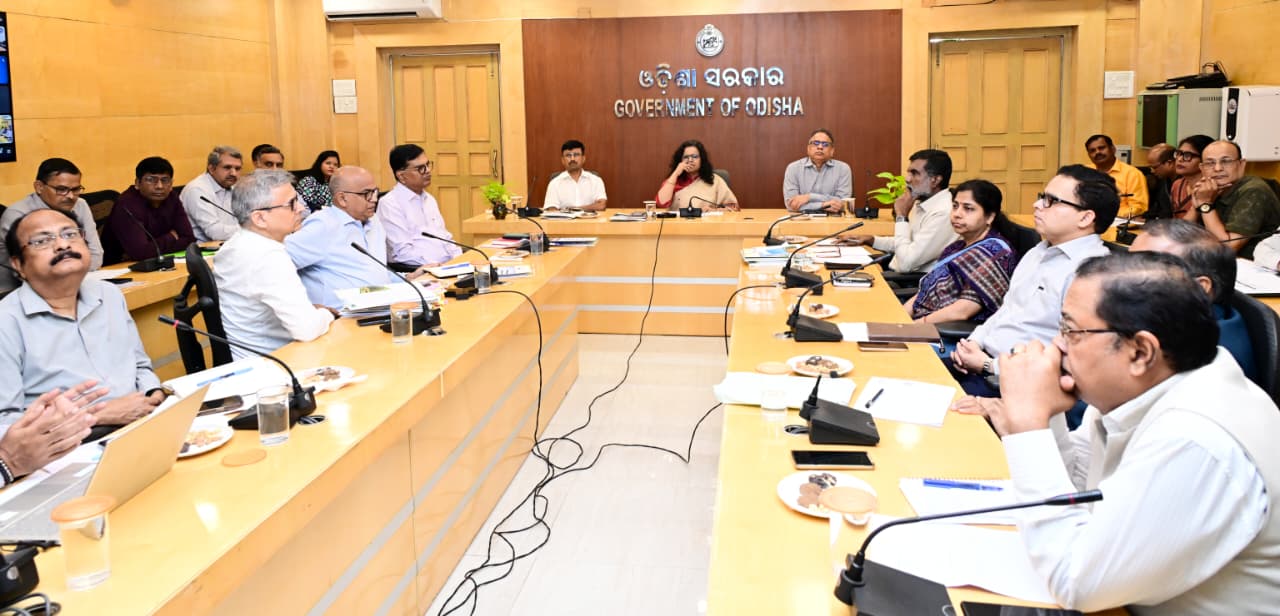
The issue came up for discussion at a meeting convened by the Odisha State Pollution Control Board (OSPCB) at Lok Seva Bhawan on Tuesday. The meeting was chaired by Chief Secretary Anu Garg and focused on strengthening monitoring mechanisms, ensuring safe transportation and expanding the industrial use of fly ash.
According to data presented at the meeting, Odisha achieved a fly ash utilisation rate of 98.63 per cent during 2025-26. The government is now seeking to close the remaining gap and move towards 100 per cent utilisation through stricter enforcement, improved logistics and greater adoption of fly ash-based products.
Five Districts Under Special Focus
Jharsuguda, Sundargarh, Sambalpur, Angul and Dhenkanal have been identified as key districts requiring focused attention on fly ash management. Collectors of these districts participated in the meeting virtually to discuss local challenges and possible interventions.
Officials expressed concern over the transportation of fly ash in uncovered or inadequately covered vehicles. Such practices can cause dust pollution, contaminate soil and water, and potentially damage agricultural land.
The meeting stressed that fly ash must be transported in fully covered vehicles and handled in accordance with environmental regulations. Its use for filling low-lying areas and abandoned mine voids must also follow prescribed procedures, including proper site preparation, transportation management and subsequent land reclamation.
Fly Ash to Be Promoted as an Industrial Resource
Emphasising the need to view fly ash as a valuable resource rather than waste, officials discussed expanding its use across construction and manufacturing sectors.
Potential applications include cement production, ready-mix concrete, geopolymer-based construction materials, sintered ash aggregates, road construction and embankments.
The meeting also explored measures to encourage the production of fly ash-based goods, support micro and small enterprises, and establish cement grinding units near thermal power plants. Such initiatives could help create sustained demand and reduce the burden of long-term ash storage and disposal.
Identifying abandoned mines suitable for fly ash utilisation was another measure discussed, subject to compliance with environmental safeguards.
GPS Tracking, Digital Certificates Proposed
To strengthen accountability and prevent illegal dumping, the OSPCB proposed a technology-based system to monitor fly ash transportation and disposal.
The proposed mechanism would incorporate GPS-enabled vehicle tracking, QR code-based digital consignment certificates, monitoring of approved transportation routes and verification of deliveries at designated destinations. Automated alerts would also help authorities identify route deviations and potential violations.
The meeting further discussed revising standard operating procedures for filling low-lying areas, strengthening district-level task forces and establishing a dedicated fly ash management cell within the OSPCB.
Coordinated Action for Environmental Protection
Chief Secretary Anu Garg called for stronger coordination among government departments, the Pollution Control Board, district administrations, industries and other stakeholders to improve compliance and reduce the environmental risks associated with fly ash.
Senior officials from the Chief Minister’s Office and departments dealing with Energy, Electronics and Information Technology, Forest, Environment and Climate Change, Panchayati Raj and Drinking Water, and Rural Development attended the meeting, along with representatives of industrial organisations.
With annual generation estimated at 45 million tonnes, effective utilisation and responsible handling of fly ash remain important environmental priorities for Odisha. The proposed measures seek to strengthen regulatory oversight while expanding industrial applications, with the ultimate objective of achieving 100 per cent utilisation and reducing the risks associated with improper disposal.
- 0
- By Neel Achary

14, Oct 2026
Sambalpur Set for Rs 10-Crore Women’s Safety Overhaul Under Nirbhaya Initiative
Sambalpur, Oct 13 (UDN): Women’s safety infrastructure in Sambalpur district is set for a significant upgrade, with the administration proposing nine initiatives worth an estimated Rs 10 crore under the Nirbhaya initiative. The proposed measures include expanded CCTV surveillance, emergency response vehicles, dedicated police patrols, pink e-rickshaws and assistance centres to improve the safety and accessibility of public spaces for women and girls.
Pic Credit: x.com/SecyChief
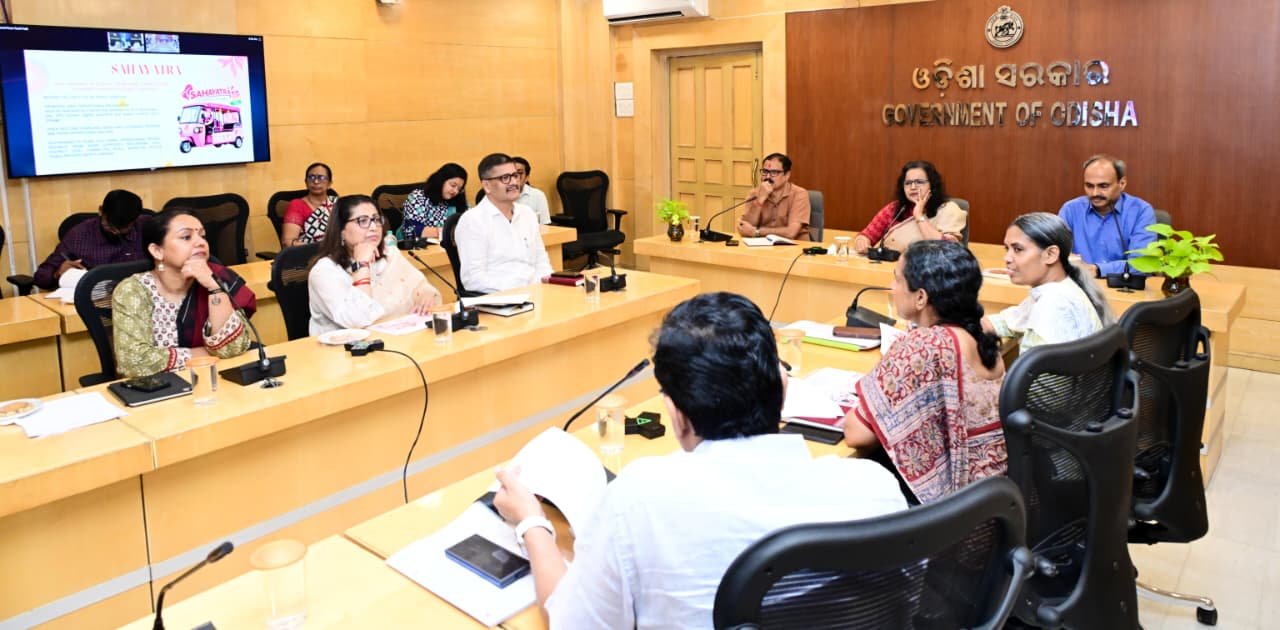
The initiatives were reviewed at a high-level meeting chaired by Chief Secretary Anu Garg at Lok Seva Bhawan on Tuesday. Additional Chief Secretary of the Home Department Hemant Sharma and Director General of Police Vinaytosh Mishra attended the meeting, while Sambalpur Collector Siddheshwar Baliram Bondar joined virtually to present the district’s proposed action plan.
Nine Initiatives to Strengthen Women’s Safety
Under the ‘Shakti Sarathi’ initiative, 15 two-wheelers will be deployed for patrols by women police personnel, enabling quicker response to complaints and emergencies.
The proposed ‘Pratikriya’ scheme will provide 15 emergency response vehicles along with drones to support assistance and rescue operations. Meanwhile, the ‘Drushti’ initiative envisages the installation of 800 CCTV cameras at 210 strategic locations to strengthen surveillance and improve monitoring of public spaces.
The administration has also proposed five police assistance centres under ‘S-Stop’ to provide support and improve access to police services.
For safer and more convenient mobility, ‘Sahayatra’ will introduce 40 pink e-rickshaws aimed at providing women with affordable transport options.
Under ‘Nirbhaya Sadan’, four assistance centres are proposed at the district court complex, railway station, Burla medical area and district headquarters hospital. These centres are intended to make support services more accessible to women in need of assistance.
The ‘Sathi’ initiative includes plans for six toilets equipped with nursing facilities, while ‘Jatra’ proposes real-time tracking systems for buses operated by 50 educational institutions to strengthen student safety during transit.
The ninth initiative, ‘Sachetana’, will focus on awareness campaigns, self-defence training, health education and community-based programmes to promote women’s safety and empowerment.
Focus on Awareness and Interdepartmental Coordination
During the meeting, Chief Secretary Anu Garg stressed the need to involve adolescent boys in awareness campaigns to encourage respectful behaviour towards women, promote gender sensitivity and foster a stronger sense of social responsibility.
She also underscored the importance of coordinated efforts among the police, Health Department, Women and Child Development Department, School and Mass Education Department, and local administration to ensure effective implementation of the proposed measures.
The planned interventions seek to combine surveillance, emergency response, safer transportation and public awareness to address women’s safety concerns through a coordinated approach.
Once implemented, the initiatives are expected to strengthen Sambalpur’s women’s safety network and improve access to assistance across key public locations. The proposals represent a comprehensive district-level push to create a safer and more inclusive environment for women and girls.
14, Oct 2026
Odisha Cabinet Approves 16 Proposals Across 11 Departments
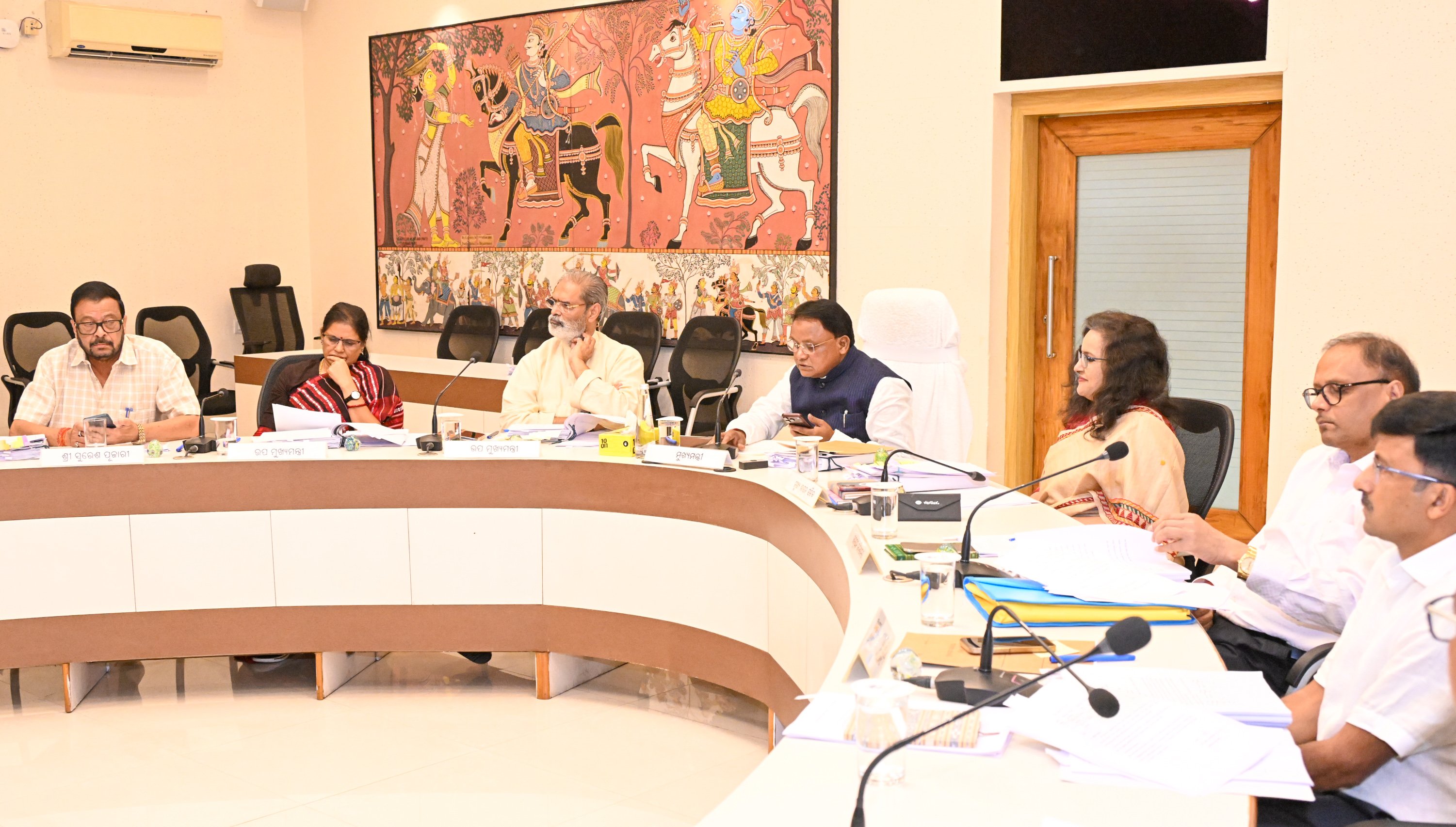
Bhubaneswar, Oct 13 (UDN): The Odisha Cabinet on Tuesday approved 16 proposals from 11 departments during its 48th meeting, chaired by Chief Minister Mohan Charan Majhi at Lok Seva Bhawan in Bhubaneswar.
Pic Credit: x.com/CMO_Odisha
Following the meeting, the Chief Minister informed the media that the Cabinet had also adopted a resolution congratulating Prime Minister Narendra Modi on completing 25 years of tenure.
Chief Secretary Anu Garg subsequently briefed the media on the key decisions taken during the meeting, outlining the proposals cleared across various departments.
The Water Resources Department and the School and Mass Education Department accounted for three approved proposals each. The Fisheries and Animal Resources Development Department secured approval for two proposals each.
The Industries Department, Skill Development and Technical Education Department, Finance Department, Electronics and Information Technology Department, Agriculture and Farmers’ Empowerment Department, Housing and Urban Development Department, and Revenue and Disaster Management Department each had one proposal approved.
In addition, the Cabinet cleared a proposal under the Parliamentary Affairs Department concerning the prorogation of the seventh session of the 17th Odisha Legislative Assembly.
The meeting covered a broad range of departmental matters, with all 16 proposals receiving Cabinet approval. The decisions reflect the state government’s ongoing administrative and policy agenda across key sectors.
The meeting was attended by senior government officials, while the Chief Minister and the Chief Secretary provided details of the proceedings and the decisions taken.
14, Oct 2026
56 percent of Multilingual Consumers Have Walked Away From a Purchase Over Poor Website Localization, Liferay Survey Finds
New report finds consumers are confident they can spot machine-translated content, while better localized digital experiences can influence trust, loyalty and which brands they choose
LOS ANGELES – AI and automated translation have made it easier than ever for brands to deliver websites, product information and digital experiences in multiple languages. But as translation becomes easier to scale, brands face more pressure to maintain quality and local relevance across every market. Liferay, a leading provider of Digital Experience Platforms (DXPs), released new research examining where multilingual digital experiences are falling short and what consumers notice when localization misses the mark.
The Liferay 2026 Website Localization Report, conducted in September 2026 via the third-party platform Pollfish, surveyed 800 U.S. adults who had used a website, app or digital service in a language other than English in the past 12 months. The report examines how multilingual consumers experience translated and localized digital content, which mistakes they notice and how those mistakes affect trust, purchase decisions and brand loyalty.
Key findings include:
- Poor localization is costing sales. 56% of multilingual consumers have decided not to buy from a company because its website or app felt poorly adapted to their language.
- Good translations can still hide a bad experience. 54% of consumers who rate brands’ non-English translations as good or excellent have still walked away from a purchase over poor localization.
- Most translated websites still don’t feel truly local. Only 23% say non-English websites usually feel like they were written for them.
- Consumers think they can spot machine translation. 82% are confident they can tell when content was machine-translated rather than written or reviewed by a fluent speaker.
- Localization problems are nearly universal. 90% have noticed at least one localization problem on a website or app.
- Better localization can win business. 48% have chosen one company over a competitor because its website or app felt better adapted to their language and culture.
- Consumers associate better localization with human review. Only 20% credit AI alone for strong localization, while 43% credit human involvement.
“You can translate every page and technically have everything working, but that doesn’t mean the experience feels natural to the person using it,” said Bryan Cheung, co-founder and CMO at Liferay. “That’s where a lot of companies can underestimate the difference between translation and localization. Translation gets the content into another language. Localization is what makes it feel natural to the people using it.”
The findings show that consumers notice when a translated experience doesn’t feel natural. As brands expand multilingual content, getting the wording, tone and cultural context right can make the difference between a site that simply does the job and one that feels made for the people using it.
Visit the Liferay 2026 Website Localization Report on Liferay’s website for the complete survey results and additional insights.
14, Oct 2026
Founder Shield Rebrands as The Baldwin Group
Founder Shield Unifies with Parent Firm’s Brand and Becomes its Innovation Practice
NEW YORK – Oct. 14, 2026 – Founder Shield, a risk management partner for rapidly evolving, high-growth companies, announced today that it will complete its rebrand to The Baldwin Group and become the firm’s Innovation Practice.
“Founder Shield brings capabilities and talent that make The Baldwin Group a stronger, more integrated firm,” said Michael Robinson, President, Innovation Practice at The Baldwin Group. “As our Innovation Practice, we are adding momentum to a firm built for what’s ahead, and we couldn’t be more excited to finalize the brand transition.”
Founder Shield will continue to deliver cutting-edge solutions, specialized expertise, and exceptional service to clients reimagining business models across industry sectors. It’s insights, resources, and client portals will be available through foundershield.com and baldwin.com.
Kyle Jeziorski, Managing Director, Innovation Practice at The Baldwin Group added, “The Founder Shield name may be changing, but its commitment to clients remains as strong as ever. This transition opens the door to broader capabilities, greater collaboration, and a forward-thinking approach to risk and insurance that helps protect the possible for clients.”
For well over a decade, Founder Shield has built a digital insurance platform featuring a broad range of competitive and specialized insurance products designed to meet the unique risk management and client experience needs of emerging companies in sectors including Life Sciences, Tech and Media, Financial, and Small Business. To date, it has served more than 20,000 clients. Since Founder Shield joined the firm in 2021, The Baldwin Group has expanded its capabilities exponentially, offering rapidly growing businesses more solutions at every stage of their growth journey, as they vault from concept to funding to scaling rapidly and into maturity.
14, Oct 2026
Kira AI Launches AI Workspace that Thinks and Acts Across Everything Users Do, Say, and Decide
“Life Operating Software” acts like a capable chief of staff for every person and team, handling the email, scheduling, calls, and follow-ups that stand between the users and the work only they can do
DOVER, Del.—October 14, 2026—Kira on Oct 13 announced the launch of a multi-part AI workspace that functions as an “operating intelligence” of the user’s life. Kira does more than just answer questions. Built to think, remember, and act, Kira learns about the user and his or her business, recalls every detail, and takes action across calls, emails, content, and workflows.
“Kira came to life based on an insight that most of the workday doesn’t involve actual work,” explained a spokesperson for Kira. “Instead, we spend huge amounts of time coordinating the work, chasing replies, moving meetings, writing the same email in five different ways, and so forth. This is the problem we are solving with Kira. Kira exists to close that gap. Kira acts as a capable chief of staff for every person and team. It handles the email, scheduling, calls, and follow-ups that stand between you and the work only you can do.”
Kira brings the user’s tools into one place and gives AI agents the ability to act on his or her behalf, but always with the user in control.
Key features include:
- Email Agent, which drafts, triages, and sends, with the user’s sign-off on anything that matters.
- AI Call Agents, which place and take calls, then hand the user the summary, not the transcript.
- Smart Calendar, which schedules, reschedules, and preps the user’s life before the day begins.
- Voice Command, which runs the dashboard hands-free.
- Connected integrations, which link the tools the user already works in.
Kira is a connected workspace that includes My Brain, My Files, and My Workspace. These are where the user’s notes, tasks, and documents live together.
Kira runs on a loop built to keep the user in charge while cutting out manual steps in various work tasks. “We connect the tools you already use, from email to calendar, and beyond,” the spokesperson added. “You delegate a goal, in plain language or by voice, but you get to review what Kira proposes before anything goes out.” As Kira executes, it learns the user’s preferences so the next round takes less time.
14, Oct 2026
Mayors of Kochi, Renca, and Gdańsk Join Board of the Global Covenant of Mayors for Climate & Energy
World’s Largest City Climate Alliance Appoints Mayor V.K. Minimol, Mayor Claudio Castro, and Mayor Aleksandra Dulkiewicz to Expand Regional Leadership Across South Asia, Latin America, and Europe
BRUSSELS, BELGIUM (October 14, 2026) – On Oct 12, the Global Covenant of Mayors for Climate and Energy (GCoM), the largest global alliance for city climate leadership built upon the commitment of over 14,000 cities and local governments from 150 countries representing more than 1.2 billion people, announced the appointment of three new mayors to its Board of Mayors and Leaders: V.K. Minimol, Mayor of Kochi, India; Claudio Castro, Mayor of Renca, Chile; and Aleksandra Dulkiewicz, Mayor of Gdańsk, Poland. This year, GCoM is celebrating a decade of helping cities translate global climate commitments into local action. The addition of these three mayors will reinforce representation in the regions of South Asia, Latin America, and the European Union & Western Europe, respectively, bringing frontline leadership and regional credibility to drive climate progress through finance, resilience, and multilevel partnerships.
Working alongside co-chairs Michael R. Bloomberg, UN Special Envoy on Climate Ambition and Solutions and founder of Bloomberg LP and Bloomberg Philanthropies, and Teresa Ribera, Executive Vice President of the European Commission for a Clean, Just and Competitive Transition, the three mayors will elevate city climate leadership and strengthen multilevel collaboration worldwide.
“Cities are leading the way in the fight against climate change – developing and testing ambitious ideas that are improving the lives of their residents. We are glad to welcome Mayors Minimol, Castro, and Dulkiewicz to our Board of Mayors and Leaders and look forward to working with them to accelerate the progress cities are making,” said Michael R. Bloomberg, GCoM Co-Chair, UN Special Envoy on Climate Ambition and Solutions, and Founder of Bloomberg L.P. and Bloomberg Philanthropies.
In her new role as GCoM Board Member, Mayor Minimol will represent GCoM signatories in South Asia, encouraging mayors across the region to accelerate their commitment to addressing climate change. With over 30 years in public service and grassroots governance, Mayor Minimol brings deep expertise in climate justice, equitable growth, and urban resilience to the Board. She previously chaired key standing committees, including Public Works and Health, and has been part of the political leadership team from Kochi Municipal Corporation that supported the development of the city’s Local Biodiversity Strategy and Action Plan. As Mayor, she has championed climate-resilient urban development, sustainable mobility, and gender-responsive governance.
“As mayor of Kochi, I have a deep understanding of the vulnerabilities and the innovative potential of cities in the Global South. Cities are leading the transition toward a low-emission future, and as a member of the GCoM Board, I am eager to bring my perspective to ensure that global climate strategies are both equitable and representative of diverse urban realities,” said V.K. Minimol, Mayor of Kochi, India. “Climate goals are best met when local, regional, and national policies are in sync, and I look forward to strengthening collaboration with multi-level organizations and enhancing access to climate finance.”
Mayor Castro brings ten years of ambitious climate leadership in Renca and across Chile to the GCoM Board. Under his leadership, Renca secured the permanent closure of its 62-year-old thermoelectric plant and has planted more than 85,000 trees in the Cerros de Renca Metropolitan Park. He has developed projects spanning adaptation, nature-based solutions, and sustainable energy, and has supported innovative institutional and financing mechanisms, including La Fábrica de Renca, a municipal corporation focused on local development and innovation that enables the municipality to build productive partnerships with public and private entities. Mayor Castro serves on the CHAMP Subnational Advisory Council and has championed Renca’s engagement in the Urban Transitions Mission and the OECD Champion Mayors program.
“In Renca, we have built a climate agenda that links mitigation, adaptation and energy to territorial justice and social cohesion. In a region facing structural drought, extreme heat and unequal access to green spaces, we have shown that climate action is also a policy of equity.” said Claudio Castro, Mayor of Renca, Chile. “As a GCoM Board Member, I will work to expand access to climate finance for Latin American cities, so that the nature-based solutions and projects our cities already have can finally be funded.”
Mayor of Gdańsk, Mayor Dulkiewicz is actively engaged in European subnational diplomacy and city networks, championing an integrated approach to climate action spanning mitigation, adaptation, and access to clean and affordable energy. Her work has included sustainable mobility, air quality, waste management, water resilience, green spaces, and energy efficiency, all supported by long-term planning and stakeholder engagement. As a member of the Commission for the Environment, Climate Change and Energy (ENVE) of the European Committee of the Regions, Mayor Dulkiewicz works on the role of cities in meeting EU climate and energy goals and contributes directly to shaping EU legislation in this area. Gdańsk is a national pioneer in blue-green infrastructure and has developed one of Poland’s most advanced rainwater retention systems, an approach recognized internationally with second prize at the MERLIN Innovation Awards in 2025.
“I am honored to serve on the Board of GCoM, an initiative that embodies the collective leadership of cities advancing ambitious, locally driven climate action worldwide. Local governments play an essential role in safeguarding the well-being of our communities and building long-term urban resilience,” said Aleksandra Dulkiewicz, Mayor of Gdańsk, Poland. “I am fully committed to advancing GCoM’s mission and contributing our region’s experience to foster scalable, inclusive climate solutions across the global network.”
The appointments come at a critical moment, as national governments are increasingly engaging cities and local governments as critical actors in addressing the global climate emergency. As members of GCoM’s Board, Mayors Minimol, Castro, and Dulkiewicz will help deepen regional engagement with GCoM cities, guiding thousands of cities and local governments worldwide in setting bold targets, implementing scalable solutions, and unlocking critical financing to turn climate ambition into tangible action.
14, Oct 2026
Kimpton Everly Hotel Appoints New Food & Beverage Leaders to Elevate Hollywood Dining Experiences
13, Oct 2026
NABEP Boosts Operations with New Workover and Drilling Rigs
CARACAS, Venezuela, Oct. 13, 2026 /PRNewswire/ — Eleven new 550-horsepower workover rigs are being deployed for use by North American Blue Energy Partners (NABEP), marking the first time in more than 15 years that new mobile repair-and-maintenance systems will operate in Venezuelan oil fields.
In addition to the workover rigs, two new 1,500-horsepower drilling rigs arrived on October 7 for NABEP’s operations with more equipment expected to arrive soon.
The new equipment complements NABEP’s steady ramp-up of operations and production. Separately, the company has purchased 60 rigs, 30 steam boilers and 70 pieces of heavy machinery, giving it the largest heavy-equipment fleet in the country.
“NABEP is making serious and steady progress in increasing oil production. Every rig that arrives in Venezuela brings us closer to reaching our production goals and revitalizing our country’s economy,” said NABEP CEO Alejandro Betancourt. “The challenge ahead is large, but there is no better partner than the U.S. government. We look forward to continuing to share our progress in the months ahead.”
The new equipment purchases follow the August 2026 agreement between NABEP and the U.S. Departments of State and War to significantly expand oil production in Venezuela. NABEP controls the rights to commercialize more than 65 billion barrels of P1 oil reserves in Venezuela and plans to invest nearly $100 billion to increase production capacity and improve oil-and-gas infrastructure. NABEP is rapidly expanding its operations in Lake Maracaibo and the Orinoco Belt. Its near-term goal is to increase production to more than 1 million barrels of oil per day.
NABEP has scaled its production from approximately 18,000 barrels per day to more than 200,000 in two years through roughly $1 billion in company-funded investment. The company employs 5,000 people and supports 10,000 contract employees in Venezuela.
About North American Blue Energy Partners
North American Blue Energy Partners (NABEP) is an independent oil exploration and production company operating in North and Latin America, with offices in Caracas, Maracaibo and Lechería. NABEP is committed to the responsible development of energy resources, the safety of its people and the prosperity of the communities where it operates. www.nabep.net
Media contact: press@nabep.com

 View original content to download multimedia:https://www.prnewswire.co.uk/news-releases/nabep-boosts-operations-with-new-workover-and-drilling-rigs-302907335.html

13, Oct 2026
EICMA 2026: ALWAYS LIKE THE FIRST TIME, BUT NEVER THIS BIG
The 83rd edition becomes the largest ever held at Fiera Milano Rho: ten exhibition halls, over 300,000 square metres, 754 exhibitors and 2,120 brands from 52 countries. From 3 to 8 November, with the first two days reserved for press and trade professionals.
MILAN, Oct. 13, 2026 /PRNewswire/ — “Always the first time. A new discovery every year.” Under this slogan, EICMA unveiled its 83rd edition today in Milan, setting a new milestone in the history of the International Two-Wheeler Exhibition.
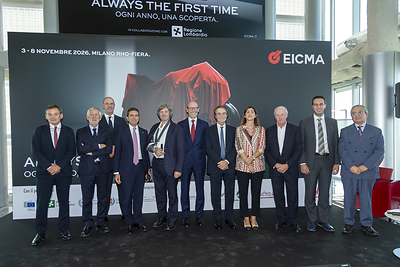
For the first time since moving to Fiera Milano Rho, EICMA will occupy ten exhibition halls, one more than in 2025, making it the largest edition ever held at the venue. The exhibition will cover over 300,000 square metres, welcoming 754 exhibitors and 2,120 brands from 52 countries.
The figures confirm EICMA’s global leadership: 74% of participating brands are international, while approximately 30% of direct exhibitors are either returning companies or first-time participants. This remarkable growth reinforces EICMA’s strategic role as a global platform for business, innovation and motorcycle culture.
The 2026 edition will offer visitors an unprecedented programme of exhibitions, racing, entertainment and immersive experiences.
Among the highlights is Speed Legends, an extraordinary exhibition celebrating the history of MotoGP’s premier class. Developed through the EICMA.SHIFT UP partnership with MotoGP, the exhibition will feature over 30 historic racing motorcycles alongside the five MotoGP bikes competing in 2026, complemented by interactive experiences and a dedicated Gaming Arena.
The Dakar Rally also returns through the renewed partnership with ASO, bringing historic and modern rally motorcycles and an official Dakar container to Hall 22.
Outside the halls, MotoLive will once again deliver spectacular racing and entertainment across more than 60,000 square metres. Highlights include twin-cylinder motorcycle competitions, Freestyle Motocross, Trial performances featuring special guest *Toni Bou, and the Champions Charity Race Legend, bringing together motorsport icons including Troy Bayliss, Marco Melandri and Stefan Everts.
Visitors will also enjoy free test rides at Y.U.M. – Your Urban Mobility, featuring over 40 vehicles, while EICMA Adventouring and the Start-up Area, supported by the Italian Trade Agency, will showcase adventure tourism and future mobility solutions.
“Every edition brings something new while preserving the excitement of a first-time experience,” said EICMA President Pietro Meda. “Our mission is to keep surprising visitors, connecting generations and creating value for the entire industry.”
EICMA CEO Paolo Magri highlighted the exhibition’s international strength: “These figures demonstrate EICMA’s continuing ability to attract investment, welcome new companies and represent the global motorcycle industry.”
A comprehensive mobility plan, developed with ATM, Trenord and the Municipality of Milan, will facilitate access through public transport and approximately 15,000 free parking spaces.
EICMA 2026 runs from 3 to 8 November, with press and trade days on 3–4 November and public opening from 5–8 November.
Tickets are available at www.eicma.it.

 View original content to download multimedia:https://www.prnewswire.co.uk/news-releases/eicma-2026-always-like-the-first-time-but-never-this-big-302907354.html



