


13, Oct 2026
Toptal Launches ExpertCrowd to Train AI with Vetted Domain Experts, Releases Frontier SWE Benchmark
SAN FRANCISCO, Oct. 13, 2026 /PRNewswire/ — Toptal, the world’s largest talent network of highly skilled domain experts, today announced the launch of ExpertCrowd, a platform for training and improving AI models and systems through RLHF, RL data generation, data labeling, and model evaluation. ExpertCrowd combines its advanced platform for AI model development and testing with Toptal’s global network of specialized talent to help frontier AI labs, innovative enterprises, and fast-growing startups build more accurate and capable AI models and systems.

The platform enables organizations to move beyond generalized crowdsourcing and data annotation and apply highly specialized human judgment to develop and improve AI applications and models across industries including financial services, healthcare, legal, biotechnology, cybersecurity, and more. ExpertCrowd is powered by Toptal’s global talent network, with more than 30,000 specialized domain experts across 140+ countries, including more than 2,000 AI and big data specialists, 12,000 professionals with advanced degrees, and 1,000 PhD-level AI specialists, available on demand.
ExpertCrowd matches thousands of specialized experts to AI alignment and training projects instantaneously, enabling organizations to rapidly scale such projects with confidence. Its AI-driven sourcing engine was developed in-house by Toptal’s AI research team, composed of more than a dozen PhDs and researchers from leading institutions such as Harvard, EPFL, and the University of Liège, using 15 years of Toptal’s proprietary data in sourcing, screening, and matching highly skilled domain experts.
Offering multimodal annotation with customizable workflows and live project tracking, ExpertCrowd provides real-time progress updates as domain experts do the actual work. AI researchers applying GRPO, PPO, and other RL techniques have leveraged ExpertCrowd’s platform to further the development of their AI models and systems.
Prior to today’s official launch, ExpertCrowd generated over $5 million in recurring revenue from work with frontier and neo labs, as well as companies including Scale AI, Sterling Labs, Vetto, and other innovative startups that service frontier labs.
As part of the launch, ExpertCrowd has developed and published the ExpertCrowd-SWE benchmark, which evaluates SOTA AI coding agents on previously unseen issues. The ExpertCrowd-SWE benchmark exposes the most significant deficiencies in model capability relative to any other currently published SWE benchmark. ExpertCrowd-SWE spans 87 codebases in 11 programming languages. Engineers from Toptal’s talent network led the development of this benchmark and authored every task as well as each grading rubric. Researchers, including several PhDs in various areas of artificial intelligence from Toptal’s AI team, reviewed and assessed the benchmark’s methodology and results.
“The fact that our SWE benchmark results expose the most deficiencies relative to any other published benchmark on leading models such as Opus 5.5 and Fable 5.1 demonstrates our ability to push frontier AI forward,” said Taso Du Val, founder and CEO of Toptal.
“Developing frontier AI models requires more than just powerful compute. It requires specialized human expertise to train, evaluate, and continuously improve these models. ExpertCrowd brings together the technology and domain expertise required to build and train AI models and systems for executing complex, real-world tasks with precision.”
About Toptal
Toptal is the world’s largest talent network of highly skilled domain experts, connecting businesses with the top 3% of freelance talent on demand. Toptal was ranked the #1 Most Reliable Professional Services Company in America by Newsweek and Statista, based on an independent survey of more than 2,400 decision-makers at Fortune 500s. Founded in 2010, Toptal has served more than 35,000 clients across more than 140 countries. For more information, please visit Toptal.com.
Contact
Luiz Baia
SVP of Marketing Strategy
luiz.baia@toptal.com
 View original content to download multimedia:https://www.prnewswire.co.uk/news-releases/toptal-launches-expertcrowd-to-train-ai-with-vetted-domain-experts-releases-frontier-swe-benchmark-302907298.html

- 0
- By Sai Krishna

13, Oct 2026
Graylog v7.2 launches the Verascend™ Incident System, transforming how security teams detect and respond to threats
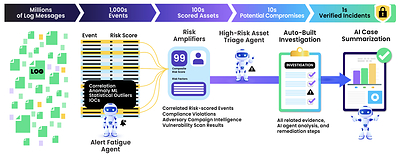
HOUSTON, Oct. 13, 2026 /PRNewswire/ — Graylog today launched the Verascend™ Incident System with Graylog v7.2. Verascend turns correlated, risk-scored events into prioritized cases, so security analysts investigate verified incidents instead of sorting through individual alerts.
The launch comes as attackers adopt AI to move faster. Europe’s cybersecurity agency, ENISA, found ransomware operators using AI coding assistants to build the platforms they rent to affiliates, and it expects AI to directly enable more stages of an attack through 2026 – a pace that leaves lean security teams on legacy tools drowning in alerts.
How Verascend unifies detection
Verascend brings together detection capabilities, including Detection Chains and Sigma rules, with risk-scoring algorithms, intelligent event consolidation, and multiple AI agent assistants that take the first pass at triage. Every case opens with corroborating events, logs, and an initial assessment attached, and analysts can run additional searches from inside the case. When the investigation closes, AI-assisted reporting summarizes what happened and recommends remediation steps, showing the prompts, tool calls, and evidence behind each recommendation.
Graylog v7.2 adds a new Detection Chains page that shows each adversary campaign’s threat actor, targeted technologies, and targeted industries. Sigma rules and custom correlation rules now sit in the same workflow as every other detection method, and expanded watchlists align to Graylog’s provided detection content.
Pipeline, storage, and system health visibility
Graylog v7.2 also introduces new views into pipeline performance, Data Lake storage, and system health, letting administrators see what’s consuming resources, fix bottlenecks before they slow detection, and keep costs under control.
EU data residency with OVH and Secunet SysEleven
Support for OVH and Secunet SysEleven S3-compatible storage lets European organizations keep security data in the region without building a separate storage architecture.
Availability and licensing
Graylog v7.2 is available from October 13, 2026. The Verascend Incident System is included in Graylog Security under existing licenses. Register for the live walkthrough of the release, “Graylog 7.2: What’s New for Security and IT Teams,” on October 21, 2026 at 10:00 a.m. ET.
Approved Quotes
“Most agentic SOC tools point an AI agent at raw log data and ask it to make sense of everything at once,” said Seth Goldhammer, VP of Products at Graylog. “We did it the other way around. Graylog normalizes the data and scores the risk first, so our agents reason over a small set of facts about a specific asset or user.”
“Attackers are using AI to move faster, and most security teams are expected to keep up with a handful of people,” said Andy Grolnick, CEO of Graylog. “Hiring more analysts to read more alerts isn’t a plan most of those teams can afford. With Verascend and Graylog v7.2, they start the day with verified cases instead of an overwhelming alert queue, and they keep their data where their regulators need it.”
About Graylog
Graylog is the SIEM and log management platform for the AI era. Trusted by 60,000+ organizations, Graylog combines scalable log management, real-time correlation, explainable AI, and data sovereignty to turn overwhelming data into clear insight and confident action. The Verascend™ Incident System brings AI-driven detection and investigation to Graylog, putting high-risk assets first and handing analysts AI-triaged cases.
Learn more at graylog.com or connect with us on Bluesky and LinkedIn.


 View original content to download multimedia:https://www.prnewswire.co.uk/news-releases/graylog-v7-2-launches-the-verascend-incident-system-transforming-how-security-teams-detect-and-respond-to-threats-302903170.html

13, Oct 2026
New Global Guide Examines International Relocation and Tax Planning for High-Net-Worth Individuals
TORONTO, Oct. 13, 2026 /PRNewswire/ — A new book, International Relocation and Tax Planning for High-Net-Worth Individuals: A Legal and Lifestyle Guide for Clients and Their Advisors, provides a practical framework for individuals, families, family offices and professional advisors considering or advising on international relocation. Jack Bernstein, senior tax partner at Aird & Berlis LLP, served as editor and Canadian country author for the publication.

Published by Wolters Kluwer and developed with contributions from leading practitioners across 48 jurisdictions, this comprehensive resource addresses the increasingly sophisticated challenges associated with international relocation and cross-border planning. It is the only book of its kind to address departure tax in 16 countries (including U.S. expatriation) and provide a comparative analysis of 35 destinations for relocation, with an additional section about strategic residency and citizenship.
The guide examines key issues, including tax residency and departure tax, wealth preservation and estate planning, immigration and citizenship opportunities and lifestyle considerations such as healthcare, education, safety and quality of life. As more high-net-worth individuals consider international mobility, the book emphasizes that relocation involves more than choosing a destination. Evolving tax regimes, geopolitical uncertainty and changing regulatory frameworks can affect tax residency, estate planning, property ownership, compliance and long-term lifestyle goals.
The book is currently available for presale through Wolters Kluwer at the following link https://airdberlis.co/4dmdsK2 and will also be available via Amazon and other online retailers in November 2026.
Author Quotes:
“International relocation is one of the most personal decisions a high-net-worth individual can make, but it is also one of the most technical. This book was written to help individuals and their advisors approach relocation with greater clarity and confidence.”
“With contributions from practitioners across 48 jurisdictions, this guide brings together perspectives from around the world in a single resource. It is intended to help readers understand the increasingly complex considerations involved in international relocation.”
“Poorly planned relocation can create unexpected tax bills, immigration concerns, double taxation, compliance issues or family conflict. Successful relocation requires early planning, clear objectives and coordinated professional advice across all stages.”
– Jack Bernstein, senior tax partner, Aird & Berlis, Toronto, Canada
About Aird & Berlis:
Aird & Berlis is a leading Canadian law firm, serving clients across Canada and around the world. We represent domestic and international clients, including multinational corporations, individuals, governments and Indigenous nations.

 View original content to download multimedia:https://www.prnewswire.co.uk/news-releases/new-global-guide-examines-international-relocation-and-tax-planning-for-high-net-worth-individuals-302903286.html

13, Oct 2026
Rain introduces wallets, putting the account at the center of its stablecoin payments platform
Partners get wallets, cards, virtual accounts, and payouts from Rain through one integration, keeping their choice of chains, stablecoins, and networks.
Key Facts:
- Stablecoins that work like any other money: Rain non-custodial wallets let users get paid, save, earn, spend, and send from a single stablecoin balance.
- Spending built in: Rain wallet balances natively back Rain-issued cards, so users can spend at 175 million merchant locations worldwide.
- Flexibility and Choice: Partners can offer Rain wallets and directly connect to Rain’s cards, rewards, onramps, offramps, and payouts. Rain wallets support twelve blockchains, so partners are not tied to one chain or one stablecoin.
- Simple and secure: Partners can embed Rain wallets directly into their apps to make it easy for users to get started. Users easily sign in with a passkey or a code sent to their email or phone instead of a seed phrase.
- Availability: Non-custodial Rain wallets, where users hold their own keys, are available to Rain partners today. Custodial wallets and additional features to help users earn on their stablecoin balance will be available before the end of the year.
NEW YORK, Oct. 13, 2026 /PRNewswire/ — Rain, the global stablecoin payments platform, today announced Rain wallets, embedded stablecoin wallets that partners can offer their users inside their own apps, with the ability to earn on balances to follow by end of year. The wallet is the account at the center of Rain’s platform. It is accessible through the same integration that issues the card, powers rewards, and supports money movement, so a user can get paid, save, spend, and send from one balance.

Companies bringing stablecoins to their users want them to work the way any other money does. For that to happen, a stablecoin balance needs to connect to everything a user wants to do with it. Rain wallets put that balance at the center of Rain’s platform, so the full life cycle of money runs in one place, from the moment it arrives to the moment it is spent or sent.
Consider a freelancer in Mexico paid by a U.S. client. Her pay is sent in dollars to her virtual account and lands in her Rain wallet as stablecoins, with no manual conversion. She can spend that afternoon at any of the 175 million merchant locations where her Rain-issued card is accepted, or she can access additional ways to earn on balances directly in her app. When she needs pesos, she can send them straight to her local bank account using Rain’s global payouts. The entire experience lives inside one app, and it’s all powered by Rain’s infrastructure.
“When a company builds with stablecoins, the first thing its users need is a place to hold them,” said Pooja Shah, Head of Product at Rain. “Rain wallets are that place. Because they are integrated into the broader Rain stack, every balance is ready to use the moment it arrives. Partners can get all of it from Rain, or keep the wallet they have and plug it into everything else we run.”
How Rain wallets fit into Rain’s full-stack platform
The wallet is the account at the center of Rain’s full-stack platform, the place where a partner’s users hold their stablecoins and the balance every other Rain product draws on. Rain started by making stablecoins spendable through cards and is now powering all onchain experiences through the wallet. A balance can arrive through a virtual account or onramp, fund a card, be put to work, and be sent to a bank account in local currency without ever leaving the partner’s app. For enterprises, that means one vendor integrating the full flow of funds, and every product a partner adds works with the ones they already run.
While Rain offers the convenience of an end-to-end platform, its infrastructure is also built to be open and interoperable. Partners that already work with a wallet provider can connect it to Rain’s cards, rewards, onramps, and payouts. Rain wallets support multiple stablecoins and other crypto assets across major blockchains, giving partners the flexibility to choose which assets or networks best fit their business.
Availability
Non-custodial Rain wallets are available today while custodial wallets and additional earning capabilities will be available by the end of the year. For more information, reach out to sales@rain.xyz or visit https://www.rain.xyz/product/wallets.
Frequently asked questions
What are Rain wallets?
Rain wallets are embedded stablecoin wallets that Rain’s partners offer to their users inside their own apps. Each Rain wallet connects directly to Rain cards, virtual accounts, onramps, offramps, and payouts, so users can get paid, spend, and send from one stablecoin balance. Non-custodial embedded wallets, where users custody their own funds, are available today, while custodial Rain wallets will be available by the end of the year.
What blockchains do Rain wallets support?
Non-custodial Rain wallets support twelve blockchains today: Arbitrum, Avalanche, Base, BNB Smart Chain, Celo, Ethereum, Monad, Plasma, Optimism, Polygon, Solana, and ZKsync.
What stablecoins will Rain wallets support?
Rain wallets hold USDC, USDT, other stablecoins and crypto assets on supported blockchains. Functionality may vary depending on the network.
What’s the benefit of a Rain wallet?
A Rain wallet connects a user’s stablecoin balance to everything they want to do with it on one platform. Money that arrives through a Rain virtual account lands in the Rain wallet as stablecoins, can fund Rain card spending at 175 million merchant locations, and can be sent to a bank account in local currency through Rain offramps and payouts without leaving the partner’s app. In the future, we plan to launch features that will let end users earn directly from stablecoin balances held in their Rain wallets.
Can I use other Rain services without a Rain wallet?
Yes. Rain cards, and the rest of its stack, work with the infrastructure partners already use, including third-party non-custodial wallets. Partners that choose Rain wallets get card funding built in, ensuring a more seamless experience to power card spending directly.
About Rain
Rain is the global stablecoin payments platform for enterprises, neobanks, platforms, developers, and AI agents. Our technology allows partners to move, store, and use stablecoins instantly and compliantly through global payment cards, rewards, on/offramps, wallets, and cross-border rails. As both a Visa and Mastercard Principal Member, Rain issues cards that work at more than 175 million merchant locations in over 220 countries and territories. Built natively for stablecoins and trusted by more than 100 organizations worldwide, Rain delivers secure, scalable infrastructure that makes money move freely and instantly around the world.
Media contact: press@rain.xyz
Rain-issued cards are accepted at any merchant that accepts Visa or Mastercard worldwide; card issuance availability varies by market. Rain wallet, virtual accounts, and future earning capabilities availability vary by jurisdiction. The ability to earn additional value is provided by third-party providers and is not guaranteed. Rain is a financial technology company, not a bank. Banking services for virtual accounts are provided by Rain’s partner bank(s).
 View original content to download multimedia:https://www.prnewswire.co.uk/news-releases/rain-introduces-wallets-putting-the-account-at-the-center-of-its-stablecoin-payments-platform-302906722.html

13, Oct 2026
Supermicro Expands Integrated Open Compute Project Portfolio to Accelerate Rack-Scale AI Data Center Deployments
- Integrated Open Compute Project (OCP) based portfolio spans rack-scale AI/HPC systems, ORv3 and ORW racks, 48V DC power, networking, and liquid cooling solutions to enable higher-density compute in existing and new data centers
- Portfolio extends from infrastructure to intelligent operations with DCBBS Coolants, in-rack CDUs, switches, and Supermicro System Management Software Suite for infrastructure management
- Supermicro DCBBS brings these OCP-based technologies together into integrated rack-scale solutions, simplifying and speeding deployment across compute, power, networking, and cooling for a faster Time-to-Online (TTO)
SAN JOSE, Calif., Oct. 13, 2026 /PRNewswire/ — Super Micro Computer, Inc. (NASDAQ: SMCI), an AI, Enterprise, Storage, and 5G/Edge Total IT Solution Provider featuring Data Center Building Block Solutions® (DCBBS), today announced an expanded portfolio of Open Compute Project Accepted™ systems, racks, and rear door heat exchangers (RDHx). Supported by DCBBS, the solutions portfolio can be incorporated into complete end-to-end rack- and cluster-scale deployments.

“The AI boom is redefining how data centers are designed, built, and deployed, and Supermicro is leading this transformation with DCBBS,” said Charles Liang, president and CEO of Supermicro. “By integrating compute, networking, power, advanced cooling, software, and services into validated rack-scale solutions, we help customers simplify complexity and accelerate the path from innovation to production. DCBBS enables customers to reduce TTM and TTO by delivering essential AI infrastructure faster and more efficiently.”
Supermicro’s OCP solutions are now available, click here to learn more.
By leveraging OCP community best practices and DCBBS design and services, data center operators can increase compute density and energy efficiency for AI and HPC workloads based on an open and validated rack-scale foundation—from systems and busbar to rack-level and data center cooling—to bring high density solutions online more efficiently to accelerate Time-to-Market (TTM) and TTO.
“Customers need open, flexible infrastructure that can scale with the rapidly evolving demands of AI while fitting the realities of their data centers,” said Dirk Van Slyke, vice president of Marketing, OCP. “By bringing OCP-accepted systems, racks, power and cooling together in validated rack-scale solutions, Supermicro is helping customers simplify integration, maximize facility capacity and efficiency, and accelerate the deployment of production AI infrastructure.”
The ORv3 and ORW racks replace per-server power supplies and cables with a centralized 48V DC busbar, allowing customers to optimize their CPU and GPU systems for higher density compute racks. This density is further supported by Supermicro’s DLC-2 Direct-to-Chip liquid cooling, which removes heat more efficiently from CPUs, GPUs, and other critical components, while residual heat can be removed from the rack by purpose-built ORv3 RDHx’s without requiring additional retrofit of data hall air conditioning systems.
Supermicro RDHx units can be mounted to the rear of ORv3 and ORW racks and remove residual heat from server exhaust before it enters the data hall. The portfolio spans 10 kW to 120 kW of cooling capacity, giving operators a practical way to increase rack density in both new AI facilities and existing data centers. DC-powered models connect to the rack’s busbar to reduce cabling, while designs include N+1 redundant fans to ensure uptime and a smart anti-condensation system to prevent moisture damage to other components inside the rack.
Operators can monitor and manage the entire portfolio of DCBBS components, through SuperCloud Composer® using industry-standard protocols. Further, Supermicro’s software, such as SuperCloud Director, SuperCloud Automation Assistant, and SuperCloud Developer Console, enables organizations to manage and operationalize all aspects of modern AI factories, enterprise data centers, and NeoCloud infrastructure, through a unified software control solution.
As part of DCBBS portfolio, Supermicro also delivers a comprehensive portfolio of AI networking solutions, ranging from air and liquid-cooled 800G and 1.6T Ethernet switches including next-generation Co-Packaged Optics (CPO) platforms built on Broadcom Tomahawk 6 switching silicon, optimized for EIA or ORv3 racks. The Supermicro Enterprise Advanced SONiC Networking Operating System gives customers the flexibility to select the networking architecture that best meets their performance, power, scalability, and deployment requirements as AI and large-scale data center environments continue to evolve.
Supermicro DCBBS will also include NVIDIA Spectrum-X Ethernet Photonics switch systems, the first co-packaged Ethernet switches with 200Gb/s SerDes. Built on the 102.4 Tb/s NVIDIA Spectrum-6 Ethernet ASIC, Spectrum-X Ethernet Photonics delivers 5x better power efficiency, 10x greater MTBI, 5x longer uptime for AI applications and 1.3x faster time to deployment, compared to pluggable transceiver-based networks. Spectrum-X Ethernet Photonics is in production now.
Portfolio Overview: Supermicro’s broad solution portfolio incorporates many community-based standards, which enable faster and more optimized data centers to be brought online faster.
These include:
1 OU FlexTwin™ Solution: A purpose-built rack-scale HPC solution featuring 1 OU 2-node systems powered by the latest Intel® Xeon® 6 or AMD EPYC™ CPUs.
NVIDIA Vera Rubin NVL72: Supermicro’s OCP contributed NVIDIA MGX 1.2 Rack Series is engineered exclusively for NVIDIA Vera Rubin NVL72 and NVIDIA Vera CPU platforms with Supermicro’s DCBBS DLC-2 liquid-cooling stack support to streamline rack integration to accelerate deployment.
2 OU NVIDIA HGX B300: Built to the OCP ORv3 specification with advanced liquid cooling technology, each compact 8-GPU node fits into 21-inch racks, enabling up to 18 nodes and 144 total GPUs per rack.
2 OU 4-Node Rack-Scale Solution: Optimized architectures unlocking breakthrough performance, efficiency, and rack density for 24/7 agentic AI, featuring up to 45,696 Arm AGI CPUs per rack.
250 kW 4U In-Rack CDU: Features a high cooling capacity and a compact design with up to 250 kW cooling capacity in a compact 4U form factor. It supports high-density AI racks with 45°C warm-water cooling and energy-efficient data center operation.
OCP ORv3 Rack Series: 44OU and 48OU 21-inch racks with integrated busbars and a 5,000 lb. (2,268 kg) certified static load capacity, liquid cooling ready architecture, optimized mechanical design, including MGX 1.2 (Gen 3) racks.
AMD Helios™ Platform Solution: ORW architecture that is fully integrated and purpose-built for high-volume inference, frontier-model training, fine-tuning, as well as sovereign and agentic AI.
ORv3/ Chiller Door: Compatible with ORv3 rack and features 20-100 kW cooling capacity, and Redfish/SNMP/WebUI/Modus control.
ORW Chiller Door: Compatible with ORW rack and features 60 kW cooling capacity and Redfish/SNMP/WebUI/Modus control.
DCBBS Coolants: Built for an OCP-Style liquid-cooling stack customers have two ready-to-use PG coolants for the TCS loop — DLC-1 for standard liquid-cooled racks, and ultra-low-conductivity DLC-2 for specialty cold-plate designs. Both are designed to align/compatible with the OCP PG25 Base Spec, so racks, in-rack CDUs, RDHx, and cold plates can run as one cooling stack.
Rear Door Heat Exchanger (RDHx): Six rack-mounted cooling solutions that remove heat from liquid-cooled racks. Cooling capacities range from 10 kW to 120 kW, with AC and DC power options available.
Power shelves (1 OU) and Battery Backup Units (2 OU) easily fit into OCP racks.
2 OU CPO Switch: Designed for OCP ORv3 racks with 40-60 VDC busbar power and blind-mate QD08 liquid cooling. Delivers 102.4 Tbps across 128 × 800G ports with Supermicro Enterprise Advanced SONiC support.
System Management Software: Supports Redfish APIs and OpenBMC based architecture for remote management. Availability of attestation and PQC algorithms for security compliance with OCP standards.
DCBBS is Supermicro’s integrated approach to building and deploying production-ready AI infrastructure—from rack-scale systems to complete AI factories. DCBBS brings together accelerated compute, high-performance networking, storage, power, advanced liquid cooling, system management software, and deployment services in validated solutions, optimized for, and co-designed by, each customer. By combining Supermicro’s engineering and manufacturing capabilities with leading technology ecosystems, DCBBS helps organizations reduce deployment complexity and total cost of ownership, while optimizing performance and efficiency.
See these solutions, and more, in Supermicro booth #B4 at the OCP Global Summit, being held October 12 thru October 15, in San Jose, CA.
About Super Micro Computer, Inc.
Supermicro (NASDAQ: SMCI) is a global leader in Application-Optimized Total IT Solutions. Founded and operating in San Jose, California, Supermicro is committed to delivering first-to-market innovation for Enterprise, Cloud, AI, and 5G Telco/Edge IT Infrastructure. We are a Total IT Solutions provider with server, AI, storage, IoT, switch systems, software, and support services. Supermicro’s motherboard, power, and chassis design expertise further enables our development and production, enabling next-generation innovation from cloud to edge for our global customers. Our products are designed and manufactured in-house (in the US, Taiwan, and the Netherlands), leveraging global operations for scale and efficiency and optimized to improve TCO and reduce environmental impact (Green Computing). The award-winning portfolio of Server Building Block Solutions® allows customers to optimize for their exact workload and application by selecting from a broad family of systems built from our flexible and reusable building blocks that support a comprehensive set of form factors, processors, memory, GPUs, storage, networking, power, and cooling solutions (air-conditioned, free air cooling or liquid cooling).
Supermicro, Server Building Block Solutions, and We Keep IT Green are trademarks and/or registered trademarks of Super Micro Computer, Inc.
All other brands, names, and trademarks are the property of their respective owners.
 View original content to download multimedia:https://www.prnewswire.co.uk/news-releases/supermicro-expands-integrated-open-compute-project-portfolio-to-accelerate-rack-scale-ai-data-center-deployments-302906440.html

13, Oct 2026
As OECD PISA Scores Hit Record Lows, JA Europe and UniCredit Foundation Renew Partnership to Keep At-Risk Students Learning
ROME, 13 October 2026 – Junior Achievement Europe (JA Europe) and UniCredit Foundation today announced the renewal of their “Re-Power Your Future” partnership through 2029, as part of a new three-year commitment by UniCredit Foundation to tackle Europe’s growing education challenge. The next phase will focus on helping young people in high dropout-risk schools build the confidence, skills and motivation to stay engaged in learning and prepare for their future.
The renewal was announced during Beyond Academic Performance. A European Dialogue on the Future of Education, held at the Foreign Press Association in Rome and bringing together UniCredit Foundation, OECD, Teach For All and JA Europe, alongside education leaders and experts, including Andreas Schleicher, OECD Director for Education and Skills. The discussion took place against the backdrop of OECD evidence pointing to declining learning outcomes, persistent inequalities and the need to look beyond academic attainment alone.
The partnership builds on three years of collaboration during which Re-Power Your Future reached more than 390,000 students and 5,900 schools across Europe, with a deliberate focus on those facing the greatest barriers to education. In the new phase, JA Europe and UniCredit Foundation aim to deliver more than 500,000 additional learning experiences and reach over 2,000 additional schools, while concentrating support where dropout risk is highest.
PISA also underlines that performance gaps are closely connected to students’ sense of opportunity, growth mindset and academic resilience. For young people facing socio-economic challenges, unequal access to opportunities can compound gaps in academic performance. Re-Power Your Future responds to this challenge through practical, hands-on learning that helps students connect education to real life, develop entrepreneurial ideas and build the agency to shape their own future.
“Young people rarely leave school in a single day; they drift away when learning stops feeling relevant to their lives and future. The latest PISA results make clear that Europe must act earlier. At JA Europe, we see that hands-on learning, real-world challenges and an entrepreneurial mindset can re-engage students, strengthen their sense of belonging and help them believe in what they can achieve. Together with UniCredit Foundation, we are focusing on the areas where dropout risk is highest—turning proven experience into evidence and making early prevention standard practice across Europe,” said Salvatore Nigro, CEO of JA Europe.
“At UniCredit Foundation, we believe that every young person should have the opportunity to fulfil their potential, regardless of background or circumstances. This is why we are committed to supporting those facing the greatest barriers, helping them develop not only academic skills, but also the confidence, resilience and sense of purpose needed to thrive in an increasingly complex world. Through our partnership with JA Europe, we provide practical learning experiences that enable young people to discover their talents, broaden their horizons and prepare for the future, while bringing together schools, local communities, non-profit organisations and corporate volunteers to expand opportunities and contribute to lasting, systemic change”, said Silvia Cappellini, General Manager of UniCredit Foundation.
Evidence from the programme points to impact beyond academic attainment. In Romania, the 2024–2025 randomised controlled trial found a 24% increase in school engagement among participating students. In the 2025–2026 randomised controlled trial, conducted across three countries — Romania, Serbia and Hungary — 65% of participating students successfully developed a concrete entrepreneurial idea. The renewed phase will continue to strengthen measurement of long-term impact, reinforcing a shared focus on understanding not only how many young people are reached, but what changes as a result.
Through the renewed partnership, JA Europe and JA Members in Europe will span 11 countries: Austria, Bulgaria, the Czech Republic, Germany, Hungary, Italy, Poland, Romania, Serbia, Slovakia and Slovenia. The approach combines direct support for young people with mentoring, career readiness, entrepreneurship education and the mobilisation of UniCredit volunteers and local networks to support schools and communities.
Together, JA Europe and UniCredit Foundation aim to translate the challenges highlighted by PISA and Education at a Glance into concrete action: addressing educational inequality through sustained investment in young people and in the educators, organisations and systems that can help them succeed.
Watch the recording: Beyond academic performance: a European dialogue on the future of education
13, Oct 2026
Gulbrandsen Expands Polyolefin Catalyst Portfolio with Commercial Launch of HYPORE®
Commercial-scale manufacturing of advanced silica supports and silica-supported chromium catalyst precursors provides polyethylene producers and catalyst manufacturers with a new source for critical catalyst components
ORANGEBURG, S.C., Oct. 13, 2026 /PRNewswire/ — Gulbrandsen today announced the commercial launch and broader global introduction of HYPORE, a portfolio of advanced silica supports and silica-supported chromium catalyst precursors for polyethylene catalyst systems.
HYPORE expands Gulbrandsen’s capabilities in the polyolefin catalyst value chain beyond its established global position in metal alkyls and provides polyethylene producers, catalyst manufacturers and process-technology companies with an additional commercial source of critical catalyst components.
HYPORE is the result of a multi-year, internally led research, product development, and commercialization program that has taken the technology from laboratory development through pilot production to commercial-scale manufacturing and customer qualification.
Rather than developing a single standardized silica product, Gulbrandsen has built a flexible silica support and catalyst-precursor platform capable of tailoring critical physical and chemical properties to specific polyethylene catalyst, process, and reactor requirements.
Commercial quantities of selected HYPORE chromium catalyst and silica grades are available today. Gulbrandsen is also working with customers to develop and qualify customized grades tailored to specific requirements for particle-size distributions, pore structure, surface characteristics, or metal-modification profiles. Customer qualification programs are ongoing across both slurry-phase and gas-phase polyethylene processes.
“HYPORE represents a significant expansion of Gulbrandsen’s capabilities within the polyolefin catalyst value chain,” said Abhishek C. Kumar, Director, Commercial Development at Gulbrandsen. “We have built the technical, analytical, and manufacturing capabilities needed to develop and produce these materials at commercial scale while retaining the flexibility to work with customers on highly specific catalyst requirements. Our objective is to provide customers with another technically capable, commercially scalable supply option and a development partner that can support both established and customized polyethylene catalyst systems.”
HYPORE products are manufactured at Gulbrandsen’s new greenfield manufacturing site. The facility is supported by dedicated process development, analytical, and quality control capabilities and is designed to provide consistent control of critical product properties, low batch-to-batch variability, and reliable commercial-scale supply.
The addition of HYPORE chromium catalysts and silica supports for polyethylene builds on Gulbrandsen’s longstanding role as a global supplier of metal alkyls and other critical materials used in polyolefin catalyst systems. Together, these capabilities enable Gulbrandsen to support customers across a broader portion of the catalyst value chain, from catalyst components and co-catalysts to customized product development and qualification programs.
About Gulbrandsen
Gulbrandsen is an American-owned global chemical manufacturing company headquartered in Orangeburg, South Carolina, providing specialized chemical technologies and critical raw materials to customers worldwide. With manufacturing operations in the United States and India and a global commercial and distribution network, Gulbrandsen serves the polyolefin, specialty chemical, and other industrial markets with a focus on manufacturing excellence, supply reliability, technical capability, and long-term customer partnerships. For more information about Gulbrandsen and the HYPORE chromium catalysts and silica supports for polyethylene, visit www.gulbrandsen.com or follow @Gulbrandsen on LinkedIn.
Media inquiries: gul-corpcomm@gulbrandsen.com
 View original content to download multimedia:https://www.prnewswire.co.uk/news-releases/gulbrandsen-expands-polyolefin-catalyst-portfolio-with-commercial-launch-of-hypore-302906891.html

13, Oct 2026
HRI Unveils a New Corporate Identity, marking a new era with the tagline – ‘Where Beauty Evolves’
Seven decades of building trusted beauty brands, HRI’s new tagline reflects its evolution into a future-ready beauty and personal care company
MUMBAI, India, Oct. 13, 2026 /PRNewswire/ — Hygienic Research Institute (HRI) (www.hriindia.com), one of India’s leading beauty and personal care companies, today unveiled its new corporate identity and logo and introduced its new tagline: ‘Where Beauty Evolves.’

The transformation marks the comprehensive corporate brand refresh in HRI’s 70-year journey, reflecting the company’s evolution from a heritage-led Indian enterprise into a modern, innovation-driven beauty organisation serving consumers across India and international markets. The refreshed identity represents the company’s commitment to continuously evolving with changing consumer aspirations, advancing scientific innovation, and shaping the future of beauty.
Founded in 1957, HRI has earned generations’ trust through iconic brands such as Vasmol and Florozone, while building contemporary beauty brands including Streax and Streax Professional. Today, HRI serves billions of consumers through a diverse portfolio spanning hair colour, hair care, skincare, and professional salon solutions.
The new identity reflects HRI’s unique ability to serve both Bharat and India, combining deep consumer understanding with expertise, trusted heritage with contemporary innovation, and mass accessibility with premium beauty experiences.
Speaking on the occasion, Dheeraj Arora, Managing Director & CEO, HRI, said:
“Our refreshed identity celebrates HRI’s legacy while reflecting our ambition to build a more vibrant, progressive and future-ready organisation, preserving the trust, values and brand equity we have nurtured over seven decades. From a single-brand, single-category business, we have evolved into a multi-brand, multi-category organisation. ‘Where Beauty Evolves’ marks the next chapter of this journey and reflects our ambition to strengthen our presence in the Beauty & Personal Care space. It embodies our commitment to continuous innovation, anticipating evolving consumer needs and creating solutions that empower individual expression through beauty. Our new identity reinforces this ambition, strengthening our market position, deepening connections with consumers and partners, and enabling us to play a more meaningful role in their beauty journeys.”
The corporate repositioning was done in partnership with India’s leading brand consultancy, chlorophyll, translating HRI’s transformation into a distinctive identity system aligned with the company’s long-term vision.
Kiran Khalap, Co-founder & Managing Director, chlorophyll brand & communications, said:
“Creating HRI’s new identity began with understanding its heritage, consumers, capabilities and future ambition. Through research, brand immersion, analytical thinking and an outside-in perspective, we identified a distinctive territory that could carry HRI into its next chapter. The result honours seven decades of equity while giving the brand a contemporary expression for the future. ‘Where Beauty Evolves’ captures HRI’s ability to evolve with its consumers and shape what’s next in beauty.”
 View original content to download multimedia:https://www.prnewswire.com/in/news-releases/hri-unveils-a-new-corporate-identity-marking-a-new-era-with-the-tagline–where-beauty-evolves-302907038.html

13, Oct 2026
12th Global Tourism Economy Forum • Macao 2026 Announces Key Speakers and Agenda Highlights
Crisis • Resilience • Evolution — Building a Tourism Economy for a Shared Future
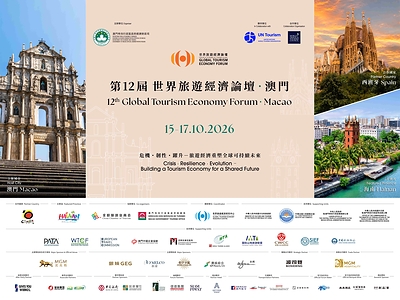
MACAO, Oct. 13, 2026 /PRNewswire/ — The 12th Global Tourism Economy Forum • Macao 2026, scheduled for 15 to 17 October, officially announced today a selection of core speakers and key agenda highlights for this year’s edition. Under the theme “Crisis • Resilience • Evolution — Building a Tourism Economy for a Shared Future”, the Forum convenes political and business leaders, academia elites, and international organization representatives from across five continents to jointly explore the path toward reshaping the tourism economy and achieving sustainable development. This year’s agenda introduces four major new highlights:
Global Thought Leadership: Shaping the Future Tourism Economy
The Forum invites Professor Jeffrey D. SACHS, world-renowned economics professor and Director of the Center for Sustainable Development at Columbia University, to deliver a keynote speech. Drawing on his 30,000-kilometre “Marco Polo Drive of Peace, Culture and Sustainable Development” across Eurasia, he will examine tourism’s unique role as a bridge for cross-cultural exchange and a powerful argument for peace. LONG Yongtu, former lead negotiator for China’s WTO accession, former Secretary-General of the Boao Forum for Asia, and Honorary Chairman of the Forum, will also deliver a keynote speech to analyze China’s inclusive growth model, offering crucial insights for the transformation and upgrading of the global tourism economy.
Ministerial Dialogue and Southeast Asian Leadership
In partnership with UN Tourism, the Forum will host a high-level ministerial panel to examine effective public-private collaboration ahead of the 2027 International Year of Sustainable and Resilient Tourism. The session will feature ministerial leaders including CHIEW Choon Man, Deputy Minister, Ministry of Tourism, Arts and Culture of Malaysia; and KIM Dae-hyun, Vice Minister of the Ministry of Culture, Sports and Tourism of the Republic of Korea. They will share the stage with prominent private sector leaders including Hary TANOESOEDIBJO, Executive Chairman of MNC Group; Hamish KEITH, CEO of EXO Travel Group; and MAO Xiao, Director and CEO of Shanghai Jinjiang International Hotels Co., Ltd., to discuss how to strengthen public-private partnerships, aligning government policies with private investment to achieve maximum synergy.
Aviation Mobility, Global Capital, and AI Innovation
The Forum collaborates with authoritative institutions such as the World Travel & Tourism Council (WTTC), Pacific Asia Travel Association (PATA), and European Travel Commission (ETC) to present major discussion sessions. On regional corridors and mobility, Tony FERNANDES, Co-Founder of AirAsia and CEO of Capital A Group; Arthur YU, CFO of H World Group Limited; Tyrion TONG, Vice President of Public Affairs of Alibaba Group; and Fred ZHOU, President and Board Director of MGM Hospitality Asia Pacific Limited, will explore emerging Asia Pacific travel trends. Decius VALMORBIDA, President of Travel at Amadeus IT Group, will share forward-looking insights on how agentic AI is disrupting global booking and itinerary experiences. Additionally, Price KARR, Chief Financial Officer at Wynn Macau, Limited, will deliver a presentation on how Wynn Resorts leverages AI technology to reshape the cultural tourism experience.
In global investment and cross-border connectivity, Greg O’HARA, Founder and Senior Managing Director of Certares, alongside LUO Suping, Chairman of the board of Hainan Tourism Investment Group Co., Ltd., and Andrew XU, Co-President and Chief Growth Officer of Club Med Lifestyle Group, will analyze destination investment environments. Meanwhile, Elena KOUNTOURA, Vice-Chair of the Committee on Transport and Tourism of the European Parliament; Miguel SANZ CASTEDO, President of the European Travel Commission; SU Guoxin, Chairman of the Board of Directors, CITIC Europe Holdings a.s.; and Leo LIU, Vice President of Public Sector at Mastercard China, will address facilitating two-way visitor flows between Europe and China.
Cultural Heritage, Experiential Commerce, and Inbound Transformation
Addressing evolving consumer preferences, the Forum explores how cross-sector Tourism+ collaboration creates lasting value. Eric FOK, Vice Chairman of the Global Tourism Economy Research Centre and Chairman of the Football Association of Hong Kong, China, will take part in a fireside chat alongside Dr. Wilfred WONG, Executive Vice Chairman of Sands China Ltd., and WEN Jiahong, County Magistrate of Taijiang County in Guizhou (the birthplace of “Village BA”), to compare how grassroots sporting activities and top-tier international events create lasting economic value for tourism destinations.
In culture and corporate social responsibility, YU Minhong, Founder and Chairman of New Oriental Education & Technology Group, will share the deep logic behind integrating tourism with education and culture, while GAO Dekang, Founder, Chairman of the Board and CEO of Bosideng International Holdings Limited, will deliver a speech under the theme “Reaching Peaks, Embracing Warmth — Together for a Sustainable Bright Future”, sharing insightful perspectives on how corporate social responsibility builds resilience and green development drives industry advancement.
In commercial space and retail innovation, Mayuree CHAIPROMPRASITH, President of Corporate Partnership and Communications at Siam Piwat Company Limited, alongside QIU Kai, Founder of Tangshan Banquet and Hetou Old Street, and representatives of Macao integrated resorts, will demonstrate how combining culture, gastronomy, and technology transforms traditional retail spaces into new tourism landmarks featuring immersive experiences, social connections, and cultural expression.
On cultural heritage and high-quality inbound tourism, Dr. KONG Vireak, Secretary-General of the Alliance for Cultural Heritage in Asia, will analyze mechanisms for cultural heritage conservation and living inheritance. Maria Helena DE SENNA FERNANDES, Director of the Macao Government Tourism Office; Leo ZHANG, Vice President and General Manager of Destination Cooperation Department at Trip.com Group; and HyungTae SON, Director of Hanatour Hongkong Co., Ltd., will explore enhancing service quality to craft high-quality inbound travel experiences with deep cultural heritage. Additionally, LU Yongzheng, Member of the Standing Committee and Director of the Publicity Department of the CPC Guizhou Provincial Committee, will detail how mountain residential tourism breaks away from traditional volume-led models to foster sustainable community development and industry integration.
In addition, GTEF 2026 converges a stellar lineup of local cultural, tourism, and business leaders. Among them, Tim KELLY, President of City of Dreams Macau, will deliver a live presentation at Dancing Water Theater, while Augustus LEUNG, Assistant Vice President of Hospitality & MICE Sales of Galaxy Entertainment Group, will address delegates during the delegation luncheon. In collaboration with the Macao University of Tourism (UTM), a side event seminar titled “The Next Generation of Tourism Leadership” will be hosted at its Taipa Campus. The session will bring together leading academic authorities to explore talent attraction and development strategies. It will also examine how to close the gap between the classroom and real-world industry to foster future leaders. Dr. Fanny VONG, Rector of Macao University of Tourism, will also attend the event. The Forum has also arranged a dedicated Health and Wellness Industry Inspection Tour, leading participants to visit the Macao Union Medical Center as well as key infrastructure developments across the Guangdong-Macao In-Depth Cooperation Zone in Hengqin. The itinerary comprehensively showcases the unique appeal of “Tourism+” cross-sector integration and new regional development opportunities between Macao and Hengqin.
As a premier global platform for high-level dialogue in culture and tourism, the 12th Global Tourism Economy Forum leverages Macao’s unique advantages as a World Centre of Tourism and Leisure and a core engine of the Greater Bay Area. The Forum continues to serve as a robust bridge connecting China with the world, injecting strong momentum into a new era of resilient, inclusive, and high-quality sustainable global tourism economic growth.
About Global Tourism Economy Forum
Founded in 2012, the Global Tourism Economy Forum is a premier international platform dedicated to promoting the sustainable development of the global tourism economy. Serving as an essential bridge for exchange and cooperation between China and the international community, the Forum convenes leaders from governments, enterprises, academia, and international organizations worldwide to address opportunities and challenges in global tourism, establishing itself as one of the most influential annual events in the global tourism economy sector.
Having successfully hosted eleven editions, the Forum has attracted over 15,500 delegates from 88 countries and regions and invited more than 780 world-renowned speakers. It has established a high-level dialogue and practical cooperation network that spans the globe and connects government, industry, academia, and research.
For more details about the Forum, please visit https://gte-forum.com/en/ and follow official social media channels for the latest updates.
For media enquiries, please contact:
Occasions Asia Pacific
|
Stella Wong |
Jade Liu |
|
Tel.: +852 3678 0123 |
Tel.: +852 3678 0135 |
|
Email: stellawong@occasionspr.com |
Email: jadeliu@occasionspr.com |
 View original content to download multimedia:https://www.prnewswire.co.uk/news-releases/12th-global-tourism-economy-forum–macao-2026-announces-key-speakers-and-agenda-highlights-302907058.html

13, Oct 2026
Ranveer Singh Announced As Brand Ambassador For Gresbond by Kajaria: Unveils New Campaign ‘Tile Expert Ka Tile Adhesive’
National campaign to go live from October 16th, 2026.
NEW DELHI, Oct. 13, 2026 /PRNewswire/ — Gresbond by Kajaria, the tile-fixing solutions brand from Kajaria Ceramics Limited, today announced Ranveer Singh, as the brand ambassador for Gresbond, who will front its new campaign, ‘Tile Expert Ka Tile Adhesive.’

While Ranveer Singh continues to represent Kajaria, India’s leading tile manufacturer, his association with Gresbond brings together two halves of the same story: the expertise that goes into making the tile and the expertise required to fix it right.
Known as the ultimate Indian showman and generational performer, Ranveer Singh embodies the very ethos of the brand – a self-made journey shaped by ambition, determination and an unwavering pursuit of excellence.
Built by Kajaria, Gresbond was created with a simple belief — the people who understand tiles best also understand what it takes to fix them. Gresbond offers a complete range of tile-fixing and surface-care solutions, including tile adhesives, epoxy and cementitious grouts, surface cleaners and professional tiling tools.
The new campaign brings this proposition to life through a series of films starring Ranveer Singh, showcasing Gresbond products. The campaign will roll out nationally from October 16th, 2026, across digital, social media, out-of-home and on-ground activations.
Commenting on the association, Ranveer Singh said, “My association with Kajaria over the years has been incredible. I’ve always admired the brand’s commitment to innovation and design. With Gresbond, that same focus on quality and expertise extends to what lies beneath every beautiful space. Gresbond offers premium tile fixing solutions for every surface and every space, ensuring that every design has the right foundation to last. For me, great design is equally about what you see and the expertise that makes it endure.“
Kartik Kajaria, who leads the Gresbond business, added: “Bringing Ranveer Singh to Gresbond represents Kajaria Ceramics’ commitment to scale Gresbond by Kajaria. We have spent the last few years building the business, strengthening our products, manufacturing capabilities and distribution network, and now we want to take the category to a much larger audience.
Tile fixing is an extremely important part of the overall tiling experience, yet it remains a category that many consumers do not think about enough. A beautiful tile deserves the right adhesive, grout and care to ensure that the installation performs the way it should. Our new campaign with Ranveer brings this message to consumers in a fun, energetic and memorable way. We are truly excited to have him join us on this journey as we work towards making Gresbond synonymous with expert tile fixing in India.”
Gresbond offers a growing portfolio of tile adhesives covering ceramic, vitrified, natural stone and large-format applications, alongside epoxy and cementitious grouts, surface cleaners and professional tiling tools. Its range includes products designed for indoor, outdoor and wet-area applications, with specialised solutions for applications such as large-format tiles and tile-on-tile installations.
About Gresbond by Kajaria
Gresbond is the premium tile-fixing solutions brand from Kajaria Ceramics Limited, India’s No.1 tile company. Built by the people who manufacture tiles, Gresbond offers a complete ecosystem of products for tile installation and surface care, including tile adhesives, grouts, surface cleaners and professional tiling tools.
Gresbond products are developed to address the diverse requirements of modern tile installations across residential, commercial and institutional applications.
 View original content to download multimedia:https://www.prnewswire.com/in/news-releases/ranveer-singh-announced-as-brand-ambassador-for-gresbond-by-kajaria-unveils-new-campaign-tile-expert-ka-tile-adhesive-302907059.html



