


16, Jun 2026
Sarvam raises $234 million in first close of $300 million Series B at $1.5 billion valuation
BENGALURU, India, June 16: Sarvam, India’s full-stack sovereign AI company, announced that it has raised $234 million in the first close of its $300 million Series B at a post-money valuation of $1.5 billion. HCLTech and Bessemer Venture Partners invested in the round, with continued support from existing investors Khosla Ventures and Peak XV Partners.
Sarvam builds across the AI stack: training and inference infrastructure, frontier model research, and a go-to-market motion spanning enterprises, developers, and government. The investment will fund Sarvam’s continued research on training its next frontier model for agentic, coding, and cybersecurity use-cases, as well as access to compute at scale to expand its forward-deployed motion across key verticals.
“We are clear that research-led innovation to create AI that works at India’s scale is a very large opportunity. That means models that understand our voices, read our documents, and serve intelligence at a cost every enterprise and government can afford. Building on this template, we are innovating on a full-stack offering for enterprises to own and operate their own sovereign AI,” said Pratyush Kumar, Co-Founder of Sarvam.
HCLTech will invest $150M as the lead strategic investor in this round. By combining its deep enterprise transformation expertise, trusted global client relationships, data and other software IP, and engineering depth, HCLTech would accelerate Sarvam’s goal of building a powerful, end-to-end sovereign AI ecosystem for India and beyond.
C Vijayakumar, CEO & Managing Director of HCLTech said, “Our investment in Sarvam marks a significant step toward building India’s trusted and globally competitive AI ecosystem. By bringing together Sarvam’s research in AI models with HCLTech’s global presence, we are creating a differentiated full-stack AI platform for enterprises and governments, strengthening our ability to deliver secure, scalable, and responsible AI solutions.”
Sarvam’s research has shipped at pace. In the last few months, it has released foundational models, all trained from scratch in India. Sarvam 105B matches or outperforms larger reasoning models on knowledge, reasoning, and agentic benchmarks, while Sarvam 30B is optimised for the edge, running on consumer hardware. Sarvam Vision, built for handwriting and Indian-language records, is being used to digitise over 35 million pages from insurance forms to legacy land records. Sarvam’s speech models work in India’s complex settings, transcribing over half a million hours of audio each month.
Sarvam’s products are rapidly scaling, focused on the verticals where the stakes are highest: banking, insurance, gov tech, and defence. Sarvam’s conversational platform now handles over 2 million interactions a day, with usage doubling in the last two months. Sarvam’s agentic platform is scaling rapidly. A leading fintech powers its 350,000-strong sales force with a sales enablement platform that is delivering demonstrable gains. Sarvam’s models are also being adopted by developers served on its inference platform in India which processes 10 million API calls daily, with usage tripling in the last three months.
Sarvam’s deployments are also creating impact at population scale. With multilingual voice agents, Sarvam’s platform collected high-quality data from 17 million farmers providing deep insights to the Ministry of Agriculture and Farmer’s Welfare. For one of India’s leading insurance providers, a nationwide voice campaign supported low cost policy renewals for 45 million policyholders.
“Our ambition is to diffuse this technology widely in India, creating significant value across sectors for citizens, small businesses, enterprises, and state and central governments. We are positioned to both help them adopt and innovate on AI. The partnership with HCLTech provides a unique example of an Indian corporate helping build foundational strength in AI,” said Vivek Raghavan, Co-Founder of Sarvam.
“Sarvam is building and deploying India’s sovereign AI platform – serving 1.4 billion citizens, mission-critical sectors, and large enterprises. Pratyush and Vivek have brought together the rare combination of research depth, engineering talent, and institutional trust to meet India’s voice and agentic needs, and we are proud to partner with them,” said Pankaj Mitra, Partner, Bessemer Venture Partners.
- 0
- By Neel Achary

16, Jun 2026
Doctors at Manipal Hospital Kharadi Save 1.5-Month-Old Infant After Emergency Removal of Open Hairpin
Pune, June 16: Doctors at Manipal Hospital Kharadi successfully removed an open hairpin from the digestive tract of a 1.5–month–old baby boy through an emergency endoscopic procedure, preventing a potentially serious complication.
The infant was brought to the hospital nearly two hours after accidentally ingesting a hairpin while at home. An immediate X-ray of the abdomen revealed that the hairpin had reached the distal stomach or proximal small intestine. The case was considered a medical emergency as the hairpin was open, increasing the risk of perforation of the stomach or small intestine.
The hairpin was successfully retrieved using specialized tooth forceps without causing any injury to the digestive tract.
Speaking about the case, Dr Aditya Borawake, Consultant – Gastroenterologist, Manipal Hospital Kharadi, Pune, said, “Considering the critical nature of the case, we decided to perform an emergency endoscopy. During the procedure, the foreign body could not be located up to the second part of the duodenum (D2), which is the usual extent of a routine gastroscopy. We carefully advanced further into the small intestine and eventually located the open hairpin deep in the fourth part of the duodenum (D4).”
Further he added, “Foreign body ingestion in infants can become a medical emergency, especially when the object is sharp or pointed. In this case, the hairpin was open, which significantly increased the risk of intestinal perforation. The procedure was particularly challenging because the foreign body had migrated deep into the duodenum, beyond the usual reach of routine endoscopy. Timely intervention helped us remove the object safely before any complications could occur.”
Following the procedure, the baby remained stable and was started on oral feeds after four hours. He tolerated the feeds well and was discharged the following day in good condition.
Dr Amit Mane, Director, Manipal Hospitals, Pune, said, “This case highlights the importance of seeking immediate medical attention when a child accidentally ingests a foreign object. The successful removal of an open hairpin from such a young infant reflects the expertise of our clinical team and our readiness to handle complex emergencies with advanced minimally invasive procedures. At Manipal Hospitals, we remain committed to delivering timely and specialized care to patients of all age groups.”
The baby recovered well without any complications and continues to do well on follow-up.
15, Jun 2026
Listing: This Father’s Day, Treat Dad to a Winning Day Out at Amoeba Sports Bar
This Father’s Day, celebrate the man who’s always been your biggest cheerleader with an experience that’s packed with fun, food, and unforgettable moments at Amoeba Sports Bar, Church Street. From exciting bowling sessions and arcade games to live sports screenings and indulgent comfort food, Amoeba offers the perfect setting for fathers and families to bond over shared experiences and a little healthy competition. The newly reimagined sports bar combines gaming, dining, and entertainment under one roof, making it one of Bengaluru’s most exciting social destinations.

Whether it’s challenging dad to a game of bowling, reliving childhood memories over arcade games, or raising a toast while catching the latest sporting action on the big screens, Amoeba Sports Bar promises a Father’s Day celebration beyond the usual brunches and dinners. With its lively atmosphere, crowd-favourite bar bites, pizzas, burgers, wings, and interactive entertainment, families can spend quality time together while creating memories that last long after the day is over.
Date: 21st June, 2026 (Sunday)Time – 11:00AM – 12:00AM Where: Amoeba Sports Bar, Church Street, BengaluruHighlights: Bowling, Arcade Games, Live Sports Screening, Food & Drinks, Family-Friendly EntertainmentOffer: Recharge Arcade Card Above ₹3,000 & Get:
-
₹1,000 Extra Credit
-
5 Free Video Games
-
Special Gifts
Price : 1200/- for 2 pax at sportsbar
15, Jun 2026
MFTA, SFTA Forge Global Fintech Alliance in Presence of Swiss Ambassador
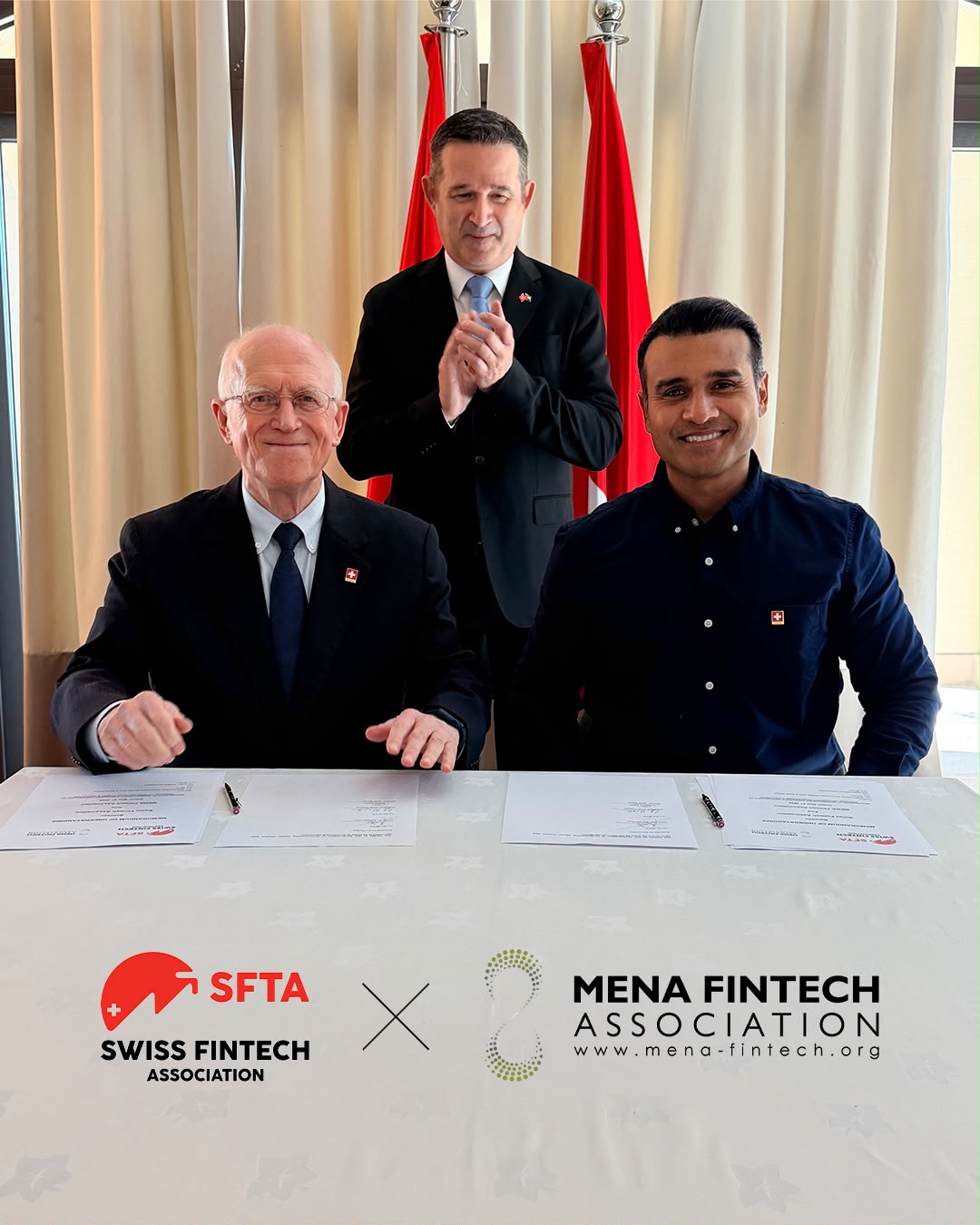
The MENA Fintech Association and Swiss Fintech Association Forge Strategic Alliance to Accelerate Global Fintech Integration, Cross-Border Innovation, and Ecosystem Empowerment
15th June 2026 – Abu Dhabi, UAE – The MENA Fintech Association (MFTA) and the Swiss Fintech Association (SFTA) today announced a landmark strategic partnership designed to advance a new era of cross-border collaboration, ecosystem integration, and innovation-led financial transformation across global markets.
This alliance reflects a shared conviction that the future of financial services will be defined by interconnected ecosystems, seamless knowledge exchange, and the collective empowerment of institutions, innovators, and talent across geographies.
The Memorandum of Understanding (MoU) was formally signed with the Swiss Fintech Association, represented by its President, Phillip Weights, marking a significant milestone in strengthening institutional ties between the two ecosystems. The engagement was held under the presence and facilitation of H.E. Arthur Mattli, Ambassador – Embassy of Switzerland to the United Arab Emirates & Kingdom of Bahrain, whose support underscored the strategic importance of deepening bilateral cooperation in financial innovation and reinforcing cross-border ecosystem linkages.
At the heart of this partnership lies a bold commitment to cross-border collaboration, enabling structured engagement between fintech ecosystems in the MENA region and Switzerland. Both associations aim to eliminate silos that limit innovation, fostering a unified platform for dialogue between startups, regulators, investors, financial institutions, and technology leaders.
A central objective of the partnership is to develop cross-border frameworks, understand the global outlook and landscape, and further the future of finance across both ecosystems and beyond. Empowerment of the next generation of fintech talent, with a strong emphasis on nurturing emerging founders, developers, and innovators, is also a vital pillar of this partnership. Through joint programs and curated ecosystem access, MFTA and SFTA will work to cultivate a globally competitive pipeline of fintech leadership capable of shaping the future of financial infrastructure.
The collaboration will further prioritize knowledge sharing and intellectual capital exchange, establishing formal mechanisms for sharing insights on regulatory frameworks, emerging technologies, market dynamics, and best practices. This will include thought leadership forums, research collaborations, and high-level roundtables aimed at elevating industry-wide understanding and accelerating informed innovation. Both organizations will also engage in co-development of ecosystem-building initiatives, designed to unlock scalable impact across both regions. These initiatives will support fintech startups in accessing new markets, facilitate investor connectivity across borders, and enable institutional partnerships that drive real-world adoption of financial technologies.
In addition, the partnership underscores a strategic global outlook, positioning both associations as key enablers of international fintech alignment. By bridging two of the world’s most dynamic financial ecosystems, the collaboration is expected to create new pathways for capital flow, regulatory dialogue, and innovation diffusion at a global scale.
The alliance is further anchored in a long-term strategic vision focused on building resilient, inclusive, and future-ready financial ecosystems. This includes fostering regulatory innovation, supporting digital transformation agendas, and reinforcing trust-based frameworks that enable sustainable fintech growth.
Leadership from both MFTA and SFTA emphasized that this partnership is not symbolic, but foundational, representing a decisive step toward shaping a more interconnected, collaborative, and innovation-driven global financial landscape.
Philip J. Weights, SFTA President comments that: “This strategic MOU between the Swiss FinTech Association (SFTA) in Zurich and the MENA Fintech Association (MFTA) in Dubai creates a powerful cross-border corridor for wealth, innovation, and digital finance. It establishes a bridge between two of the world’s most prominent financial technology hubs.”
“This alliance is a defining step toward deepening cross-border collaboration and co-creating the future of financial innovation between our two ecosystems. It reflects a shared ambition to enable sustainable growth and global connectivity in fintech.” — Nameer Khan, Chairman, MENA Fintech Association
Together, the MENA Fintech Association and the Swiss Fintech Association are setting a new global benchmark for ecosystem partnership, one defined by cross-border synergy, talent empowerment, and the shared ambition to co-create the future of finance.
15, Jun 2026
Emilios Tannousis MCSI, FCCA appointed new president of CISI Cyprus National Advisory Council
Global educational charity and professional body the CISI (Chartered Institute for Securities & Investment) is delighted to announce the appointment of Emilios Tannousis MCSI, FCCA as president of the CISI’s Cyprus National Advisory Council (NAC).
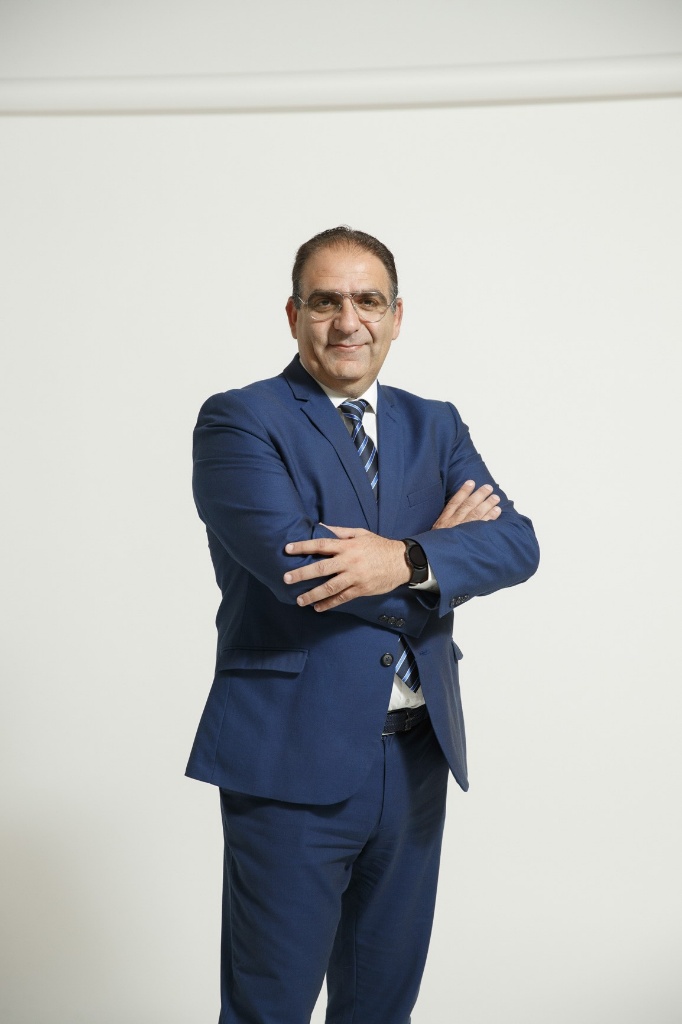
Emilios (left) previously served as vice president of the CISI’s Cyprus NAC. He has over 25 years of experience in the wealth and asset management industry, with expertise in wealth management and family office advisory for both private and institutional clients. He currently serves as Partner, Wealth Management at Gravity Private Wealth, a European-regulated multi-family office advisory boutique firm serving private families and institutional investors across global financial markets.
Prior to joining Gravity, Emilios led the Wealth Management Units at Bank of Cyprus, overseeing teams serving private clients, family offices, investment funds, pension funds, insurance companies and other institutional investors.
He also currently serves on the Board of the Cyprus Investment Funds Association (CIFA) and is a member of the Advisory Board of the European Institute of Management and Finance (EIMF) Master’s programme in Risk and Governance.
Emilios Tannousis MCSI, FCCA said: “I am honoured to take on the Presidency of the CISI Cyprus National Advisory Council at a time when the financial services industry is rapidly evolving through innovation, digital transformation, and increasing global interconnection
“I look forward to collaborating closely with fellow peers and the Institute in London to further strengthen professional standards, promote ethical leadership, and support the continued development of Cyprus as a growing international financial services centre and as a hub for family wealth and fintech innovation, underpinned by a robust European regulatory framework.”
Tracy Vegro OBE CISI CEO said: “Our warmest congratulations to Emilios, who has been integral to our Cyprus NAC over the years and continues to be an advocate for CISI and the wider financial services profession. We look forward to supporting him in championing integrity, raising individual standards of knowledge, skills and behaviour.
“We are also deeply grateful for the outstanding service of Charles Charalambous, Chartered MCSI, Chief Executive Officer, Cyprowealth Group, who will remain with us as the Vice President of Cyprus NAC.”
The next Cyprus CISI event will be a summer social gathering and a date will be confirmed shortly.
15, Jun 2026
Brompton processing and Absen LED panels bring the 50th Olivier Awards to the stage and screen

June 15th, 2026. Celebrating its 50th anniversary, the annual Olivier Awards once again took place at London’s Royal Albert Hall to celebrate the best of theatrical entertainment, not only over the past 12 months, but the last 50 years. Blue-i Theatre Technology relied on Brompton Technology’s Tessera LED processing platform to help deliver a spectacular visual experience, both in the room and on screen, for the prestigious ceremony’s much anticipated return to prime-time BBC television.
Into The Woods and Paddington The Musical, which also features Brompton processing, both led the evening’s nominations with 11 each, with Paddington The Musical taking home seven awards, including Best New Musical.
The LED rig was split into seven pieces: a central 16:9 screen flew in and out throughout the ceremony to display VT packages and scenic content behind performers, while another six screens built into the scenery as ‘posters’ were used for both scenic content and imagery celebrating nominated and winning productions.
The setup comprised two Tessera 4K SX40 LED processors and two Tessera XD 10G data distribution units for the main flown screen, with a matching configuration of two further SX40s and two XDs powering the poster screens.
This year also saw Blue-i transition to its latest batch of Absen Saturn 2.6mm panels, chosen specifically to run on Brompton processing. The move brought a significant practical advantage, with the new panels weighing less than half their predecessors, a benefit welcomed by the automation and rigging teams working within the Royal Albert Hall.
“Productions of this scale demand complete confidence in every element of the LED workflow,” says Darren Jackson, Business Development Manager (UK and Ireland) at Absen Europe. “The combination of Absen Saturn panels and Brompton processing gave Blue-i the performance, colour fidelity and reliability needed for a live prime-time broadcast, and we’re proud to have contributed to such a landmark celebration of British theatre.”
For Blue-i’s Head of Technical Theatre, Sam Jeffs, the Olivier Awards is a personal highlight of the year, and marked his 12th consecutive year working on the show. As a broadcast production, the technical stakes were particularly high and redundancy was a top priority. “Being a live broadcast, project timings are really tight, so ensuring we could load in quickly and have a rock solid system with full redundancy was very important,” Jeffs explains. “The SX40 and XD combination allowed for multiple layers of redundancy, which makes it one of our favourite Brompton features.”
Ultra-low latency was equally critical for the live camera feeds that were central to the show’s broadcast. This feature reduces end-to-end latency to just one frame across the processor, providing an effective solution for exactly these kinds of broadcast demands. Because the production signal had to pass through an outside broadcast system, minimising latency at every possible point in the chain was essential.
Genlock further supported the broadcast pipeline, allowing the entire LED system to be synchronised to the production’s house sync, helping eliminate any risk of on-camera artefacts during the live transmission.
The fine colour control offered by the SX40s, in particular ChromaTune, which includes a 14-way colour corrector, also proved invaluable in collaborating with the broadcast engineering team to achieve the precise on camera look required. “Having the fine colour controls was heavily used to work with the broadcast engineers to get things looking just right on camera,” Jeffs says. “The different levels of control really helped dial things in quickly.”
He also highlighted Brompton’s Stacking feature, which ensured any changes made were propagated across all four SX40 units simultaneously, enabling rapid adjustments across the system. The Frame Store feature meanwhile provided an added layer of confidence, giving the team the ability to store and recall video snapshots as a contingency should any issues arise during the live broadcast.
“It’s always a highlight of the year, celebrating the success of UK theatre, and it’s such a privilege to be a part of that,” Jeffs reflects. “For me it’s special, as it’s one of the few shows for which I’m still in the hot seat looking after programming.”
“The Olivier Awards’ return to prime-time TV is a landmark occasion,” concludes Patrick Goodden, Technical Sales Manager (UK and Ireland) at Brompton Technology. “Live broadcast is one of the most demanding environments for LED processing, with latency, redundancy and colour accuracy requiring no margin for error. The fact that Blue-i have built their entire workflow around the SX40 is a real testament to what the platform can deliver; it’s a privilege to support them in making something this special look its very best.”
15, Jun 2026
IndiQube strengthens leadership team with key appointments across business development and design & build
Tarun Tandon joins as Vice President, Business Development and Shallu Singh joins as National Director, Design & Build, as IndiQube sharpens its enterprise growth and Design & Build capabilities
Bengaluru, India, June 15: IndiQube Spaces Limited, one of India’s leading Integrated Managed Solutions Platform, today announced two senior leadership appointments as it strengthens its next phase of growth.
Tarun Tandon has joined the company as Vice President of Business Development, while Shallu Singh has joined as National Director, Design & Build. The appointments come at a time when enterprises across India are seeking more integrated workplace solutions spanning managed offices, customized environments, and faster go live capabilities. IndiQube has a presence in 17 cities and manages over 9.66 million sq. ft. of office space as of March 2026.
These additions reflect the increasing breadth of demand in India’s flexible workspace market. Flexible workspace stock in India crossed 100 million sq. ft. by the end of 2025, and is likely to reach about 236 million sq. ft., by 2030 according to Redseer. At the same time, occupier demand is becoming more sophisticated, with enterprises seeking not only flexibility, but also integrated design, delivery, technology, and operational support. CBRE reported that flex spaces accounted for 23% of total office leasing in India in Q1 2026, driven by growing enterprise demand for managed office environments.
In his new role, Tarun Tandon will lead IndiQube’s sales organisation, with a focus on deepening enterprise relationships, expanding market coverage, and accelerating growth across key customer segments. He comes with over two decades of real estate experience in firms like DLF, Colliers, Knowledge Realty Trust and ICP.
Shallu Singh joins IndiQube as National Director – Design & Build, bringing over 25 years of experience across workplace and hospitality design and build. Having led large-scale workplace transformation initiatives for leading organizations, she brings deep expertise in creating environments that balance functionality, employee experience, and business objectives. At IndiQube, she will focus on strengthening the company’s Design & Build capabilities and delivering integrated workplace solutions that support the evolving needs of clients.
Rishi Das, Co-founder and CEO, IndiQube, said, “As workspaces continue to evolve, we are seeing a clear shift in what enterprises expect from their partners. Clients are increasingly looking for partners with strategic capability across the full workplace lifecycle, from space planning to design, build, and operational delivery. Tarun and Shallu’s appointments reflect that shift. Their additions to our leadership team further strengthen our ability to serve enterprises with greater depth, speed, and consistency as we continue to scale.”
Meghna Agarwal, Co-founder, IndiQube, added, “Workplaces have become far more central to business strategy than before. Enterprises are increasingly seeking environments that are customized, experience led, and ready to support multiple workstyles from day one. These appointments reinforce our commitment to building a stronger leadership team across both growth and execution. We were confident that Tarun and Shallu would add significant value as we continued to expand our enterprise offerings.”
Tarun Tandon, Head of Sales, IndiQube Spaces Limited, said, “Excited to join IndiQube at a time when the market is seeing strong demand for agile and enterprise ready workspace solutions. What stood out to me was the company’s ability to combine scale, customer centricity, and execution. I looked forward to working closely with the team to deepen client relationships, unlock new growth opportunities, and help more enterprises navigate their evolving workplace needs.”
Shallu Singh, National Director, Design and Build, IndiQube Spaces Limited, said, “Design and build is more than just creating workplaces, it is about shaping sustainable environments that support business objectives and enhance employee experience. I am excited to join IndiQube in its relentless pursuit of delivering sustainable workplace solutions and look forward to strengthening the company’s ability to create environments that help clients build customized and future-ready workplaces across markets.”
The announcement also signals IndiQube’s continued evolution from a flexible workspace operator to a broader workplace solutions platform.
15, Jun 2026
Kotak Mutual Fund Launches First SIF with Hybrid Long-Short Strategy
Delhi, June 15: Kotak Mahindra Asset Management Company (“Kotak Mutual Fund”/”KMAMC”) announced the launch of its maiden Specialised Investment Fund (SIF) – the Kotak Infinity Hybrid Long-Short Fund, marking its entry into SEBI’s newly introduced SIF category.
SIFs are a new investment category designed to bridge the gap between traditional mutual funds and more advanced offerings such as PMS and AIFs. They may offer relatively greater flexibility in portfolio construction, subject to applicable regulatory provisions, and are generally suited for investors who understand the associated features and risks. The strategy aims to navigate different market conditions through dynamic management of net equity exposure, with a focus on portfolio risk management, including downside risks. It involves a combination of long-only investments, permitted short exposures and arbitrage opportunities, in line with regulatory limits. However, there is no assurance that the stated objectives will be achieved or that the strategy will deliver consistent or stable outcomes across market cycles. The New Fund Offer (NFO) will open on June 15, 2026, and close on June 29, 2026.
Nilesh Shah, Managing Director, Kotak Mahindra Asset Management Company Ltd says “Mutual funds have created significant wealth through disciplined long-only investing. SIFs represent a natural evolution, offering greater flexibility through long-short strategies to navigate market cycles more effectively. With experience in managing hybrid strategies, the Infinity Hybrid Long-Short Fund is positioned to provide an additional approach to investing, with a focus on disciplined portfolio construction and risk management. However, there is no assurance that the investment objectives will be achieved or that the strategy will result in favourable outcomes.
Kalpesh Jain, Fund Manager- SIF at Kotak Mahindra Asset Management Company Ltd says “SIFs enable a more flexible approach to portfolio construction while maintaining a strong focus on risk management. The Infinity Hybrid Long-Short Fund will invest across equities, arbitrage opportunities and select derivative strategies, dynamically managing net equity exposure. The objective is to participate in market upside while aiming to reduce drawdowns in volatile conditions.”
The launch reflects Kotak Mutual Fund’s continued focus on building relevant investment solutions aligned to evolving investor needs. The strategy is designed to offer a differentiated approach within the mutual fund framework while maintaining a strong emphasis on risk management and disciplined investing.
15, Jun 2026
The MENA Fintech Association and Swiss Fintech Association Forge Strategic Alliance to Accelerate Global Fintech Integration…
The MENA Fintech Association and Swiss Fintech Association Forge Strategic Alliance to Accelerate Global Fintech Integration, Cross-Border Innovation, and Ecosystem Empowerment
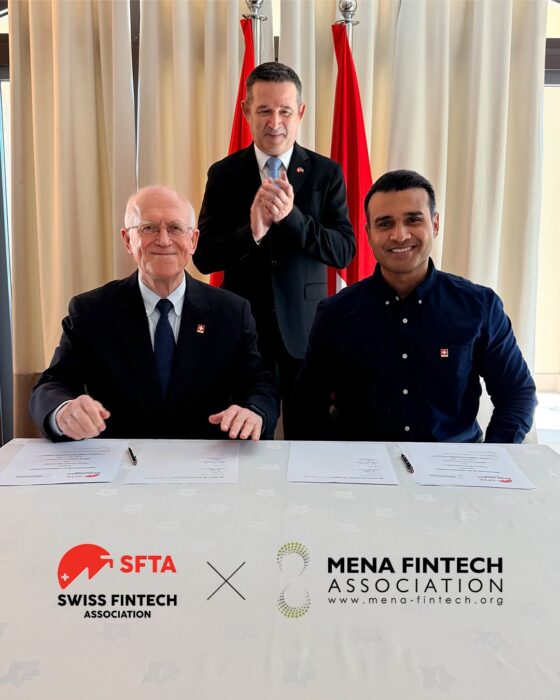
June 15 – Abu Dhabi, UAE – The MENA Fintech Association (MFTA) and the Swiss Fintech Association (SFTA) announced a landmark strategic partnership designed to advance a new era of cross-border collaboration, ecosystem integration, and innovation-led financial transformation across global markets.
This alliance reflects a shared conviction that the future of financial services will be defined by interconnected ecosystems, seamless knowledge exchange, and the collective empowerment of institutions, innovators, and talent across geographies.
The Memorandum of Understanding (MoU) was formally signed with the Swiss Fintech Association, represented by its President, Phillip Weights, marking a significant milestone in strengthening institutional ties between the two ecosystems. The engagement was held under the presence and facilitation of H.E. Arthur Mattli, Ambassador – Embassy of Switzerland to the United Arab Emirates & Kingdom of Bahrain, whose support underscored the strategic importance of deepening bilateral cooperation in financial innovation and reinforcing cross-border ecosystem linkages.
Philip J. Weights, SFTA President, comments: “This strategic MOU between the Swiss FinTech Association (SFTA) in Zurich and the MENA Fintech Association (MFTA) in Dubai creates a powerful cross-border corridor for wealth, innovation, and digital finance. It establishes a bridge between two of the world’s most prominent financial technology hubs.”
“This alliance is a defining step toward deepening cross-border collaboration and co-creating the future of financial innovation between our two ecosystems. It reflects a shared ambition to enable sustainable growth and global connectivity in fintech.” — Nameer Khan, Chairman, MENA Fintech Association
15, Jun 2026
Talegaon – Where Connectivity, Industry and Liveability Converge
By Anil Pharande
For much of the past two decades, Talegaon occupied a peripheral role in Pune’s real estate imagination. It was where the expressway passed through, where JCB assembled its excavators, and where weekend home buyers occasionally ventured. That description no longer holds. A convergence of infrastructure investment, industrial policy, and residential demand is rewriting Talegaon’s identity at speed -and the data makes a compelling case for those willing to look past the legacy narrative.
The Connectivity Dividend
Location has always been Talegaon’s understated advantage. Positioned squarely on the Mumbai–Pune Expressway and National Highway 48, it sits roughly equidistant between India’s two largest economic centres. What has changed is the density and quality of that connectivity.
The Maharashtra State Infrastructure Development Corporation (MSIDC) has received cabinet approval to upgrade the 53.2-km Talegaon–Chakan–Shikrapur corridor into a four-lane elevated highway and a six-lane at-grade road, at an estimated cost of Rs. 3,923.89 crore on the BOT model. Tenders were floated in late 2025, with construction timelines of two to two-and-a-half years.
The Pune Ring Road -whose western section is targeted for completion by May 2027 -will directly benefit the Talegaon belt, connecting it to Hinjewadi IT Park, Lohegaon Airport, and PCMC without traversing city arteries. The Ring Road alone changes the commute calculus for the entire western corridor, reducing dependence on the congested Pune-Nashik axis.
Equally significant is Talegaon’s westward reach. Via the Mumbai–Pune Expressway and the new connecting link at Lonavala, Mumbai is approximately a 90-minute drive -placing the Navi Mumbai International Airport (NMIA) and the Jawaharlal Nehru Port Trust (JNPT) within roughly an hour’s commute. For logistics operators and export-oriented manufacturers, this is a transformative proposition: direct, time-efficient access to India’s largest port and its newest international gateway, without the congestion of the city proper.
Rail connectivity adds another dimension. Talegaon station on the Mumbai–Pune Central Railway line provides a functional, affordable commuter option that is almost entirely absent in comparable peri-urban industrial belts in the region.

The Defence Dimension
The most consequential recent development for Talegaon’s long-term trajectory is one that has received relatively little residential-market attention. As of early June 2026, the Maharashtra government has initiated plans to develop a 1,100-acre industrial park near Talegaon, with defence manufacturing explicitly identified as the primary growth driver. The project is expected to generate approximately 50,000 jobs. This follows a structured pattern of defence-sector interest in the Pune–Maval corridor, which already houses precision engineering, electronics, and aerospace-ancillary manufacturers.
The significance for residential real estate is direct. Defence-sector employment is stable, relatively well-compensated, and -crucially -long-tenure. Workers and technicians drawn to such facilities do not commute from Shivajinagar or Hadapsar; they settle close to work. This is the demographic profile that sustains integrated residential communities.
Warehousing: The Emerging Anchor
Talegaon is increasingly consolidating its position as Pune’s primary warehousing and logistics hub. Welspun One’s announcement of a Rs. 550 crore Grade-A logistics park on 46 MIDC-allotted acres in Talegaon MIDC Phase IV -comprising 1.2 million sq. ft. spread across four buildings -is among the more visible markers of this shift. ESR already operates a 60-acre, 1.35 million sq. ft. industrial and logistics park at Talegaon Phase II, serving automotive, FMCG, pharma, and e-commerce clients.
Pune’s overall warehousing market recorded approximately 7.4 million sq. ft. of leasing in 2025, a 10 per cent increase over the previous year. Notably, the Talegaon–Chakan corridor alone contributed nearly 70 per cent of this leasing activity. The Cabinet Committee on Economic Affairs has also approved a Multi-Modal Logistics Park (MMLP) for Talegaon, which would integrate road and rail freight handling and significantly reduce transit costs for exporters.
Together, these investments position Talegaon not merely as an industrial satellite of Pune but as a self-sustaining logistics region in its own right.
The Environment Edge
It is worth comparing Talegaon’s quality-of-life metrics with those of neighbouring industrial zones. Chakan MIDC, for over a decade the undisputed anchor of Pune’s industrial expansion, is now navigating the pressure points of its own success -including infrastructure strain, traffic congestion on its primary artery that has materially lengthened daily commutes, and the challenge of sustaining liveability at high industrial density. These are well-documented growing pains, acknowledged at the highest levels of state government.
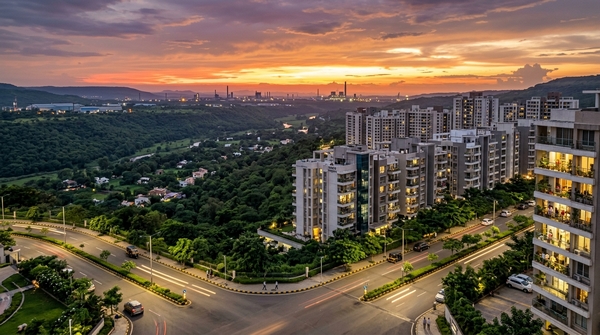
Talegaon, benefiting from a lower base of industrial density and a greener, more undulated landscape, has not yet accumulated these pressures. Its air quality, noise environment, and spatial character remain meaningfully superior -the Sahyadri foothills provide a natural backdrop that no amount of post-facto urban greening can replicate. That is not a permanent condition; it is a window. How that window is used will determine whether Talegaon becomes a cautionary tale or a model.
The Case for Integrated Townships
Within this emerging landscape, the question of development format deserves serious attention. Talegaon’s growth drivers -defence employment, logistics, manufacturing -create a specific residential demand profile: people who want to live near work, in communities that offer a full range of daily-life infrastructure without dependence on the nearest saturated city. That is, almost by definition, the integrated township model.
A standalone housing project in Talegaon, whatever its individual quality, cannot on its own provide schools, healthcare, recreational facilities, open green space, or commercial amenities at sufficient scale. It adds population without adding support infrastructure -which is precisely how well-intentioned residential growth in several comparable industrial corridors has gradually eroded liveability over time.
Integrated townships of sufficient scale can internalise these costs, create genuine communities, and maintain quality control over the built environment in their immediate precinct. In a market still in its early residential phase, the format of development sets the tone for everything that follows.
Maharashtra has recognised this. State policy actively encourages integrated township development, and the Pune Metropolitan Region has received approvals for over a dozen such projects. The policy logic is sound: structured planning compounds positively; ad-hoc development compounds negatively.
Property data indicates that select well-located townships within the Talegaon belt have logged appreciation of 80–90 per cent over the past five years -with real potential to reach 100 per cent or more by 2028–29, as infrastructure completions (Ring Road, elevated corridor, MMLP) catalyse a fresh demand cycle. The apartment segment, which started from a lower base, has recorded annualised growth of approximately 9 per cent in recent periods. For a peri-urban location, these figures compare favourably -particularly when adjusted for the substantially lower entry price point relative to core Pune localities.
A Note of Caution
None of the above is an argument for complacency. Talegaon’s current appeal rests substantially on what it is not yet -not as congested, not as polluted, not as under-infrastructure-stress as the zones it borders. That is a fragile competitive advantage. If the next phase of development consists primarily of small, fragmented, single-project launches -each rational individually but collectively generating density without the infrastructure to support it -Talegaon will have replicated exactly the errors it now benefits from.
The infrastructure investment underway is necessary but not sufficient. Equally important is planning discipline: adequate green cover, functional road widths, utility provisioning, and integrated community design. Talegaon is, in 2026, at precisely the inflection point where the right choices are still available. The question is whether enough stakeholders recognise this before the window closes.

Anil Pharande is Chairman of Pharande Spaces, a leading real estate construc


