


7, Oct 2026
Biodeal Pharmaceuticals Expands into Sterile Injectables with Acquisition of Biological E Facility

Mumbai, 07 October 2026: Biodeal Pharmaceuticals, a leading Contract Development and Manufacturing Organisation (CDMO), has acquired a sterile injectable manufacturing facility in Paonta Sahib, Himachal Pradesh – one of the largest manufacturing facilities in the state – from Biological E Limited. The acquisition marks a strategic expansion of Biodeal’s manufacturing platform into sterile injectables for global markets, adding established regulatory credentials, specialised capabilities and significant manufacturing capacity to its portfolio.
The facility is equipped for general injectables and Carbapenem manufacturing in vial formats, supported by German-made Groninger processing lines, with current annual capacity of around 135 million units. There is scope to expand to the facility‘s full capacity of 17 production lines and to add pre-filled syringe (PFS) and lyophilised formats. Biodeal is pursuing PIC/S and EU accreditation for the facility as part of its plans to expand into additional regulated markets.
Spread across a 14-acre campus, the Paonta Sahib facility comprises approximately 39,000 square metres of built-up manufacturing space and has the potential to add a further capacity of 30 million units through near-term expansion. Located approximately 50 kilometres from Biodeal’s existing Nalagarh facility, the acquisition also strengthens the company’s manufacturing footprint within Himachal Pradesh’s established pharmaceutical corridor.
“This acquisition is a deliberate step, not an opportunistic one. RMB Capitalworks backed our growth path with conviction, and Paonta Sahib gives us a regulated-market manufacturing base with credentials and capabilities that normally take years to build. It changes the category of company Biodeal competes in and puts us in a strong position to continue building a durable, high-value regulated-market business,” said Anurag Kumar, Chairman & Managing Director, Biodeal Pharmaceuticals.
The facility was acquired from Biological E Limited, a Hyderabad-headquartered vaccine and pharmaceutical manufacturer with nearly seven decades of operations, as part of Biological E’s ongoing investment in its new vaccine R&D and CDMO campus in Telangana. With this acquisition, Biodeal adds established manufacturing capacity and credentials to its platform, broadening the range of complex injectable manufacturing it can offer pharmaceutical customers globally – spanning Carbapenems for serious bacterial and drug-resistant infections, and in process of expanding into ready-to-use pre-filled syringe formats, and lyophilised products with extended stability and shelf life.
“As Biological E continues to focus our investment on our new vaccine R&D and CDMO campus in Telangana, divesting our Paonta Sahib facility to a capable, growth-oriented partner was a natural next step. We are confident Biodeal Pharmaceuticals is well positioned to build on the strong foundation established at this facility, and we wish them continued success as they take it forward,” said Mahima Datla, CEO & Managing Director, Biological E Limited.
- 0
- By Neel Achary

7, Oct 2026
Kaizen Analytix Becomes Kaizen Global to Reflect Expanding Global Footprint and Services Capabilities
New Name and Refreshed Brand Identity Reflect the Company’s Evolution Across AI, Data, Technology and Global Delivery
ATLANTA, Oct. 7, 2026 /PRNewswire/ — Kaizen Analytix LLC, a global provider of AI, data analytics and technology services and solutions, today announced that it is changing its name to Kaizen Global LLC. The new name reflects the company’s continued expansion across geographies, capabilities and industries, including the recent acquisition of Nihon Technology, growth of its global delivery model and expanded portfolio of AI and technology services.

The name change is the next stage in Kaizen’s evolution as the company expands beyond its origins in data analytics to help enterprises address increasingly complex business and technology challenges through AI, data, digital transformation, enterprise technology and global delivery capabilities.
“Kaizen has grown significantly in both the breadth of what we do and where we operate,” said Krishna Arangode, founder and CEO of Kaizen Global. “We are a global company today, with growing capabilities across AI, technology, data and enterprise transformation. Our new name reflects Kaizen’s global footprint and dedication to continuously improve client operations and deliver lasting business value.”
Kaizen Global’s executive team consists of CEO Arangode and Managing Partners and Co-Founders Anand Srinivasan, Jeff Anderson, and Ken Bara. As part of the company’s global expansion, Muthu Muthuvelan will serve as CEO of Kaizen Global Japan, and Sivaramakrishnan Senthatty (Siva Sen) will serve as CEO of Kaizen Global India.
Expanding Capabilities for a Changing Technology Landscape
The evolution to Kaizen Global follows significant growth in the company’s geographic reach and services offerings, including:
- The acquisition of Nihon Technology strengthened Kaizen’s capabilities in SAP implementation, digital transformation and cybersecurity services while expanding its Japan-India delivery model.
- AI services expansion to help organizations move beyond experimentation toward practical AI solutions that address specific business challenges and deliver measurable results. Kaizen Global’s AI portfolio now includes AI strategy and implementation, AI-enabled services, purpose-built AI agents and agent management, and AI training and change management.
- The launch of Kaizen Kvantum, a marketing analytics and customer insights practice that serves global brands through Kaizen’s India-based delivery teams.
- Kaizen Circularity AI partnering with Kaizen Global to establish a Global Capability Center (GCC) in Chennai, India, which supports product innovation, data science and customer delivery operations worldwide.
- In support of its growing cybersecurity services, launch of a unified identity security solution designed to address identity-based threats by integrating SSO, MFA, PIM, PAM, IAM, Zero Trust and passwordless authentication.
Together, these developments have expanded Kaizen’s ability to combine business acumen, technology know-how and global delivery resources to support increasingly complex transformation initiatives.
A New Identity for the Next Stage of Growth
The Kaizen Global launch includes a refreshed brand identity and redesigned website that bring the company’s expanding capabilities together under a unified brand.
The new identity is anchored by the tagline “Rapid Delivery, Continuous Improvement” which reflects Kaizen’s longstanding commitment to continuous improvement while emphasizing the measurable business outcomes the company delivers rapidly through AI, technology, data analytics and transformation.
“Continuous improvement has always been at the heart of our business,” said Arangode. “What has changed is the scale and breadth of what we can bring to our clients. Kaizen Global represents that evolution. We are bringing together AI, data, technology, subject-matter expertise and global delivery to help organizations solve complex problems and transform how they operate.”
For more information about Kaizen and its AI and analytics capabilities, visit Kaizen Global.
About Kaizen Global
Kaizen Global is a leading global provider of AI, data analytics and technology services for enterprise transformation and business-value generation. Combining business acumen with technical know-how, Kaizen delivers measurable, sustainable business outcomes through AI-enabled services, development of intelligent systems, and deployment of advanced analytics—all via a continuous-improvement delivery model with a human-in-the-loop. Recognized for speed and flexibility by Gartner, NPR, Forbes, Entrepreneur, and Inc. 5000 as one of America’s fastest-growing private companies, Kaizen is a certified minority-owned business headquartered in Atlanta with offices in New York, Dallas, Tokyo, Osaka and Chennai. Follow Kaizen on LinkedIn, Facebook, and Twitter @KaizenGlobal.
Media Contact:
Paulette Brown
Carabiner Communications
pbrown@carabinercomms.com
770.577.3881
 View original content to download multimedia:https://www.prnewswire.com/in/news-releases/kaizen-analytix-becomes-kaizen-global-to-reflect-expanding-global-footprint-and-services-capabilities-302900431.html

7, Oct 2026
Chandigarh University Signs MoU with 247VC to Create Investment Opportunities for Quantum and Deep-Tech Startups
Chandigarh University’s CUBIC becomes India’s First University-Led Quantum Incubator for Deep-Tech Startups, Signs MoU with 247VC
NEW DELHI, Oct. 7, 2026 /PRNewswire/ — Chandigarh University’s CUBIC, India’s first university-led quantum incubator for deep-tech startups became an academic and incubation partner for PRAGATI Q-Foundry 2026, a national initiative of the Ministry of Science and Technology, aimed at accelerating the development and commercialization of quantum technologies, and signed a Memorandum of Understanding (MoU) with 247VC Investment Trust which is a leading Indian venture capital firm on the sidelines of the PRAGATI Q-FOUNDRY 2026 NQM Co-development and Venture Partnership Meet held on September 29–30 in New Delhi.
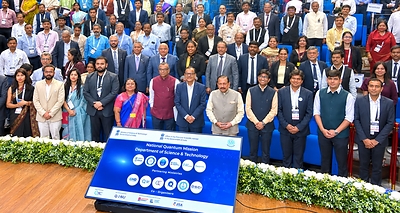
The MoU will facilitate direct access to potential investment opportunities, strategic mentorship and business support for quantum and deep-tech startups associated with CUBIC. The national meet was addressed by the Union Minister of State for Science and Technology and Earth Sciences, Dr. Jitendra Singh, and brought together startups, academic institutions, industry, investors, manufacturers to accelerate the translation of quantum technologies from research towards validation, co-development, commercialization and deployment under India’s National Quantum Mission (NQM).
The MoU with 247VC Investment Trust adds an investment and business-development dimension to CUBIC’s incubation activities. This collaboration aims to help promising startups associated with CUBIC access potential seed-stage and eligible early-stage funding opportunities to strengthen investment readiness and connect to relevant investor networks. Under this agreement, CUBIC may identify suitable startups from its incubation ecosystem and facilitate introductions to 247VC, subject to the investor’s sector preferences, stage requirements and investment criteria.
The agreement also provides for potential investor–startup interactions through pitch sessions, curated meetings, demo days and other mutually agreed platforms. CUBIC may support eligible startups in preparing business plans, pitch decks, financial projections and technology and intellectual property documentation required for fundraising. Where mutually agreed, 247VC or its representatives to provide strategic mentorship in fundraising, business development, commercialization and market access.
The parties will also explore opportunities to connect eligible startups with venture capital funds, angel investors, family offices, corporate investors and strategic partners. Potential follow-on investments may be considered for selected ventures as they progress through subsequent stages of growth and fundraising, subject to 247VC’s independent evaluation, due diligence, investment mandate and internal approvals. The MoU establishes a framework for collaboration but does not guarantee funding or create an obligation for the investor to invest in any startup.
Jai Inder Singh Sandhu, Managing Director, Chandigarh University, said, “PRAGATI Q-FOUNDRY 2026 highlights the importance of connecting academic research with industry, investors and strategic users so that promising technologies can move closer to practical applications. Through CUBIC’s role as an academic and incubation partner, Chandigarh University aims to contribute by bringing together research capabilities, emerging talent and entrepreneurial innovation in quantum and other deep-tech domains. Our MoU with 247VC complements this effort by creating a structured pathway for eligible startups to engage with potential investors, strengthen their investment readiness and access strategic mentorship.”
Sandhu added, “For the National Quantum Mission to translate into lasting technological and economic value, India needs to connect scientific research with technology validation, industry adoption, investment and entrepreneurship. Universities can contribute by nurturing talent, supporting research-led innovation and helping promising ideas progress towards commercially viable solutions. Through these collaborations, we aim to strengthen the connections between research, incubation and investment and support India’s broader ambition of developing indigenous, globally competitive technologies.”
The CUBIC will help connect academic knowledge, research capabilities and emerging entrepreneurial ideas with opportunities for technology development and industry engagement. The association will create avenues for students, researchers, faculty members and aspiring entrepreneurs to engage with stakeholders working in quantum technologies and other frontier domains. The initiative aligns with the broader objectives of the National Quantum Mission, which seeks to strengthen indigenous capabilities in quantum computing, quantum communication, quantum sensing and metrology and quantum materials and devices.
PRAGATI Q-FOUNDRY 2026 provided a national platform for academic and research institutions to showcase promising technologies, connect with strategic users and investors and explore technology transfer, co-development and deployment opportunities. By participating in this initiative, CUBIC aims to strengthen the link between university-led research and practical technology applications, supporting the progression of promising ideas towards deep-tech ventures. Its areas of interest extend beyond quantum technologies to include semiconductors, photonics, advanced materials, robotics and artificial intelligence.
Chandigarh University
Chandigarh University is a NAAC A+ Grade University and QS World Ranked University. This autonomous educational institution is approved by UGC and is located near Chandigarh in the state of Punjab. It is the youngest university in India and the only private university in Punjab to be honoured with A+ Grade by NAAC (National Assessment and Accreditation Council). CU offers more than 109 UG and PG programs in the field of engineering, management, pharmacy, law, architecture, journalism, animation, hotel management, commerce, and others. It has been awarded as The University with Best Placements by WCRC.
Website address: https://www.cuchd.in/
 View original content to download multimedia:https://www.prnewswire.com/in/news-releases/chandigarh-university-signs-mou-with-247vc-to-create-investment-opportunities-for-quantum-and-deep-tech-startups-302899886.html

7, Oct 2026
Puri Airport Clears Final Environmental Hurdle, Construction Set to Begin
Puri, Oct 8 (UDN): The ambitious Shree Jagannath International Airport project in Puri has cleared a major regulatory hurdle with the Union Ministry of Environment, Forest and Climate Change granting final environmental clearance for the proposed greenfield airport.

Representational Image
The clearance paves the way for the next phase of the project and is expected to accelerate preparations for construction at Sipasarubali, where the airport is planned over nearly 471 hectares.
Puri Collector Dibyajyoti Parida said the environmental clearance has been granted, while certain formalities, including the required no-objection certificate from the Ministry, remain to be completed before construction activities can formally proceed.
“The EC has been accorded for the Puri airport project. A no-objection certificate thereafter is required from MoEFCC to go ahead with the project. The Airports Authority of India (AAI) will also give a go-ahead to prepare the detailed project report (DPR) to take up construction work,” Parida said.
Major Step Forward for Puri Airport
The project had earlier received Stage-I environmental clearance from the ministry on April 4, following the forest ministry’s in-principle approval and recommendations of the Expert Appraisal Committee.
Officials said the conditions attached to the initial clearance have since been addressed, paving the way for the final environmental approval.
With the final clearance in place, the forest land required for the airport project can formally be brought into the project framework, removing one of the key obstacles to its implementation.
Airport to Handle 4.6 Million Passengers Annually
The proposed airport is estimated to cost around Rs 5,631 crore and is planned across approximately 471 hectares (1,164 acres).
Once operational, the airport is expected to have a passenger-handling capacity of around 4.6 million passengers per annum.
According to officials, the runway will require 114.961 hectares, including around 3.427 hectares of forest land. A further 0.037 hectare of forest land will be required for construction of the passenger terminal building.
A Boost to Puri’s Connectivity
The proposed international airport is being viewed as a major infrastructure project for Puri and Odisha, particularly given the city’s status as a major pilgrimage and tourism destination.
The final environmental clearance is expected to give fresh momentum to the project, with the authorities now moving towards the remaining procedural approvals, preparation of the detailed project report and subsequent construction activities.
The project is expected to significantly strengthen air connectivity to Puri and support the growth of tourism and related economic activities in the region once completed.
7, Oct 2026
CDK Global Names Sudhakar Ramakrishna President and CEO
Technology veteran succeeds Brian MacDonald, who retires after leading successful CDK transformation

India, Oct 07: CDK, the leading automotive retail software provider, named Sudhakar Ramakrishna president and CEO and member of the CDK board of directors, effective Oct. 5. He succeeds Brian MacDonald, who will retire and serve as a senior strategic advisor to Brookfield and CDK, providing continuity and perspective through the planned transition.
Ramakrishna is a seasoned enterprise technology leader with decades of experience building and scaling software businesses across cloud, mobility, networking, security and collaboration markets. He most recently served as president and CEO of SolarWinds, a leading provider of infrastructure management software, and previously led Pulse Secure, where he worked closely with customers and partners in complex, mission-critical environments. He also held senior leadership roles at Citrix, Polycom, Motorola, 3Com and U.S. Robotics.
“We are grateful to Brian for his leadership and the lasting impact he has had on CDK. He returned to the company at an important moment and led a multi-year transformation that strengthened CDK’s strategy, product roadmap and financial foundation,” said Doug Bayerd, managing partner in Brookfield’s Private Equity Group and director of CDK’s board of directors. “Sudhakar is the right leader to build on that foundation. His experience leading technology organizations, scaling innovation and commercializing customer-centric products makes him well suited to advance CDK’s momentum and help its customers succeed in a changing automotive landscape.”
CDK enters this transition positioned for its next phase of growth, supported by more than $500 million invested over several years to evolve its platform from an industry-leading system of record into a system of intelligence and engagement. As technology becomes more central to automotive retail, CDK’s unmatched automotive-specific data -including 257 million unique customer IDs reflecting most U.S. consumers and vehicles on its platform – creates a strong foundation for AI, analytics and customer insights. That advantage allows CDK to embed intelligence directly into the workflows customers already rely on without disruption.
“CDK has the people, scale, expertise and product depth to help customers get more from the solutions they rely on to operate their businesses,” said Ramakrishna. “Our opportunity is to deliver more customer value and success through innovation, disciplined execution and reliable delivery. I look forward to spending time with our customers, learning from our teams and partners, and carrying forward our commitment to earning the industry’s trust every day.”
7, Oct 2026
WHO Says Risk of Plague Spread Remains ‘Very Low’ Amid Russia Concerns
United Nations, Oct 8: The World Health Organization (WHO) has assessed the risk of the plague spreading beyond a suspected incident in Russia as “very low”, even as international concern grows over the death of a technician linked to a plague research facility in Siberia.

Representational Image
WHO spokesperson Christian Lindmeier said Tuesday that authorities had identified and were monitoring people who had been in contact with the deceased woman. So far, none of the contacts has developed symptoms associated with plague.
“According to the test results, no pathogens of dangerous infectious diseases were detected among any of the contacts,” Lindmeier told reporters in Geneva.
The WHO currently assesses the risk as moderate to low in Irkutsk, where the incident occurred, low for Russia as a whole, and very low for the WHO European Region, Lindmeier said.
The technician, who worked at a research institute studying dangerous pathogens, reportedly died last week after developing pneumonia. Russian authorities said her illness initially appeared to be a typical acute respiratory viral infection.
Media reports have suggested that she may have fallen ill after accidentally breaking a test tube at the facility last month. However, the circumstances surrounding her illness and death remain under investigation.
The research institute is located in Siberia, a region where plague occurs naturally among wild animals. The WHO said it contacted Russian authorities after reports of the death emerged and is continuing to monitor developments.
US Watching Situation Closely
The incident has also drawn attention in Washington. US Secretary of State Marco Rubio said the United States was monitoring the situation “very closely, hour by hour”.
Rubio said there could be nothing unusual about the incident but acknowledged that it remained unclear whether the situation was more serious than initially believed. He also called on Moscow to share further information with the international community.
The heightened concern comes against the backdrop of continuing debate over the origins of the COVID-19 pandemic and the possibility of laboratory-related incidents involving dangerous pathogens.
Russian authorities, meanwhile, have sought to reassure the public. Kremlin spokesman Dmitry Peskov said the country’s health watchdog, Rospotrebnadzor, was closely monitoring the situation and urged people not to rely on rumours or speculation.
What Is Plague?
Plague is an infectious disease caused by the bacterium Yersinia pestis, which is primarily found in small mammals and their fleas. Humans can become infected through flea bites or direct contact with infected tissues. Pneumonic plague can also spread through respiratory droplets from an infected person or animal.
The most common form, bubonic plague, causes painful swelling of the lymph nodes, known as buboes. More severe forms include septicaemic plague, which affects the bloodstream, and pneumonic plague, which affects the lungs.
Despite the concerns surrounding the Russian incident, the WHO’s current assessment indicates that the risk of wider international transmission remains very low.
7, Oct 2026
Project Eleven Launches Strongpoint for Post-Quantum Custody with Zcash Foundation as Initial Development Partner
Zcash Foundation joins Project Eleven to shape institutional custody infrastructure for the post-quantum and AI era as more than $1 trillion in digital assets remain at risk of attack by sufficiently powerful quantum computers.
NEW YORK, Oct. 7, 2026 /PRNewswire/ — Project Eleven, the post-quantum security company for digital assets, today introduced Strongpoint, its flagship custody platform built for navigating the transition to post-quantum cryptography. Zcash Foundation joins Project Eleven as an initial development partner, helping shape Strongpoint’s institutional custody architecture.
Strongpoint is designed to give institutions a consistent control layer for securing and managing digital assets as networks change the cryptographic standards underneath them. Rather than rebuilding key-management, transaction approval, and audit infrastructure for each new signature scheme or network migration, institutions can maintain a common set of security controls while the underlying cryptography evolves.
“Institutional digital asset custody was built for a world where the cryptography underneath it rarely changed,” said Alex Pruden, CEO of Project Eleven. “Quantum computing is upending that model. If every network adopts a different solution, institutions could be forced to rebuild their security infrastructure again and again. Strongpoint is built around crypto-agility, so the cryptography can change without the infrastructure changing with it.”
“Institutions holding shielded ZEC need custody infrastructure that respects Zcash’s privacy model today and can adapt as cryptographic standards change,” said Alex Bornstein, Executive Director of Zcash Foundation. “Project Eleven is building Strongpoint with the crypto-agility and technical foundation needed to support those requirements over time, helping strengthen custody infrastructure for the broader ecosystem.”
Zcash Foundation Joins as an Initial Development Partner
Zcash Foundation joins as an initial development partner for Strongpoint, bringing its expertise in privacy-preserving cryptography and protocol engineering to Strongpoint’s institutional custody architecture. Zcash’s privacy-preserving design introduces sophisticated key-management and transaction requirements, making it a valuable environment for developing custody infrastructure capable of supporting evolving cryptographic standards.
The collaboration will help inform how Strongpoint handles network-specific requirements while maintaining a consistent institutional control framework across assets and cryptographic schemes.
Post-Quantum Migrations Are Taking Different Paths
The digital asset industry’s post-quantum transition is becoming a coordination challenge. Among the networks represented by the 20 largest assets in CoinGecko’s Layer 1 (L1) category by market capitalization, Project Eleven found that only 10 have published a network-specific technical proposal, roadmap or implementation path for migrating transaction or account authentication to post-quantum cryptography.
Those approaches span at least six proposed post-quantum signature schemes and vary significantly in how they address account migration, key rotation and legacy-asset recovery. Even where technical roadmaps exist, operational readiness remains uneven, leaving institutions to navigate different standards and requirements across networks.
For institutions operating across multiple networks, that fragmentation means accommodating different cryptographic standards and migration requirements without losing a consistent security model. Strongpoint is designed to provide that common operating layer while allowing the cryptography beneath it to change independently.
Early Access and Deployment
Project Eleven targets production deployment in Q4 2026 and is working with a limited group of development partners ahead of general availability. Additional development partners and supported networks will be announced. Institutions interested in early access can request more information at projecteleven.com/strongpoint.
Founded in 2024 by Alex Pruden and Conor Deegan, Project Eleven raised a $20 million Series A led by Castle Island Ventures in January 2026, bringing its total funding to $26 million. The company recently acquired Riva Labs, a specialized engineering firm with deep expertise in post-quantum signatures, wallet infrastructure and blockchain cryptography, expanding Project Eleven’s in-house research and protocol-engineering capabilities.
Methodology: Project Eleven reviewed the 20 largest assets in CoinGecko’s Layer 1 (L1) category by market capitalization on September 25, 2026. A network was counted only where an official network organization, foundation, core development team or recognized protocol-improvement process had published a network-specific technical proposal, roadmap or implementation path for migrating transaction or account authentication to post-quantum cryptography. General research programs, statements of intent and post-quantum work that did not specify such a migration path were not counted. Draft technical proposals were included and do not imply network approval or adoption.
Alex Pruden and Conor Deegan are available for interview.
About Project Eleven
Project Eleven builds resilient infrastructure and tooling for the post-quantum era. The company develops scalable solutions that strengthen security across a rapidly evolving quantum threat landscape. With deep expertise in cryptography, blockchain, and financial systems, Project Eleven bridges advanced post-quantum research with real-world implementations that prepare the digital asset ecosystem for the future. For more information, visit www.projecteleven.com.
About Zcash Foundation
Zcash Foundation, a 501(c)(3) public charity, builds financial privacy infrastructure for the public good, primarily serving users of the Zcash protocol and blockchain. With expertise in cryptography, protocol engineering, and open-source development, Zcash Foundation works to sustain and improve open financial networks that allow anyone to protect their own privacy, on their own terms. For more information, visit zfnd.org.
Media Contacts
Aubrey Strobel / Elena Nisonoff, Halcyon Communications
projecteleven@halcyonpr.xyz
 View original content to download multimedia:https://www.prnewswire.co.uk/news-releases/project-eleven-launches-strongpoint-for-post-quantum-custody-with-zcash-foundation-as-initial-development-partner-302900355.html

7, Oct 2026
UAE-Founded AHOY Labs Outperforms OpenAI, Amazon,Microsoft, Google and NVIDIA on EnterpriseRAG-Bench
Regional deep-tech company delivers greater enterprise AI accuracy than OpenAI, with a fifteenth of the noise
Dubai, UAE,7 October 2026–UAE-founded AHOY Labs (aka Trouvé), part of the AHOY technology group, today announced that its sovereign-by-design AI system has outperformed the enterprise AI search products of OpenAI, Amazon, Microsoft, Google and NVIDIA on EnterpriseRAG-Bench, a public, open-source benchmark for enterprise AI.
The regional deep-tech company surpassed all five across every measure reported by the benchmark and ranked eighth worldwide among 26 systems.
The benchmark gives each AI system the full archive of a simulated company including 500,000 emails, chat threads, files,tickets, sales recordsand meeting transcripts. It then asks 500 questions.Some answers are spread across several documents. Some documents contradict each other. Some questions have no answer at all. Systems are scored on whether their answers are correct and completeand on whether they bring back only the documents that matter.
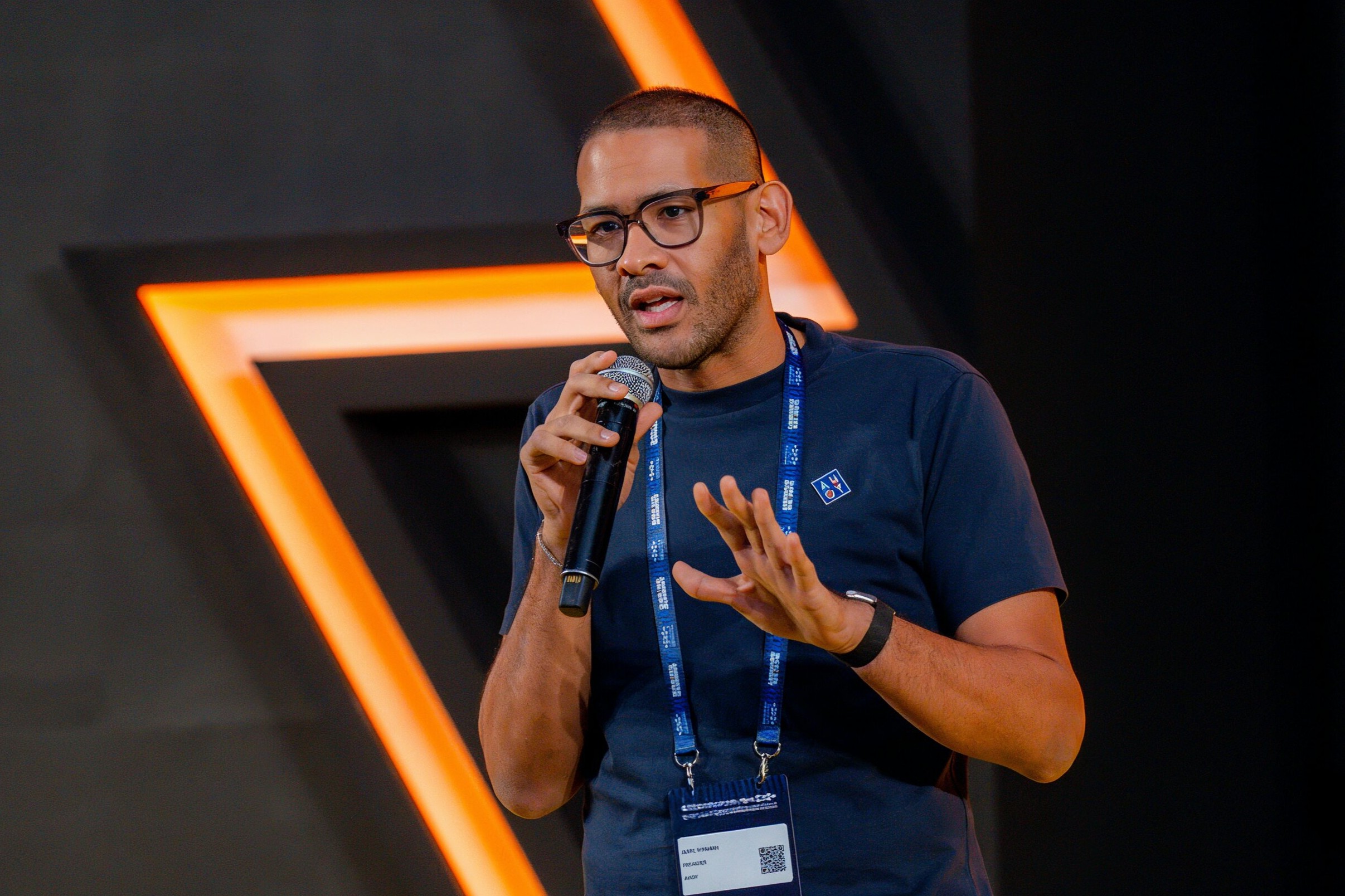
“We built AHOY to prove that sovereignty and world-class performance are not a trade-off. Outperforming the biggest names in technology, on both accuracy and precision, shows that regionalorganisations can keep full control of their data without settling for second-best AI. This is a milestone, not a finish line. Our goal is the top spot,” said Jamil Shinawi, Founder and Group CEO of AHOY.
A fifteenth of the noise
The biggest gap is in precision. For each answer, OpenAI File Search returned an average of 15.7 irrelevant documents. AHOY Labs returned 1.03, about a fifteenth as many and the fewest of all six systems. Irrelevant documents are noise: they bury the real evidence, add cost and slow people down. They also make it harder to check where an answer came from. With AHOY, the evidence behind an answer is the evidence that matters. For governments, regulators and organisations that must defend every decision they make with AI, that difference is decisive.
Built for sovereignty
AHOY’s platform is designed to run inside the customer’s own premises, on the customer’s own hardware. It can operate fully offline, so sensitive data never leaves the organisation, and AHOY’s internal testing shows it delivers the same benchmark result when running fully offline. Sovereignty is built into the system itself, not added as a hosting option, so every AHOY deployment is sovereign. This makes AHOY Labs the highest-ranked sovereign system on the leaderboard and suited to sectors where data cannot go to a public cloud, such as government, defence, healthcare and energy.
EnterpriseRAG-Bench was created by Onyx and published with an accompanying research paper. It is open source under the MIT licence. Onyx reviews results before posting them to the public leaderboard and does not rank its own product.
Overall Score of Systems:
|
System |
Overall score |
Questions answered correctly |
Irrelevant documents per answer (lower is better) |
|
AHOY Labs (aka Trouvé) |
74.95 |
79.6% |
1.03 |
|
OpenAI File Search |
61.03 |
69.8% |
15.7 |
|
Amazon Q (Kendra) |
48.96 |
55.4% |
1.49 |
|
Microsoft Azure AI Search |
48.42 |
56.4% |
3.25 |
|
Google Vertex AI Search |
41.87 |
49.2% |
4.05 |
|
NVIDIA AI Blueprints |
37.73 |
59.6% |
7.72 |
7, Oct 2026
Zapata Quantum Joins IBM Quantum Network to Accelerate Mission-Driven Quantum Application Development
Effort builds on prior collaboration to translate high-value use cases into practical applications running on IBM quantum computers
BOSTON, Massachusetts – October 7, 2026 – Zapata Quantum (OTCQB: ZPTA) (“Zapata” or the “Company”) today announced it has joined the IBM Quantum Network with plans to use IBM’s world-class quantum computers with Zapata’s deep expertise in use-case discovery and application development. The Company’s effort aims to help close the quantum application gap by translating advances in quantum computing into mission-critical applications and real-world impact.
“The rapid progress IBM is making on the path to fault-tolerant quantum computing brings the quantum application gap into sharper focus,” said Sumit Kapur, CEO of Zapata Quantum. “These advances must be matched by progress in identifying, evaluating and developing the applications that will deliver real-world value. We are excited for Zapata’s Quantum Application Intelligence™ to translate organizations’ highest-mission priorities into practical quantum applications.”
“IBM’s roadmap to fault-tolerant quantum computing is one of the most credible in the industry, and superconducting qubits remain one of the most capable paths to advantage because their hardware is fast,” said Jonny Olson, VP Strategy and Co-Founder of Zapata Quantum. “Joining the IBM Quantum Network lets us better identify valuable opportunities for organizations that need the fastest systems, and then prepare those organizations for the precise moment that quantum gives them real ROI.”
Joining the IBM Quantum Network builds on a history of joint IBM and Zapata research done on early quantum devices. Zapata used IBM quantum computers in a landmark study published in Nature Biotechnology that produced experimentally validated candidates targeting KRAS and was selected as one of the journal’s Top 10 Articles of 2025.¹ Scientists from the two companies also co-authored research published in npj Quantum Information, which advanced the understanding of variational quantum factoring on a superconducting processor.2
Being part of the IBM Quantum Network also reflects Zapata’s broader strategy of working with technology leaders across the quantum and AI ecosystems. Insights from being part of the IBM Quantum Network will inform Quantum Pilot™, Zapata’s hardware-agnostic platform that helps enterprises identify, prioritize, and develop quantum applications as hardware matures.
7, Oct 2026
Riverain Technologies Expands Access to ClearRead™ Advanced Chest Imaging AI Through RapidAI’s Enterprise Platform
ClearRead Chest integration extends Riverain’s clinically proven cardiothoracic AI suite of solutions through a unified enterprise workflow designed to reduce fragmentation and accelerate action
MIAMISBURG, Ohio, October 7, 2026 — Riverain Technologies, a leader in cardiothoracic imaging AI, today announced that its FDA-cleared ClearRead™ Chest suite will be available through RapidAI, a global leader in enterprise clinical AI, via its Rapid Enterprise™ Platform. The integration expands access to Riverain’s advanced lung and cardiac imaging intelligence within RapidAI’s connected enterprise platform, helping radiologists identify subtle findings, reduce cognitive burden, and move from imaging insight to clinical action with less workflow friction.
Designed for chest CTs and X-rays, ClearRead Chest is a cardiothoracic AI suite that helps radiologists detect, characterize and visualize pulmonary nodules, pneumothoraces, and coronary artery calcification (CAC). Riverain’s patented vessel and bone suppression technology provides an unobstructed view of the lungs to improve visualization of nodules and other pathology. The ClearRead Chest suite delivers clinically proven accuracy and time-saving insights within radiologists’ existing workflows, helping ease cognitive burden and support more confident decisions.
Riverain develops clinically validated cardiothoracic imaging technology designed to help radiologists see, detect, characterize, and report subtle findings more clearly. Integrating ClearRead Chest into RapidAI’s connected platform extends the technology into an enterprise environment that unifies imaging intelligence, clinical workflows, and patient management, helping health systems scale AI without adding separate systems or operational complexity.
ClearRead Chest integrates into the Rapid Enterprise Platform, including its Rapid Edge Cloud™ infrastructure, the Rapid Navigator Pro™ radiology workflow solution, RapidAI’s mobile and web applications, and its AI governance capabilities. The integration will create a secure, interoperable experience across PACS, EHR, and reporting systems, allowing health systems to deploy Riverain’s cardiothoracic imaging intelligence while maintaining workflow consistency and enterprise-grade infrastructure.
“ClearRead was developed to help radiologists see subtle chest findings more clearly and confidently within the workflows they already rely on every day,” said Steve Worrell, CEO of Riverain Technologies. “By integrating ClearRead Chest into the Rapid Enterprise Platform, we’re expanding access to our advanced chest imaging technology to support earlier detection of leading global killers like lung cancer, and cardiovascular disease and reduce the burden on radiologists facing increasingly complex imaging workloads.”
Through the integration, Riverain’s ClearRead Chest suite will be available to RapidAI’s install base of more than 2,500 hospitals. The collaboration gives Riverain a broader path to scale advanced cardiothoracic imaging intelligence across health systems while allowing customers to access Riverain and RapidAI solutions through one connected workflow.
For Riverain, the collaboration advances its mission to reduce delayed cardiothoracic diagnoses by bringing ClearRead Chest to more radiologists within the systems they use every day. For RapidAI, the integration expands its enterprise imaging ecosystem with clinically validated third-party AI for lung and cardiovascular disease, building on its full-body portfolio.


