


31, Jul 2026
Family Offices Turn to Third Parties for Specialist Expertise to Overcome New Challenges and Go Global
July 31: Family offices are increasingly turning to specialist third parties for sophisticated, specialist services in order to overcome new challenges and expand internationally, global research* from Ocorian, the specialist global provider of services to high-net-worth individuals and family offices, financial institutions, asset managers and corporates, shows.
Ocorian’s study among family members and senior family office employees responsible for total wealth of $119.37 billion found that advice on illiquid investments (55%) and cyber security (49%) is currently most received from third parties, closely followed by advice on personal finances (48%).
At the other end of the spectrum, only 3% of family offices surveyed say they currently receive third-party support on extended family services, such as concierge needs, global insurance programmes and extended family financial support.
However, demand is set to rise, with over three quarters (77%) of respondents citing their use of third-party support for key services will increase across the board over the next three years, with just 21% saying it will stay the same as it is today. The main reason given is a desire for more sophisticated services (74%), followed by a lack of expertise in-house as family offices grow (62%) and the realisation that third parties are more cost-effective (55%).
More specifically, 70% said the plan to increase third party support for extended family services as their needs and requirements change and they are faced with new, emerging challenges. More than two-thirds (68%) said their use of outsourcing around wealth planning will increase in the next three years.
The study in 16 countries or territories including the UK, UAE, Singapore, Switzerland, Hong Kong, South Africa, Saudi Arabia, Mauritius and Bahrain found that when looking to appoint third party specialists, the most important factor cited by 62% of family offices is the capability to operate across multiple regions followed by the ability to establish a strong, trusted relationship (58%). This is followed by their technology and reporting proficiency (53%) and then cost (52%).
Lana So Wan Yuen, Head of Private Clients – Mauritius, at Ocorian said: “Family offices are facing new challenges as they grow and become increasingly international. That means they are looking for third-party specialist expertise which can not only support them with the skills they need but also operate across multiple jurisdictions. In addition to still needing support with core services, our research findings also point towards family offices increasingly looking for support with extended services as they grow, such as concierge needs and global insurance programmes.”
Rebecca Thrope, Global Head of Regulatory Consulting at Ocorian added: “Outsourcing to a third-party not only provides family offices access to specialist technical advice, but also can help reduce cost, increase efficiency and help manage risk. Choosing the right partner is critical, and the upfront due diligence and ongoing monitoring and oversight is equally important to ensure the benefits of outsourcing are realised.”
Ocorian’s award winning dedicated family office team provides a seamless and holistic approach to the challenges and opportunities families face. Its service is built on long-term personal relationships that are founded on a deep understanding of what matters to family office clients. Its global presence means Ocorian can provide bespoke structures and services for international families no matter where they live.
Key services include formation and administration of family offices, HR support services, support with lifestyle and luxury assets, family governance, resident and relocation services and specialist support with immigration, visas, payroll, marine and aircraft crew management and financial reporting.
- 0
- By Neel Achary

31, Jul 2026
IIM Kozhikode Launches Professional Certificate in Data Analytics for Business with Generative AI
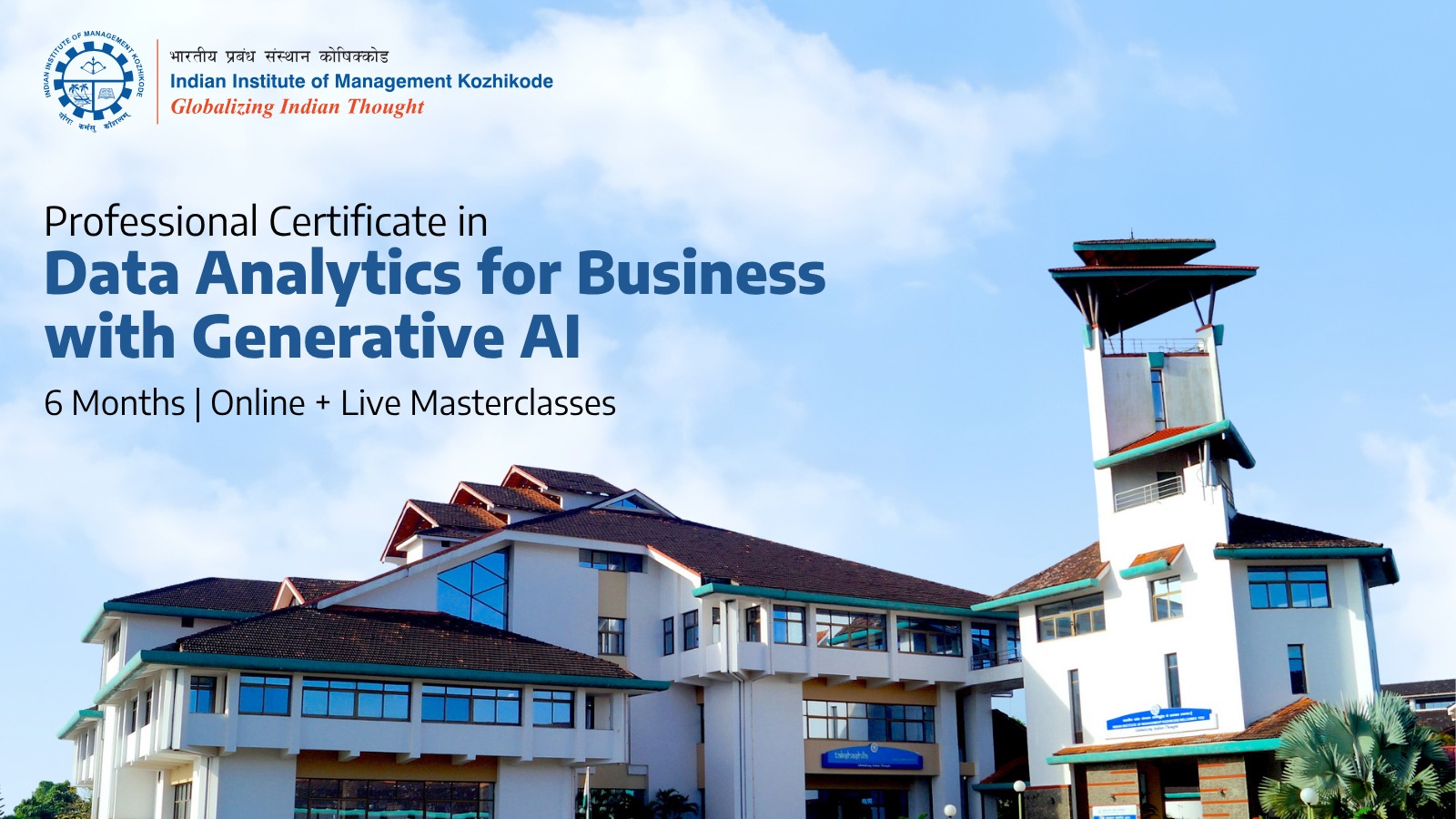
As Generative AI and Agentic AI reshapes how organisations analyse information, automate workflows and make business decisions, analytics is evolving beyond dashboards and reports. Businesses today need professionals who can combine data with AI to solve complex challenges, build intelligent workflows and drive measurable business outcomes.
Responding to this shift, IIM Kozhikode has launched the Professional Certificate in Data Analytics for Business with Generative AI, a next-generation executive programme that brings together Data Analytics, Generative AI and Agentic AI into one business-focused learning experience.
The launch comes at a time when AI-enabled analytics capabilities are becoming business critical. Gartner (2025) projects that 75% of analytics content will be GenAI-driven by 2027, while PwC (2025) reports that AI-exposed roles are witnessing 4x higher productivity growth. NASSCOM (2025) further estimates that Data and AI professionals in India can earn 30–50% more than comparable non-AI analytics roles.
Designed for both technical and non-technical professionals, with no coding experience required, the programme goes beyond traditional analytics education by integrating analytics with Generative AI, Agentic AI and intelligent automation for real business applications.
Participants benefit from an immersive, application-driven learning experience featuring:
- Integrated Data Analytics, Generative AI and Agentic AI curriculum that goes beyond traditional analytics learning.
- Exposure to 20+ industry-leading tools, including Claude, Perplexity, Microsoft Copilot, Zapier, Tableau, Gemini and Julius, to build AI-powered analytics workflows.
- Five live masterclasses led by industry experts on emerging analytics, GenAI and Agentic AI applications.
- Four applied business projects built around real-world scenarios to translate concepts into business impact.
- A GenAI and Agentic AI-powered capstone project that brings together analytics, intelligent automation and AI-driven decision-making to solve a real business challenge.
By combining academic rigour with practical business application, the programme helps professionals build future-ready capabilities, develop an AI-first decision-making mindset and confidently drive innovation and business transformation.
Backed by IIM Kozhikode‘s globally recognised academic excellence, including its Triple Crown accreditation (AMBA, AACSB and EQUIS), #3 ranking among management institutions in India (NIRF 2025), and #76 global ranking in the Financial Times Open Enrolment Rankings 2025; the programme prepares professionals to lead with analytics and AI in an increasingly intelligent business environment.
Programme At a Glance
- Duration: 6 months
- Weekly Commitment: 4–5 hours per week
- Mode: Online with live sessions
- Eligibility: Graduates or diploma holders (10+2+3) from any discipline
- Learning Experience: Live masterclasses, hands-on learning with 20+ analytics, GenAI and automation tools, four applied projects, a GenAI-powered capstone project, and an optional networking event at the IIM Kozhikode campus (available at an additional cost).
As organisations accelerate AI adoption, professionals who can combine analytics with intelligent automation will be best positioned to create lasting business value.
Applications are now open for professionals looking to build AI-powered analytics capabilities and lead the next wave of business transformation.
31, Jul 2026
Berger Paints Enhances Puri’s Iconic Rath Yatra Procession Route
Bengaluru, July 31: Following the successful conclusion of this year’s Jagannath Rath Yatra, Berger Paints India Ltd. marked the completion of painting the Puri’s iconic Grand Road , continuing its association with the landmark route for the second consecutive year. The company contributed decorative paint solutions to the stretch that served as the centrepiece of one of India’s most significant religious festivals.

The initiative covered nearly 300 buildings lining both sides of the 4-kilometre stretch between the Shree Jagannath Temple and the Mausi Maa Temple, with close to 10 lakh sq. ft. of surface painted over a period of one month. Finished in a uniform light peach colour with white borders, the refreshed route formed the backdrop to this year’s Jagannath Rath Yatra, welcoming millions of devotees during the annual procession.
Mr. Abhijit Roy, MD & CEO, Berger Paints India Limited, said,
“We were honoured to contribute to this year’s Rath Yatra celebrations and see the Grand Road serve as the backdrop to one of India’s most revered cultural and spiritual traditions. It was a privilege to be part of an initiative experienced by millions of devotees and visitors during the festival. At Berger Paints, we believe preserving colour goes beyond surfaces—it’s about preserving the spirit, identity and stories that make places and people unique. That belief lies at the heart of our recently launched Rang Bana Rahe campaign, which celebrates the resilience to hold on to what defines us, even as life changes around us.”
With decades of expertise in decorative and protective coatings, Berger Paints continues to support projects that enhance public spaces while celebrating India’s rich cultural heritage. The company’s association with this year’s Rath Yatra reflects its commitment to combining technical excellence with meaningful cultural engagement, contributing to initiatives that leave a lasting impact on communities.”
31, Jul 2026
Cipla Health’s new W.H.O hai toh woh ORS hai campaign highlights the importance of knowing the correct ORS

July 31: On the occasion of World ORS Day, Cipla Health Limited has launched its annual awareness campaign for Prolyte ORS, aimed at encouraging consumers to understand the benefits of World Health Organization (W.H.O.) approved Oral Rehydration Solutions. Anchored in the message “W.H.O hai toh woh ORS hai” the campaign seeks to encourage consumers to look for the W.H.O. recommended mark on the pack while purchasing ORS.
While ORS has long been recognized as an important aid in managing dehydration, adoption gaps continue to persist. Data from the National Family Health Survey-5 (NFHS-5) shows that only around 62% of children under five suffering from diarrhoea received ORS, highlighting the need for greater awareness around dehydration management. Despite being easy to use and highly effective, ORS treatment rates continue to vary considerably across regions. Research has shown that many areas with a high prevalence of child diarrhoea continue to report low ORS treatment rates, and that although ORS is widely considered the primary treatment option for childhood diarrhoea, adherence to this recommendation remains far from optimal, creating a significant know-do gap between awareness and actual usage.
Internal Cipla Health data further indicates a continued need to strengthen consumer understanding around ORS. While awareness of ORS rises to nearly 70% when consumers are prompted, more than 75% of ORS-aware consumers are unable to recall what ORS stands for. Further, among aware users, only around 61% recalled seeing the ‘W.H.O.-recommended’ mark on pack, suggesting that while familiarity with ORS exists, awareness around formulations and what consumers should look for while purchasing ORS continues to evolve. Data from the engagements across Hyderabad and Mumbai showed the need for more knowledge amongst consumers around ORS. Only 85% respondents indicated they knew what to look for while purchasing an ORS product.
As part of the campaign, Cipla Health is undertaking a series of awareness initiatives designed to encourage consumers to understand what constitutes an appropriate ORS formulation. These include a hospital-led awareness initiative in association with MGM Group of Hospitals, where medical experts will engage with doctors, patients and caregivers on recognising dehydration, understanding the role of ORS in rehydration and the importance of choosing W.H.O. recommended formulations. The campaign will also feature educational content led by nutritionists and fitness creators, healthcare professional outreach programmes, consumer sampling activities, transit and outdoor visibility initiatives, and trade engagement efforts aimed at reinforcing the importance of choosing a W.H.O. recommended ORS formulation.
Shivam Puri, CEO, One India Business, Cipla said “As India experiences longer summers, rising temperatures, and a growing burden of heat-related illnesses, dehydration is becoming an increasingly critical public health challenge. While Oral Rehydration Solution (ORS) has remained the WHO-recommended gold standard for managing dehydration, awareness around choosing the right ORS formulation remains inconsistent. As category leaders, we have a responsibility that goes beyond providing solutions; we must empower people with the knowledge to make informed decisions. Through our efforts this year, we aim to close the awareness gaps, improve access to credible information, deepen understanding of global ORS standards, and reinforce the importance of evidence-based hydration practices. Our goal is simple: to help every Indian household recognize, choose, and trust scientifically validated hydration solutions when they matter most.”
Commenting on the importance of hydration awareness, Dr. Usha Chennuru, Senior Director Medical Services at Cipla Health said “We commonly see that many people do not recognise the early signs of dehydration or understand the role ORS can play in managing it. Greater awareness and timely action can help people make more informed choices and take appropriate steps to manage dehydration effectively.”
Among individuals engaged across activations in Hyderabad, 27% reported experiencing dehydration-related symptoms during outdoor activities like excessive sweating, and fever while 96% said these episodes had affected their productivity or day-to-day routine. The findings also revealed that 9% respondents were unaware of the role ORS can play in managing dehydration, highlighting the need for greater awareness around dehydration management and appropriate rehydration practices.
In Mumbai, Cipla Health along with a national medical association, and MGM Navi Mumbai Hospital engaged with 432 patients through awareness and counselling sessions in Mumbai. The interactions revealed that 31% participants were unaware of factors to consider while purchasing ORS.
30, Jul 2026
From Cutting Smartphone Glass to “Painting” with Light: 3 Applications of Femtosecond Lasers
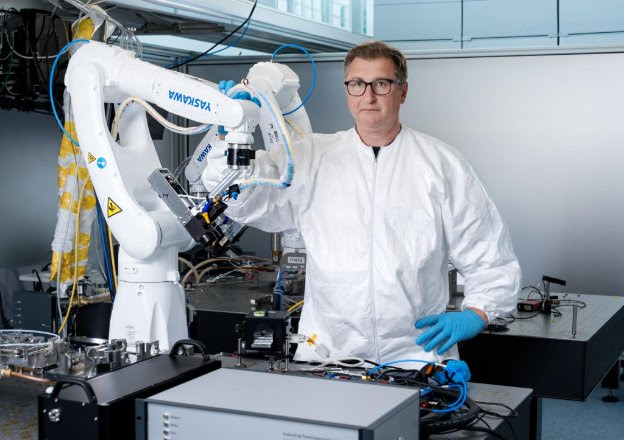
Nikolajus Gavrillinas, co-founder and CEO of LITILIT. (Source: LITILIT)
Femtosecond lasers are among the most advanced tools in precision manufacturing and can shape materials with great precision without damaging surrounding structures. According to experts at LITILIT, one of the biggest barriers to mass adoption of femtosecond lasers is that they evolved from laboratory-grade systems and are notoriously difficult to produce at scale.
July 29, Vilnius, Lithuania. Researchers at EPFL university in Switzerland recently demonstrated a lab concept of ultrafast laser integrated onto a photonic chip, showing how rapidly the technology is becoming smaller. According to experts at femtosecond laser company LITILIT, industrial femtosecond lasers are already used to cut display glass, create colours without paint and perform precision eye surgery, but their complexity continues to limit wider adoption.
Femtosecond lasers, a group of ultrafast lasers, are among the most advanced tools in precision manufacturing. They fire pulses of light so brief that trillions of them fit inside a single second. This is what allows materials to be shaped with great precision, without damaging surrounding structures in many applications, ranging from manufacturing electronics to medicine.
Smartphone screens
Nikolajus Gavrilinas, the CEO of LITILIT, says that the high precision makes femtosecond lasers one of the few methods for manufacturing day-to-day electronics. For example, many screens and camera lenses of the latest smartphones are cut with a femtosecond laser.
“Femtosecond lasers are used across electronics manufacturing because they can process delicate materials with extremely high precision and minimal heat damage. They help cut display glass, ceramics, circuit boards and semiconductor components, while also drilling microscopic holes and creating fine structures that would be difficult to produce with conventional tools,” Gavrilinas explains.
“Painting” with light
Another growing application of ultrashort-pulse lasers is replacing toxic chemicals with physics. Laser pulses are short enough to sculpt a material’s surface at a nanoscale level without melting or damaging what’s underneath. This makes it possible to add color to metal without paint or ink.
“The colour comes from how that microscopic texture bends light, the same physics that gives a peacock feather its colour without any pigment at all,” Gavrilinas says.
The same principle can be applied to make surfaces water-repellent, and to replace PFAS-based coatings and other toxic chemical treatments.
Eye surgery
For years, femtosecond lasers have been used in ophthalmology. They revolutionized ophthalmic surgery by enabling high-precision procedures with minimal tissue damage and rapid recovery times.
“In LASIK surgery, the laser cuts a thin flap on the surface of the eye so precisely and evenly that a blade never could. In cataract surgery, it does the same careful cutting and even softens the lens before the surgeon removes it, so there’s less manual cutting involved than there used to be,” Gavrilinas explains.
Now, as technology progresses, femtosecond lasers could extend to other fields of medicine. A study published this year by researchers at Heriot-Watt University and the University of Edinburgh found that femtosecond lasers can also remove tissue with unprecedented accuracy, potentially helping treat cancer.
The adoption gap
While the EPFL research showed that ultrafast lasers could one day be integrated onto photonic chips, Gavrilinas says the more immediate challenge is bringing today’s higher-power femtosecond laser systems into industrial production.
“Many existing femtosecond laser systems trace their design back to complex laboratory instruments. Although they can achieve very high performance, they are often difficult to assemble and depend on highly qualified specialists. To address this gap, we built lasers on a purpose built design, high level of automation and easily integrated into factories, which makes them suitable for a wide range of applications,” Gavrilinas says.
The company’s technology is based on patented inventions (𝐩𝐚𝐭𝐞𝐧𝐭 𝟏, 𝐩𝐚𝐭𝐞𝐧𝐭 𝟐) developed by LITILIT co-founders Kęstutis Regelskis, Nerijus Rusteika and Gavrilinas in close collaboration with the Center for Physical Sciences and Technology in Vilnius.
30, Jul 2026
AI Boom Fuels Photonics Investment Surge, But Europe Risks Losing the Race to China, Investor Warns

Daiva Rakauskaitė, CFA, partner and fund manager of Aneli Capital
From Nvidia’s multibillion-dollar bets to Europe’s first dedicated photonics exchange traded fund, investor interest in the sector is surging, yet industry leaders say Europe still lacks the funding to scale its own champions.
Vilnius, Lithuania, July 30: The AI boom, together with rising investment in 5G, defence quantum computing and medical technologies, is renewing investor interest in photonics. But as more capital flows into the sector, European companies face intensifying competition from Chinese manufacturers, raising concerns that Europe may struggle to turn its scientific strengths into industrial scale, an investor warns.
Since March, Nvidia has backed US photonics companies Coherent and Lumentu
Amid the investor rush, Defiance has launched Europe’s first dedicated photonics ETF, listed on the London Stock Exchange and Borsa Italiana since 9 July.
According to Daiva Rakauskaitė, managing partner at a VC fund Aneli Capital, this is a strong catalyst for Europe’s photonics leaders to build on the region’s scientific and engineering strengths and translate them into industrial scale faster. This matters because, over the last two decades, China’s share of the photonics market has tripled to more than 30%, while Europe’s has fallen to 15%, according to a previous report by Photonics21, the European Technology Platform for Photonics.
Europe still produces world-class laser science; now it needs to make a decisive strategic move by investing to close the scale-up gap,” Rakauskaitė says. “A European startup with a working photonics design should already be able to build it at scale, rather than having European businesses turn to Chinese competitors instead. Europe is still inventing photonics and should be a committed customer of its own technology.”
The leading European companies from defence, manufacturing and other industries including Mercedes, Bosch, Volkswagen, last year issued a joint statement urging to strengthen
the resilience and sustainability of Europe’s strategic photonic supply chains.
Some of these challenges were addressed in the Chips Act proposal, as Integrated photonics was listed as a key enabling technology alongside traditional electronics. Therefore, according to Rakauskaitė, further measures are needed to help businesses move from research and pilot production to commercially competitive manufacturing.
“Strengthening European photonics means backing startups all the way through, from first prototype to full-scale production, with patient capital and policy that treats them as strategic assets. It also means governments recognizing that a photonics startup succeeding at scale is a matter of economic security,” Rakauskaitė says.
One of the proofs that Europe can manufacture lasers at home is Lithuania, which marks the 60th anniversary of its laser industry this year. 90–95% of Lithuanian laser production is exported to more than 80 countries, while the sector continues to grow by more than 16% annually, according to the Lithuanian Innovation Agency.
“Lithuania shows that Europe can build globally competitive laser companies. The next challenge is ensuring that companies emerging across Europe have access to the capital and manufacturing capacity needed to achieve the same success at industrial scale,” Rakauskaitė concludes.
30, Jul 2026
Biocon Foundation and IISc Convene National Experts to Shape India’s Oral Cancer Elimination Strategy
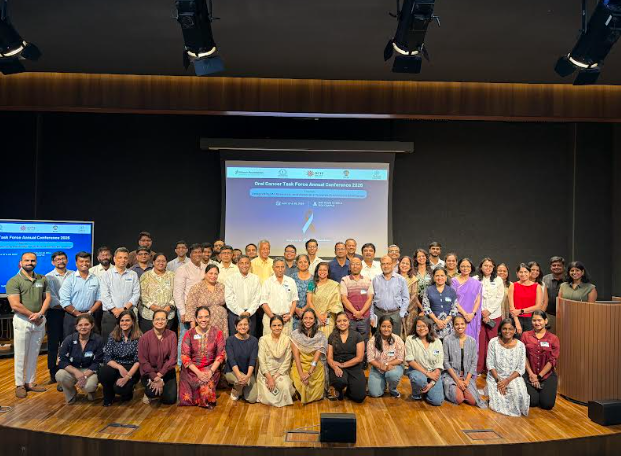
Bengaluru, India, July 30: Biocon Foundation, the Corporate Social Responsibility (CSR) arm of the Biocon Group, in association with the Indian Institute of Science (IISc) and Translational AI for Networked Universal Health Care (TANUH), commemorated World Head & Neck Cancer Day by hosting the 7th edition of the Oral Cancer Task Force (OCTF) Annual Conference on July 27–28, 2026, at the BITS Pilani, Goa Campus.
The two-day conference brought together leading oncologists, clinicians, public health experts, researchers, policymakers, artificial intelligence specialists and implementation partners to advance India’s roadmap towards oral cancer elimination. This year’s theme, ‘Integrating AI, Research, and Advocacy towards Oral Cancer Elimination,’ underscored the role of artificial intelligence, implementation research and multi-stakeholder collaboration in strengthening oral cancer prevention, early detection and access to timely care.
Kiran Mazumdar-Shaw, Founder & Managing Trustee, Biocon Foundation, and Convenor, OCTF, said, “India has a unique opportunity to redefine the global approach to oral cancer by harnessing the power of artificial intelligence, scientific innovation, and strong public health systems. Through the Oral Cancer Task Force, we are bringing together expertise across sectors to develop scalable, technology-enabled solutions that can drive early detection, improve access to timely treatment, and ultimately save lives. The goal is to ensure that these innovations reach far and wide, making quality cancer care more equitable and accessible.”
Oral Cancer Task Force Members, “Oral cancers are responsible for a humongous amount of mortality and morbidity in India. Eliminating this scourge necessitates a comprehensive, pragmatic approach that integrates health and technology through tobacco control and cessation, AI-enabled screening and early detection, timely referral pathways, down staging of disease, and quality care across the continuum of care. It is heartening to know that AI-enabled oral cancer screening at the district level has been implemented. This initiative marks a significant step towards AI-assisted approach to improve oral cancer outcomes.”
Established in 2018 by Biocon Foundation, the Oral Cancer Task Force (OCTF) is an independent multidisciplinary platform bringing together clinicians, researchers, public health experts, policymakers and technology partners to reduce the burden of oral cancer through research, innovation, evidence generation, advocacy and policy engagement. Over the years, OCTF has contributed to the development of consensus guidelines for Oral Potentially Malignant Disorders (OPMDs) and Head & Neck Cancers, while advancing technology-enabled screening approaches across India.
Advancing AI-enabled Screening at Scale
A key highlight of the conference was the progress made under the Centre of Excellence for Artificial Intelligence (AI-CoE), a first-of-its-kind multicentric initiative involving 28 consortium partners with IISc serving as the nodal institution.
The initiative has developed an AI-assisted, mobile phone-based white-light imaging solution that stratifies oral lesions into high- and low-risk categories, enabling early identification of oral cancer. The technology powers Aarogya Aarohan, an AI-enabled mobile application currently deployed across Public Health Centres in Goa. Designed for use by frontline healthcare workers, the application can operate on low-cost smartphones, function offline in low-connectivity settings and support referral workflows across different levels of the healthcare system, making point-of-care screening more accessible and scalable.
Since 2014, Biocon Foundation has screened more than 100,000 individuals across multiple states through a community-based oral cancer screening programme. The Foundation contributed over 30,000 annotated oral lesion images that enabled the development of Aarogya Aarohan in collaboration with IISc and TANUH. The deployment of the application has contributed to a ten-fold increase in screening capacity over the past 18 months while helping identify community-specific intervention strategies.
Driving an Integrated Strategy for Oral Cancer Elimination
The conference reaffirmed OCTF’s commitment to advancing oral cancer elimination through three strategic priorities:
· Tobacco cessation through education, awareness and school health programmes
· Screening and early detection
· Timely diagnosis and initiation of treatment
Supported by collaborations across public health, clinical research, artificial intelligence and policy, these efforts aim to build a scalable, evidence-based framework for oral cancer control in India.
The conference featured keynote addresses, expert talks, panel discussions, stakeholder consultations and strategic planning sessions covering AI-assisted screening, integration of AI into clinical workflows, digital innovations for community-based screening, tobacco cessation and improving timely access to treatment. Drawing inspiration from global efforts towards cervical cancer elimination, the deliberations will inform the development of a robust and scalable oral cancer elimination strategy that can be adapted across geographies and health systems.
Consensus Guidelines Updated
The conference also unveiled the 2026 update to the Indian Clinical Practice Consensus Guidelines for Head & Neck Cancer, developed under the aegis of OCTF. Presented by Dr Kumar Prabhash, the updated guidelines reflect the latest clinical evidence and continue OCTF’s efforts to standardise evidence-based management of head and neck cancers across India. The initiative is coordinated by Dr Neera Gupta, Vice President – Clinical Development & Medical Affairs, Immuneel Therapeutics, and the updated guidelines will continue to be published in the Journal of Cancer Research and Statistics and Treatment.
The conference brought together experts from Tata Memorial Hospital, IISc, the Government of Goa, Biocon Foundation and leading academic, clinical and public health institutions from India and abroad. Keynote speakers and panellists included Dr Srinath Reddy, Dr Shekhar Salkar, Dr Guruprasad Naik, Dr Upendra Bhojani, Dr Sumirtha Gandhi, representatives from the Department of Health Services, Government of Goa, Prof Paturu Kondaiah, Dr Anupama Shetty, Dr Manisha Khorate, Dr Anupama Borkar, Prof Kunal Korgaonkar, Dr Praveen Birur and several other national and international experts.
The conference concluded with a renewed commitment from clinicians, researchers, policymakers and technology partners to accelerate the adoption of AI-enabled, evidence-based approaches for oral cancer prevention, early detection and treatment, strengthening India’s journey towards eliminating oral cancer as a major public health challenge.
30, Jul 2026
Star Health reports normalised PAT of ₹ 386 Crores in Q1 FY27, up 44% YoY; Underwriting Profit increases sharply to ₹ 111 Crores, compared to ₹ 16 Crores in Q1 FY26
CHENNAI, India, July 30, 2026 /PRNewswire/ — Star Health and Allied Insurance Company Limited (“Star Health”), India’s largest standalone health insurer, today announced its financial results for the quarter ended June 30, 2026 (Q1 FY27). The Company posted a normalised Profit After Tax (PAT) of ₹ 386 Crores, an increase of 44% YoY, driven by healthy premium growth, disciplined underwriting and sustained operating efficiencies. Underwriting Profit for Q1 FY27 was ₹ 111 Crores, compared to ₹ 16 Crores for Q1 FY26.

The Company recorded Gross Written Premium (GWP) of ₹ 4,287 Crores during Q1 FY27, representing a growth of 19% YoY on Reported 1/N basis. On the same basis, Fresh Retail Health GWP for the quarter stood at ₹ 730 Crores, a 37% YoY increase.
Under Ind AS Accounting Standards, the Company posted Profit After Tax (PAT) of ₹ 550 Crores, an increase of 25% YoY.
Performance highlights for Q1 FY27
Business Performance
- GWP (Reported 1/N basis) increased 19% YoY to ₹ 4,287 Crores
- Retail Health fresh GWP (Reported 1/N basis) increased 37% YoY to ₹ 730 Crores
Financial Performance (Ind AS)
- Underwriting Profit: ₹ 111 Crores (6x YoY growth | Q1 FY26: ₹ 16 Crores)
- Profit After Tax (PAT): ₹ 550 Crores (25% YoY growth | Q1 FY26: ₹ 438 Crores)
- Combined Insurance Service Ratio (CISR): 97.0% (improvement of 1.7% over 98.7% in Q1 FY26)
Claims Excellence & Customer Trust
- Star Health settled 9.6 lakh claims during Q1 FY27
- Retail Claims Settlement Ratio improved by 1% and moved to 91% for Q1 FY27
- Persistency improved by 3% YoY to 102%
- Company Net Promoter Score (NPS) improved by 12 points and stands at 65 as on June 2026
Digital First approach
Digital continued to be a key growth and operating lever for the Company during Q1 FY27. During the quarter, the Company’s proprietary digital D2C Channel contributed 16% of fresh retail sales, with a YoY growth of 142%.
97% of fresh policies were sourced digitally, reflecting digital adoption at scale for a granular retail distribution franchise. The Company also strengthened its technology-led capabilities through ATOM PRO, its AI-enabled digital platform for business acquisition, which continued to witness increasing adoption. Designed as an end-to-end productivity platform, ATOM PRO enables advisors with intelligent product recommendations, instant quotations, policy comparisons, network hospital search, business dashboards and other digital servicing capabilities, helping improve customer engagement and advisor productivity. ATOM Pro was recognized by The Economic Times in the BFSI FinNext Awards 2026, under ‘InsurTech Product Excellence of the Year’.
The Star Health Customer App also continued to witness strong traction, with 14.7 million downloads and over 1.5 million monthly active users, and increasing adoption of self-service capabilities- such as, digital renewals, and claims submissions and wellness initiatives.
Artificial intelligence use cases are being deployed across the value-chain with dedicated management focus on measurable outcomes. Claims operations, for example, have been strengthened by an AI-ML analytics layer designed to enhanced precision and efficiency. The Company is now in the process of layering Generative AI capabilities to further improve outcomes. In-house capabilities on AI have been strengthened through global technology partnerships.
Distribution Strength
Star Health’s robust distribution network and service infrastructure continued to support its growth momentum during Q1 FY27. As of June 30, 2026, the Company had a multi-channel distribution network comprising 900+ branch offices, 8.5 lakh+ agents, 16,000+ network hospitals, and 18,500+ employees. These capabilities, complemented by the Company’s continued investments in technology, digital enablement, and customer service, position Star Health strongly to drive sustainable growth and expand quality health insurance access across the country.
CEO Commentary
Commenting on the performance of the Company, Mr. Anand Roy, CEO & Managing Director, Star Health and Allied Insurance Company Limited, said, “Our performance in the first quarter reflects the strength of our fundamentals and the consistency of our execution. Sustainable growth, driving improvement in core underwriting profitability, and sustained operating discipline have enabled us to deliver a strong start to the year. We remain focused on expanding health insurance access across the country while maintaining prudent risk selection and delivering superior customer experience. Investments in digital capabilities, AI-led innovation, and distribution network continue to strengthen our ability to serve customers more efficiently and at scale. As health insurance adoption deepens in India, we remain committed to building a resilient, digital-first organisation that creates long-term value for our policyholders and shareholders.”
About Star Health and Allied Insurance
Star Health and Allied Insurance Company Limited (NSE: STARHEALTH) (BSE: 543412), one of India’s leading standalone health insurance companies, commenced operations in 2006 as India’s first standalone health insurance company. Star Health provides Health, Personal Accident and Travel Insurance to its customers. The Company has grown to emerge as one of the preferred health insurance companies in India with several pioneering products and services to its credit. With customer-centricity at its core, the Company has developed superior and innovative product offerings, service capabilities and a seamless claims management process. Star Health offers tailor-made products to cater to needs such as cancer, diabetes and cardiac illnesses, as well as specific segments such as senior citizens, women and children. Star Health is India’s first health insurance company to settle over 1 crore claims.
Star Health and Allied Insurance Co. Ltd. has a strong multi-channel distribution network of 900+ offices, over 8.5 lakh+ agents and robust bancassurance and financial institution partners. The Company has 16,000+ network hospitals and 18,500+ employees.
Talk to Star: helping policyholders plan care with confidence: Star Health offers guided support through 7200 222 333 for eligible policyholders seeking Home Healthcare or planned hospitalisation assistance. Customers can call the number and press 1 for Home Healthcare or press 2 for planned hospitalisation. The service helps customers understand coverage, network hospital options, the cashless process, required documents and care pathways before admission or home-based treatment. Non-policyholders can access free 24/7 Virtual OPD consultations through the Star Health Customer app.
For more information visit www.starhealth.in
 View original content to download multimedia:https://www.prnewswire.com/in/news-releases/star-health-reports-normalised-pat-of–386-crores-in-q1-fy27-up-44-yoy-underwriting-profit-increases-sharply-to–111-crores-compared-to–16-crores-in-q1-fy26-302838942.html

30, Jul 2026
Public Benefits ‘Cliffs’ Can Trap Low-Wage Workers, Study Finds
New research from Washington University in St. Louis argues that policymakers should enact gradual cutoffs for public benefits such as food assistance or healthcare. The change could help both families and employers by allowing low-wage workers to earn more without losing critical support systems.
Millions of low-wage Americans using public assistance limit their earnings or savings, according to the study from the Center for Social Development (CSD) at the WashU Brown School.
The findings suggest that so-called “benefits cliffs” can discourage work, career advancement and financial security for families already struggling to make ends meet.
In the research brief, Stephen Roll, an assistant professor and research director at the CSD, and co-author Mathieu Despard, of the University of North Carolina at Chapel Hill, examined responses from a nationally representative sample of U.S. workers with incomes below 250% of the federal poverty level, which amounts to $82,500 for a family of four. They developed a survey tool to measure how public benefit rules influence workers’ employment and savings decisions.
The researchers found that nearly 22% of low-wage workers participating in at least one public benefits program, such as SNAP or Medicaid, reported acting to preserve their eligibility. That equals roughly 4 million workers nationwide. The most common response was declining additional work hours, though many respondents also reported keeping savings below program limits, turning down raises or promotions or declining job offers altogether.
Why would workers reject a pay raise?
“Because of the way our benefits system is structured, a single mother of two living in St. Louis enrolled in a set of common public benefits could increase her earnings from $34,000 to $80,000 and experience no positive financial impact for her family,” Roll said. “That’s because the loss of benefits over that range fully offsets any increased earnings she gets.
“At some points, this loss is especially severe. If that same mother went from $31 an hour to $33 an hour at her full-time job (a salary bump of $4,160), that $2-per-hour raise would result in her losing nearly $15,000 in childcare benefits, leaving her family much worse off. This illustrates the fundamental problem with a benefits cliff: A worker can do exactly what the system encourages — work more and earn more — and still fall behind financially.”
Workers who limited their earnings reported giving up hundreds of hours of work and thousands of dollars in wages each year, reducing opportunities to build savings and improve their long-term financial stability.
These constraints also can affect employers and local economies, making it harder for employers to cover shifts when a qualified employee turns them down, Roll and Despard found.
How can policymakers support families’ well-being?
The study also found that earnings and savings penalties often occur alongside administrative burdens associated with public assistance programs. Workers who reported limiting earnings or savings were substantially more likely to experience challenges understanding program rules, complying with requirements and coping with the stress and stigma of receiving benefits. Among participants enrolled in SNAP or Medicaid, those discouraged from work and saving were roughly 2.5 times more likely to report psychological burdens related to public benefits.
Roll and Despard recommended a number of ways that policymakers can better support economic mobility and families’ well-being: reduce benefits cliffs through more gradual phaseouts; raise, or even eliminate, asset limits; and simplify eligibility and enrollment processes.
Such changes, they said, would help public benefits programs fulfill their dual purpose of protecting families from hardship while also encouraging work, savings and long-term financial independence.
“There is growing momentum around benefits-cliff reform at the state level, and we are already sharing these findings with state agency leaders, advocacy organizations, philanthropies and other researchers,” Roll said. “We also plan to bring the findings more directly to legislators and other policymakers as this work develops.
“Our next step is to use larger-scale survey and economic data to estimate how much these policies cost workers in forgone wages and employers in lost hours, advancement and retention. The basic idea behind our research is that families should not have to turn down a raise to protect the childcare, health coverage or food assistance that makes work possible.”


